










Engaging Business As Your Partner
Michele Martin, The Bamboo Project, Inc.
Let’s Connect!
 Name/Organization/Role
 “What made you say ‘yes’ to attending this
session?”
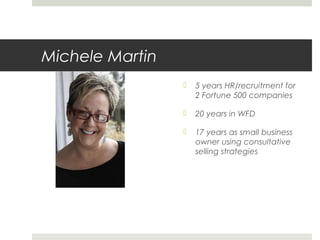
Michele Martin
 5 years HR/recruitment for
2 Fortune 500 companies
 20 years in WFD
 17 years as small business
owner using consultative
selling strategies
Website
 www.michelemmartin.com/consultative_selling
 Username: pwda
 Password: pawork
 All slides and handouts
 Follow-up resources/information for implementation
Background/Context
 Builds from April workshops on consultative/relationship
selling
 Recognize you’re already building partnerships.
 Open a dialogue about how we can engage in more
strategic, long-term relationship building to deepen
partnerships.
 **Think about how this info applies to building
partnerships with others in the system.
Agenda
 What does a “thriving partnership” with business look
like?
 Stages of Engagement—From “How do you do?” to
“Let’s Partner!”
 Ideal Partner Profiles
 Offers and Engagement Strategies
 Information
 Meetings
 Events
 Customer Learning
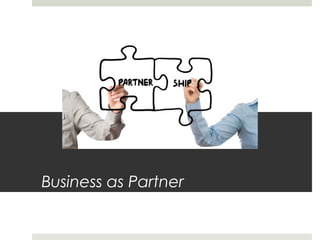
Business as Partner
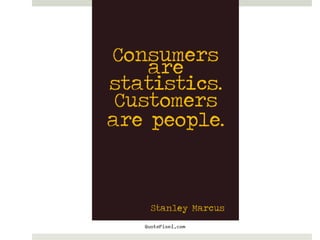
If you want to build a long-term,
successful enterprise, you can’t
focus on “closing the sale.”
You have to focus on opening the
relationship.
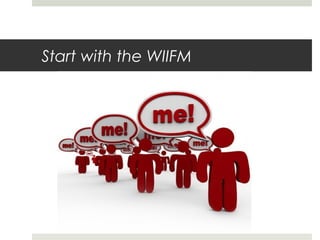
Start with the WIIFM
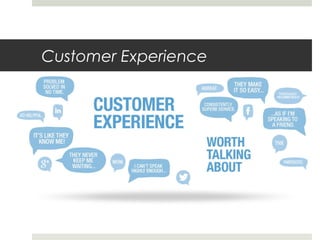
Customer Experience
Help Them Make Good Decisions
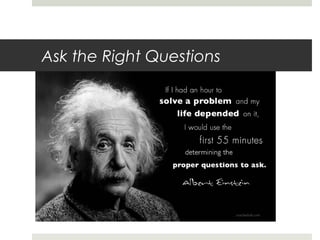
Ask the Right Questions
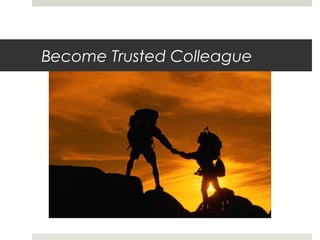
Become Trusted Colleague
Engagement=Mind AND Heart!
At Your Table
 When you think of a “thriving partnership
with business”—what does that look like?
 How would your businesses describe it?
(How do you know?)
 What are the key characteristics of a
thriving partnership?
Stages of Engagement
From “Who Are You?” to “I’ll Do Anything for You!”
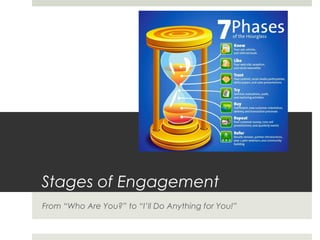
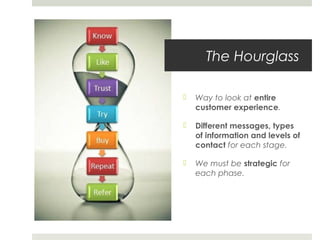
The Hourglass
 Way to look at entire
customer experience.
 Different messages, types
of information and levels of
contact for each stage.
 We must be strategic for
each phase.
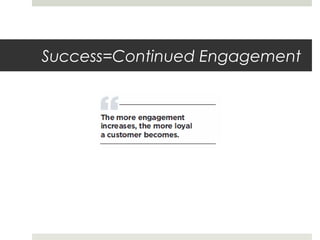
Success=Continued Engagement
Phase 1: KNOW
 First impressions count!
 How do customers find out about you? Are you capturing
your leads so you can follow up?
 How inviting/welcoming are your interactions, website,
materials, etc.?
Phase 2: LIKE
 Do you seem to “get” their issues, needs, etc.?
 Do your interactions seem customized/personalized to
their problems?
 Have you overcome any initial negative perceptions
they may have about working with a government
agency?
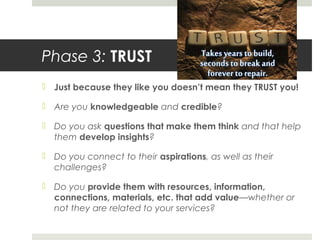
Phase 3: TRUST
 Just because they like you doesn’t mean they TRUST you!
 Are you knowledgeable and credible?
 Do you ask questions that make them think and that help
them develop insights?
 Do you connect to their aspirations, as well as their
challenges?
 Do you provide them with resources, information,
connections, materials, etc. that add value—whether or
not they are related to your services?
Phase 4: TRY
 What could they “sample” to entice them to actually
buy?
 What can we do that minimizes their investments of time
and/or their perceived risks?
Phase 5:
 When they’re ready to participate—post on Job
Gateway, participate in a Job Fair, work on a
recruitment event, work on a committee, etc.
 Expectations are everything! What expectations are you
setting? What are their expectations?
 How are you DELIVERING on your promises and
DELIGHTING customers with the experience?
 Every aspect of the process will influence their opinion—
can either move you forward or 3 steps back.
Phase 6: REPEAT
 Use the same services?
 Use new services (cross-selling)?
 Engage in new activities?
 How are you engaging with customers to uncover new
needs and respond?
 How are you continuing to engage with them to connect
to relevant resources, information and people—even
when they aren’t currently “buying” from you?
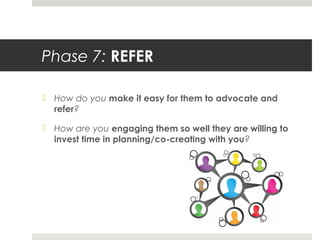
Phase 7: REFER
 How do you make it easy for them to advocate and
refer?
 How are you engaging them so well they are willing to
invest time in planning/co-creating with you?
Reflection
 What opportunities do you see in these
phases for us to improve our partnerships
with business?
 How can we use these phases to think
more strategically about our interactions
and partnership-building with business?
Ideal Customer Profiles
Who Should We Partner With?
Some Key Elements
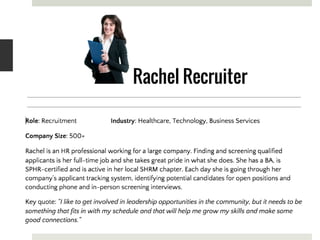
 Broad Description—Industry, Role in Company
 Key Quotes
 Unique Goals, Problems and “Hot Buttons”
 Hesitations and Objections
 Best ways to engage
 How do these ideal customers find you?
 What keeps them coming back?
 What do they look for in a partnership?
Rachel Recruiter
Ideally. . .
 Done with WIB/CareerLink staff as an OVERALL strategy.
 Shared with everyone.
 Reviewed/revised on ongoing basis:
 Same customers?
 Where are the new markets?
Who are your “Ideal Partners?”
 Customer Profile+
 Why do they partner with you? Why do you partner with
them?
 What are the win/wins—especially from their
perspective?
Customer Offers
Where Can We Bring Value?
The Offer Has to MATTER to Them!
Information
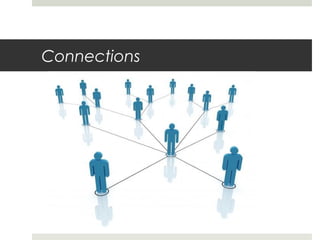
Connections
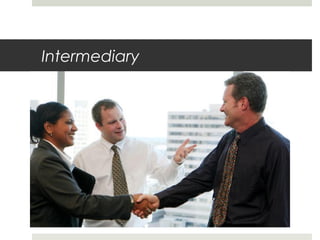
Intermediary
Convener
From Hero to Host
How do we deliver value in these
areas to deepen partnerships?
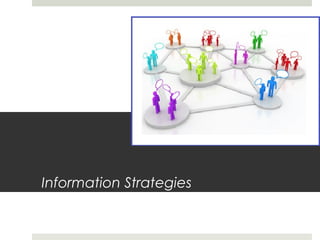
Information Strategies
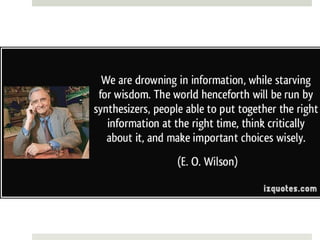
We have lots of data. But does it
really inform? And is it the
information that helps business
partners make more informed
decisions about their businesses?
What makes information useful?
 Relevant to key challenges, problems and aspirations
 Timely, accurate and reflects “real-life” conditions.
 Assists in thinking through an issue and/or making
decisions
 Piques curiosity and learning
 Provides insight
 Provided in preferred format(s) and according to stage
of engagement
Some Examples
 “Link Round-Ups”
 Targeted e-newsletters
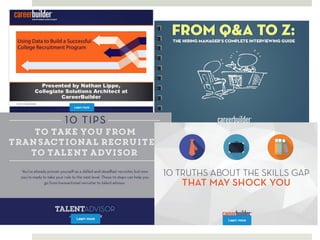
 E-guides
 Infographics
 Webinars
 Podcasts/v-casts
 Social media
At Your Table
 How does the information you provide help a business
customer:
 Solve a problem or challenge?
 Achieve their aspirations (personally and professionally)?
 Develop insight into their situations and into the future?
 Learn something new and relevant?
 Become more successful?
 How are you synthesizing and repackaging data to
provide insights to business?
 How are you ensuring that information is relevant, timely
useable, and in your customers’ preferred formats?
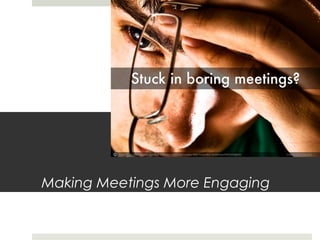
Making Meetings More Engaging
Should we have a meeting?
 Is there a need to share information?
 Does the information to be shared require
dialogue?
 Do we need to meet to make a decision?
Who Should Be There?
 Has information or knowledge to share
 Has decision-making authority
 Vital to the issue at hand
If They Aren’t Attending. . .
 This is feedback!!
 What do they need to make meetings
something they WANT to attend?
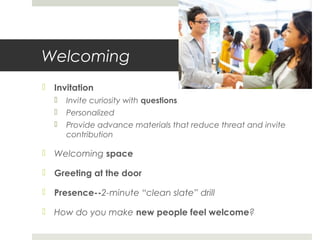
Welcoming
 Invitation
 Invite curiosity with questions
 Personalized
 Provide advance materials that reduce threat and invite
contribution
 Welcoming space
 Greeting at the door
 Presence--2-minute “clean slate” drill
 How do you make new people feel welcome?
Inviting Topics
 “We surveyed your needs and identified your top two
priorities. In this meeting, we want to explore what it
would mean for us to be “best in class” in these two
areas and identify the most important next steps we can
take to meet these expectations.”
 “In our region, businesses with 20 or fewer employees
make up 40% of business. In this meeting, we want to
explore the question: ‘What are your greatest challenges
to thriving as a business and how can we help you
address those challenges?’”
Connecting
 “Why did you say yes to this meeting?”
 “When it comes to the purpose of this meeting, what do
you care about and why?”
 “What question or concern do you bring to the meeting
that needs to be addressed?”
 What are your hopes/fears for this meeting?
 “What strengths or gifts do you bring to this meeting?”
Discovering
 Create shared view of reality and environment for
learning
 How do other people understand the situation?
 What’s the bird’s eye view? What’s the view on the ground?
 Make sense of that reality
 Neither flee from nor prematurely resolve that reality.
 Present info (<20 minutes) and then ask:
 What did you hear?
 What do you want to learn more about?
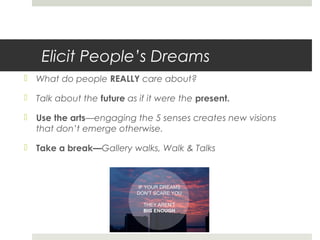
Elicit People’s Dreams
 What do people REALLY care about?
 Talk about the future as if it were the present.
 Use the arts—engaging the 5 senses creates new visions
that don’t emerge otherwise.
 Take a break—Gallery walks, Walk & Talks
Deciding
 Who will make the decision?
 How will the decision be made?
 What will be decided?
Attend to the End
 How you end creates the platform for the next stage.
 3-Part Ending
 Summarize discussion and decisions made
 Roadmap to what’s next
 Time to reflect on the meeting experience
Reflecting
 Did we do the work we needed to in this meeting?
 Was this time well-spent? If so, what worked? What
didn’t?
 What do we need to do to make sure that our next
meeting is time well-spent?
 Whom would you like to recognize for their contributions
to this meeting?
 What accomplishments would you like to celebrate?
Discussion
 What questions does this open up for you about
how you currently structure your meetings?
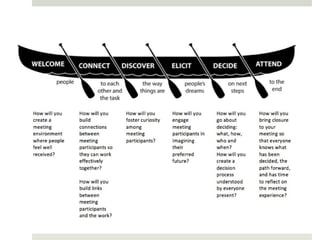
 How could you use the “meeting canoe” to
build relationships and deepen your
partnerships?
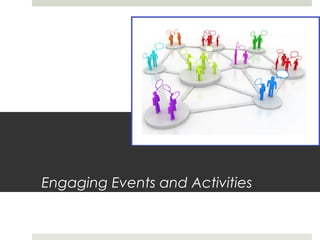
Engaging Events and Activities
Think about. . .
 How can we help people build their connections and
relationships?
 How can we help them develop insight and plan for the
future?
 How can we share learning?
 How can we enable collective action?
 How could we partner with business to offer these?
Asking More Powerful Questions
 What gives life to our partnerships?
 What would it look like if our region was thriving for
everyone?
 What areas of impact would bring the most positive
change to our community?
 How can we cultivate innovation in our community?
 How can we cultivate entrepreneurship in our
community?
 What trends are shaping our community and how can
we respond, rather than react?
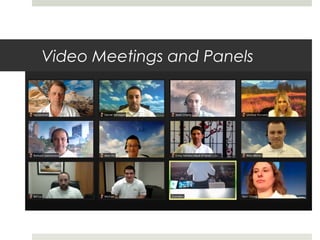
Video Meetings and Panels
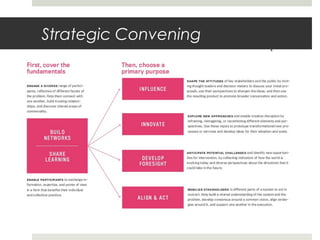
Strategic Convening
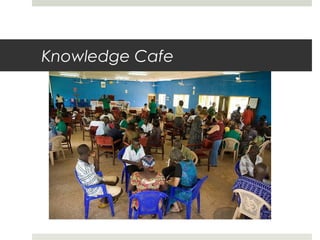
Knowledge Cafe
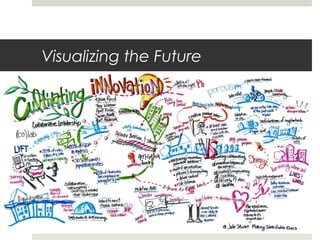
Visualizing the Future
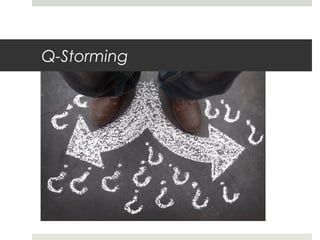
Q-Storming
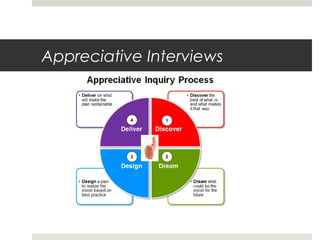
Appreciative Interviews
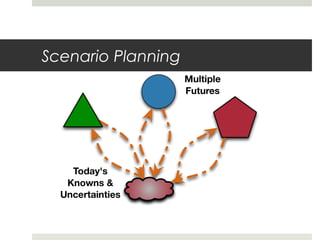
Scenario Planning
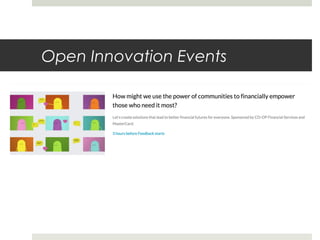
Open Innovation Events
Startup Weekend
At Your Tables
 Which of these event ideas intrigues you?
 How could you use these event ideas to
deepen relationships and build partnerships in
your area?
 How could you partner with business to offer
these events?
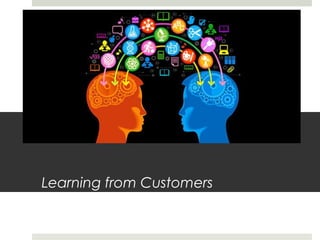
Learning from Customers
Strategic Business Intelligence
 Working with quantitative and
qualitative information to identify and
respond to customer needs/gaps, look
for new opportunities and operate more
effectively and efficiently.
How do we go deeper than
“customer satisfaction”?
Consultative Interviews
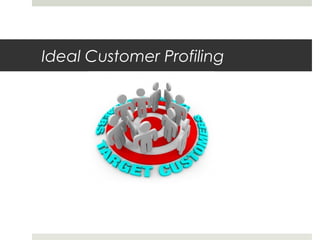
Ideal Customer Profiling
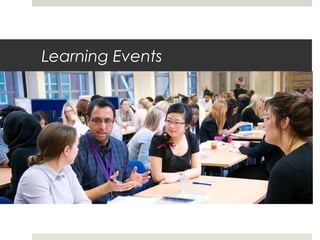
Learning Events
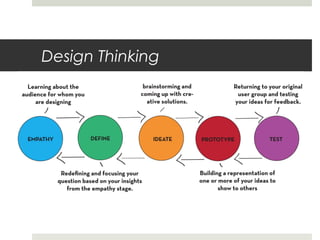
Design Thinking
Look for Surprises and Insights!
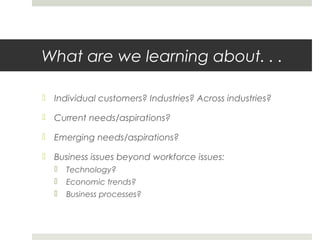
What are we learning about. . .
 Individual customers? Industries? Across industries?
 Current needs/aspirations?
 Emerging needs/aspirations?
 Business issues beyond workforce issues:
 Technology?
 Economic trends?
 Business processes?
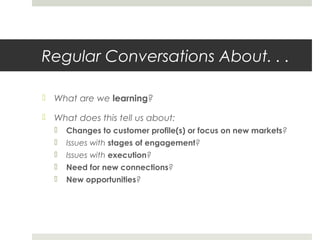
Regular Conversations About. . .
 What are we learning?
 What does this tell us about:
 Changes to customer profile(s) or focus on new markets?
 Issues with stages of engagement?
 Issues with execution?
 Need for new connections?
 New opportunities?
Share Information with. . .
 WIB/CareerLink staff
 Partners
 Customers!
 “Here’s what we’re learning from our customers”
 “This is what we’re hearing from healthcare providers”
 “We asked and you responded!”
Keys to Long-Term Partnerships
 Focus on deepening relationships, over time.
 Focus on “needfinding” and aspiration
identification--from customer perspective.
 Focus on providing ongoing value based on
customer needs and aspirations.
 Focus on ways to connect, deepen insights,
innovate and create alignment.
Skills We Need to Grow
 Content Curation and Sense-making
 Creative questioning
 Creative meeting facilitation
 Strategic convening
 Design Thinking
What Are Your Take Aways?
What is ONE thing you will do?

Engaging Business as Your Partner

  • 1.
    Engaging Business AsYour Partner Michele Martin, The Bamboo Project, Inc.
  • 2.
    Let’s Connect!  Name/Organization/Role “What made you say ‘yes’ to attending this session?”
  • 3.
    Michele Martin  5years HR/recruitment for 2 Fortune 500 companies  20 years in WFD  17 years as small business owner using consultative selling strategies
  • 4.
    Website  www.michelemmartin.com/consultative_selling  Username:pwda  Password: pawork  All slides and handouts  Follow-up resources/information for implementation
  • 5.
    Background/Context  Builds fromApril workshops on consultative/relationship selling  Recognize you’re already building partnerships.  Open a dialogue about how we can engage in more strategic, long-term relationship building to deepen partnerships.  **Think about how this info applies to building partnerships with others in the system.
  • 6.
    Agenda  What doesa “thriving partnership” with business look like?  Stages of Engagement—From “How do you do?” to “Let’s Partner!”  Ideal Partner Profiles  Offers and Engagement Strategies  Information  Meetings  Events  Customer Learning
  • 7.
  • 8.
    If you wantto build a long-term, successful enterprise, you can’t focus on “closing the sale.” You have to focus on opening the relationship.
  • 9.
  • 11.
  • 12.
    Help Them MakeGood Decisions
  • 13.
    Ask the RightQuestions
  • 14.
  • 16.
  • 17.
    At Your Table When you think of a “thriving partnership with business”—what does that look like?  How would your businesses describe it? (How do you know?)  What are the key characteristics of a thriving partnership?
  • 18.
    Stages of Engagement From“Who Are You?” to “I’ll Do Anything for You!”
  • 19.
    The Hourglass  Wayto look at entire customer experience.  Different messages, types of information and levels of contact for each stage.  We must be strategic for each phase.
  • 20.
  • 21.
    Phase 1: KNOW First impressions count!  How do customers find out about you? Are you capturing your leads so you can follow up?  How inviting/welcoming are your interactions, website, materials, etc.?
  • 22.
    Phase 2: LIKE Do you seem to “get” their issues, needs, etc.?  Do your interactions seem customized/personalized to their problems?  Have you overcome any initial negative perceptions they may have about working with a government agency?
  • 23.
    Phase 3: TRUST Just because they like you doesn’t mean they TRUST you!  Are you knowledgeable and credible?  Do you ask questions that make them think and that help them develop insights?  Do you connect to their aspirations, as well as their challenges?  Do you provide them with resources, information, connections, materials, etc. that add value—whether or not they are related to your services?
  • 24.
    Phase 4: TRY What could they “sample” to entice them to actually buy?  What can we do that minimizes their investments of time and/or their perceived risks?
  • 25.
    Phase 5:  Whenthey’re ready to participate—post on Job Gateway, participate in a Job Fair, work on a recruitment event, work on a committee, etc.  Expectations are everything! What expectations are you setting? What are their expectations?  How are you DELIVERING on your promises and DELIGHTING customers with the experience?  Every aspect of the process will influence their opinion— can either move you forward or 3 steps back.
  • 26.
    Phase 6: REPEAT Use the same services?  Use new services (cross-selling)?  Engage in new activities?  How are you engaging with customers to uncover new needs and respond?  How are you continuing to engage with them to connect to relevant resources, information and people—even when they aren’t currently “buying” from you?
  • 27.
    Phase 7: REFER How do you make it easy for them to advocate and refer?  How are you engaging them so well they are willing to invest time in planning/co-creating with you?
  • 28.
    Reflection  What opportunitiesdo you see in these phases for us to improve our partnerships with business?  How can we use these phases to think more strategically about our interactions and partnership-building with business?
  • 29.
    Ideal Customer Profiles WhoShould We Partner With?
  • 30.
    Some Key Elements Broad Description—Industry, Role in Company  Key Quotes  Unique Goals, Problems and “Hot Buttons”  Hesitations and Objections  Best ways to engage  How do these ideal customers find you?  What keeps them coming back?  What do they look for in a partnership?
  • 31.
  • 32.
    Ideally. . . Done with WIB/CareerLink staff as an OVERALL strategy.  Shared with everyone.  Reviewed/revised on ongoing basis:  Same customers?  Where are the new markets?
  • 33.
    Who are your“Ideal Partners?”  Customer Profile+  Why do they partner with you? Why do you partner with them?  What are the win/wins—especially from their perspective?
  • 34.
  • 35.
    The Offer Hasto MATTER to Them!
  • 36.
  • 37.
  • 38.
  • 39.
  • 40.
  • 41.
    How do wedeliver value in these areas to deepen partnerships?
  • 42.
  • 43.
    We have lotsof data. But does it really inform? And is it the information that helps business partners make more informed decisions about their businesses?
  • 45.
    What makes informationuseful?  Relevant to key challenges, problems and aspirations  Timely, accurate and reflects “real-life” conditions.  Assists in thinking through an issue and/or making decisions  Piques curiosity and learning  Provides insight  Provided in preferred format(s) and according to stage of engagement
  • 47.
    Some Examples  “LinkRound-Ups”  Targeted e-newsletters  E-guides  Infographics  Webinars  Podcasts/v-casts  Social media
  • 48.
    At Your Table How does the information you provide help a business customer:  Solve a problem or challenge?  Achieve their aspirations (personally and professionally)?  Develop insight into their situations and into the future?  Learn something new and relevant?  Become more successful?  How are you synthesizing and repackaging data to provide insights to business?  How are you ensuring that information is relevant, timely useable, and in your customers’ preferred formats?
  • 49.
  • 51.
    Should we havea meeting?  Is there a need to share information?  Does the information to be shared require dialogue?  Do we need to meet to make a decision?
  • 52.
    Who Should BeThere?  Has information or knowledge to share  Has decision-making authority  Vital to the issue at hand
  • 53.
    If They Aren’tAttending. . .  This is feedback!!  What do they need to make meetings something they WANT to attend?
  • 55.
    Welcoming  Invitation  Invitecuriosity with questions  Personalized  Provide advance materials that reduce threat and invite contribution  Welcoming space  Greeting at the door  Presence--2-minute “clean slate” drill  How do you make new people feel welcome?
  • 56.
    Inviting Topics  “Wesurveyed your needs and identified your top two priorities. In this meeting, we want to explore what it would mean for us to be “best in class” in these two areas and identify the most important next steps we can take to meet these expectations.”  “In our region, businesses with 20 or fewer employees make up 40% of business. In this meeting, we want to explore the question: ‘What are your greatest challenges to thriving as a business and how can we help you address those challenges?’”
  • 57.
    Connecting  “Why didyou say yes to this meeting?”  “When it comes to the purpose of this meeting, what do you care about and why?”  “What question or concern do you bring to the meeting that needs to be addressed?”  What are your hopes/fears for this meeting?  “What strengths or gifts do you bring to this meeting?”
  • 58.
    Discovering  Create sharedview of reality and environment for learning  How do other people understand the situation?  What’s the bird’s eye view? What’s the view on the ground?  Make sense of that reality  Neither flee from nor prematurely resolve that reality.  Present info (<20 minutes) and then ask:  What did you hear?  What do you want to learn more about?
  • 59.
    Elicit People’s Dreams What do people REALLY care about?  Talk about the future as if it were the present.  Use the arts—engaging the 5 senses creates new visions that don’t emerge otherwise.  Take a break—Gallery walks, Walk & Talks
  • 60.
    Deciding  Who willmake the decision?  How will the decision be made?  What will be decided?
  • 61.
    Attend to theEnd  How you end creates the platform for the next stage.  3-Part Ending  Summarize discussion and decisions made  Roadmap to what’s next  Time to reflect on the meeting experience
  • 62.
    Reflecting  Did wedo the work we needed to in this meeting?  Was this time well-spent? If so, what worked? What didn’t?  What do we need to do to make sure that our next meeting is time well-spent?  Whom would you like to recognize for their contributions to this meeting?  What accomplishments would you like to celebrate?
  • 63.
    Discussion  What questionsdoes this open up for you about how you currently structure your meetings?  How could you use the “meeting canoe” to build relationships and deepen your partnerships?
  • 64.
  • 65.
    Think about. ..  How can we help people build their connections and relationships?  How can we help them develop insight and plan for the future?  How can we share learning?  How can we enable collective action?  How could we partner with business to offer these?
  • 66.
    Asking More PowerfulQuestions  What gives life to our partnerships?  What would it look like if our region was thriving for everyone?  What areas of impact would bring the most positive change to our community?  How can we cultivate innovation in our community?  How can we cultivate entrepreneurship in our community?  What trends are shaping our community and how can we respond, rather than react?
  • 67.
  • 68.
  • 69.
  • 70.
  • 71.
  • 72.
  • 73.
  • 74.
  • 75.
  • 76.
    At Your Tables Which of these event ideas intrigues you?  How could you use these event ideas to deepen relationships and build partnerships in your area?  How could you partner with business to offer these events?
  • 77.
  • 78.
    Strategic Business Intelligence Working with quantitative and qualitative information to identify and respond to customer needs/gaps, look for new opportunities and operate more effectively and efficiently.
  • 79.
    How do wego deeper than “customer satisfaction”?
  • 80.
  • 81.
  • 82.
  • 83.
  • 84.
    Look for Surprisesand Insights!
  • 85.
    What are welearning about. . .  Individual customers? Industries? Across industries?  Current needs/aspirations?  Emerging needs/aspirations?  Business issues beyond workforce issues:  Technology?  Economic trends?  Business processes?
  • 86.
    Regular Conversations About.. .  What are we learning?  What does this tell us about:  Changes to customer profile(s) or focus on new markets?  Issues with stages of engagement?  Issues with execution?  Need for new connections?  New opportunities?
  • 87.
    Share Information with.. .  WIB/CareerLink staff  Partners  Customers!  “Here’s what we’re learning from our customers”  “This is what we’re hearing from healthcare providers”  “We asked and you responded!”
  • 88.
    Keys to Long-TermPartnerships  Focus on deepening relationships, over time.  Focus on “needfinding” and aspiration identification--from customer perspective.  Focus on providing ongoing value based on customer needs and aspirations.  Focus on ways to connect, deepen insights, innovate and create alignment.
  • 89.
    Skills We Needto Grow  Content Curation and Sense-making  Creative questioning  Creative meeting facilitation  Strategic convening  Design Thinking
  • 90.
    What Are YourTake Aways?
  • 91.
    What is ONEthing you will do?

Editor's Notes

  • #15 Want to be a trusted colleague, not an order taker, a service provider or a salesperson
  • #72 Questions open thinking while answers close it.