Building Resilient Employment Programs
Michele Martin, The Bamboo Project Inc.
Michele Martin
 President, The Bamboo
Project, Inc.
 Career Development
Facilitator Instructor
 Former HR Manager
 20 years of experience in
workforce & career
development
Goals
 Understand the reality of today’s economy
and job market
 Discuss basic strategies for supporting
employment
 Explore ideas for moving beyond the basics
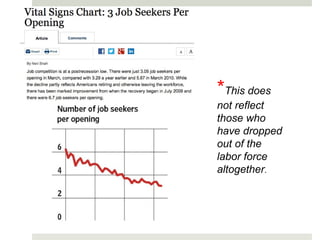
Job Market 2014
*This does
not reflect
those who
have dropped
out of the
labor force
altogether.
Promoting from Within
When there’s an opening, 42% of jobs are filled internally.
Less Pressure to Hire
Rise of Temp/Contract Workers
 30-40% of workers are
in “perma-temp” or
freelance/contract work.
 20% of job growth has
been in temp workers
Multiple
Hiring
Sources
45% of external hires come from referrals and applications received
through the company website.
Rapidly Evolving Requirements
Too Many Applicants
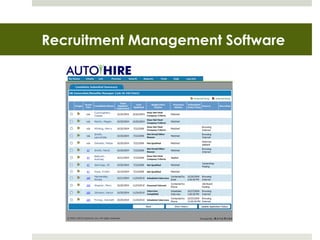
Recruitment Management Software
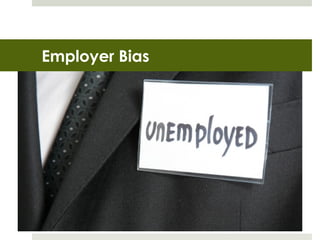
Employer Bias
Implications for Job Seekers
 Fewer jobs with more competition for those
jobs
 Greater “churn” and instability
 Changing nature of jobs
 Greater difficulty getting noticed
 Need to overcome biases
 Need to navigate confusing online systems
and multiple social networks
Implications for your customers?
Workforce 101
Educate yourselves about. . .
 Demand occupations and skill/education requirements
 Education and training resources
 Job search basics
 Local job search/employment resources
 Temp agencies
 Local employers, especially in occupations for which your
customers are qualified
With Job Seekers
 Make employment a goal and an ongoing conversation
 Connect to quality career/job search assessments, tools
and resources
 Help job seekers monitor job search progress and
troubleshoot problems/challenges
 Find and share job openings & networking opportunities
 As much as possible, facilitate the job seeker in developing
and implementing their own job search plan—do NOT act
as an intermediary with the employer if at all possible
If you work with employers. . .
 Know the skills, education, qualifications of your population
 Target employers who hire people with those qualifications
 Discuss what they look for in potential candidates
 Discuss recruitment/screening process
 Partner with other agencies/organizations to develop
interventions to prepare job seekers for those jobs
 Facilitate job seekers in accessing those jobs directly—direct
“job development” only as a last resort
 If you do direct job development, refer only qualified
applicants!
In developing interventions. . .
 Connect to career pathways/ladders, not dead-end jobs
 Develop/connect to career advancement/retention
strategies—from getting the job to keeping the job and
moving to new opportunities—especially for underemployed
 Connect to ongoing education/learning/skill-building
opportunities
 Avoid activating negative stereotypes—both job seeker and
employer!
 Teach them to fish!
What are you doing now?
What could you be doing?
Beyond the Basics. . .
Key Principles
 Need to both respond to and go beyond today’s economy
 Build individual resilience AND program/organizational
resilience
 Will need to stretch ourselves if we want to go beyond
helping people to merely survive
 Think “how could we make this work?” rather than “this will
NEVER work!”
 Think “DIT” rather than DIY—co-creation!
 Think “Experimental” and “perpetual beta”
How do we combat. . .
 Isolation and shame?
 Identity issues and stereotype threat?
 Scarcity thinking?
 Community bias and stereotypes?
People need. . .
 Positive sense of identity
 Sense of community/belonging
 Sense of “control” and empowerment
 Sense of purpose that’s larger than themselves
Little Experiments. . .
Use Positive Questions
 What do you want MORE of in your life? How can you get it?
 What are the very best things about you—your strengths and
assets? How can you use those in moving forward?
 Think of a similar situation you’ve handled well. What made it a
success and how can you use that now?
 Let’s list all your assets and resources. How can we use those
in your situation right now?
 What steps could you take, no matter how small, that would
bring you closer to what you want?
 Who handles this situation well that you could emulate?
Power Posing
Small Wins Journals
Vision Boards
Bigger Experiments. . .
From Case Manager to Coach
 Move from hero to host.
 Help clarify assets, strengths, resources—what we focus on
grows!
 Facilitate decision-making through positive questions
 Provide structure, tools for action and accountability
 Facilitate the ActReflectAct cycle
 Help people develop learning/growth mindset.
G.R.O.W Coaching Model
 Goal—What do you want?
 Reality—What is happening now?
 Options—What could you do?
 Will—What will you do?
Mastermind Groups
 Purpose: Provide ongoing accountability, ideas, support,
resources, trouble-shooting, learning.
 Facilitated and co-created by members.
 Staff provide structure, support, ideas
 Focus is on:
 Goals for the week
 Progress
 Troubleshooting
 Just-in-time learning
Benefits of Group Coaching
 Increased probability of achieving goals
 Distribution of obstacles
 Collective wisdom and multiple perspectives
 Resource sharing
 Diffusion of stress
 Accelerated motivation
 Support & challenge
Engage Customers as Co-Creators
“Giving Circles”
Purpose Workshops
What do you want your life to be about?
What are your unique gifts and talents
and how can you use them in the world?
Microenterprise/Entrepreneurship
 Builds economic, personal and social capital
 Most reliable route to self-sufficiency when properly supported
 Think “multiple income streams” rather than “find a job”
Community Experiments. . .
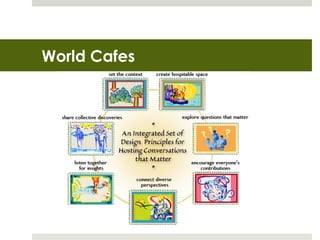
World Cafes
Power to the Pop-Up
Crowdsourcing
 Hackathons
 Open Innovation Challenges
Starts with a BIG question. . . How might we. . . ?
What will you do next?
www.bambooprojectinc.com
www.bambooprojectinc.wikispaces.com
www.michelemmartin.com
www.michelemmartin.com/wfd
Michele Martin
610-248-6230
michelemmartin@gmail.com

Building Resilient Employment Programs

  • 1.
    Building Resilient EmploymentPrograms Michele Martin, The Bamboo Project Inc.
  • 2.
    Michele Martin  President,The Bamboo Project, Inc.  Career Development Facilitator Instructor  Former HR Manager  20 years of experience in workforce & career development
  • 3.
    Goals  Understand thereality of today’s economy and job market  Discuss basic strategies for supporting employment  Explore ideas for moving beyond the basics
  • 4.
  • 5.
    *This does not reflect thosewho have dropped out of the labor force altogether.
  • 6.
    Promoting from Within Whenthere’s an opening, 42% of jobs are filled internally.
  • 7.
  • 8.
    Rise of Temp/ContractWorkers  30-40% of workers are in “perma-temp” or freelance/contract work.  20% of job growth has been in temp workers
  • 10.
    Multiple Hiring Sources 45% of externalhires come from referrals and applications received through the company website.
  • 12.
  • 13.
  • 14.
  • 15.
  • 16.
    Implications for JobSeekers  Fewer jobs with more competition for those jobs  Greater “churn” and instability  Changing nature of jobs  Greater difficulty getting noticed  Need to overcome biases  Need to navigate confusing online systems and multiple social networks
  • 17.
  • 18.
  • 19.
    Educate yourselves about.. .  Demand occupations and skill/education requirements  Education and training resources  Job search basics  Local job search/employment resources  Temp agencies  Local employers, especially in occupations for which your customers are qualified
  • 20.
    With Job Seekers Make employment a goal and an ongoing conversation  Connect to quality career/job search assessments, tools and resources  Help job seekers monitor job search progress and troubleshoot problems/challenges  Find and share job openings & networking opportunities  As much as possible, facilitate the job seeker in developing and implementing their own job search plan—do NOT act as an intermediary with the employer if at all possible
  • 21.
    If you workwith employers. . .  Know the skills, education, qualifications of your population  Target employers who hire people with those qualifications  Discuss what they look for in potential candidates  Discuss recruitment/screening process  Partner with other agencies/organizations to develop interventions to prepare job seekers for those jobs  Facilitate job seekers in accessing those jobs directly—direct “job development” only as a last resort  If you do direct job development, refer only qualified applicants!
  • 22.
    In developing interventions.. .  Connect to career pathways/ladders, not dead-end jobs  Develop/connect to career advancement/retention strategies—from getting the job to keeping the job and moving to new opportunities—especially for underemployed  Connect to ongoing education/learning/skill-building opportunities  Avoid activating negative stereotypes—both job seeker and employer!  Teach them to fish!
  • 23.
    What are youdoing now? What could you be doing?
  • 24.
  • 25.
    Key Principles  Needto both respond to and go beyond today’s economy  Build individual resilience AND program/organizational resilience  Will need to stretch ourselves if we want to go beyond helping people to merely survive  Think “how could we make this work?” rather than “this will NEVER work!”  Think “DIT” rather than DIY—co-creation!  Think “Experimental” and “perpetual beta”
  • 26.
    How do wecombat. . .  Isolation and shame?  Identity issues and stereotype threat?  Scarcity thinking?  Community bias and stereotypes?
  • 27.
    People need. ..  Positive sense of identity  Sense of community/belonging  Sense of “control” and empowerment  Sense of purpose that’s larger than themselves
  • 28.
  • 29.
    Use Positive Questions What do you want MORE of in your life? How can you get it?  What are the very best things about you—your strengths and assets? How can you use those in moving forward?  Think of a similar situation you’ve handled well. What made it a success and how can you use that now?  Let’s list all your assets and resources. How can we use those in your situation right now?  What steps could you take, no matter how small, that would bring you closer to what you want?  Who handles this situation well that you could emulate?
  • 30.
  • 31.
  • 32.
  • 33.
  • 34.
    From Case Managerto Coach  Move from hero to host.  Help clarify assets, strengths, resources—what we focus on grows!  Facilitate decision-making through positive questions  Provide structure, tools for action and accountability  Facilitate the ActReflectAct cycle  Help people develop learning/growth mindset.
  • 35.
    G.R.O.W Coaching Model Goal—What do you want?  Reality—What is happening now?  Options—What could you do?  Will—What will you do?
  • 36.
    Mastermind Groups  Purpose:Provide ongoing accountability, ideas, support, resources, trouble-shooting, learning.  Facilitated and co-created by members.  Staff provide structure, support, ideas  Focus is on:  Goals for the week  Progress  Troubleshooting  Just-in-time learning
  • 37.
    Benefits of GroupCoaching  Increased probability of achieving goals  Distribution of obstacles  Collective wisdom and multiple perspectives  Resource sharing  Diffusion of stress  Accelerated motivation  Support & challenge
  • 38.
  • 39.
  • 40.
    Purpose Workshops What doyou want your life to be about? What are your unique gifts and talents and how can you use them in the world?
  • 41.
  • 42.
     Builds economic,personal and social capital  Most reliable route to self-sufficiency when properly supported  Think “multiple income streams” rather than “find a job”
  • 43.
  • 44.
  • 45.
  • 46.
  • 49.
    Starts with aBIG question. . . How might we. . . ?
  • 50.
    What will youdo next? www.bambooprojectinc.com www.bambooprojectinc.wikispaces.com www.michelemmartin.com www.michelemmartin.com/wfd Michele Martin 610-248-6230 michelemmartin@gmail.com

Editor's Notes

  • #8 Fewer job openings plus highly qualified applicants begging for jobs. Plus, in many cases, they have current employees who are afraid of losing their jobs pick up the slack.