Agenda

1. Introduction
2. Presentation
3. Discussion
BIA Presentation | 2012-07-11
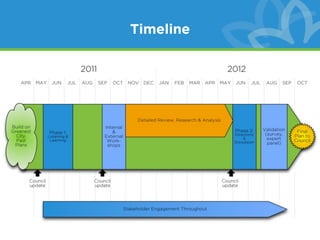
Timeline
GOALS & CONTEXT
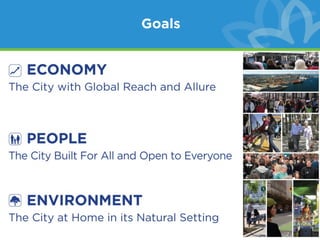
Goals
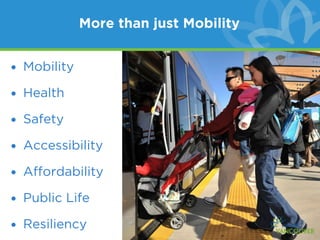
More than just Mobility


• Mobility

• Health

• Safety

• Accessibility

• Affordability

• Public Life

• Resiliency
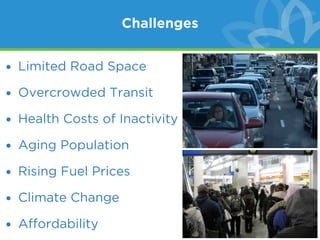
Challenges


• Limited Road Space

• Overcrowded Transit

• Health Costs of Inactivity

• Aging Population

• Rising Fuel Prices

• Climate Change

• Affordability
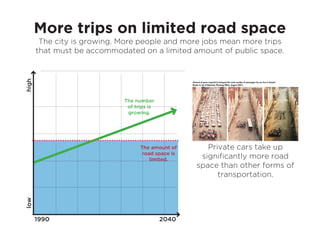
More trips on limited road space
        The city is growing. More people and more jobs mean more trips
       that must be accommodated on a limited amount of public space.
high


                             The number
                              of trips is
                              growing.


                                   The amount of      Private cars take up
                                    road space is
                                       limited.
                                                    space than other forms of
                                                         transportation.
low


       1990                                 2040
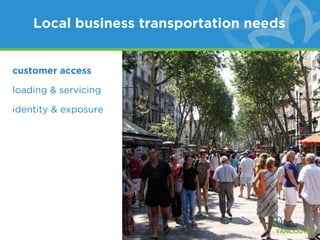
Local business transportation needs


customer access

loading & servicing

identity & exposure
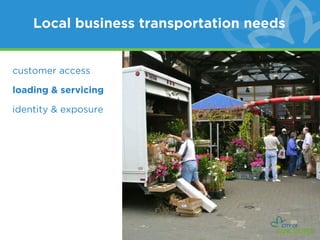
Local business transportation needs


customer access

loading & servicing

identity & exposure
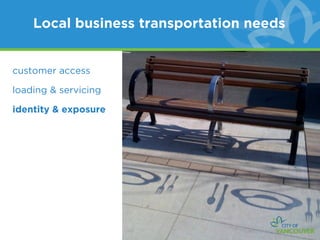
Local business transportation needs


customer access

loading & servicing

identity & exposure
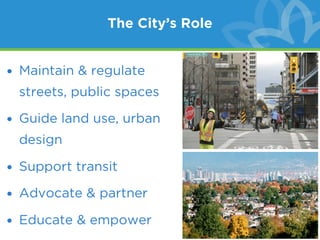
The City’s Role


• Maintain & regulate
 streets, public spaces

• Guide land use, urban
 design

• Support transit

• Advocate & partner

• Educate & empower
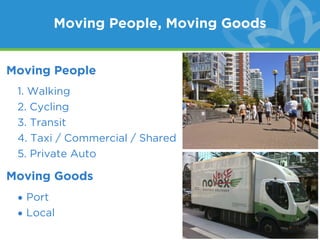
Moving People, Moving Goods


Moving People
 1. Walking
 2. Cycling
 3. Transit
 4. Taxi / Commercial / Shared
 5. Private Auto

Moving Goods
 • Port
 • Local
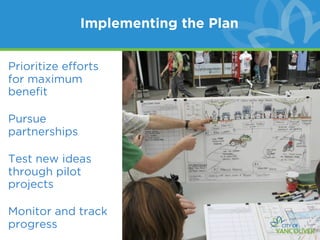
Implementing the Plan


Prioritize efforts
for maximum
benefit

Pursue
partnerships

Test new ideas
through pilot
projects

Monitor and track
progress
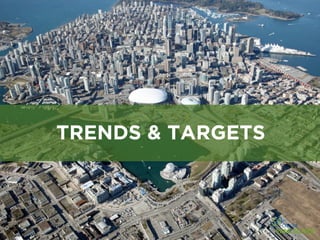
TRENDS & TARGETS
New Targets & Indicators


            Build on Greenest City
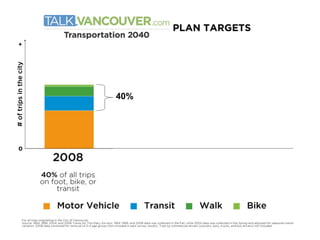
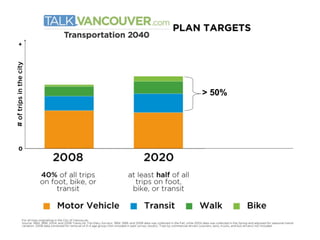
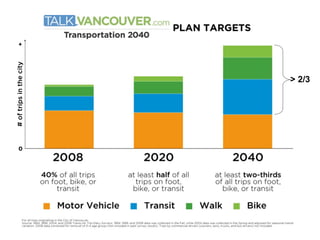
             • Make the majority of trips
               on foot, bike, and transit

             • Eliminate dependence on
               fossil fuels

             • Breathe the cleanest air of
               any major city in the world
            Set new targets for 2040
            Identify indicators to track
            progress
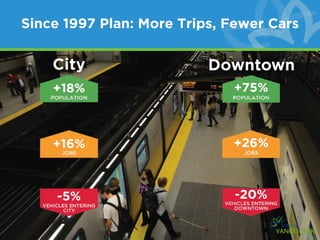
Since 1997 Plan: More Trips, Fewer Cars
+


0
    # of trips in the city


            40%
+


0
    # of trips in the city


             > 50%
+


0
    # of trips in the city


                  > 2/3
Directions on Specific Topics


             Land Use

             Goods & Services

             Walking & Public Space

             Cycling

             Transit

             Motor Vehicles
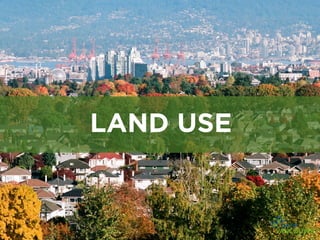
LAND USE
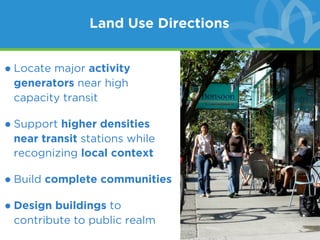
Land Use Directions


• Locate major activity
 generators near high
 capacity transit

• Support higher densities
 near transit stations while
 recognizing local context

• Build complete communities
• Design buildings to
 contribute to public realm
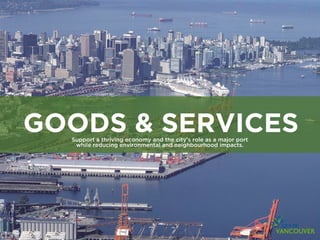
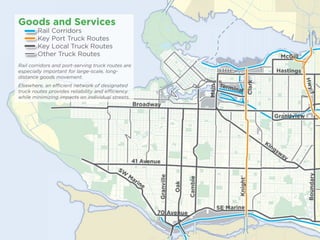
GOODS & SERVICES
                        Support a thriving economy and the city’s role as a major port
                         while reducing environmental and neighbourhood impacts.
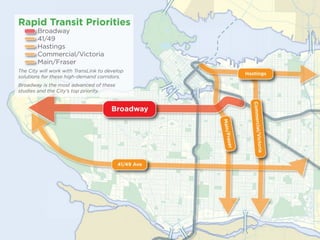


Photo: Don McKillican
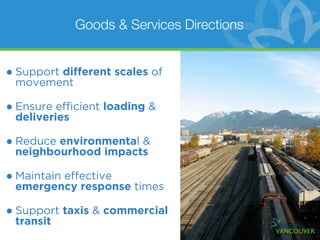
Goods & Services Directions


• Support different scales of
 movement

• Ensure efficient loading &
 deliveries

• Reduce environmental &
 neighbourhood impacts

• Maintain effective
 emergency response times

• Support taxis & commercial
 transit
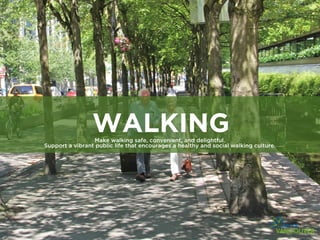
WALKING
                 Make walking safe, convenient, and delightful.
Support a vibrant public life that encourages a healthy and social walking culture.
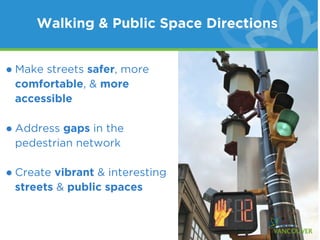
Walking & Public Space Directions


• Make streets safer, more
 comfortable, & more
 accessible

• Address gaps in the
 pedestrian network

• Create vibrant & interesting
 streets & public spaces
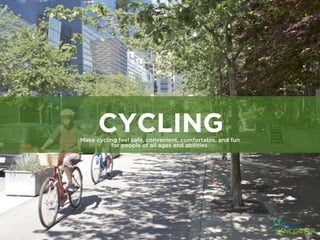
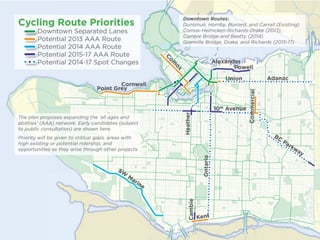
CYCLING
Make cycling feel safe, convenient, comfortable, and fun
          for people of all ages and abilities.
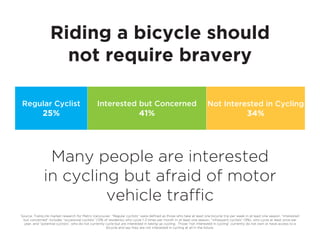
Riding a bicycle should
         not require bravery

Regular Cyclist   Interested but Concerned   Not Interested in Cycling
     25%                    41%                        34%
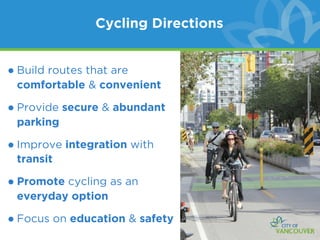
Cycling Directions


• Build routes that are
 comfortable & convenient

• Provide secure & abundant
 parking

• Improve integration with
 transit

• Promote cycling as an
 everyday option

• Focus on education & safety
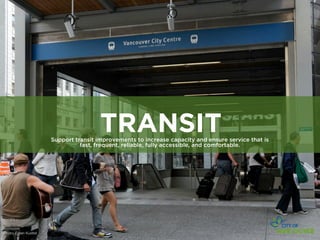
TRANSIT
                        Support transit improvements to increase capacity and ensure service that is
                                  fast, frequent, reliable, fully accessible, and comfortable.


Photo: Eileen Kuettel
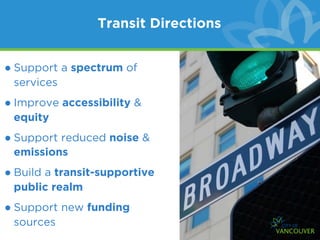
Transit Directions


• Support a spectrum of
 services

• Improve accessibility &
 equity

• Support reduced noise &
 emissions

• Build a transit-supportive
 public realm

• Support new funding
 sources
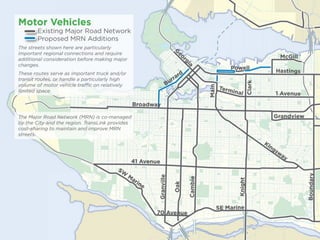
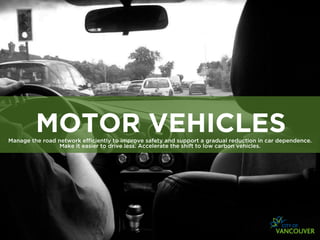
MOTOR VEHICLES
Manage the road network efficiently to improve safety and support a gradual reduction in car dependence.
                 Make it easier to drive less. Accelerate the shift to low carbon vehicles.
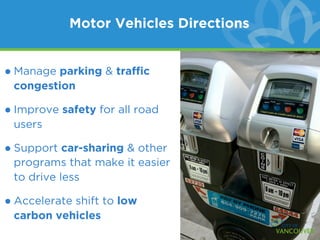
Motor Vehicles Directions


• Manage parking & traffic
 congestion

• Improve safety for all road
 users

• Support car-sharing & other
 programs that make it easier
 to drive less

• Accelerate shift to low
 carbon vehicles
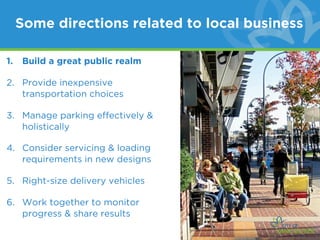
Some directions related to local business

1.   Build a great public realm

2. Provide inexpensive
   transportation choices

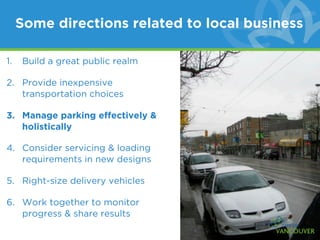
3. Manage parking effectively &
   holistically

4. Consider servicing & loading
   requirements in new designs

5. Right-size delivery vehicles

6. Work together to monitor
   progress & share results
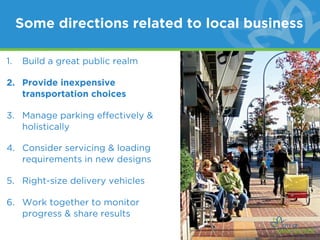
Some directions related to local business

1.   Build a great public realm

2. Provide inexpensive
   transportation choices

3. Manage parking effectively &
   holistically

4. Consider servicing & loading
   requirements in new designs

5. Right-size delivery vehicles

6. Work together to monitor
   progress & share results
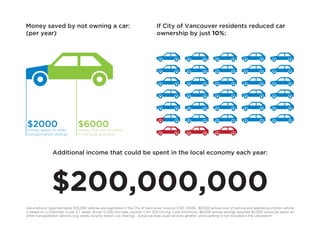
Money saved by not owning a car:                                               If City of Vancouver residents reduced car
(per year)                                                                     ownership by just 10%:


$2000other
money spent on
                               $6000be spent
                               money that can
transportation choices         in the local economy


                Additional income that could be spent in the local economy each year:


               $200,000,000
Assumptions: Approximately 330,000 vehicles are registered in the City of Vancouver (source: ICBC, 2009). $8,000 annual cost of owning and operating a motor vehicle
is based on a Chevrolet Cruze 1LT sedan driven 12,000 km/year (source: CAA 2011 Driving Costs brochure). $6,000 annual savings assumes $2,000 would be spent on
other transportation options (e.g. shoes, bicycle, transit, car-sharing). Actual savings could be even greater, since parking is not included in the calculation!
Some directions related to local business

1.   Build a great public realm

2. Provide inexpensive
   transportation choices

3. Manage parking effectively &
   holistically

4. Consider servicing & loading
   requirements in new designs

5. Right-size delivery vehicles

6. Work together to monitor
   progress & share results
Some directions related to local business

1.   Build a great public realm

2. Make it easier to drive less

3. Manage parking effectively &
   holistically

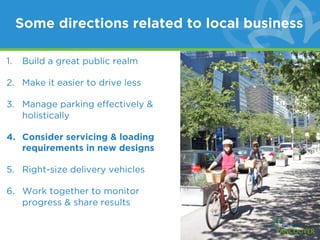
4. Consider servicing & loading
   requirements in new designs

5. Right-size delivery vehicles

6. Work together to monitor
   progress & share results
Some directions related to local business

1.   Build a great public realm

2. Provide inexpensive
   transportation choices

3. Manage parking effectively &
   holistically

4. Consider servicing & loading
   requirements in new designs

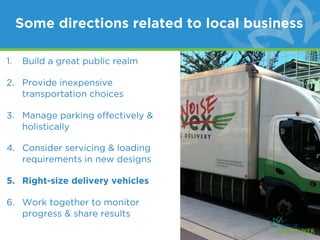
5. Right-size delivery vehicles

6. Work together to monitor
   progress & share results
Some directions related to local business

1.   Build a great public realm

2. Provide inexpensive
   transportation choices

3. Manage parking effectively &
   holistically

4. Consider servicing & loading
   requirements in new designs

5. Right-size delivery vehicles

6. Work together to monitor
   progress & share results
Questions/Discussion

Transportation 2040 Presentation for BIAs July 11 2012

  • 1.
  • 2.
  • 3.
  • 4.
  • 5.
  • 6.
    More than justMobility • Mobility • Health • Safety • Accessibility • Affordability • Public Life • Resiliency
  • 7.
    Challenges • Limited RoadSpace • Overcrowded Transit • Health Costs of Inactivity • Aging Population • Rising Fuel Prices • Climate Change • Affordability
  • 8.
    More trips onlimited road space The city is growing. More people and more jobs mean more trips that must be accommodated on a limited amount of public space. high The number of trips is growing. The amount of Private cars take up road space is limited. space than other forms of transportation. low 1990 2040
  • 9.
    Local business transportationneeds customer access loading & servicing identity & exposure
  • 10.
    Local business transportationneeds customer access loading & servicing identity & exposure
  • 11.
    Local business transportationneeds customer access loading & servicing identity & exposure
  • 12.
    The City’s Role •Maintain & regulate streets, public spaces • Guide land use, urban design • Support transit • Advocate & partner • Educate & empower
  • 13.
    Moving People, MovingGoods Moving People 1. Walking 2. Cycling 3. Transit 4. Taxi / Commercial / Shared 5. Private Auto Moving Goods • Port • Local
  • 14.
    Implementing the Plan Prioritizeefforts for maximum benefit Pursue partnerships Test new ideas through pilot projects Monitor and track progress
  • 15.
  • 16.
    New Targets &Indicators Build on Greenest City • Make the majority of trips on foot, bike, and transit • Eliminate dependence on fossil fuels • Breathe the cleanest air of any major city in the world Set new targets for 2040 Identify indicators to track progress
  • 17.
    Since 1997 Plan:More Trips, Fewer Cars
  • 18.
    + 0 # of trips in the city 40%
  • 19.
    + 0 # of trips in the city > 50%
  • 20.
    + 0 # of trips in the city > 2/3
  • 21.
    Directions on SpecificTopics Land Use Goods & Services Walking & Public Space Cycling Transit Motor Vehicles
  • 22.
  • 23.
    Land Use Directions •Locate major activity generators near high capacity transit • Support higher densities near transit stations while recognizing local context • Build complete communities • Design buildings to contribute to public realm
  • 24.
    GOODS & SERVICES Support a thriving economy and the city’s role as a major port while reducing environmental and neighbourhood impacts. Photo: Don McKillican
  • 25.
    Goods & ServicesDirections • Support different scales of movement • Ensure efficient loading & deliveries • Reduce environmental & neighbourhood impacts • Maintain effective emergency response times • Support taxis & commercial transit
  • 27.
    WALKING Make walking safe, convenient, and delightful. Support a vibrant public life that encourages a healthy and social walking culture.
  • 28.
    Walking & PublicSpace Directions • Make streets safer, more comfortable, & more accessible • Address gaps in the pedestrian network • Create vibrant & interesting streets & public spaces
  • 31.
    CYCLING Make cycling feelsafe, convenient, comfortable, and fun for people of all ages and abilities.
  • 32.
    Riding a bicycleshould not require bravery Regular Cyclist Interested but Concerned Not Interested in Cycling 25% 41% 34%
  • 33.
    Cycling Directions • Buildroutes that are comfortable & convenient • Provide secure & abundant parking • Improve integration with transit • Promote cycling as an everyday option • Focus on education & safety
  • 35.
    TRANSIT Support transit improvements to increase capacity and ensure service that is fast, frequent, reliable, fully accessible, and comfortable. Photo: Eileen Kuettel
  • 36.
    Transit Directions • Supporta spectrum of services • Improve accessibility & equity • Support reduced noise & emissions • Build a transit-supportive public realm • Support new funding sources
  • 38.
    MOTOR VEHICLES Manage theroad network efficiently to improve safety and support a gradual reduction in car dependence. Make it easier to drive less. Accelerate the shift to low carbon vehicles.
  • 39.
    Motor Vehicles Directions •Manage parking & traffic congestion • Improve safety for all road users • Support car-sharing & other programs that make it easier to drive less • Accelerate shift to low carbon vehicles
  • 41.
    Some directions relatedto local business 1. Build a great public realm 2. Provide inexpensive transportation choices 3. Manage parking effectively & holistically 4. Consider servicing & loading requirements in new designs 5. Right-size delivery vehicles 6. Work together to monitor progress & share results
  • 42.
    Some directions relatedto local business 1. Build a great public realm 2. Provide inexpensive transportation choices 3. Manage parking effectively & holistically 4. Consider servicing & loading requirements in new designs 5. Right-size delivery vehicles 6. Work together to monitor progress & share results
  • 43.
    Money saved bynot owning a car: If City of Vancouver residents reduced car (per year) ownership by just 10%: $2000other money spent on $6000be spent money that can transportation choices in the local economy Additional income that could be spent in the local economy each year: $200,000,000 Assumptions: Approximately 330,000 vehicles are registered in the City of Vancouver (source: ICBC, 2009). $8,000 annual cost of owning and operating a motor vehicle is based on a Chevrolet Cruze 1LT sedan driven 12,000 km/year (source: CAA 2011 Driving Costs brochure). $6,000 annual savings assumes $2,000 would be spent on other transportation options (e.g. shoes, bicycle, transit, car-sharing). Actual savings could be even greater, since parking is not included in the calculation!
  • 44.
    Some directions relatedto local business 1. Build a great public realm 2. Provide inexpensive transportation choices 3. Manage parking effectively & holistically 4. Consider servicing & loading requirements in new designs 5. Right-size delivery vehicles 6. Work together to monitor progress & share results
  • 45.
    Some directions relatedto local business 1. Build a great public realm 2. Make it easier to drive less 3. Manage parking effectively & holistically 4. Consider servicing & loading requirements in new designs 5. Right-size delivery vehicles 6. Work together to monitor progress & share results
  • 46.
    Some directions relatedto local business 1. Build a great public realm 2. Provide inexpensive transportation choices 3. Manage parking effectively & holistically 4. Consider servicing & loading requirements in new designs 5. Right-size delivery vehicles 6. Work together to monitor progress & share results
  • 47.
    Some directions relatedto local business 1. Build a great public realm 2. Provide inexpensive transportation choices 3. Manage parking effectively & holistically 4. Consider servicing & loading requirements in new designs 5. Right-size delivery vehicles 6. Work together to monitor progress & share results
  • 48.