Presented By.
Dr. Md Razi Ahmad MD
Assistant Professor Dept. of Niswa-wa-Qabalat
GTCH, Patna.
Presence of active functioning
endometrial implants outside its normal
place i.e uterine cavity
Incidence:20-25% in reproductive age
group
Implantation theory :
Sampson's pioneering work in 1922 attributed endometriosis
to reflux of menstrual endometrium through the fallopian tubes. Occurrence of
scar endometriosis following classical caesarean section, hysterotomy, myomectomy
and episiotomy further supports this view.
Coelomic metaplasia theory :
Meyer and Ivanoff (1919) propounded that endometriosis arises as a result of
metaplastic changes in embryonic cell rests of embryonic mesothelium.
Hormonal stimulation of Embryologically similar tissues to the Mullerian
ducts.
Metastatic theory :
Suggested by Halban et al. (1924) that embolization of menstrual fragments
through vascular or lymphatic channels, explain its occurrence at less accessible
sites like the umbilicus, pelvic lymph nodes, ureter, rectovaginal septum, bowel
wall, and remote sites like the lung, pleura, endocardium and the extremities.
Hormonal influence :
The initial genesis of endometriosis, its further development depends on the
presence of hormones, mainly oestrogen. Pregnancy causes atrophy of
endometriosis through high progesterone level. Regression also follows
oophorectomy and irradiation. Endometriosis is rarely seen before puberty and
it regresses after menopause. Hormones with antioestrogenic activity also
suppress endometriosis and are used therapeutically.
Immunological factor :
The peritoneal fluid in endometriosis shows the presence of macrophages and
natural killer (NK) cells. Impaired T cell and NK cell activity and altered
immunology.
Other factors :
Genetic - familial tendency reported in 15% cases, multifactorial, vaginal or
cervical atresia which encourage retrograde spill.
Prostaglandins.
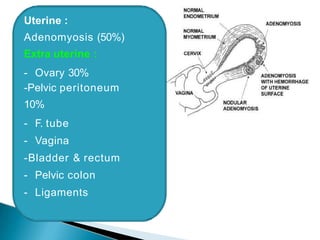
Uterine :
Adenomyosis (50%)
Extra uterine :
- Ovary 30%
-Pelvic peritoneum
10%
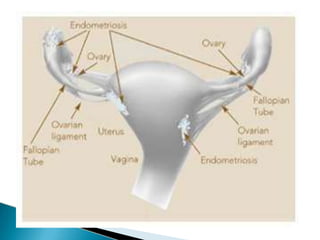
- F. tube
- Vagina
-Bladder & rectum
- Pelvic colon
- Ligaments
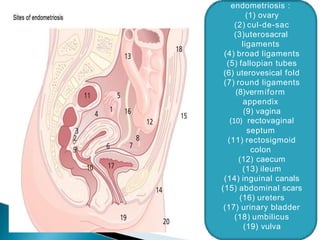
endometriosis :
(1) ovary
(2) cul-de-sac
(3)uterosacral
ligaments
(4) broad ligaments
(5) fallopian tubes
(6) uterovesical fold
(7) round ligaments
(8)vermiform
appendix
(9) vagina
(10) rectovaginal
septum
(11) rectosigmoid
colon
(12) caecum
(13) ileum
(14) inguinal canals
(15) abdominal scars
(16) ureters
(17) urinary bladder
(18) umbilicus
(19) vulva
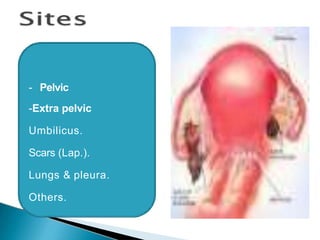
- Pelvic
-Extra pelvic
Umbilicus.
Scars (Lap.).
Lungs & pleura.
Others.
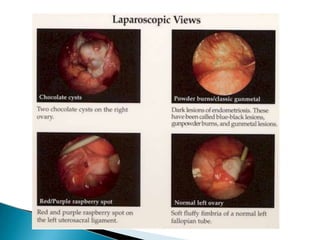
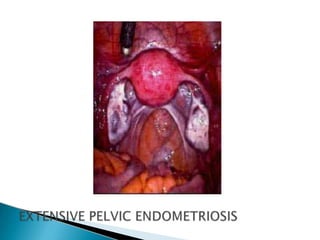
Early lesions appear papular and red vesicles are filled with
haemorrhagic fluid with surrounding flame-like lesions.
Over time, these vesicles change colour and endometriotic areas
appear as dark red, bluish or black cystic areas adherent to the site.
Scarring in the endometriosis makes it puckered. Atypical lesions
such as non-pigmented areas or yellowish-white thick plaques have
been noticed, which are healed lesions. Powder burnt areas are the
inactive and old lesions seen scattered over the pelvic peritoneum.
Chocolate cysts of the ovaries represent the most important
manifestation of endometriosis. To the naked eye, the chocolate cyst
shows obvious thickening of tunica albuginea, and vascular red
adhesions are well marked on the undersurface of the ovary. The
inner surface of the cyst wall is vascular and contains areas of dark
brown tissue. The chocolate cyst lies in the ovary and adherent to
lateral pelvic wall.
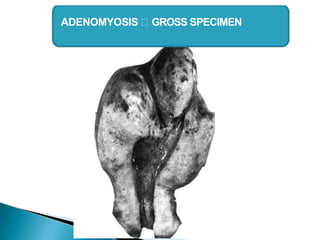
ADENOMYOSIS GROSS SPECIMEN
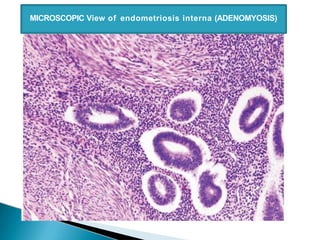
MICROSCOPIC View of endometriosis interna (ADENOMYOSIS)
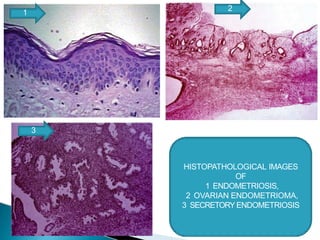
HISTOPATHOLOGICAL IMAGES
OF
1 ENDOMETRIOSIS,
2 OVARIAN ENDOMETRIOMA,
3 SECRETORYENDOMETRIOSIS
1
2
3
On History
Common symptoms :
Chronic pelvic pain, worsening dysmenorrhea,
acquired dyspareunia, infertility, premenstrual
spotting, dyschezia.
Risk factors :
First degree relative affected, short menstrual cycles,
long duration of menstrual flow, low parity,
infertility, fair complexioned, reproductive tract
obstructive anomalies. However tubectomised
Examination
On bimanual pelvic examination, fixed retroverted uterus,
bilateral pelvic tenderness, fixed or enlarged ovaries and painful
uterosacral nodularity.
Deeply infiltrating nodules are most reliably detected when
clinical examination is performed during menstruation.
Adenomyotic uterus is seldom > 12 weeks, soft, smooth & tender
in contrast to fibroid uterus. Isolated adenomyoma can be
differentiated by presence of localised tenderness
Investigations
Laparoscopy: Gold standard It should not be
performed within 3 months of hormonal
treatment to prevent under diagnosis
Ultrasound: Ultrasound has a limited role,
however the addition of colour doppler claims
to increase the sensitivity to 91.8%, specificity
of 91.3%
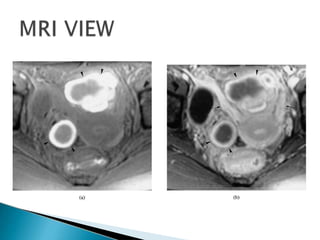
MRI –useful
Ca 125-Maybe elevated in severe
Histological Confirmation:
Visual inspection is usually adequate but histological
confirmation of at least one lesion is ideal.
In cases of ovarian endometrioma >3 cm in diameter
and in deeply infiltrating disease, histology is a must to
rule out malignancy.
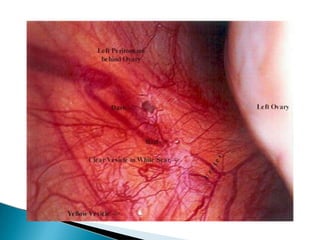
Laparoscopy:
(Sensitivity: 97%, Specificity 95%) Types of lesions
on laparoscopy: Powder burn or black lesions
White opacified peritoneum Glandular
excrescences Flame like red lesions
Peritoneal pockets or windows Clear vesicles Yellow brown
patches
Unexplained adherence of ovary to peritoneum of
ovarian fossa
Encysted collection of thick chocolate coloured or
tarry fluids
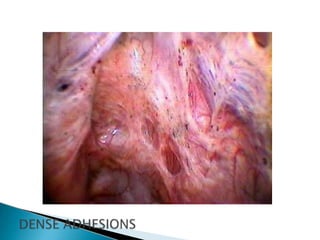
Adhesions to posterior lip of broad ligaments/other pelvic
structures
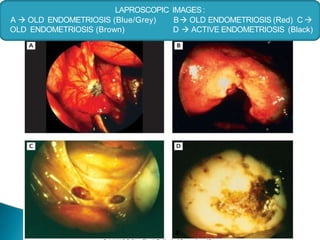
LAPROSCOPIC IMAGES:
A  OLD ENDOMETRIOSIS (Blue/Grey) B OLD ENDOMETRIOSIS (Red) C 
OLD ENDOMETRIOSIS (Brown) D  ACTIVE ENDOMETRIOSIS (Black)
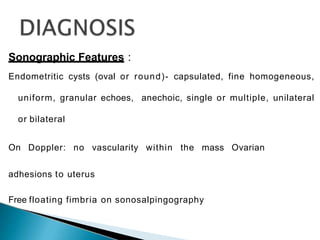
Sonographic Features :
Endometritic cysts (oval or round)- capsulated, fine homogeneous,
uniform, granular echoes, anechoic, single or multiple, unilateral
or bilateral
On Doppler: no vascularity within the mass Ovarian
adhesions to uterus
Free floating fimbria on sonosalpingography
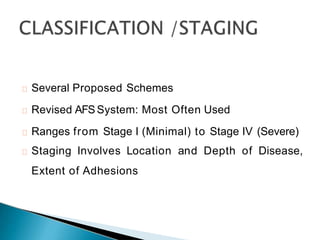
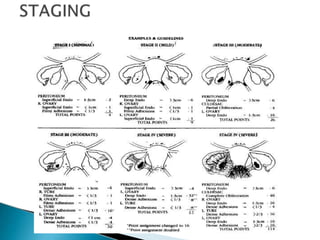
Several Proposed Schemes
Revised AFS System: Most Often Used
Ranges from Stage I (Minimal) to Stage IV (Severe)
Staging Involves Location and Depth of Disease,
Extent of Adhesions
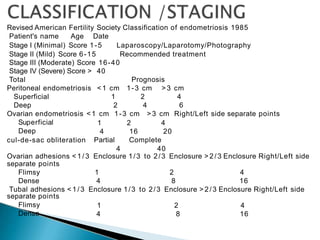
Revised American Fertility Society Classification of endometriosis 1985
Patient's name Age Date
Stage I (Minimal) Score 1-5 Laparoscopy/Laparotomy/Photography
Stage II (Mild) Score 6-15 Recommended treatment
Stage III (Moderate) Score 16-40
Stage IV (Severe) Score > 40
Total Prognosis
Peritoneal endometriosis <1 cm 1-3 cm >3 cm
Superficial 1 2 4
Deep 2 4 6
Ovarian endometriosis <1 cm 1-3 cm >3 cm Right/Left side separate points
Superficial
Deep
cul-de-sac obliteration
1 2 4
4 16 20
Partial Complete
4 40
Ovarian adhesions < 1/3 Enclosure 1/3 to 2/3 Enclosure > 2/3 Enclosure Right/Left side
separate points
Flimsy 1 2 4
Dense 4 8 16
Tubal adhesions < 1/3 Enclosure 1/3 to 2/3 Enclosure > 2/3 Enclosure Right/Left side
separate points
Flimsy
Dense
1
4
2
8
4
16
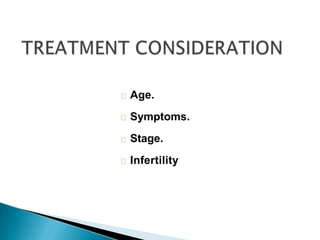
Age.
Symptoms.
Stage.
Infertility
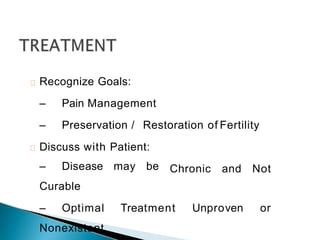
Recognize Goals:
– Pain Management
– Preservation / Restoration of Fertility
Discuss with Patient:
– Disease may be
Curable
Chronic and Not
– Optimal Treatment Unproven or
Nonexistent
Management of Endometriosis must be ‘tailor
made’ taking into account, patients profile,
presenting symptoms, impact of the disease and
effects of treatment on day to day life.
Empirical treatment of pain symptoms without
definitive diagnosis of endometriosis, a
therapeutic trial of hormonal drug to reduce
menstrual flow is appropriate.
Medical Therapy for endometriosis can be used
either as primary therapy or in conjunction with
surgery preoperatively or postoperatively-
Sandwich Therapy
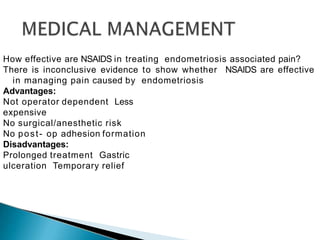
How effective are NSAIDS in treating endometriosis associated pain?
There is inconclusive evidence to show whether NSAIDS are effective
in managing pain caused by endometriosis
Advantages:
Not operator dependent Less
expensive
No surgical/anesthetic risk
No post- op adhesion formation
Disadvantages:
Prolonged treatment Gastric
ulceration Temporary relief
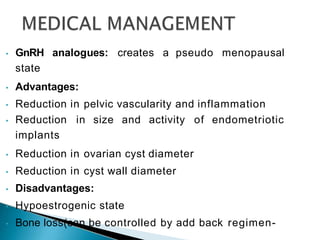
• GnRH analogues: creates a pseudo menopausal
state
• Advantages:
• Reduction in pelvic vascularity and inflammation
• Reduction in size and activity of endometriotic
implants
• Reduction in ovarian cyst diameter
• Reduction in cyst wall diameter
• Disadvantages:
• Hypoestrogenic state
• Bone loss(can be controlled by add back regimen-
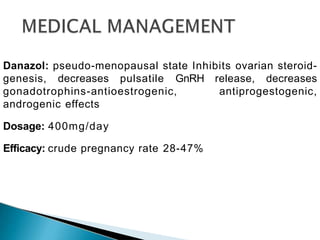
Danazol: pseudo-menopausal state Inhibits ovarian steroid-
genesis, decreases pulsatile GnRH release, decreases
gonadotrophins-antioestrogenic, antiprogestogenic,
androgenic effects
Dosage: 400mg/day
Efficacy: crude pregnancy rate 28-47%
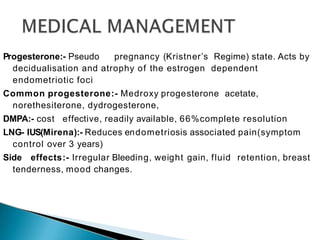
Progesterone:- Pseudo pregnancy (Kristner’s Regime) state. Acts by
decidualisation and atrophy of the estrogen dependent
endometriotic foci
Common progesterone:- Medroxy progesterone acetate,
norethesiterone, dydrogesterone,
DMPA:- cost effective, readily available, 66%complete resolution
LNG- IUS(Mirena):- Reduces endometriosis associated pain(symptom
control over 3 years)
Side effects:- Irregular Bleeding, weight gain, fluid retention, breast
tenderness, mood changes.
Gestrinone: Androgenic, progestogenic and antiestrogenic
Dosage: 1 - 2 5 - 2 - 5 m g biweekly
Side effects : similar to danazol
Combined OC Pills:
 To reduce the frequent prolonged bleeding not
recommended in infertile endometriotic women.
 However COCs are the only effective prophylaxis
in against endometriosis.
RU 486: antiprogestogenic activity with minimal or no
other endocrinologic effects
Aromatase Inhibitor: Acts on the diseased endometriotic
implants to decrease local oestrogen production-to
inhibit the growth of implants.
Interferons: combination with GnRH have resulted in
higher cumulative pregnancy rates and monthly
fecundity rates
SERMs: Selective antiestrogenic activity on the
endometrium, agonist activity on bones and
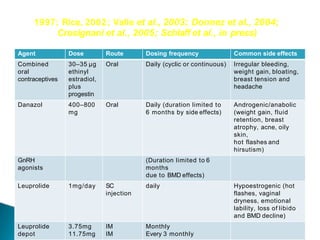
Agent Dose Route Dosing frequency Common side effects
Combined
oral
contraceptives
30–35 μg
ethinyl
estradiol,
plus
progestin
Oral Daily (cyclic or continuous) Irregular bleeding,
weight gain, bloating,
breast tension and
headache
Danazol 400–800
mg
Oral Daily (duration limited to
6 months by side effects)
Androgenic/anabolic
(weight gain, fluid
retention, breast
atrophy, acne, oily
skin,
hot flashes and
hirsutism)
GnRH
agonists
(Duration limited to 6
months
due to BMD effects)
Leuprolide 1mg/day SC
injection
daily Hypoestrogenic (hot
flashes, vaginal
dryness, emotional
lability, loss of libido
and BMD decline)
Leuprolide
depot
3.75mg
11.75mg
IM
IM
Monthly
Every 3 monthly
1997; Rice, 2002; Valle et al., 2003; Donnez et al., 2004;
Crosignani et al., 2005; Schlaff et al., in press)
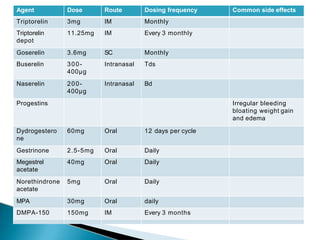
Agent Dose Route Dosing frequency Common side effects
Triptorelin 3mg IM Monthly
Triptorelin
depot
11.25mg IM Every 3 monthly
Goserelin 3.6mg SC Monthly
Buserelin 300-
400µg
Intranasal Tds
Naserelin 200-
400µg
Intranasal Bd
Progestins Irregular bleeding
bloating weight gain
and edema
Dydrogestero
ne
60mg Oral 12 days per cycle
Gestrinone 2.5-5mg Oral Daily
Megestrel
acetate
40mg Oral Daily
Norethindrone
acetate
5mg Oral Daily
MPA 30mg Oral daily
DMPA-150 150mg IM Every 3 months
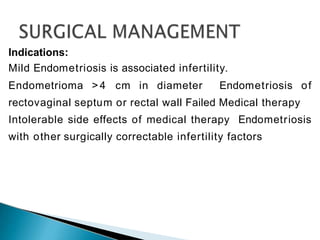
Indications:
Mild Endometriosis is associated infertility.
Endometrioma >4 cm in diameter Endometriosis of
rectovaginal septum or rectal wall Failed Medical therapy
Intolerable side effects of medical therapy Endometriosis
with other surgically correctable infertility factors
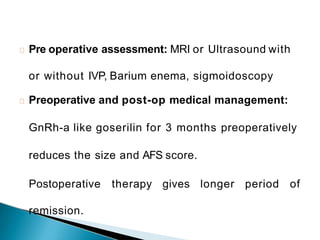
Pre operative assessment: MRI or Ultrasound with
or without IVP, Barium enema, sigmoidoscopy
Preoperative and post-op medical management:
GnRh-a like goserilin for 3 months preoperatively
reduces the size and AFS score.
Postoperative therapy gives longer period of
remission.
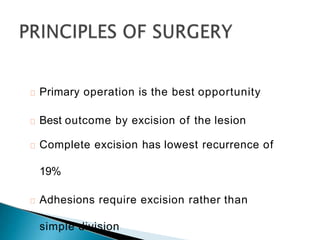
Primary operation is the best opportunity
Best outcome by excision of the lesion
Complete excision has lowest recurrence of
19%
Adhesions require excision rather than
simple division
Electrosurgical instruments are used for excision of
endometriotic focii pelvic peritoneum, however
the depth of dissection is unpredictable & hence
damage to gut.
Sophisticated energy sources available are:
1. Carbon dioxide or Nd YAG laser: Allows
vaporisation; excision; high cost
2. Harmonic scalpel: Ultrasound mechanical source,
for cutting and coagulation
3. Argon beam: for widespread superficial lesion
4. Helica thermal coagulator: effective in
vaporisation with risk of thermal damage.
Surgery when pain relief is the priority:
Early stage disease: LUNA along with ablation of
endometrial deposits improves outcome
Moderate to severe disease: Removal of the entire
lesion recommended
Endometrioma:
1. For large unilateral endometrioma-
salpingoopherectomy of the affected side;
2. Bilateral large endometrioma: < 40years: ovarian
tissue to be conserved as far as possible
3. Insufficient evidence to justify use of pre op or
post op hormones
4. HRT recommendation after bilateral
salpingooherectomy is controversial
Surgery when infertility is the priority
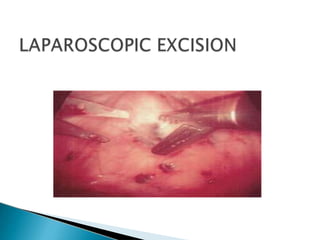
Early stage disease: Laparoscopic excision or
ablation with adhesiolysis
Moderate to severe endometriosis: role of surgery
is uncertain(overactive excision may reduce
fertility)
Endometrioma: laparosopic cystectomy better
than drainage and coagulation.
Post op hormonal treatment has no beneficial effect
on pregnancy rates after surgery
Tubal flushing improves pregnancy rates.
Treatment with IUI improves fertility in minimal to
mild endometriosis
IVF appropriate especially when tubal function is
compromised, if there is male factor infertility
and/or other treatments have failed.
Treatment with GnRH agonists for 3-6months
before IVF increases the rate of clinical
pregnancies
Laparoscopic ovarian cystectomy is recommended
for endometriomas >4cm in diameter.

Endometriosis

  • 1.
    Presented By. Dr. MdRazi Ahmad MD Assistant Professor Dept. of Niswa-wa-Qabalat GTCH, Patna.
  • 2.
    Presence of activefunctioning endometrial implants outside its normal place i.e uterine cavity Incidence:20-25% in reproductive age group
  • 3.
    Implantation theory : Sampson'spioneering work in 1922 attributed endometriosis to reflux of menstrual endometrium through the fallopian tubes. Occurrence of scar endometriosis following classical caesarean section, hysterotomy, myomectomy and episiotomy further supports this view. Coelomic metaplasia theory : Meyer and Ivanoff (1919) propounded that endometriosis arises as a result of metaplastic changes in embryonic cell rests of embryonic mesothelium. Hormonal stimulation of Embryologically similar tissues to the Mullerian ducts. Metastatic theory : Suggested by Halban et al. (1924) that embolization of menstrual fragments through vascular or lymphatic channels, explain its occurrence at less accessible sites like the umbilicus, pelvic lymph nodes, ureter, rectovaginal septum, bowel wall, and remote sites like the lung, pleura, endocardium and the extremities.
  • 4.
    Hormonal influence : Theinitial genesis of endometriosis, its further development depends on the presence of hormones, mainly oestrogen. Pregnancy causes atrophy of endometriosis through high progesterone level. Regression also follows oophorectomy and irradiation. Endometriosis is rarely seen before puberty and it regresses after menopause. Hormones with antioestrogenic activity also suppress endometriosis and are used therapeutically. Immunological factor : The peritoneal fluid in endometriosis shows the presence of macrophages and natural killer (NK) cells. Impaired T cell and NK cell activity and altered immunology. Other factors : Genetic - familial tendency reported in 15% cases, multifactorial, vaginal or cervical atresia which encourage retrograde spill. Prostaglandins.
  • 5.
    Uterine : Adenomyosis (50%) Extrauterine : - Ovary 30% -Pelvic peritoneum 10% - F. tube - Vagina -Bladder & rectum - Pelvic colon - Ligaments
  • 6.
    endometriosis : (1) ovary (2)cul-de-sac (3)uterosacral ligaments (4) broad ligaments (5) fallopian tubes (6) uterovesical fold (7) round ligaments (8)vermiform appendix (9) vagina (10) rectovaginal septum (11) rectosigmoid colon (12) caecum (13) ileum (14) inguinal canals (15) abdominal scars (16) ureters (17) urinary bladder (18) umbilicus (19) vulva
  • 7.
    - Pelvic -Extra pelvic Umbilicus. Scars(Lap.). Lungs & pleura. Others.
  • 9.
    Early lesions appearpapular and red vesicles are filled with haemorrhagic fluid with surrounding flame-like lesions. Over time, these vesicles change colour and endometriotic areas appear as dark red, bluish or black cystic areas adherent to the site. Scarring in the endometriosis makes it puckered. Atypical lesions such as non-pigmented areas or yellowish-white thick plaques have been noticed, which are healed lesions. Powder burnt areas are the inactive and old lesions seen scattered over the pelvic peritoneum. Chocolate cysts of the ovaries represent the most important manifestation of endometriosis. To the naked eye, the chocolate cyst shows obvious thickening of tunica albuginea, and vascular red adhesions are well marked on the undersurface of the ovary. The inner surface of the cyst wall is vascular and contains areas of dark brown tissue. The chocolate cyst lies in the ovary and adherent to lateral pelvic wall.
  • 10.
  • 11.
    MICROSCOPIC View ofendometriosis interna (ADENOMYOSIS)
  • 12.
    HISTOPATHOLOGICAL IMAGES OF 1 ENDOMETRIOSIS, 2OVARIAN ENDOMETRIOMA, 3 SECRETORYENDOMETRIOSIS 1 2 3
  • 13.
    On History Common symptoms: Chronic pelvic pain, worsening dysmenorrhea, acquired dyspareunia, infertility, premenstrual spotting, dyschezia. Risk factors : First degree relative affected, short menstrual cycles, long duration of menstrual flow, low parity, infertility, fair complexioned, reproductive tract obstructive anomalies. However tubectomised
  • 14.
    Examination On bimanual pelvicexamination, fixed retroverted uterus, bilateral pelvic tenderness, fixed or enlarged ovaries and painful uterosacral nodularity. Deeply infiltrating nodules are most reliably detected when clinical examination is performed during menstruation. Adenomyotic uterus is seldom > 12 weeks, soft, smooth & tender in contrast to fibroid uterus. Isolated adenomyoma can be differentiated by presence of localised tenderness
  • 15.
    Investigations Laparoscopy: Gold standardIt should not be performed within 3 months of hormonal treatment to prevent under diagnosis Ultrasound: Ultrasound has a limited role, however the addition of colour doppler claims to increase the sensitivity to 91.8%, specificity of 91.3% MRI –useful Ca 125-Maybe elevated in severe
  • 17.
    Histological Confirmation: Visual inspectionis usually adequate but histological confirmation of at least one lesion is ideal. In cases of ovarian endometrioma >3 cm in diameter and in deeply infiltrating disease, histology is a must to rule out malignancy.
  • 18.
    Laparoscopy: (Sensitivity: 97%, Specificity95%) Types of lesions on laparoscopy: Powder burn or black lesions White opacified peritoneum Glandular excrescences Flame like red lesions Peritoneal pockets or windows Clear vesicles Yellow brown patches Unexplained adherence of ovary to peritoneum of ovarian fossa Encysted collection of thick chocolate coloured or tarry fluids Adhesions to posterior lip of broad ligaments/other pelvic structures
  • 21.
    LAPROSCOPIC IMAGES: A OLD ENDOMETRIOSIS (Blue/Grey) B OLD ENDOMETRIOSIS (Red) C  OLD ENDOMETRIOSIS (Brown) D  ACTIVE ENDOMETRIOSIS (Black)
  • 24.
    Sonographic Features : Endometriticcysts (oval or round)- capsulated, fine homogeneous, uniform, granular echoes, anechoic, single or multiple, unilateral or bilateral On Doppler: no vascularity within the mass Ovarian adhesions to uterus Free floating fimbria on sonosalpingography
  • 25.
    Several Proposed Schemes RevisedAFS System: Most Often Used Ranges from Stage I (Minimal) to Stage IV (Severe) Staging Involves Location and Depth of Disease, Extent of Adhesions
  • 27.
    Revised American FertilitySociety Classification of endometriosis 1985 Patient's name Age Date Stage I (Minimal) Score 1-5 Laparoscopy/Laparotomy/Photography Stage II (Mild) Score 6-15 Recommended treatment Stage III (Moderate) Score 16-40 Stage IV (Severe) Score > 40 Total Prognosis Peritoneal endometriosis <1 cm 1-3 cm >3 cm Superficial 1 2 4 Deep 2 4 6 Ovarian endometriosis <1 cm 1-3 cm >3 cm Right/Left side separate points Superficial Deep cul-de-sac obliteration 1 2 4 4 16 20 Partial Complete 4 40 Ovarian adhesions < 1/3 Enclosure 1/3 to 2/3 Enclosure > 2/3 Enclosure Right/Left side separate points Flimsy 1 2 4 Dense 4 8 16 Tubal adhesions < 1/3 Enclosure 1/3 to 2/3 Enclosure > 2/3 Enclosure Right/Left side separate points Flimsy Dense 1 4 2 8 4 16
  • 28.
  • 29.
    Recognize Goals: – PainManagement – Preservation / Restoration of Fertility Discuss with Patient: – Disease may be Curable Chronic and Not – Optimal Treatment Unproven or Nonexistent
  • 30.
    Management of Endometriosismust be ‘tailor made’ taking into account, patients profile, presenting symptoms, impact of the disease and effects of treatment on day to day life.
  • 31.
    Empirical treatment ofpain symptoms without definitive diagnosis of endometriosis, a therapeutic trial of hormonal drug to reduce menstrual flow is appropriate. Medical Therapy for endometriosis can be used either as primary therapy or in conjunction with surgery preoperatively or postoperatively- Sandwich Therapy
  • 32.
    How effective areNSAIDS in treating endometriosis associated pain? There is inconclusive evidence to show whether NSAIDS are effective in managing pain caused by endometriosis Advantages: Not operator dependent Less expensive No surgical/anesthetic risk No post- op adhesion formation Disadvantages: Prolonged treatment Gastric ulceration Temporary relief
  • 33.
    • GnRH analogues:creates a pseudo menopausal state • Advantages: • Reduction in pelvic vascularity and inflammation • Reduction in size and activity of endometriotic implants • Reduction in ovarian cyst diameter • Reduction in cyst wall diameter • Disadvantages: • Hypoestrogenic state • Bone loss(can be controlled by add back regimen-
  • 34.
    Danazol: pseudo-menopausal stateInhibits ovarian steroid- genesis, decreases pulsatile GnRH release, decreases gonadotrophins-antioestrogenic, antiprogestogenic, androgenic effects Dosage: 400mg/day Efficacy: crude pregnancy rate 28-47%
  • 35.
    Progesterone:- Pseudo pregnancy(Kristner’s Regime) state. Acts by decidualisation and atrophy of the estrogen dependent endometriotic foci Common progesterone:- Medroxy progesterone acetate, norethesiterone, dydrogesterone, DMPA:- cost effective, readily available, 66%complete resolution LNG- IUS(Mirena):- Reduces endometriosis associated pain(symptom control over 3 years) Side effects:- Irregular Bleeding, weight gain, fluid retention, breast tenderness, mood changes.
  • 36.
    Gestrinone: Androgenic, progestogenicand antiestrogenic Dosage: 1 - 2 5 - 2 - 5 m g biweekly Side effects : similar to danazol
  • 37.
    Combined OC Pills: To reduce the frequent prolonged bleeding not recommended in infertile endometriotic women.  However COCs are the only effective prophylaxis in against endometriosis.
  • 38.
    RU 486: antiprogestogenicactivity with minimal or no other endocrinologic effects Aromatase Inhibitor: Acts on the diseased endometriotic implants to decrease local oestrogen production-to inhibit the growth of implants. Interferons: combination with GnRH have resulted in higher cumulative pregnancy rates and monthly fecundity rates SERMs: Selective antiestrogenic activity on the endometrium, agonist activity on bones and
  • 39.
    Agent Dose RouteDosing frequency Common side effects Combined oral contraceptives 30–35 μg ethinyl estradiol, plus progestin Oral Daily (cyclic or continuous) Irregular bleeding, weight gain, bloating, breast tension and headache Danazol 400–800 mg Oral Daily (duration limited to 6 months by side effects) Androgenic/anabolic (weight gain, fluid retention, breast atrophy, acne, oily skin, hot flashes and hirsutism) GnRH agonists (Duration limited to 6 months due to BMD effects) Leuprolide 1mg/day SC injection daily Hypoestrogenic (hot flashes, vaginal dryness, emotional lability, loss of libido and BMD decline) Leuprolide depot 3.75mg 11.75mg IM IM Monthly Every 3 monthly 1997; Rice, 2002; Valle et al., 2003; Donnez et al., 2004; Crosignani et al., 2005; Schlaff et al., in press)
  • 40.
    Agent Dose RouteDosing frequency Common side effects Triptorelin 3mg IM Monthly Triptorelin depot 11.25mg IM Every 3 monthly Goserelin 3.6mg SC Monthly Buserelin 300- 400µg Intranasal Tds Naserelin 200- 400µg Intranasal Bd Progestins Irregular bleeding bloating weight gain and edema Dydrogestero ne 60mg Oral 12 days per cycle Gestrinone 2.5-5mg Oral Daily Megestrel acetate 40mg Oral Daily Norethindrone acetate 5mg Oral Daily MPA 30mg Oral daily DMPA-150 150mg IM Every 3 months
  • 41.
    Indications: Mild Endometriosis isassociated infertility. Endometrioma >4 cm in diameter Endometriosis of rectovaginal septum or rectal wall Failed Medical therapy Intolerable side effects of medical therapy Endometriosis with other surgically correctable infertility factors
  • 42.
    Pre operative assessment:MRI or Ultrasound with or without IVP, Barium enema, sigmoidoscopy Preoperative and post-op medical management: GnRh-a like goserilin for 3 months preoperatively reduces the size and AFS score. Postoperative therapy gives longer period of remission.
  • 43.
    Primary operation isthe best opportunity Best outcome by excision of the lesion Complete excision has lowest recurrence of 19% Adhesions require excision rather than simple division
  • 44.
    Electrosurgical instruments areused for excision of endometriotic focii pelvic peritoneum, however the depth of dissection is unpredictable & hence damage to gut. Sophisticated energy sources available are: 1. Carbon dioxide or Nd YAG laser: Allows vaporisation; excision; high cost 2. Harmonic scalpel: Ultrasound mechanical source, for cutting and coagulation 3. Argon beam: for widespread superficial lesion 4. Helica thermal coagulator: effective in vaporisation with risk of thermal damage.
  • 45.
    Surgery when painrelief is the priority: Early stage disease: LUNA along with ablation of endometrial deposits improves outcome Moderate to severe disease: Removal of the entire lesion recommended Endometrioma: 1. For large unilateral endometrioma- salpingoopherectomy of the affected side; 2. Bilateral large endometrioma: < 40years: ovarian tissue to be conserved as far as possible 3. Insufficient evidence to justify use of pre op or post op hormones 4. HRT recommendation after bilateral salpingooherectomy is controversial
  • 46.
    Surgery when infertilityis the priority Early stage disease: Laparoscopic excision or ablation with adhesiolysis Moderate to severe endometriosis: role of surgery is uncertain(overactive excision may reduce fertility) Endometrioma: laparosopic cystectomy better than drainage and coagulation. Post op hormonal treatment has no beneficial effect on pregnancy rates after surgery Tubal flushing improves pregnancy rates.
  • 48.
    Treatment with IUIimproves fertility in minimal to mild endometriosis IVF appropriate especially when tubal function is compromised, if there is male factor infertility and/or other treatments have failed. Treatment with GnRH agonists for 3-6months before IVF increases the rate of clinical pregnancies Laparoscopic ovarian cystectomy is recommended for endometriomas >4cm in diameter.