ENDOCRINE
SYSTEM
Endocrine System
Derives from the Greek words
“endo” meaning inside/within and
“crinis” meaning secrete.
Plays an important role in
maintenance of homeostasis in the
internal environment of the body.
Consists of glands that regulate
various body function.
Plays a major role in regulating
growth, the reproductive process,
and the way the body uses food.
Helps prepare the body to deal
with stress and emergencies.
An information signal system like
the nervous system, yet its effects
and mechanism are classifiably
different.
Now, What is the DIFFERENCE
between NERVOUS SYSTEM
and ENDOCRINE SYSTEM?
DIFFERENCE BETWEEN
Nervous System Endocrine System
ccc rrr
Homeostasis
The tendency of an organism or a cell to regulate its
internal conditions, usually by a system of feedback
controls, so as to stabilize health and functioning,
regardless of the outside changing conditions
The ability of the body or a cell to seek and maintain
a condition of equilibrium or stability within its internal
environment when dealing with external changes
In humans, homeostasis happens when the body
regulates body temperature in an effort to maintain
an internal temperature around 98.6 degrees
Fahrenheit. For example, we sweat to cool off during
the hot summer days, and we shiver to produce heat
during the cold winter season.
Word origin: from the Greek: homeo, meaning
unchanging + stasis, meaning standing.
Gland
Organ specialized for secretion by the
infolding of an epithelial sheet.
The secretory epithelial cells may either
be arranged as an acinus with a duct or as
a tubule. Glands from which release
occurs to a free epithelial surface are
exocrine, those that release product to the
circulatory system are endocrine glands.
Hormones
Chemical, excitatory
substances secreted by the
glands which help regulate
bodily activities such as growth
and metabolism.
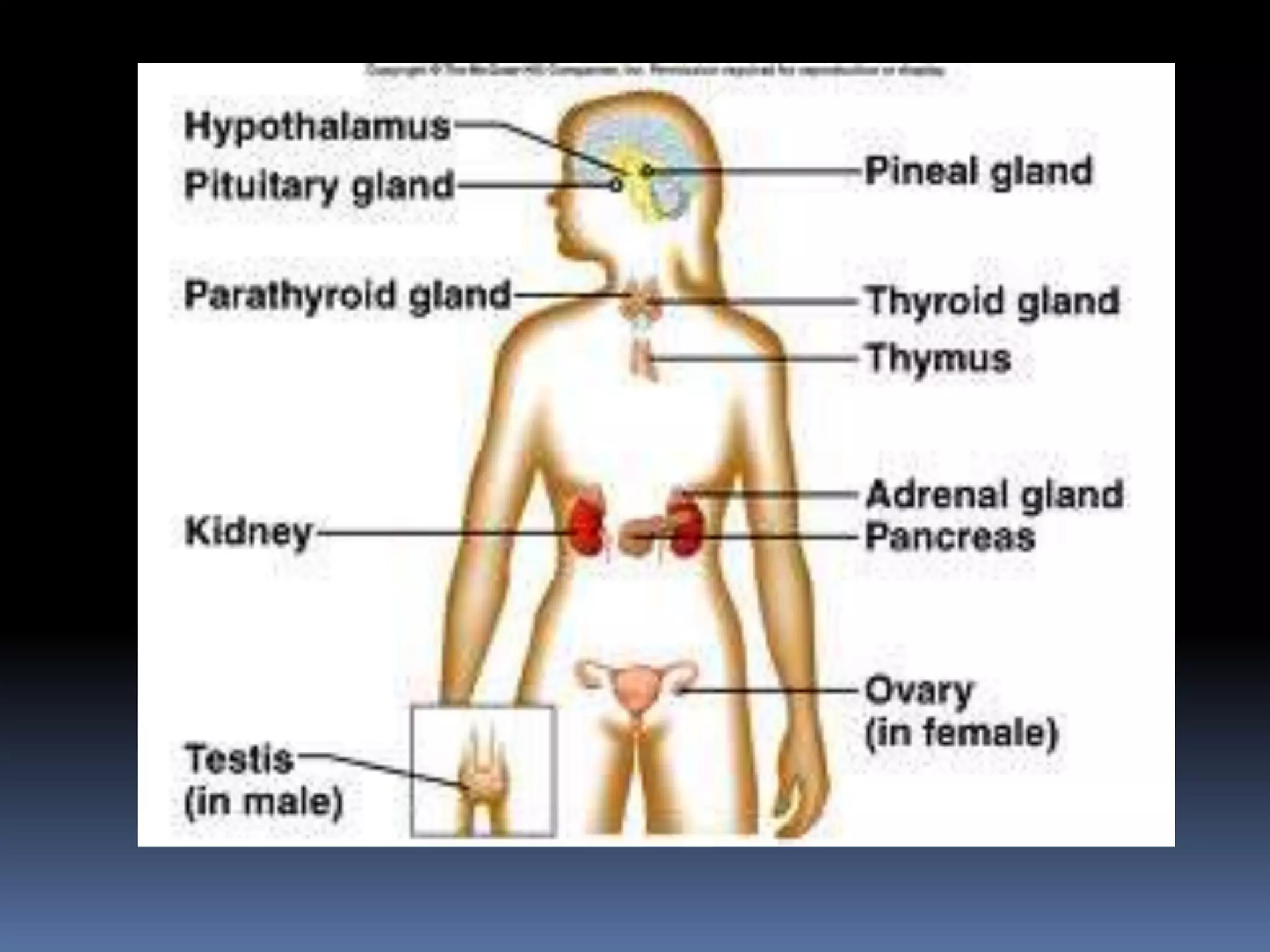
Major Endocrine Glands of
the Body
Pituitary
Thyroid
Adrenals
Parathyroids
Pancreas
Gonads
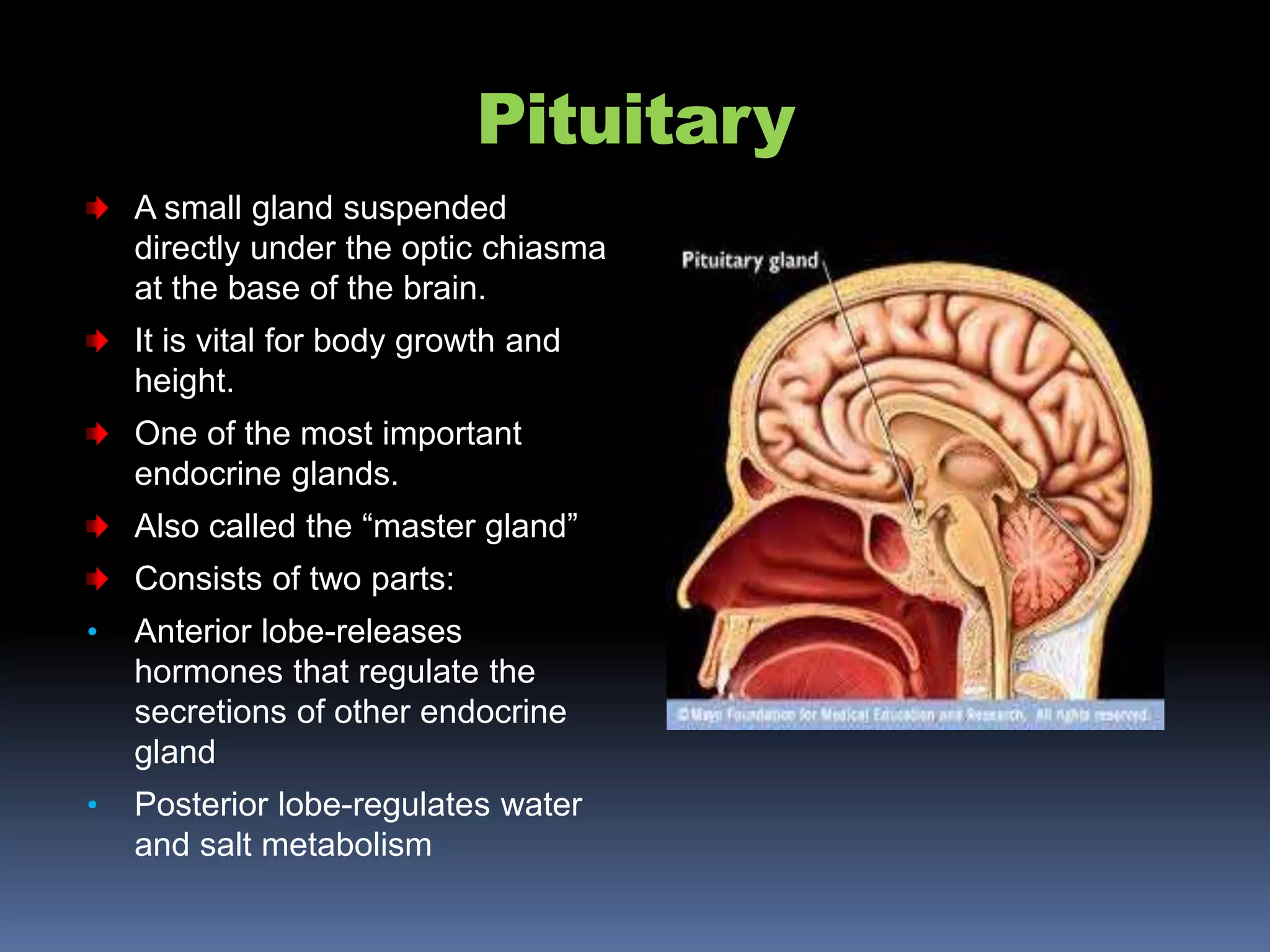
Pituitary
A small gland suspended
directly under the optic chiasma
at the base of the brain.
It is vital for body growth and
height.
One of the most important
endocrine glands.
Also called the “master gland”
Consists of two parts:
• Anterior lobe-releases
hormones that regulate the
secretions of other endocrine
gland
• Posterior lobe-regulates water
and salt metabolism
Pituitary
Hormones
Growth hormone (GH)- promotes the growth
of the skeleton and the body as a whole.
Thyroid Stimulating Hormone (TSH)- controls
the amount of thyroglobulin secreted by the
thyroid.
Adrenocorticotropic Hormone (ACTH)-
stimulates the growth and secretion of the
cortex (outer layer) of the adrenal gland.
Gonadtopins- stimulate the gonads, which
are sperm- or egg-producing organs.
Leutinizing Hormone (LH)- necessary for the
attachment of an embryo within its mother’s
womb.
Lactogenic Hormone (LH) or Prolactin-
stimulates the secretion of milk.
Melanocyte Stimulating Hormone- stimulates
the melanocytes, the cells of the skin which
contain the the black pigment. It is also
responsible for moles, freckles and
birthmarks.
Oxytocin- stimulates the smooth muscles of
the uterus to contract during childbirth.
Antidiuretic Hormone (Vasopression)- causes
kidneys to excrete excess water and at the
same time causes arteries to contract and in
this case increases blood pressure.
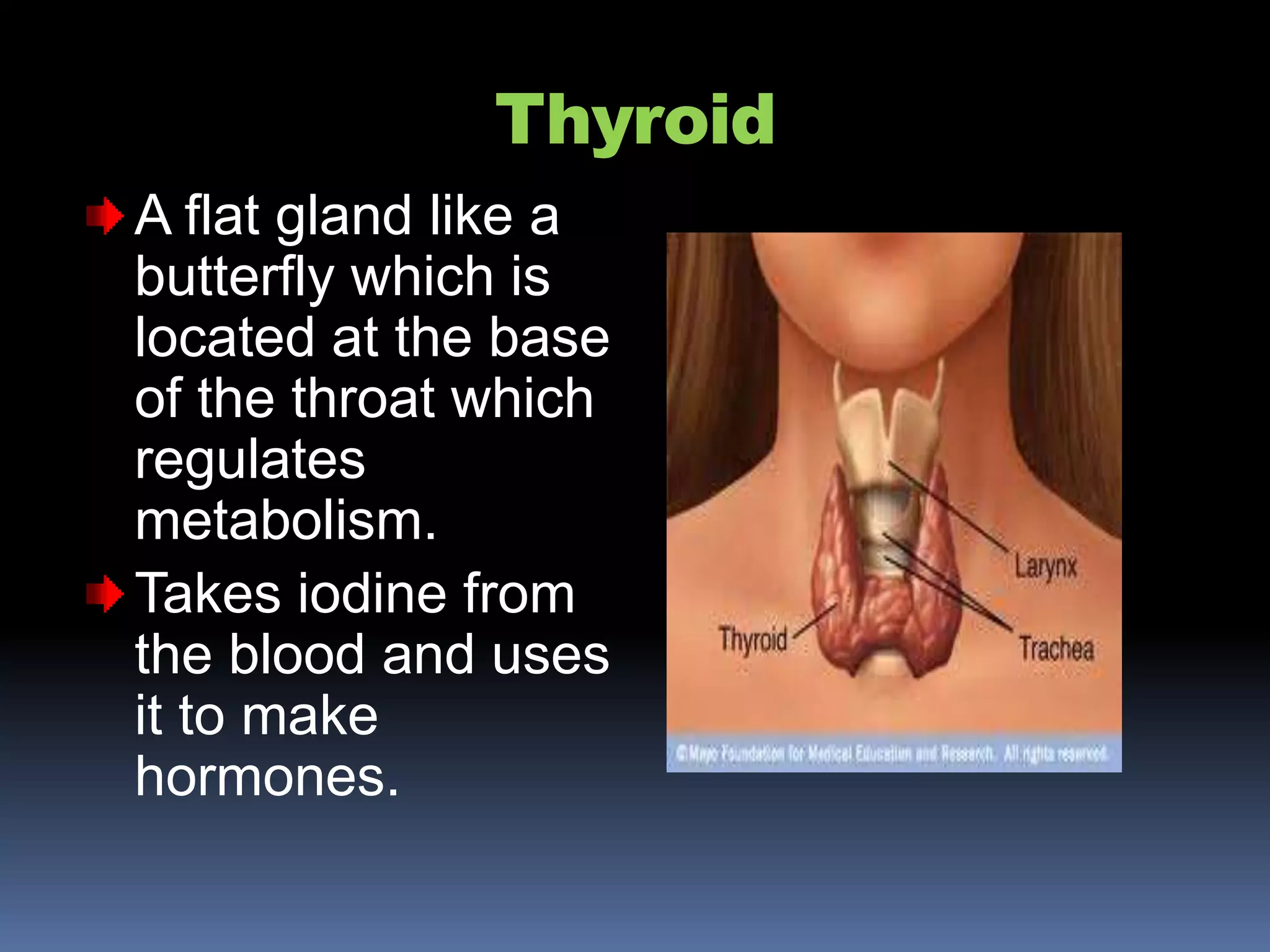
Thyroid
A flat gland like a
butterfly which is
located at the base
of the throat which
regulates
metabolism.
Takes iodine from
the blood and uses
it to make
hormones.
Thyroid Hormones
Control the body’s cell metabolism.
When released into the
bloodstream, cells increase the
rate at which they convert oxygen
and nutrients into energy and heat
for the body’s use.
Hormones of the Thyroid
Glands
Thyroxin- influences the growth and
development of the body, like sex organs,
brain, bones and muscles.
Calcitonin- produced in response to high
levels of calcium in the blood, this causes
the kidneys to discharge more calcium
into the urine and raises the amount of
calcium stored in the bones.
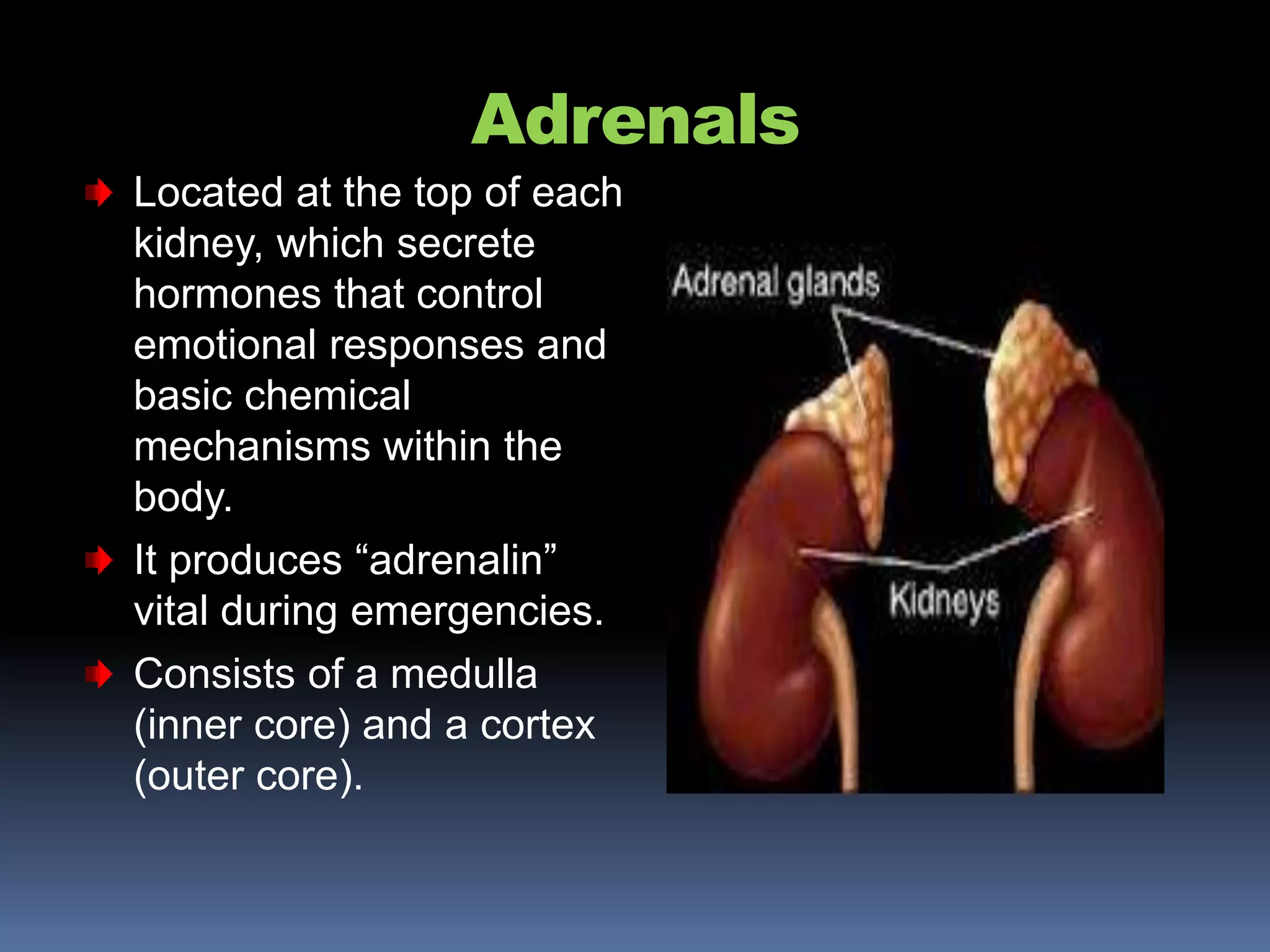
Adrenals
Located at the top of each
kidney, which secrete
hormones that control
emotional responses and
basic chemical
mechanisms within the
body.
It produces “adrenalin”
vital during emergencies.
Consists of a medulla
(inner core) and a cortex
(outer core).
Adrenal Medulla
Controlled by the nervous system.
Stimulated by the nerve signals to
secrete epinephrine (also called
adrenaline) and norepinephrine (also
called noradrenaline) into the blood
which help the body to adjust to sudden
stress.
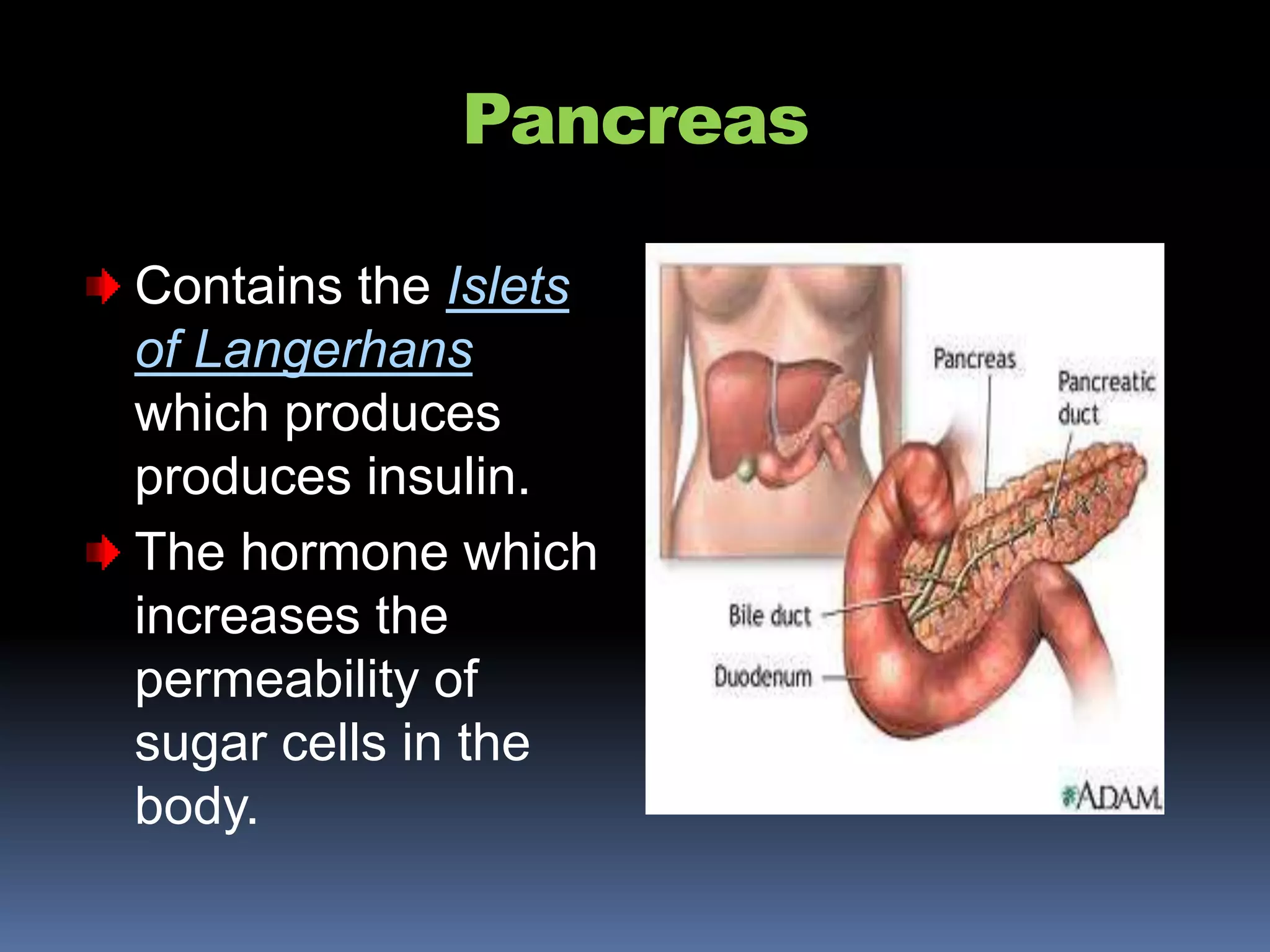
Pancreas
Contains the Islets
of Langerhans
which produces
produces insulin.
The hormone which
increases the
permeability of
sugar cells in the
body.
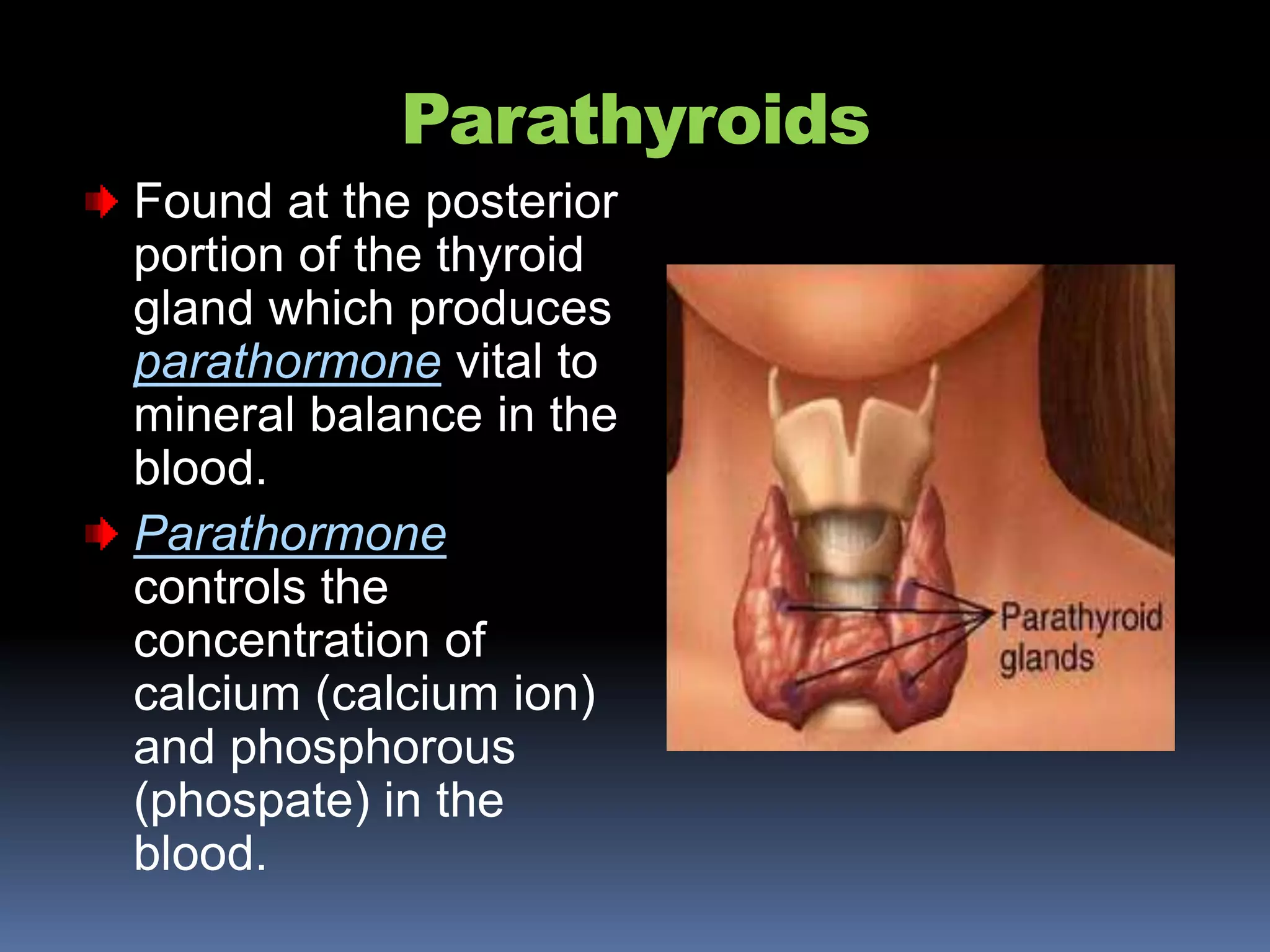
Parathyroids
Found at the posterior
portion of the thyroid
gland which produces
parathormone vital to
mineral balance in the
blood.
Parathormone
controls the
concentration of
calcium (calcium ion)
and phosphorous
(phospate) in the
blood.
Parathyroid Hormones
Act to increase the excretion of
phosphorous by the kidneys and to
increase the rate of resorption of
calcium from bones.
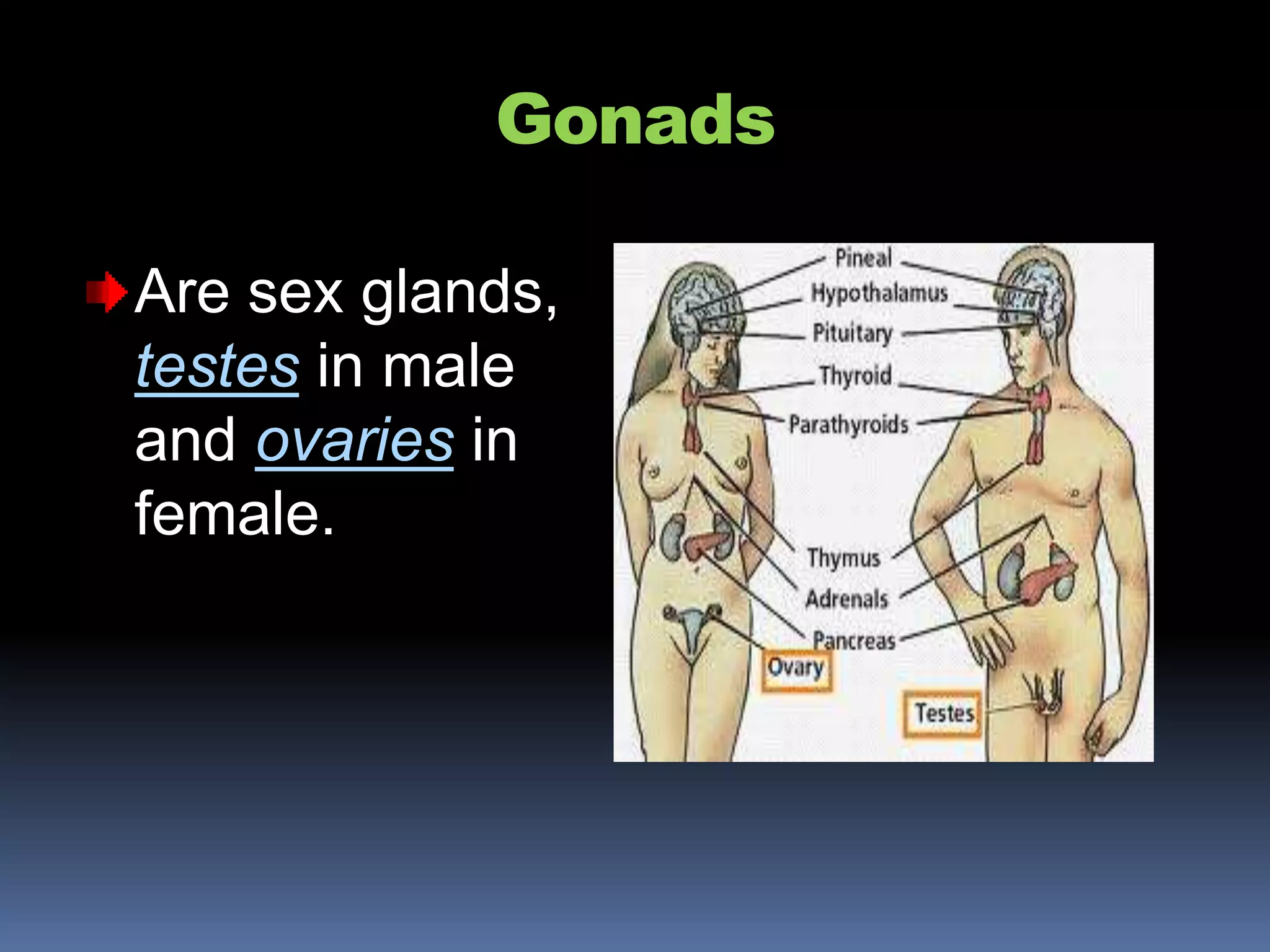
Gonads
Are sex glands,
testes in male
and ovaries in
female.
Importance
WHAT DO YOU THINK IS
THE IMPORTANCE OF
ENDOCRINE SYSTEM IN
PSYCHOLOGY?

Endocrine system

  • 1.
  • 3.
    Endocrine System Derives fromthe Greek words “endo” meaning inside/within and “crinis” meaning secrete. Plays an important role in maintenance of homeostasis in the internal environment of the body. Consists of glands that regulate various body function.
  • 4.
    Plays a majorrole in regulating growth, the reproductive process, and the way the body uses food. Helps prepare the body to deal with stress and emergencies. An information signal system like the nervous system, yet its effects and mechanism are classifiably different.
  • 5.
    Now, What isthe DIFFERENCE between NERVOUS SYSTEM and ENDOCRINE SYSTEM?
  • 6.
    DIFFERENCE BETWEEN Nervous SystemEndocrine System ccc rrr
  • 7.
    Homeostasis The tendency ofan organism or a cell to regulate its internal conditions, usually by a system of feedback controls, so as to stabilize health and functioning, regardless of the outside changing conditions The ability of the body or a cell to seek and maintain a condition of equilibrium or stability within its internal environment when dealing with external changes In humans, homeostasis happens when the body regulates body temperature in an effort to maintain an internal temperature around 98.6 degrees Fahrenheit. For example, we sweat to cool off during the hot summer days, and we shiver to produce heat during the cold winter season. Word origin: from the Greek: homeo, meaning unchanging + stasis, meaning standing.
  • 8.
    Gland Organ specialized forsecretion by the infolding of an epithelial sheet. The secretory epithelial cells may either be arranged as an acinus with a duct or as a tubule. Glands from which release occurs to a free epithelial surface are exocrine, those that release product to the circulatory system are endocrine glands.
  • 9.
    Hormones Chemical, excitatory substances secretedby the glands which help regulate bodily activities such as growth and metabolism.
  • 10.
    Major Endocrine Glandsof the Body Pituitary Thyroid Adrenals Parathyroids Pancreas Gonads
  • 11.
    Pituitary A small glandsuspended directly under the optic chiasma at the base of the brain. It is vital for body growth and height. One of the most important endocrine glands. Also called the “master gland” Consists of two parts: • Anterior lobe-releases hormones that regulate the secretions of other endocrine gland • Posterior lobe-regulates water and salt metabolism
  • 12.
  • 13.
    Growth hormone (GH)-promotes the growth of the skeleton and the body as a whole. Thyroid Stimulating Hormone (TSH)- controls the amount of thyroglobulin secreted by the thyroid. Adrenocorticotropic Hormone (ACTH)- stimulates the growth and secretion of the cortex (outer layer) of the adrenal gland. Gonadtopins- stimulate the gonads, which are sperm- or egg-producing organs. Leutinizing Hormone (LH)- necessary for the attachment of an embryo within its mother’s womb.
  • 14.
    Lactogenic Hormone (LH)or Prolactin- stimulates the secretion of milk. Melanocyte Stimulating Hormone- stimulates the melanocytes, the cells of the skin which contain the the black pigment. It is also responsible for moles, freckles and birthmarks. Oxytocin- stimulates the smooth muscles of the uterus to contract during childbirth. Antidiuretic Hormone (Vasopression)- causes kidneys to excrete excess water and at the same time causes arteries to contract and in this case increases blood pressure.
  • 15.
    Thyroid A flat glandlike a butterfly which is located at the base of the throat which regulates metabolism. Takes iodine from the blood and uses it to make hormones.
  • 16.
    Thyroid Hormones Control thebody’s cell metabolism. When released into the bloodstream, cells increase the rate at which they convert oxygen and nutrients into energy and heat for the body’s use.
  • 17.
    Hormones of theThyroid Glands Thyroxin- influences the growth and development of the body, like sex organs, brain, bones and muscles. Calcitonin- produced in response to high levels of calcium in the blood, this causes the kidneys to discharge more calcium into the urine and raises the amount of calcium stored in the bones.
  • 18.
    Adrenals Located at thetop of each kidney, which secrete hormones that control emotional responses and basic chemical mechanisms within the body. It produces “adrenalin” vital during emergencies. Consists of a medulla (inner core) and a cortex (outer core).
  • 19.
    Adrenal Medulla Controlled bythe nervous system. Stimulated by the nerve signals to secrete epinephrine (also called adrenaline) and norepinephrine (also called noradrenaline) into the blood which help the body to adjust to sudden stress.
  • 20.
    Pancreas Contains the Islets ofLangerhans which produces produces insulin. The hormone which increases the permeability of sugar cells in the body.
  • 21.
    Parathyroids Found at theposterior portion of the thyroid gland which produces parathormone vital to mineral balance in the blood. Parathormone controls the concentration of calcium (calcium ion) and phosphorous (phospate) in the blood.
  • 22.
    Parathyroid Hormones Act toincrease the excretion of phosphorous by the kidneys and to increase the rate of resorption of calcium from bones.
  • 23.
    Gonads Are sex glands, testesin male and ovaries in female.
  • 24.
    Importance WHAT DO YOUTHINK IS THE IMPORTANCE OF ENDOCRINE SYSTEM IN PSYCHOLOGY?