DIABETES MELLITUS (DM)
COMPILED BY –
Mr. Ashish h. Roy
(Nursing Tutor)
History of DM
 Disease in which the body doesn’t produce or properly use insulin, leading to
hyperglycemia.
 In the writings of Aretaios (Aretaeus) of Cappadocia, a Greek physicianswho lived
during the period 120-200 A.D., there is a reference, probably to Diabetes. Amongst the
disease described, he mentioned a condition associated with unquenchable thirst,
excessive drinking of water and excessive passing of urine. The word "Diabetes" is
perhaps derived from a Greek word signifying a siphon, appropriately describing how in
the disease the fluid cannot be retained in the body. Greek physicians, like ancient
Hindu physicians, used to taste the patient's urine to detect abnormal constituents. This
unpleasant practice perhaps enabled them to detect diabetic patients.
Thomas Willis, in 1764, observed that the urine of a diabetic patient was sweet and he
surmised that it contained either sugar or honey.
 Diabetes mellitus comes from the Greek word "diabainein" meaning "to pass through,"
and the Latin word "mellitus" meaning "sweetened with honey." Put the two words
together and you have "to pass through sweetened with honey."
Introduction
 Pancreas produces two hormones, i.e. insulin and glucagon. These hormones are
secreted by cells of islets of Langerhans. Both insulin and glucagon regulate the amount
of sugar that present in bloodstream. Insulin permits cells to use glucose for energy. Cells
cannot utilize glucose without insulin. It also coverts glucose to glycogen and glucagon
converts glycogen to glucose . Deficiency of insulin hormone cause glucose level in
blood that means hyperglycaemia (diabetes mellitus).
Definition of DM
It is the condition in which carbohydrates metabolism disturbed due to insufficient secrection
of insulin hormones. It is characterized by triad features, e.g. polyuria, polyphagia, polydipsia
Glucose level in blood increases. This is know as hyperglycemia.
Normal blood sugar level.
Fasting : 70-110 mg/dl
Postprandial (PP) : 80-150
OR
 Disease in which the body doesn’t produce or properly use insulin, leading to
hyperglycemia.
Carbohydrate Digestion
What goes wrong in Diabetes ?
 Multitude of mechanisms -
 Insulin
 Regulation
 Secretion
 Uptake or breakdown
 Beta cells Damage
What goes wrong in diabetes?
 The body’s response to blood sugar requires the coordination of an array of mechanisms.
Failure of any one component involved in insulin regulation, secretion, uptake or breakdown
can lead to the build-up of glucose in the blood. Likewise, any damage to the beta cells,
which produce insulin, will lead to increased levels of blood glucose. Diabetes mellitus,
commonly known as diabetes, is a metabolic disease that is characterized by abnormally high
levels of glucose in the blood. Whereas non-diabetics produce insulin to reduce elevated
blood glucose levels (i.e. after a meal), the blood glucose levels of diabetics remain high. This
can be due to insulin not being produced at all, or not in quantities sufficient to be able to
reduce the blood glucose level. The most common forms of diabetes are Type 1 diabetes
(juvenile onset, 5-10% of cases), which is an autoimmune disease that destroys beta cells, and
Type 2 diabetes (adult onset, 90-95% of cases), which is associated with insufficient insulin. In
either case, diabetes complications are severe and the disease can be fatal if left untreated.
 Insulin is the foundation for the management of insulin-dependent diabetes. Unfortunately, the
use of insulin is not a cure nor without side effects. In certain parts of the world, it is not even
available. Insulin is also not completely effective in preventing complications of the disease
such as blindness, heart disease, kidney failure, etc. While millions of men, women, and
children await a life without diabetes, let us hope that policy makers and the scientific
community can converge on strategies that promote discovery for a cure.
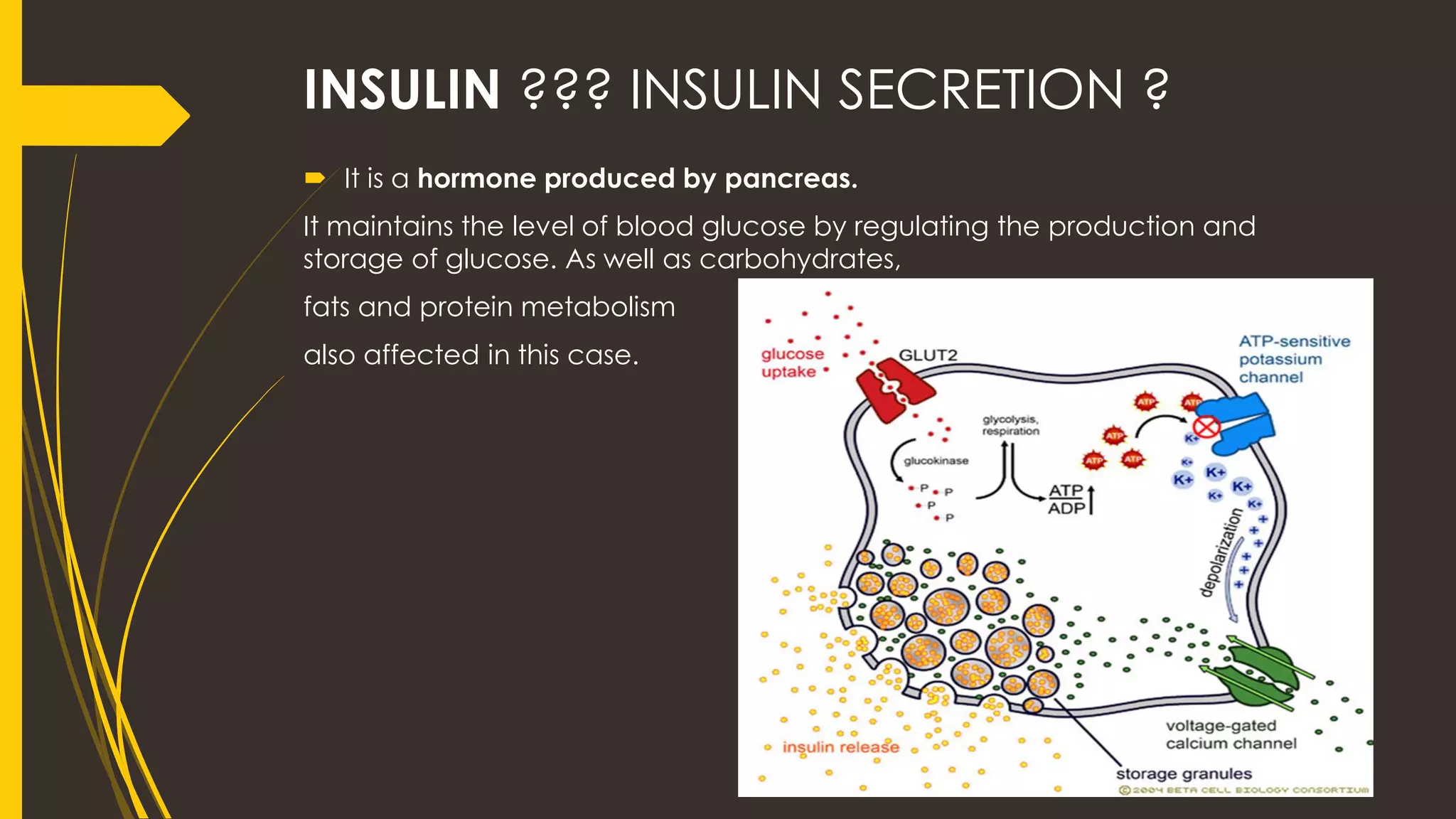
INSULIN ??? INSULIN SECRETION ?
 It is a hormone produced by pancreas.
It maintains the level of blood glucose by regulating the production and
storage of glucose. As well as carbohydrates,
fats and protein metabolism
also affected in this case.
Action of Insulin on the Cell Metabolism
INSULIN ITS ACTION AND METABOLISM
 Insulin is a polypeptide hormone that travels around the bloodstream. Most of the cells in
the body carry receptors for the molecule in their cell membranes. Once the hormone
has become bound to one of these receptors, the receptor gives a signal to the cell's
interior. This signal leads to many enzyme controlled reactions which, in turn lead to
changes in the metabolism of the cell.
 Many of the effects of insulin depend on the particular cell type in which it stimulates.
However, in nearly all of the cells that have insulin receptors in their cell membrane, the
binding of insulin to the receptors leads to increased glucose uptake of the cell.
 The two types of cells that are the main exceptions are the brain and the liver. However,
this is only due to the fact that these cells are readily permeable to glucose, even in the
absence of insulin. Liver cell membranes do contain insulin and glucagon receptors, but
binding of the hormone to them affects cellular processes other than glucose
permeability.
 The animation below illustrates the way insulin brings about the increase in glucose uptake
 Glucose enters the cells of the body through glucose transporter (GLUT) proteins which
are embedded within the cell membrane. This is a process called facilitated diffusion.
When insulin binds to it's receptor, the intracellular domain of the receptor changes shape
slightly. This sets off a chain of reactions. These reactions serve to activate certain
enzymes.
 As a result, more glucose transporter proteins are released from intracellular stores and
move to the plasma membrane and become embedded within it.
Action of Insulin on Carbohydrate, Protein
and Fat Metabolism
 Protein
 Stimulates protein synthesis
 Inhibits protein breakdown; diminishes gluconeogenesis
 A protein-rich meal leads to release of both insulin and glucagon. The latter
stimulates gluconeogenesis and release of the newly formed glucose from the liver
to the blood stream. The very moderate rise in insulin associated with the protein
meal stimulates uptake of the sugar formed in the liver by muscle and fat tissue.

TYPES OF INSULIN
TYPES OF INSULIN ONSET OF ACTION PEAK ACTION DURATION OF
ACTION
RAPID ACTION
INSULINS( lispro
[humalog] and
aspart [novolog]
5-20 minutes 30- 90 minutes 2-5 hours
REGULAR INSULIN 30-60 minutes 1 – 5 hours 6- 10 hours
INTERMEDIATE –
ACTING INSULIN ()
1-4 hours 6- 12 hours 12-24 hours
LONG –ACTING
INSULIN (protime
zinc ultralente
insulin )
4- 8 hours 16-18 hours up to to 30 hours
Type I Diabetes
 Low or absent endogenous insulin
 Dependent on exogenous insulin for life
 Onset generally < 30 years
 5-10% of cases of diabetes
 Onset sudden
 Symptoms: 3 P’s: polyuria, polydypsia, polyphagia
Diabetes Type I
Genetic component to disease
 Type 1 and type 2 diabetes have different causes. Yet two factors are important in both. First, you
must inherit a predisposition to the disease. Second, something in your environment must trigger
diabetes.
 Genes alone are not enough. One proof of this is identical twins. Identical twins have identical
genes. Yet when one twin has type 1 diabetes, the other gets the disease at most only half the
time. When one twin has type 2 diabetes, the other's risk is at most 3 in 4.
 In most cases of type 1 diabetes, people need to inherit risk factors from both parents. We think these
factors must be more common in whites because whites have the highest rate of type 1
diabetes. Because most people who are at risk do not get diabetes, researchers want to find out
what the environmental triggers are.
 One trigger might be related to cold weather. Type 1 diabetes develops more often in winter than
summer and is more common in places with cold climates. Another trigger might be viruses. Perhaps
a virus that has only mild effects on most people triggers type 1 diabetes in others.
 Early diet may also play a role. Type 1 diabetes is less common in people who were breastfed and in
those who first ate solid foods at later ages.
 In many people, the development of type 1 diabetes seems to take many years. In experiments that
followed relatives of people with type 1 diabetes, researchers found that most of those who later got
diabetes had certain autoantibodies in their blood for years before.
 (Antibodies are proteins that destroy bacteria or viruses. Autoantibodies are antibodies 'gone bad,'
which attack the body's own tissues.)
Type II Diabetes
Type II Diabetes
 Insulin levels may be normal, elevated or depressed
 Characterized by insulin resistance,
 diminished tissue sensitivity to insulin,
 and impaired beta cell function (delayed or inadequate insulin release)
 Often occurs >40 years
 Blood sugar levels are dependent upon glucose uptake after meals and hepatic
release of glucose between meals. The sugar released from the liver comes either
from stored glycogen or production of glucose from lactate and amino acids. This
production of glucose is largely responsible for stabilization of postprandial blood
sugar levels. The hyperglycemia noted in type 2 diabetes partially results from lack
of control over hepatic glucose formation due to resistance to insulin. It has
recently become clear that part of this insulin effect occurs indirectly through
insulin-sensitive receptors in the brain (more precisely, in the hypothalamus).
Type II Diabetes
 Risk factors: family history, sedentary lifestyle, obesity and aging
 Controlled by weight loss, oral hypoglycemic agents and or insulin
Type 2 diabetes has a stronger genetic basis than type 1, yet it also depends more
on environmental factors. Sound confusing? What happens is that a family history
of type 2 diabetes is one of the strongest risk factors for getting the disease but it
only seems to matter in people living a Western lifestyle.
Americans and Europeans eat too much fat and too little carbohydrate and fiber,
and they get too little exercise. Type 2 diabetes is common in people with these
habits. The ethnic groups in the United States with the highest risk are African
Americans, Mexican Americans, and Pima Indians.
In contrast, people who live in areas that have not become Westernized tend not
to get type 2 diabetes, no matter how high their genetic risk.
Obesity is a strong risk factor for type 2 diabetes. Obesity is most risky for young
people and for people who have been obese for a long time.
TYPES OF DIABETES MILLITUS
1. INSULIN DEPENDENT DIABETES MELLITUS (IDIM) – TYPE I
 In this condition, patient is unable to produce endogenous insulin due to destruction of pancreatic beta
cells by genetic immunologic and environmental factors.
 About 5-10% cases have diabetes Type I of total DM.
 It has sudden onset, usually before the age of 30 years ( mostly in young age).
 Insulin therapy is necessary.
2. NON-INSULIN DEPENDENT DIABETES MELLITUS (NIDM) – TYPE II
 It results from a decrease sensitivity to insulin ( insulin resistance) or from a decreased amount of insulin
production
 About 90- 95 % of patient have type 2 DM
 Type 2 DM is first treated with diet and exercise and then with oral hypoglycemia agents as needed.
 It occurs mostly after 40 years of age.
 About 80% cases due to obesity.
 There is no need of exogenous insulin until severity of the case.
 3. Gestational DM
Etiological Factors/ Causes/ Risk Factors
 Heredity
 Obesity, mostly due to imbalance insulin level because supply of insulin is less and
requirement is more in obesity.
 Old age( pancreatic functions become slow)
 Other systemic disease like : heart disease, mi stroke.
 Renal disease
 Virus (coxsackie, b. strepto.)
 Africans and Asians are more susceptible
Clinical Manifestations
 In early stage (no symptoms )
 Nocturia
 Hypotension
 Parathesia
 Vaginal infection
 Tingling and numbness in hands or
feet
 Skin becomes dry and rough
 Itching (pruritis)
• 3Ps symptoms Weight loss
• Polyuria
• Polyphagia
• Polydypsia
• Later symptoms are :
• Slow healing of cuts
• Fatigue
• Blurred vision
• Drowsiness
• Skin infections
• Skin infections
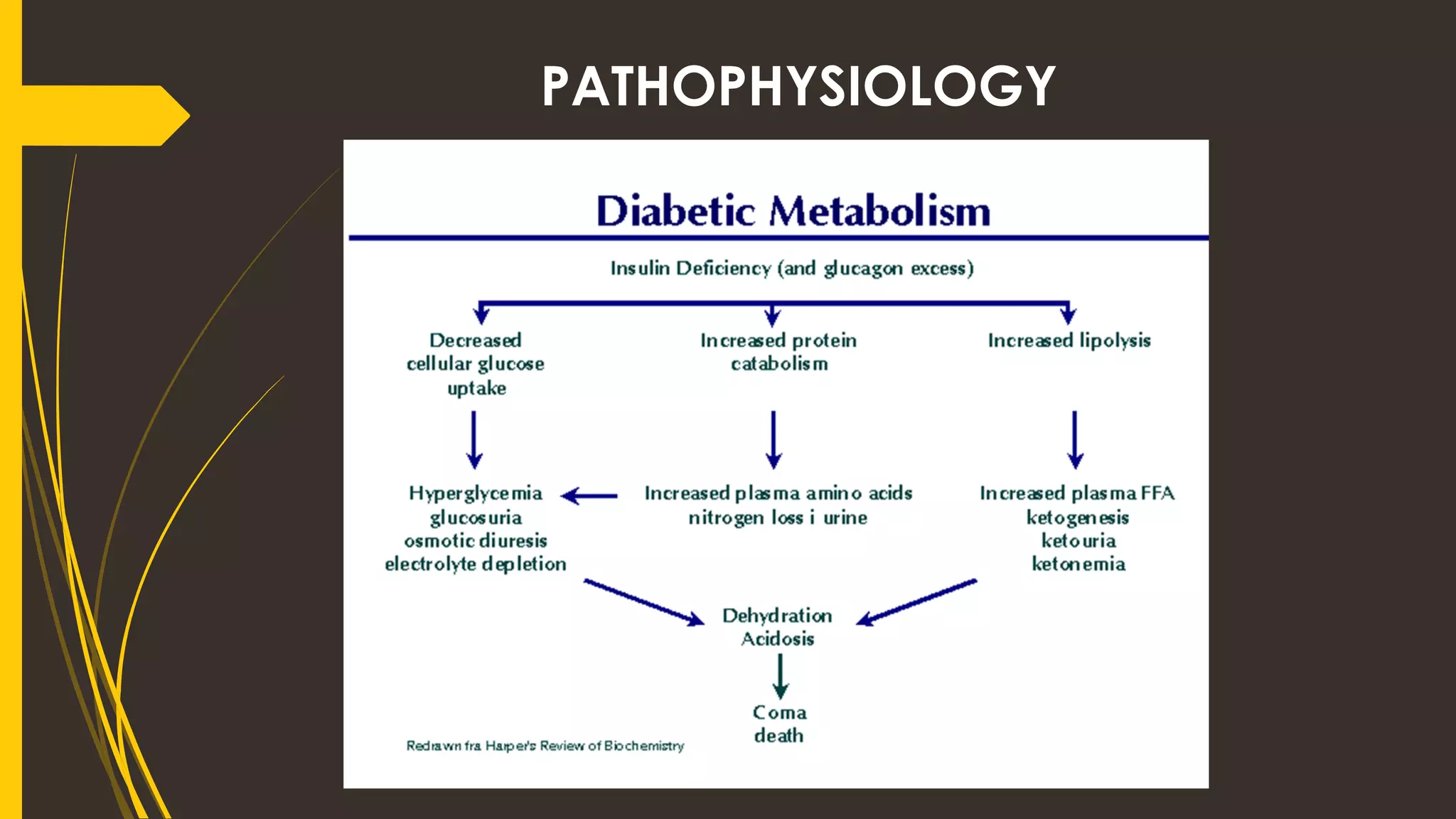
PATHOPHYSIOLOGY
 The total lack of insulin leads to two metabolic crises; a marked increase in the rate
of lipolysis in adipose tissue and activation of hepatic gluconeogenesis in spite of
high plasma glucose levels. The dramatically increased rate of lipolysis in adipose
tissue follows the lack of insulin inhibition of hormone-sensitive lipase. The increase
in fatty acids that results leads to a massive synthesis of ketone bodies in the
liver. These then exceed the buffer capacity of the blood, leading to
ketoacidosis. Excess acid is a potent poison for the brain. Coma and death follow
by ketoacidosis.
 Elevated Blood glucose levels
COMPLICATIONS
 KIDNEY DISEASE
 - ALBUMINURIA
 - OEDEMA IN LEGS
 - URAEMIA
 HIGH B.P.
 NEUROPATHY
 -PAIN IN LEGS
 - SEXUAL IMPOTENCY
-RETROGRADE EJACULATION
-SWEATING
-MUSCLE DAMAGE
• ARTEIOSCLEROSIS
• INFECTION
• -TONSILITIS
• -PNEUMONIA
• APPENDICITIS
• PYELITIS (INFLAMMATION OF PELVIS OF THE
KIDNEY)
COMPLICATIONS
 Determine the effects of glucose control on the development of long term
microvascular and neurologic complications in persons with type I diabetes.
 1441 participants, ages 13 to 39
 Conventional therapy:
 1 - 2 insulin injections,
 self monitoring B.G
 routine contact with MD and case manager 4X/year.
 Intensive therapy:
 3 or more insulin injections, with adjustments in dose according to B.G monitoring,
 planned dietary intake and anticipated exercise.
DIAGNOSTIC EVALUATIONS
 BLOOD GLUCOSE LEVEL TEST :
 FASTING PLASMA GLUCOSE LEVEL-126 MG/DL
 RANDOM OR PP – 180MG/DL
 Primary Goal – improve metabolic control
 Lipid (cholesterol) levels
 DETECTION OF COMPLICATIONS
 BY SIGNS AND SYMPTOMS
 HISTORY COLLECTION
 HEMOGLOBIN A1C TEST (A1C)- TO MEASURE THE AVERAGE BLOOD GLUCOSE LEVEL
DURING THE PAST TWO TO THREE MONTHS. NORMAL VALUES FOR A1C ARE 4 TO 6
PRESENT.
PREVENTION AND CONTROL
 Nutrition
 Blood glucose
 Medications
 Physical activity/exercise
 Behavior modification
 SPECIMEN OUTLINE GUIDE 8400KJ (2100 CALORIES)
MANAGEMENT
 Maintain short and long term body weight
 Reach and maintain normal growth and development
 Prevent or treat complications
 Improve and maintain nutritional status
 Provide optimal nutrition for pregnancy
MANAGEMENT
For diabetes mellitus type I
 Timing of insulin
 Monitor blood glucose regularly
 Consistency and timing of meals
Screening of Diabetes Mellitus
Diabetes Control and Complications Trial
 Results:
 76% reduction in retinopathy
 60% reduction in neuropathy
 54% reduction in albuminuria
 39% reduction in microalbuminuria
 Implication: Improved blood glucose control also applies to person with type II
diabetes.
DIETARY MANGEMENT
 SUFFICIENT QUANTITY OF DIET IS VERY NECESSARY WHICH SATISFY TO APPETITE.
 ABOUT ½ ENERGY SHOULD GET FROM CARBOHYDRATES, AND 1/3 ENERGY GET FAT
AND 15-20 % FROM PROTEIN.
 MEAL SHOULD BE TAKEN AT REGULAR TIME. IF MEAL WILL BE LATE, IT MAY CAUSE
HYPOGLYCEMIA ATTACK.
 TOTAL CALORIES -2200/8800 KJ SHOULD BE TAKEN.
Nutrition Recommendations
 Carbohydrate
 60-70% calories from carbohydrates and monounsaturated fats
 Protein
 10-20% total calories
 Sucrose and sucrose foods may be substituted for other carbohydrates; not added to
male plan
Nutritional management of diabetes mellitus type ii
 Weight loss
 Smaller meals and snacks
 Physical activity
 Monitor blood glucose and medications
Nutrition Recommendations
 Fat
 <10% calories from saturated fat
 10% calories from PUFA
 <300 mg cholesterol
 Fiber
 20-35 grams/day
 Alcohol
 Type I – limit to 2 drinks/day, with meals
 Type II – substitute for fat calories
NURSING DIAGNOSIS
 FLUID VOULME DEFICIT RELATED TO HYPERGLYCEMIA AND RESTRICTED INTAKE.
 IMBALANCE NUTRITION LESS THAN THE BODY REQUIREMENT RELATED TO INSULIN
DEFICIENCY,DECREASE UPTAKE AND UTILIZATION OF GLUCOSE BY TISSUE,
DECREASE ORAL INTAKE.
 RISK FOR UNSTABLE BLOOD GLUCOSE LEVEL RELATED TO DEFICIENCY OF
INSULIN.
 RISK FOR INFECTION / INJURY TO FEET RELATED TO HYPERGLYCEMIA, DECREASE
LEUCOCYTES FUNCTION , IMMUNE SYSTEM DEFICITS.
 ALTERED DAILY LIVING PATTERN REALTED TO FATIGUE AND WEAKNESS.
 SELF CARE DEIFICT RELATED TO DISEASE PROCESS
 RISK FOR DISTURBED SENSORY PERCEPTION RELATED TO IMBALANCE
ELECTROLYTE
NURSING DIAGNOSIS
 INEFFECTIVE COPING RELATED CHRONIC DISEASE AND COMPLEXICITY IN SELF CARE.
 RISK FOR IMPAIRED SKIN INTERGRITY RELATED TO DECREASE SENSATION AND
CIRCULATION TO LOWER LIMBS.
 DEFICIENT KNOWLEDGE RELATED TO DISEASE PROCESS, PROGNOSIS, TREATMENT, SELF
CARE, AND DISCHARGE NEEDS
NURSING MANGEMENT
 TEACH THE PATIENT ABOUT FOLLOWING A PRESCRIBED MEAL PLAN. IT WILL HELP THE
PATIENT MAIONTYAIN STABLE BLOOD GLUCOSE LEVEL.
 ASSESS PATIENTS FOR COGINITIVE OR SENSORY IMPAIREMENTS, WHICH MAY INTERERE
WITH ABILITY TO ACCURATELY ADMINISTER INSULIN.
 DEMONSTRATE AND EXPLAIN THROUGHLY THE PROCEDURE FOR INSULIN SELF-
INJECTION.
 REVIEW DOSAGE AND TIME OF INJECTIONS IN RELATION TO MEALS, ACTIVITY AND
BEDTIMEBASED ON PATIENTS INDIVIDUALIZED INSULIN REGIMEN (A SET OF RULES OF
FOOD AND EXERCISE OR MEDICAL TREATMENT)
 INSTRUCT IMPORTANCE OF ROUTINE DAILY EXAMINATION OF FEET AND PROPER FOOT
CARE.
 INSTRUCT/ TEACH THE PATIENT TO INSPECT SHOES DAILY BE FEELING THE INSIDE OF THE
SHOE FOR IRREGULARITIES IN THE LINININGS, SHARP OBJECTS IN THE ROLE OF SHOE TO
REDUCE RISK FOR INJURY
 INSTRUCT THE PATIENT TO WEAR APPROPRIATE SIZE OF FOOTWEAR OR THEY SHOULD BE
WELL COMFORT.
NURSING MANGEMENT
 INSTRUCT PATIENT THE IMPORTANCE OF ATICCURACY OF INSULIN PREPARATION AND MEAL
TIMING TOAVOID HYPOGLYCEMIA.
 ADVICE THE PATIENT TO ASSESS BLOOD GLUCOSE LEVEL BEFORE ACTIVITY AND TO EAT
CARBOHYDRATE SNACK 30mins BEFORE EXERCISING TO AVOID HYPOGLYCEMIA
 TEACH PATIENT ABOUT TAKING PRECRIBED MEDICATIONS TO DECREASE BLOOD GLUCOSE
LEVEL.
 TEACH PATIENT TO BALANCE EXERCISE WITH FOOD INTAKE . EXERCISE BALANCE GLUCOSE
LEVEL BY FACILITATING UPTAKE OF GLUCOSE INTO CELLLS.
 MAINTAIN SKIN INTEGRITY BY PROTECTING FEET FROM BREAKDOWN.
 ASSESS FEET AND LEGS FOR SKIN TEMPERATURE , SENSATION, SOFT TISSUES INJURIES, CORNS,
CALLUSES, DRYNESS, HAIR DISTRIBUTION, PULSES AND DEEP TENDON REFLEXES.
 INSTRUCT PATIENT TO TRIM NAILS STRAIGHT ACROSS AND TO FILE SHARP CORNERS TO MATCH
CONTOUR OF TOE
 ADVICE PATIENT WHO SMOKES TO QUIT SMOKING OR REDUCE IF POSSIBLE TO REDUCE
VASOCONSTRICTION AND PROMOTE PERIPHERAL BLOOD FLOW.
THANKYOU FOR YOUR ACTIVE
LISTENING AND ATTENTION..
IF ANY QUERY REGARDING THE TOPIC
KINDLY ASK….
The End.

Endocrine disorder Diabetes Mellitus (DM)

  • 1.
    DIABETES MELLITUS (DM) COMPILEDBY – Mr. Ashish h. Roy (Nursing Tutor)
  • 2.
    History of DM Disease in which the body doesn’t produce or properly use insulin, leading to hyperglycemia.  In the writings of Aretaios (Aretaeus) of Cappadocia, a Greek physicianswho lived during the period 120-200 A.D., there is a reference, probably to Diabetes. Amongst the disease described, he mentioned a condition associated with unquenchable thirst, excessive drinking of water and excessive passing of urine. The word "Diabetes" is perhaps derived from a Greek word signifying a siphon, appropriately describing how in the disease the fluid cannot be retained in the body. Greek physicians, like ancient Hindu physicians, used to taste the patient's urine to detect abnormal constituents. This unpleasant practice perhaps enabled them to detect diabetic patients. Thomas Willis, in 1764, observed that the urine of a diabetic patient was sweet and he surmised that it contained either sugar or honey.  Diabetes mellitus comes from the Greek word "diabainein" meaning "to pass through," and the Latin word "mellitus" meaning "sweetened with honey." Put the two words together and you have "to pass through sweetened with honey."
  • 3.
    Introduction  Pancreas producestwo hormones, i.e. insulin and glucagon. These hormones are secreted by cells of islets of Langerhans. Both insulin and glucagon regulate the amount of sugar that present in bloodstream. Insulin permits cells to use glucose for energy. Cells cannot utilize glucose without insulin. It also coverts glucose to glycogen and glucagon converts glycogen to glucose . Deficiency of insulin hormone cause glucose level in blood that means hyperglycaemia (diabetes mellitus).
  • 4.
    Definition of DM Itis the condition in which carbohydrates metabolism disturbed due to insufficient secrection of insulin hormones. It is characterized by triad features, e.g. polyuria, polyphagia, polydipsia Glucose level in blood increases. This is know as hyperglycemia. Normal blood sugar level. Fasting : 70-110 mg/dl Postprandial (PP) : 80-150 OR  Disease in which the body doesn’t produce or properly use insulin, leading to hyperglycemia.
  • 5.
  • 6.
    What goes wrongin Diabetes ?  Multitude of mechanisms -  Insulin  Regulation  Secretion  Uptake or breakdown  Beta cells Damage
  • 7.
    What goes wrongin diabetes?  The body’s response to blood sugar requires the coordination of an array of mechanisms. Failure of any one component involved in insulin regulation, secretion, uptake or breakdown can lead to the build-up of glucose in the blood. Likewise, any damage to the beta cells, which produce insulin, will lead to increased levels of blood glucose. Diabetes mellitus, commonly known as diabetes, is a metabolic disease that is characterized by abnormally high levels of glucose in the blood. Whereas non-diabetics produce insulin to reduce elevated blood glucose levels (i.e. after a meal), the blood glucose levels of diabetics remain high. This can be due to insulin not being produced at all, or not in quantities sufficient to be able to reduce the blood glucose level. The most common forms of diabetes are Type 1 diabetes (juvenile onset, 5-10% of cases), which is an autoimmune disease that destroys beta cells, and Type 2 diabetes (adult onset, 90-95% of cases), which is associated with insufficient insulin. In either case, diabetes complications are severe and the disease can be fatal if left untreated.  Insulin is the foundation for the management of insulin-dependent diabetes. Unfortunately, the use of insulin is not a cure nor without side effects. In certain parts of the world, it is not even available. Insulin is also not completely effective in preventing complications of the disease such as blindness, heart disease, kidney failure, etc. While millions of men, women, and children await a life without diabetes, let us hope that policy makers and the scientific community can converge on strategies that promote discovery for a cure.
  • 8.
    INSULIN ??? INSULINSECRETION ?  It is a hormone produced by pancreas. It maintains the level of blood glucose by regulating the production and storage of glucose. As well as carbohydrates, fats and protein metabolism also affected in this case.
  • 9.
    Action of Insulinon the Cell Metabolism
  • 10.
    INSULIN ITS ACTIONAND METABOLISM  Insulin is a polypeptide hormone that travels around the bloodstream. Most of the cells in the body carry receptors for the molecule in their cell membranes. Once the hormone has become bound to one of these receptors, the receptor gives a signal to the cell's interior. This signal leads to many enzyme controlled reactions which, in turn lead to changes in the metabolism of the cell.  Many of the effects of insulin depend on the particular cell type in which it stimulates. However, in nearly all of the cells that have insulin receptors in their cell membrane, the binding of insulin to the receptors leads to increased glucose uptake of the cell.  The two types of cells that are the main exceptions are the brain and the liver. However, this is only due to the fact that these cells are readily permeable to glucose, even in the absence of insulin. Liver cell membranes do contain insulin and glucagon receptors, but binding of the hormone to them affects cellular processes other than glucose permeability.  The animation below illustrates the way insulin brings about the increase in glucose uptake  Glucose enters the cells of the body through glucose transporter (GLUT) proteins which are embedded within the cell membrane. This is a process called facilitated diffusion. When insulin binds to it's receptor, the intracellular domain of the receptor changes shape slightly. This sets off a chain of reactions. These reactions serve to activate certain enzymes.  As a result, more glucose transporter proteins are released from intracellular stores and move to the plasma membrane and become embedded within it.
  • 11.
    Action of Insulinon Carbohydrate, Protein and Fat Metabolism  Protein  Stimulates protein synthesis  Inhibits protein breakdown; diminishes gluconeogenesis  A protein-rich meal leads to release of both insulin and glucagon. The latter stimulates gluconeogenesis and release of the newly formed glucose from the liver to the blood stream. The very moderate rise in insulin associated with the protein meal stimulates uptake of the sugar formed in the liver by muscle and fat tissue. 
  • 12.
    TYPES OF INSULIN TYPESOF INSULIN ONSET OF ACTION PEAK ACTION DURATION OF ACTION RAPID ACTION INSULINS( lispro [humalog] and aspart [novolog] 5-20 minutes 30- 90 minutes 2-5 hours REGULAR INSULIN 30-60 minutes 1 – 5 hours 6- 10 hours INTERMEDIATE – ACTING INSULIN () 1-4 hours 6- 12 hours 12-24 hours LONG –ACTING INSULIN (protime zinc ultralente insulin ) 4- 8 hours 16-18 hours up to to 30 hours
  • 13.
    Type I Diabetes Low or absent endogenous insulin  Dependent on exogenous insulin for life  Onset generally < 30 years  5-10% of cases of diabetes  Onset sudden  Symptoms: 3 P’s: polyuria, polydypsia, polyphagia
  • 14.
  • 15.
    Genetic component todisease  Type 1 and type 2 diabetes have different causes. Yet two factors are important in both. First, you must inherit a predisposition to the disease. Second, something in your environment must trigger diabetes.  Genes alone are not enough. One proof of this is identical twins. Identical twins have identical genes. Yet when one twin has type 1 diabetes, the other gets the disease at most only half the time. When one twin has type 2 diabetes, the other's risk is at most 3 in 4.  In most cases of type 1 diabetes, people need to inherit risk factors from both parents. We think these factors must be more common in whites because whites have the highest rate of type 1 diabetes. Because most people who are at risk do not get diabetes, researchers want to find out what the environmental triggers are.  One trigger might be related to cold weather. Type 1 diabetes develops more often in winter than summer and is more common in places with cold climates. Another trigger might be viruses. Perhaps a virus that has only mild effects on most people triggers type 1 diabetes in others.  Early diet may also play a role. Type 1 diabetes is less common in people who were breastfed and in those who first ate solid foods at later ages.  In many people, the development of type 1 diabetes seems to take many years. In experiments that followed relatives of people with type 1 diabetes, researchers found that most of those who later got diabetes had certain autoantibodies in their blood for years before.  (Antibodies are proteins that destroy bacteria or viruses. Autoantibodies are antibodies 'gone bad,' which attack the body's own tissues.)
  • 16.
  • 17.
    Type II Diabetes Insulin levels may be normal, elevated or depressed  Characterized by insulin resistance,  diminished tissue sensitivity to insulin,  and impaired beta cell function (delayed or inadequate insulin release)  Often occurs >40 years  Blood sugar levels are dependent upon glucose uptake after meals and hepatic release of glucose between meals. The sugar released from the liver comes either from stored glycogen or production of glucose from lactate and amino acids. This production of glucose is largely responsible for stabilization of postprandial blood sugar levels. The hyperglycemia noted in type 2 diabetes partially results from lack of control over hepatic glucose formation due to resistance to insulin. It has recently become clear that part of this insulin effect occurs indirectly through insulin-sensitive receptors in the brain (more precisely, in the hypothalamus).
  • 18.
    Type II Diabetes Risk factors: family history, sedentary lifestyle, obesity and aging  Controlled by weight loss, oral hypoglycemic agents and or insulin Type 2 diabetes has a stronger genetic basis than type 1, yet it also depends more on environmental factors. Sound confusing? What happens is that a family history of type 2 diabetes is one of the strongest risk factors for getting the disease but it only seems to matter in people living a Western lifestyle. Americans and Europeans eat too much fat and too little carbohydrate and fiber, and they get too little exercise. Type 2 diabetes is common in people with these habits. The ethnic groups in the United States with the highest risk are African Americans, Mexican Americans, and Pima Indians. In contrast, people who live in areas that have not become Westernized tend not to get type 2 diabetes, no matter how high their genetic risk. Obesity is a strong risk factor for type 2 diabetes. Obesity is most risky for young people and for people who have been obese for a long time.
  • 19.
    TYPES OF DIABETESMILLITUS 1. INSULIN DEPENDENT DIABETES MELLITUS (IDIM) – TYPE I  In this condition, patient is unable to produce endogenous insulin due to destruction of pancreatic beta cells by genetic immunologic and environmental factors.  About 5-10% cases have diabetes Type I of total DM.  It has sudden onset, usually before the age of 30 years ( mostly in young age).  Insulin therapy is necessary. 2. NON-INSULIN DEPENDENT DIABETES MELLITUS (NIDM) – TYPE II  It results from a decrease sensitivity to insulin ( insulin resistance) or from a decreased amount of insulin production  About 90- 95 % of patient have type 2 DM  Type 2 DM is first treated with diet and exercise and then with oral hypoglycemia agents as needed.  It occurs mostly after 40 years of age.  About 80% cases due to obesity.  There is no need of exogenous insulin until severity of the case.  3. Gestational DM
  • 20.
    Etiological Factors/ Causes/Risk Factors  Heredity  Obesity, mostly due to imbalance insulin level because supply of insulin is less and requirement is more in obesity.  Old age( pancreatic functions become slow)  Other systemic disease like : heart disease, mi stroke.  Renal disease  Virus (coxsackie, b. strepto.)  Africans and Asians are more susceptible
  • 21.
    Clinical Manifestations  Inearly stage (no symptoms )  Nocturia  Hypotension  Parathesia  Vaginal infection  Tingling and numbness in hands or feet  Skin becomes dry and rough  Itching (pruritis) • 3Ps symptoms Weight loss • Polyuria • Polyphagia • Polydypsia • Later symptoms are : • Slow healing of cuts • Fatigue • Blurred vision • Drowsiness • Skin infections • Skin infections
  • 22.
  • 23.
     The totallack of insulin leads to two metabolic crises; a marked increase in the rate of lipolysis in adipose tissue and activation of hepatic gluconeogenesis in spite of high plasma glucose levels. The dramatically increased rate of lipolysis in adipose tissue follows the lack of insulin inhibition of hormone-sensitive lipase. The increase in fatty acids that results leads to a massive synthesis of ketone bodies in the liver. These then exceed the buffer capacity of the blood, leading to ketoacidosis. Excess acid is a potent poison for the brain. Coma and death follow by ketoacidosis.  Elevated Blood glucose levels
  • 24.
    COMPLICATIONS  KIDNEY DISEASE - ALBUMINURIA  - OEDEMA IN LEGS  - URAEMIA  HIGH B.P.  NEUROPATHY  -PAIN IN LEGS  - SEXUAL IMPOTENCY -RETROGRADE EJACULATION -SWEATING -MUSCLE DAMAGE • ARTEIOSCLEROSIS • INFECTION • -TONSILITIS • -PNEUMONIA • APPENDICITIS • PYELITIS (INFLAMMATION OF PELVIS OF THE KIDNEY)
  • 25.
    COMPLICATIONS  Determine theeffects of glucose control on the development of long term microvascular and neurologic complications in persons with type I diabetes.  1441 participants, ages 13 to 39  Conventional therapy:  1 - 2 insulin injections,  self monitoring B.G  routine contact with MD and case manager 4X/year.  Intensive therapy:  3 or more insulin injections, with adjustments in dose according to B.G monitoring,  planned dietary intake and anticipated exercise.
  • 26.
    DIAGNOSTIC EVALUATIONS  BLOODGLUCOSE LEVEL TEST :  FASTING PLASMA GLUCOSE LEVEL-126 MG/DL  RANDOM OR PP – 180MG/DL  Primary Goal – improve metabolic control  Lipid (cholesterol) levels  DETECTION OF COMPLICATIONS  BY SIGNS AND SYMPTOMS  HISTORY COLLECTION  HEMOGLOBIN A1C TEST (A1C)- TO MEASURE THE AVERAGE BLOOD GLUCOSE LEVEL DURING THE PAST TWO TO THREE MONTHS. NORMAL VALUES FOR A1C ARE 4 TO 6 PRESENT.
  • 27.
    PREVENTION AND CONTROL Nutrition  Blood glucose  Medications  Physical activity/exercise  Behavior modification  SPECIMEN OUTLINE GUIDE 8400KJ (2100 CALORIES)
  • 28.
    MANAGEMENT  Maintain shortand long term body weight  Reach and maintain normal growth and development  Prevent or treat complications  Improve and maintain nutritional status  Provide optimal nutrition for pregnancy
  • 29.
    MANAGEMENT For diabetes mellitustype I  Timing of insulin  Monitor blood glucose regularly  Consistency and timing of meals
  • 30.
  • 31.
    Diabetes Control andComplications Trial  Results:  76% reduction in retinopathy  60% reduction in neuropathy  54% reduction in albuminuria  39% reduction in microalbuminuria  Implication: Improved blood glucose control also applies to person with type II diabetes.
  • 32.
    DIETARY MANGEMENT  SUFFICIENTQUANTITY OF DIET IS VERY NECESSARY WHICH SATISFY TO APPETITE.  ABOUT ½ ENERGY SHOULD GET FROM CARBOHYDRATES, AND 1/3 ENERGY GET FAT AND 15-20 % FROM PROTEIN.  MEAL SHOULD BE TAKEN AT REGULAR TIME. IF MEAL WILL BE LATE, IT MAY CAUSE HYPOGLYCEMIA ATTACK.  TOTAL CALORIES -2200/8800 KJ SHOULD BE TAKEN.
  • 33.
    Nutrition Recommendations  Carbohydrate 60-70% calories from carbohydrates and monounsaturated fats  Protein  10-20% total calories  Sucrose and sucrose foods may be substituted for other carbohydrates; not added to male plan
  • 34.
    Nutritional management ofdiabetes mellitus type ii  Weight loss  Smaller meals and snacks  Physical activity  Monitor blood glucose and medications
  • 35.
    Nutrition Recommendations  Fat <10% calories from saturated fat  10% calories from PUFA  <300 mg cholesterol  Fiber  20-35 grams/day  Alcohol  Type I – limit to 2 drinks/day, with meals  Type II – substitute for fat calories
  • 36.
    NURSING DIAGNOSIS  FLUIDVOULME DEFICIT RELATED TO HYPERGLYCEMIA AND RESTRICTED INTAKE.  IMBALANCE NUTRITION LESS THAN THE BODY REQUIREMENT RELATED TO INSULIN DEFICIENCY,DECREASE UPTAKE AND UTILIZATION OF GLUCOSE BY TISSUE, DECREASE ORAL INTAKE.  RISK FOR UNSTABLE BLOOD GLUCOSE LEVEL RELATED TO DEFICIENCY OF INSULIN.  RISK FOR INFECTION / INJURY TO FEET RELATED TO HYPERGLYCEMIA, DECREASE LEUCOCYTES FUNCTION , IMMUNE SYSTEM DEFICITS.  ALTERED DAILY LIVING PATTERN REALTED TO FATIGUE AND WEAKNESS.  SELF CARE DEIFICT RELATED TO DISEASE PROCESS  RISK FOR DISTURBED SENSORY PERCEPTION RELATED TO IMBALANCE ELECTROLYTE
  • 37.
    NURSING DIAGNOSIS  INEFFECTIVECOPING RELATED CHRONIC DISEASE AND COMPLEXICITY IN SELF CARE.  RISK FOR IMPAIRED SKIN INTERGRITY RELATED TO DECREASE SENSATION AND CIRCULATION TO LOWER LIMBS.  DEFICIENT KNOWLEDGE RELATED TO DISEASE PROCESS, PROGNOSIS, TREATMENT, SELF CARE, AND DISCHARGE NEEDS
  • 38.
    NURSING MANGEMENT  TEACHTHE PATIENT ABOUT FOLLOWING A PRESCRIBED MEAL PLAN. IT WILL HELP THE PATIENT MAIONTYAIN STABLE BLOOD GLUCOSE LEVEL.  ASSESS PATIENTS FOR COGINITIVE OR SENSORY IMPAIREMENTS, WHICH MAY INTERERE WITH ABILITY TO ACCURATELY ADMINISTER INSULIN.  DEMONSTRATE AND EXPLAIN THROUGHLY THE PROCEDURE FOR INSULIN SELF- INJECTION.  REVIEW DOSAGE AND TIME OF INJECTIONS IN RELATION TO MEALS, ACTIVITY AND BEDTIMEBASED ON PATIENTS INDIVIDUALIZED INSULIN REGIMEN (A SET OF RULES OF FOOD AND EXERCISE OR MEDICAL TREATMENT)  INSTRUCT IMPORTANCE OF ROUTINE DAILY EXAMINATION OF FEET AND PROPER FOOT CARE.  INSTRUCT/ TEACH THE PATIENT TO INSPECT SHOES DAILY BE FEELING THE INSIDE OF THE SHOE FOR IRREGULARITIES IN THE LINININGS, SHARP OBJECTS IN THE ROLE OF SHOE TO REDUCE RISK FOR INJURY  INSTRUCT THE PATIENT TO WEAR APPROPRIATE SIZE OF FOOTWEAR OR THEY SHOULD BE WELL COMFORT.
  • 39.
    NURSING MANGEMENT  INSTRUCTPATIENT THE IMPORTANCE OF ATICCURACY OF INSULIN PREPARATION AND MEAL TIMING TOAVOID HYPOGLYCEMIA.  ADVICE THE PATIENT TO ASSESS BLOOD GLUCOSE LEVEL BEFORE ACTIVITY AND TO EAT CARBOHYDRATE SNACK 30mins BEFORE EXERCISING TO AVOID HYPOGLYCEMIA  TEACH PATIENT ABOUT TAKING PRECRIBED MEDICATIONS TO DECREASE BLOOD GLUCOSE LEVEL.  TEACH PATIENT TO BALANCE EXERCISE WITH FOOD INTAKE . EXERCISE BALANCE GLUCOSE LEVEL BY FACILITATING UPTAKE OF GLUCOSE INTO CELLLS.  MAINTAIN SKIN INTEGRITY BY PROTECTING FEET FROM BREAKDOWN.  ASSESS FEET AND LEGS FOR SKIN TEMPERATURE , SENSATION, SOFT TISSUES INJURIES, CORNS, CALLUSES, DRYNESS, HAIR DISTRIBUTION, PULSES AND DEEP TENDON REFLEXES.  INSTRUCT PATIENT TO TRIM NAILS STRAIGHT ACROSS AND TO FILE SHARP CORNERS TO MATCH CONTOUR OF TOE  ADVICE PATIENT WHO SMOKES TO QUIT SMOKING OR REDUCE IF POSSIBLE TO REDUCE VASOCONSTRICTION AND PROMOTE PERIPHERAL BLOOD FLOW.
  • 40.
    THANKYOU FOR YOURACTIVE LISTENING AND ATTENTION.. IF ANY QUERY REGARDING THE TOPIC KINDLY ASK…. The End.