ENDOPLASMIC RETICULUM
 Cytoplasm of eukaryotic cells contain a network of
interconnecting membranes. This extensive structure
is called endoplasmic reticulum.
 It consists of membranes with smooth appearance in
some areas and rough appearance in some areas-
Smooth endoplasmic reticulum and rough
endoplasmic reticulum.
Biomedical importance
Rough Endoplasmic Reticulum
 These membranes enclose a lumen.
 In this lumen newly synthesized proteins are
modified.
 Rough appearance is due to the presence of ribosomes
attached on its cytosolic side(outer side).
 These ribosomes are involved in the biosynthesis of
proteins.
 The synthesizedproteins are either incorporated
into the membranes or into the organelles.
 Special proteins are present that are called
CHAPERONES. Theses proteins play a role in
proper folding of newly synthsied proteins.
 Protein glycosylation also occurs in ER i.e. the
carbohydrates are attached to the newly
synthesized proteins.
Smooth Endoplasmic Reticulum
 Smooth endoplasmic reticulum is involved in lipid
synthesis.
 Cholesterol synthesis
 Steroid hormones synthesis.
 Detoxification of endogenous and exogenous
substances.
 The enzyme system involved in detoxification is
called Microsomal Cytochrome P450
monooxygenase system(xenobiotic metabolism).
 ER along with Golgi apparatus is involved in the
synthesis of other organelles –lysosomes &
Peroxisomes.
 Elongation of fatty acids e.g. Palmitic acid 16 C-
Stearic acid 18 C.
 Desaturation of fatty acids.
 Omega oxidation of fatty acids.
GOLGI APPARATUS
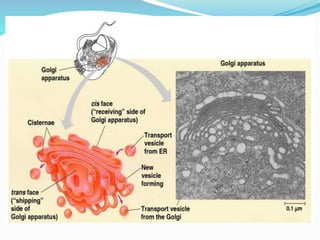
 Golgi complex is a network of flattened smooth
membranous sacs- cisternae and vesicles.
 The membrane of each cisterna separates its
internal space from the cytosol
 One side of the Golgi, the cis side, receives
material by fusing with vesicles, while the other
side, the trans side, buds off vesicles that travel to
other sites.
 These are responsible for the secretion of
proteins from the cells(hormones, plasma
proteins, and digestive enzymes).
 It works in combination with ER.
 Enzymes in golgi complex transfer
carbohydrate units to proteins to form of
glycoporoteins, this determines the ultimate
destination of proteins.
 Golgi is the major site for the synthesis of
new membrane, lysosomes and
peroxisomes.
 It plays two major roles in the membrane
synthesis:
i. It is involved in the processing of
oligosaccharide chains of the
membranes (all parts of the GA
participates).
ii. It is involved in the sorting of various
proteins prior to their delivery(Trans
Golgi network).
 During their transit from the cis to trans pole,
products from the ER are modified to reach their
final state.
 This includes modifications of the oligosaccharide
portion of glycoproteins.
 The Golgi can also manufacture its own
macromolecules, including pectin and other
noncellulose polysaccharides.
 During processing material is moved from cisterna
to cisterna, each with its own set of enzymes.
 Finally, the Golgi tags, sorts, and packages materials
into transport vesicles.
LYSOSOMES
 These are responsible for the intracellular
digestion of both intra and extracellular
substances.
 They have a single limiting membrane.
 They have an acidic pH- 5
 They have a group of enzymes called
Hydrolases. Lysosomal enzymes can hydrolyze
proteins, fats, polysaccharides, and nucleic
acids.
Biomedical importance
 The enzyme content varies in different
tissues according to the requirement of
tissues or the metabolic activity of the tissue.
 Lysosomal membrane is impermeable and
specific translocations are required.
 Vesicles containing external material fuses
with lysosomes, form primary vesicles and
then secondary vesicles or digestive vacuoles.
 Lysosomes are also involved in autophagy.
 Products of lysosomal digestion are released
and reutilised.
 Indigestible material accumulates in the
vesicles called residual bodies and their
material is removed by exocytosis.
 Some residual bodies in non dividing cells
contain a high amount of a pigmented
substance called Lipofuscin.
 Also called age pigment or wear–tear
pigment.
 In some genetic disease individual
lysosomal enzymes are missing and this lead
to the accumulation of that particular
substance.
 Such lysosomes gets enlarged and they
interfere the normal function of the cell.
 Such diseases are called lysosomal storage
diseases
 Most importantt is I-cell disease (inclusion-
cell disease).
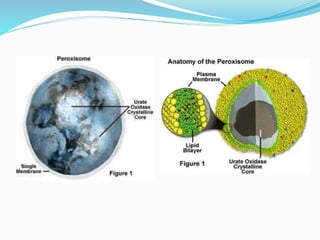
PEROXISOMES
 Called Peroxisomes because of their ability to
produce or utilize H2O2. Peroxisomes contain
enzymes that can transform hydrogen into oxygen,
creating hydrogen peroxide as a waste product. This
oxygen can be used to brake down macromolecules
into smaller molecules that can be used for cellular
respiration.
 They are small, oval or spherical in shape.
 They have a fine network of tubules in their matrix.
 About 50 enzymes have been identified.The number
of enzymes fluctuates according to the function of
the cells.
Biomedical importance
 Xenobiotics leads to the proliferation of
Peroxisomes in the liver.
 Have an important role in the breakdown of
lipids, particularly long chain fatty acids.
 Synthesis of glycerolipids.
 Synthesis of glycerol ether lipids.
 Synthesis of isoprenoids.
 Synthesis of bile.
Oxidation of D- amino acids.
Oxidation of Uric acid to allantoin
(animals)
Oxidation of Hydroxy acids which
leads to the formation of H2O2.
Contain catalase enzyme, which causes
the breakdown of H2O2 .
Diseases associated:
Most important disease is Zellweger
Syndrome. There is absence of
functional peroxisomes. This leads to
the accumulation of long chain fatty
acids in the brain, decreased formation
of plasmalogens (type of
phospholipid), and defects of bile acid
formation.

Endo membrane system

  • 1.
    ENDOPLASMIC RETICULUM  Cytoplasmof eukaryotic cells contain a network of interconnecting membranes. This extensive structure is called endoplasmic reticulum.  It consists of membranes with smooth appearance in some areas and rough appearance in some areas- Smooth endoplasmic reticulum and rough endoplasmic reticulum.
  • 3.
    Biomedical importance Rough EndoplasmicReticulum  These membranes enclose a lumen.  In this lumen newly synthesized proteins are modified.  Rough appearance is due to the presence of ribosomes attached on its cytosolic side(outer side).  These ribosomes are involved in the biosynthesis of proteins.
  • 4.
     The synthesizedproteinsare either incorporated into the membranes or into the organelles.  Special proteins are present that are called CHAPERONES. Theses proteins play a role in proper folding of newly synthsied proteins.  Protein glycosylation also occurs in ER i.e. the carbohydrates are attached to the newly synthesized proteins.
  • 5.
    Smooth Endoplasmic Reticulum Smooth endoplasmic reticulum is involved in lipid synthesis.  Cholesterol synthesis  Steroid hormones synthesis.  Detoxification of endogenous and exogenous substances.  The enzyme system involved in detoxification is called Microsomal Cytochrome P450 monooxygenase system(xenobiotic metabolism).
  • 6.
     ER alongwith Golgi apparatus is involved in the synthesis of other organelles –lysosomes & Peroxisomes.  Elongation of fatty acids e.g. Palmitic acid 16 C- Stearic acid 18 C.  Desaturation of fatty acids.  Omega oxidation of fatty acids.
  • 8.
    GOLGI APPARATUS  Golgicomplex is a network of flattened smooth membranous sacs- cisternae and vesicles.  The membrane of each cisterna separates its internal space from the cytosol  One side of the Golgi, the cis side, receives material by fusing with vesicles, while the other side, the trans side, buds off vesicles that travel to other sites.  These are responsible for the secretion of proteins from the cells(hormones, plasma proteins, and digestive enzymes).  It works in combination with ER.
  • 10.
     Enzymes ingolgi complex transfer carbohydrate units to proteins to form of glycoporoteins, this determines the ultimate destination of proteins.  Golgi is the major site for the synthesis of new membrane, lysosomes and peroxisomes.  It plays two major roles in the membrane synthesis:
  • 11.
    i. It isinvolved in the processing of oligosaccharide chains of the membranes (all parts of the GA participates). ii. It is involved in the sorting of various proteins prior to their delivery(Trans Golgi network).
  • 12.
     During theirtransit from the cis to trans pole, products from the ER are modified to reach their final state.  This includes modifications of the oligosaccharide portion of glycoproteins.  The Golgi can also manufacture its own macromolecules, including pectin and other noncellulose polysaccharides.  During processing material is moved from cisterna to cisterna, each with its own set of enzymes.  Finally, the Golgi tags, sorts, and packages materials into transport vesicles.
  • 13.
    LYSOSOMES  These areresponsible for the intracellular digestion of both intra and extracellular substances.  They have a single limiting membrane.  They have an acidic pH- 5  They have a group of enzymes called Hydrolases. Lysosomal enzymes can hydrolyze proteins, fats, polysaccharides, and nucleic acids.
  • 15.
    Biomedical importance  Theenzyme content varies in different tissues according to the requirement of tissues or the metabolic activity of the tissue.  Lysosomal membrane is impermeable and specific translocations are required.  Vesicles containing external material fuses with lysosomes, form primary vesicles and then secondary vesicles or digestive vacuoles.  Lysosomes are also involved in autophagy.
  • 16.
     Products oflysosomal digestion are released and reutilised.  Indigestible material accumulates in the vesicles called residual bodies and their material is removed by exocytosis.  Some residual bodies in non dividing cells contain a high amount of a pigmented substance called Lipofuscin.  Also called age pigment or wear–tear pigment.
  • 17.
     In somegenetic disease individual lysosomal enzymes are missing and this lead to the accumulation of that particular substance.  Such lysosomes gets enlarged and they interfere the normal function of the cell.  Such diseases are called lysosomal storage diseases  Most importantt is I-cell disease (inclusion- cell disease).
  • 19.
    PEROXISOMES  Called Peroxisomesbecause of their ability to produce or utilize H2O2. Peroxisomes contain enzymes that can transform hydrogen into oxygen, creating hydrogen peroxide as a waste product. This oxygen can be used to brake down macromolecules into smaller molecules that can be used for cellular respiration.  They are small, oval or spherical in shape.  They have a fine network of tubules in their matrix.  About 50 enzymes have been identified.The number of enzymes fluctuates according to the function of the cells.
  • 21.
    Biomedical importance  Xenobioticsleads to the proliferation of Peroxisomes in the liver.  Have an important role in the breakdown of lipids, particularly long chain fatty acids.  Synthesis of glycerolipids.  Synthesis of glycerol ether lipids.  Synthesis of isoprenoids.  Synthesis of bile.
  • 22.
    Oxidation of D-amino acids. Oxidation of Uric acid to allantoin (animals) Oxidation of Hydroxy acids which leads to the formation of H2O2. Contain catalase enzyme, which causes the breakdown of H2O2 .
  • 23.
    Diseases associated: Most importantdisease is Zellweger Syndrome. There is absence of functional peroxisomes. This leads to the accumulation of long chain fatty acids in the brain, decreased formation of plasmalogens (type of phospholipid), and defects of bile acid formation.