ENDANGERED SPECIES
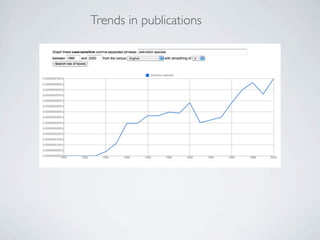
Trends in publications
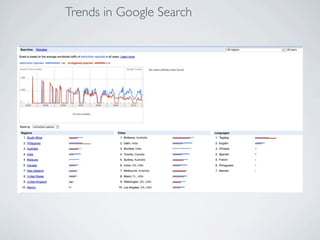
Trends in Google Search
The 2008 IUCN Red List contains information on the conservation status of all of the
world's known mammal species Over 1,700 experts have contributed to these assessments.
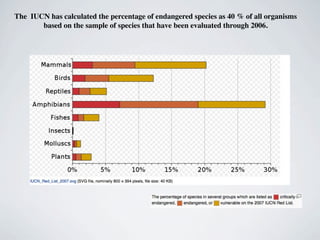
The IUCN has calculated the percentage of endangered species as 40 % of all organisms
       based on the sample of species that have been evaluated through 2006.
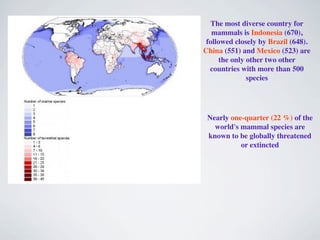
The most diverse country for
   mammals is Indonesia (670),
 followed closely by Brazil (648).
China (551) and Mexico (523) are
      the only other two other
  countries with more than 500
               species


 Nearly one-quarter (22 %) of the
   world's mammal species are
 known to be globally threatened
           or extincted
“It has confirmed an extinction crisis,
with almost one in four [mammals] at     1,141 of the 5,487 mammals on Earth are known to be
risk of disappearing forever”            threatened with extinction
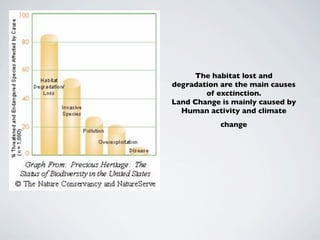
The habitat lost and
degradation are the main causes
        of exctinction.
Land Change is mainly caused by
  Human activity and climate
            change
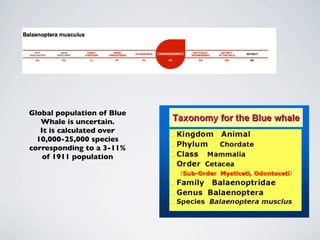
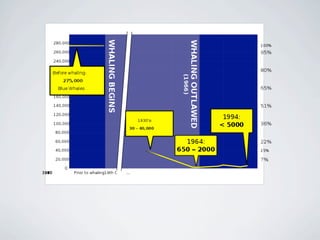
Global population of Blue
   Whale is uncertain.
   It is calculated over
  10,000-25,000 species
corresponding to a 3-11%
    of 1911 population
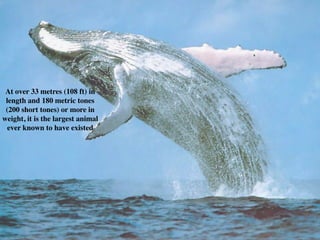
At over 33 metres (108 ft) in
 length and 180 metric tones
 (200 short tones) or more in
weight, it is the largest animal
  ever known to have existed
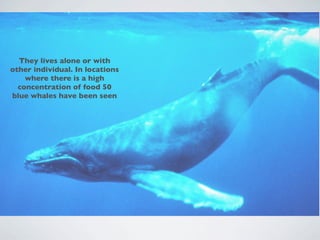
They lives alone or with
other individual. In locations
    where there is a high
  concentration of food 50
blue whales have been seen
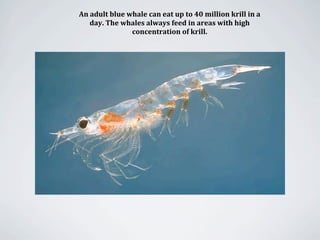
An
adult
blue
whale
can
eat
up
to
40
million
krill
in
a

   day.
The
whales
always
feed
in
areas
with
high

               concentration
of
krill.
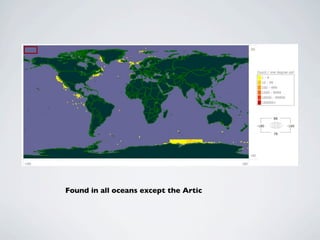
Found in all oceans except the Artic
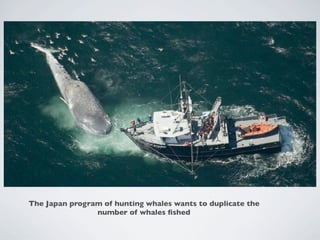
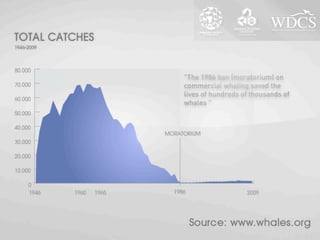
The Japan program of hunting whales wants to duplicate the
                number of whales fished
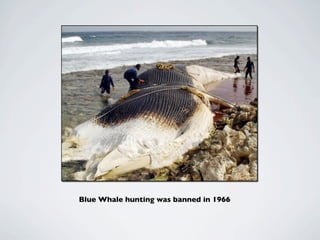
Blue Whale hunting was banned in 1966
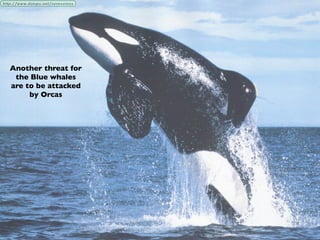
Another threat for
 the Blue whales
are to be attacked
     by Orcas
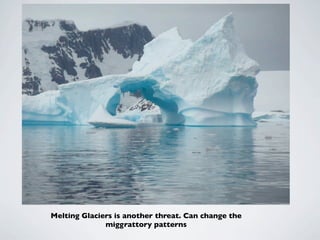
Melting Glaciers is another threat. Can change the
              miggrattory patterns
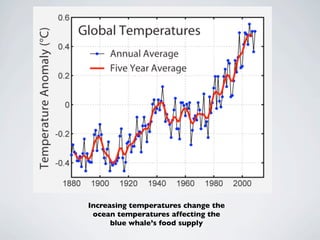
Increasing temperatures change the
 ocean temperatures affecting the
      blue whale’s food supply

Endangered Species: Blue Whale

  • 1.
  • 2.
  • 3.
  • 4.
    The 2008 IUCNRed List contains information on the conservation status of all of the world's known mammal species Over 1,700 experts have contributed to these assessments.
  • 5.
    The IUCN hascalculated the percentage of endangered species as 40 % of all organisms based on the sample of species that have been evaluated through 2006.
  • 6.
    The most diversecountry for mammals is Indonesia (670), followed closely by Brazil (648). China (551) and Mexico (523) are the only other two other countries with more than 500 species Nearly one-quarter (22 %) of the world's mammal species are known to be globally threatened or extincted
  • 7.
    “It has confirmedan extinction crisis, with almost one in four [mammals] at 1,141 of the 5,487 mammals on Earth are known to be risk of disappearing forever” threatened with extinction
  • 8.
    The habitat lostand degradation are the main causes of exctinction. Land Change is mainly caused by Human activity and climate change
  • 9.
    Global population ofBlue Whale is uncertain. It is calculated over 10,000-25,000 species corresponding to a 3-11% of 1911 population
  • 10.
    At over 33 metres(108 ft) in length and 180 metric tones (200 short tones) or more in weight, it is the largest animal ever known to have existed
  • 11.
    They lives aloneor with other individual. In locations where there is a high concentration of food 50 blue whales have been seen
  • 12.
    An
adult
blue
whale
can
eat
up
to
40
million
krill
in
a
 day.
The
whales
always
feed
in
areas
with
high
 concentration
of
krill.
  • 13.
    Found in alloceans except the Artic
  • 15.
    The Japan programof hunting whales wants to duplicate the number of whales fished
  • 16.
    Blue Whale huntingwas banned in 1966
  • 18.
    Another threat for the Blue whales are to be attacked by Orcas
  • 19.
    Melting Glaciers isanother threat. Can change the miggrattory patterns
  • 20.
    Increasing temperatures changethe ocean temperatures affecting the blue whale’s food supply