Fitango Education
          Health Topics

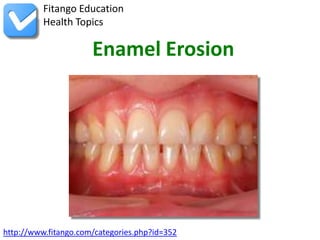
                      Enamel Erosion


http://www.fitango.com/categories.php?id=352
Overview
Enamel is the hard calcified tissue covering the
dentin in the crown of tooth. Because it contains
no living cells, tooth enamel cannot repair damage
from decay or from wear.


                                                     1
Overview
Enamel helps protect your teeth from daily use
such as chewing, biting, crunching, and grinding.
Although enamel is a hard protector of teeth, it
can chip, crack, and erode over time. Enamel
erosion happens when the tooth can not be
protected by its outside covering and
is susceptible to damage, stains, and decay.


                                                    2
Symptoms
The symptoms of enamel erosion can
vary, depending on the stage. Some symptoms
may include:


                                              3
Symptoms
                **Sensitivity **
Certain foods (like sweets) and temperatures of
foods (either hot or cold) may cause pain in the
early stage of enamel erosion.


                                                   4
Symptoms
              **Discoloration**
As the enamel erodes and the layers beneath
become exposed, the teeth may begin to appear
yellow.


                                                5
Symptoms
        **Cracks, chips, and indents**
The edges of teeth become more rough, irregular,
indented, and jagged as enamel erodes.


                                                   6
Symptoms
         **Severe, painful sensitivity**
In the later stages of enamel erosion, teeth
become extremely sensitive to sweets and
temperatures.
When enamel erodes, the tooth is more prone to
cavities and tooth decay. As cavities grow and
penetrate the tooth, they can affect the tiny nerve
fibers, resulting in a painful abscess or infection.


                                                       7
Causes
Enamel erosion can be caused by the following:
-- Excessive soft drink consumption (high levels of
phosphoric and citric acids)
-- Fruit drinks (high acidity)
-- Dry mouth or low salivary flow


                                                      8
Causes
-- A diet high in sugars and starches
-- Acid reflux disease
-- Gastrointestinal problems
-- Medications like aspirin and antihistamines
-- Genetics


                                                 9
Causes
-- Environmental factors (friction, wear and
tear, stress, and corrosion*)
Friction can be caused by teeth grinding. Wear and
tear includes
brushing teeth too hard, chewing tobacco, and
biting on hard objects. Corrosion is caused by
frequent vomiting, medicines like aspirin or
vitamin C tablets, and highly acidic foods.

                                                     10
Causes
http://www.webmd.com/oral-health/guide/tooth-
enamel-erosion-restoration


                                                11
Treatment
Treating enamel erosion depends on the severity
of the condition. Sometimes tooth bonding is used
to protect teeth and enhance cosmetic
appearance.
If the enamel erosion is significant, a dentist
may recommend a crown to cover the tooth and
prevent it from further decay.


                                                    12
Prevention
One of the best ways to prevent enamel loss is to
keep teeth healthy; be sure to brush and floss
daily. In addition, see your dentist every six months
for regular checkups and cleanings.
You can also try the following:


                                                        13
Prevention
-- Eliminate highly acidic foods and drinks from
your diet (carbonated sodas, lemons, and other
citrus fruits and juices)
-- Rinse your mouth immediately with water after
eating or drinking acidic items
-- Use a straw when you drink acidic drinks. The
straw helps to avoid your teeth by pushing the
acidic liquid to the back of your mouth

                                                   14
Prevention
-- Monitor snacks because snacking throughout the
day increases the chance of tooth decay. The
mouth is acidic for a few hours after eating foods
high in sugar and starches. Avoid snacking unless
you are able to brush your teeth directly after


                                                     15
Prevention
-- Chew sugar-free gum between meals. Chewing
gum boosts saliva production up to 10 times the
normal flow, which can help strengthen teeth with
important minerals. Be sure to select sugar-free
gum with xylitol, which is known to reduce acids
-- Drink more water throughout the day, especially
if you have low saliva volume or dry mouth.


                                                     16
Prevention
-- Use fluoride toothpaste and mouthwash
to strengthen teeth. Ask your dentist if sealants
may be helpful in preventing enamel erosion and
tooth decay.


                                                    17
Enamel Erosion

Enamel Erosion

  • 1.
    Fitango Education Health Topics Enamel Erosion http://www.fitango.com/categories.php?id=352
  • 2.
    Overview Enamel is thehard calcified tissue covering the dentin in the crown of tooth. Because it contains no living cells, tooth enamel cannot repair damage from decay or from wear. 1
  • 3.
    Overview Enamel helps protectyour teeth from daily use such as chewing, biting, crunching, and grinding. Although enamel is a hard protector of teeth, it can chip, crack, and erode over time. Enamel erosion happens when the tooth can not be protected by its outside covering and is susceptible to damage, stains, and decay. 2
  • 4.
    Symptoms The symptoms ofenamel erosion can vary, depending on the stage. Some symptoms may include: 3
  • 5.
    Symptoms **Sensitivity ** Certain foods (like sweets) and temperatures of foods (either hot or cold) may cause pain in the early stage of enamel erosion. 4
  • 6.
    Symptoms **Discoloration** As the enamel erodes and the layers beneath become exposed, the teeth may begin to appear yellow. 5
  • 7.
    Symptoms **Cracks, chips, and indents** The edges of teeth become more rough, irregular, indented, and jagged as enamel erodes. 6
  • 8.
    Symptoms **Severe, painful sensitivity** In the later stages of enamel erosion, teeth become extremely sensitive to sweets and temperatures. When enamel erodes, the tooth is more prone to cavities and tooth decay. As cavities grow and penetrate the tooth, they can affect the tiny nerve fibers, resulting in a painful abscess or infection. 7
  • 9.
    Causes Enamel erosion canbe caused by the following: -- Excessive soft drink consumption (high levels of phosphoric and citric acids) -- Fruit drinks (high acidity) -- Dry mouth or low salivary flow 8
  • 10.
    Causes -- A diethigh in sugars and starches -- Acid reflux disease -- Gastrointestinal problems -- Medications like aspirin and antihistamines -- Genetics 9
  • 11.
    Causes -- Environmental factors(friction, wear and tear, stress, and corrosion*) Friction can be caused by teeth grinding. Wear and tear includes brushing teeth too hard, chewing tobacco, and biting on hard objects. Corrosion is caused by frequent vomiting, medicines like aspirin or vitamin C tablets, and highly acidic foods. 10
  • 12.
  • 13.
    Treatment Treating enamel erosiondepends on the severity of the condition. Sometimes tooth bonding is used to protect teeth and enhance cosmetic appearance. If the enamel erosion is significant, a dentist may recommend a crown to cover the tooth and prevent it from further decay. 12
  • 14.
    Prevention One of thebest ways to prevent enamel loss is to keep teeth healthy; be sure to brush and floss daily. In addition, see your dentist every six months for regular checkups and cleanings. You can also try the following: 13
  • 15.
    Prevention -- Eliminate highlyacidic foods and drinks from your diet (carbonated sodas, lemons, and other citrus fruits and juices) -- Rinse your mouth immediately with water after eating or drinking acidic items -- Use a straw when you drink acidic drinks. The straw helps to avoid your teeth by pushing the acidic liquid to the back of your mouth 14
  • 16.
    Prevention -- Monitor snacksbecause snacking throughout the day increases the chance of tooth decay. The mouth is acidic for a few hours after eating foods high in sugar and starches. Avoid snacking unless you are able to brush your teeth directly after 15
  • 17.
    Prevention -- Chew sugar-freegum between meals. Chewing gum boosts saliva production up to 10 times the normal flow, which can help strengthen teeth with important minerals. Be sure to select sugar-free gum with xylitol, which is known to reduce acids -- Drink more water throughout the day, especially if you have low saliva volume or dry mouth. 16
  • 18.
    Prevention -- Use fluoridetoothpaste and mouthwash to strengthen teeth. Ask your dentist if sealants may be helpful in preventing enamel erosion and tooth decay. 17