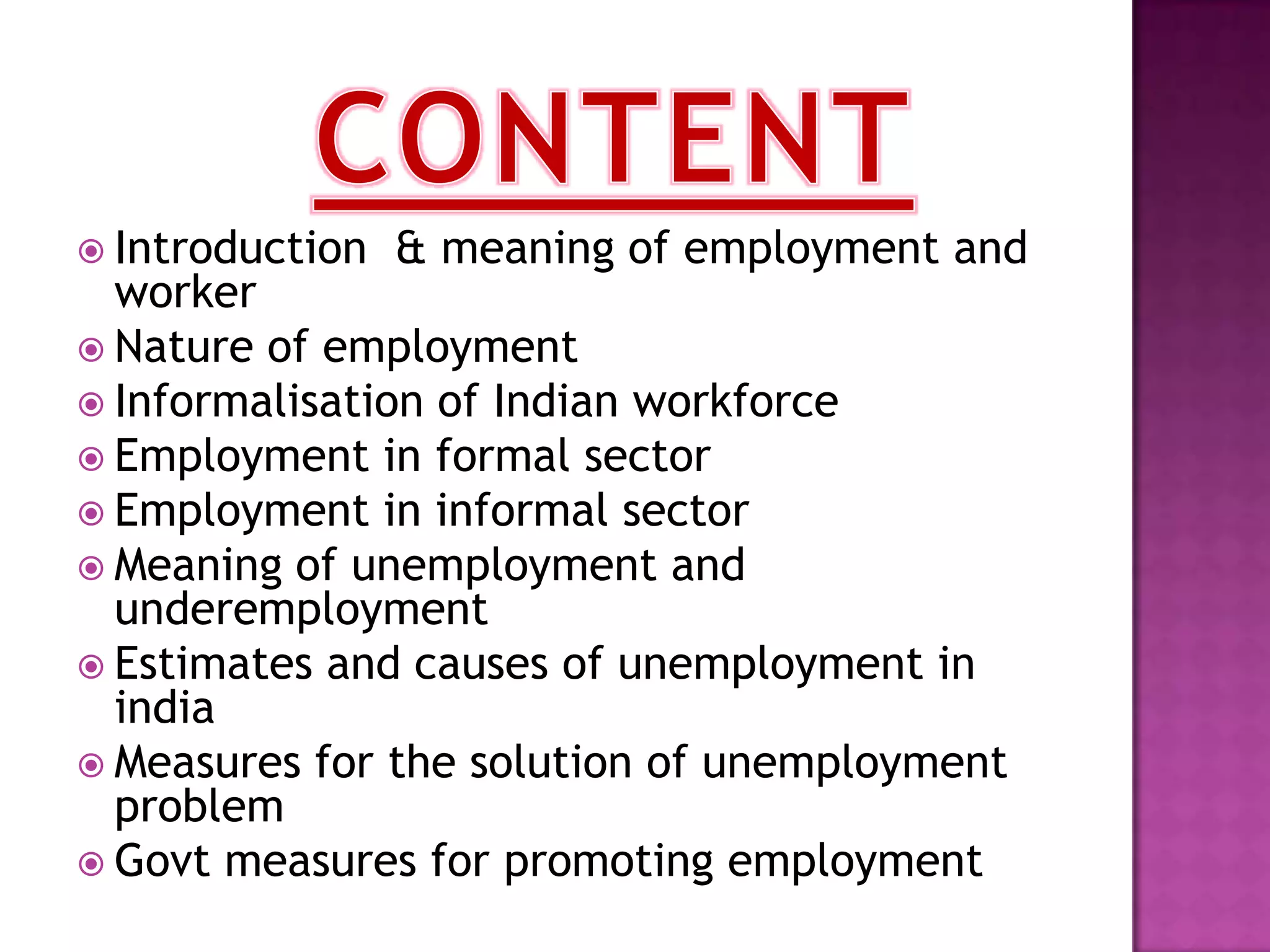
 Introduction

& meaning of employment and

worker
 Nature of employment
 Informalisation of Indian workforce
 Employment in formal sector
 Employment in informal sector
 Meaning of unemployment and
underemployment
 Estimates and causes of unemployment in
india
 Measures for the solution of unemployment
problem
 Govt measures for promoting employment
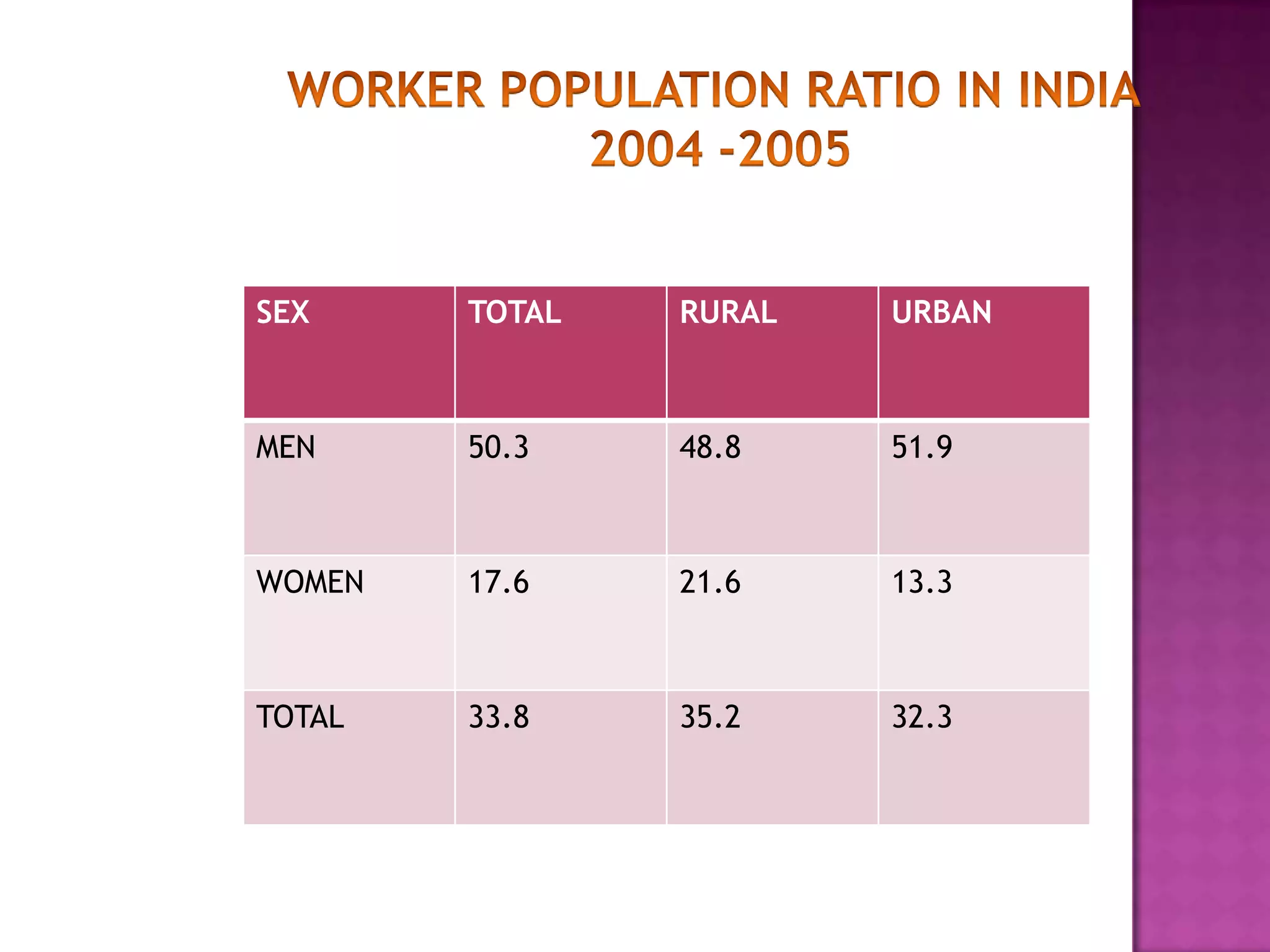
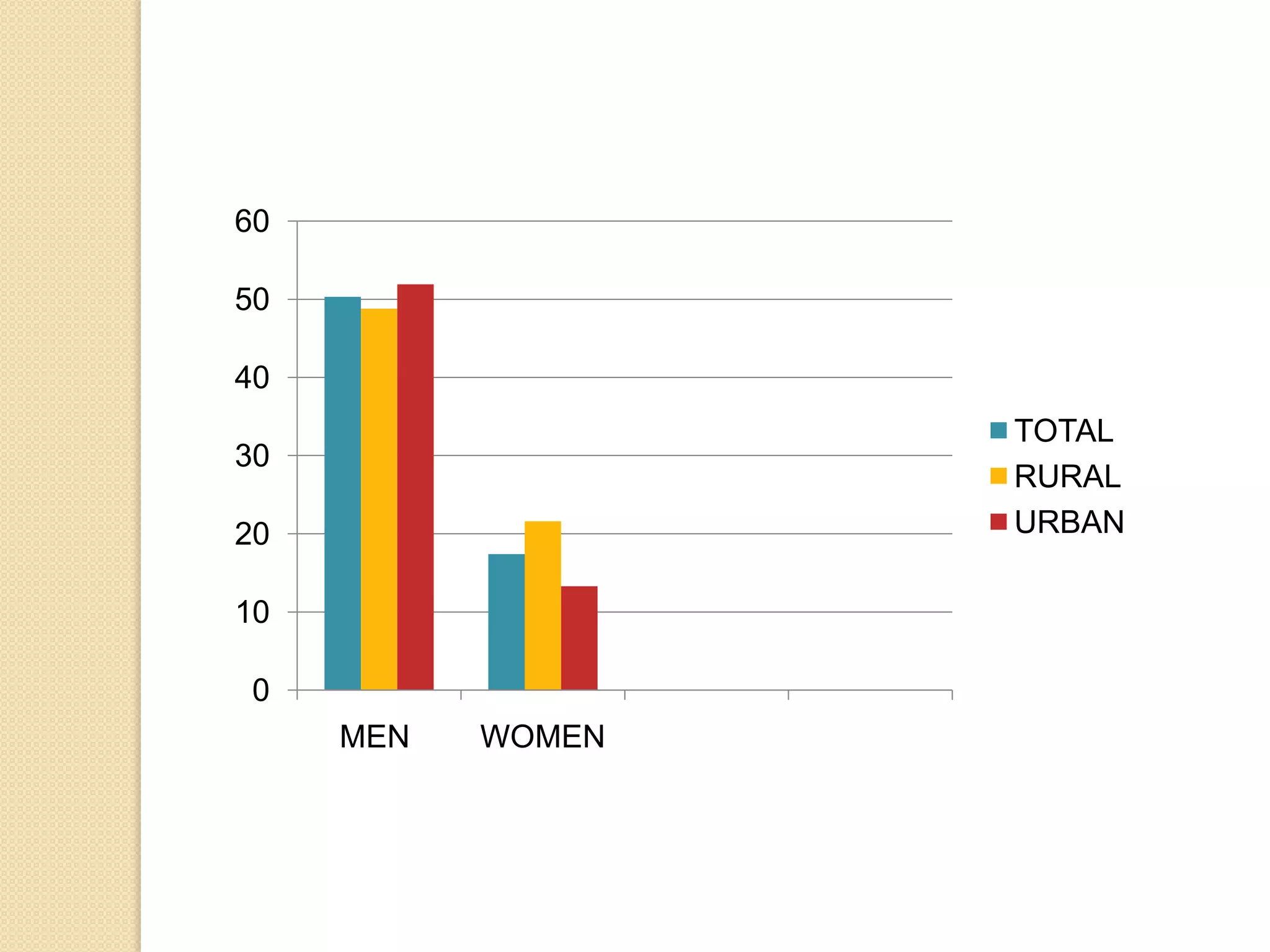
SEX

TOTAL

RURAL

URBAN

MEN

50.3

48.8

51.9

WOMEN

17.6

21.6

13.3

TOTAL

33.8

35.2

32.3
60
50
40

TOTAL
RURAL
URBAN

30
20
10
0
MEN

WOMEN
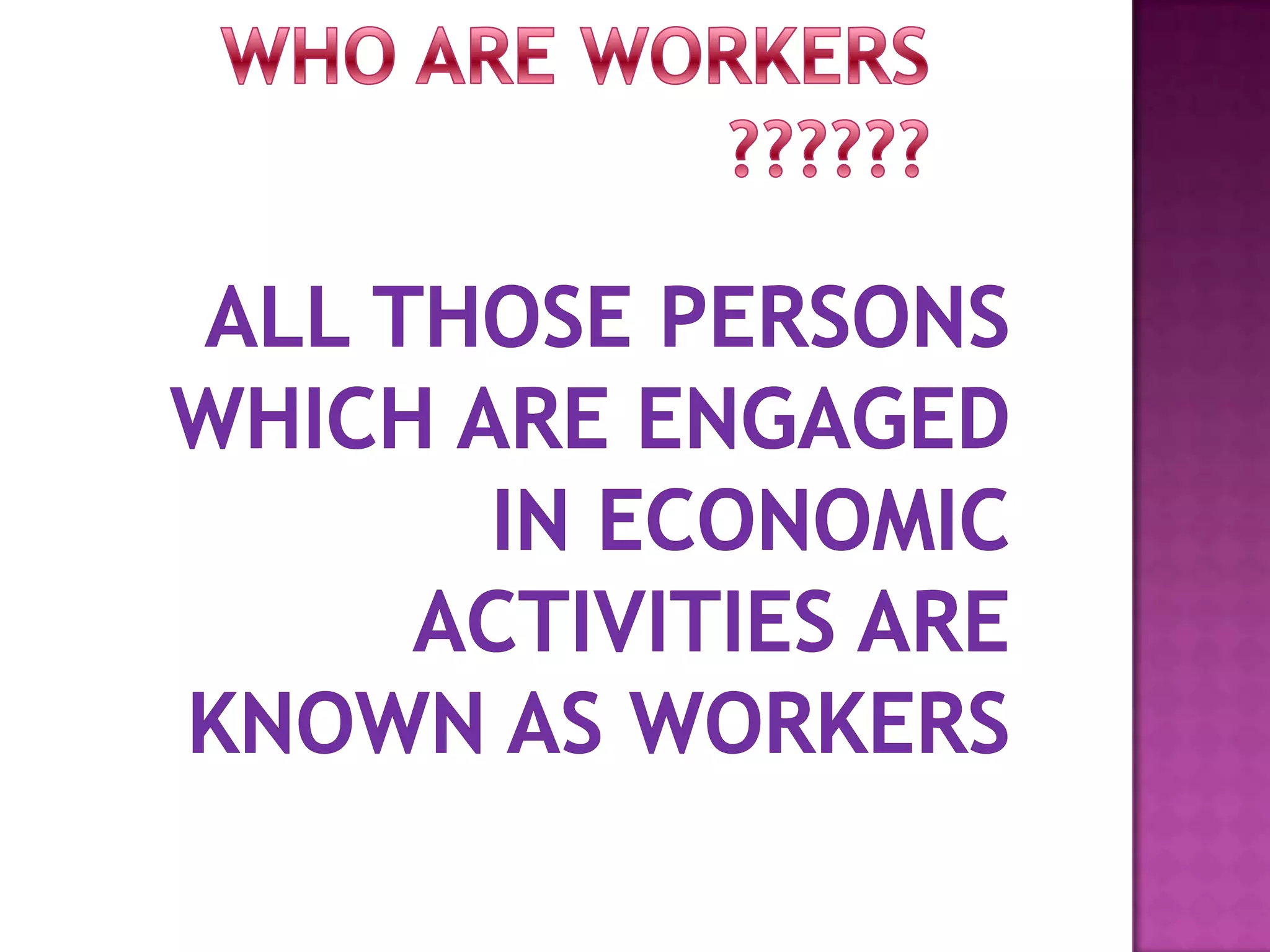
 It

is a situation in which a person goes
for work for a fixed period of time for a
particular and gets salary in return
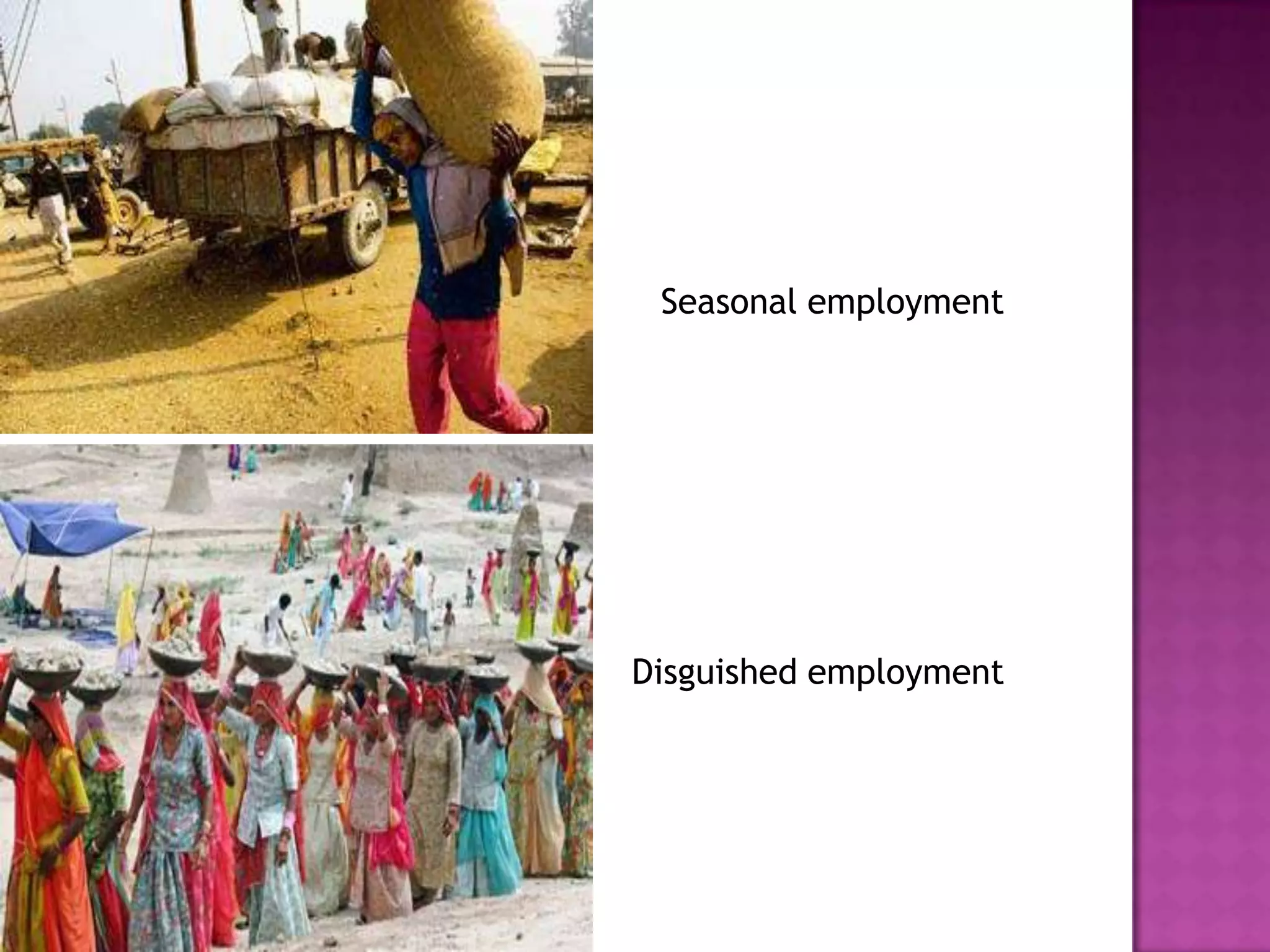
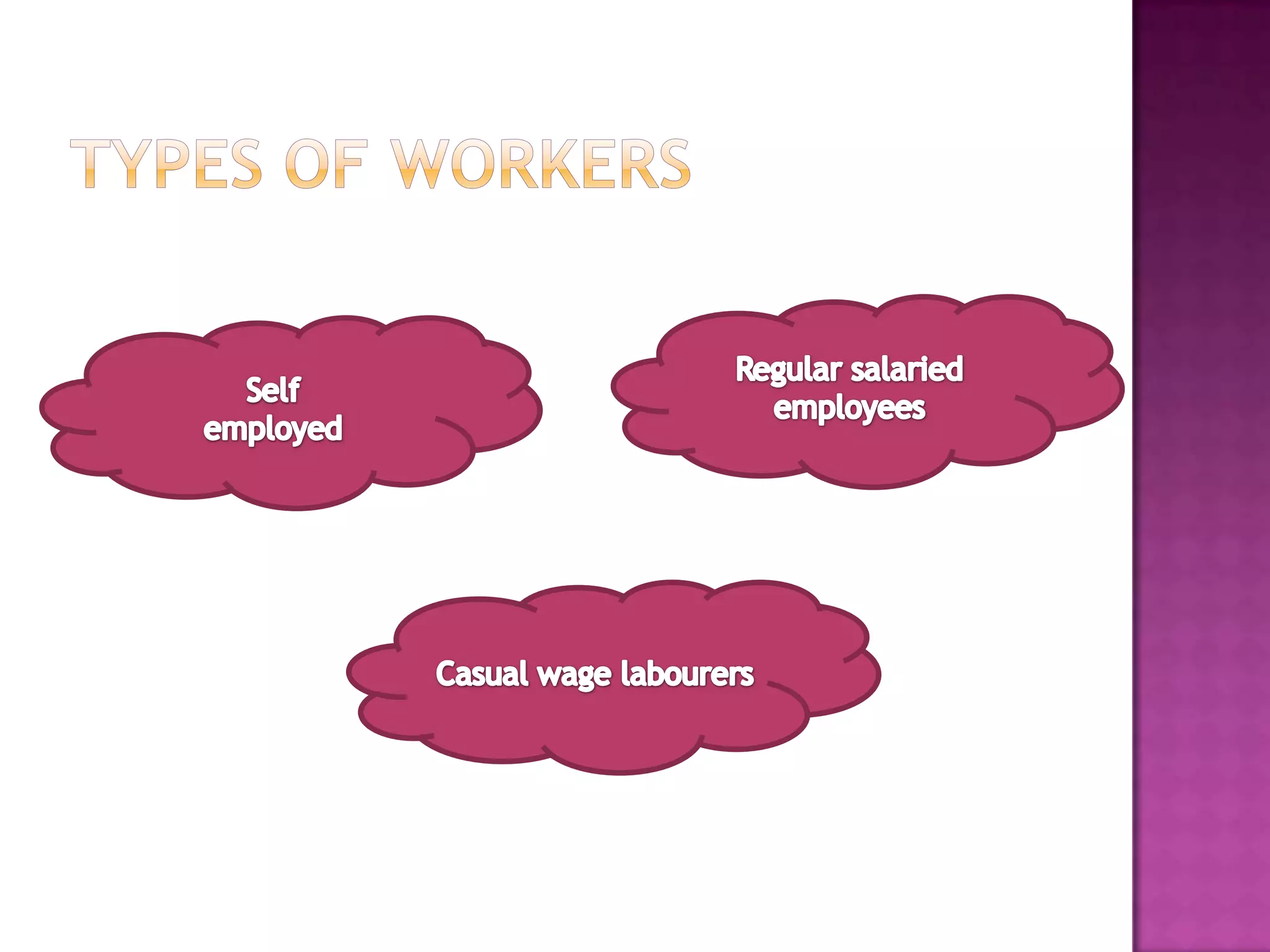
Seasonal employment

Disguished employment
 Nature

of employment in india is
multi faceted.
 Some gets employment throughout
the year.
 Some are employed for only a few
months a year.
 Many workers do not get the fair
wages.
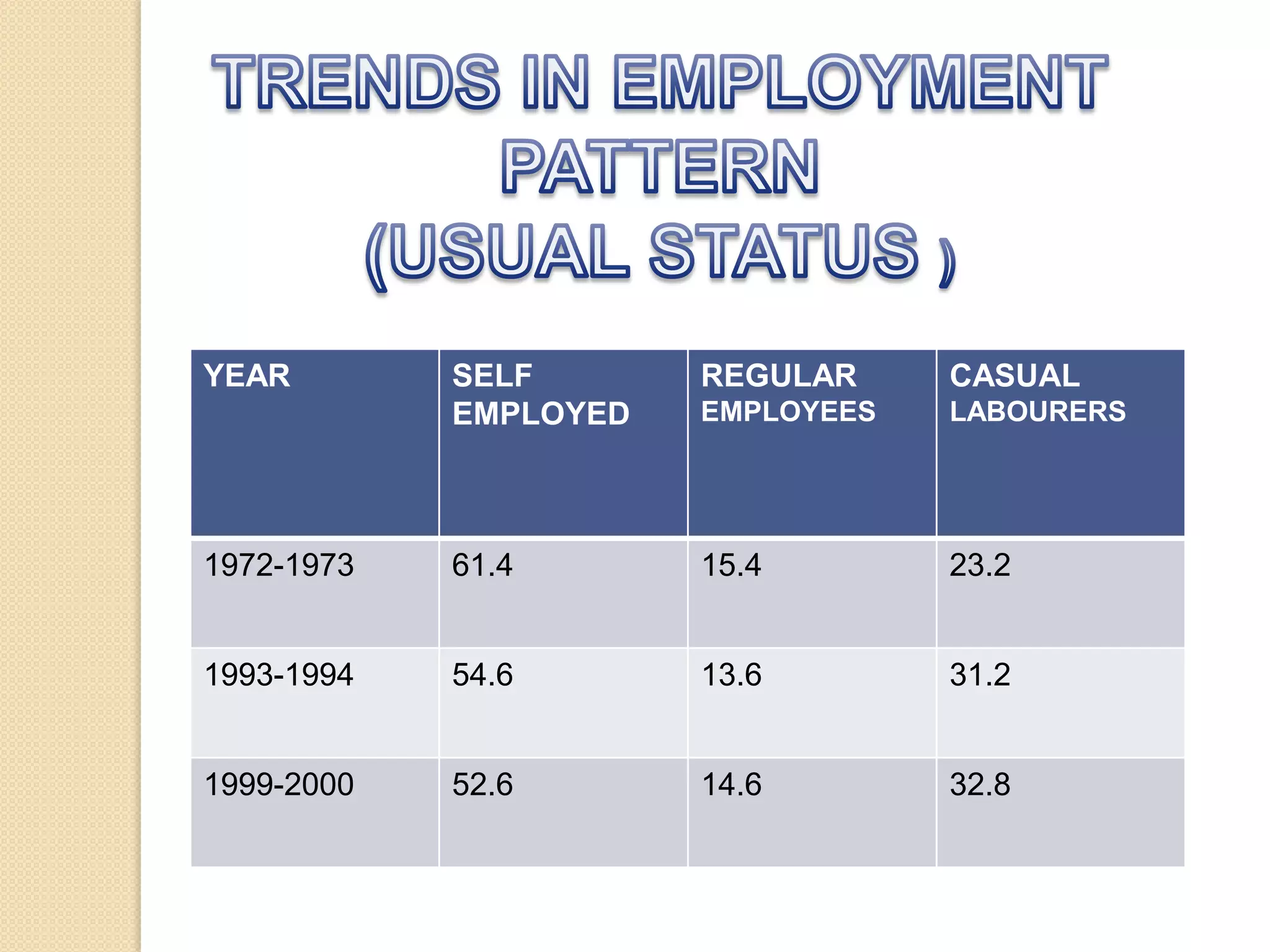
YEAR

SELF
EMPLOYED

REGULAR

CASUAL

EMPLOYEES

LABOURERS

1972-1973

61.4

15.4

23.2

1993-1994

54.6

13.6

31.2

1999-2000

52.6

14.6

32.8
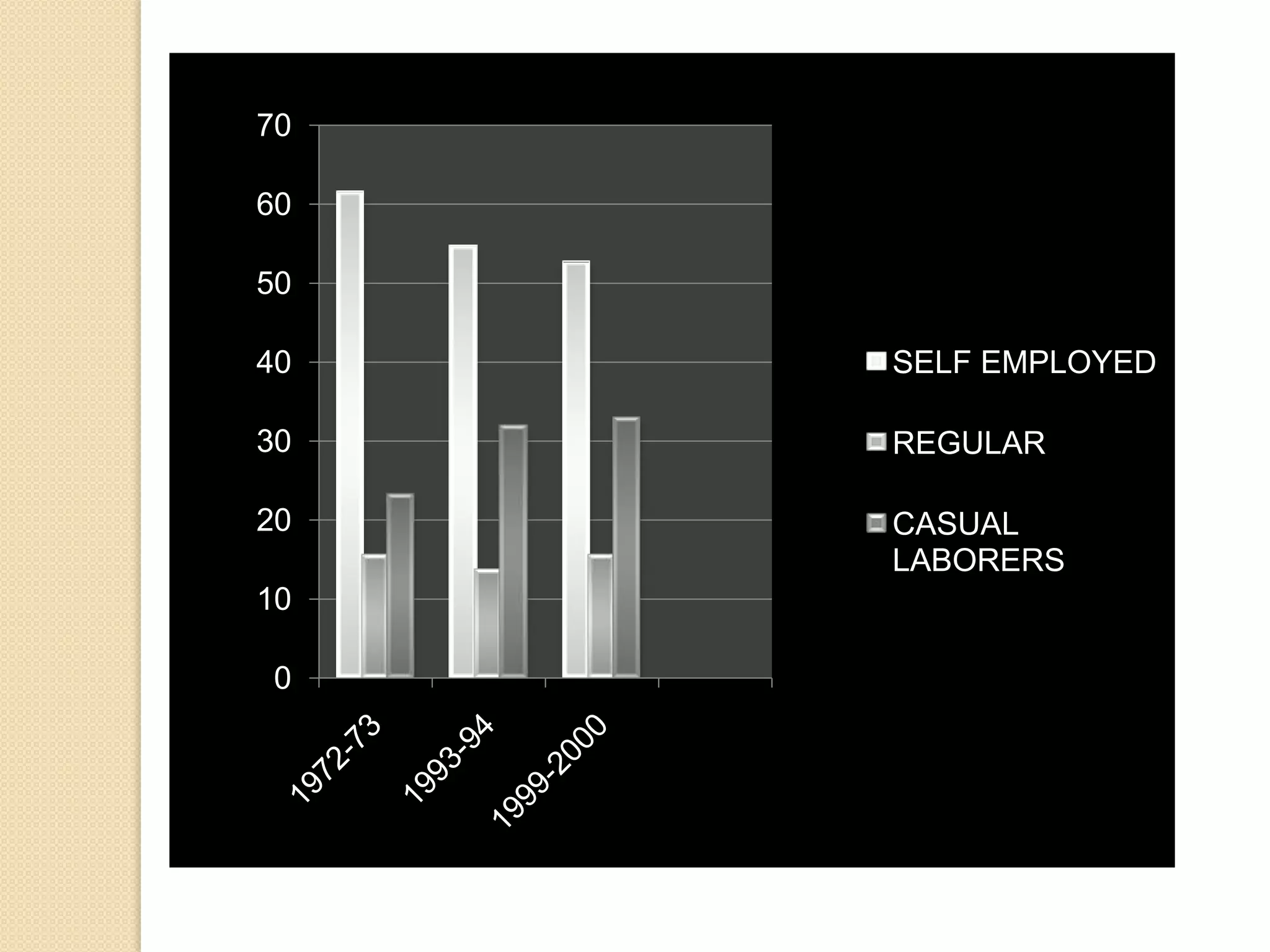
70
60
50
40

SELF EMPLOYED

30

REGULAR

20

CASUAL
LABORERS

10

0
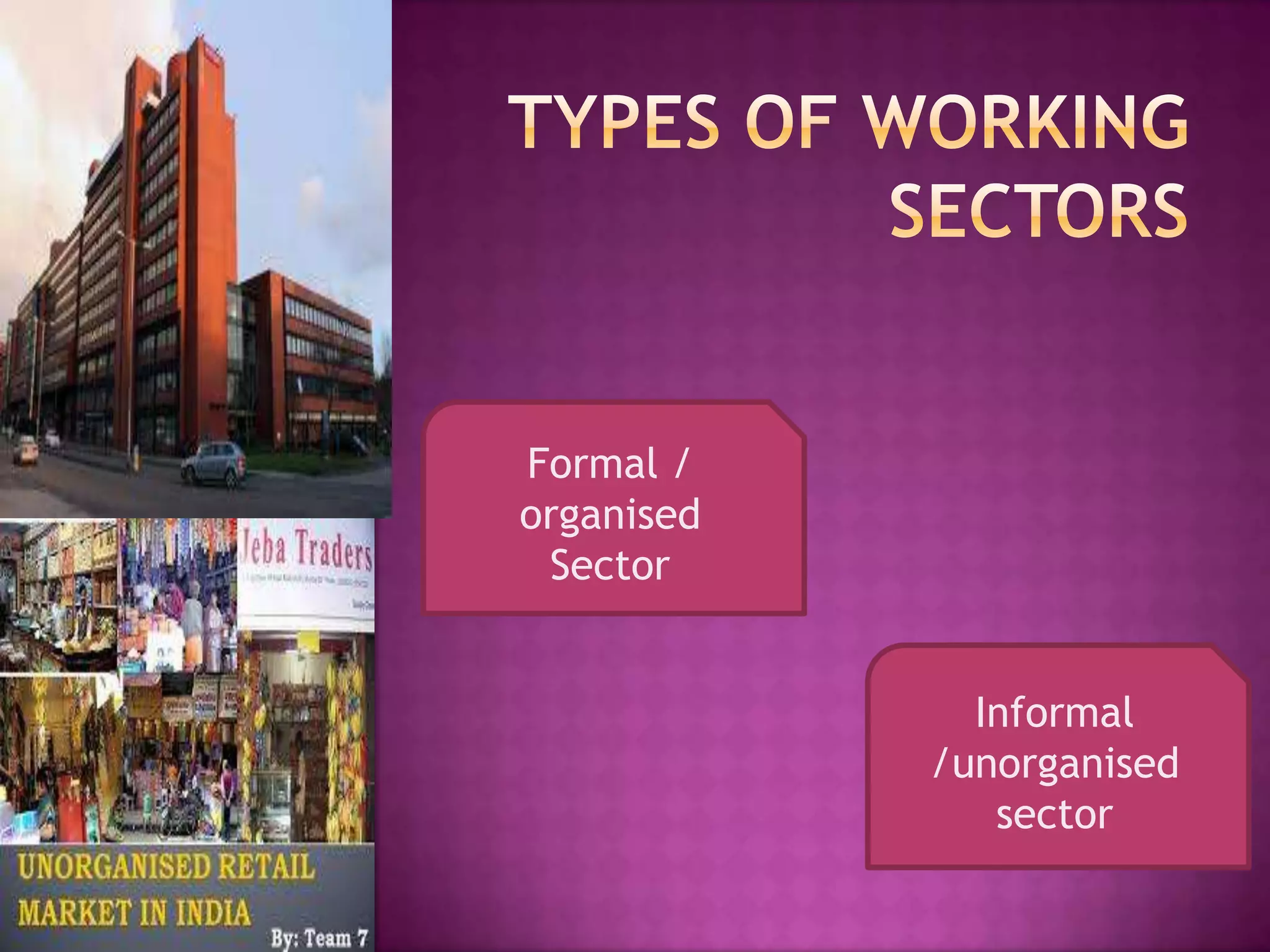
Formal /
organised
Sector

Informal
/unorganised
sector
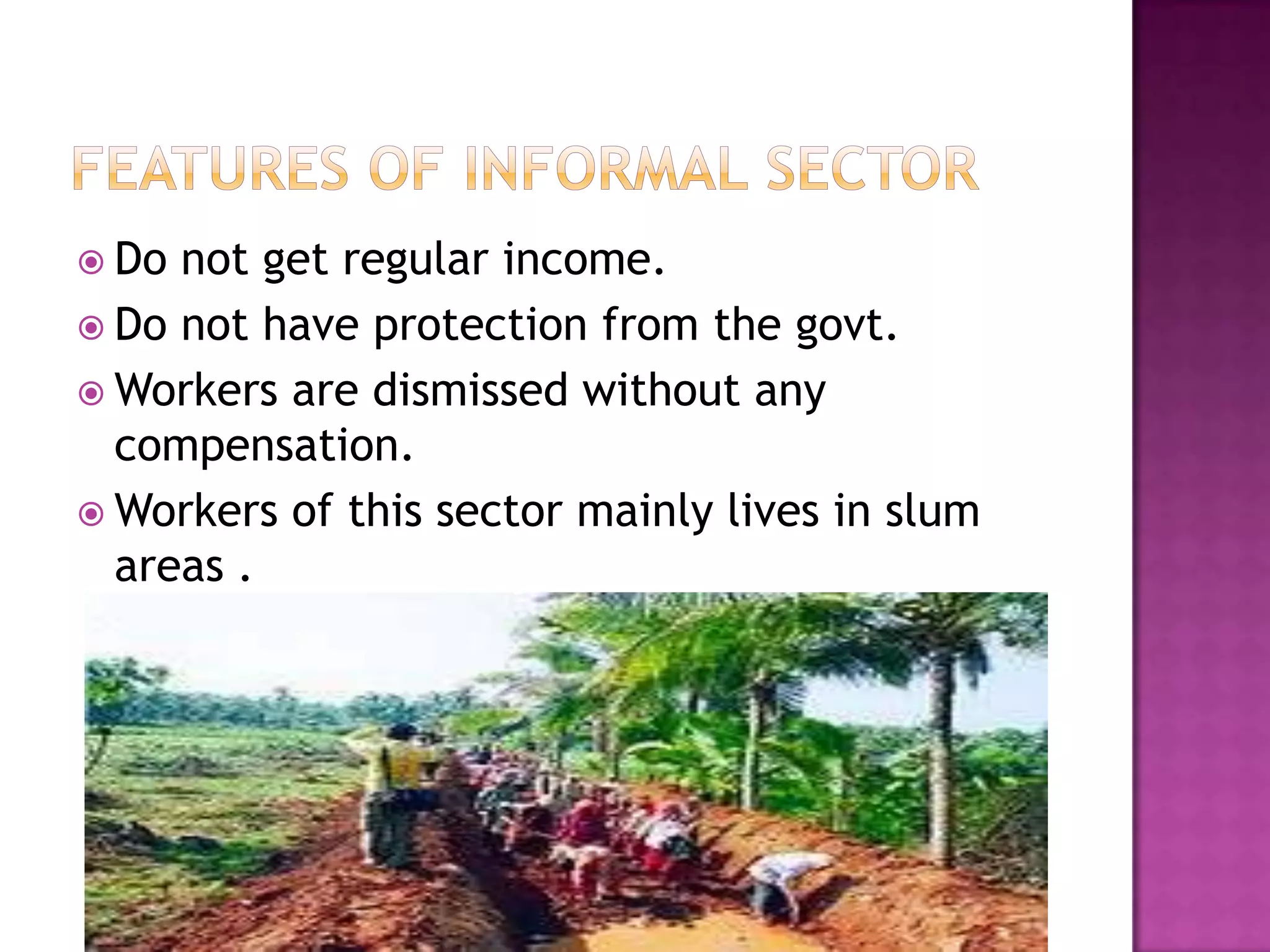
 Do

not get regular income.
 Do not have protection from the govt.
 Workers are dismissed without any
compensation.
 Workers of this sector mainly lives in slum
areas .
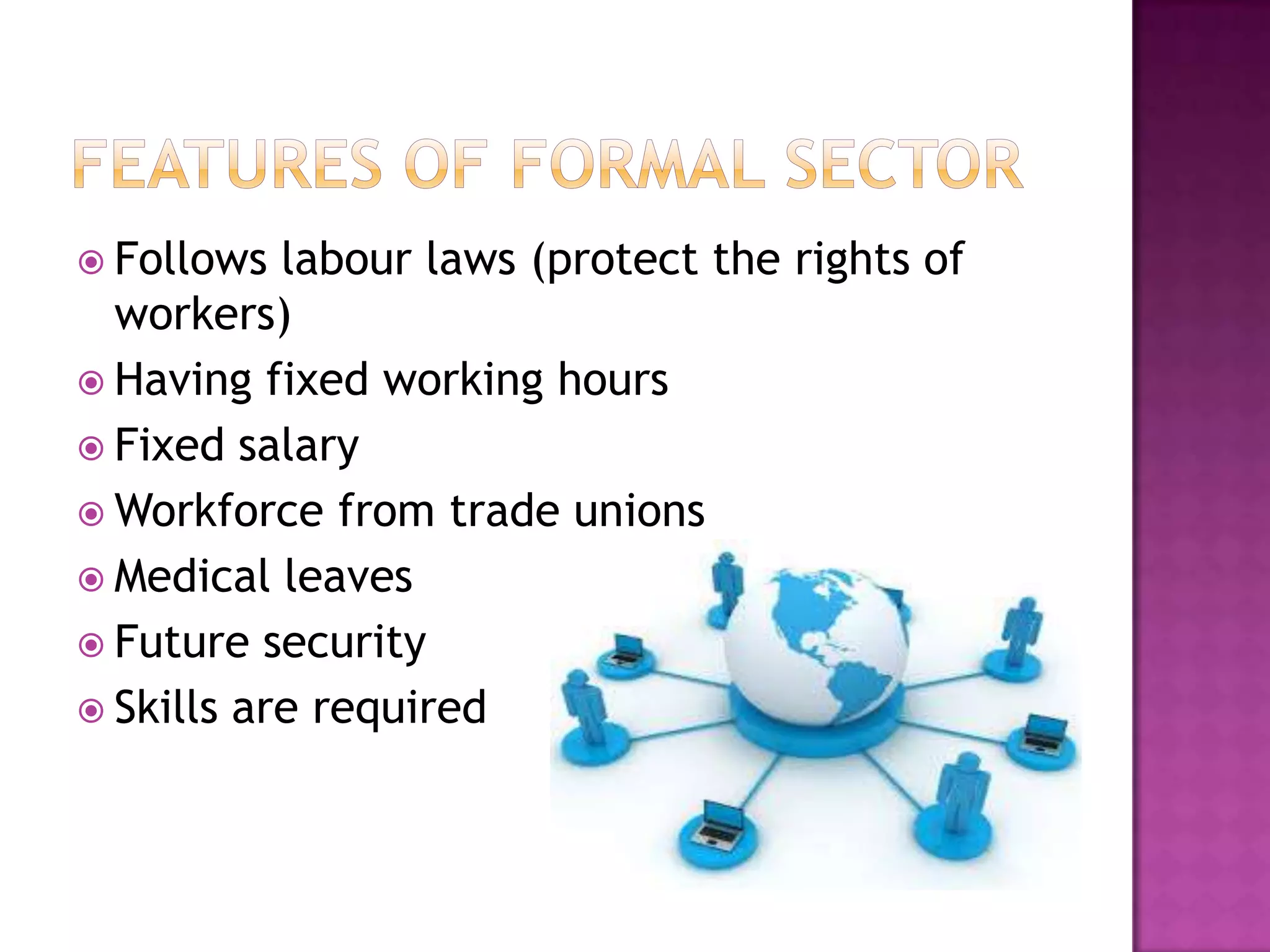
 Follows

labour laws (protect the rights of
workers)
 Having fixed working hours
 Fixed salary
 Workforce from trade unions
 Medical leaves
 Future security
 Skills are required
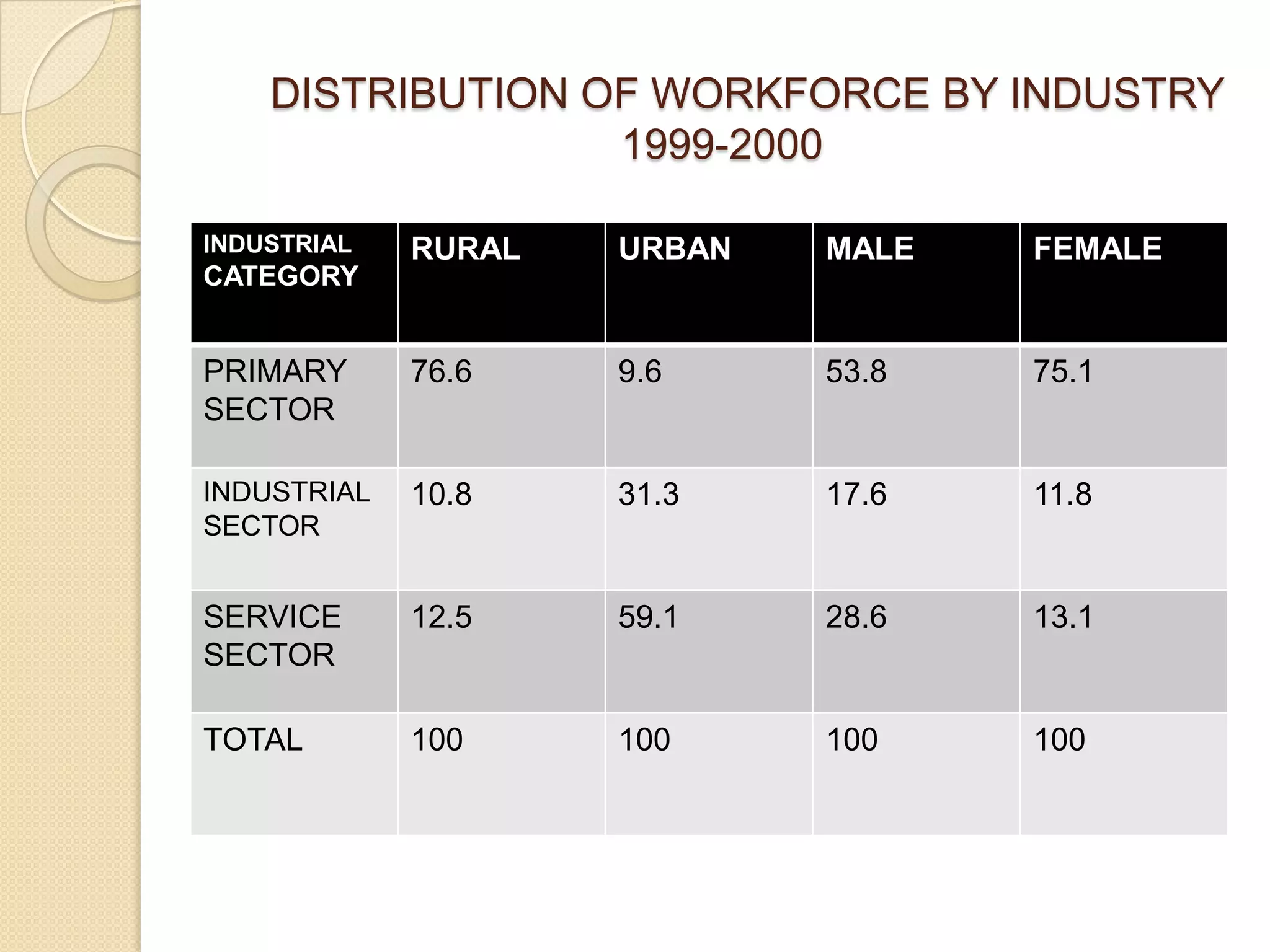
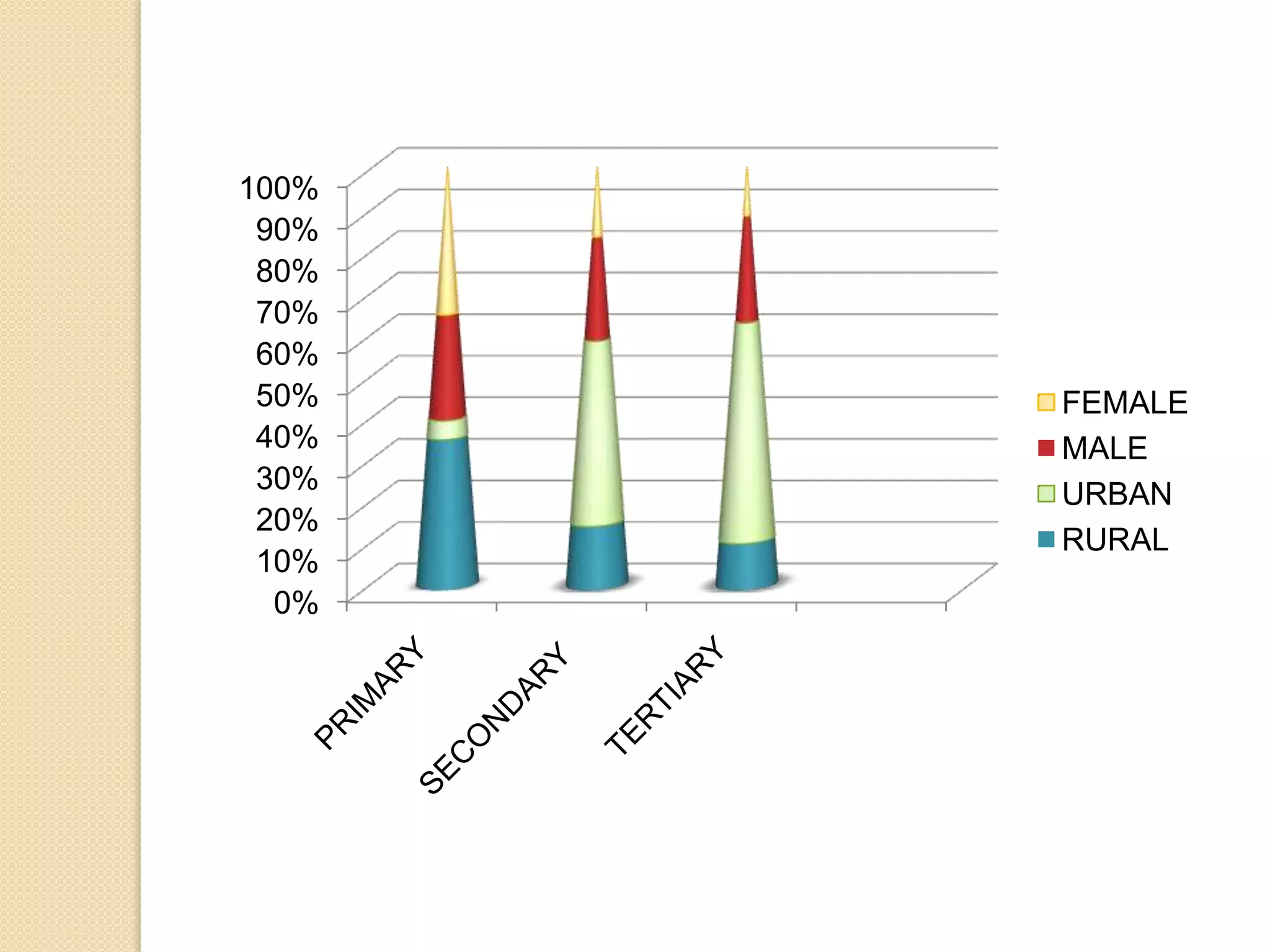
DISTRIBUTION OF WORKFORCE BY INDUSTRY
1999-2000
INDUSTRIAL

RURAL

URBAN

MALE

FEMALE

PRIMARY
SECTOR

76.6

9.6

53.8

75.1

INDUSTRIAL
SECTOR

10.8

31.3

17.6

11.8

SERVICE
SECTOR

12.5

59.1

28.6

13.1

TOTAL

100

100

100

100

CATEGORY
100%
90%
80%
70%
60%
50%
40%
30%
20%
10%
0%

FEMALE
MALE
URBAN
RURAL
Casualisation refers to a situation when the
percentage of casually-hired workers in the
total workforce tends to rise over time
Informalisation refers to a situation when
people tend to find employment more in
informal sector of the economy, and less in
formal sector of the economy.
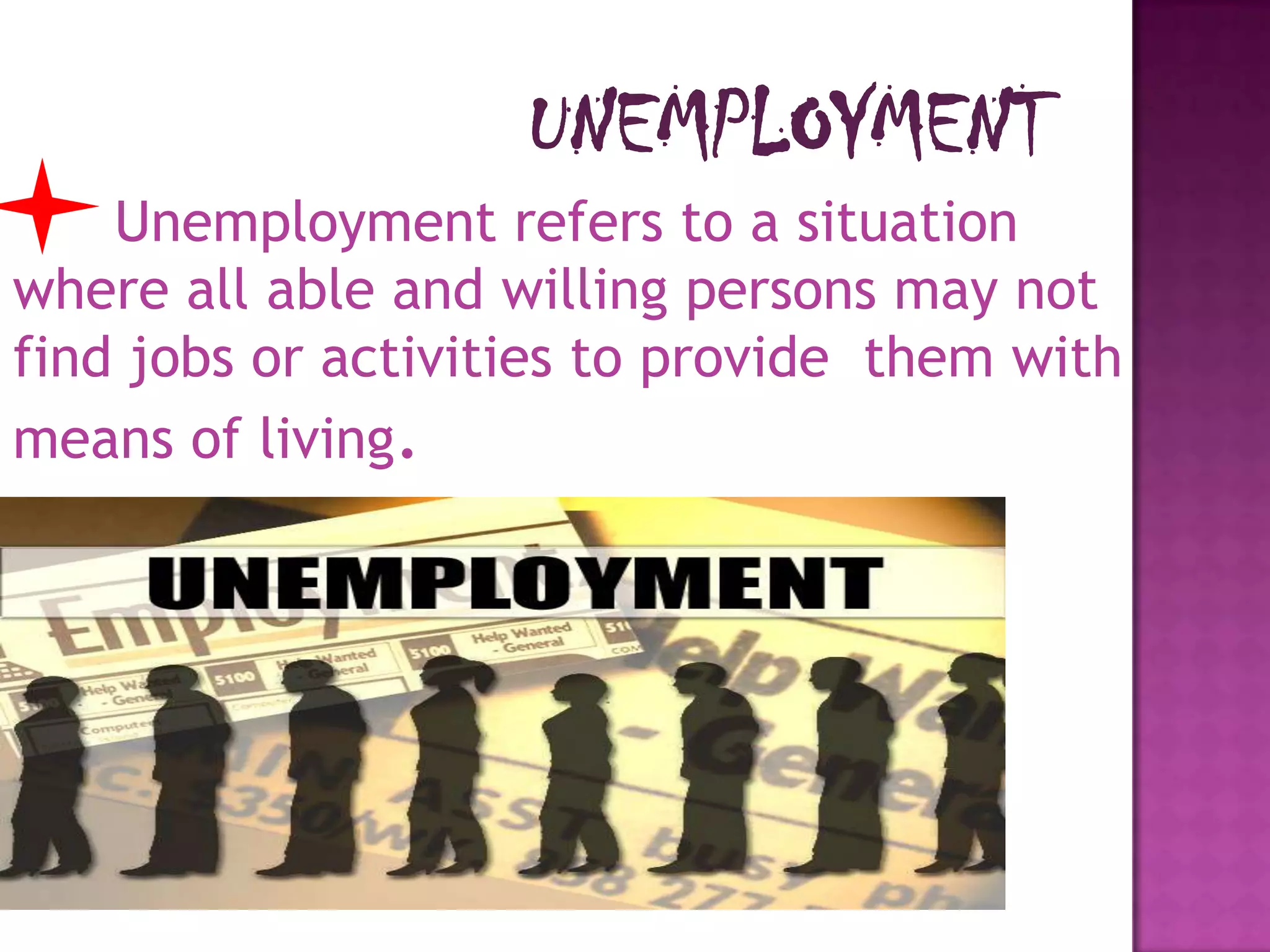
UNEMPLOYMENT
Unemployment refers to a situation
where all able and willing persons may not
find jobs or activities to provide them with
means of living.
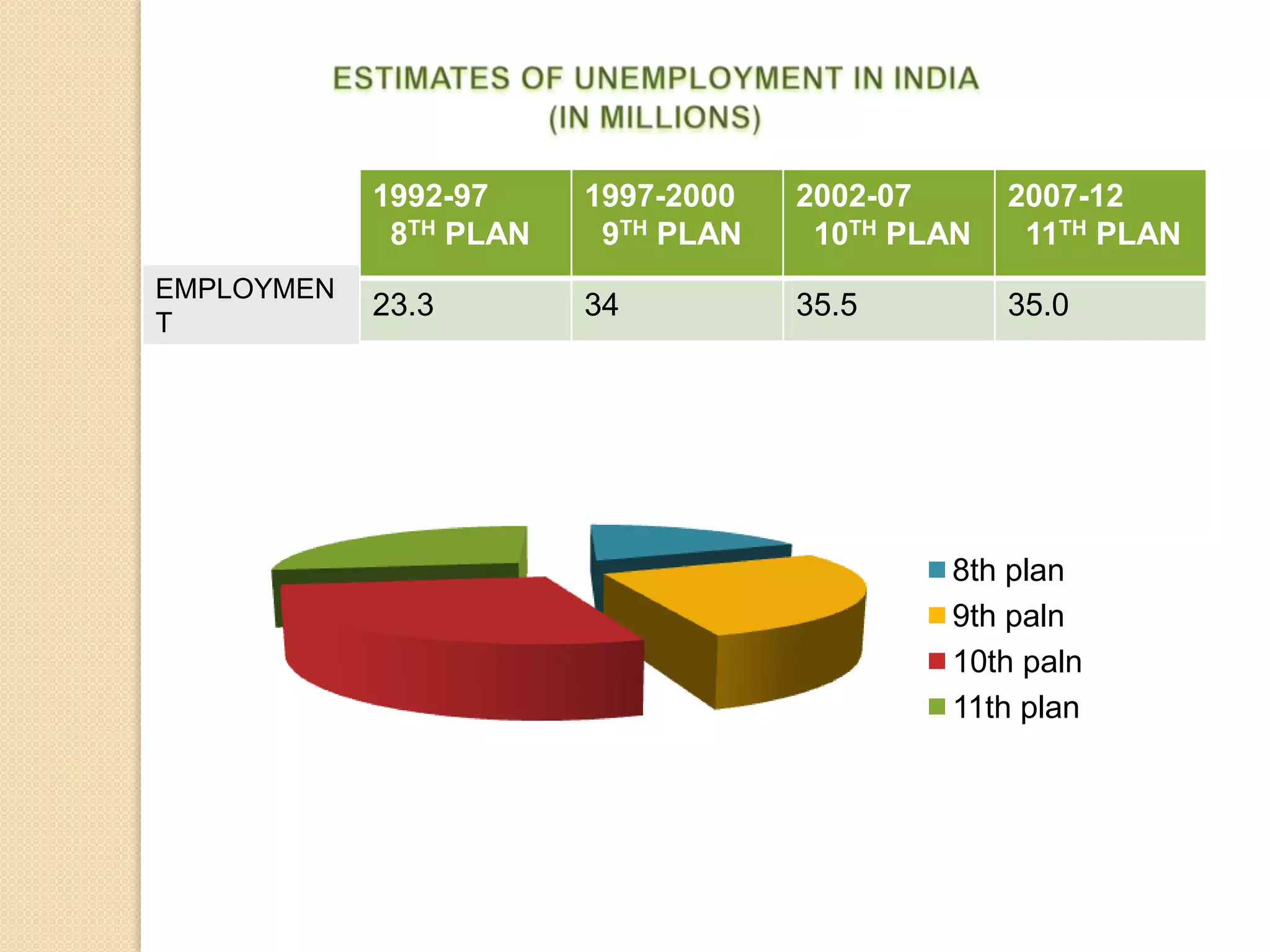
1992-97
8TH PLAN
EMPLOYMEN
T

1997-2000
9TH PLAN

2002-07
10TH PLAN

2007-12
11TH PLAN

23.3

34

35.5

35.0

8th plan
9th paln
10th paln
11th plan
Causes of Unemployment :
1.Faulty employment planning.
2.Emphasies on capital intensive
projects.
3.Excessive use of foreign
technology.
4.Lack of financial resources.
5.Slow growth process of the
country.
6.Increase in labour force with rise
in population.
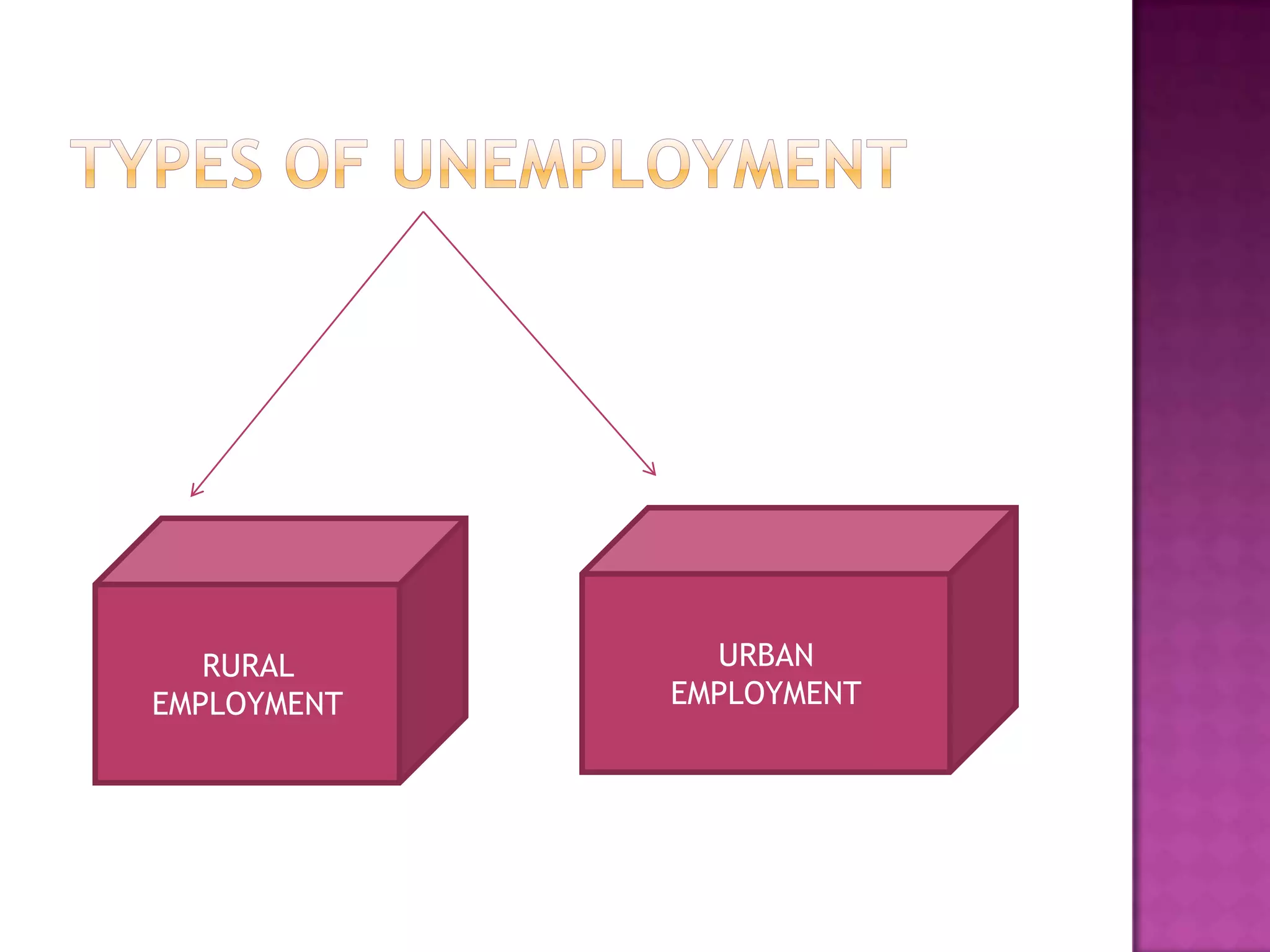
RURAL
EMPLOYMENT

URBAN
EMPLOYMENT
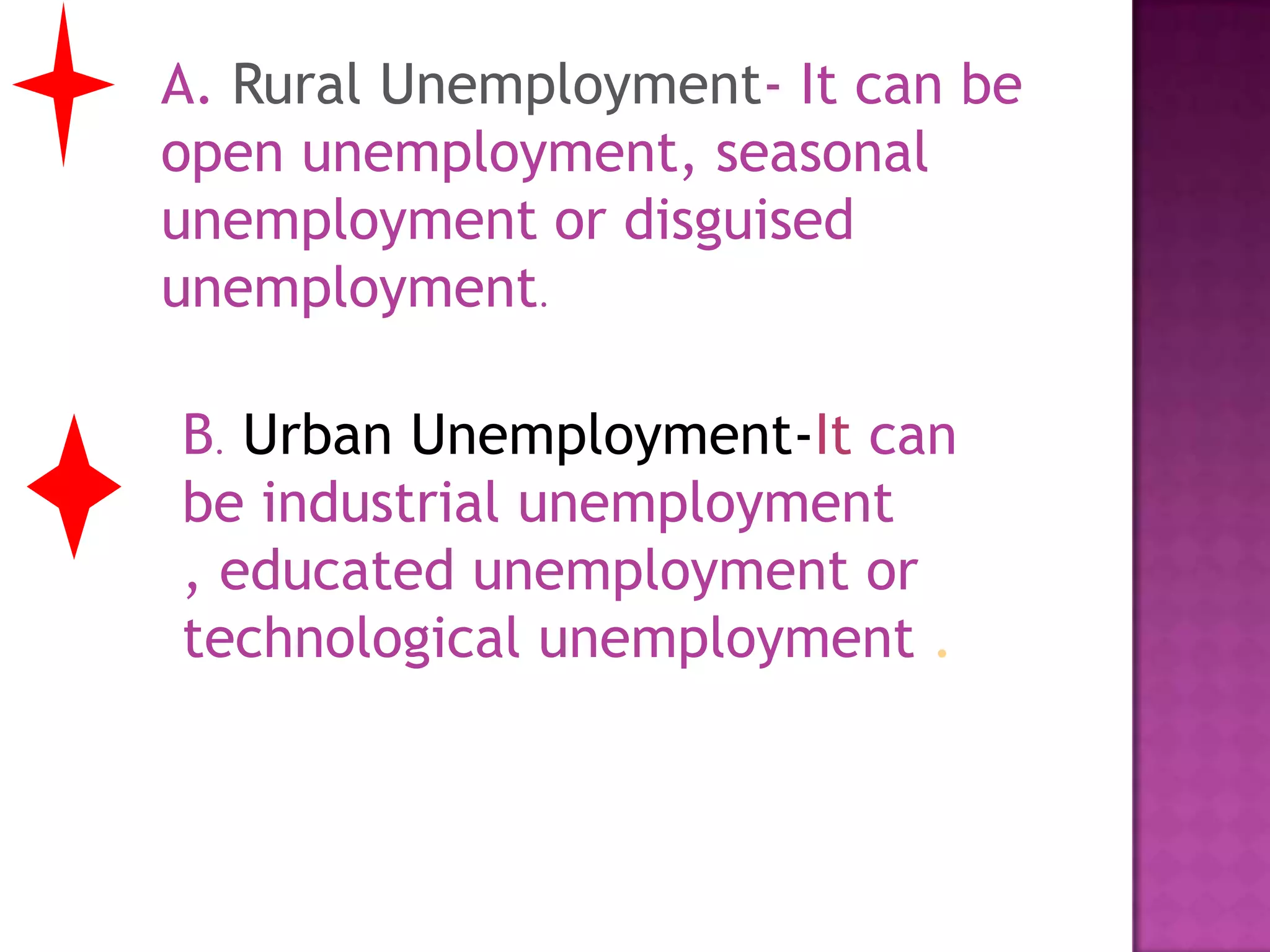
A. Rural Unemployment- It can be
open unemployment, seasonal
unemployment or disguised
unemployment.
B. Urban Unemployment-It can
be industrial unemployment
, educated unemployment or
technological unemployment .
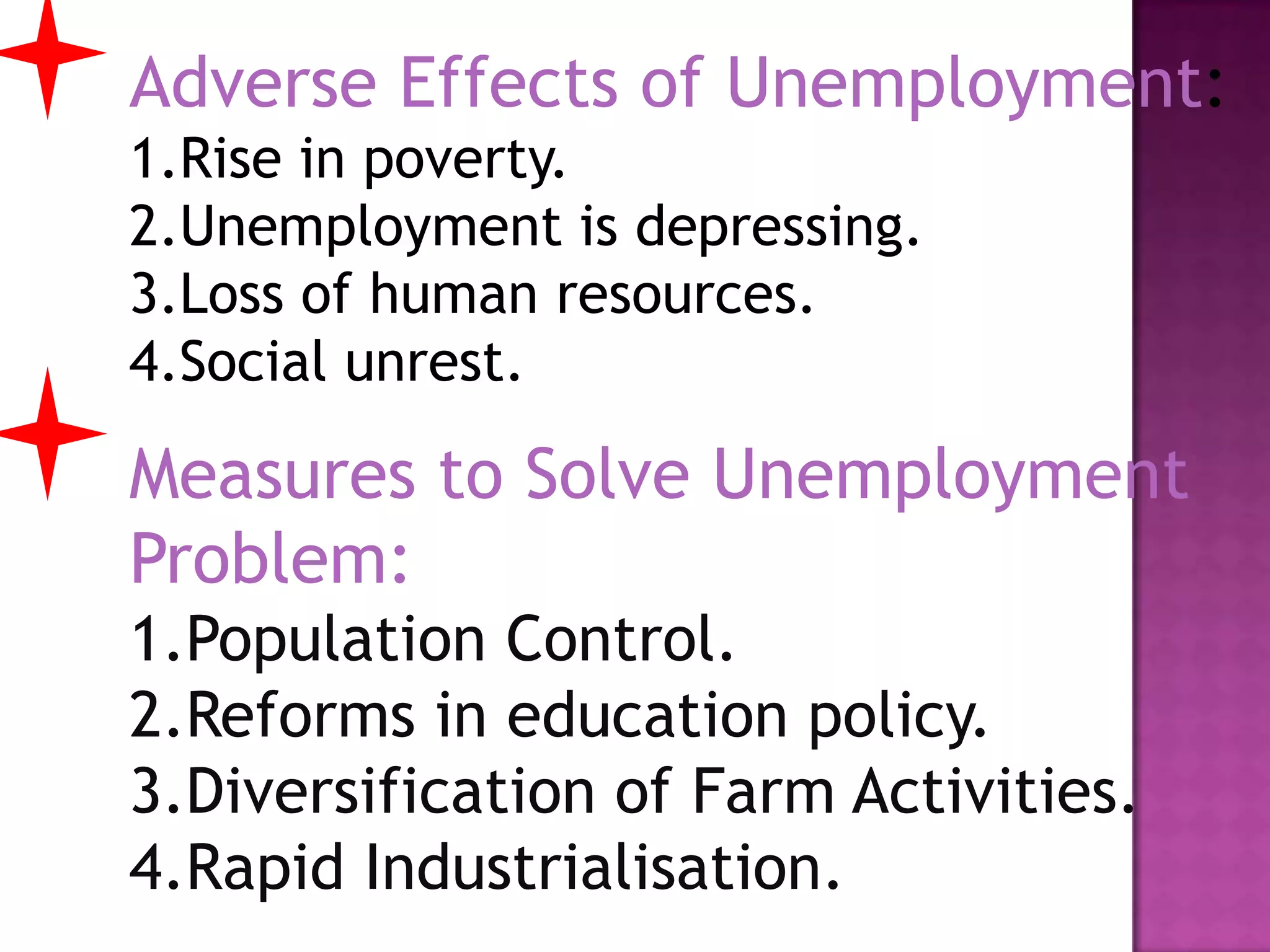
Adverse Effects of Unemployment:
1.Rise in poverty.
2.Unemployment is depressing.
3.Loss of human resources.
4.Social unrest.

Measures to Solve Unemployment
Problem:
1.Population Control.
2.Reforms in education policy.
3.Diversification of Farm Activities.
4.Rapid Industrialisation.
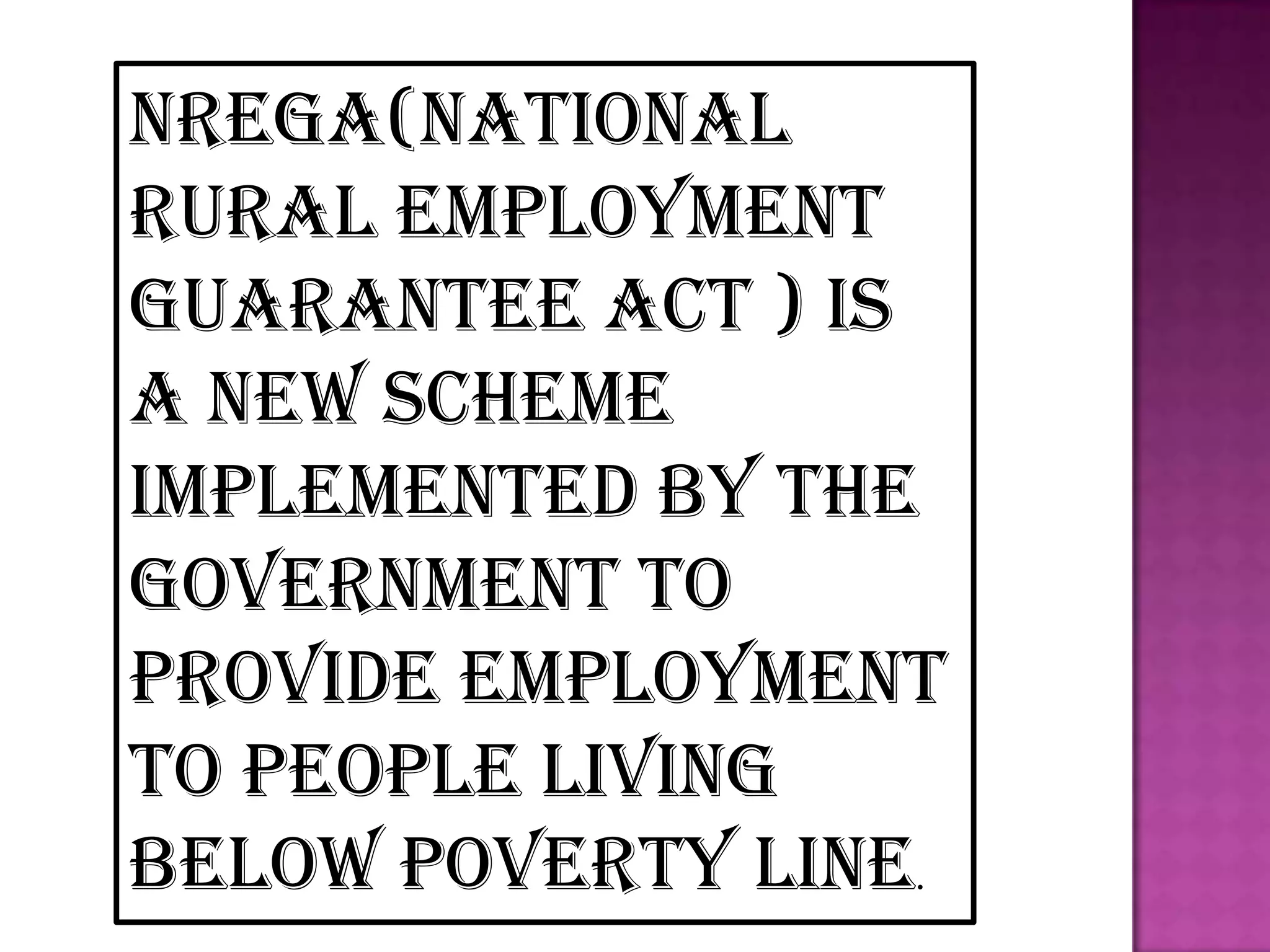
NREGA(National
Rural Employment
Guarantee Act ) is
a new scheme
implemented by the
government to
provide employment
to people living
below poverty line.
 This

act was introduced with an aim
of providing 100 days assured
employment to the people below
the poverty line.
 Around one-third of the stipulated
work force is women. The law was
initially called the National Rural
Employment Guarantee Act (NREGA)
but was renamed on 2 October 2009
 Employment ( GROWTH INFORMALISATION AND OTHER ISSUES)
 Employment ( GROWTH INFORMALISATION AND OTHER ISSUES)

Employment ( GROWTH INFORMALISATION AND OTHER ISSUES)