UNIT IV
REALTIME SYSTEMS
Structure of a Real Time System - Estimating program run times –
Task Assignmentand Scheduling – FaultTolerance Techniques –
Reliability, Evaluation – Clock Synchronization.
Operating System
⚫An Operating System performs all the basic tasks like managing
file, process, and memory.
⚫Thus operating system acts as managerof all the resources,
i.e. resource manager.
⚫Operating system becomes an interface between userand
machine.
Types of Operating Systems
⚫Batch Operating System
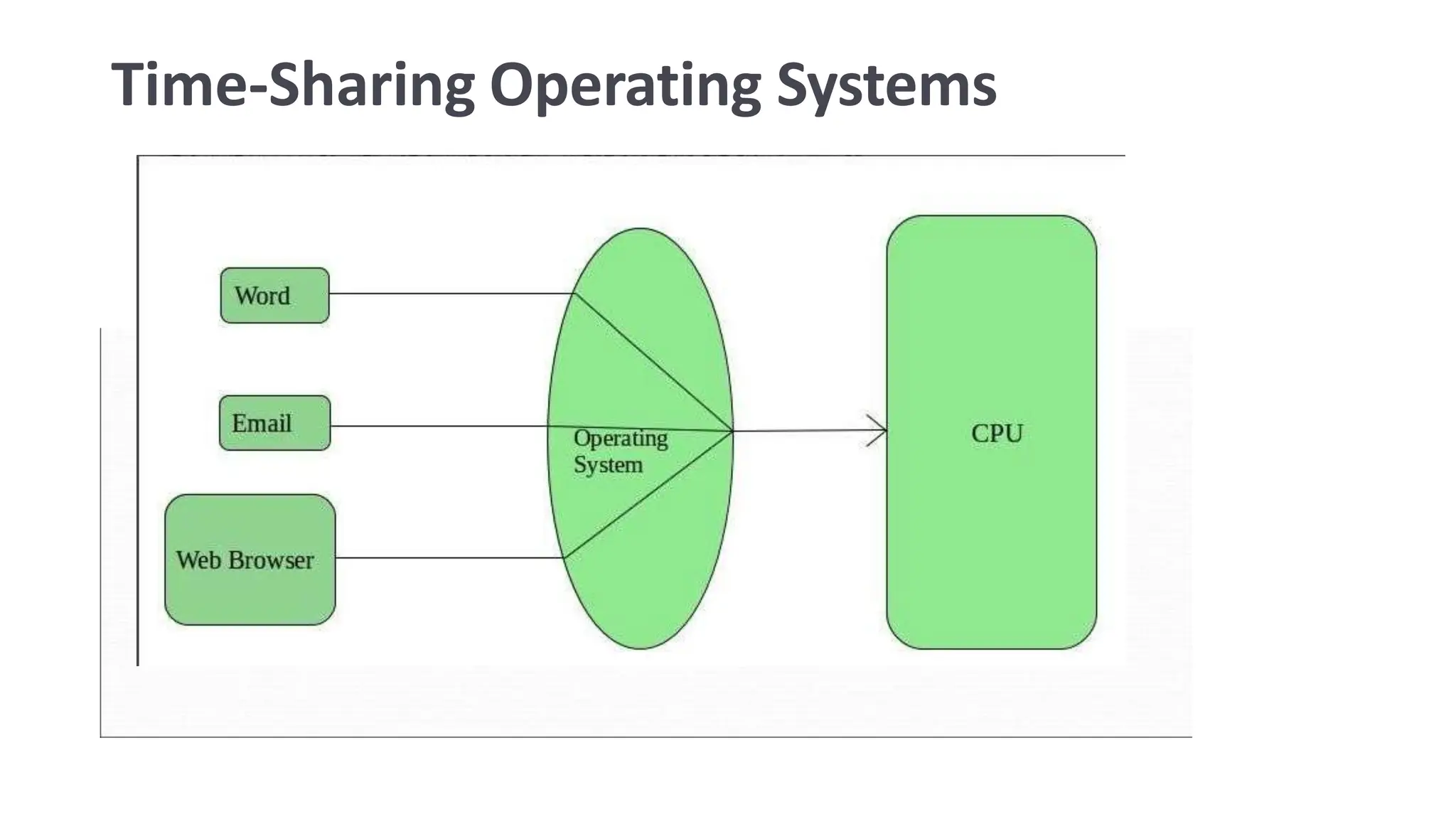
⚫Time-Sharing Operating Systems
⚫Distributed Operating System
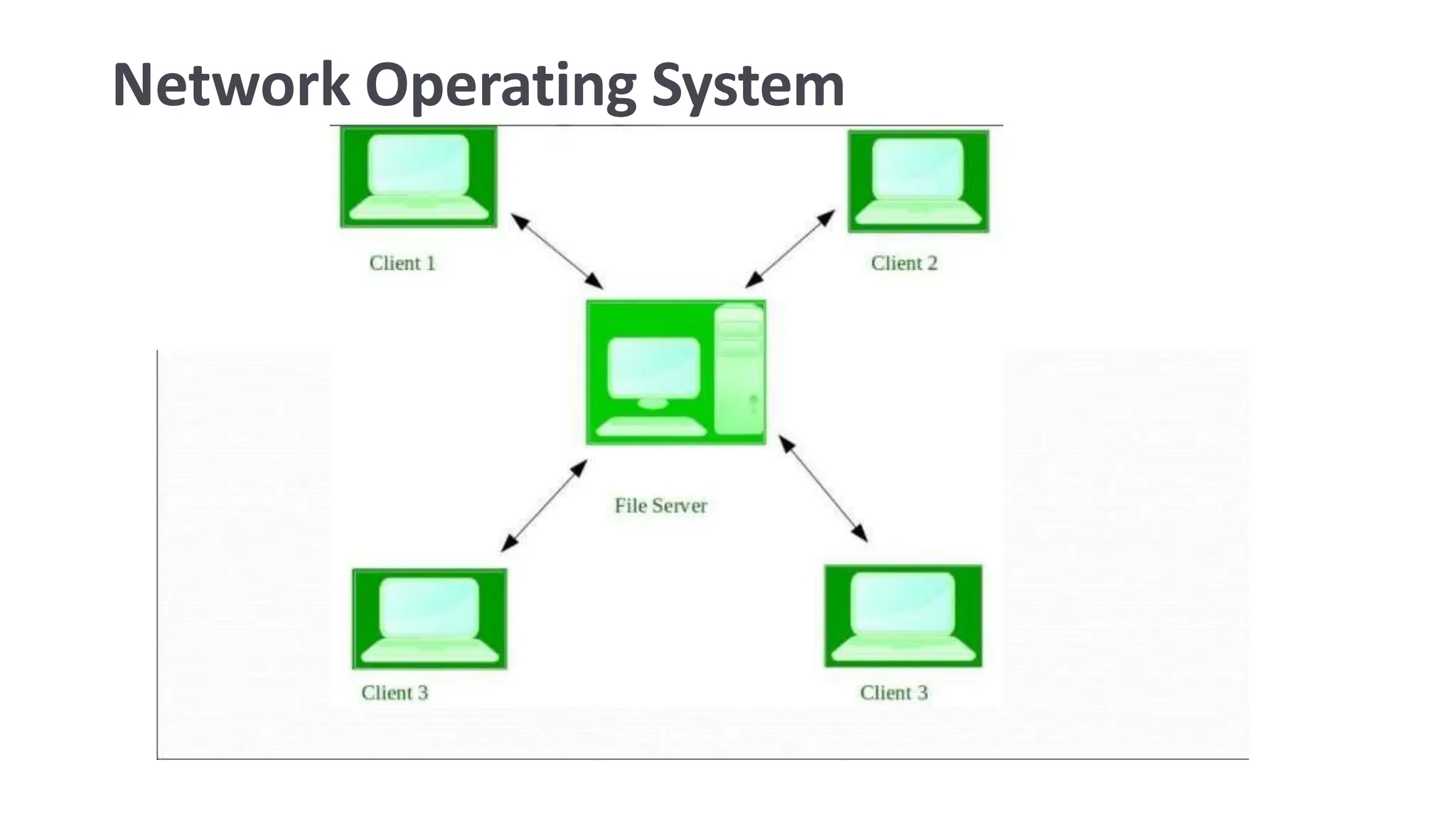
⚫ Network Operating System
⚫Real-Time Operating System
1. Batch Operating System
Time-Sharing Operating Systems
Distributed Operating System
Network Operating System
Real-Time Operating System
⚫These types of OSs serves the real-timesystems. The time interval
required to process and respond to inputs isvery small. This time
interval is called response time.
⚫Real-time systems are used when there are time requirementsare
very strict like missilesystems, air trafficcontrol systems, robotsetc
⚫Twotypesof Real-Time Operating System which areas follows:
⚫Hard Real-Time Systems:
⚫Soft Real-Time Systems:
⚫Hard Real-Time Systems:
• These OSs are meant for the applicationswhere time constraints
are very strict and even the shortest possibledelay is not
acceptable.
⚫These systems are built for saving life like automatic parachutes
orair bags which are required to be readily available in caseof any
accident.
⚫ Virtual memory is almost never found in these systems.
⚫Soft Real-Time Systems:
• These OSs are forapplications where for time-
constraint is less strict.
Structure of a Real Time System
Estimating Program Run Times
⚫Real timesystem meetdeadlines, it is important to be able toaccurately
estimate program run times.
⚫Estimating theexecuting timeof anygiven program is averydifficult
task
⚫Itdepend on the following factors
⚫Source code
⚫Compiler-Mapping should be depend on thecompiler used.
⚫Machinearchitecture
⚫Operating system
⚫Analysisof a sourcecode
⚫ L1: a = bx c;
⚫ L2: b = d + e;
⚫ L3: d = a – f;
Schematicof a timing estimationsystem
• Accounting of Pipeline
Two Stagepipeline
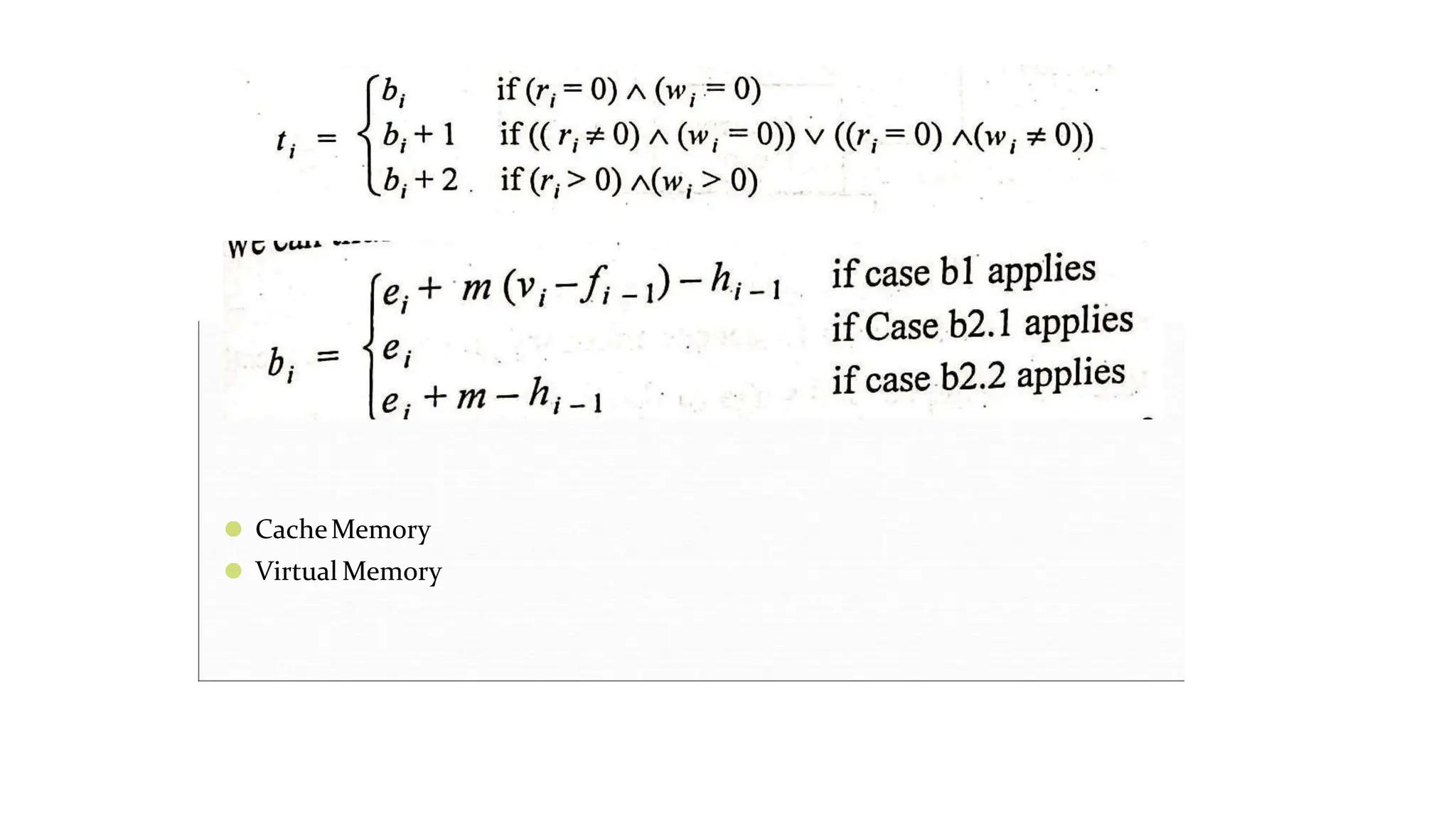
⚫ CacheMemory
⚫ Virtual Memory
TaskAssignment and Scheduling
⚫A Task requires someexecution timeon a processor
⚫Alsoa task may required certain amountof memoryor access toa bus
⚫Sometimesa resource must be exclusively held by a task
⚫In other cases resource may be exclusive or non exclusivedepending on the
operation to be performed on it
⚫ ReleaseTime
⚫ A task isa timeatwhich all thedata thatarerequired to beginexecuting theTask are
available
⚫ Deadline
⚫ Thedeadline is the time bywhich thetask mustcomplete its execution
⚫ Thedeadline must be hard orsoft
⚫ Task areclassified as
⚫ Periodic
⚫ Sporadic
⚫ Aperiodic
⚫ Periodic
• A task Ti is periodic if it is released periodically. sayevery pi
seconds pi is called the period of task Ti
⚫ SporadicTask
⚫ Sporadic task is a notperiodic task, but may be invoked at irregular interval
⚫ Sporadic tasksarecharacterized byan upper bound on the rateat which they may be
invoked
⚫ APeriodicTask
⚫ Tasks to be those taskswhich are notperiodic and which also have no upper bound on their
invocationrate
⚫Task Assignment / Schedule
⚫All task starts afterthe release timeand complete before theirdeadline
⚫A schedule may be
⚫ Pre-computed(Off linescheduling)
⚫ Dynamically(Online Scheduling)
⚫Pre-computed Scheduling
⚫ Advance theoperation with specification of periodic taskswill be run and slots for the sporadic
/ aperiodic tasks in the event that theyare involved.
⚫Dynamically Scheduling
⚫ Tasks arescheduled as theyarrive in the system
⚫ Thealgorithm used in onlinescheduling must be fast and it takes to meet their
deadlines is clearly useless
⚫ Two types priorityalgorithmsare used
⚫ Static priorityalgorithm
⚫ Dynamic priorityalgorithm
⚫ Static priorityalgorithm
⚫ Staticpriorityalgorithm assume that the task prioritydoes not changewithina mode
⚫ Example Rate monotonicalgorithm
⚫ Dynamicpriorityalgorithm
⚫ algorithm assume that the task prioritycan changewithina time
⚫ Example Earliest Deadline First (EDF) algorthim

Embedded systems IoT Design UNIT IV PPT.pptx

  • 1.
    UNIT IV REALTIME SYSTEMS Structureof a Real Time System - Estimating program run times – Task Assignmentand Scheduling – FaultTolerance Techniques – Reliability, Evaluation – Clock Synchronization.
  • 2.
    Operating System ⚫An OperatingSystem performs all the basic tasks like managing file, process, and memory. ⚫Thus operating system acts as managerof all the resources, i.e. resource manager. ⚫Operating system becomes an interface between userand machine.
  • 3.
    Types of OperatingSystems ⚫Batch Operating System ⚫Time-Sharing Operating Systems ⚫Distributed Operating System ⚫ Network Operating System ⚫Real-Time Operating System
  • 4.
  • 5.
  • 6.
  • 7.
  • 8.
    Real-Time Operating System ⚫Thesetypes of OSs serves the real-timesystems. The time interval required to process and respond to inputs isvery small. This time interval is called response time. ⚫Real-time systems are used when there are time requirementsare very strict like missilesystems, air trafficcontrol systems, robotsetc ⚫Twotypesof Real-Time Operating System which areas follows: ⚫Hard Real-Time Systems: ⚫Soft Real-Time Systems:
  • 9.
    ⚫Hard Real-Time Systems: •These OSs are meant for the applicationswhere time constraints are very strict and even the shortest possibledelay is not acceptable. ⚫These systems are built for saving life like automatic parachutes orair bags which are required to be readily available in caseof any accident. ⚫ Virtual memory is almost never found in these systems. ⚫Soft Real-Time Systems: • These OSs are forapplications where for time- constraint is less strict.
  • 10.
    Structure of aReal Time System
  • 12.
    Estimating Program RunTimes ⚫Real timesystem meetdeadlines, it is important to be able toaccurately estimate program run times. ⚫Estimating theexecuting timeof anygiven program is averydifficult task ⚫Itdepend on the following factors ⚫Source code ⚫Compiler-Mapping should be depend on thecompiler used. ⚫Machinearchitecture ⚫Operating system
  • 13.
    ⚫Analysisof a sourcecode ⚫L1: a = bx c; ⚫ L2: b = d + e; ⚫ L3: d = a – f;
  • 14.
    Schematicof a timingestimationsystem
  • 15.
    • Accounting ofPipeline Two Stagepipeline
  • 16.
  • 17.
    TaskAssignment and Scheduling ⚫ATask requires someexecution timeon a processor ⚫Alsoa task may required certain amountof memoryor access toa bus ⚫Sometimesa resource must be exclusively held by a task ⚫In other cases resource may be exclusive or non exclusivedepending on the operation to be performed on it ⚫ ReleaseTime ⚫ A task isa timeatwhich all thedata thatarerequired to beginexecuting theTask are available ⚫ Deadline ⚫ Thedeadline is the time bywhich thetask mustcomplete its execution ⚫ Thedeadline must be hard orsoft ⚫ Task areclassified as ⚫ Periodic ⚫ Sporadic ⚫ Aperiodic
  • 18.
    ⚫ Periodic • Atask Ti is periodic if it is released periodically. sayevery pi seconds pi is called the period of task Ti ⚫ SporadicTask ⚫ Sporadic task is a notperiodic task, but may be invoked at irregular interval ⚫ Sporadic tasksarecharacterized byan upper bound on the rateat which they may be invoked ⚫ APeriodicTask ⚫ Tasks to be those taskswhich are notperiodic and which also have no upper bound on their invocationrate
  • 19.
    ⚫Task Assignment /Schedule ⚫All task starts afterthe release timeand complete before theirdeadline ⚫A schedule may be ⚫ Pre-computed(Off linescheduling) ⚫ Dynamically(Online Scheduling)
  • 20.
    ⚫Pre-computed Scheduling ⚫ Advancetheoperation with specification of periodic taskswill be run and slots for the sporadic / aperiodic tasks in the event that theyare involved. ⚫Dynamically Scheduling ⚫ Tasks arescheduled as theyarrive in the system ⚫ Thealgorithm used in onlinescheduling must be fast and it takes to meet their deadlines is clearly useless ⚫ Two types priorityalgorithmsare used ⚫ Static priorityalgorithm ⚫ Dynamic priorityalgorithm ⚫ Static priorityalgorithm ⚫ Staticpriorityalgorithm assume that the task prioritydoes not changewithina mode ⚫ Example Rate monotonicalgorithm ⚫ Dynamicpriorityalgorithm ⚫ algorithm assume that the task prioritycan changewithina time ⚫ Example Earliest Deadline First (EDF) algorthim