Email communication
in times of crisis
Charlie Meyerson
linkedin.com/in/cmeyerson
facebook.com/meyerson
@Meyerson on Twitter
Charlie@MeyersonStrategy.com
ChicagoPublicSquare.com
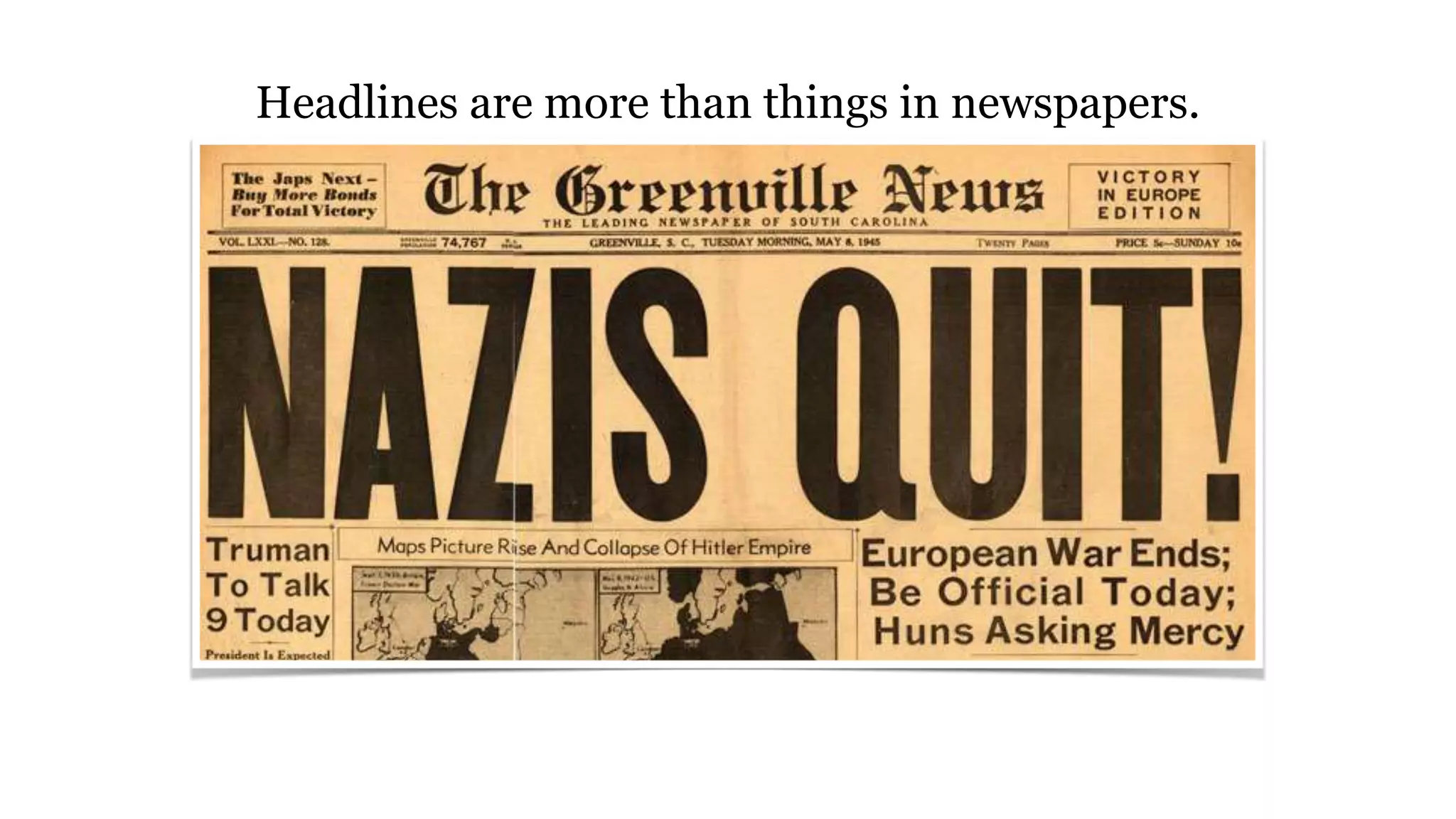
Headlines are more than things in newspapers.
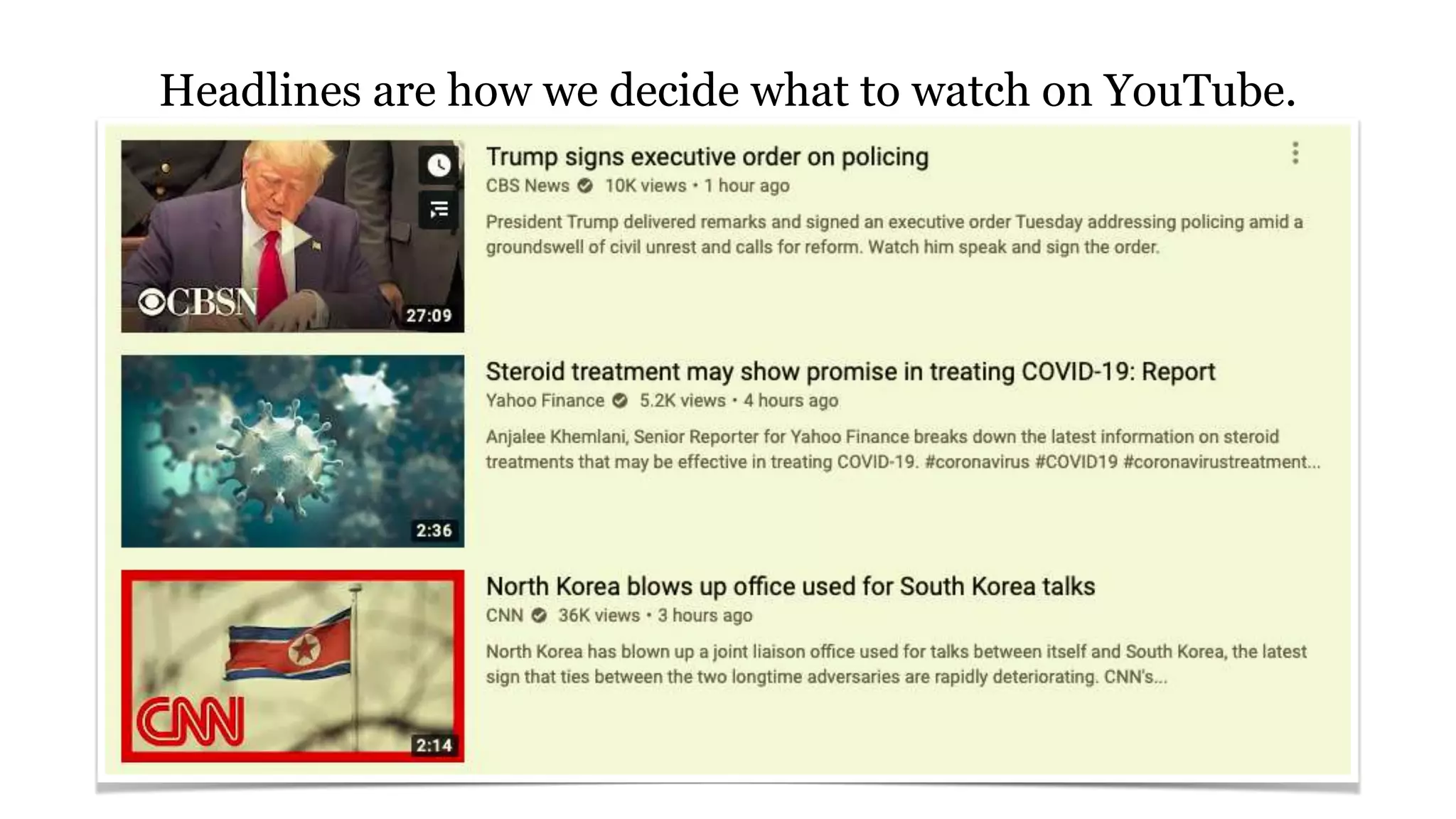
Headlines are how we decide what to watch on YouTube.
Headlines are how we connect in social media.
*
*No longer true.
And—especially in times of crisis—
headlines are how we decide what email to open.
But before we push ahead …
Skeptics will ask:
Does he know what
he’s talking about?
Yes, it works.
I learned what I know
by launching and running
the Chicago Tribune’s
email services for a decade.
... sent to tens of thousands of subscribers
on my watch, 2000-2009.
… often achieved Tribune Co. editorial newsletter-
leading 60 percent clickthrough rates
–60 clicks per 100 recipients.
Yes, it works.
[“Charlie is a pioneer in the e-newsletter headline business.”
—Rick Kaempfer, Illinois Entertainer, April 2017]
Yes, it works.
A major professional organization that followed the
advice you’re about to get (after I was embedded
with the team for four days)—a site that previously
hadn’t strung together two successive months of
record traffic—achieved record pageviews ...
• for the next 5 straight months.
• for 10 of the following 12 months.
... launched in
January
2017…
And more recently …
Main factor driving performance:
Stronger headlines
Primarily, in
email subject lines.
But
isn’t
email
dead?
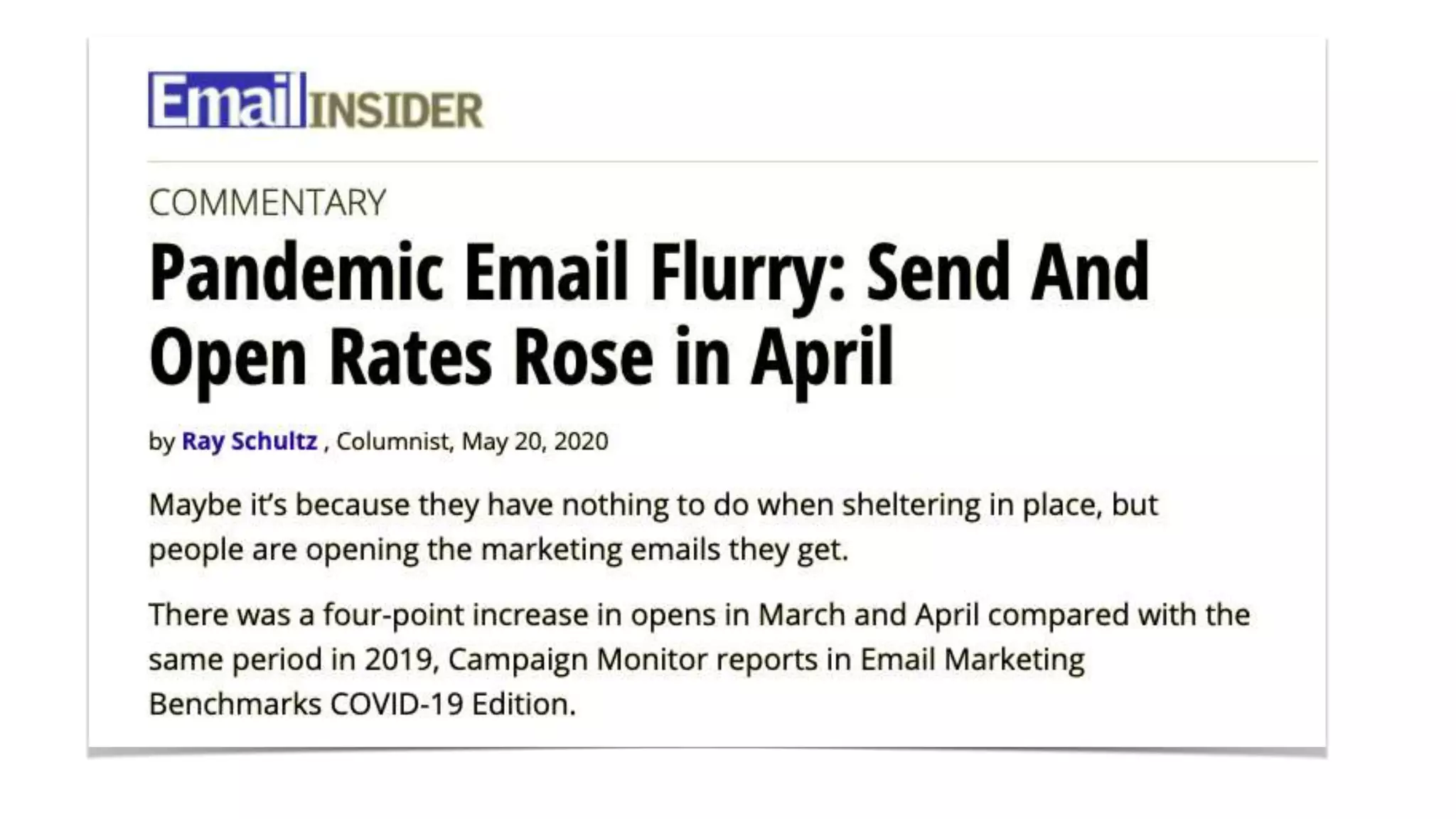
Not in a
pandemic.
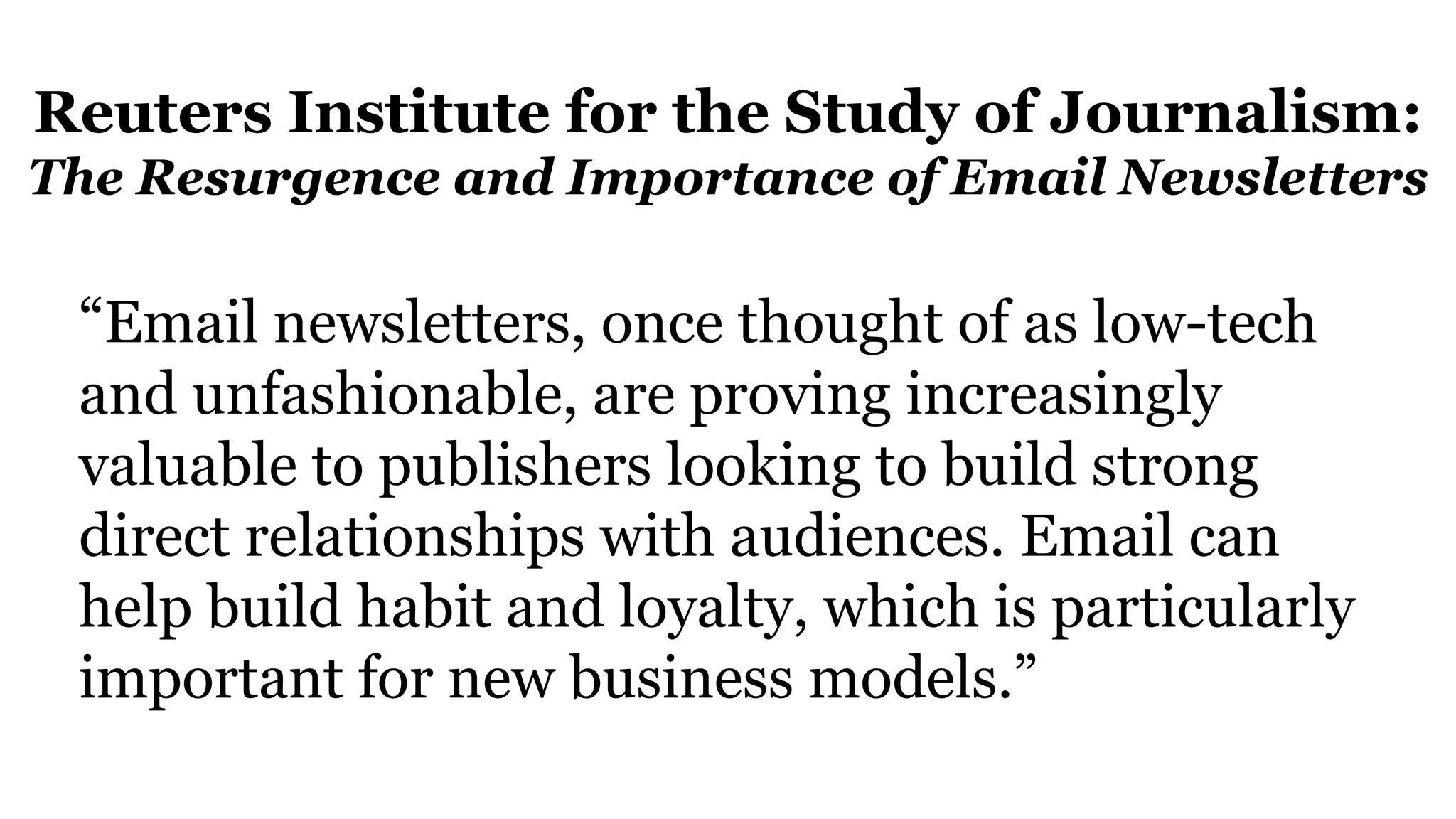
Reuters Institute for the Study of Journalism:
The Resurgence and Importance of Email Newsletters
“Email newsletters, once thought of as low-tech
and unfashionable, are proving increasingly
valuable to publishers looking to build strong
direct relationships with audiences. Email can
help build habit and loyalty, which is particularly
important for new business models.”
Do you …
• Check Facebook, Twitter and email regularly?
• Check all three at least once a day?
• When you check them, scroll all the way back
to the last item you checked …
On email?
On Facebook?
On Twitter?
• Email summons at will your most devoted users.
• … who then share their interests (by clicking).
• It awaits their attention, unlike social-media rivers.
• It’s -independent!
• It’s fixed, unlike Web site front pages – and so, an
easier gauge of elements’ relative popularity,
especially with …
• Heat maps, or click maps, making patterns easy to spot.
The joy of email
But to get that intel from email …
You need people to
open it.
And the key to doing that?
Good, old-
fashioned writing.
Secrets for getting people to tune in:
Omit needless words.
—Will Strunk, The Elements of Style, 1918.
• Twitter.
• Texting.
• Tiny smartphone screens that truncate subject lines.
Need we say more?
• Make your most interesting word
or phrase the first element—the
first word of your headline or subject
line or post—and let your writing flow
from there.
meyersonstrategy.com/2007/04/good-radio-writing.html
Secrets for getting people to tune in:
But what are the most interesting words?
Develop a
sense of
the
wider
world’s
priorities
by
checking
sites like
Google
Trends:
google.co
m/trends
/
What are the most interesting words?
Develop a sense of your audience’s
priorities by monitoring clicks.
This isn’t about
This is about
Good headlines
and
Bad headlines
Good headlines
Connect content
to the maximum number of people
to whom it’s
useful and relevant.
They begin with the most interesting words.
They’re brief; they omit needless words.
They create a curiosity gap.
Bad headlines
Fail to connect content
with people who’d find it
useful and relevant.
They’re long, boring and irrelevant.
They don’t spotlight interesting words.
They generate little curiosity.
Or
Connect content
with people to whom it’s
neither useful nor relevant
(turning them off to future communication).
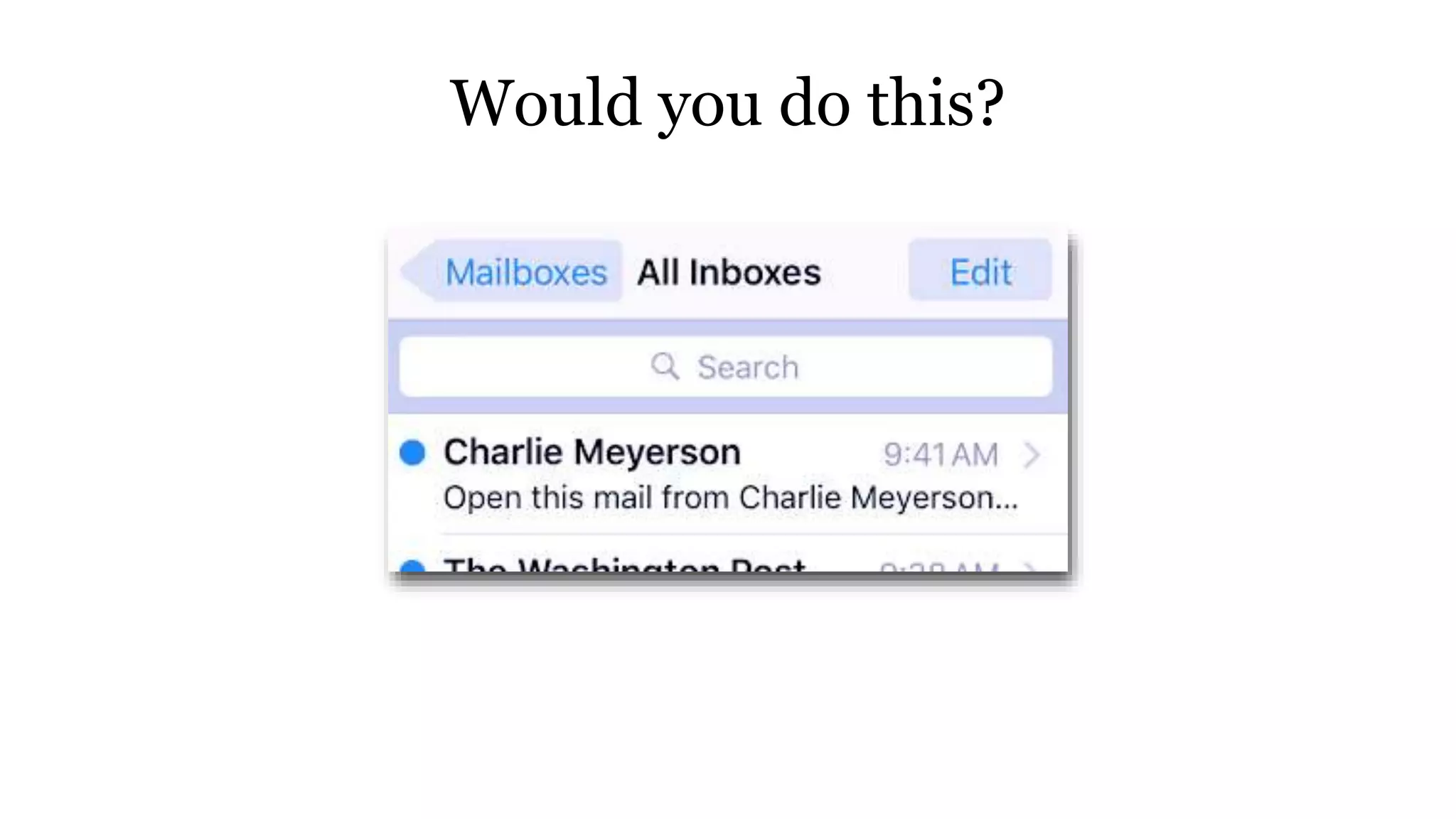
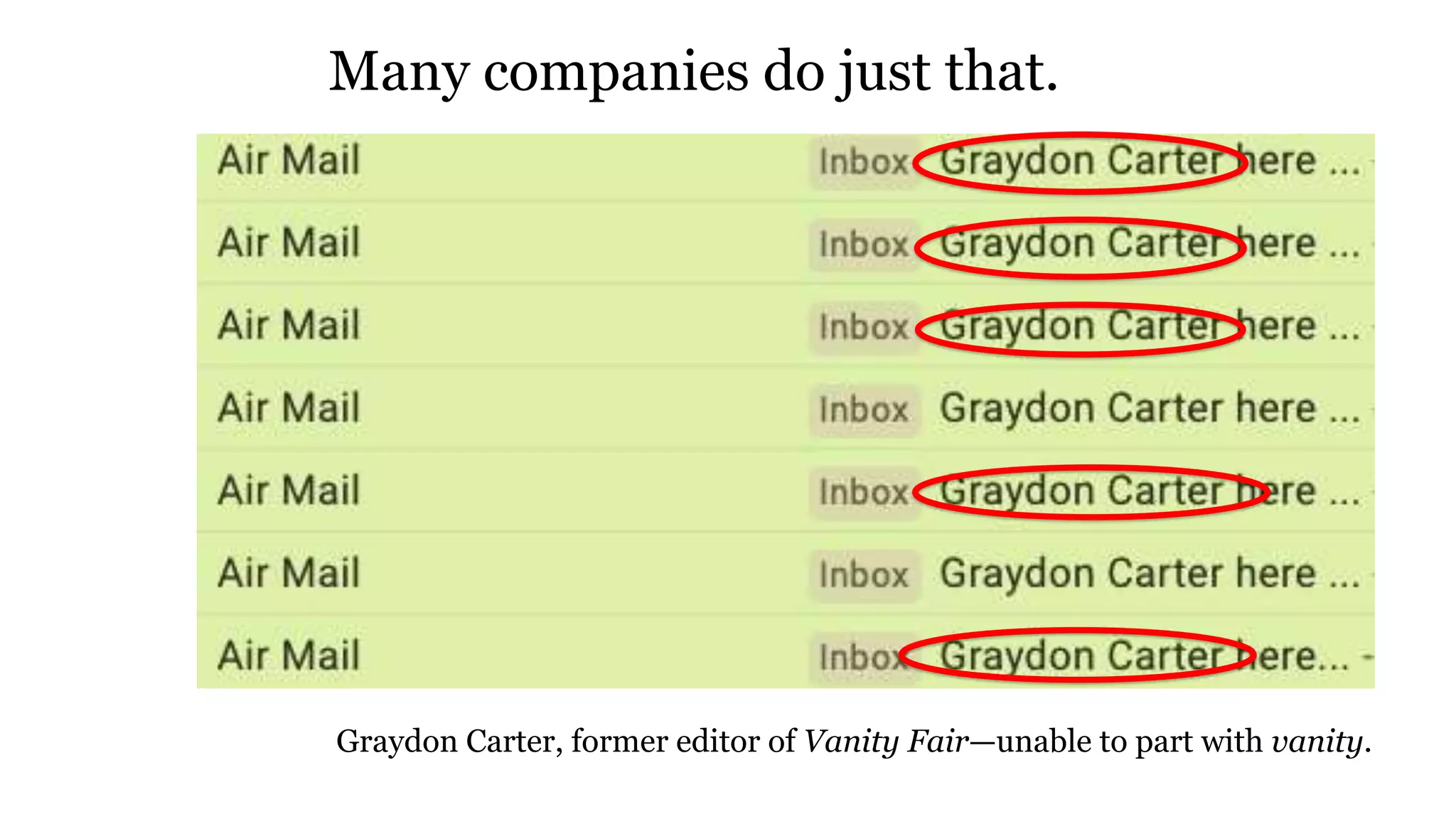
Would you do this?
Many companies
do that.
Many companies do just that.
Graydon Carter, former editor of Vanity Fair—unable to part with vanity.
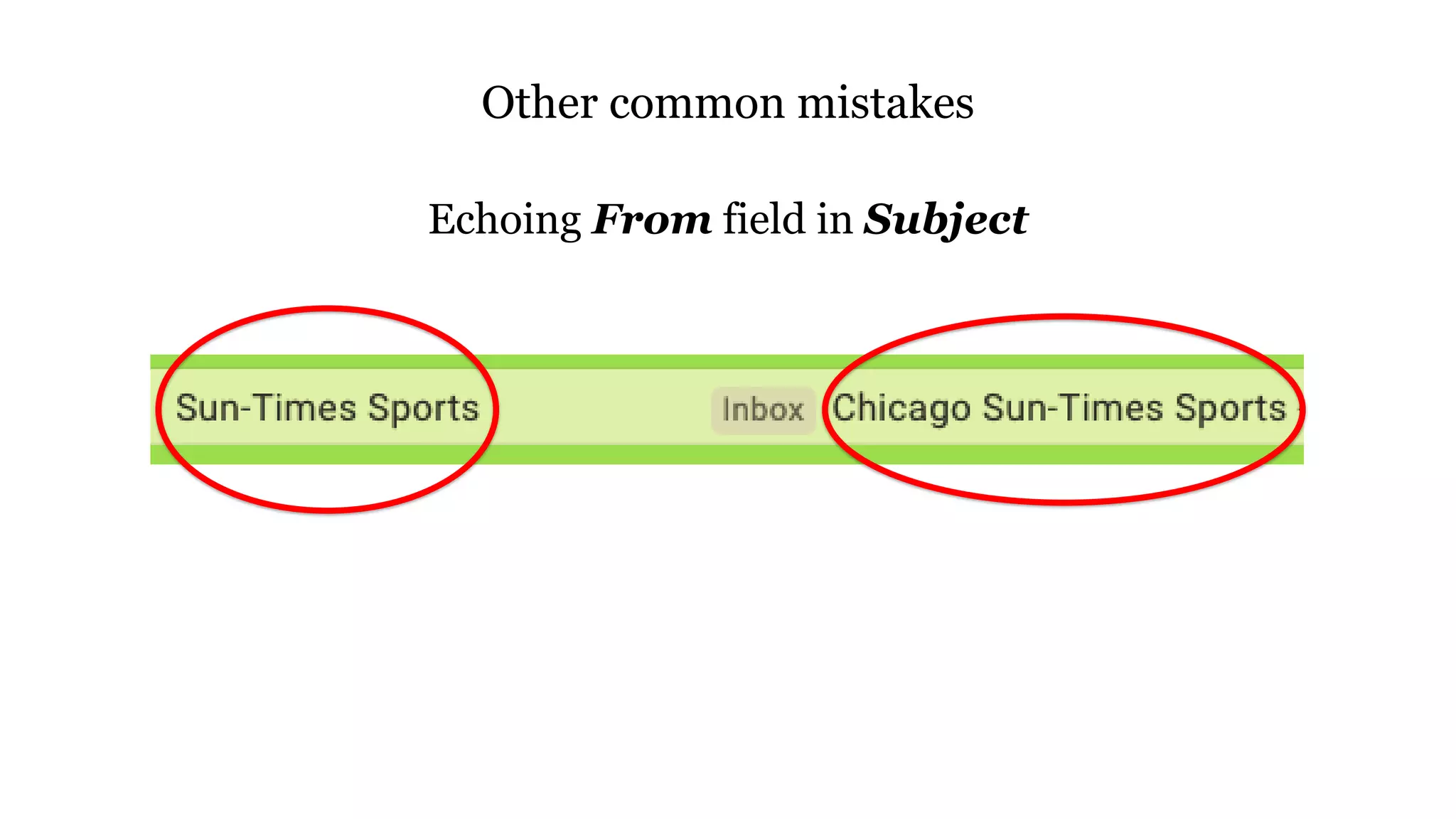
Other common mistakes
Echoing From field in Subject
Other common mistakes
Repeating
Subject from
day to day
(Ad Age email)
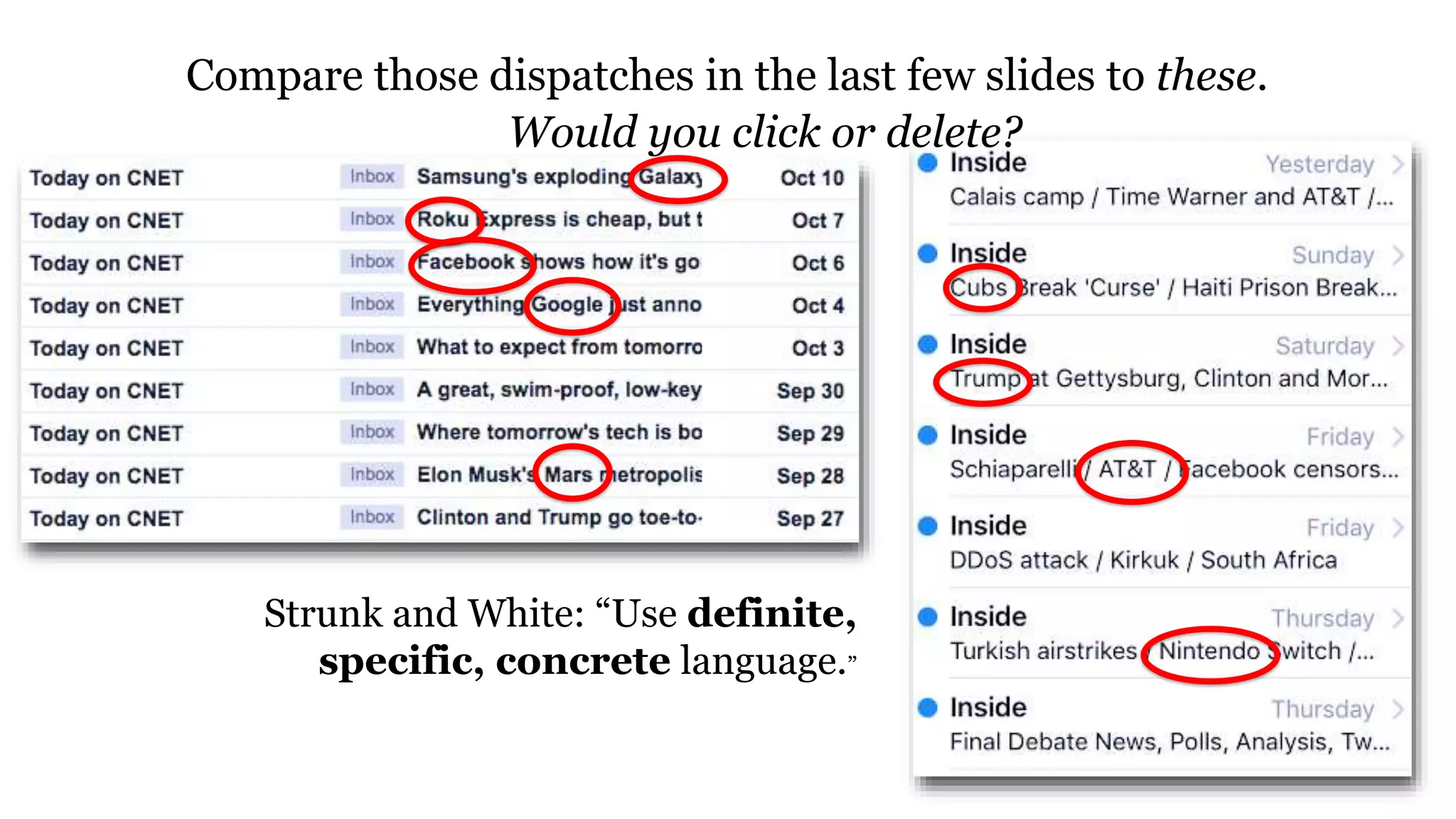
Compare those dispatches in the last few slides to these.
Would you click or delete?
Strunk and White: “Use definite,
specific, concrete language.”
Note
how
few
words
you
get.
If the future is mobile,
now more than ever,
every word–every
syllable–counts.
Strunk & White:
Omit needless
words.
Spreadsheets are (almost) useless
Better to watch your
clicks using …
Email Content
Analysis
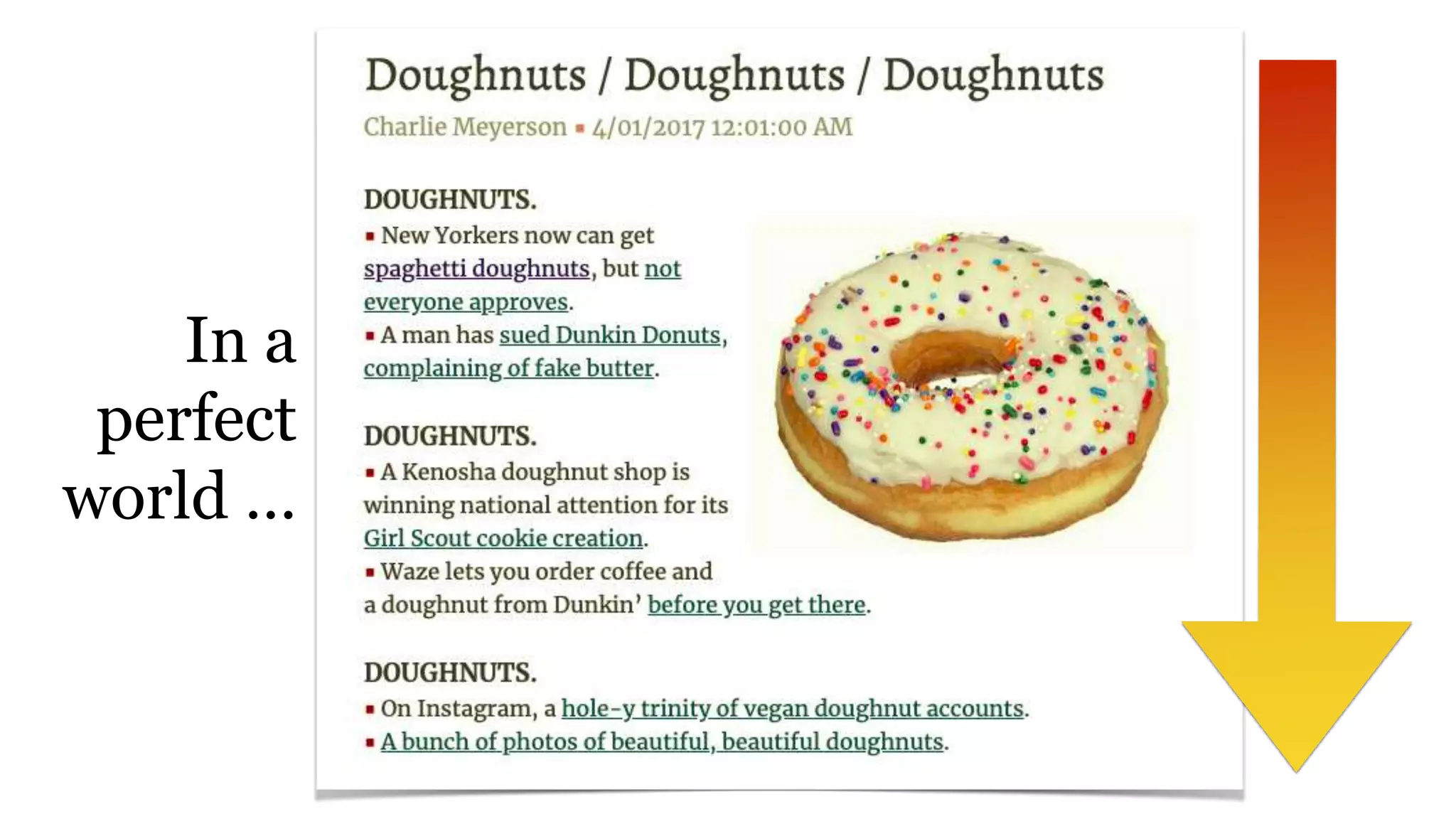
In a
perfect
world …
Use
heat
maps
or
click
maps
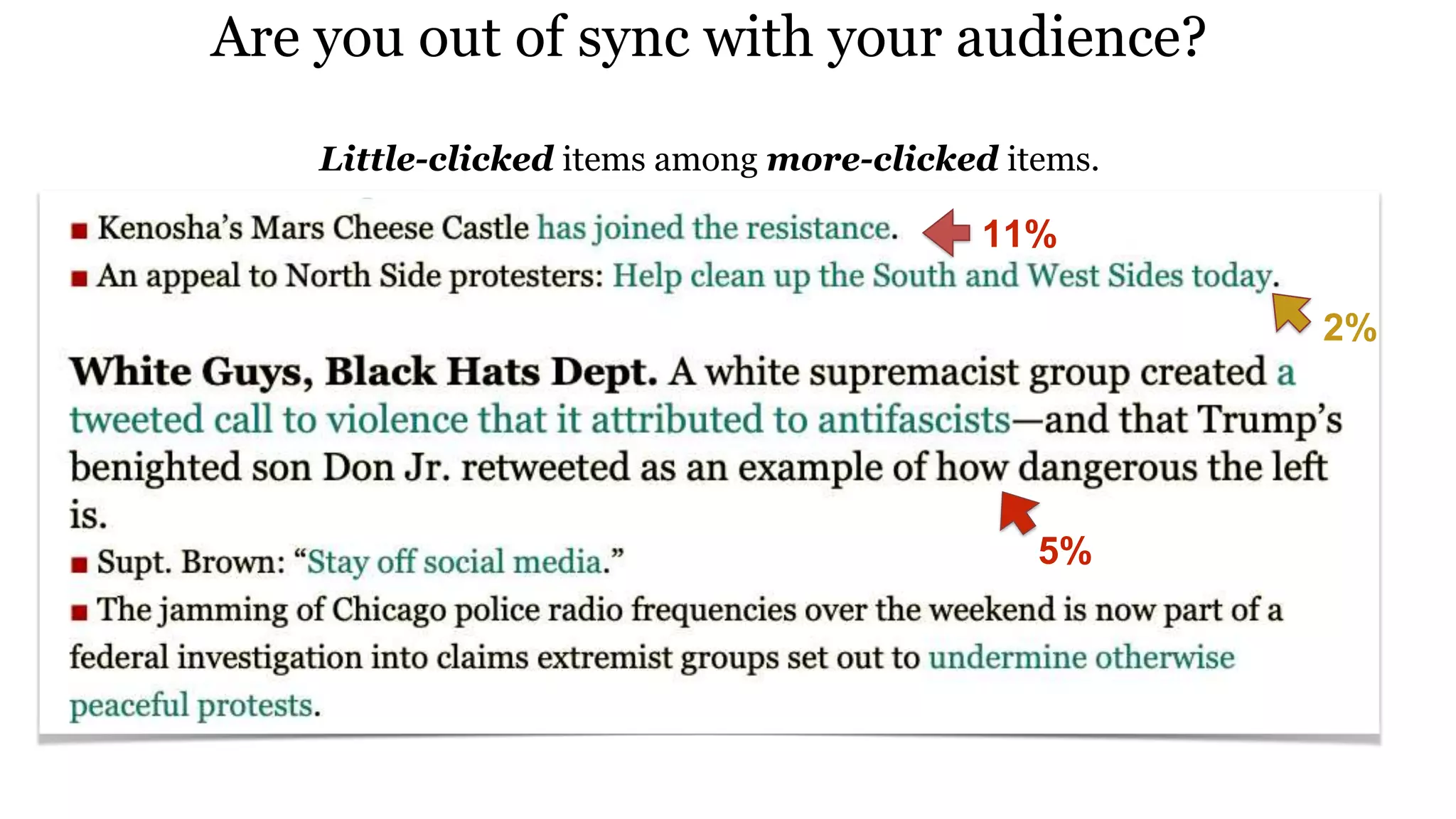
Are you out of sync with your audience?
Little-clicked items among more-clicked items.
11%
2%
5%
Are
you
out of
sync?
More-
clicked
items
among
less-
clicked
items.
0%
1%
8%
16%3%
Headlines that work
Two purposes:
• Search-engine-optimized (SEO) headlines
(headlines for robots*).
Good for page-level placement.
• “Curiosity gap”-optimized headlines
(headlines for people*).
Good for front-page and email placement, for
print publications ... and for social media
(Twitter, Facebook).
*Andy Crestodina: orbitmedia.com/blog/write-for-robots-write-for-people/
Headlines for robots
These are the stupid-simple headlines that tell the story
plainly—that look like the answer to a Google query:
Portland police arrest 127 in protest
(Answers searches like “Portland protest”)
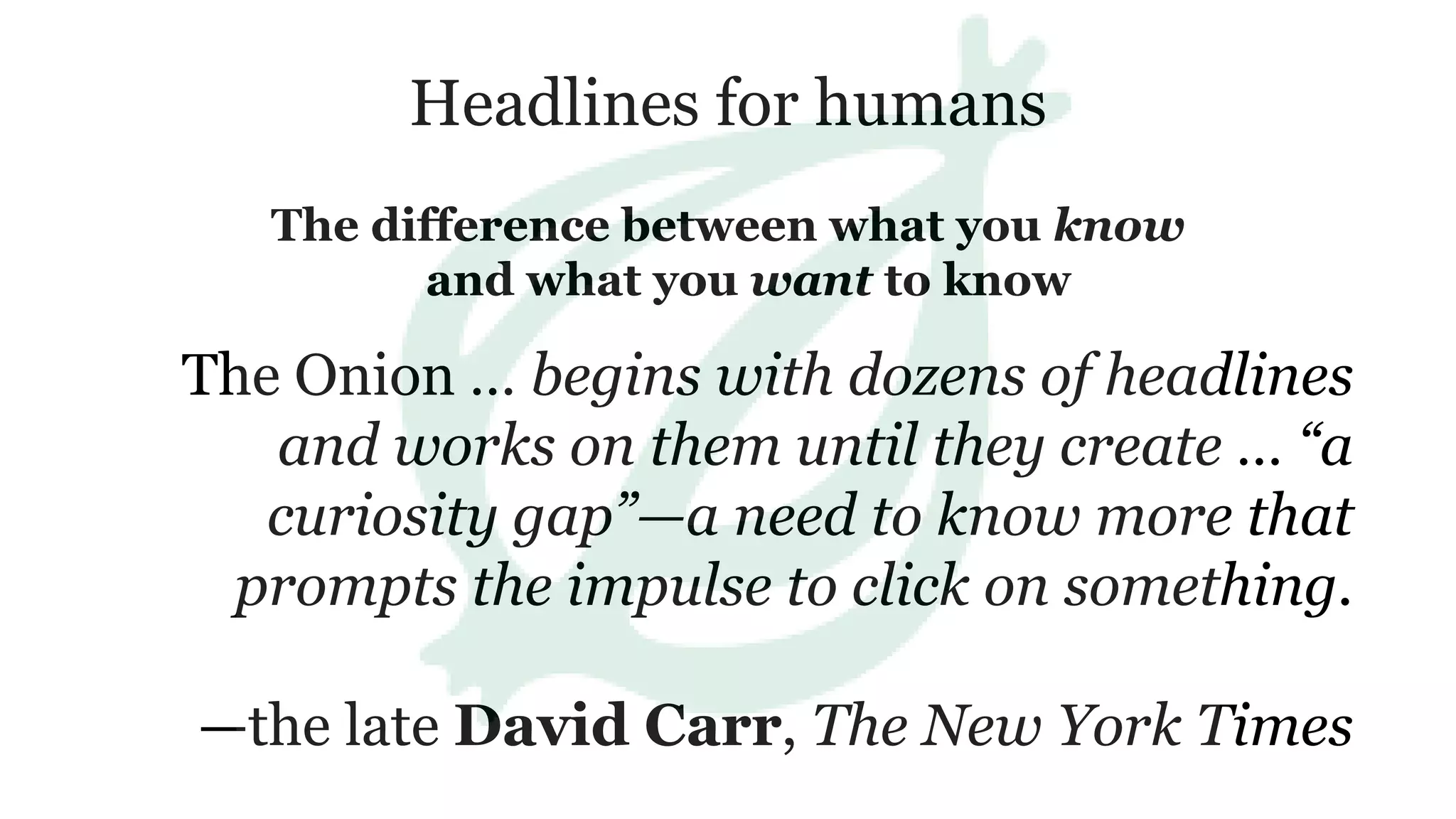
Headlines for humans
The difference between what you know
and what you want to know
The Onion … begins with dozens of headlines
and works on them until they create … “a
curiosity gap”—a need to know more that
prompts the impulse to click on something.
—the late David Carr, The New York Times
Headlines for humans
Assume most people (think they) aren’t
interested.
• Write headlines to engage them, and your core
audience will still be there for you.
• Play down location.
(Except locations well-known to your audience.)
• Play down names.
(Except names well-known to your audience.)
(Use generic nouns for unfamiliar names.)
Headlines for humans
• Questions:
COVID-careful … or OCD?
• Ellipses, teases:
Nation’s sickest city is …
• Pull-quotes:
‘Suck it up, wussies’
For all headlines
Place the story’s most
relevant or engaging
word or phrase as close
as possible to the start.
In all kinds of headlines, avoid …
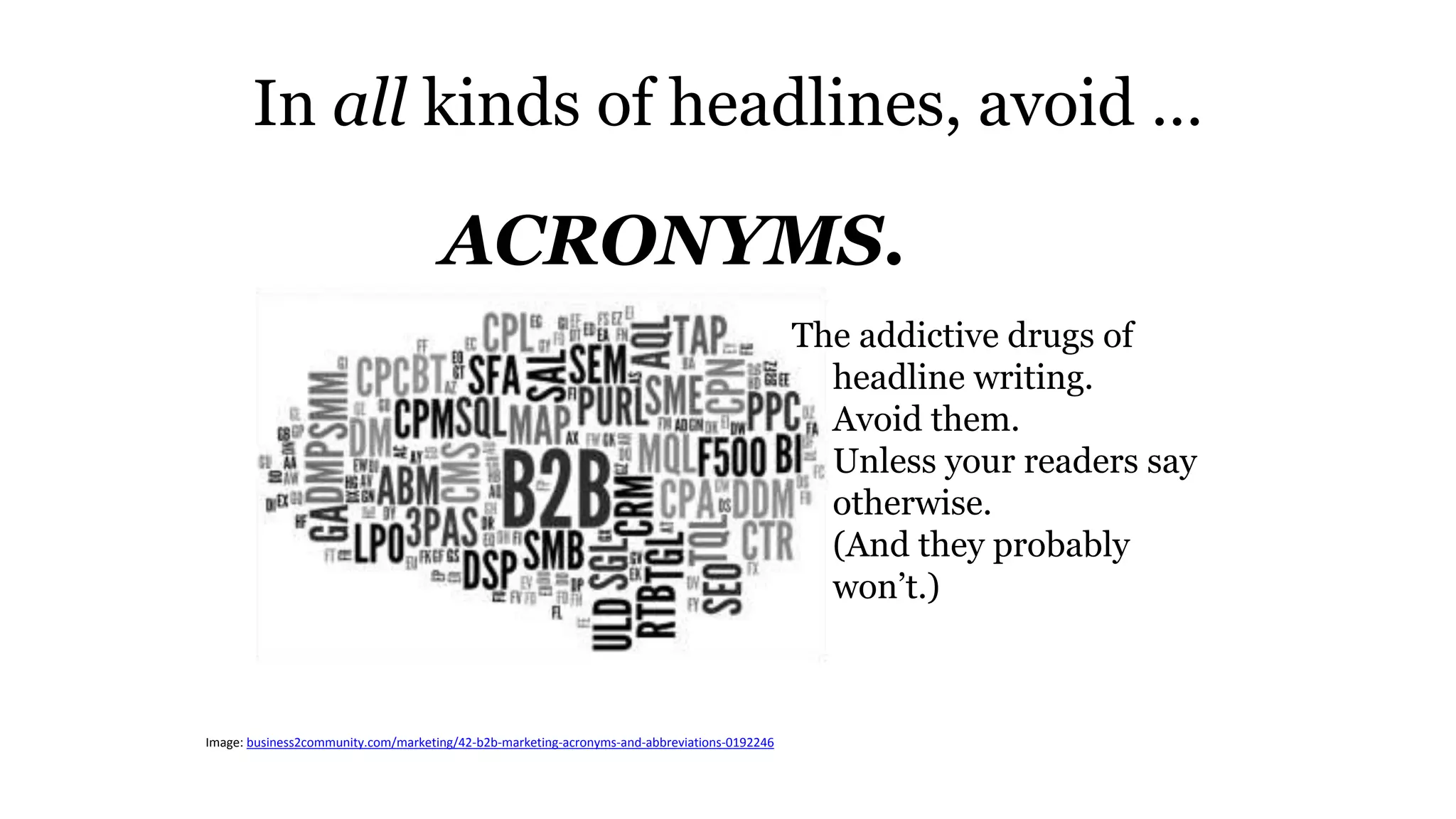
ACRONYMS.
Image: business2community.com/marketing/42-b2b-marketing-acronyms-and-abbreviations-0192246
The addictive drugs of
headline writing.
Avoid them.
Unless your readers say
otherwise.
(And they probably
won’t.)
The power of YOU
The Onion:
Second-Person Narrative Enthralling You
CHICAGO—In a piece of writing that had you intrigued
from the very first clause, a second-person narrative you
are reading right at this very moment is absolutely
captivating you, sources reported. “Wow, I can’t believe
this is happening,” you are thinking as you move through
the narrative, which at first merely piqued your interest
but is now completely and utterly taking hold of you …
The case for sentence case
... vs. Title Case for headlines:
• Concrete nouns drive traffic.
• The most concrete concrete
nouns are Proper Nouns.
• So why not make Proper Nouns
easier to find?
Once you have a great subject line …
… make sure the inside of your
email is engaging and accessible.
Make sure your content is
engaging and accessible.
Stick to one column.
Smartphones render
multicolumn email illegible.
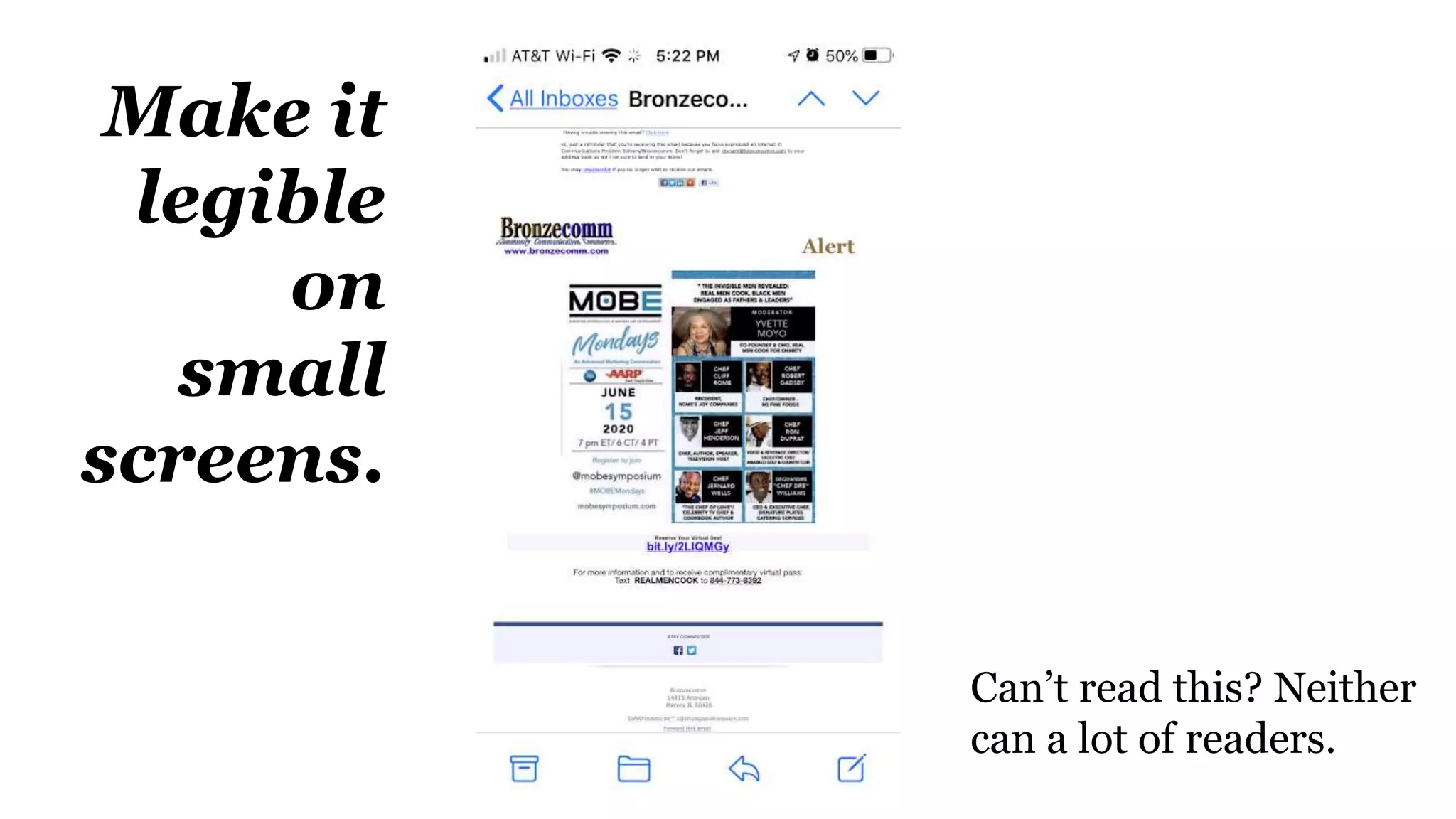
Make it
legible
on
small
screens.
Can’t read this? Neither
can a lot of readers.
Make sure your content is
engaging and accessible.
Include many links every time.
Even—maybe especially—if you’re
sending readers to off-site content, the
relative popularity of those links gives
you valuable intel.
Make sure your content is
engaging and accessible.
Don’t use images for images’ sake.
• If they’re not compelling at smartphone size, they
push down more engaging content.
• Lose that hulking masthead or logo at the top of
your email. (People don’t open email if they don’t
know who sent it, and your From field will have
made that clear.)
Anatomy of an email turd
Break down what we see, word for word ...
“Unbeatabl...” what?
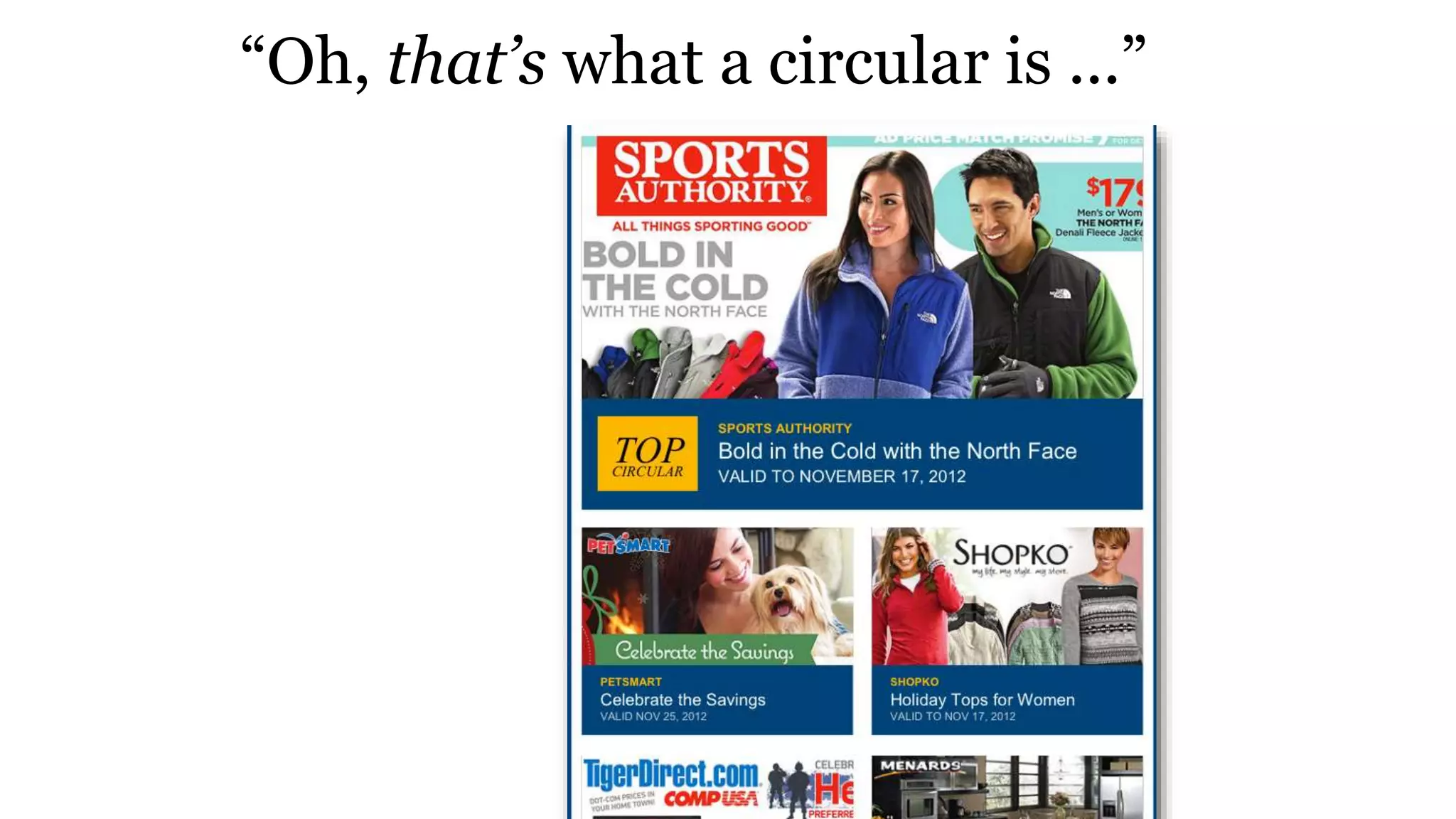
“Oh, that’s what a circular is ...”
Email communication
in times of crisis
Charlie Meyerson
linkedin.com/in/cmeyerson
facebook.com/meyerson
@Meyerson on Twitter
Charlie@MeyersonStrategy.com
ChicagoPublicSquare.com

Email communication in times of crisis

  • 1.
    Email communication in timesof crisis Charlie Meyerson linkedin.com/in/cmeyerson facebook.com/meyerson @Meyerson on Twitter Charlie@MeyersonStrategy.com ChicagoPublicSquare.com
  • 2.
    Headlines are morethan things in newspapers.
  • 3.
    Headlines are howwe decide what to watch on YouTube.
  • 4.
    Headlines are howwe connect in social media. * *No longer true.
  • 5.
    And—especially in timesof crisis— headlines are how we decide what email to open.
  • 6.
    But before wepush ahead … Skeptics will ask: Does he know what he’s talking about?
  • 7.
    Yes, it works. Ilearned what I know by launching and running the Chicago Tribune’s email services for a decade.
  • 8.
    ... sent totens of thousands of subscribers on my watch, 2000-2009. … often achieved Tribune Co. editorial newsletter- leading 60 percent clickthrough rates –60 clicks per 100 recipients. Yes, it works. [“Charlie is a pioneer in the e-newsletter headline business.” —Rick Kaempfer, Illinois Entertainer, April 2017]
  • 9.
    Yes, it works. Amajor professional organization that followed the advice you’re about to get (after I was embedded with the team for four days)—a site that previously hadn’t strung together two successive months of record traffic—achieved record pageviews ... • for the next 5 straight months. • for 10 of the following 12 months.
  • 10.
  • 11.
    Main factor drivingperformance: Stronger headlines Primarily, in email subject lines.
  • 12.
  • 13.
  • 14.
    Reuters Institute forthe Study of Journalism: The Resurgence and Importance of Email Newsletters “Email newsletters, once thought of as low-tech and unfashionable, are proving increasingly valuable to publishers looking to build strong direct relationships with audiences. Email can help build habit and loyalty, which is particularly important for new business models.”
  • 15.
    Do you … •Check Facebook, Twitter and email regularly? • Check all three at least once a day? • When you check them, scroll all the way back to the last item you checked … On email? On Facebook? On Twitter?
  • 16.
    • Email summonsat will your most devoted users. • … who then share their interests (by clicking). • It awaits their attention, unlike social-media rivers. • It’s -independent! • It’s fixed, unlike Web site front pages – and so, an easier gauge of elements’ relative popularity, especially with … • Heat maps, or click maps, making patterns easy to spot. The joy of email
  • 17.
    But to getthat intel from email … You need people to open it.
  • 18.
    And the keyto doing that? Good, old- fashioned writing.
  • 19.
    Secrets for gettingpeople to tune in: Omit needless words. —Will Strunk, The Elements of Style, 1918. • Twitter. • Texting. • Tiny smartphone screens that truncate subject lines. Need we say more?
  • 20.
    • Make yourmost interesting word or phrase the first element—the first word of your headline or subject line or post—and let your writing flow from there. meyersonstrategy.com/2007/04/good-radio-writing.html Secrets for getting people to tune in:
  • 21.
    But what arethe most interesting words? Develop a sense of the wider world’s priorities by checking sites like Google Trends: google.co m/trends /
  • 22.
    What are themost interesting words? Develop a sense of your audience’s priorities by monitoring clicks.
  • 23.
  • 24.
    This is about Goodheadlines and Bad headlines
  • 25.
    Good headlines Connect content tothe maximum number of people to whom it’s useful and relevant. They begin with the most interesting words. They’re brief; they omit needless words. They create a curiosity gap.
  • 26.
    Bad headlines Fail toconnect content with people who’d find it useful and relevant. They’re long, boring and irrelevant. They don’t spotlight interesting words. They generate little curiosity. Or Connect content with people to whom it’s neither useful nor relevant (turning them off to future communication).
  • 27.
  • 28.
  • 29.
    Many companies dojust that. Graydon Carter, former editor of Vanity Fair—unable to part with vanity.
  • 30.
    Other common mistakes EchoingFrom field in Subject
  • 31.
    Other common mistakes Repeating Subjectfrom day to day (Ad Age email)
  • 32.
    Compare those dispatchesin the last few slides to these. Would you click or delete? Strunk and White: “Use definite, specific, concrete language.”
  • 33.
    Note how few words you get. If the futureis mobile, now more than ever, every word–every syllable–counts. Strunk & White: Omit needless words.
  • 34.
  • 35.
    Better to watchyour clicks using … Email Content Analysis
  • 36.
  • 37.
  • 38.
    Are you outof sync with your audience? Little-clicked items among more-clicked items. 11% 2% 5%
  • 39.
  • 40.
    Headlines that work Twopurposes: • Search-engine-optimized (SEO) headlines (headlines for robots*). Good for page-level placement. • “Curiosity gap”-optimized headlines (headlines for people*). Good for front-page and email placement, for print publications ... and for social media (Twitter, Facebook). *Andy Crestodina: orbitmedia.com/blog/write-for-robots-write-for-people/
  • 41.
    Headlines for robots Theseare the stupid-simple headlines that tell the story plainly—that look like the answer to a Google query: Portland police arrest 127 in protest (Answers searches like “Portland protest”)
  • 42.
    Headlines for humans Thedifference between what you know and what you want to know The Onion … begins with dozens of headlines and works on them until they create … “a curiosity gap”—a need to know more that prompts the impulse to click on something. —the late David Carr, The New York Times
  • 43.
    Headlines for humans Assumemost people (think they) aren’t interested. • Write headlines to engage them, and your core audience will still be there for you. • Play down location. (Except locations well-known to your audience.) • Play down names. (Except names well-known to your audience.) (Use generic nouns for unfamiliar names.)
  • 44.
    Headlines for humans •Questions: COVID-careful … or OCD? • Ellipses, teases: Nation’s sickest city is … • Pull-quotes: ‘Suck it up, wussies’
  • 45.
    For all headlines Placethe story’s most relevant or engaging word or phrase as close as possible to the start.
  • 46.
    In all kindsof headlines, avoid … ACRONYMS. Image: business2community.com/marketing/42-b2b-marketing-acronyms-and-abbreviations-0192246 The addictive drugs of headline writing. Avoid them. Unless your readers say otherwise. (And they probably won’t.)
  • 47.
    The power ofYOU The Onion: Second-Person Narrative Enthralling You CHICAGO—In a piece of writing that had you intrigued from the very first clause, a second-person narrative you are reading right at this very moment is absolutely captivating you, sources reported. “Wow, I can’t believe this is happening,” you are thinking as you move through the narrative, which at first merely piqued your interest but is now completely and utterly taking hold of you …
  • 48.
    The case forsentence case ... vs. Title Case for headlines: • Concrete nouns drive traffic. • The most concrete concrete nouns are Proper Nouns. • So why not make Proper Nouns easier to find?
  • 49.
    Once you havea great subject line … … make sure the inside of your email is engaging and accessible.
  • 50.
    Make sure yourcontent is engaging and accessible. Stick to one column. Smartphones render multicolumn email illegible.
  • 51.
    Make it legible on small screens. Can’t readthis? Neither can a lot of readers.
  • 52.
    Make sure yourcontent is engaging and accessible. Include many links every time. Even—maybe especially—if you’re sending readers to off-site content, the relative popularity of those links gives you valuable intel.
  • 53.
    Make sure yourcontent is engaging and accessible. Don’t use images for images’ sake. • If they’re not compelling at smartphone size, they push down more engaging content. • Lose that hulking masthead or logo at the top of your email. (People don’t open email if they don’t know who sent it, and your From field will have made that clear.)
  • 54.
    Anatomy of anemail turd
  • 55.
    Anatomy of anemail turd Break down what we see, word for word ...
  • 56.
  • 57.
    “Oh, that’s whata circular is ...”
  • 58.
    Email communication in timesof crisis Charlie Meyerson linkedin.com/in/cmeyerson facebook.com/meyerson @Meyerson on Twitter Charlie@MeyersonStrategy.com ChicagoPublicSquare.com