Elaboration Theory

   ELIZABETH RUSSO
Who originated the elaboration theory?


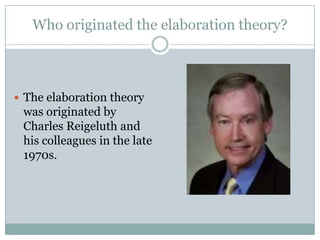
 The elaboration theory
 was originated by
 Charles Reigeluth and
 his colleagues in the late
 1970s.
Key points of the elaboration theory

 conceptual elaboration sequence: used when there
 are many related concepts to be learned

 theoretical elaboration sequence: used when there
 are many related principles to be learned

 simplifying conditions sequence: used when a task of
 at least moderate complexity is to be learned
What does the teacher do?

 The teacher must teach broader, more inclusive
 concepts before the more detailed ones that
 elaborate upon them.


 Next, the teacher should teach “supporting” content
 such as principles, procedures, information, higher-
 order thinking skills, or attitudes together with the
 concepts to which they are most closely related.
What does the teacher do?

 The teacher should also group concepts, principles,
 or steps and their supporting content into “learning
 episodes” of a useful size.

 Finally, teachers allow students to choose which
 concepts, principles, or versions of the task to
 elaborate upon or learn first.
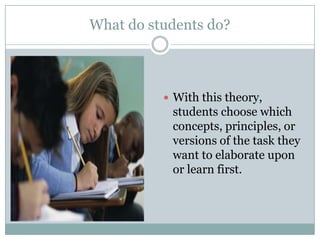
What do students do?


           With this theory,
           students choose which
           concepts, principles, or
           versions of the task they
           want to elaborate upon
           or learn first.
My teaching

 I believe that when it comes to my teaching, this is
 an excellent theory to use.

 This theory will allow me to teach students but also
 allow the students to chose how they want to learn.
Information used

 http://www.learning-theories.com/elaboration-
  theory-reigeluth.html
 http://nasuprawoto.wordpress.com/2009/12/29/ela
  boration-theory/

Elizabethrusso elaboration theory

  • 1.
    Elaboration Theory ELIZABETH RUSSO
  • 2.
    Who originated theelaboration theory?  The elaboration theory was originated by Charles Reigeluth and his colleagues in the late 1970s.
  • 3.
    Key points ofthe elaboration theory  conceptual elaboration sequence: used when there are many related concepts to be learned  theoretical elaboration sequence: used when there are many related principles to be learned  simplifying conditions sequence: used when a task of at least moderate complexity is to be learned
  • 4.
    What does theteacher do?  The teacher must teach broader, more inclusive concepts before the more detailed ones that elaborate upon them.  Next, the teacher should teach “supporting” content such as principles, procedures, information, higher- order thinking skills, or attitudes together with the concepts to which they are most closely related.
  • 5.
    What does theteacher do?  The teacher should also group concepts, principles, or steps and their supporting content into “learning episodes” of a useful size.  Finally, teachers allow students to choose which concepts, principles, or versions of the task to elaborate upon or learn first.
  • 6.
    What do studentsdo?  With this theory, students choose which concepts, principles, or versions of the task they want to elaborate upon or learn first.
  • 7.
    My teaching  Ibelieve that when it comes to my teaching, this is an excellent theory to use.  This theory will allow me to teach students but also allow the students to chose how they want to learn.
  • 8.
    Information used  http://www.learning-theories.com/elaboration- theory-reigeluth.html  http://nasuprawoto.wordpress.com/2009/12/29/ela boration-theory/