ELEMENTAL IMPURITIES
Presented by- Shiv Kumar Guided By – Dr. P.S Rajnikant Sir
M.Pharma 1st year (1st sem) Assoc. Professor (M.Pharma,Ph.D )
Pharmaceutical Analysis Department Of Pharmaceutical Sciences.
Department Of Pharmaceutical Sciences.
BBAU Central University Lucknow,U.P.
CONTENTS
● INTRODUCTION OF IMPURITIES AND ELEMENTAL IMPURITIES
● SCOPE OF ICH GUIDELINES
● CLASSIFICATION OF ELEMENTAL IMPURITIES
● POTENTIAL SOURCES OF ELEMENTAL IMPURITIES
● IDENTIFICATION OF POTENTIAL ELEMENTAL IMPURITIES
● CONTROL OF ELEMENTAL IMPURITIES
● RISK ASSESSMENT OF ELEMENTAL IMPURITIES
IMPURITIES
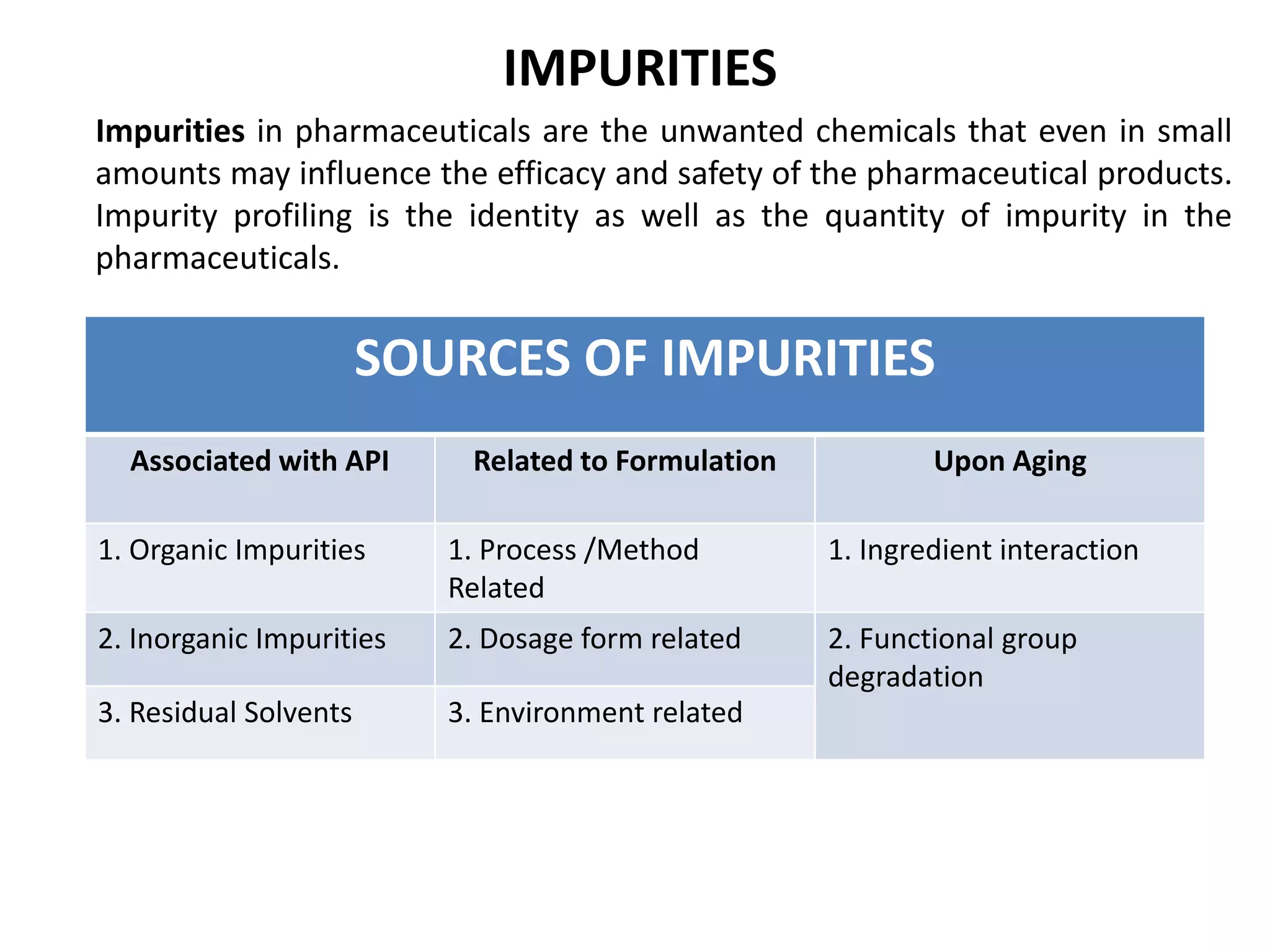
Impurities in pharmaceuticals are the unwanted chemicals that even in small
amounts may influence the efficacy and safety of the pharmaceutical products.
Impurity profiling is the identity as well as the quantity of impurity in the
pharmaceuticals.
SOURCES OF IMPURITIES
Associated with API Related to Formulation Upon Aging
1. Organic Impurities 1. Process /Method
Related
1. Ingredient interaction
2. Inorganic Impurities 2. Dosage form related 2. Functional group
degradation
3. Residual Solvents 3. Environment related
ELEMENTAL IMPURITIES
Elemental Impurities:- are traces of metals that can end up
in finished drug products. These impurities can come from
multiple points in the manufacturing process, such as
residual catalysts from a product's synthesis or from contact
with manufacturing equipment, containers and other
materials.
These impurities do not contribute to a drugs therapeutic
effect, and in some cases can cause patients harm, FDA and
other regulatory and standards bodies have developed
guidelines to measure and control the presence of these
impurities.
QUALITY GUIDELINES
(Q3A - Q3D: Impurities)
Q3A(R2)Impurities in New Drug Substance
Q3B(R2)Impurities in New Drug Products
Q3C(R5)Impurities: Guideline for Residual Solven
Q3D Guideline for Elemental Impurities
Q3d Training Implementation of Guideline for Elemental
Impurities
SCOPE OF ICH GUIDELINES
The guideline applies to new finished drug products (as defined in ICH Q6A and
Q6B) and new drug products containing existing drug substances. The drug
products containing purified proteins and polypeptides (including proteins and
polypeptides produced from recombinant or non-recombinant origins), their
derivatives, and products of which they are components (e.g., conjugates) are
within the scope of this guideline, as are drug products containing synthetically
produced polypeptides, polynucleotides, and oligosaccharides.
This guideline does not apply to herbal products, radiopharmaceuticals,
vaccines, cell metabolites, DNA products, allergenic extracts, cells, whole blood,
cellular blood components or blood derivatives including plasma and plasma
derivatives, dialysate solutions not intended for systemic circulation, and
elements that are intentionally included in the drug product for therapeutic
benefit.
CLASSIFICATION OF ELEMENTAL IMPURITIES
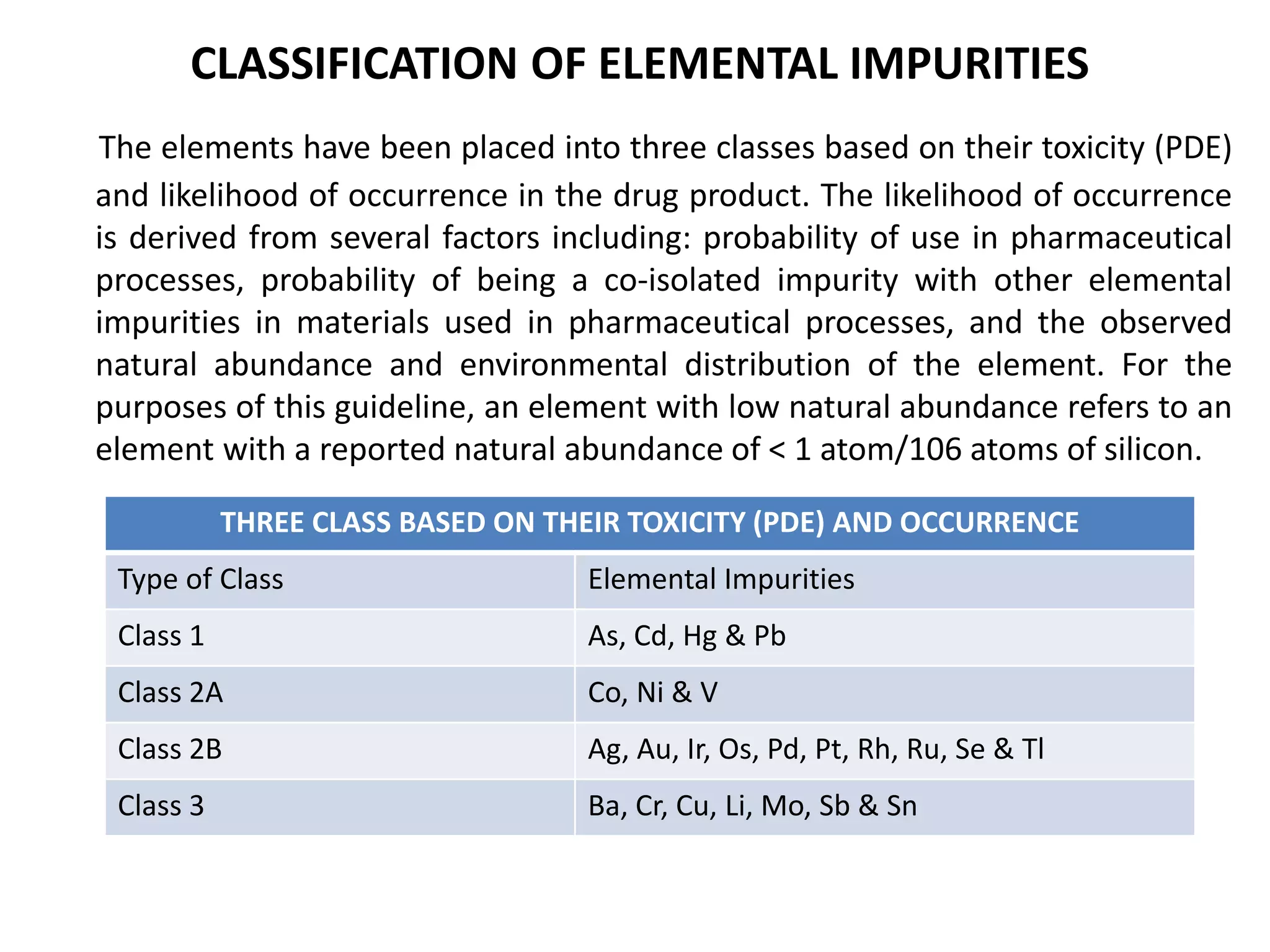
The elements have been placed into three classes based on their toxicity (PDE)
and likelihood of occurrence in the drug product. The likelihood of occurrence
is derived from several factors including: probability of use in pharmaceutical
processes, probability of being a co-isolated impurity with other elemental
impurities in materials used in pharmaceutical processes, and the observed
natural abundance and environmental distribution of the element. For the
purposes of this guideline, an element with low natural abundance refers to an
element with a reported natural abundance of < 1 atom/106 atoms of silicon.
THREE CLASS BASED ON THEIR TOXICITY (PDE) AND OCCURRENCE
Type of Class Elemental Impurities
Class 1 As, Cd, Hg & Pb
Class 2A Co, Ni & V
Class 2B Ag, Au, Ir, Os, Pd, Pt, Rh, Ru, Se & Tl
Class 3 Ba, Cr, Cu, Li, Mo, Sb & Sn
• Class 1: The elements, As, Cd, Hg, and Pb, are human toxicants that have
limited or no use in the manufacture of pharmaceuticals. Their presence in
drug products typically comes from commonly used materials (e.g., mined
excipients). Because of their unique nature, these four elements require
evaluation during the risk assessment, across all potential sources of elemental
impurities and routes of administration. The outcome of the risk assessment
will determine those components that may require additional controls which
may in some cases include testing for Class 1 elements. It is not expected that
all components will require testing for Class 1 elemental impurities; testing
should only be applied when the risk assessment identifies it as the
appropriate control to ensure that the PDE will be met.
• Class 2: Elements in this class are generally considered as route-dependent
human toxicants. Class 2 elements are further divided in sub-classes 2A and 2B
based on relative likelihood of occurrence in the drug product.
• Class 2A elements have relatively high probability of occurrence in the drug
product and thus require risk assessment across all potential sources of
elemental impurities and routes of administration (as indicated). The class 2A
elements are: Co, Ni and V.
• Class 2B elements have a reduced probability of occurrence in the
drug product related to their low abundance and low potential to be
co-isolated with other materials. As a result, they may be excluded
from the risk assessment unless they are intentionally added during the
manufacture of drug substances, excipients or other components of the
drug product. The elemental impurities in class 2B include: Ag, Au, Ir,
Os, Pd, Pt, Rh, Ru, Se and Tl.
• Class 3: The elements in this class have relatively low toxicities by the
oral route of administration (high PDEs, generally > 500 µg/day) but
may require consideration in the risk assessment for inhalation and
parenteral routes. For oral routes of administration, unless these
elements are intentionally added, they do not need to be considered
during the risk assessment. For parenteral and inhalation products, the
potential for inclusion of these elemental impurities should be
evaluated during the risk assessment, unless the route specific PDE is
above 500 µg/day. The elements in this class include: Ba, Cr, Cu, Li, Mo,
Sb, and Sn.
• Other elements: Some elemental impurities for which PDEs have not been
established due to their low inherent toxicity and/or differences in regional
regulations are not addressed in this guideline. If these elemental impurities are
present or included in the drug product they are addressed by other guidelines
and/or regional regulations and practices that may be applicable for particular
elements (e.g., Al for compromised renal function; Mn and Zn for patients with
compromised hepatic function), or quality considerations (e.g., presence of W
impurities in therapeutic proteins) for the final drug product. Some of the
elements considered include: Al, B, Ca, Fe, K, Mg, Mn, Na, W and Zn.
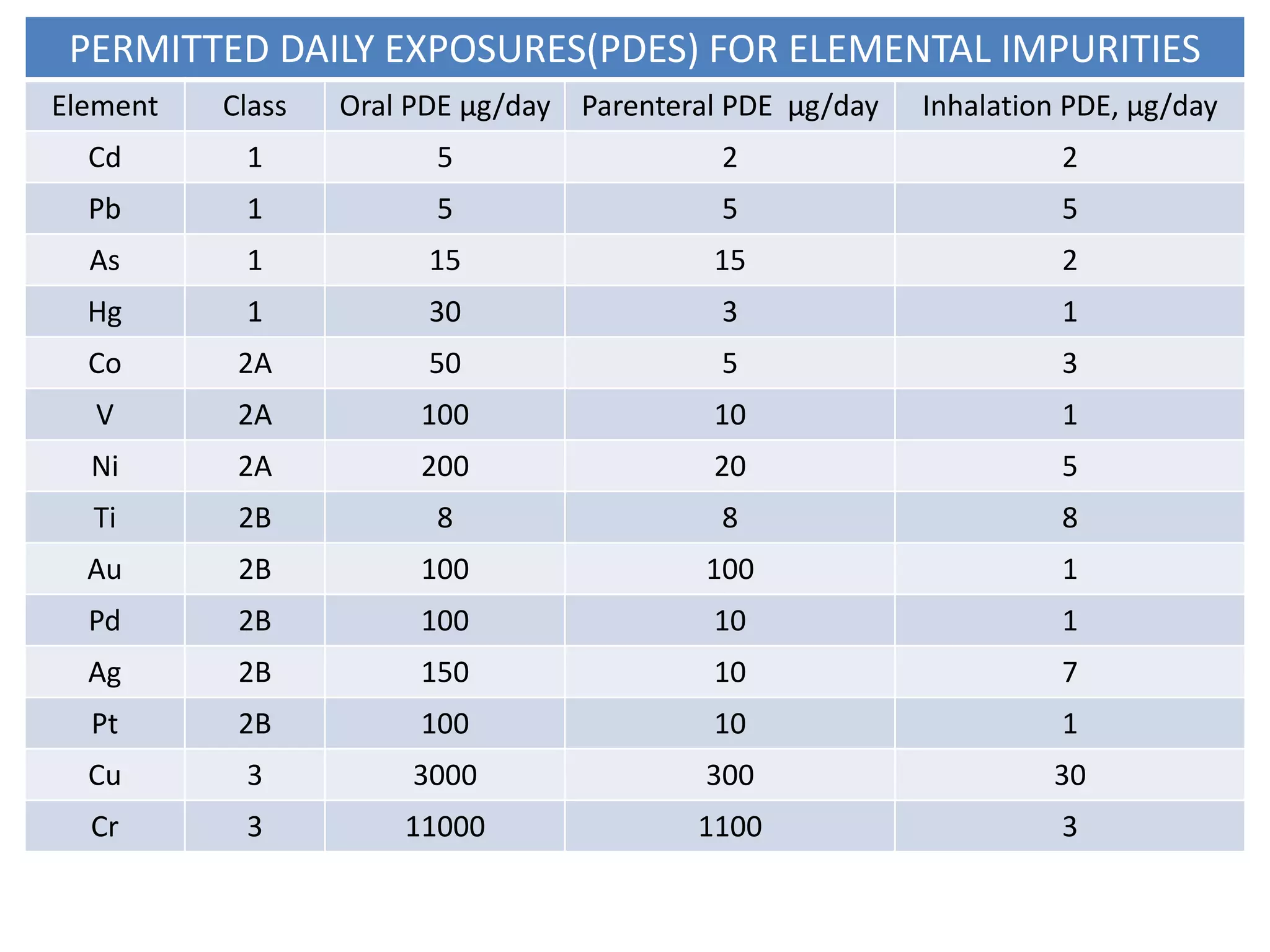
PERMITTED DAILY EXPOSURES(PDES) FOR ELEMENTAL IMPURITIES
Element Class Oral PDE μg/day Parenteral PDE μg/day Inhalation PDE, μg/day
Cd 1 5 2 2
Pb 1 5 5 5
As 1 15 15 2
Hg 1 30 3 1
Co 2A 50 5 3
V 2A 100 10 1
Ni 2A 200 20 5
Ti 2B 8 8 8
Au 2B 100 100 1
Pd 2B 100 10 1
Ag 2B 150 10 7
Pt 2B 100 10 1
Cu 3 3000 300 30
Cr 3 11000 1100 3
POTENTIAL SOURCES OF ELEMENTAL IMPURITIES
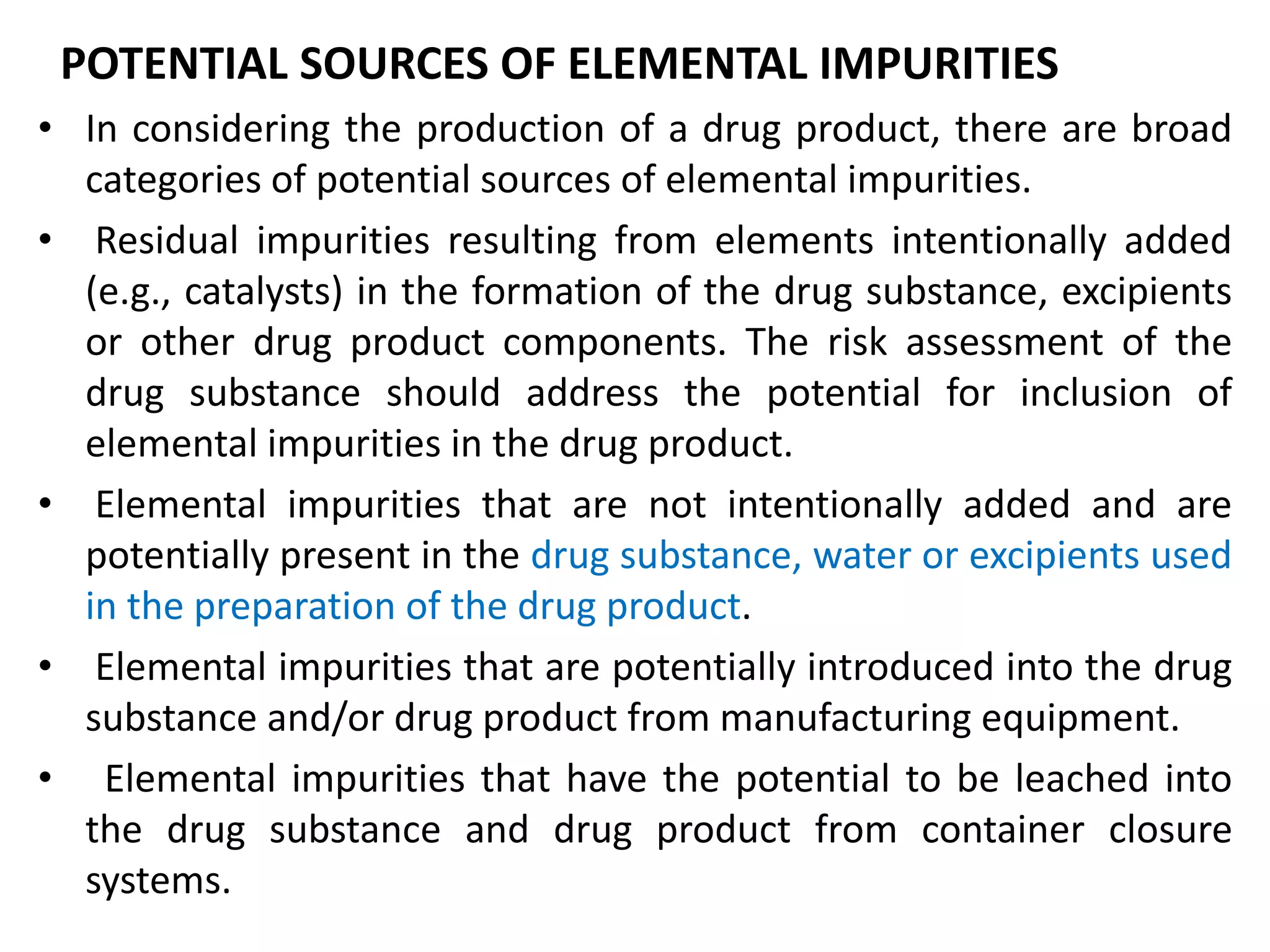
• In considering the production of a drug product, there are broad
categories of potential sources of elemental impurities.
• Residual impurities resulting from elements intentionally added
(e.g., catalysts) in the formation of the drug substance, excipients
or other drug product components. The risk assessment of the
drug substance should address the potential for inclusion of
elemental impurities in the drug product.
• Elemental impurities that are not intentionally added and are
potentially present in the drug substance, water or excipients used
in the preparation of the drug product.
• Elemental impurities that are potentially introduced into the drug
substance and/or drug product from manufacturing equipment.
• Elemental impurities that have the potential to be leached into
the drug substance and drug product from container closure
systems.
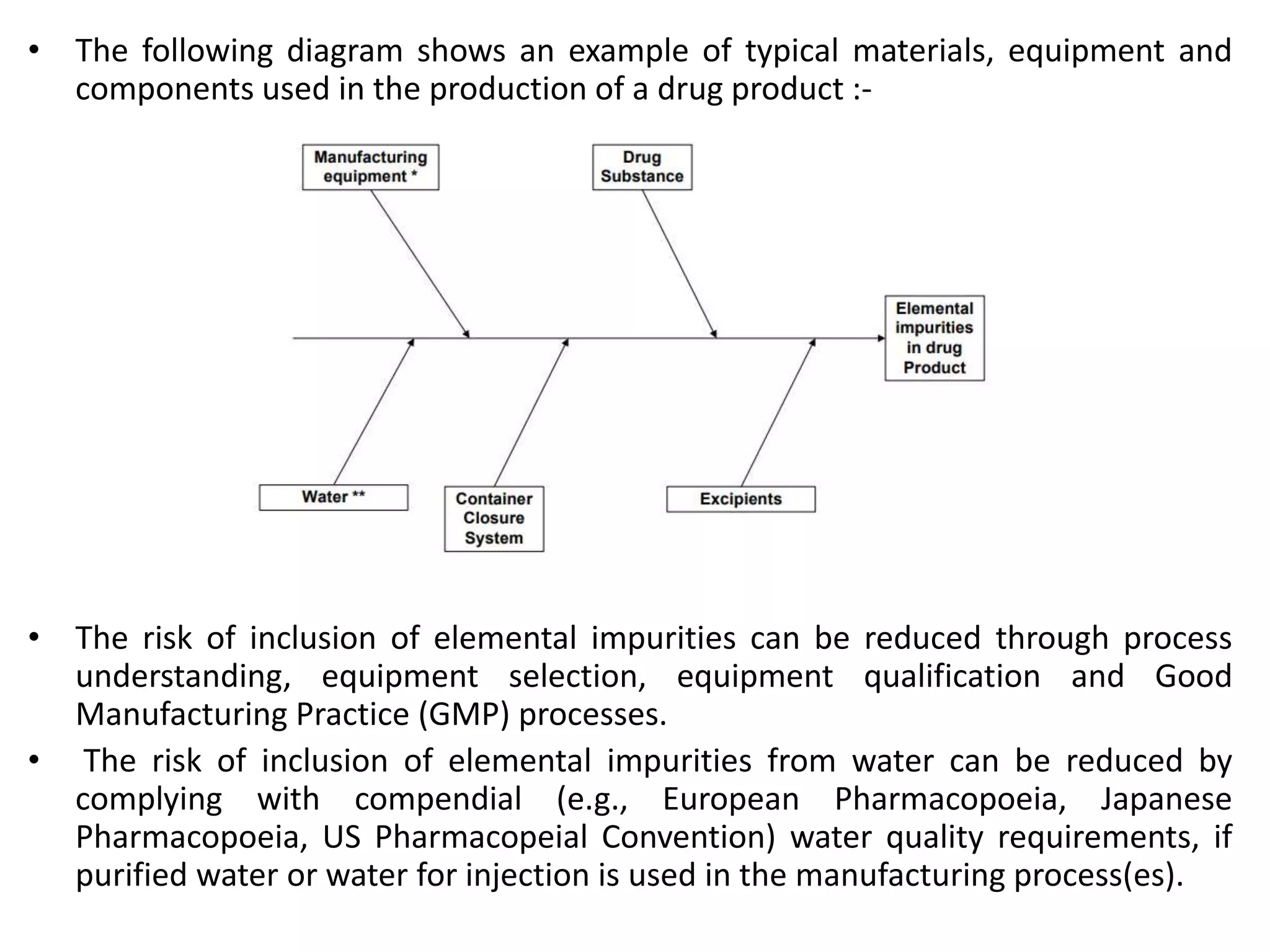
• The following diagram shows an example of typical materials, equipment and
components used in the production of a drug product :-
• The risk of inclusion of elemental impurities can be reduced through process
understanding, equipment selection, equipment qualification and Good
Manufacturing Practice (GMP) processes.
• The risk of inclusion of elemental impurities from water can be reduced by
complying with compendial (e.g., European Pharmacopoeia, Japanese
Pharmacopoeia, US Pharmacopeial Convention) water quality requirements, if
purified water or water for injection is used in the manufacturing process(es).
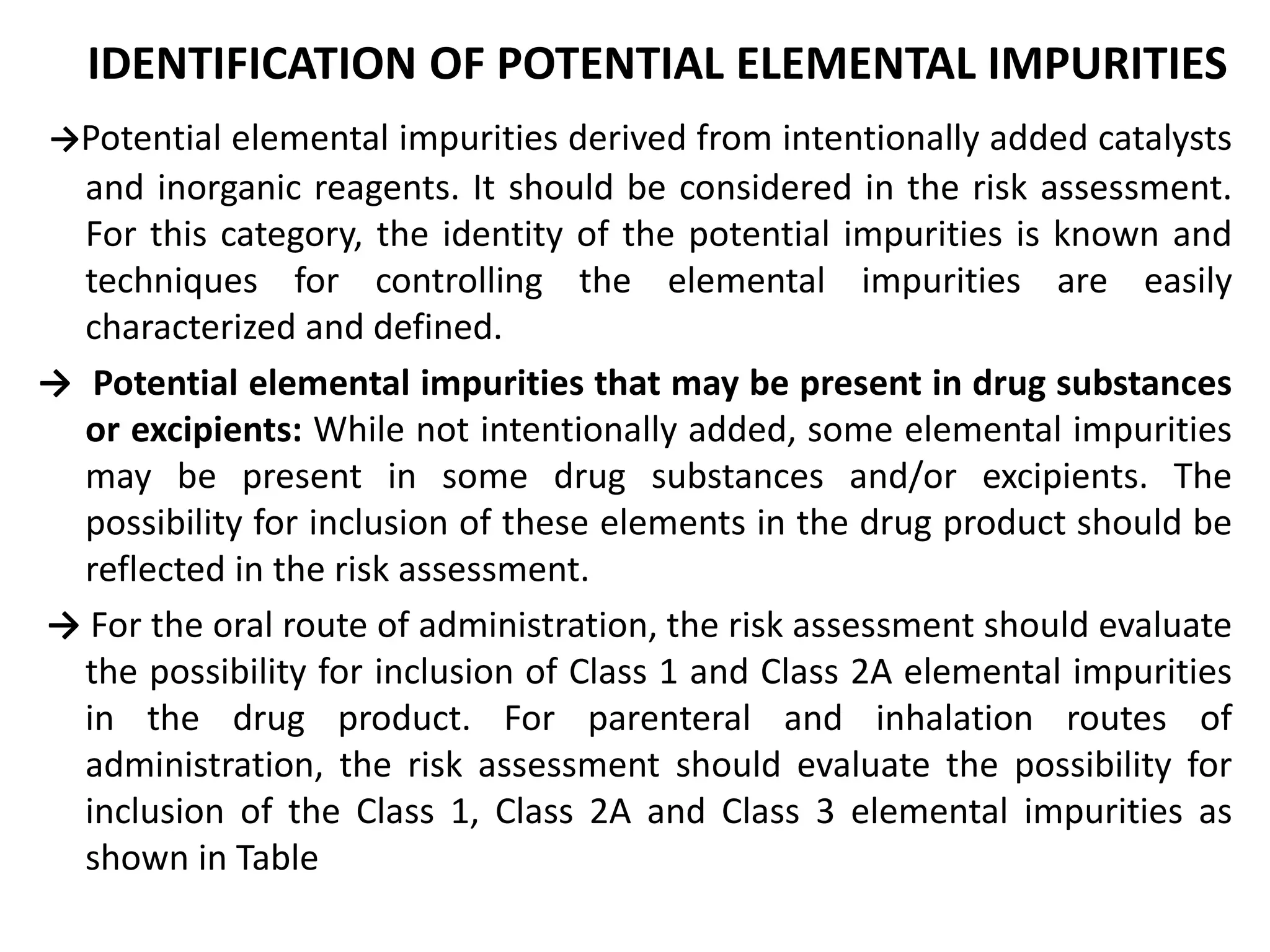
IDENTIFICATION OF POTENTIAL ELEMENTAL IMPURITIES
→Potential elemental impurities derived from intentionally added catalysts
and inorganic reagents. It should be considered in the risk assessment.
For this category, the identity of the potential impurities is known and
techniques for controlling the elemental impurities are easily
characterized and defined.
→ Potential elemental impurities that may be present in drug substances
or excipients: While not intentionally added, some elemental impurities
may be present in some drug substances and/or excipients. The
possibility for inclusion of these elements in the drug product should be
reflected in the risk assessment.
→ For the oral route of administration, the risk assessment should evaluate
the possibility for inclusion of Class 1 and Class 2A elemental impurities
in the drug product. For parenteral and inhalation routes of
administration, the risk assessment should evaluate the possibility for
inclusion of the Class 1, Class 2A and Class 3 elemental impurities as
shown in Table
• Potential elemental impurities derived from manufacturing equipment:
The contribution of elemental impurities from this source may be limited
and the subset of elemental impurities that should be considered in the
risk assessment will depend on the manufacturing equipment used in the
production of the drug product. Application of process knowledge,
selection of equipment, equipment qualification and GMP controls
ensure a low contribution from manufacturing equipment. The specific
elemental impurities of concern should be assessed based on knowledge
of the composition of the components of the manufacturing equipment
that come in contact with components of the drug product.
• Elemental impurities leached from container closure systems: The
identification of potential elemental impurities that may be introduced
from container closure systems should be based on a scientific
understanding of likely interactions between a particular drug product
type and its packaging. When a review of the materials of construction
demonstrates that the container closure system does not contain
elemental impurities, no additional risk assessment needs to be
performed.
Contd…
• It is recognized that the probability of elemental leaching into solid dosage
forms is minimal and does not require further consideration in the risk
assessment. For liquid and semi-solid dosage forms there is a higher
probability that elemental impurities could leach from the container closure
system during the shelf-life of the product. Studies to understand potential
leachable from the container closure system (after washing, sterilization,
irradiation, etc.) should be performed.
• Factors that should be considered (for liquid and semi-solid dosage
forms) include but are not limited to: Hydrophilicity/hydrophobicity;
• Ionic content , pH
• Temperature (cold chain vs room temperature and processing
conditions)
• Contact surface area
• Container/component composition
• Terminal sterilization
• Packaging process
• Component sterilization
• Duration of storage.
CONTROL OF ELEMENTAL IMPURITIES
• Control of elemental impurities is one part of the overall control
strategy for a drug product that assures that elemental impurities
do not exceed the PDEs. When the level of an elemental impurity
may exceed the control threshold, additional measures should be
implemented to assure that the level does not exceed the PDE.
Approaches that an applicant can pursue include but are not
limited to:
• Modification of the steps in the manufacturing process that result
in the reduction of elemental impurities below the control
threshold through specific or non-specific purification steps.
• Implementation of in-process or upstream controls, designed to
limit the concentration of the elemental impurity below the
control threshold in the drug product.
• Establishment of specification limits for excipients or
materials (e.g., synthetic intermediates)
• Establishment of specification limits for the drug substance.
• Establishment of specification limits for the drug product.
• Selection of appropriate container closure systems.
• Periodic testing may be applied to elemental impurities
according to the principles described in ICH Q6A.
• The information on the control of elemental impurities that
is provided in a regulatory submission includes.
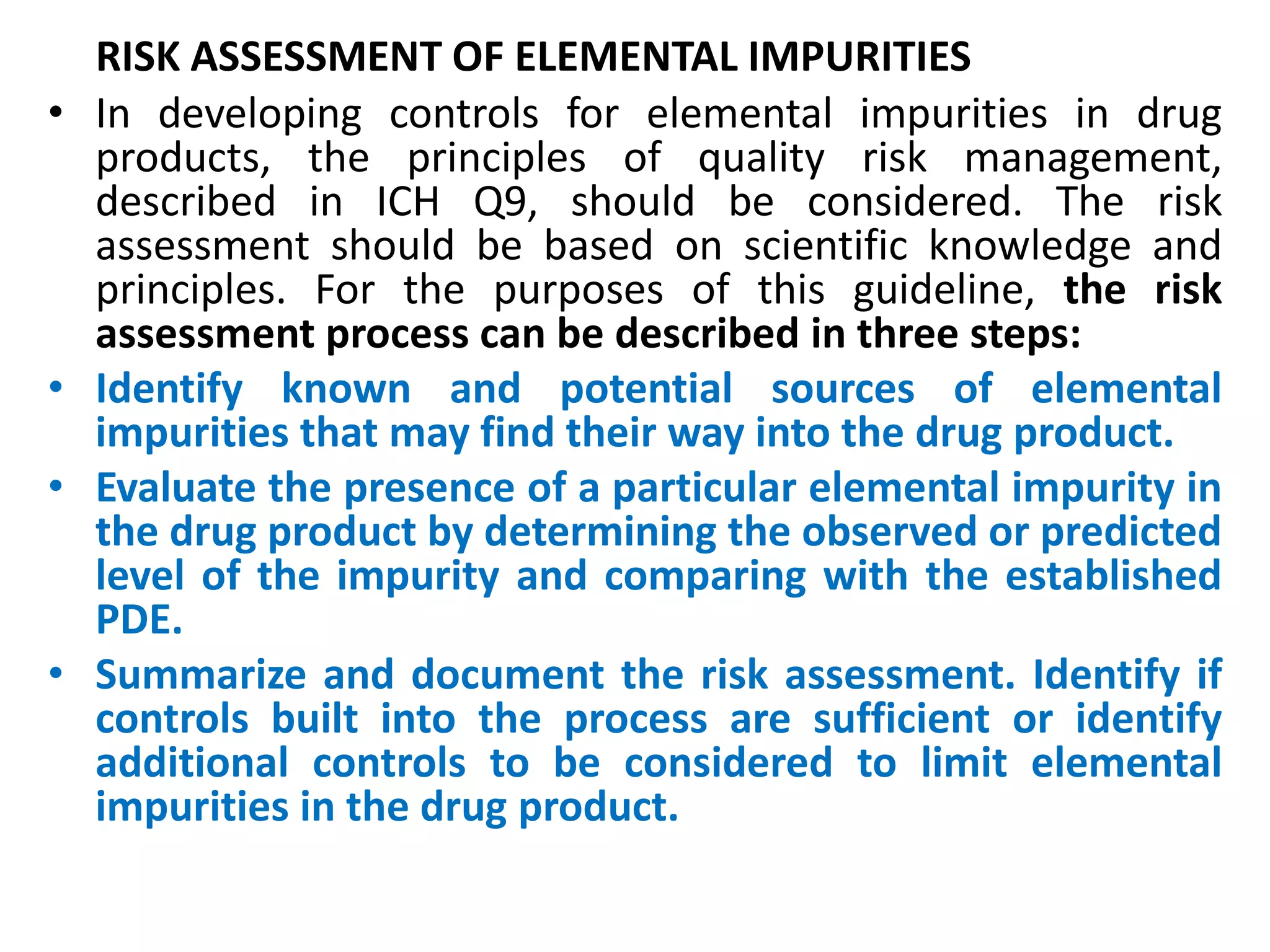
RISK ASSESSMENT OF ELEMENTAL IMPURITIES
• In developing controls for elemental impurities in drug
products, the principles of quality risk management,
described in ICH Q9, should be considered. The risk
assessment should be based on scientific knowledge and
principles. For the purposes of this guideline, the risk
assessment process can be described in three steps:
• Identify known and potential sources of elemental
impurities that may find their way into the drug product.
• Evaluate the presence of a particular elemental impurity in
the drug product by determining the observed or predicted
level of the impurity and comparing with the established
PDE.
• Summarize and document the risk assessment. Identify if
controls built into the process are sufficient or identify
additional controls to be considered to limit elemental
impurities in the drug product.
Elemental Impurities by Shiv Kalia.pptx

Elemental Impurities by Shiv Kalia.pptx

  • 1.
    ELEMENTAL IMPURITIES Presented by-Shiv Kumar Guided By – Dr. P.S Rajnikant Sir M.Pharma 1st year (1st sem) Assoc. Professor (M.Pharma,Ph.D ) Pharmaceutical Analysis Department Of Pharmaceutical Sciences. Department Of Pharmaceutical Sciences. BBAU Central University Lucknow,U.P.
  • 2.
    CONTENTS ● INTRODUCTION OFIMPURITIES AND ELEMENTAL IMPURITIES ● SCOPE OF ICH GUIDELINES ● CLASSIFICATION OF ELEMENTAL IMPURITIES ● POTENTIAL SOURCES OF ELEMENTAL IMPURITIES ● IDENTIFICATION OF POTENTIAL ELEMENTAL IMPURITIES ● CONTROL OF ELEMENTAL IMPURITIES ● RISK ASSESSMENT OF ELEMENTAL IMPURITIES
  • 3.
    IMPURITIES Impurities in pharmaceuticalsare the unwanted chemicals that even in small amounts may influence the efficacy and safety of the pharmaceutical products. Impurity profiling is the identity as well as the quantity of impurity in the pharmaceuticals. SOURCES OF IMPURITIES Associated with API Related to Formulation Upon Aging 1. Organic Impurities 1. Process /Method Related 1. Ingredient interaction 2. Inorganic Impurities 2. Dosage form related 2. Functional group degradation 3. Residual Solvents 3. Environment related
  • 4.
    ELEMENTAL IMPURITIES Elemental Impurities:-are traces of metals that can end up in finished drug products. These impurities can come from multiple points in the manufacturing process, such as residual catalysts from a product's synthesis or from contact with manufacturing equipment, containers and other materials. These impurities do not contribute to a drugs therapeutic effect, and in some cases can cause patients harm, FDA and other regulatory and standards bodies have developed guidelines to measure and control the presence of these impurities.
  • 5.
    QUALITY GUIDELINES (Q3A -Q3D: Impurities) Q3A(R2)Impurities in New Drug Substance Q3B(R2)Impurities in New Drug Products Q3C(R5)Impurities: Guideline for Residual Solven Q3D Guideline for Elemental Impurities Q3d Training Implementation of Guideline for Elemental Impurities
  • 6.
    SCOPE OF ICHGUIDELINES The guideline applies to new finished drug products (as defined in ICH Q6A and Q6B) and new drug products containing existing drug substances. The drug products containing purified proteins and polypeptides (including proteins and polypeptides produced from recombinant or non-recombinant origins), their derivatives, and products of which they are components (e.g., conjugates) are within the scope of this guideline, as are drug products containing synthetically produced polypeptides, polynucleotides, and oligosaccharides. This guideline does not apply to herbal products, radiopharmaceuticals, vaccines, cell metabolites, DNA products, allergenic extracts, cells, whole blood, cellular blood components or blood derivatives including plasma and plasma derivatives, dialysate solutions not intended for systemic circulation, and elements that are intentionally included in the drug product for therapeutic benefit.
  • 7.
    CLASSIFICATION OF ELEMENTALIMPURITIES The elements have been placed into three classes based on their toxicity (PDE) and likelihood of occurrence in the drug product. The likelihood of occurrence is derived from several factors including: probability of use in pharmaceutical processes, probability of being a co-isolated impurity with other elemental impurities in materials used in pharmaceutical processes, and the observed natural abundance and environmental distribution of the element. For the purposes of this guideline, an element with low natural abundance refers to an element with a reported natural abundance of < 1 atom/106 atoms of silicon. THREE CLASS BASED ON THEIR TOXICITY (PDE) AND OCCURRENCE Type of Class Elemental Impurities Class 1 As, Cd, Hg & Pb Class 2A Co, Ni & V Class 2B Ag, Au, Ir, Os, Pd, Pt, Rh, Ru, Se & Tl Class 3 Ba, Cr, Cu, Li, Mo, Sb & Sn
  • 8.
    • Class 1:The elements, As, Cd, Hg, and Pb, are human toxicants that have limited or no use in the manufacture of pharmaceuticals. Their presence in drug products typically comes from commonly used materials (e.g., mined excipients). Because of their unique nature, these four elements require evaluation during the risk assessment, across all potential sources of elemental impurities and routes of administration. The outcome of the risk assessment will determine those components that may require additional controls which may in some cases include testing for Class 1 elements. It is not expected that all components will require testing for Class 1 elemental impurities; testing should only be applied when the risk assessment identifies it as the appropriate control to ensure that the PDE will be met. • Class 2: Elements in this class are generally considered as route-dependent human toxicants. Class 2 elements are further divided in sub-classes 2A and 2B based on relative likelihood of occurrence in the drug product. • Class 2A elements have relatively high probability of occurrence in the drug product and thus require risk assessment across all potential sources of elemental impurities and routes of administration (as indicated). The class 2A elements are: Co, Ni and V.
  • 9.
    • Class 2Belements have a reduced probability of occurrence in the drug product related to their low abundance and low potential to be co-isolated with other materials. As a result, they may be excluded from the risk assessment unless they are intentionally added during the manufacture of drug substances, excipients or other components of the drug product. The elemental impurities in class 2B include: Ag, Au, Ir, Os, Pd, Pt, Rh, Ru, Se and Tl. • Class 3: The elements in this class have relatively low toxicities by the oral route of administration (high PDEs, generally > 500 µg/day) but may require consideration in the risk assessment for inhalation and parenteral routes. For oral routes of administration, unless these elements are intentionally added, they do not need to be considered during the risk assessment. For parenteral and inhalation products, the potential for inclusion of these elemental impurities should be evaluated during the risk assessment, unless the route specific PDE is above 500 µg/day. The elements in this class include: Ba, Cr, Cu, Li, Mo, Sb, and Sn.
  • 10.
    • Other elements:Some elemental impurities for which PDEs have not been established due to their low inherent toxicity and/or differences in regional regulations are not addressed in this guideline. If these elemental impurities are present or included in the drug product they are addressed by other guidelines and/or regional regulations and practices that may be applicable for particular elements (e.g., Al for compromised renal function; Mn and Zn for patients with compromised hepatic function), or quality considerations (e.g., presence of W impurities in therapeutic proteins) for the final drug product. Some of the elements considered include: Al, B, Ca, Fe, K, Mg, Mn, Na, W and Zn.
  • 11.
    PERMITTED DAILY EXPOSURES(PDES)FOR ELEMENTAL IMPURITIES Element Class Oral PDE μg/day Parenteral PDE μg/day Inhalation PDE, μg/day Cd 1 5 2 2 Pb 1 5 5 5 As 1 15 15 2 Hg 1 30 3 1 Co 2A 50 5 3 V 2A 100 10 1 Ni 2A 200 20 5 Ti 2B 8 8 8 Au 2B 100 100 1 Pd 2B 100 10 1 Ag 2B 150 10 7 Pt 2B 100 10 1 Cu 3 3000 300 30 Cr 3 11000 1100 3
  • 12.
    POTENTIAL SOURCES OFELEMENTAL IMPURITIES • In considering the production of a drug product, there are broad categories of potential sources of elemental impurities. • Residual impurities resulting from elements intentionally added (e.g., catalysts) in the formation of the drug substance, excipients or other drug product components. The risk assessment of the drug substance should address the potential for inclusion of elemental impurities in the drug product. • Elemental impurities that are not intentionally added and are potentially present in the drug substance, water or excipients used in the preparation of the drug product. • Elemental impurities that are potentially introduced into the drug substance and/or drug product from manufacturing equipment. • Elemental impurities that have the potential to be leached into the drug substance and drug product from container closure systems.
  • 13.
    • The followingdiagram shows an example of typical materials, equipment and components used in the production of a drug product :- • The risk of inclusion of elemental impurities can be reduced through process understanding, equipment selection, equipment qualification and Good Manufacturing Practice (GMP) processes. • The risk of inclusion of elemental impurities from water can be reduced by complying with compendial (e.g., European Pharmacopoeia, Japanese Pharmacopoeia, US Pharmacopeial Convention) water quality requirements, if purified water or water for injection is used in the manufacturing process(es).
  • 14.
    IDENTIFICATION OF POTENTIALELEMENTAL IMPURITIES →Potential elemental impurities derived from intentionally added catalysts and inorganic reagents. It should be considered in the risk assessment. For this category, the identity of the potential impurities is known and techniques for controlling the elemental impurities are easily characterized and defined. → Potential elemental impurities that may be present in drug substances or excipients: While not intentionally added, some elemental impurities may be present in some drug substances and/or excipients. The possibility for inclusion of these elements in the drug product should be reflected in the risk assessment. → For the oral route of administration, the risk assessment should evaluate the possibility for inclusion of Class 1 and Class 2A elemental impurities in the drug product. For parenteral and inhalation routes of administration, the risk assessment should evaluate the possibility for inclusion of the Class 1, Class 2A and Class 3 elemental impurities as shown in Table
  • 15.
    • Potential elementalimpurities derived from manufacturing equipment: The contribution of elemental impurities from this source may be limited and the subset of elemental impurities that should be considered in the risk assessment will depend on the manufacturing equipment used in the production of the drug product. Application of process knowledge, selection of equipment, equipment qualification and GMP controls ensure a low contribution from manufacturing equipment. The specific elemental impurities of concern should be assessed based on knowledge of the composition of the components of the manufacturing equipment that come in contact with components of the drug product. • Elemental impurities leached from container closure systems: The identification of potential elemental impurities that may be introduced from container closure systems should be based on a scientific understanding of likely interactions between a particular drug product type and its packaging. When a review of the materials of construction demonstrates that the container closure system does not contain elemental impurities, no additional risk assessment needs to be performed.
  • 16.
    Contd… • It isrecognized that the probability of elemental leaching into solid dosage forms is minimal and does not require further consideration in the risk assessment. For liquid and semi-solid dosage forms there is a higher probability that elemental impurities could leach from the container closure system during the shelf-life of the product. Studies to understand potential leachable from the container closure system (after washing, sterilization, irradiation, etc.) should be performed. • Factors that should be considered (for liquid and semi-solid dosage forms) include but are not limited to: Hydrophilicity/hydrophobicity; • Ionic content , pH • Temperature (cold chain vs room temperature and processing conditions) • Contact surface area • Container/component composition • Terminal sterilization • Packaging process • Component sterilization • Duration of storage.
  • 17.
    CONTROL OF ELEMENTALIMPURITIES • Control of elemental impurities is one part of the overall control strategy for a drug product that assures that elemental impurities do not exceed the PDEs. When the level of an elemental impurity may exceed the control threshold, additional measures should be implemented to assure that the level does not exceed the PDE. Approaches that an applicant can pursue include but are not limited to: • Modification of the steps in the manufacturing process that result in the reduction of elemental impurities below the control threshold through specific or non-specific purification steps. • Implementation of in-process or upstream controls, designed to limit the concentration of the elemental impurity below the control threshold in the drug product.
  • 18.
    • Establishment ofspecification limits for excipients or materials (e.g., synthetic intermediates) • Establishment of specification limits for the drug substance. • Establishment of specification limits for the drug product. • Selection of appropriate container closure systems. • Periodic testing may be applied to elemental impurities according to the principles described in ICH Q6A. • The information on the control of elemental impurities that is provided in a regulatory submission includes.
  • 19.
    RISK ASSESSMENT OFELEMENTAL IMPURITIES • In developing controls for elemental impurities in drug products, the principles of quality risk management, described in ICH Q9, should be considered. The risk assessment should be based on scientific knowledge and principles. For the purposes of this guideline, the risk assessment process can be described in three steps: • Identify known and potential sources of elemental impurities that may find their way into the drug product. • Evaluate the presence of a particular elemental impurity in the drug product by determining the observed or predicted level of the impurity and comparing with the established PDE. • Summarize and document the risk assessment. Identify if controls built into the process are sufficient or identify additional controls to be considered to limit elemental impurities in the drug product.