KARTHICK S
III-MCT
12BMT017
 Replacement for carburetor.
 EFI very precise, reliable & cost effective.
 EFI provide correct A/F ratio.
 Reduce exhaust pollution.
 Increased engine power.
 Single or Multi-point injection
 Indirect or Direct injection
 Injector located inside
throttle body.
 Injector sprays fuel from
above throttle valve.
 ECU control injector
openings.
 Injector located below
Throttle valve.
 Injector sprays fuel
Directly to ports.
 ECU controls opening.
 Injector is fixed to the top
of combustion chamber.
 Fuel is injected above
Piston head.
 Smaller combustion space,
better thermal efficiency.
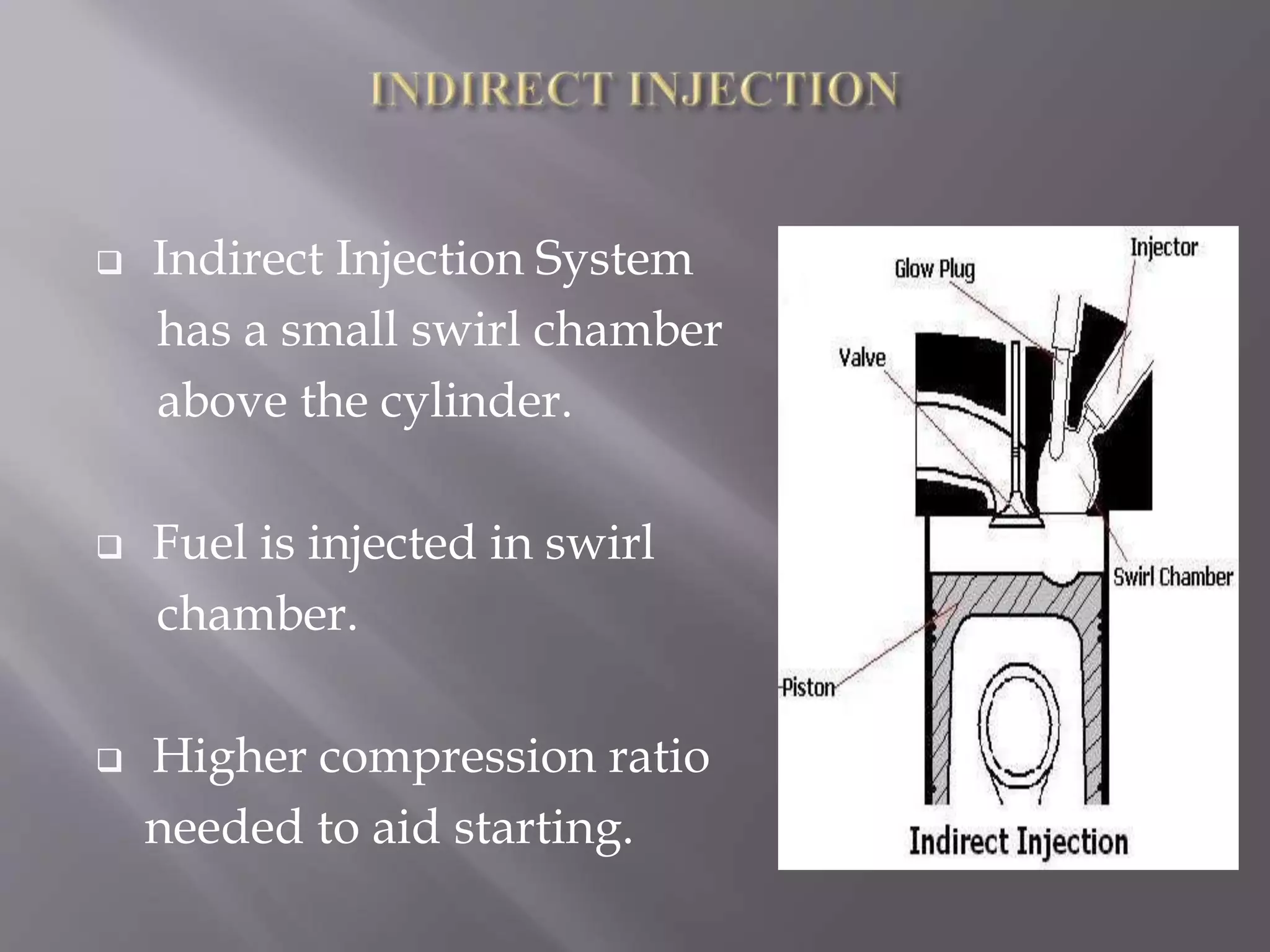
 Indirect Injection System
has a small swirl chamber
above the cylinder.
 Fuel is injected in swirl
chamber.
 Higher compression ratio
needed to aid starting.
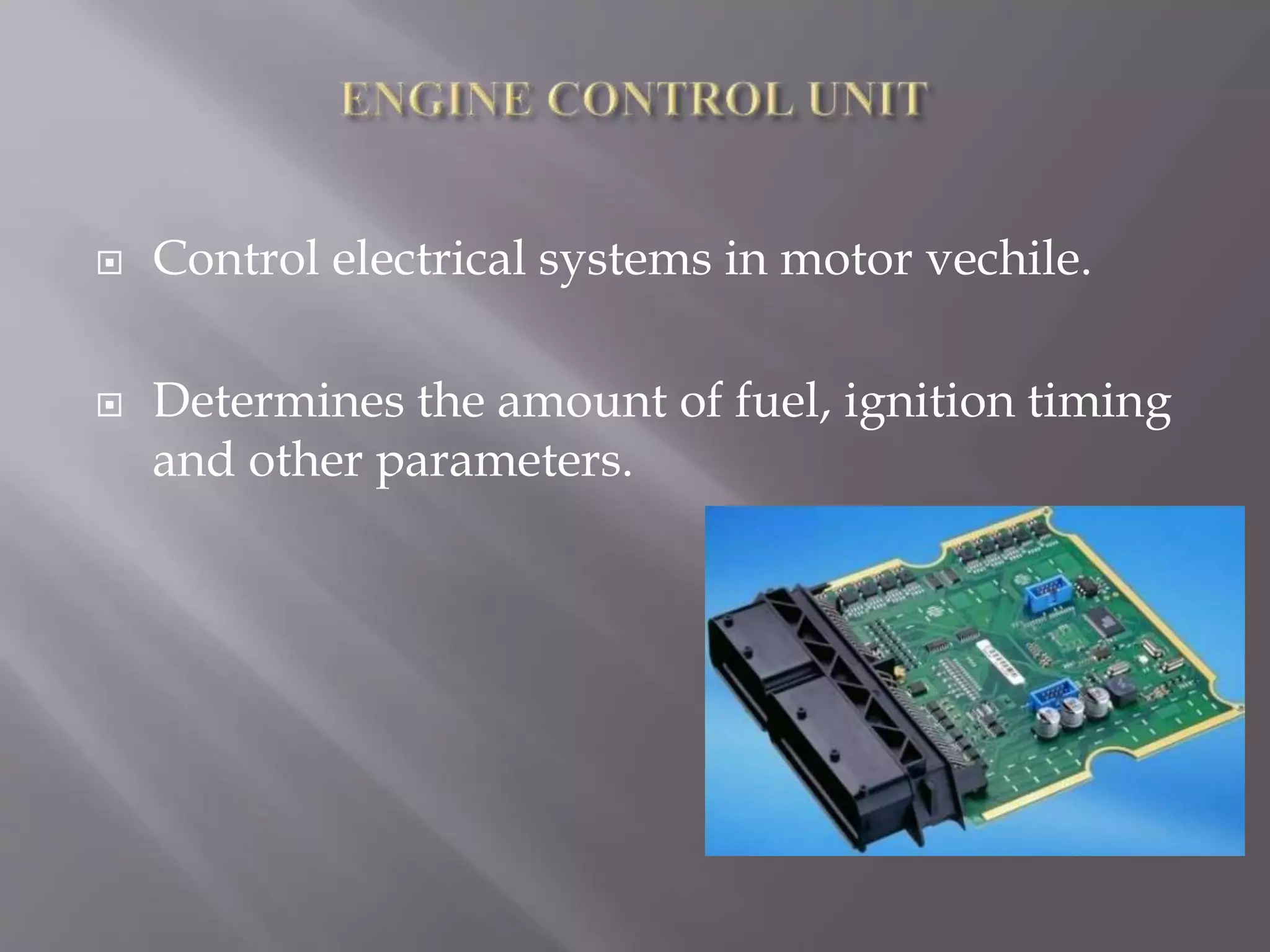
 Control electrical systems in motor vechile.
 Determines the amount of fuel, ignition timing
and other parameters.
Delivery system consists of:
1. Electrical fuel pump
2.Pressure regulator
3. Fuel Injector
 Sensors are electrical device.
 It will change resistance with change in
condition.
 Monitors operating condition and report to
Ecu.
 Oxygen sensor
 Throttle position sensor(TPS)
 Engine Temperature sensor(ETS)
 Inlet Air Temperature Sensor
 Crank Shaft Position sensor
 Measure oxygen content
 Mounted on exhaust system
 Output voltage changes with change in oxygen
content.
 Lean mixture decreases voltage
 Rich mixture increases voltage
 Variable resistor connected to throttle plate.
 Change in throttle angle =change in resistance.
 Based on resistance , ECU richens or leans the
mixture.
 Monitors the temperature of engine.
 Exposed to engine coolant.
 Engine cold = low resistance = rich mixture
 Engine hot = high resistance = lean mixture
 Measure the temperature of air entering the
engine.
 Cold air = more Fuel for proper A/F ratio.
 Detects engine speed
 Change injector timing and position
 Higher engine speed = more fuel
Electronic fuel injection system

Electronic fuel injection system

  • 1.
  • 2.
     Replacement forcarburetor.  EFI very precise, reliable & cost effective.  EFI provide correct A/F ratio.  Reduce exhaust pollution.  Increased engine power.
  • 3.
     Single orMulti-point injection  Indirect or Direct injection
  • 4.
     Injector locatedinside throttle body.  Injector sprays fuel from above throttle valve.  ECU control injector openings.
  • 5.
     Injector locatedbelow Throttle valve.  Injector sprays fuel Directly to ports.  ECU controls opening.
  • 6.
     Injector isfixed to the top of combustion chamber.  Fuel is injected above Piston head.  Smaller combustion space, better thermal efficiency.
  • 7.
     Indirect InjectionSystem has a small swirl chamber above the cylinder.  Fuel is injected in swirl chamber.  Higher compression ratio needed to aid starting.
  • 8.
     Control electricalsystems in motor vechile.  Determines the amount of fuel, ignition timing and other parameters.
  • 9.
    Delivery system consistsof: 1. Electrical fuel pump 2.Pressure regulator 3. Fuel Injector
  • 10.
     Sensors areelectrical device.  It will change resistance with change in condition.  Monitors operating condition and report to Ecu.
  • 11.
     Oxygen sensor Throttle position sensor(TPS)  Engine Temperature sensor(ETS)  Inlet Air Temperature Sensor  Crank Shaft Position sensor
  • 12.
     Measure oxygencontent  Mounted on exhaust system  Output voltage changes with change in oxygen content.  Lean mixture decreases voltage  Rich mixture increases voltage
  • 13.
     Variable resistorconnected to throttle plate.  Change in throttle angle =change in resistance.  Based on resistance , ECU richens or leans the mixture.
  • 14.
     Monitors thetemperature of engine.  Exposed to engine coolant.  Engine cold = low resistance = rich mixture  Engine hot = high resistance = lean mixture
  • 15.
     Measure thetemperature of air entering the engine.  Cold air = more Fuel for proper A/F ratio.
  • 16.
     Detects enginespeed  Change injector timing and position  Higher engine speed = more fuel