ELECTROMAGNETIC WAVES
What is an Electromagnetic wave?
Electromagnetic waves or EM waves are
waves that are created as a result of
vibrations between an electric field and a
magnetic field. In other words, EM waves are
composed of oscillating magnetic and electric
fields.
Properties of Electromagnetic waves
Electromagnetic waves are transverse waves.
Electromagnetic waves can travel through a vacuum.
Electromagnetic waves travel at the same speed in a
vacuum, the speed of light.
Properties of Electromagnetic waves
It can be reflected
It can be refracted
Transfers Energy
Types of Electromagnetic waves in
terms of there wavelengths.
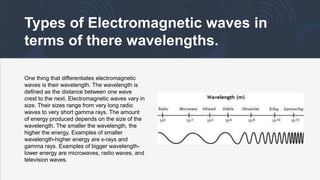
One thing that differentiates electromagnetic
waves is their wavelength. The wavelength is
defined as the distance between one wave
crest to the next. Electromagnetic waves vary in
size. Their sizes range from very long radio
waves to very short gamma rays. The amount
of energy produced depends on the size of the
wavelength. The smaller the wavelength, the
higher the energy. Examples of smaller
wavelength-higher energy are x-rays and
gamma rays. Examples of bigger wavelength-
lower energy are microwaves, radio waves, and
television waves.
An electromagnetic
spectrum is the entire
distribution of
electromagnetic
radiation according to
frequency or
wavelength.
• A spectroscope is an
instrument that can be
use for visual
observations. The first
person to observe the
spectrum of a comet
was Giovanni Battista
Donati who was an
Italian astronomer.
Sources of electromagnetic waves
• Electromagnetic waves are waves that consist of vibrating
electric and magnetic fields. They transfer energy through
matter or across space. The transfer of energy by
electromagnetic waves is called electromagnetic radiation.
Electromagnetic waves are formed when an electric field
couples with a magnetic field. The magnetic and electric fields
of an electromagnetic wave are perpendicular to each other and
the direction of the wave.
Types of Electromagnetic
waves
Radio Waves
These are the longest wavelength
electromagnetic waves that are used for
communicating information from radio,
satellites, and radar. They range from almost
around a foot long to several miles long.
Microwaves
• These waves are estimated in centimetres
and are used for communicating data and
for cooking food. Moreover, radar helps in
forecasting the climate. Microwaves are
valuable in communication since they can
enter clouds, smoke, and light rain. The
universe is loaded with cosmic microwave
background radiation that researchers
accept are hints to the origin of the universe
they call the Big Bang.
Infrared Waves
These waves are also called all-over infrared. The human
body is an example of a body that radiates infrared waves. In
between microwaves and visible light are infrared waves.
Infrared waves are sometimes classified as "near" infrared and
"far" infrared. Near to infrared waves are the waves nearer to
visible light in frequency. These are the infrared waves that are
used in our TV remote to change channels. Far infrared beams
are further away from visible light in wavelength. Far infrared
waves are warm and radiate heat. Anything that emits heat
radiates infrared waves. This also includes the human body!
Visible Light
The visible light range covers the frequencies
that should be visible to the human eye.
Visible light wavelength ranges between 390
and 700 nm.
Ultraviolet waves
Ultraviolet waves are acquired from the Sun.
Ultraviolet waves have the following shortest
frequency after visible light. Ultraviolet beams
from the Sun cause sunburns. We are
safeguarded from the sun's ultraviolet rays by
the ozone layer. A few insects, like honeybees,
can see ultraviolet light. Ultraviolet light is used
by strong telescopes like the Hubble Space
Telescope to see faraway stars.
X-Rays
• X-rays: These light beams are used for
medical purposes to take pictures of
bones. X-rays have much shorter
frequencies than ultraviolet rays. At this
point in the electromagnetic range,
researchers consider these rays more as a
greater number of particles than waves. X-
rays were found by German researcher
Wilhelm Roentgen. They can enter delicate
tissue like skin and muscle and are utilised
to take X-ray pictures of bones in
medication.
Gamma Rays
These beams are the shortest waves in the
electromagnetic spectrum. As the
frequencies of electromagnetic waves get
shorter, their energy increases. Gamma rays
are the shortest waves in the spectrum and,
accordingly, have the most energy. Gamma
rays are sometimes used in treating cancer
and in taking detailed pictures for diagnostic
medication. Gamma rays are created in high-
energy nuclear blasts and cosmic explosions.
Thank you for listening
to our presentation!

ELECTROMAGNETIC WAVES.pptx

  • 1.
  • 2.
    What is anElectromagnetic wave? Electromagnetic waves or EM waves are waves that are created as a result of vibrations between an electric field and a magnetic field. In other words, EM waves are composed of oscillating magnetic and electric fields.
  • 3.
    Properties of Electromagneticwaves Electromagnetic waves are transverse waves. Electromagnetic waves can travel through a vacuum. Electromagnetic waves travel at the same speed in a vacuum, the speed of light.
  • 4.
    Properties of Electromagneticwaves It can be reflected It can be refracted Transfers Energy
  • 5.
    Types of Electromagneticwaves in terms of there wavelengths. One thing that differentiates electromagnetic waves is their wavelength. The wavelength is defined as the distance between one wave crest to the next. Electromagnetic waves vary in size. Their sizes range from very long radio waves to very short gamma rays. The amount of energy produced depends on the size of the wavelength. The smaller the wavelength, the higher the energy. Examples of smaller wavelength-higher energy are x-rays and gamma rays. Examples of bigger wavelength- lower energy are microwaves, radio waves, and television waves.
  • 6.
    An electromagnetic spectrum isthe entire distribution of electromagnetic radiation according to frequency or wavelength.
  • 7.
    • A spectroscopeis an instrument that can be use for visual observations. The first person to observe the spectrum of a comet was Giovanni Battista Donati who was an Italian astronomer.
  • 8.
    Sources of electromagneticwaves • Electromagnetic waves are waves that consist of vibrating electric and magnetic fields. They transfer energy through matter or across space. The transfer of energy by electromagnetic waves is called electromagnetic radiation. Electromagnetic waves are formed when an electric field couples with a magnetic field. The magnetic and electric fields of an electromagnetic wave are perpendicular to each other and the direction of the wave.
  • 9.
  • 10.
    Radio Waves These arethe longest wavelength electromagnetic waves that are used for communicating information from radio, satellites, and radar. They range from almost around a foot long to several miles long.
  • 11.
    Microwaves • These wavesare estimated in centimetres and are used for communicating data and for cooking food. Moreover, radar helps in forecasting the climate. Microwaves are valuable in communication since they can enter clouds, smoke, and light rain. The universe is loaded with cosmic microwave background radiation that researchers accept are hints to the origin of the universe they call the Big Bang.
  • 12.
    Infrared Waves These wavesare also called all-over infrared. The human body is an example of a body that radiates infrared waves. In between microwaves and visible light are infrared waves. Infrared waves are sometimes classified as "near" infrared and "far" infrared. Near to infrared waves are the waves nearer to visible light in frequency. These are the infrared waves that are used in our TV remote to change channels. Far infrared beams are further away from visible light in wavelength. Far infrared waves are warm and radiate heat. Anything that emits heat radiates infrared waves. This also includes the human body!
  • 13.
    Visible Light The visiblelight range covers the frequencies that should be visible to the human eye. Visible light wavelength ranges between 390 and 700 nm.
  • 14.
    Ultraviolet waves Ultraviolet wavesare acquired from the Sun. Ultraviolet waves have the following shortest frequency after visible light. Ultraviolet beams from the Sun cause sunburns. We are safeguarded from the sun's ultraviolet rays by the ozone layer. A few insects, like honeybees, can see ultraviolet light. Ultraviolet light is used by strong telescopes like the Hubble Space Telescope to see faraway stars.
  • 15.
    X-Rays • X-rays: Theselight beams are used for medical purposes to take pictures of bones. X-rays have much shorter frequencies than ultraviolet rays. At this point in the electromagnetic range, researchers consider these rays more as a greater number of particles than waves. X- rays were found by German researcher Wilhelm Roentgen. They can enter delicate tissue like skin and muscle and are utilised to take X-ray pictures of bones in medication.
  • 16.
    Gamma Rays These beamsare the shortest waves in the electromagnetic spectrum. As the frequencies of electromagnetic waves get shorter, their energy increases. Gamma rays are the shortest waves in the spectrum and, accordingly, have the most energy. Gamma rays are sometimes used in treating cancer and in taking detailed pictures for diagnostic medication. Gamma rays are created in high- energy nuclear blasts and cosmic explosions.
  • 17.
    Thank you forlistening to our presentation!