SELF STUDY COURSE-1
GANESH(2E2)
2ND EEE-C
 What Is brake?
 Needfor alternative
 What is electromagnetic brake
 Advatages
 Disadvantages
 Applications
 conclusion
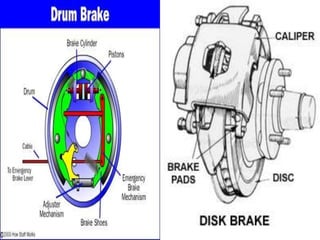
 A brake is a mechanical device which retards
motion.
 Brakes use friction between two surfaces to
convert the kinetic energy of the moving
object into heat.
 Types of Frictional brakes-Disc, Drum
 All conventional systems of braking in road
vehicles uses development of contact friction
for retardation
 These systems are prone to the wear and tear
on usage
 Conventional braking systems produces
continuous power dissipation as heat and
may fail if the temperature rises too high
 Friction based braking methods are also not
efficient under wet conditions
 Disc is rotated in magnetic field
 eddy currents will be produced in disc
 eddy currents induced in disc will produce a
torque (motor principle)
 produced torque in disc opposes actual
rotation of disc (Lenz law)
 No friction
 Low maintenance requirement
 Less noise
 Simple in design
 High degree of safety
 Failure to act as a holding device
 Usage of electric power for
braking
 Less effective under very low
velocities
 Already in use under some railway system
 Can be used for any road vehicles
 Equally applicable to heavy and light vehicles
 Can be used as additional retarder for
aircrafts
 Electromagnetic Braking is superior to
conventional frictional braking as there is no
friction and heat in electromagnetic braking.
 So the conventional disc and drum brakes can
be replaced with electromagnetic brakes.

electro magnetic breaking

  • 1.
  • 3.
     What Isbrake?  Needfor alternative  What is electromagnetic brake  Advatages  Disadvantages  Applications  conclusion
  • 4.
     A brakeis a mechanical device which retards motion.  Brakes use friction between two surfaces to convert the kinetic energy of the moving object into heat.  Types of Frictional brakes-Disc, Drum
  • 6.
     All conventionalsystems of braking in road vehicles uses development of contact friction for retardation  These systems are prone to the wear and tear on usage  Conventional braking systems produces continuous power dissipation as heat and may fail if the temperature rises too high  Friction based braking methods are also not efficient under wet conditions
  • 7.
     Disc isrotated in magnetic field  eddy currents will be produced in disc  eddy currents induced in disc will produce a torque (motor principle)  produced torque in disc opposes actual rotation of disc (Lenz law)
  • 9.
     No friction Low maintenance requirement  Less noise  Simple in design  High degree of safety
  • 10.
     Failure toact as a holding device  Usage of electric power for braking  Less effective under very low velocities
  • 11.
     Already inuse under some railway system  Can be used for any road vehicles  Equally applicable to heavy and light vehicles  Can be used as additional retarder for aircrafts
  • 12.
     Electromagnetic Brakingis superior to conventional frictional braking as there is no friction and heat in electromagnetic braking.  So the conventional disc and drum brakes can be replaced with electromagnetic brakes.