Electrical Safety
By
Autry Technology Center
You shall be able to identify:
 The injuries and fatalities while working near
electricity.
 Basic electrical principles.
 Workers at risk.
 Basic electrical hazards. Safe work practices
associated with electricity.
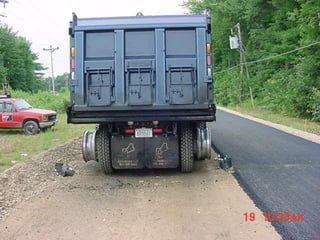
Crane contacts electrical lines;
causes fire; tires begin to burn
 Each year contact with overhead power lines
result in fatalities, serious injury and property
damage.
 Unintentional contact with overhead power lines
resulted in the following:
Based on accident statistics in one state
 19 serious accidents from July 1999
through September 2005.
 16 fatalities.
Based on national statistics (NSC–2004)
 309 fatalities occurred from 1999 to 2001.
 These statistics only represent facts
that have been reported to these
agencies; the actual number of fatalities
and suffering are far greater.
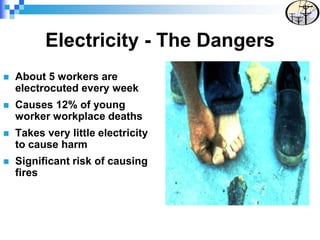
Electricity - The Dangers
 About 5 workers are
electrocuted every week
 Causes 12% of young
worker workplace deaths
 Takes very little electricity
to cause harm
 Significant risk of causing
fires
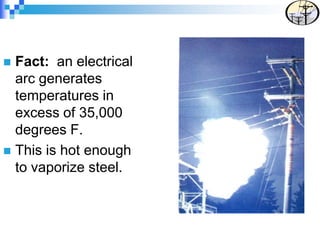
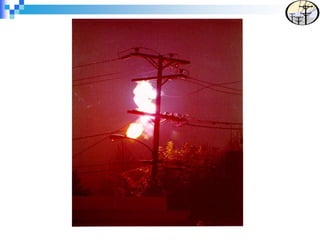
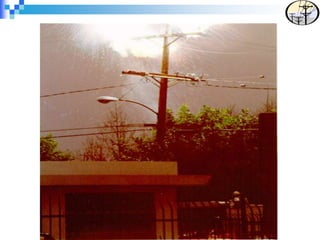
 Fact: an electrical
arc generates
temperatures in
excess of 35,000
degrees F.
 This is hot enough
to vaporize steel.
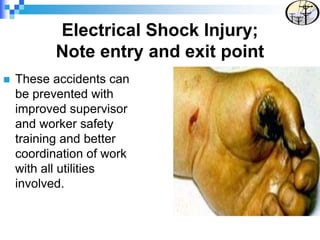
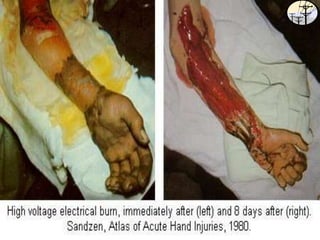
Electrical Shock Injury;
Note entry and exit point
 These accidents can
be prevented with
improved supervisor
and worker safety
training and better
coordination of work
with all utilities
involved.
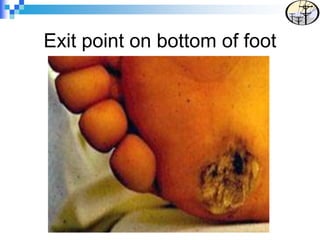
Same injury a few days later
Exit point on bottom of foot
At-Risk Workers
 Equipment operators of mobile
equipment, dump trucks, drill rigs, cranes, etc.
and employees who work around this equipment
 Emergency service personnel who respond to
car crashes involving power poles and overhead
lines, downed power lines, respond to fires
involving electrical lines near structures
 Employees working from ladders
 Employees working with electrical equipment
At-Risk Workers
 Employees working from roofs where
power lines enter building
 Employees who work from scaffolds
 Employees who work from Man lifts or
bucket trucks around power lines
 And Any employee who is near overhead
power lines for any reason such as tree
trimmers, highway workers, forklift
operators, etc.
Electrical Shock
An electrical shock is received when electrical
current passes through the body.
You will get an electrical shock if a part of your
body completes an electrical circuit by…
 Touching a live wire and an electrical ground, or
 Touching a live wire and another wire at a
different voltage.
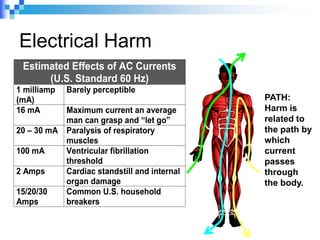
Electrical Harm
Estimated Effects of AC Currents
(U.S. Standard 60 Hz)
1 milliamp
(mA)
Barely perceptible
16 mA Maximum current an average
man can grasp and “let go”
20 – 30 mA Paralysis of respiratory
muscles
100 mA Ventricular fibrillation
threshold
2 Amps Cardiac standstill and internal
organ damage
15/20/30
Amps
Common U.S. household
breakers
PATH:
Harm is
related to
the path by
which
current
passes
through
the body.
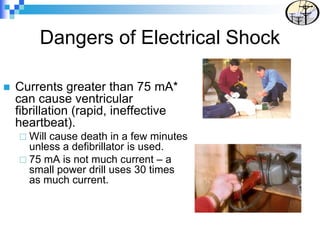
Dangers of Electrical Shock
 Currents greater than 75 mA*
can cause ventricular
fibrillation (rapid, ineffective
heartbeat).
 Will cause death in a few minutes
unless a defibrillator is used.
 75 mA is not much current – a
small power drill uses 30 times
as much current.
Defibrillator in use
Fundamentals of Electrical
Hazards
 To flow electricity must have a complete path.
 Electricity flows through conductors
water,
metal,
the human body
 Insulators are non-conductors.
 The human body is a conductor.
Electrical Injuries
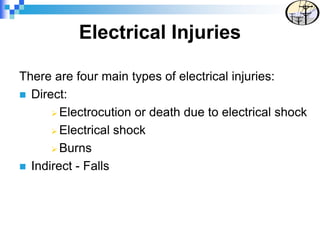
There are four main types of electrical injuries:
 Direct:
 Electrocution or death due to electrical shock
 Electrical shock
 Burns
 Indirect - Falls
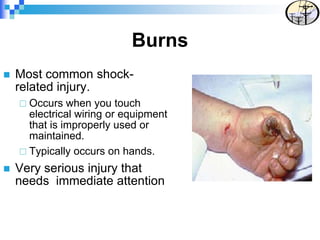
Burns
 Most common shock-
related injury.
 Occurs when you touch
electrical wiring or equipment
that is improperly used or
maintained.
 Typically occurs on hands.
 Very serious injury that
needs immediate attention
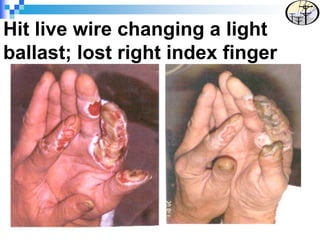
Hit live wire changing a light
ballast; lost right index finger
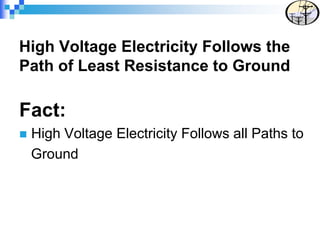
High Voltage Electricity Follows the
Path of Least Resistance to Ground
Fact:
 High Voltage Electricity Follows all Paths to
Ground
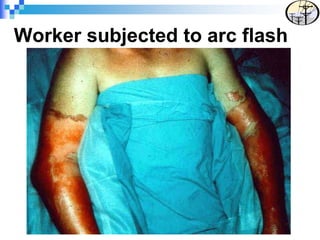
Worker subjected to arc flash
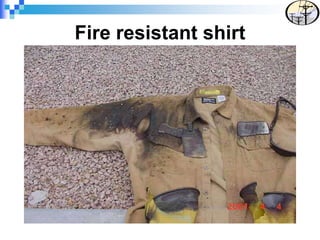
Fire resistant shirt
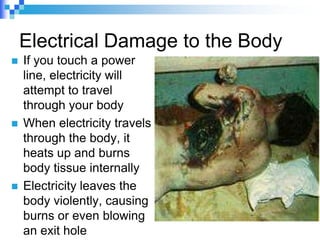
Electrical Damage to the Body
 If you touch a power
line, electricity will
attempt to travel
through your body
 When electricity travels
through the body, it
heats up and burns
body tissue internally
 Electricity leaves the
body violently, causing
burns or even blowing
an exit hole
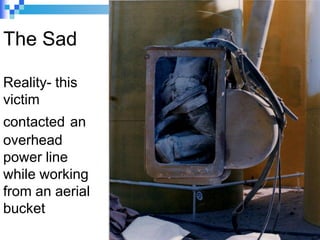
The Sad
Reality- this
victim
contacted an
overhead
power line
while working
from an aerial
bucket
Myths
Fact:
 Possibly Dead Wrong! Electricity Travels at the
speed of light, 186,000 miles per second.
 If you touch another person that is in contact
 with a high voltage wire you will instantly
 become part of the electrical circuit.
You Can Safely Shove a Person Away From
Contact With an Energized Power
Car and Truck Tires Are Made of Rubber and Are
Non-Conductive
Fact:
 Tires contain Carbon Black. Carbon Black is a
conductive material used to make the tires conductive
for a better radio signal and to make them last longer.
 If an overhead electrical line falls upon your vehicle stay
on or inside the vehicle if at all possible.
 If you must leave your vehicle do not touch the vehicle and
ground at the same time.
 Jump clear and Keep both feet together and hop away.
Myths
I Can Safely Use a Tree Limb To Move an
Overhead Powerline
Fact:
 Tree limbs are conductive. Fresh tree limbs are
very electrically conductive due to the moisture
content.
 High voltage electricity will conduct through most
items that have contamination or moisture.
Myths
Overhead Powerlines Laying on the Ground Are
Safe To Be Near.
Fact:
 Just because a power line is laying on the ground
does not mean it is not energized.
 Always consider downed power lines live!
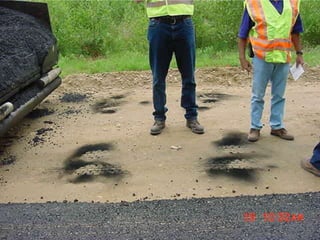
 High voltage electricity can enter the ground from
the power line.
 This can create different electrical potentials near the
wire that could cause electrocution by contact through
your footwear.
Myths
I Can Look-Up and Estimate the Distance to The
Powerline.
Fact:
 Few people have the ability to judge vertical
distance accurately.
 Don’t take a chance with your safety and the
safety of those working around you.
 Call the owner of the powerlines at least 72
hours prior to working within 50 feet of
energized overhead power lines.
Myths
I’ve Been Shocked by Electricity Before, So I
Know What Electricity Will Do.
Fact:
 Unless you have seen the destructive
power of High Voltage Electricity first hand
you have no idea what it can do to
material, objects and to people compared
to household voltages.
Myths
A Powerline Falls Across Your Vehicle, You
Should Not Try to Drive Away.
Fact:
 You should try to drive away if at all possible.
 If your vehicle will not start stay inside and warn
others to stay away until an electrical line worker tell
you it is safe to leave the vehicle.
Myths
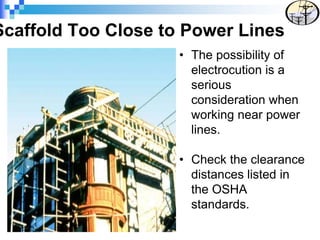
Scaffold Too Close to Power Lines
• The possibility of
electrocution is a
serious
consideration when
working near power
lines.
• Check the clearance
distances listed in
the OSHA
standards.
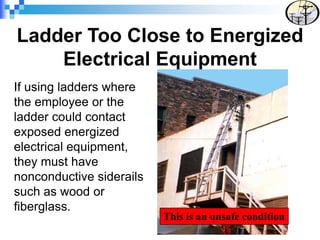
Ladder Too Close to Energized
Electrical Equipment
If using ladders where
the employee or the
ladder could contact
exposed energized
electrical equipment,
they must have
nonconductive siderails
such as wood or
fiberglass.
This is an unsafe condition
It’s up to you to prevent contacts
with electricity.
Don’t Put Your Life on the Line!

Electrical safety13

  • 1.
  • 2.
    You shall beable to identify:  The injuries and fatalities while working near electricity.  Basic electrical principles.  Workers at risk.  Basic electrical hazards. Safe work practices associated with electricity.
  • 3.
    Crane contacts electricallines; causes fire; tires begin to burn
  • 4.
     Each yearcontact with overhead power lines result in fatalities, serious injury and property damage.  Unintentional contact with overhead power lines resulted in the following: Based on accident statistics in one state  19 serious accidents from July 1999 through September 2005.  16 fatalities. Based on national statistics (NSC–2004)  309 fatalities occurred from 1999 to 2001.
  • 5.
     These statisticsonly represent facts that have been reported to these agencies; the actual number of fatalities and suffering are far greater.
  • 6.
    Electricity - TheDangers  About 5 workers are electrocuted every week  Causes 12% of young worker workplace deaths  Takes very little electricity to cause harm  Significant risk of causing fires
  • 7.
     Fact: anelectrical arc generates temperatures in excess of 35,000 degrees F.  This is hot enough to vaporize steel.
  • 8.
    Electrical Shock Injury; Noteentry and exit point  These accidents can be prevented with improved supervisor and worker safety training and better coordination of work with all utilities involved.
  • 9.
    Same injury afew days later
  • 10.
    Exit point onbottom of foot
  • 12.
    At-Risk Workers  Equipmentoperators of mobile equipment, dump trucks, drill rigs, cranes, etc. and employees who work around this equipment  Emergency service personnel who respond to car crashes involving power poles and overhead lines, downed power lines, respond to fires involving electrical lines near structures  Employees working from ladders  Employees working with electrical equipment
  • 13.
    At-Risk Workers  Employeesworking from roofs where power lines enter building  Employees who work from scaffolds  Employees who work from Man lifts or bucket trucks around power lines  And Any employee who is near overhead power lines for any reason such as tree trimmers, highway workers, forklift operators, etc.
  • 14.
    Electrical Shock An electricalshock is received when electrical current passes through the body. You will get an electrical shock if a part of your body completes an electrical circuit by…  Touching a live wire and an electrical ground, or  Touching a live wire and another wire at a different voltage.
  • 15.
    Electrical Harm Estimated Effectsof AC Currents (U.S. Standard 60 Hz) 1 milliamp (mA) Barely perceptible 16 mA Maximum current an average man can grasp and “let go” 20 – 30 mA Paralysis of respiratory muscles 100 mA Ventricular fibrillation threshold 2 Amps Cardiac standstill and internal organ damage 15/20/30 Amps Common U.S. household breakers PATH: Harm is related to the path by which current passes through the body.
  • 16.
    Dangers of ElectricalShock  Currents greater than 75 mA* can cause ventricular fibrillation (rapid, ineffective heartbeat).  Will cause death in a few minutes unless a defibrillator is used.  75 mA is not much current – a small power drill uses 30 times as much current. Defibrillator in use
  • 17.
    Fundamentals of Electrical Hazards To flow electricity must have a complete path.  Electricity flows through conductors water, metal, the human body  Insulators are non-conductors.  The human body is a conductor.
  • 18.
    Electrical Injuries There arefour main types of electrical injuries:  Direct:  Electrocution or death due to electrical shock  Electrical shock  Burns  Indirect - Falls
  • 19.
    Burns  Most commonshock- related injury.  Occurs when you touch electrical wiring or equipment that is improperly used or maintained.  Typically occurs on hands.  Very serious injury that needs immediate attention
  • 20.
    Hit live wirechanging a light ballast; lost right index finger
  • 25.
    High Voltage ElectricityFollows the Path of Least Resistance to Ground Fact:  High Voltage Electricity Follows all Paths to Ground
  • 26.
  • 27.
  • 29.
    Electrical Damage tothe Body  If you touch a power line, electricity will attempt to travel through your body  When electricity travels through the body, it heats up and burns body tissue internally  Electricity leaves the body violently, causing burns or even blowing an exit hole
  • 30.
    The Sad Reality- this victim contactedan overhead power line while working from an aerial bucket
  • 31.
    Myths Fact:  Possibly DeadWrong! Electricity Travels at the speed of light, 186,000 miles per second.  If you touch another person that is in contact  with a high voltage wire you will instantly  become part of the electrical circuit. You Can Safely Shove a Person Away From Contact With an Energized Power
  • 32.
    Car and TruckTires Are Made of Rubber and Are Non-Conductive Fact:  Tires contain Carbon Black. Carbon Black is a conductive material used to make the tires conductive for a better radio signal and to make them last longer.  If an overhead electrical line falls upon your vehicle stay on or inside the vehicle if at all possible.  If you must leave your vehicle do not touch the vehicle and ground at the same time.  Jump clear and Keep both feet together and hop away. Myths
  • 33.
    I Can SafelyUse a Tree Limb To Move an Overhead Powerline Fact:  Tree limbs are conductive. Fresh tree limbs are very electrically conductive due to the moisture content.  High voltage electricity will conduct through most items that have contamination or moisture. Myths
  • 34.
    Overhead Powerlines Layingon the Ground Are Safe To Be Near. Fact:  Just because a power line is laying on the ground does not mean it is not energized.  Always consider downed power lines live!  High voltage electricity can enter the ground from the power line.  This can create different electrical potentials near the wire that could cause electrocution by contact through your footwear. Myths
  • 35.
    I Can Look-Upand Estimate the Distance to The Powerline. Fact:  Few people have the ability to judge vertical distance accurately.  Don’t take a chance with your safety and the safety of those working around you.  Call the owner of the powerlines at least 72 hours prior to working within 50 feet of energized overhead power lines. Myths
  • 36.
    I’ve Been Shockedby Electricity Before, So I Know What Electricity Will Do. Fact:  Unless you have seen the destructive power of High Voltage Electricity first hand you have no idea what it can do to material, objects and to people compared to household voltages. Myths
  • 37.
    A Powerline FallsAcross Your Vehicle, You Should Not Try to Drive Away. Fact:  You should try to drive away if at all possible.  If your vehicle will not start stay inside and warn others to stay away until an electrical line worker tell you it is safe to leave the vehicle. Myths
  • 38.
    Scaffold Too Closeto Power Lines • The possibility of electrocution is a serious consideration when working near power lines. • Check the clearance distances listed in the OSHA standards.
  • 39.
    Ladder Too Closeto Energized Electrical Equipment If using ladders where the employee or the ladder could contact exposed energized electrical equipment, they must have nonconductive siderails such as wood or fiberglass. This is an unsafe condition
  • 40.
    It’s up toyou to prevent contacts with electricity.
  • 41.
    Don’t Put YourLife on the Line!