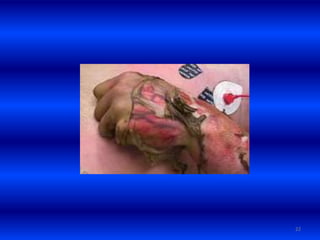
Electric shock
Vėjūna Guzulaitytė, I k., 9 gr.
1
Electric shock occurs upon contact of a
(human) body with any source of
electricity that causes a sufficient
current through the skin, muscles, or
hair.
2
Adolescents and adults are prone to
high voltage shock caused by
mischievous exploration and exposure
at work. About 1,000 people in the
United States die each year as a result
of electrocution. Most of these deaths
are related to on-the-job injuries.
3
Many variables determine what injuries may occur, if
any. These variables include:
• the type of current (AC or DC);
• the amount of current (determined by the
voltage of the source and the resistance of the
tissues involved);
• the pathway the electricity takes through the
body.
4
If a person is going to help someone
who has sustained a high voltage
shock, he or she needs to be very
careful that they don't become a
second victim of a similar electrical
shock.
5
Children are not often seriously
injured by electricity. They are prone
to shock by the low voltage (110-220
volts) found in typical household
current. In children aged 12 years and
younger, household appliance
electrical cords and extension cords
caused more than 63% of injuries in
one study. Wall outlets were
responsible for 15% of injuries.
6
Lightening injuries, an unusual form of
electric shock, may show external
burns, but injure or kill due to cardiac
or respiratory arrest; neurologic injury
is common. Other injuries are due to
muscle contractions or trauma from
explosive forces (for example, tree sap
and fluid being superheated and trees
blown apart due to steam pressure).
7
8
Symptoms:
• Burns
• Other injuries. Consideration should be given
to the possibility of a spine injury. The person
may have internal injuries.
• Broken bones.
• Burn on the lip. The area has a red or dark,
charred appearance.
9
Following a low-voltage shock, call the
doctor for the following reasons:
• If it has been more than 5 years since the
affected person's last tetanus booster;
• Burns that are not healing well;
• Burns with increasing redness, soreness, or
drainage;
• Any electric shock in a woman who is
pregnant.
10
Following a low-voltage shock, a person go to the
Emergency Department for the following concerns:
• Any noticeable burn to the skin;
• Any period of unconsciousness;
• Any numbness, tingling, paralysis, vision,
hearing, or speech problems;
• Any electric shock if a woman is more than 20
weeks' pregnant;
• Any other worrisome symptoms.
11
The doctor may order various tests depending
on the history and physical examination. Tests
may include any or none of the following:
• Electrocardiogram (ECG, EKG);
• Complete blood count;
• Urine test;
• X-rays;
• CT scan.
12
Treatment
13
Treatment of electric shock depends on the
severity of the burns or the nature of other
injuries found.
14
Burns are treated according to
severity.
– Minor burns may be treated with topical antibiotic
ointment and dressings.
– More severe burns may require surgery to clean
the wounds or even skin grafting.
– Severe burns on the arms, legs, or hands may
require surgery to remove damaged muscle or
even amputation.
15
Other injuries may require treatment.
– Eye injuries may require examination and
treatment by an ophthalmologist, an eye
specialist.
– Broken bones require splinting, casting, or surgery
to stabilize the bones.
– Internal injuries may require observation or
surgery.
16
Prevention
17
– Do not allow children to play with any electrical
cord.
– Limit use of extension cords and be sure the cord
is rated for the current (measured in amps) that
will be drawn by the device being powered.
– Use outlet covers to protect infants from exploring
electrical outlets.
– Update old, ungrounded electrical outlets to
grounded (3-prong) systems. Replace outlets near
any water (sink, tub) with fused (GFCI) outlets.
18
• In children older than 12 years, most electrical
injuries result from exploring and activities
around high-power systems. Explain to
adolescent children that they should not climb
on power towers, play near transformer
systems, or explore electrified train rails or
other electrical systems.
19
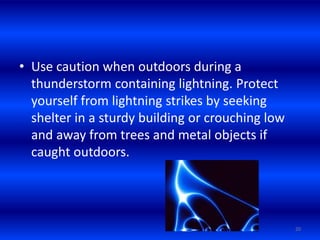
• Use caution when outdoors during a
thunderstorm containing lightning. Protect
yourself from lightning strikes by seeking
shelter in a sturdy building or crouching low
and away from trees and metal objects if
caught outdoors.
20
Recovery from electric shock depends
on the nature and severity of the
injuries. The percentage of the body
surface area burned is the most
important factor affecting prognosis.
21
22
23
24
Sourcers:
• http://www.emedicinehealth.com/electric_sh
ock/page11_em.htm
• http://en.wikipedia.org/wiki/Electric_shock
• http://www.healthy.net/scr/article.aspx?id=14
90
• http://hyperphysics.phy-
astr.gsu.edu/hbase/electric/shock.html
25
26

Electric shock

  • 1.
  • 2.
    Electric shock occursupon contact of a (human) body with any source of electricity that causes a sufficient current through the skin, muscles, or hair. 2
  • 3.
    Adolescents and adultsare prone to high voltage shock caused by mischievous exploration and exposure at work. About 1,000 people in the United States die each year as a result of electrocution. Most of these deaths are related to on-the-job injuries. 3
  • 4.
    Many variables determinewhat injuries may occur, if any. These variables include: • the type of current (AC or DC); • the amount of current (determined by the voltage of the source and the resistance of the tissues involved); • the pathway the electricity takes through the body. 4
  • 5.
    If a personis going to help someone who has sustained a high voltage shock, he or she needs to be very careful that they don't become a second victim of a similar electrical shock. 5
  • 6.
    Children are notoften seriously injured by electricity. They are prone to shock by the low voltage (110-220 volts) found in typical household current. In children aged 12 years and younger, household appliance electrical cords and extension cords caused more than 63% of injuries in one study. Wall outlets were responsible for 15% of injuries. 6
  • 7.
    Lightening injuries, anunusual form of electric shock, may show external burns, but injure or kill due to cardiac or respiratory arrest; neurologic injury is common. Other injuries are due to muscle contractions or trauma from explosive forces (for example, tree sap and fluid being superheated and trees blown apart due to steam pressure). 7
  • 8.
  • 9.
    Symptoms: • Burns • Otherinjuries. Consideration should be given to the possibility of a spine injury. The person may have internal injuries. • Broken bones. • Burn on the lip. The area has a red or dark, charred appearance. 9
  • 10.
    Following a low-voltageshock, call the doctor for the following reasons: • If it has been more than 5 years since the affected person's last tetanus booster; • Burns that are not healing well; • Burns with increasing redness, soreness, or drainage; • Any electric shock in a woman who is pregnant. 10
  • 11.
    Following a low-voltageshock, a person go to the Emergency Department for the following concerns: • Any noticeable burn to the skin; • Any period of unconsciousness; • Any numbness, tingling, paralysis, vision, hearing, or speech problems; • Any electric shock if a woman is more than 20 weeks' pregnant; • Any other worrisome symptoms. 11
  • 12.
    The doctor mayorder various tests depending on the history and physical examination. Tests may include any or none of the following: • Electrocardiogram (ECG, EKG); • Complete blood count; • Urine test; • X-rays; • CT scan. 12
  • 13.
  • 14.
    Treatment of electricshock depends on the severity of the burns or the nature of other injuries found. 14
  • 15.
    Burns are treatedaccording to severity. – Minor burns may be treated with topical antibiotic ointment and dressings. – More severe burns may require surgery to clean the wounds or even skin grafting. – Severe burns on the arms, legs, or hands may require surgery to remove damaged muscle or even amputation. 15
  • 16.
    Other injuries mayrequire treatment. – Eye injuries may require examination and treatment by an ophthalmologist, an eye specialist. – Broken bones require splinting, casting, or surgery to stabilize the bones. – Internal injuries may require observation or surgery. 16
  • 17.
  • 18.
    – Do notallow children to play with any electrical cord. – Limit use of extension cords and be sure the cord is rated for the current (measured in amps) that will be drawn by the device being powered. – Use outlet covers to protect infants from exploring electrical outlets. – Update old, ungrounded electrical outlets to grounded (3-prong) systems. Replace outlets near any water (sink, tub) with fused (GFCI) outlets. 18
  • 19.
    • In childrenolder than 12 years, most electrical injuries result from exploring and activities around high-power systems. Explain to adolescent children that they should not climb on power towers, play near transformer systems, or explore electrified train rails or other electrical systems. 19
  • 20.
    • Use cautionwhen outdoors during a thunderstorm containing lightning. Protect yourself from lightning strikes by seeking shelter in a sturdy building or crouching low and away from trees and metal objects if caught outdoors. 20
  • 21.
    Recovery from electricshock depends on the nature and severity of the injuries. The percentage of the body surface area burned is the most important factor affecting prognosis. 21
  • 22.
  • 23.
  • 24.
  • 25.
    Sourcers: • http://www.emedicinehealth.com/electric_sh ock/page11_em.htm • http://en.wikipedia.org/wiki/Electric_shock •http://www.healthy.net/scr/article.aspx?id=14 90 • http://hyperphysics.phy- astr.gsu.edu/hbase/electric/shock.html 25
  • 26.