TEAM
ZERO GRAVITY
MD.SHAFIUZZAMAN
NURE ALAM NOBLE
SHAZID KARIM
SAMIM MIA
RAJIB MIA
AVIJIT SARKAR
KAMRAN AHMED
Course title: Electricity ,
Magnetism and Modern
physics
Course code: PHY 123
Course teacher: Subrata
Banik
Lecturer (Physics)
Department of General
education development
Daffodil International
University
Submited to:
TOPIC :ELECTRIC BELL
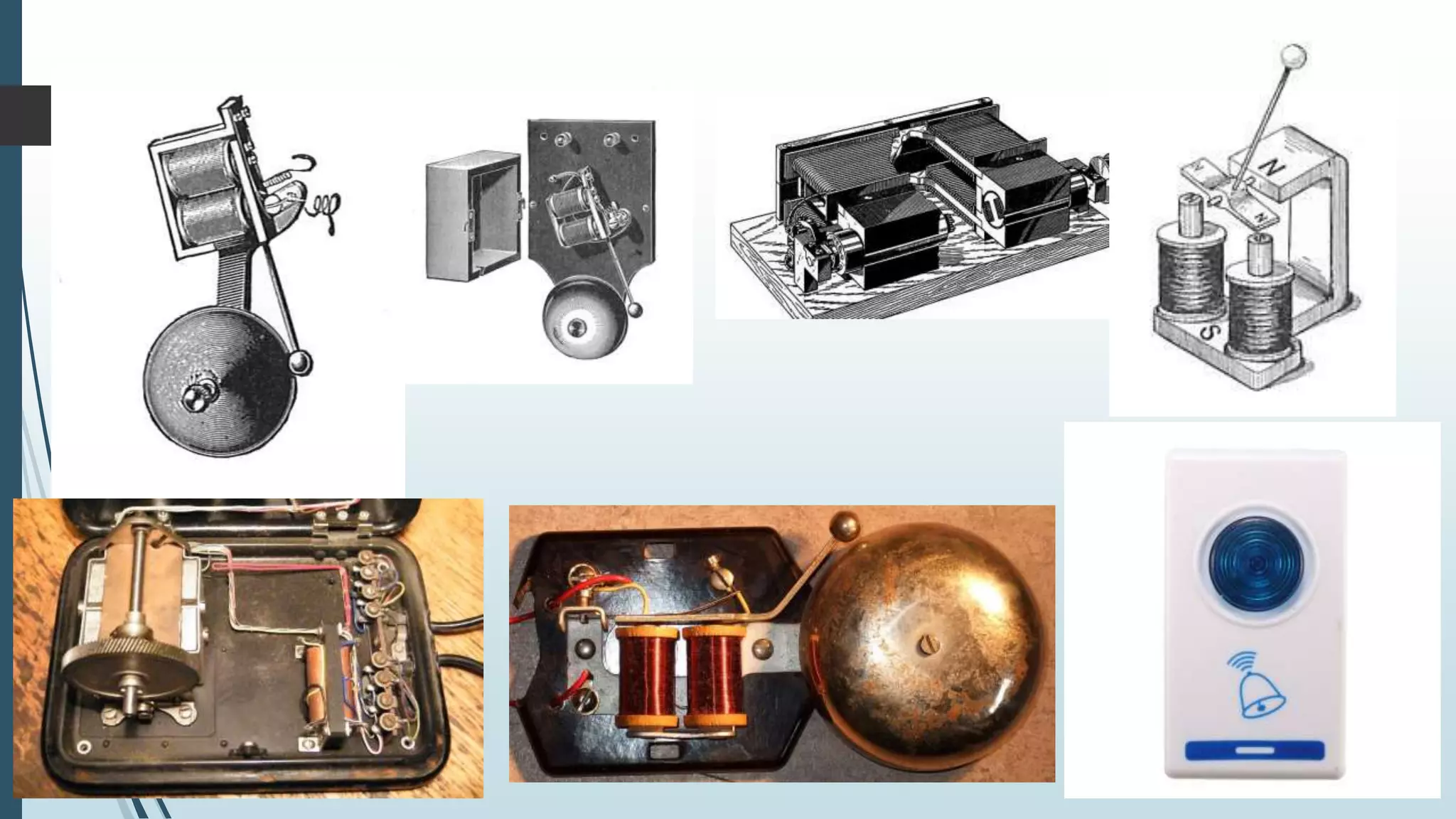
HISTORY OF ELECTRIC BELL
Invention of the
electromagnet by
William Sturgeon in
1823
Vibrating hammer
invented by Johann
Philipp Wagner (1839)
One of the first was
the oscillating
electric wire invented
by James Marsh in
1824.
Christian Ernst Neeff
(1847) was
developed into a
buzzer by Froment
(1847).
telegraph
developed by
Werner Siemens
around 1850
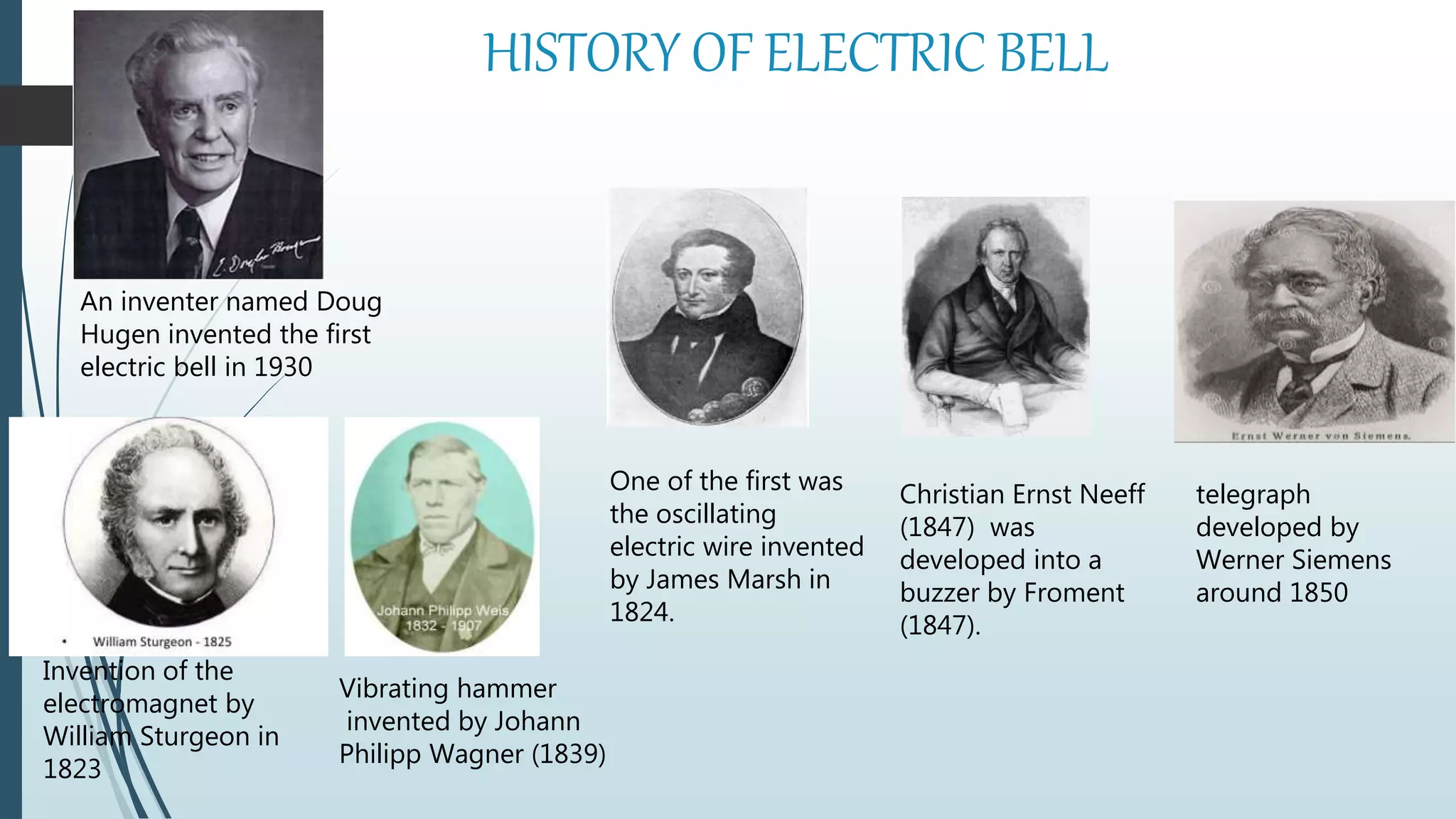
An inventer named Doug
Hugen invented the first
electric bell in 1930
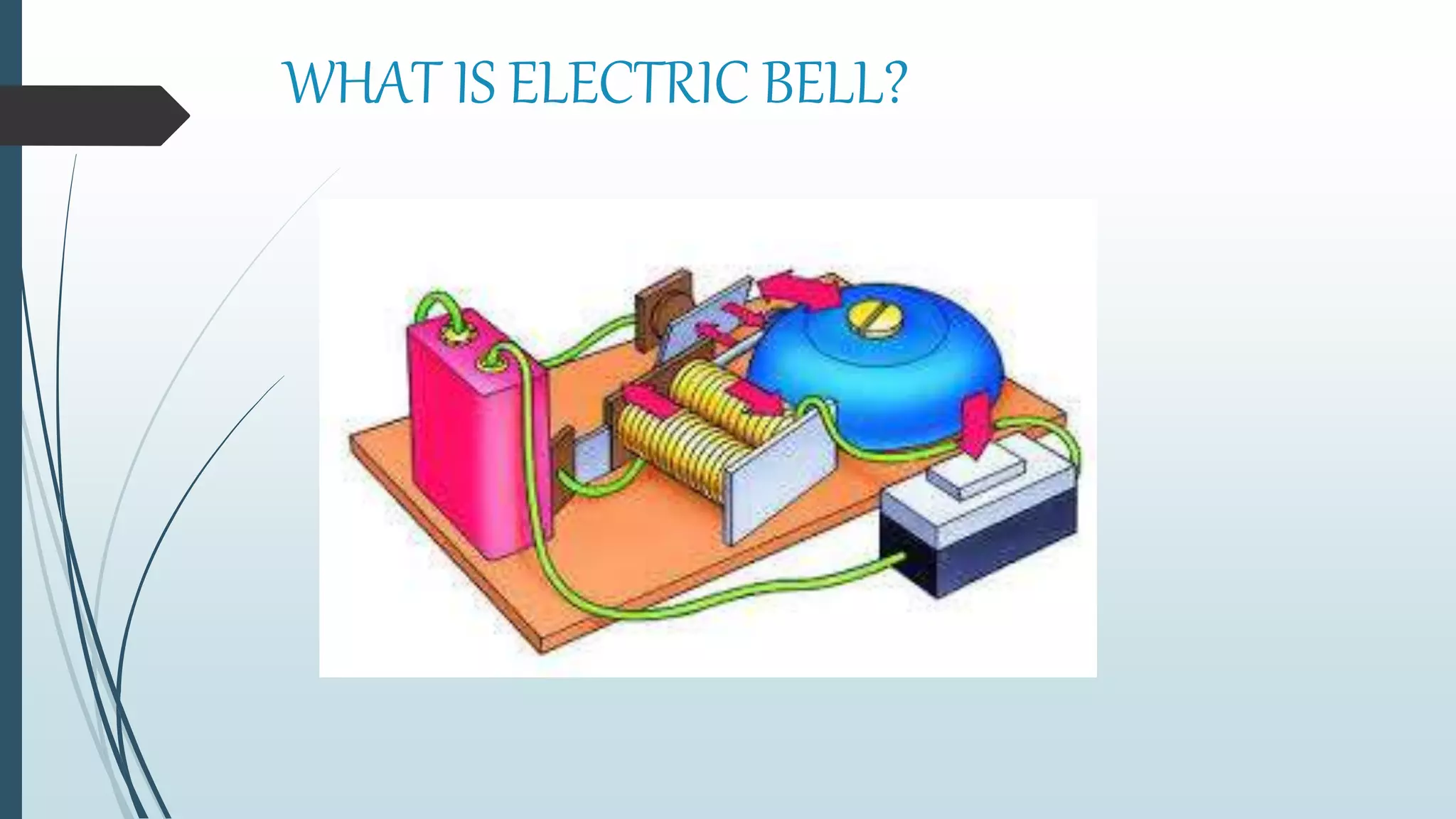
WHAT IS ELECTRIC BELL?
ELECTRIC BELL
An electric bell is a mechanical bell that
functions by means of an electromagnet.
When an electric current is applied, it
produces a repetitive buzzing or
clanging sound. Electric bells have been
widely used at railroad crossings,
in telephones, fire alarms, etc.
WORKING
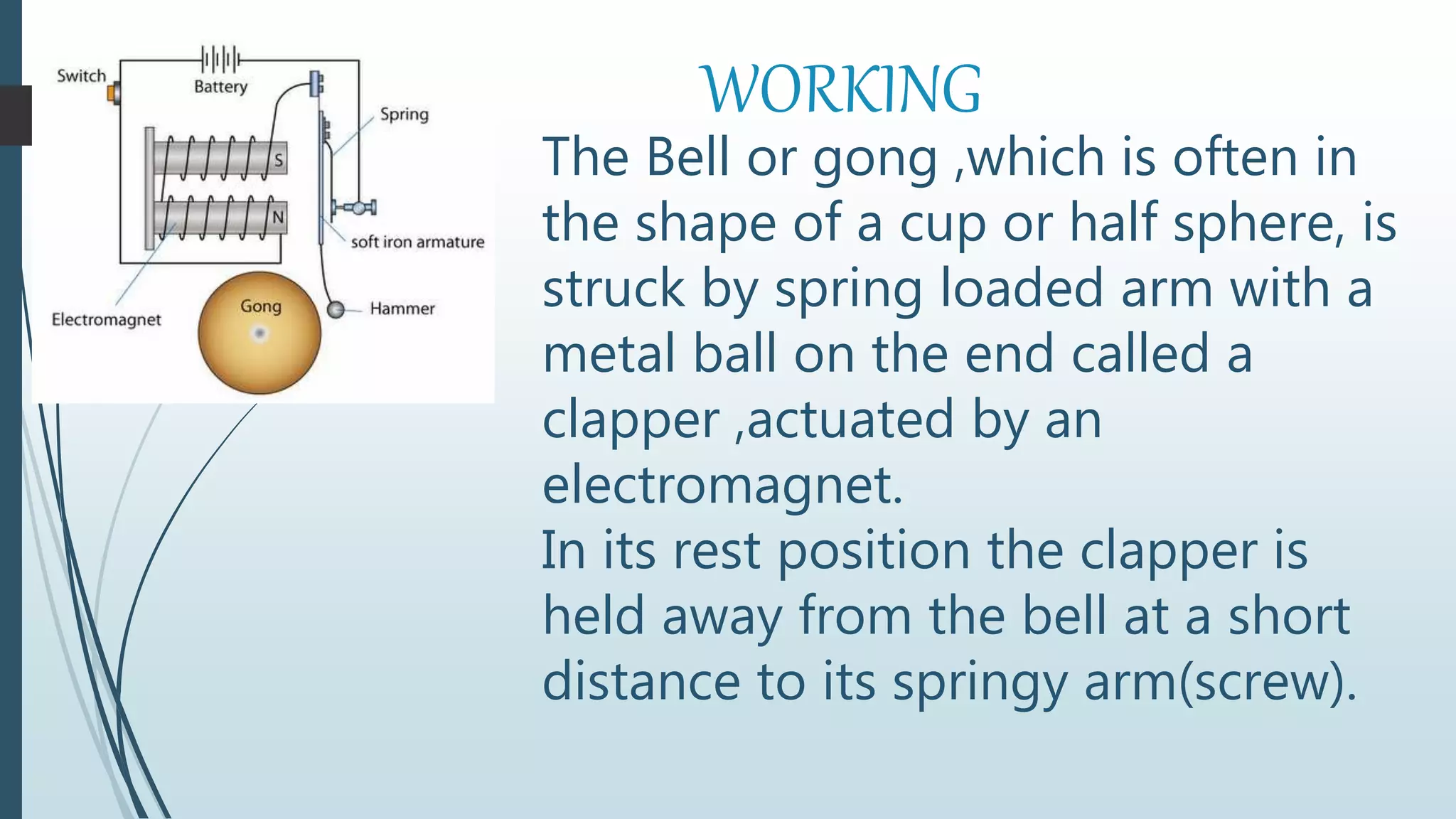
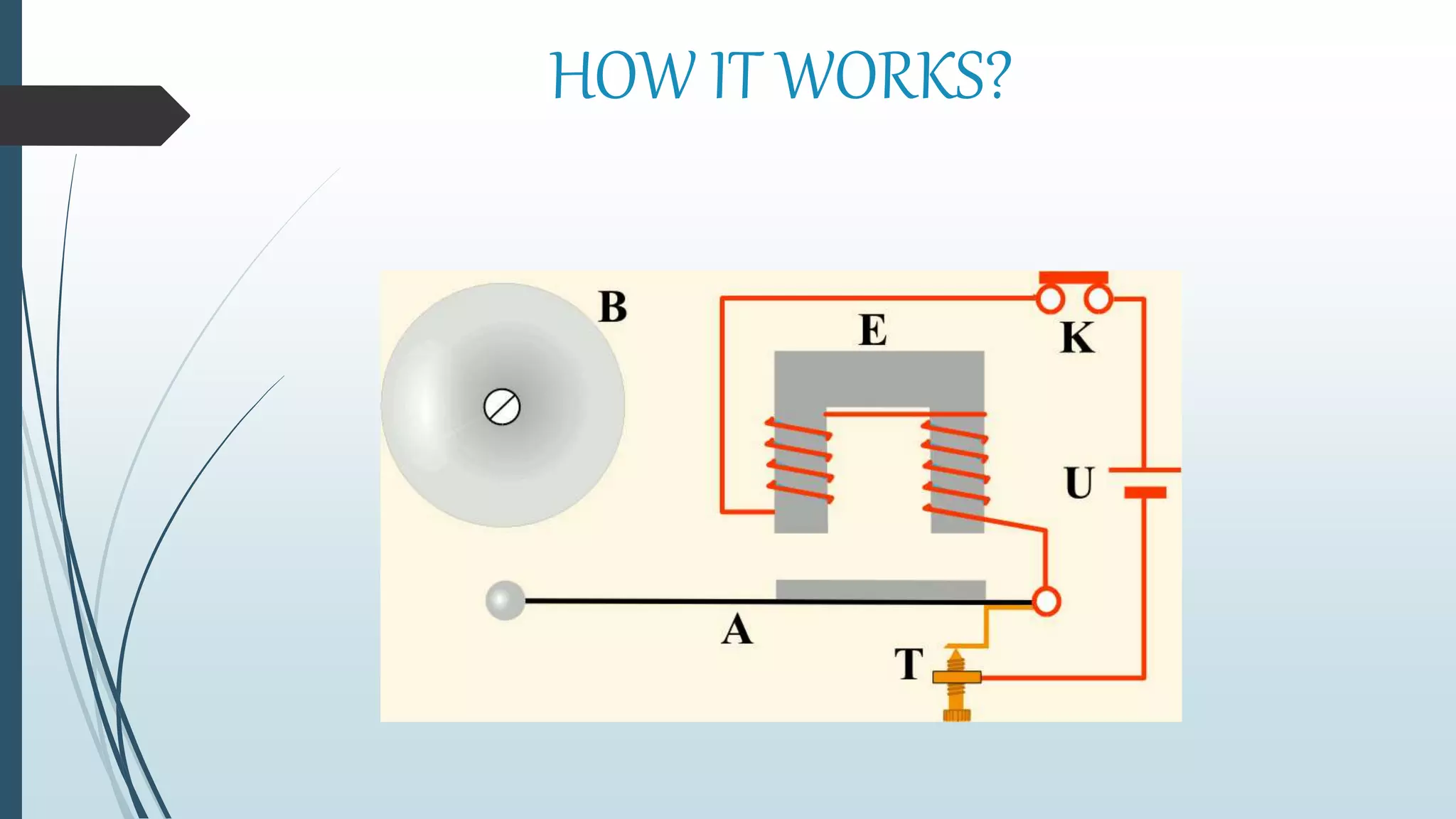
The Bell or gong ,which is often in
the shape of a cup or half sphere, is
struck by spring loaded arm with a
metal ball on the end called a
clapper ,actuated by an
electromagnet.
In its rest position the clapper is
held away from the bell at a short
distance to its springy arm(screw).
HOW IT WORKS?
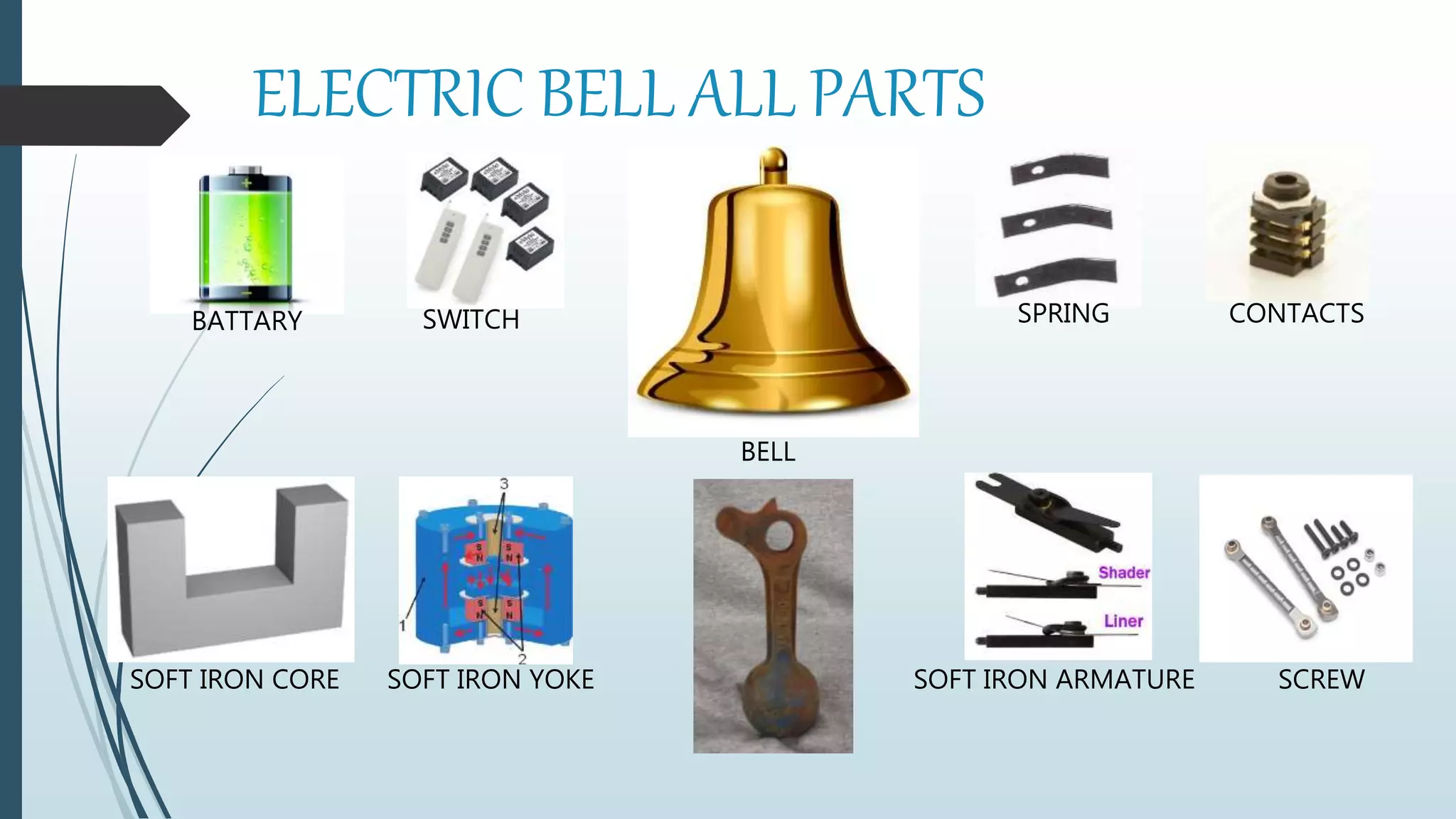
ELECTRIC BELL ALL PARTS
BATTARY SWITCH
BELL
SPRING CONTACTS
SOFT IRON YOKESOFT IRON CORE SOFT IRON ARMATURE SCREW
PART AND WORK
HOW DOES THE BATTERY WORK
BATTERY WORK
An electric bell containsanelectromagnet, consistingofcoils
ofinsulatedwire woundroundiron rods.When anelectric
current flowsthrough the coils,the rods become magnetic and
attracta piece ofiron attachedto aclapper.The clapperhits
the bellandmakes itring.
Applications
They are used in fire
or burglar alarms.
It is used as alarms at some
industrial plants because it
is replaced by electronic
sounders.
It is used as a door bell.
ADVANTAGES
Low cost.
Less use of electricity.
Can perform for more than
100000 operations.
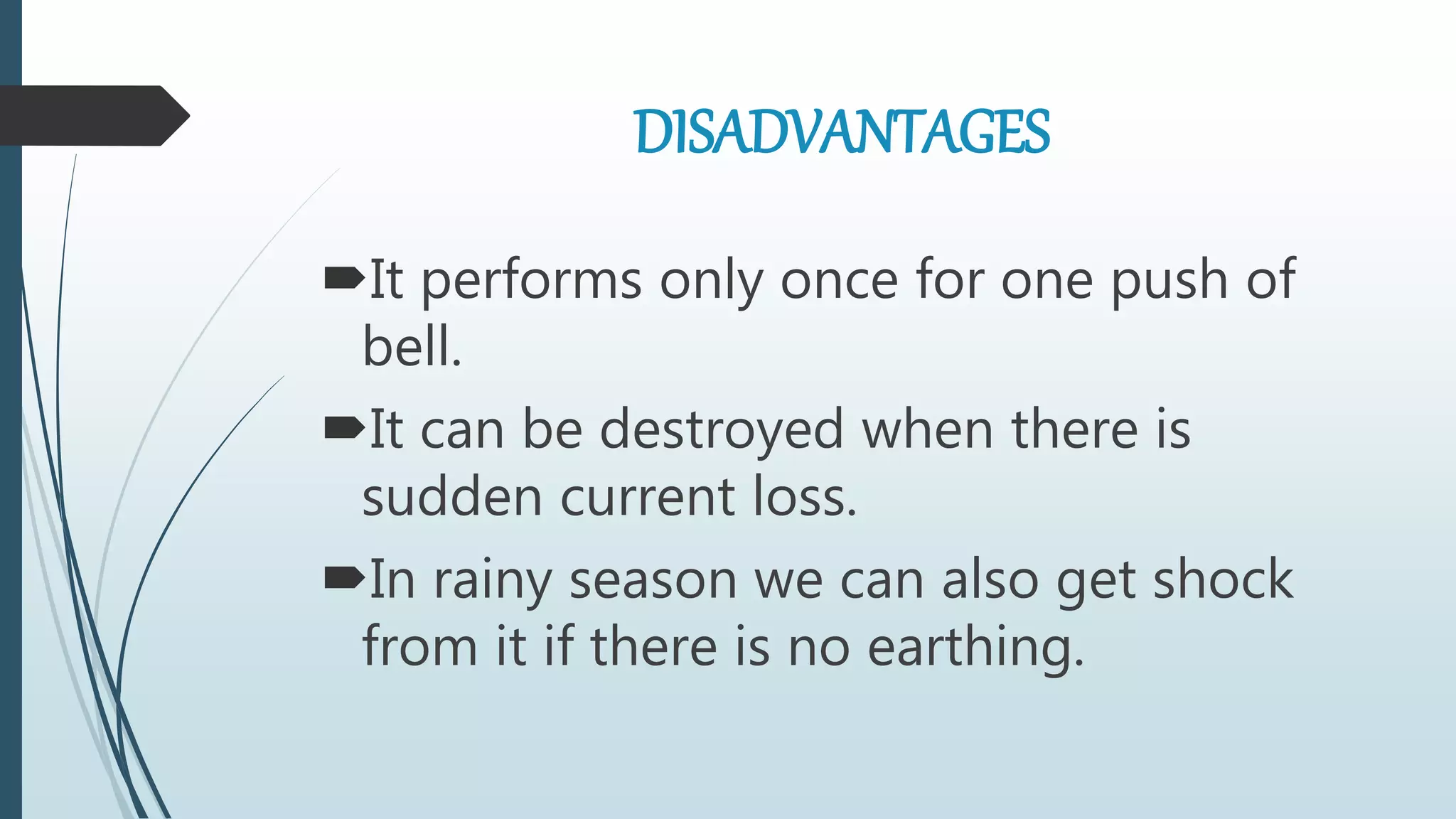
DISADVANTAGES
It performs only once for one push of
bell.
It can be destroyed when there is
sudden current loss.
In rainy season we can also get shock
from it if there is no earthing.
Electric bell
Electric bell

Electric bell

  • 1.
    TEAM ZERO GRAVITY MD.SHAFIUZZAMAN NURE ALAMNOBLE SHAZID KARIM SAMIM MIA RAJIB MIA AVIJIT SARKAR KAMRAN AHMED Course title: Electricity , Magnetism and Modern physics Course code: PHY 123 Course teacher: Subrata Banik Lecturer (Physics) Department of General education development Daffodil International University Submited to:
  • 2.
  • 3.
    HISTORY OF ELECTRICBELL Invention of the electromagnet by William Sturgeon in 1823 Vibrating hammer invented by Johann Philipp Wagner (1839) One of the first was the oscillating electric wire invented by James Marsh in 1824. Christian Ernst Neeff (1847) was developed into a buzzer by Froment (1847). telegraph developed by Werner Siemens around 1850 An inventer named Doug Hugen invented the first electric bell in 1930
  • 5.
  • 6.
    ELECTRIC BELL An electricbell is a mechanical bell that functions by means of an electromagnet. When an electric current is applied, it produces a repetitive buzzing or clanging sound. Electric bells have been widely used at railroad crossings, in telephones, fire alarms, etc.
  • 7.
    WORKING The Bell orgong ,which is often in the shape of a cup or half sphere, is struck by spring loaded arm with a metal ball on the end called a clapper ,actuated by an electromagnet. In its rest position the clapper is held away from the bell at a short distance to its springy arm(screw).
  • 8.
  • 9.
    ELECTRIC BELL ALLPARTS BATTARY SWITCH BELL SPRING CONTACTS SOFT IRON YOKESOFT IRON CORE SOFT IRON ARMATURE SCREW
  • 10.
  • 11.
    HOW DOES THEBATTERY WORK
  • 12.
    BATTERY WORK An electricbell containsanelectromagnet, consistingofcoils ofinsulatedwire woundroundiron rods.When anelectric current flowsthrough the coils,the rods become magnetic and attracta piece ofiron attachedto aclapper.The clapperhits the bellandmakes itring.
  • 13.
    Applications They are usedin fire or burglar alarms. It is used as alarms at some industrial plants because it is replaced by electronic sounders.
  • 14.
    It is usedas a door bell.
  • 15.
    ADVANTAGES Low cost. Less useof electricity. Can perform for more than 100000 operations.
  • 16.
    DISADVANTAGES It performs onlyonce for one push of bell. It can be destroyed when there is sudden current loss. In rainy season we can also get shock from it if there is no earthing.