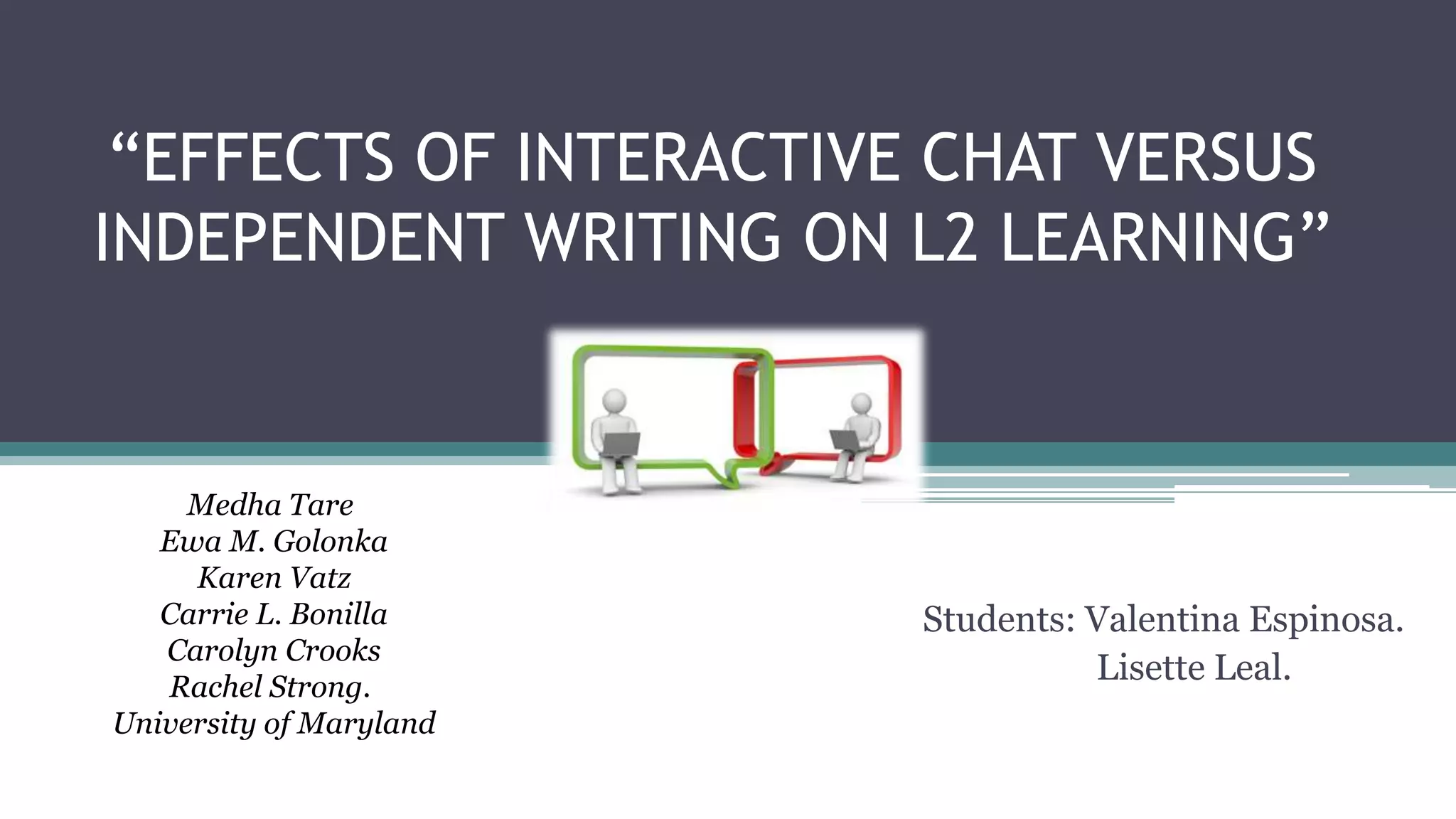
“EFFECTS OF INTERACTIVE CHAT VERSUS
INDEPENDENT WRITING ON L2 LEARNING”
Students: Valentina Espinosa.
Lisette Leal.
Medha Tare
Ewa M. Golonka
Karen Vatz
Carrie L. Bonilla
Carolyn Crooks
Rachel Strong.
University of Maryland
Literature review
* Advantages from performing tasks interactively
compared to individually (Gass & Varonis, 1994;
Mackey, 1999).
*Technology can provide opportunities for learner interaction
(Golonka, Bowles, Frank, Richardson, & Freynik, 2014)
mini-dialogues about
the language, offered
the opportunity to
notice new linguistic
items and retain that
information.
Shekary and Tahririan
(2006)
Students using text chat
produced more typed
utterances and variety of
discourse functions than
students in the spoken
condition
(Beauvois, 1998; Kern,
1995).
Oral fluency
compared to students
in the spoken
condition.
(Blake, 2009; Payne
& Whitney, 2002;
Satar & Özdener,
2008).
In text-based chat,
less confident
students are more
likely to open up and
participate.
(Kern, 1995; Owen,
1993; Sullivan & Pratt,
1996; Warschauer,
1996).
(Korean- and English-speaking
high-school students in Canada)
-Teach and learn appropriate
linguistic and cultural behaviors:
Korean honorific discourse or
chat jargon.
-Negotiate meaning.
-Gains in vocabulary knowledge
(Chung, Graves, Wesche, &
Barfurth, 2005; Chung, 2006).
Self correction
without teacher
supervision
Kitade (2000)
Research Questions:
• Do vocabulary knowledge, writing complexity and
accuracy, and oral production and fluency differ for
students who participated in the individual and interactive
conditions, and if so, how?
• Does language production differ and change over time for
students in the interactive and individual groups in later
homework assignments compared to the earliest
homework assignments, and if so, how?
Methodology
• Participants in two intermediate level Russian classes
completed study tasks three times a week for six weeks.
• TWO CONDITIONS:
Interactive condition: students were engaged in text-chat
sessions, completing tasks designed to encourage interaction
through information-, reasoning-, or opinion-gaps.
Individual condition: students completed comparable
writing activities on their own.
(*Same language input, required production, and equivalent
amount of time.)
(*Language gains were assessed through vocabulary, writing,
and speaking pre- and post-tests.)
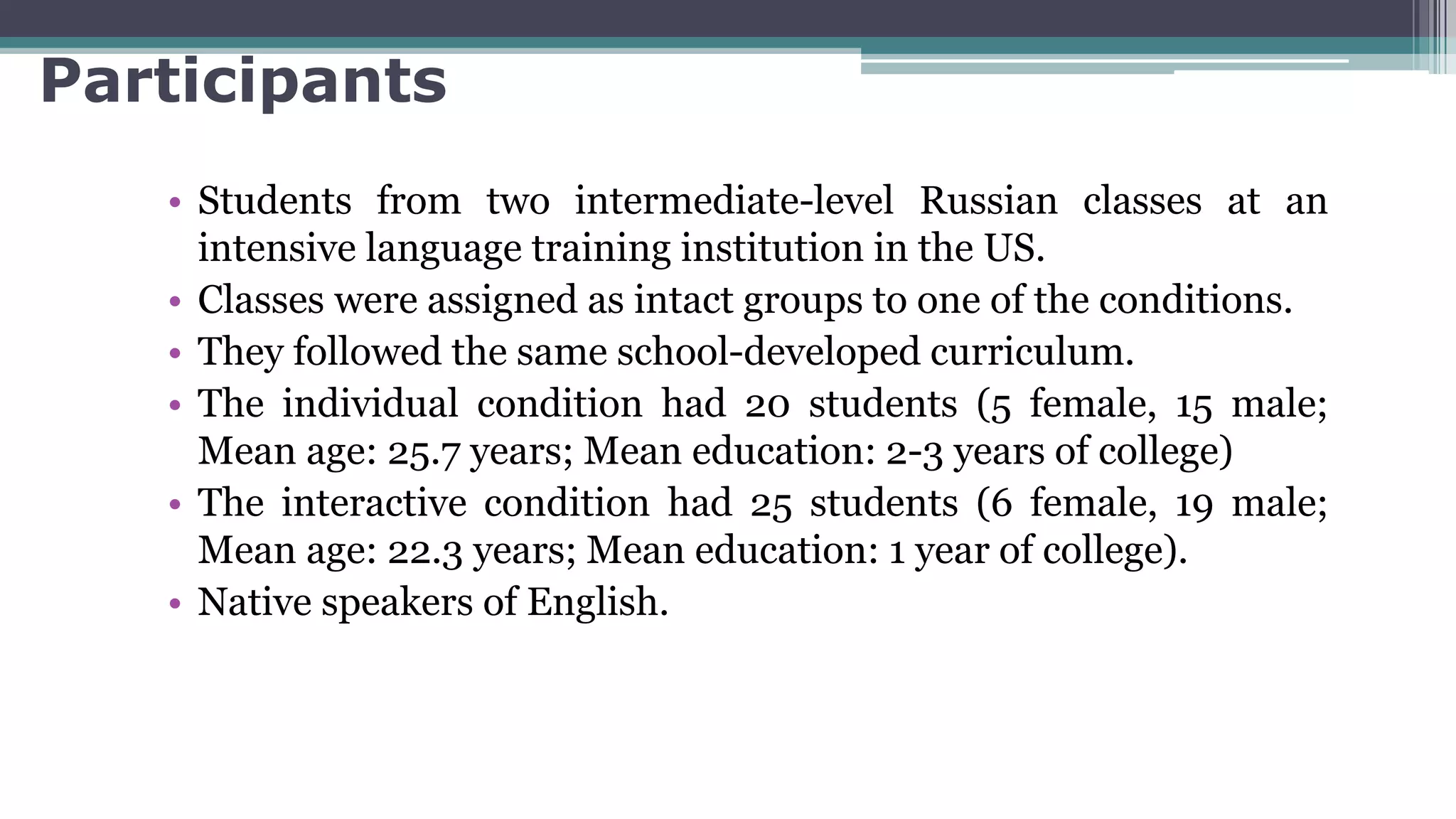
Participants
• Students from two intermediate-level Russian classes at an
intensive language training institution in the US.
• Classes were assigned as intact groups to one of the conditions.
• They followed the same school-developed curriculum.
• The individual condition had 20 students (5 female, 15 male;
Mean age: 25.7 years; Mean education: 2-3 years of college)
• The interactive condition had 25 students (6 female, 19 male;
Mean age: 22.3 years; Mean education: 1 year of college).
• Native speakers of English.
RESULTS
• Research Question 1:
Do vocabulary knowledge, writing complexity
and accuracy, and oral production and fluency
differ for students who participated in the
individual and interactive conditions, and if so,
how?
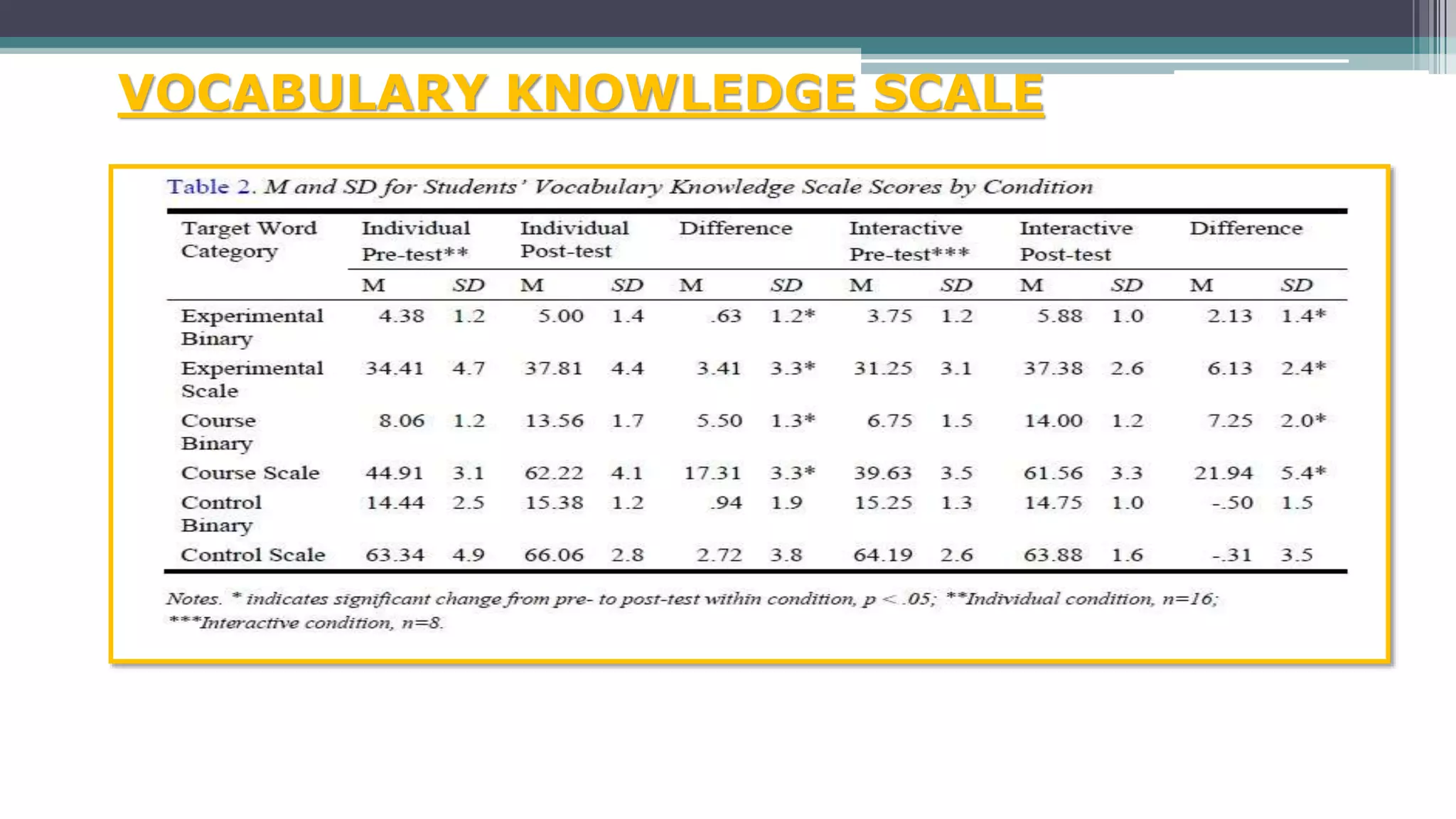
VOCABULARY KNOWLEDGE SCALE
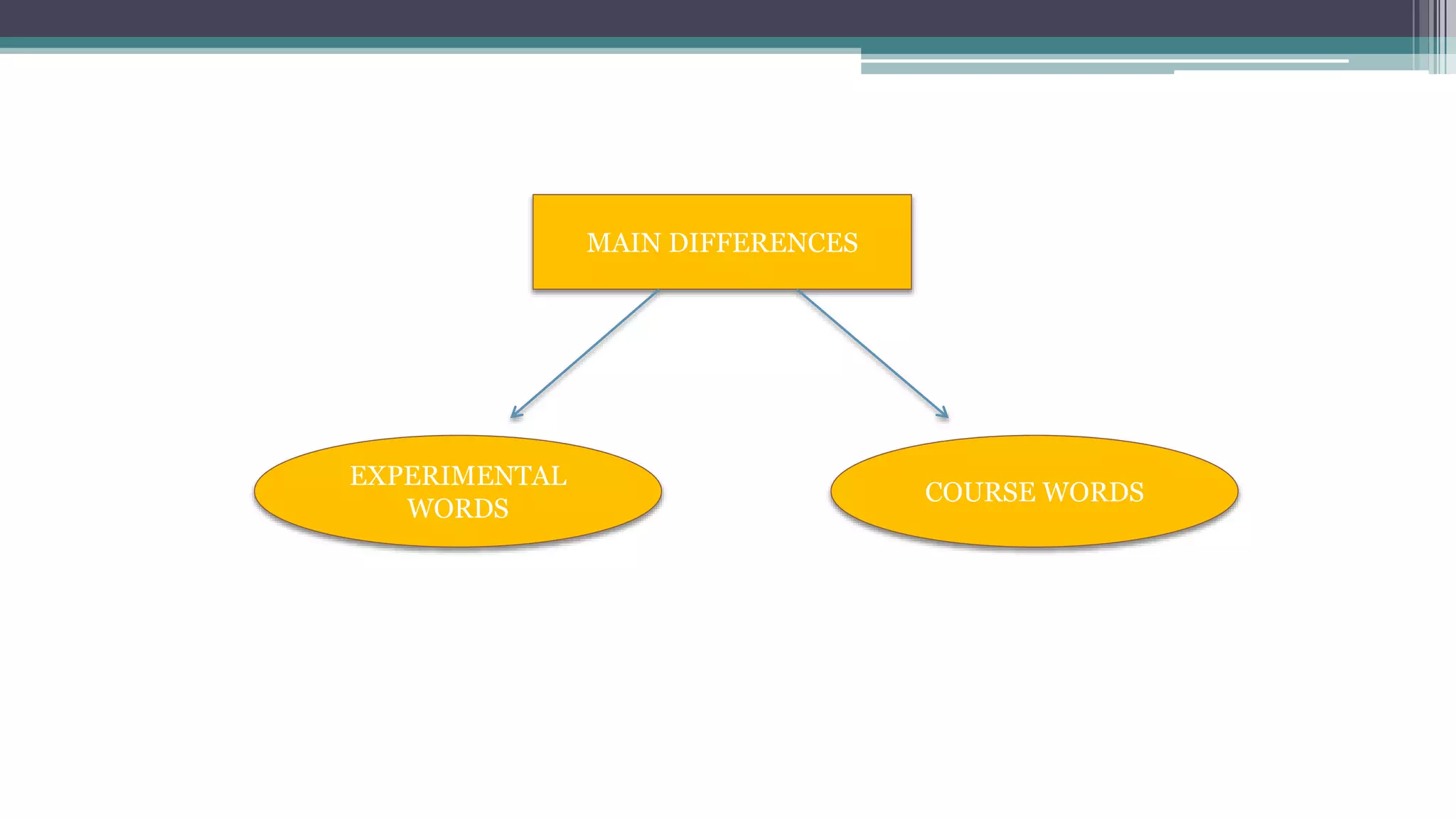
MAIN DIFFERENCES
EXPERIMENTAL
WORDS
COURSE WORDS
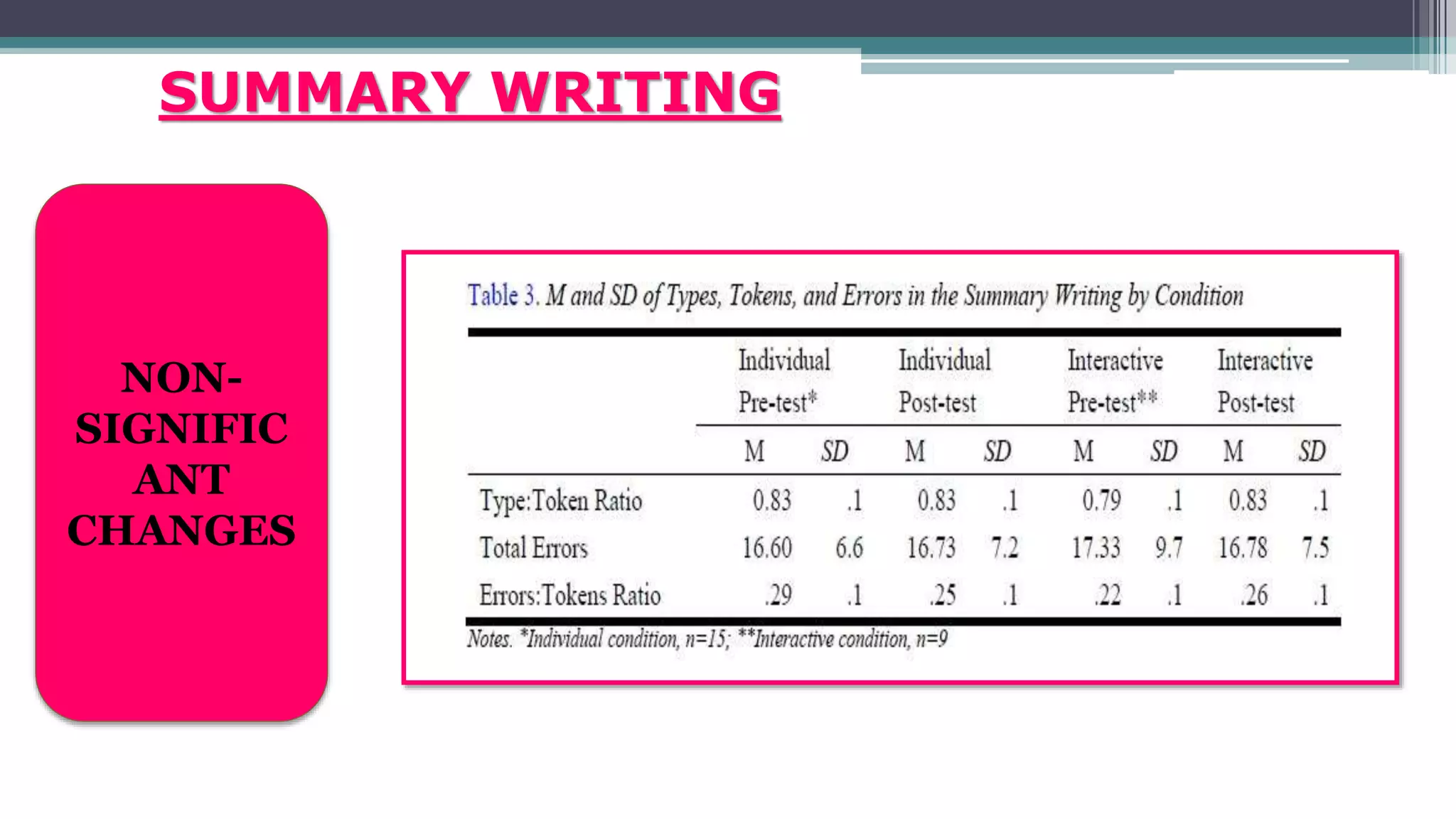
SUMMARY WRITING
NON-
SIGNIFIC
ANT
CHANGES
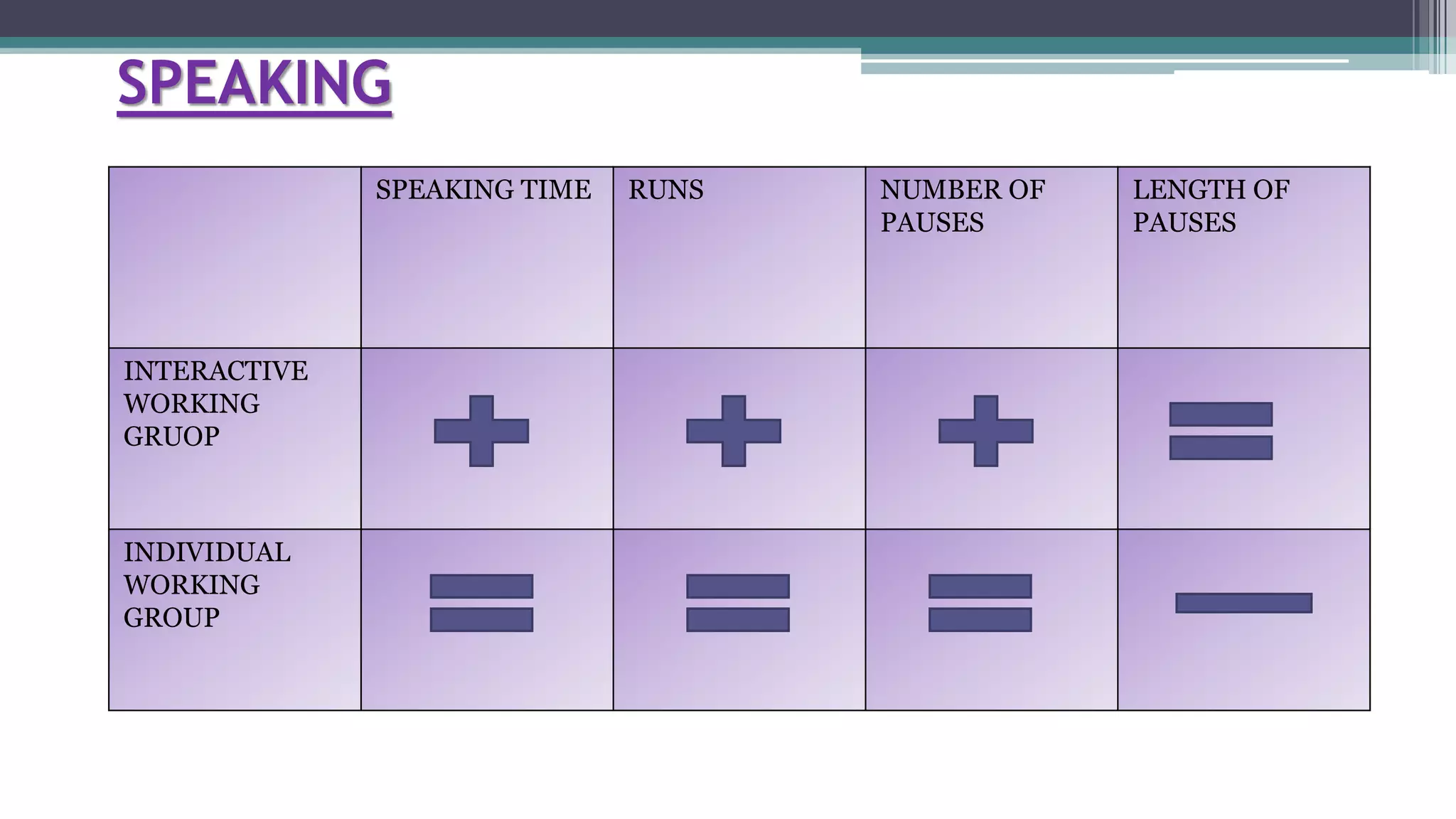
SPEAKING
SPEAKING TIME RUNS NUMBER OF
PAUSES
LENGTH OF
PAUSES
INTERACTIVE
WORKING
GRUOP
INDIVIDUAL
WORKING
GROUP
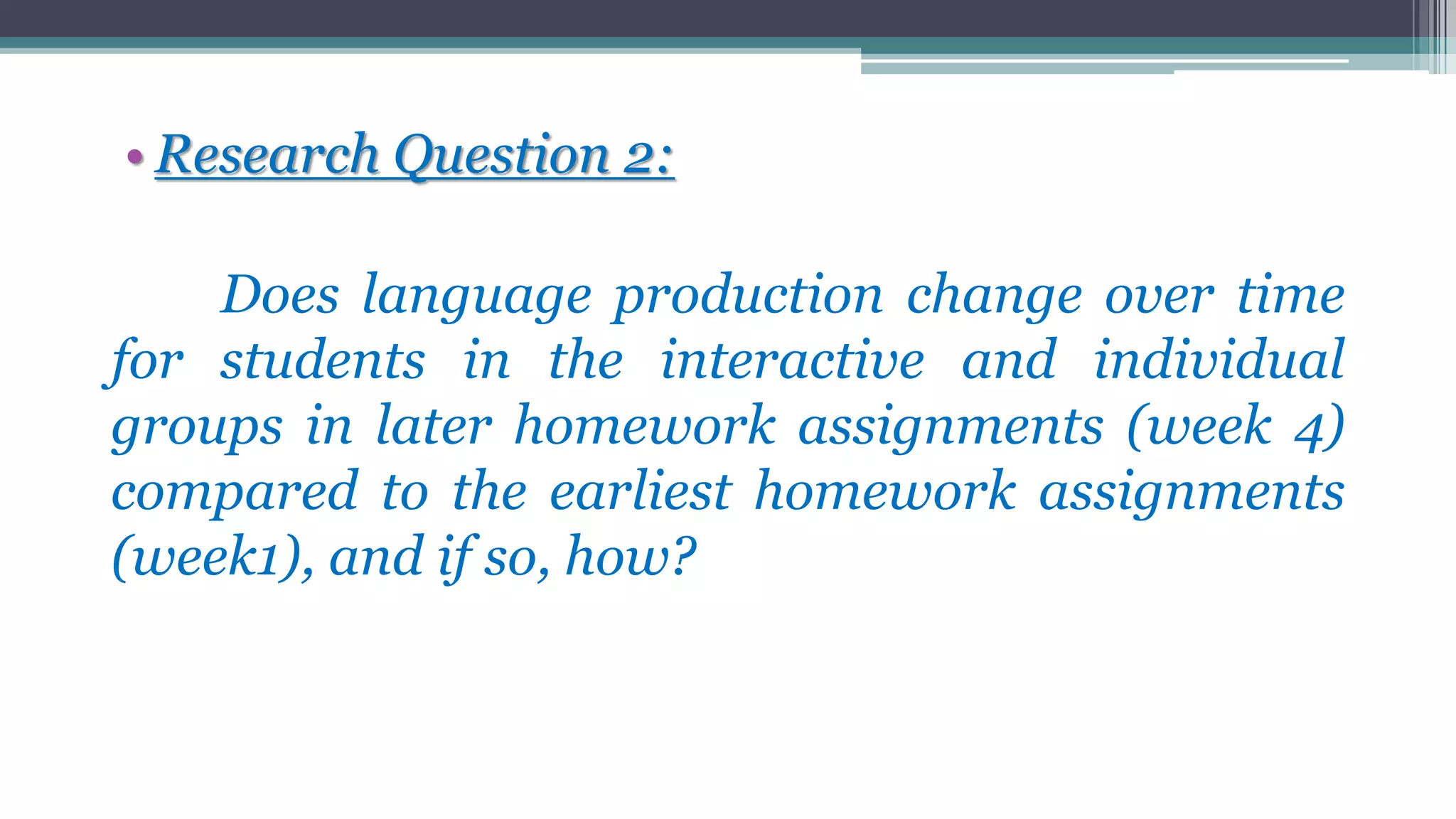
• Research Question 2:
Does language production change over time
for students in the interactive and individual
groups in later homework assignments (week 4)
compared to the earliest homework assignments
(week1), and if so, how?
Individual group: little change
Interactive group: drcreased
LANGUAGE PRODUCTION
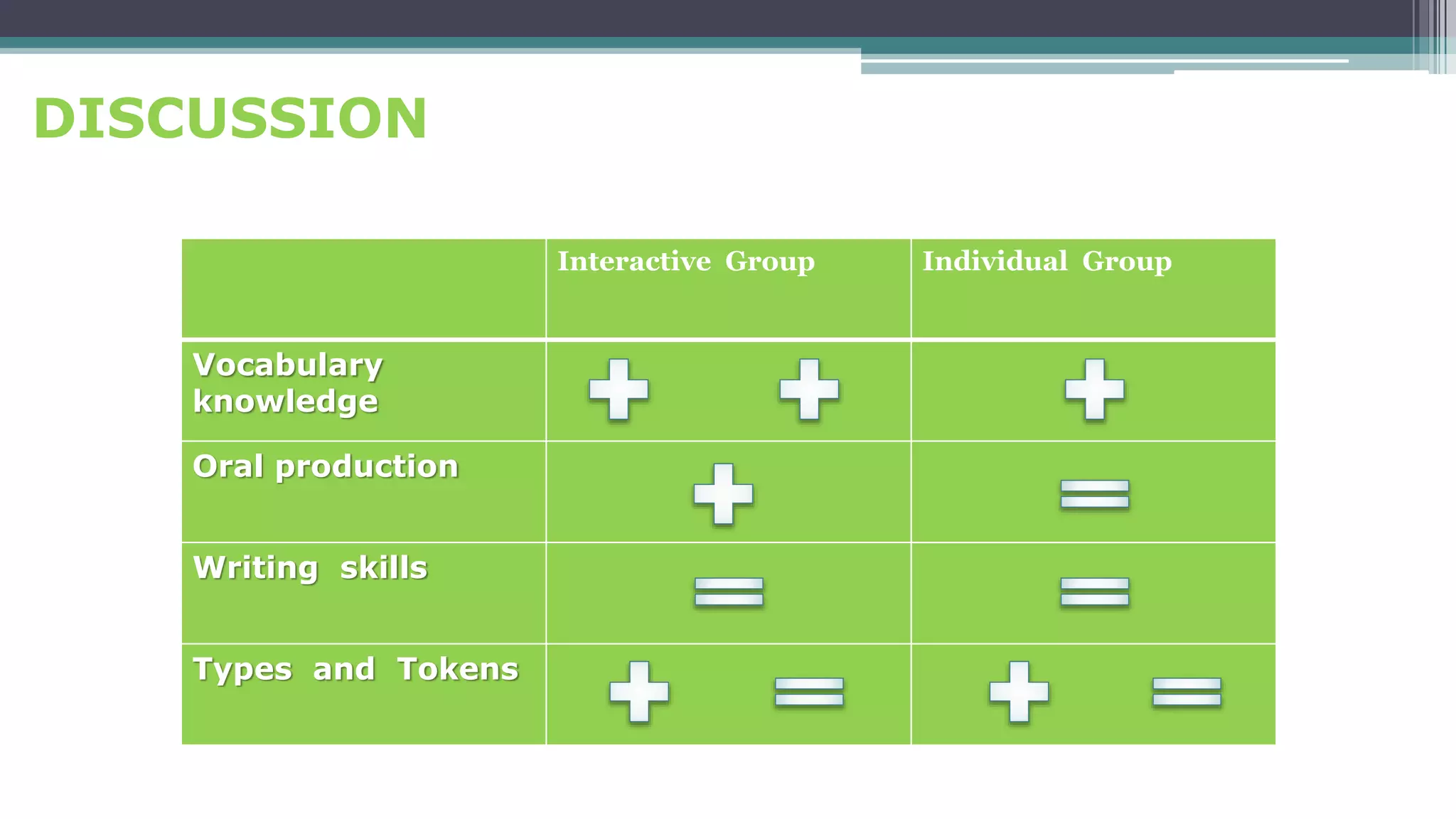
DISCUSSION
Interactive Group Individual Group
Vocabulary
knowledge
Oral production
Writing skills
Types and Tokens
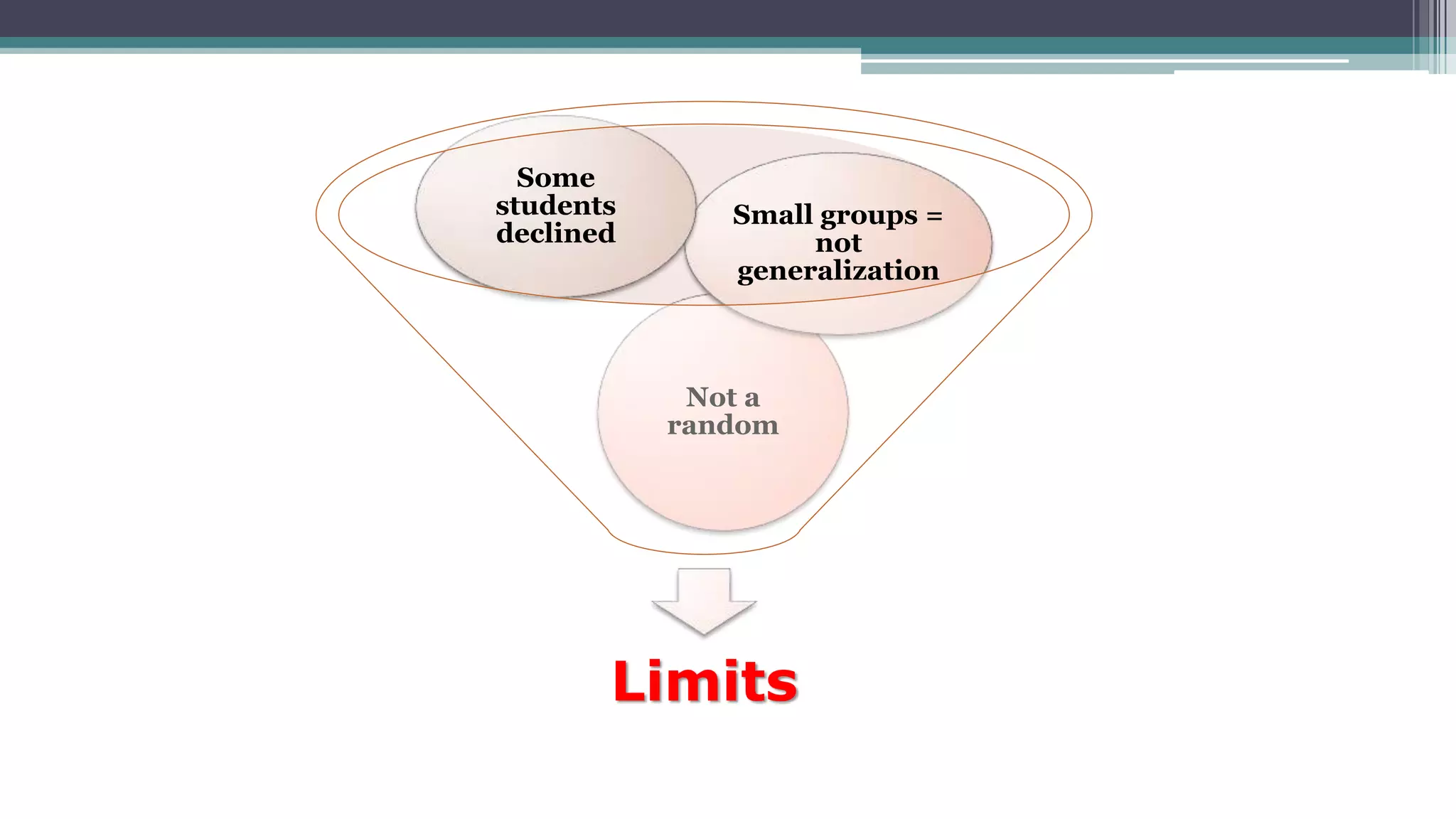
Limits
Not a
random
Small groups =
not
generalization
Some
students
declined
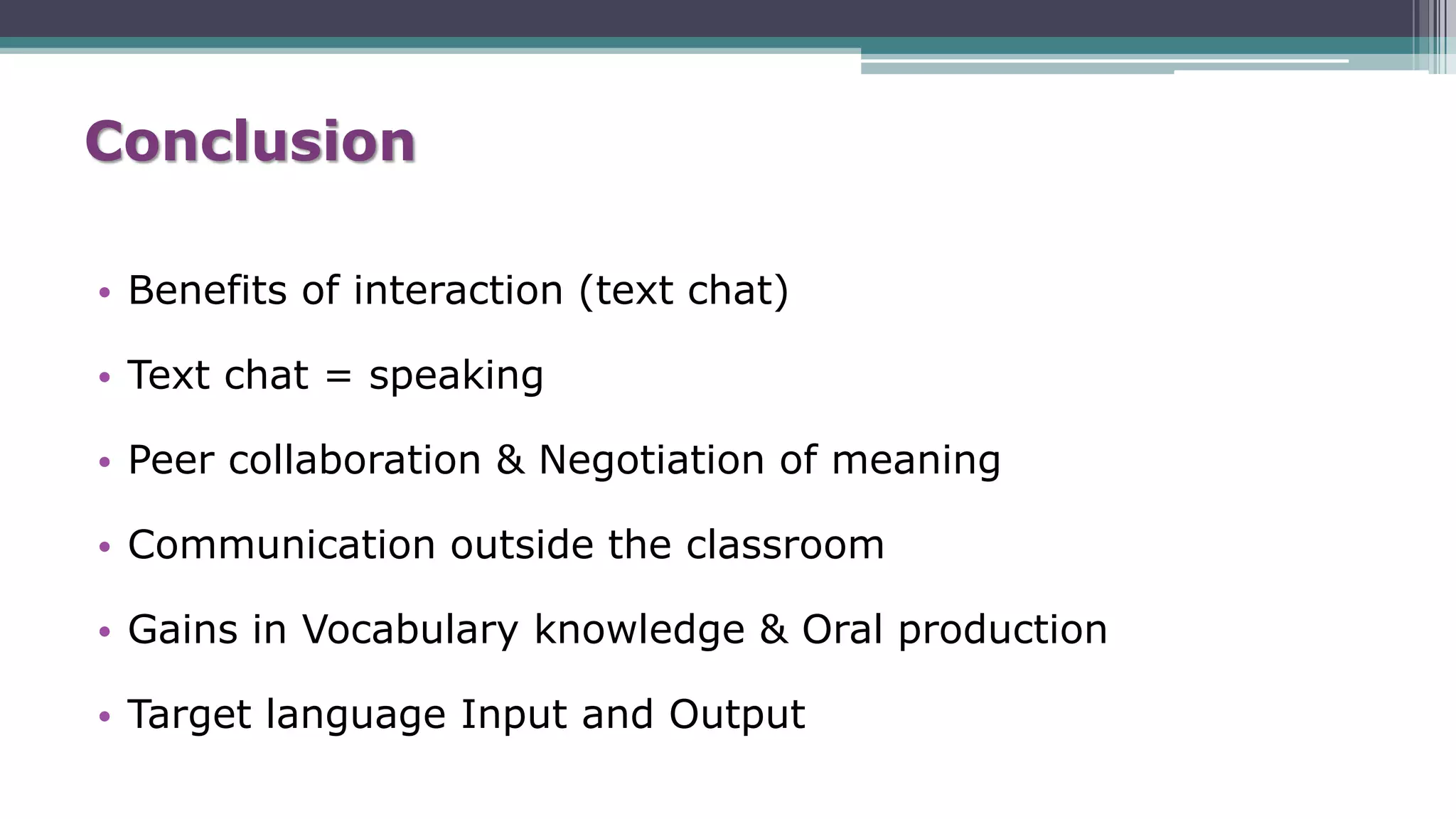
Conclusion
• Benefits of interaction (text chat)
• Text chat = speaking
• Peer collaboration & Negotiation of meaning
• Communication outside the classroom
• Gains in Vocabulary knowledge & Oral production
• Target language Input and Output

Effects of interactive chat versus independent writing

  • 1.
    “EFFECTS OF INTERACTIVECHAT VERSUS INDEPENDENT WRITING ON L2 LEARNING” Students: Valentina Espinosa. Lisette Leal. Medha Tare Ewa M. Golonka Karen Vatz Carrie L. Bonilla Carolyn Crooks Rachel Strong. University of Maryland
  • 2.
    Literature review * Advantagesfrom performing tasks interactively compared to individually (Gass & Varonis, 1994; Mackey, 1999). *Technology can provide opportunities for learner interaction (Golonka, Bowles, Frank, Richardson, & Freynik, 2014)
  • 3.
    mini-dialogues about the language,offered the opportunity to notice new linguistic items and retain that information. Shekary and Tahririan (2006) Students using text chat produced more typed utterances and variety of discourse functions than students in the spoken condition (Beauvois, 1998; Kern, 1995). Oral fluency compared to students in the spoken condition. (Blake, 2009; Payne & Whitney, 2002; Satar & Özdener, 2008).
  • 4.
    In text-based chat, lessconfident students are more likely to open up and participate. (Kern, 1995; Owen, 1993; Sullivan & Pratt, 1996; Warschauer, 1996). (Korean- and English-speaking high-school students in Canada) -Teach and learn appropriate linguistic and cultural behaviors: Korean honorific discourse or chat jargon. -Negotiate meaning. -Gains in vocabulary knowledge (Chung, Graves, Wesche, & Barfurth, 2005; Chung, 2006). Self correction without teacher supervision Kitade (2000)
  • 5.
    Research Questions: • Dovocabulary knowledge, writing complexity and accuracy, and oral production and fluency differ for students who participated in the individual and interactive conditions, and if so, how? • Does language production differ and change over time for students in the interactive and individual groups in later homework assignments compared to the earliest homework assignments, and if so, how?
  • 6.
    Methodology • Participants intwo intermediate level Russian classes completed study tasks three times a week for six weeks. • TWO CONDITIONS: Interactive condition: students were engaged in text-chat sessions, completing tasks designed to encourage interaction through information-, reasoning-, or opinion-gaps. Individual condition: students completed comparable writing activities on their own. (*Same language input, required production, and equivalent amount of time.) (*Language gains were assessed through vocabulary, writing, and speaking pre- and post-tests.)
  • 7.
    Participants • Students fromtwo intermediate-level Russian classes at an intensive language training institution in the US. • Classes were assigned as intact groups to one of the conditions. • They followed the same school-developed curriculum. • The individual condition had 20 students (5 female, 15 male; Mean age: 25.7 years; Mean education: 2-3 years of college) • The interactive condition had 25 students (6 female, 19 male; Mean age: 22.3 years; Mean education: 1 year of college). • Native speakers of English.
  • 8.
    RESULTS • Research Question1: Do vocabulary knowledge, writing complexity and accuracy, and oral production and fluency differ for students who participated in the individual and interactive conditions, and if so, how?
  • 9.
  • 10.
  • 11.
  • 12.
    SPEAKING SPEAKING TIME RUNSNUMBER OF PAUSES LENGTH OF PAUSES INTERACTIVE WORKING GRUOP INDIVIDUAL WORKING GROUP
  • 13.
    • Research Question2: Does language production change over time for students in the interactive and individual groups in later homework assignments (week 4) compared to the earliest homework assignments (week1), and if so, how?
  • 14.
    Individual group: littlechange Interactive group: drcreased LANGUAGE PRODUCTION
  • 15.
    DISCUSSION Interactive Group IndividualGroup Vocabulary knowledge Oral production Writing skills Types and Tokens
  • 16.
    Limits Not a random Small groups= not generalization Some students declined
  • 17.
    Conclusion • Benefits ofinteraction (text chat) • Text chat = speaking • Peer collaboration & Negotiation of meaning • Communication outside the classroom • Gains in Vocabulary knowledge & Oral production • Target language Input and Output