Effective Internship Practices Presented by: Peggy Joines, SPHR July 27, 2010
What is an Intern? Wiki:  An  intern  is someone who works in a temporary position with an emphasis on  on-the-job training  rather than merely employment  Webster: An  intern  is an advanced student or graduate usually in a professional field gaining  supervised practical experience
Defining Success Effective = Successful, useful, helpful, producing result   From the  intern’s  perspective – how will you know it was a successful, useful, helpful internship From the  employer’s  perspective – how will you know it was a successful, useful, helpful internship?
Begin with the end in mind … At the end of the session, you will have an understanding of how to: Determine your organization's ability to support an intern  Determine the financial arrangement – and stay legal with unpaid interns Select the right person  Assess the intern's performance.
Can you support an Intern?   Key questions to ask yourself before hiring an intern: Which of my organization’s goals can be met or advanced over a short period of time by use of an intern? What value will my organization derive from meeting these goals? What value will the intern derive from the experience? How much time am I willing to spend overseeing the work? How will I measure success? How you answer these questions will have a direct impact on the effectiveness of the experience.
What are the Financial Arrangements? Paid or Unpaid:  That is the question …. For-profit  Unpaid Interns:  *Department of Labor’s Six Factor test The internship, even though it includes actual operation of the facilities of the employer,  is similar to training which would be given in an educational environment ;  The internship experience is for the  benefit of the intern ;  The  intern does not displace regular employees , but works under close supervision of existing staff;  The  employer that provides the training derives no immediate advantage  from the activities of the intern; and on occasion its operations may actually be impeded;  The  intern is not necessarily entitled to a job  at the conclusion of the internship; and  The  employer and intern understand that the intern is not entitled to wages  for the time spent in the internship  Ask yourself:  Who is the main beneficiary?  The Company or the Intern? *hrhero.com
Unpaid interns – experience is even more critical *Unpaid internships are a form of quid pro quo arrangement. A business or other organization offers someone a valuable experience and in turn receives help from that person. It's the kind of help the individual provides that determines whether a particular unpaid internship is ethical or not. If the intern's efforts are integral to the learning experience (for example, setting up appointments and then attending those meetings), such efforts are a legitimate use of the intern's time and are thus ethically appropriate. If, however, the intern is acting essentially as unpaid labor (e.g., stuffing envelopes, making photocopies, or fetching coffee), such work may  constitute exploitation  and is therefore to be avoided.”  Bruce Weinstein, PhD * businesswekk.com
Selection – It starts with a job description “ If you don’t know where you are going, any road will take you there.”  The Cat to Alice, Alice in Wonderland, by Lewis Carroll Necessary elements of a job description: Essential job functions and Minimum Qualifications (required skills, education, experience) Why is it important to write a job description?  Ensures that the job connects to the overall business strategy or plan Gives applicants a picture of the assignment so they can align their talents and abilities  Makes the selection process more objective because it gives you standards by which to measure applicants Once you know what you need, cast a  wide net  to collect the  best candidates  available for consideration.
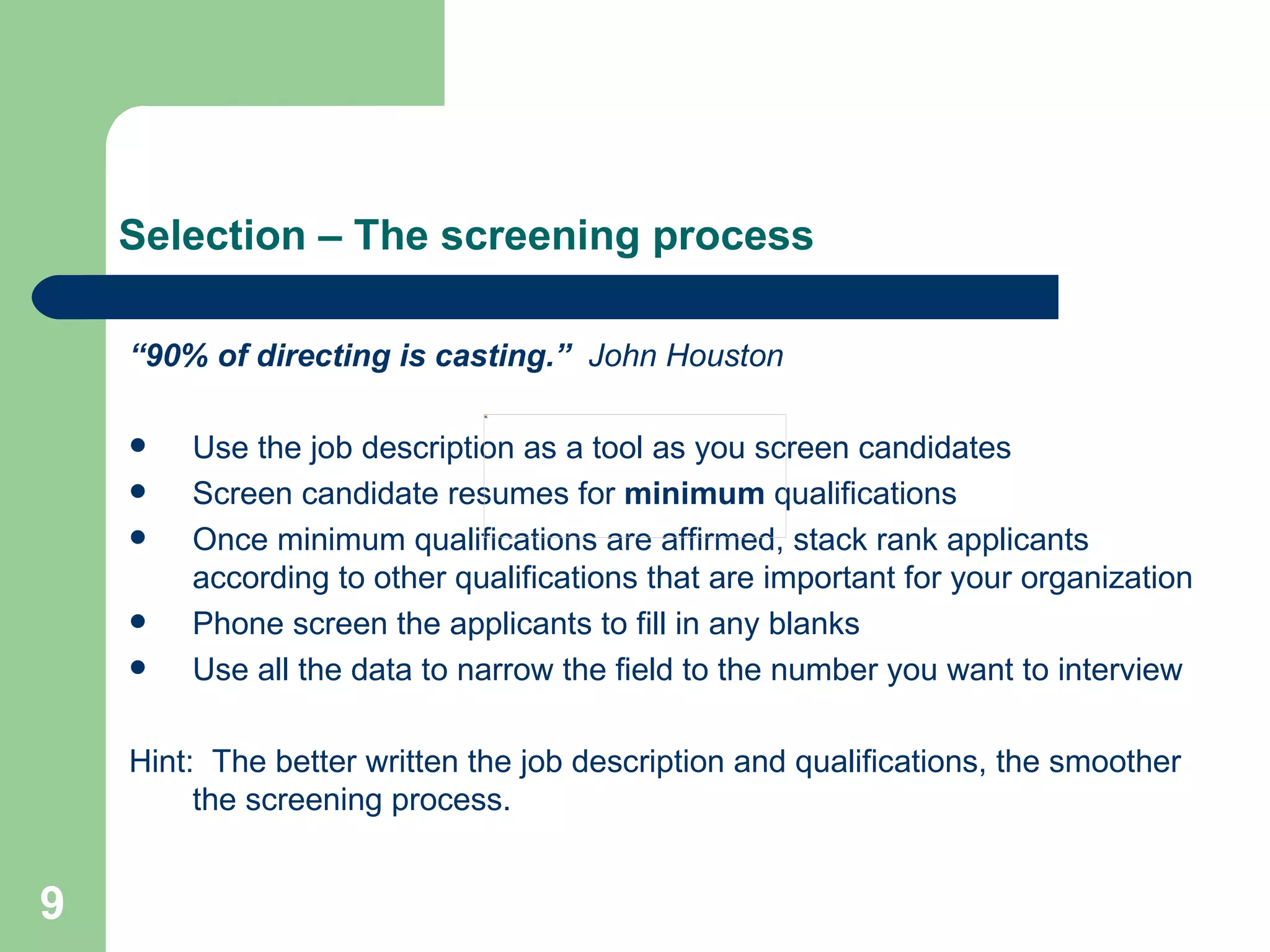
Selection – The screening process “ 90% of directing is casting.”   John Houston Use the job description as a tool as you screen candidates Screen candidate resumes for  minimum  qualifications  Once minimum qualifications are affirmed, stack rank applicants according to other qualifications that are important for your organization Phone screen the applicants to fill in any blanks Use all the data to narrow the field to the number you want to interview Hint:  The better written the job description and qualifications, the smoother the screening process.
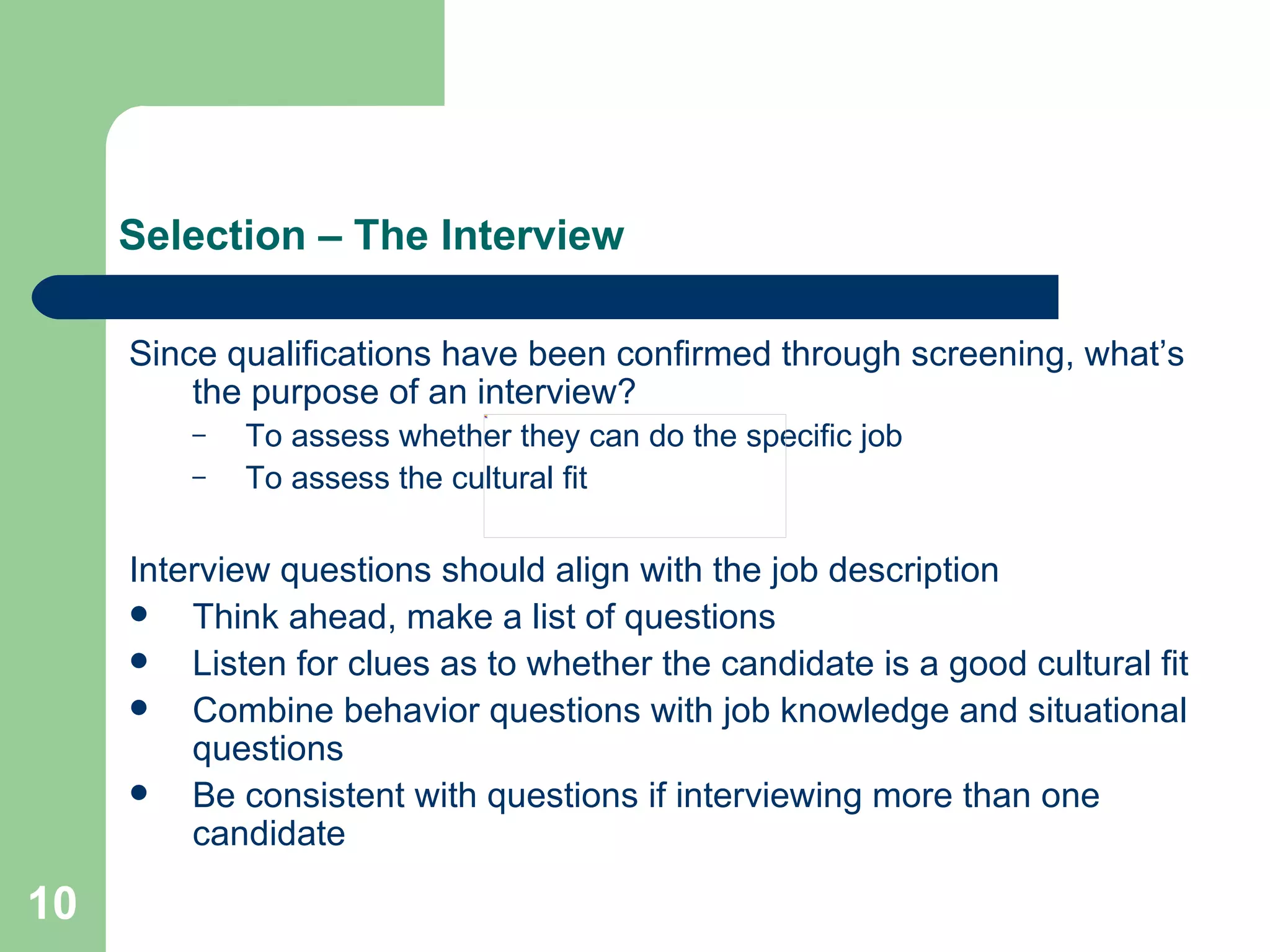
Selection – The Interview Since qualifications have been confirmed through screening, what’s the purpose of an interview?  To assess whether they can do the specific job To assess the cultural fit Interview questions should align with the job description Think ahead, make a list of questions  Listen for clues as to whether the candidate is a good cultural fit Combine behavior questions with job knowledge and situational questions Be consistent with questions if interviewing more than one candidate
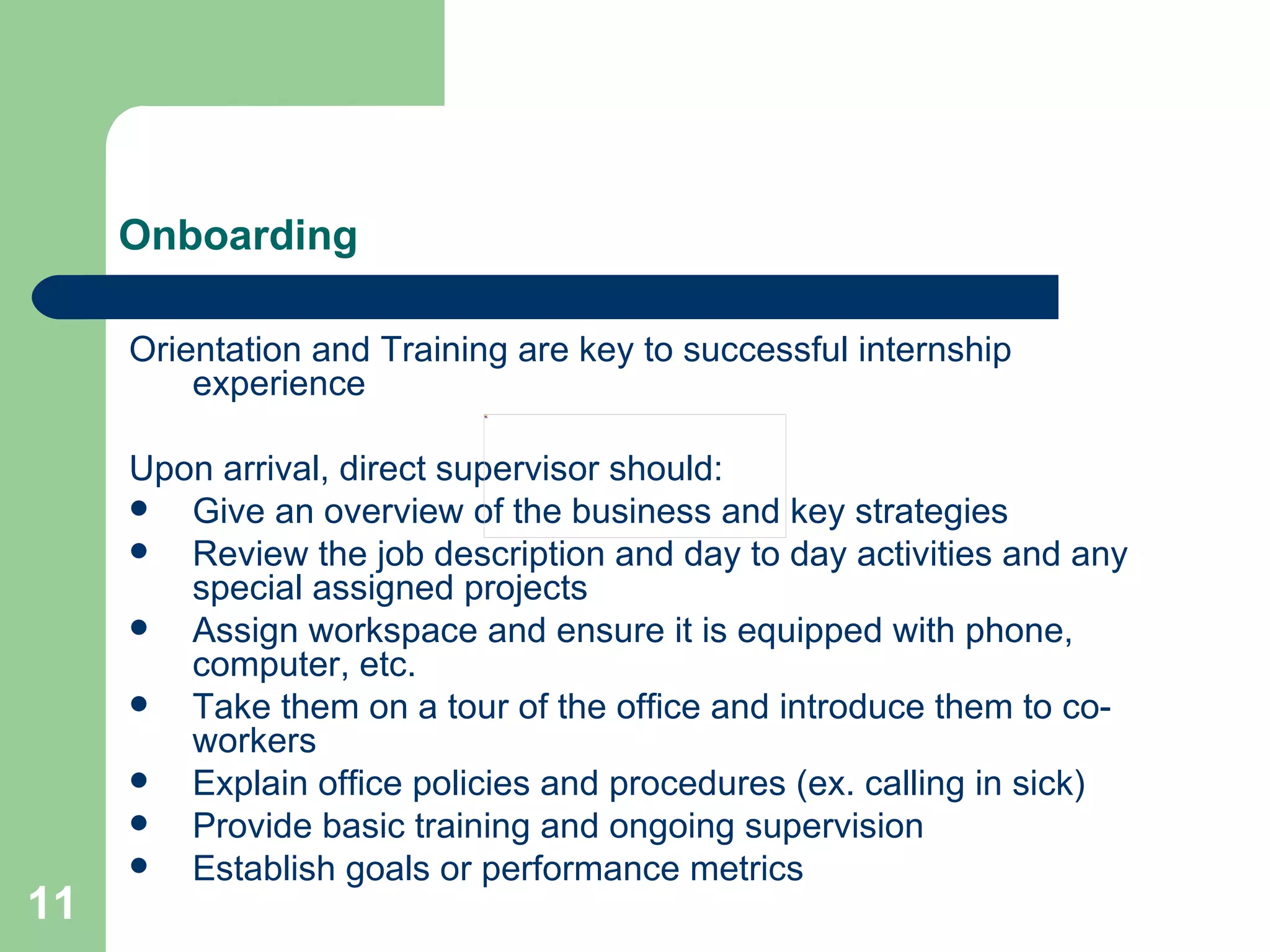
Onboarding Orientation and Training are key to successful internship experience Upon arrival, direct supervisor should: Give an overview of the business and key strategies Review the job description and day to day activities and any special assigned projects Assign workspace and ensure it is equipped with phone, computer, etc. Take them on a tour of the office and introduce them to co-workers Explain office policies and procedures (ex. calling in sick)  Provide basic training and ongoing supervision Establish goals or performance metrics
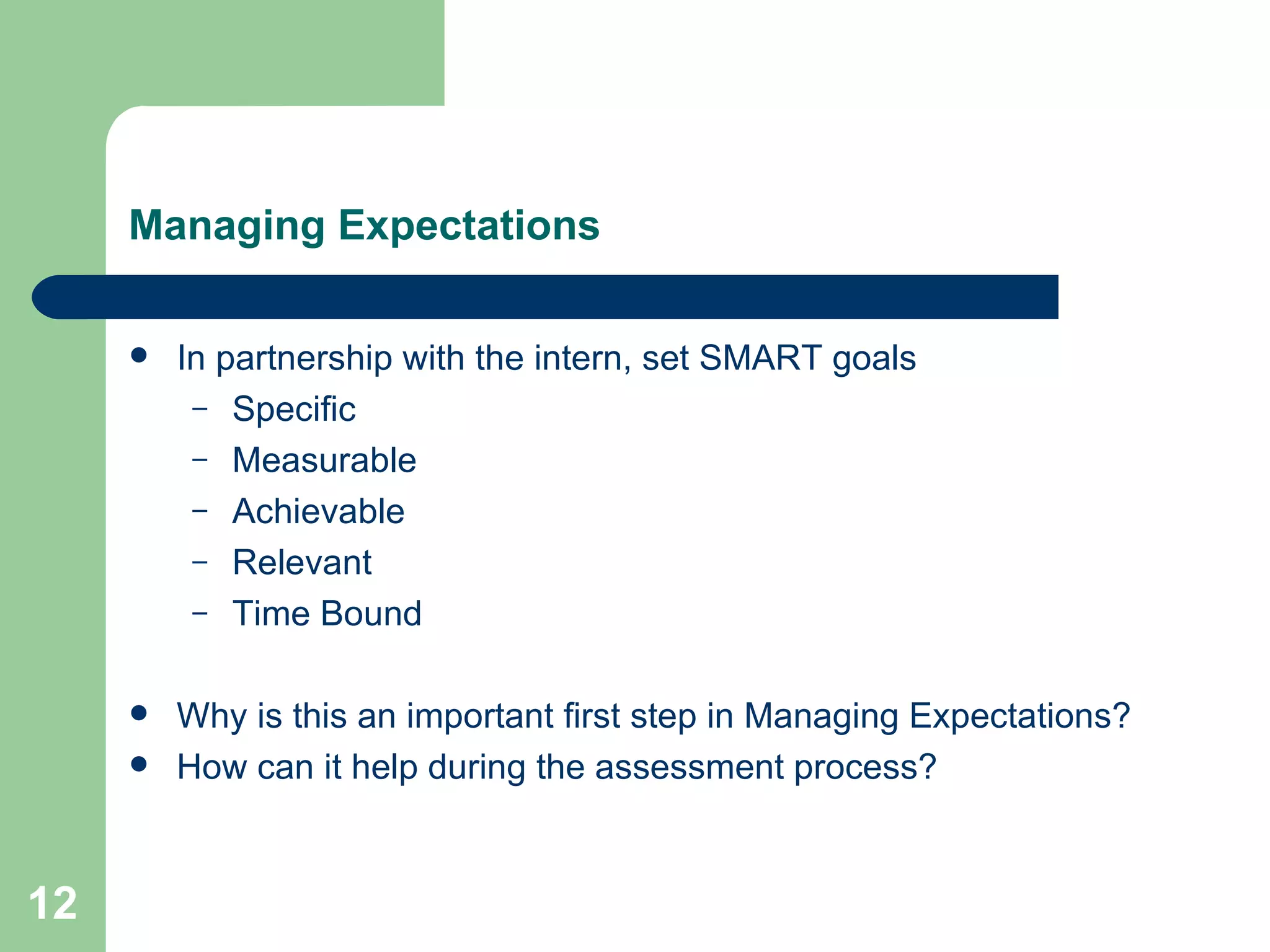
Managing Expectations In partnership with the intern, set SMART goals Specific Measurable Achievable Relevant Time Bound Why is this an important first step in Managing Expectations? How can it help during the assessment process?
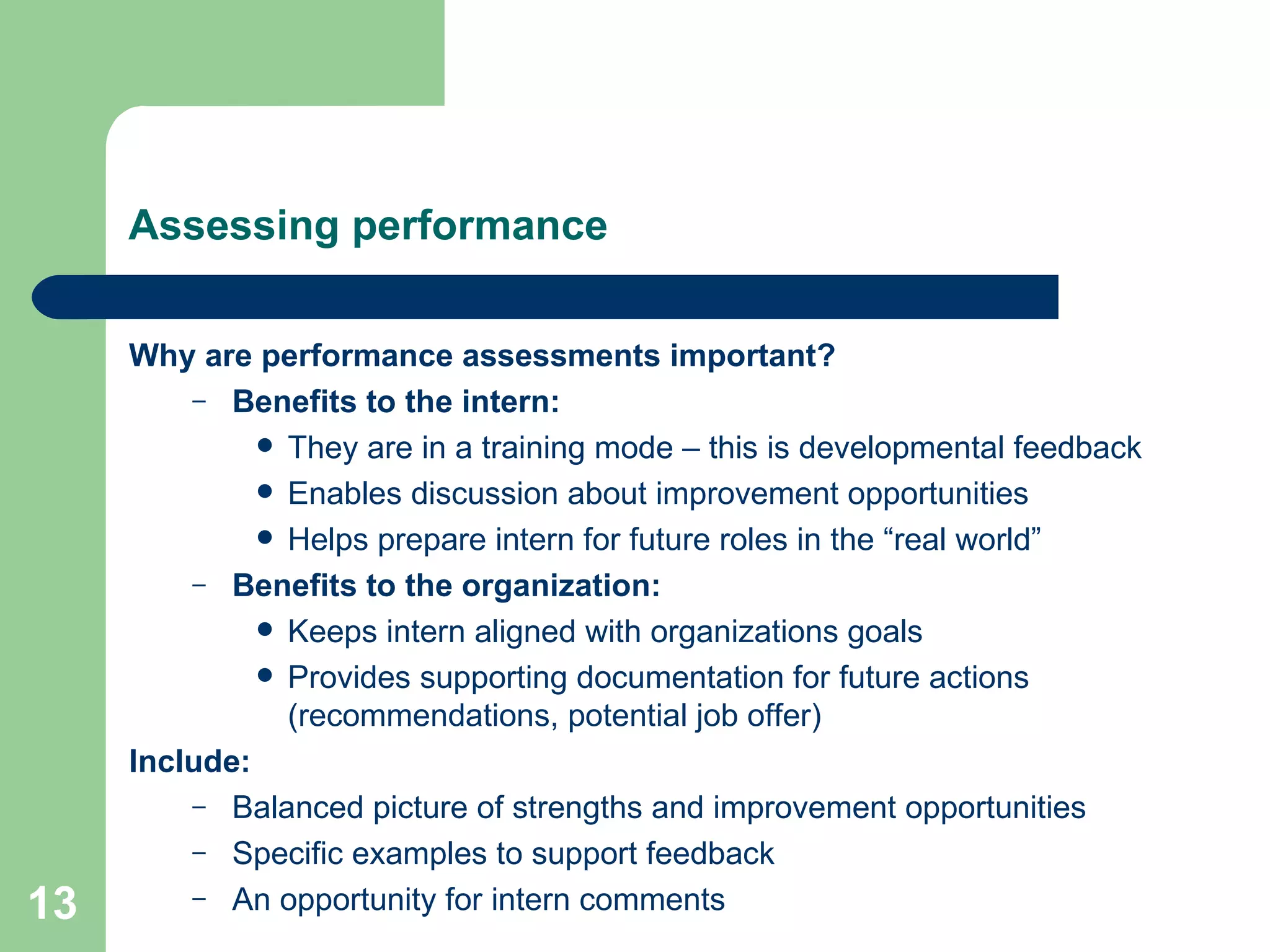
Assessing performance Why are performance assessments important? Benefits to the intern: They are in a training mode – this is developmental feedback Enables discussion about improvement opportunities Helps prepare intern for future roles in the “real world” Benefits to the organization: Keeps intern aligned with organizations goals  Provides supporting documentation for future actions (recommendations, potential job offer)  Include: Balanced picture of strengths and improvement opportunities Specific examples to support feedback An opportunity for intern comments
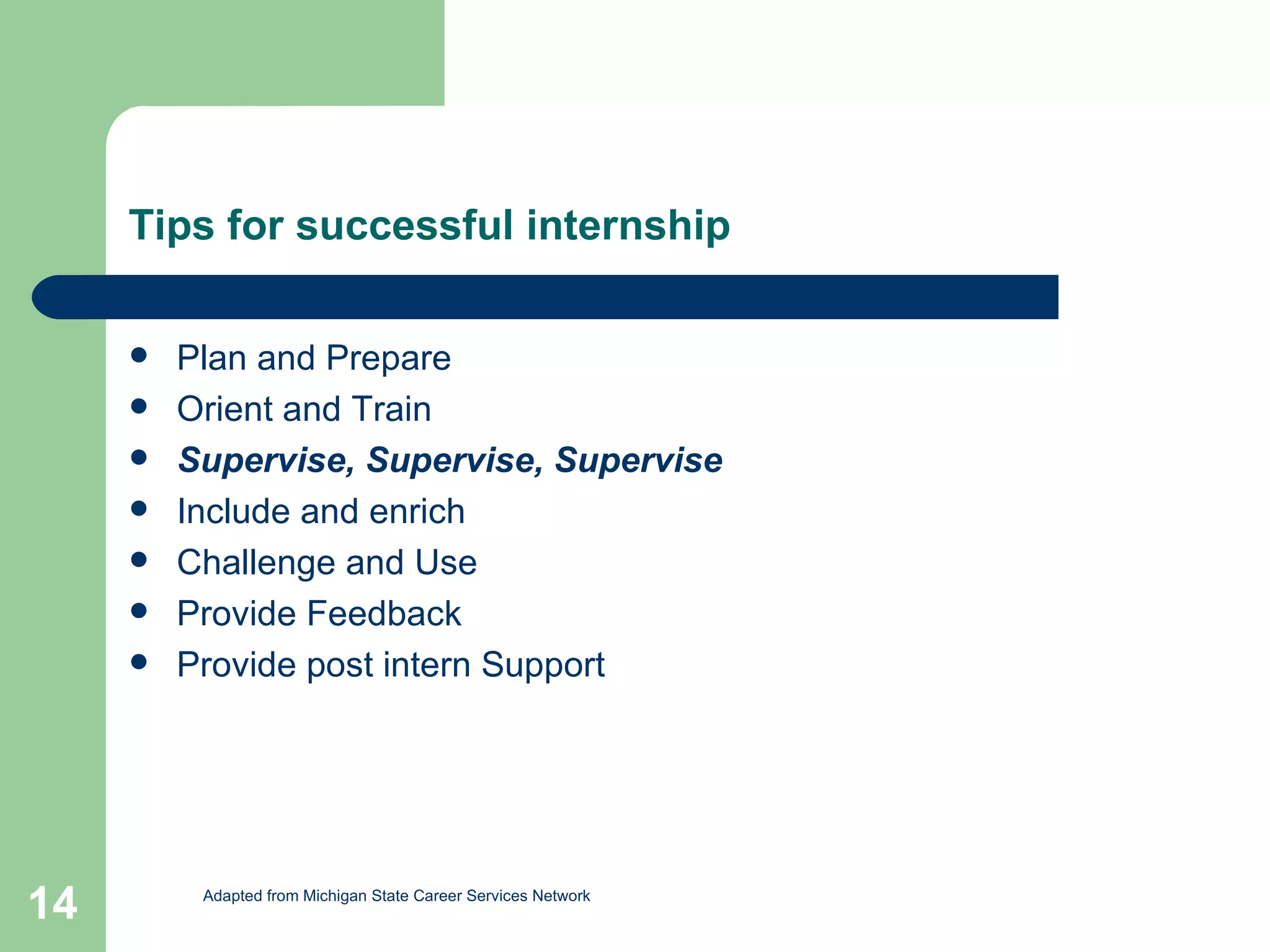
Tips for successful internship Plan and Prepare Orient and Train Supervise, Supervise, Supervise Include and enrich Challenge and Use Provide Feedback Provide post intern Support Adapted from Michigan State Career Services Network

Effective internship practices7.27.2010

  • 1.
    Effective Internship PracticesPresented by: Peggy Joines, SPHR July 27, 2010
  • 2.
    What is anIntern? Wiki: An intern is someone who works in a temporary position with an emphasis on on-the-job training rather than merely employment Webster: An intern is an advanced student or graduate usually in a professional field gaining supervised practical experience
  • 3.
    Defining Success Effective= Successful, useful, helpful, producing result From the intern’s perspective – how will you know it was a successful, useful, helpful internship From the employer’s perspective – how will you know it was a successful, useful, helpful internship?
  • 4.
    Begin with theend in mind … At the end of the session, you will have an understanding of how to: Determine your organization's ability to support an intern Determine the financial arrangement – and stay legal with unpaid interns Select the right person Assess the intern's performance.
  • 5.
    Can you supportan Intern? Key questions to ask yourself before hiring an intern: Which of my organization’s goals can be met or advanced over a short period of time by use of an intern? What value will my organization derive from meeting these goals? What value will the intern derive from the experience? How much time am I willing to spend overseeing the work? How will I measure success? How you answer these questions will have a direct impact on the effectiveness of the experience.
  • 6.
    What are theFinancial Arrangements? Paid or Unpaid: That is the question …. For-profit Unpaid Interns: *Department of Labor’s Six Factor test The internship, even though it includes actual operation of the facilities of the employer, is similar to training which would be given in an educational environment ; The internship experience is for the benefit of the intern ; The intern does not displace regular employees , but works under close supervision of existing staff; The employer that provides the training derives no immediate advantage from the activities of the intern; and on occasion its operations may actually be impeded; The intern is not necessarily entitled to a job at the conclusion of the internship; and The employer and intern understand that the intern is not entitled to wages for the time spent in the internship Ask yourself: Who is the main beneficiary? The Company or the Intern? *hrhero.com
  • 7.
    Unpaid interns –experience is even more critical *Unpaid internships are a form of quid pro quo arrangement. A business or other organization offers someone a valuable experience and in turn receives help from that person. It's the kind of help the individual provides that determines whether a particular unpaid internship is ethical or not. If the intern's efforts are integral to the learning experience (for example, setting up appointments and then attending those meetings), such efforts are a legitimate use of the intern's time and are thus ethically appropriate. If, however, the intern is acting essentially as unpaid labor (e.g., stuffing envelopes, making photocopies, or fetching coffee), such work may constitute exploitation and is therefore to be avoided.” Bruce Weinstein, PhD * businesswekk.com
  • 8.
    Selection – Itstarts with a job description “ If you don’t know where you are going, any road will take you there.” The Cat to Alice, Alice in Wonderland, by Lewis Carroll Necessary elements of a job description: Essential job functions and Minimum Qualifications (required skills, education, experience) Why is it important to write a job description? Ensures that the job connects to the overall business strategy or plan Gives applicants a picture of the assignment so they can align their talents and abilities Makes the selection process more objective because it gives you standards by which to measure applicants Once you know what you need, cast a wide net to collect the best candidates available for consideration.
  • 9.
    Selection – Thescreening process “ 90% of directing is casting.” John Houston Use the job description as a tool as you screen candidates Screen candidate resumes for minimum qualifications Once minimum qualifications are affirmed, stack rank applicants according to other qualifications that are important for your organization Phone screen the applicants to fill in any blanks Use all the data to narrow the field to the number you want to interview Hint: The better written the job description and qualifications, the smoother the screening process.
  • 10.
    Selection – TheInterview Since qualifications have been confirmed through screening, what’s the purpose of an interview? To assess whether they can do the specific job To assess the cultural fit Interview questions should align with the job description Think ahead, make a list of questions Listen for clues as to whether the candidate is a good cultural fit Combine behavior questions with job knowledge and situational questions Be consistent with questions if interviewing more than one candidate
  • 11.
    Onboarding Orientation andTraining are key to successful internship experience Upon arrival, direct supervisor should: Give an overview of the business and key strategies Review the job description and day to day activities and any special assigned projects Assign workspace and ensure it is equipped with phone, computer, etc. Take them on a tour of the office and introduce them to co-workers Explain office policies and procedures (ex. calling in sick) Provide basic training and ongoing supervision Establish goals or performance metrics
  • 12.
    Managing Expectations Inpartnership with the intern, set SMART goals Specific Measurable Achievable Relevant Time Bound Why is this an important first step in Managing Expectations? How can it help during the assessment process?
  • 13.
    Assessing performance Whyare performance assessments important? Benefits to the intern: They are in a training mode – this is developmental feedback Enables discussion about improvement opportunities Helps prepare intern for future roles in the “real world” Benefits to the organization: Keeps intern aligned with organizations goals Provides supporting documentation for future actions (recommendations, potential job offer) Include: Balanced picture of strengths and improvement opportunities Specific examples to support feedback An opportunity for intern comments
  • 14.
    Tips for successfulinternship Plan and Prepare Orient and Train Supervise, Supervise, Supervise Include and enrich Challenge and Use Provide Feedback Provide post intern Support Adapted from Michigan State Career Services Network