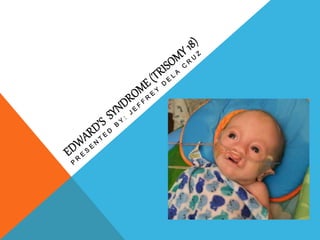
Edwards syndrome (also known as trisomy 
18 [T18]) is a chromosomal disorder caused by 
the presence of all, or part of, an extra 18th 
chromosome. This genetic condition almost 
always results 
from nondisjunction during meiosis. It is named 
after John Hilton Edwards, who first described 
the syndrome in 1960. It is the second-most 
common autosomal trisomy, after Down 
syndrome, that carries to term.
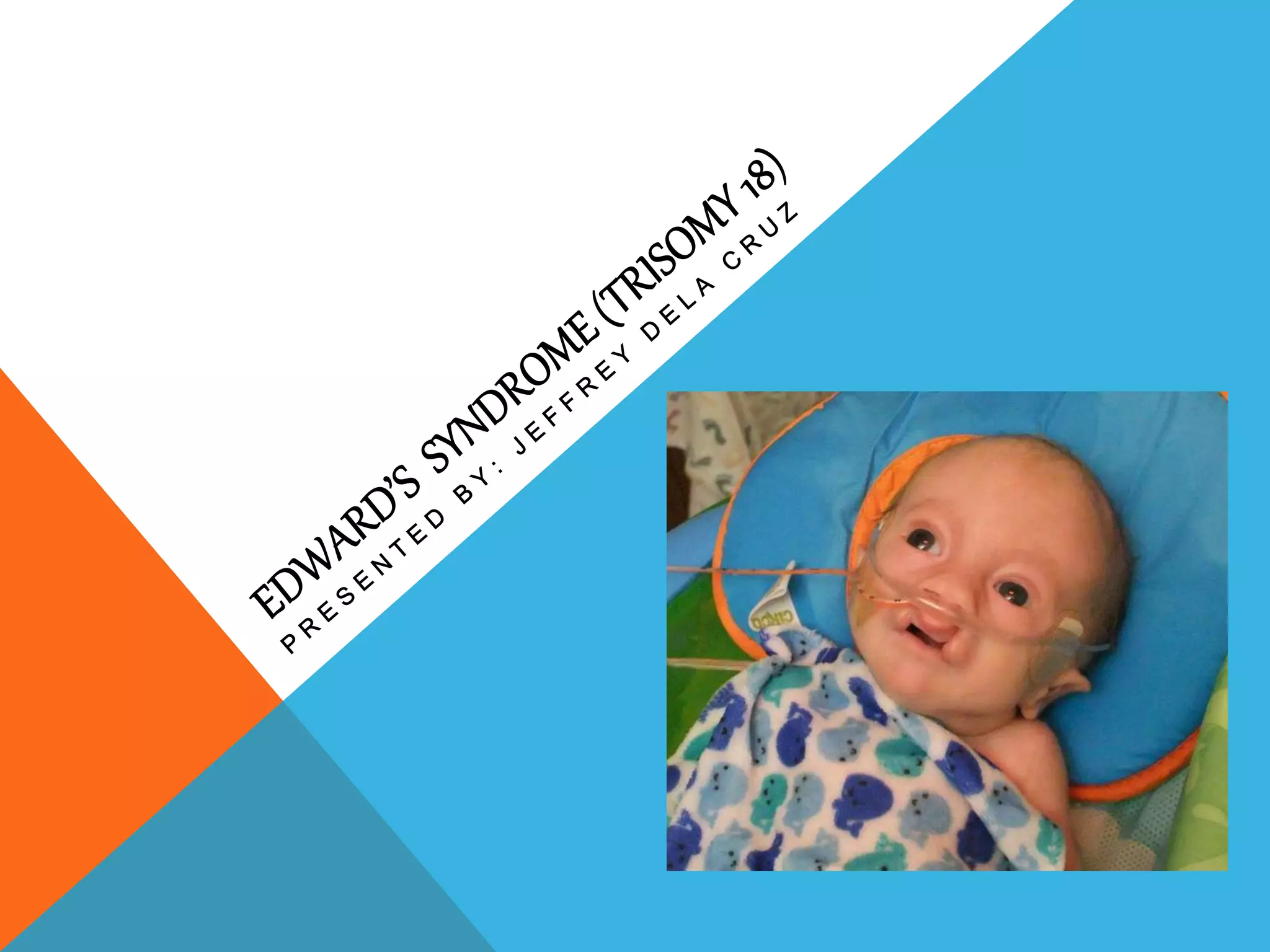
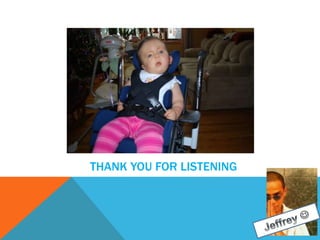
LANE, FULL TRISOMY 18 AT 5 YEARS & 8 MONTHS OLD, HAVING A SIT 
DOWN CHAT WITH MOMMY.
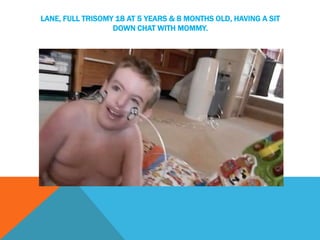
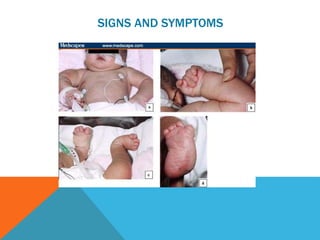
SIGNS AND SYMPTOMS
CHARACTERISTICS 
 kidney malformations 
 structural heart defect at birth (i.e. ventricular 
septal defect, atrial septal defect, patent ductus 
arteriosus 
 intestines protruding outside the body 
(omphalocele) 
 esophageal atresia 
 intellectual disability 
 breathing difficulties 
 arthrogryposis (a muscle disorder that causes 
multiple joint contractures at birth).
PHYSICAL MALFORMATIONS 
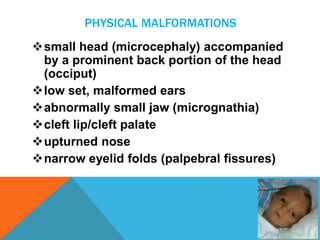
small head (microcephaly) accompanied 
by a prominent back portion of the head 
(occiput) 
low set, malformed ears 
abnormally small jaw (micrognathia) 
cleft lip/cleft palate 
upturned nose 
narrow eyelid folds (palpebral fissures)
In utero, the most common characteristic is 
cardiac anomalies, followed by central nervous 
system anomalies such as head shape 
abnormalities. The most common intracranial 
anomaly is the presence of choroid plexus 
cysts, which are pockets of fluid on the brain. 
These are not problematic in themselves, but 
their presence may be a marker for trisomy 
18. Sometimes, excess amniotic fluid or 
polyhydramnios is exhibited.
3 TYPES OF TRISOMY 18 
Full Trisomy 18: The most common type of Trisomy 18 (occurring in about 
95% of all cases) is full Trisomy. With full Trisomy, the extra chromosome 
occurs in every cell in the baby's body. This type of trisomy is not 
hereditary. It is not due to anything the parents did or did not do—either 
before or during pregnancy. 
Partial Trisomy 18: Partial trisomies are very rare. They occur when only part 
of an extra chromosome is present. Some partial Trisomy 18 syndromes 
may be caused by hereditary factors. Very rarely, a piece of 
chromosome 18 becomes attached to another chromosome before or 
after conception. Affected people have two copies of chromosome 18, 
plus a "partial" piece of extra material from chromosome 18. 
Mosaic Trisomy 18: Mosaic trisomy is also very rare. It occurs when the extra 
chromosome is present in some (but not all) of the cells of the 
body. Like full Trisomy 18, mosaic Trisomy is not inherited and is a 
random occurrence that takes place during cell division.
THANK YOU FOR LISTENING

Edward’s syndrome (trisomy 18)

  • 2.
    Edwards syndrome (alsoknown as trisomy 18 [T18]) is a chromosomal disorder caused by the presence of all, or part of, an extra 18th chromosome. This genetic condition almost always results from nondisjunction during meiosis. It is named after John Hilton Edwards, who first described the syndrome in 1960. It is the second-most common autosomal trisomy, after Down syndrome, that carries to term.
  • 3.
    LANE, FULL TRISOMY18 AT 5 YEARS & 8 MONTHS OLD, HAVING A SIT DOWN CHAT WITH MOMMY.
  • 4.
  • 5.
    CHARACTERISTICS  kidneymalformations  structural heart defect at birth (i.e. ventricular septal defect, atrial septal defect, patent ductus arteriosus  intestines protruding outside the body (omphalocele)  esophageal atresia  intellectual disability  breathing difficulties  arthrogryposis (a muscle disorder that causes multiple joint contractures at birth).
  • 6.
    PHYSICAL MALFORMATIONS smallhead (microcephaly) accompanied by a prominent back portion of the head (occiput) low set, malformed ears abnormally small jaw (micrognathia) cleft lip/cleft palate upturned nose narrow eyelid folds (palpebral fissures)
  • 7.
    In utero, themost common characteristic is cardiac anomalies, followed by central nervous system anomalies such as head shape abnormalities. The most common intracranial anomaly is the presence of choroid plexus cysts, which are pockets of fluid on the brain. These are not problematic in themselves, but their presence may be a marker for trisomy 18. Sometimes, excess amniotic fluid or polyhydramnios is exhibited.
  • 8.
    3 TYPES OFTRISOMY 18 Full Trisomy 18: The most common type of Trisomy 18 (occurring in about 95% of all cases) is full Trisomy. With full Trisomy, the extra chromosome occurs in every cell in the baby's body. This type of trisomy is not hereditary. It is not due to anything the parents did or did not do—either before or during pregnancy. Partial Trisomy 18: Partial trisomies are very rare. They occur when only part of an extra chromosome is present. Some partial Trisomy 18 syndromes may be caused by hereditary factors. Very rarely, a piece of chromosome 18 becomes attached to another chromosome before or after conception. Affected people have two copies of chromosome 18, plus a "partial" piece of extra material from chromosome 18. Mosaic Trisomy 18: Mosaic trisomy is also very rare. It occurs when the extra chromosome is present in some (but not all) of the cells of the body. Like full Trisomy 18, mosaic Trisomy is not inherited and is a random occurrence that takes place during cell division.
  • 9.
    THANK YOU FORLISTENING