Edward’s Syndrome
BY : GROUP 3
Edward’s Syndrome
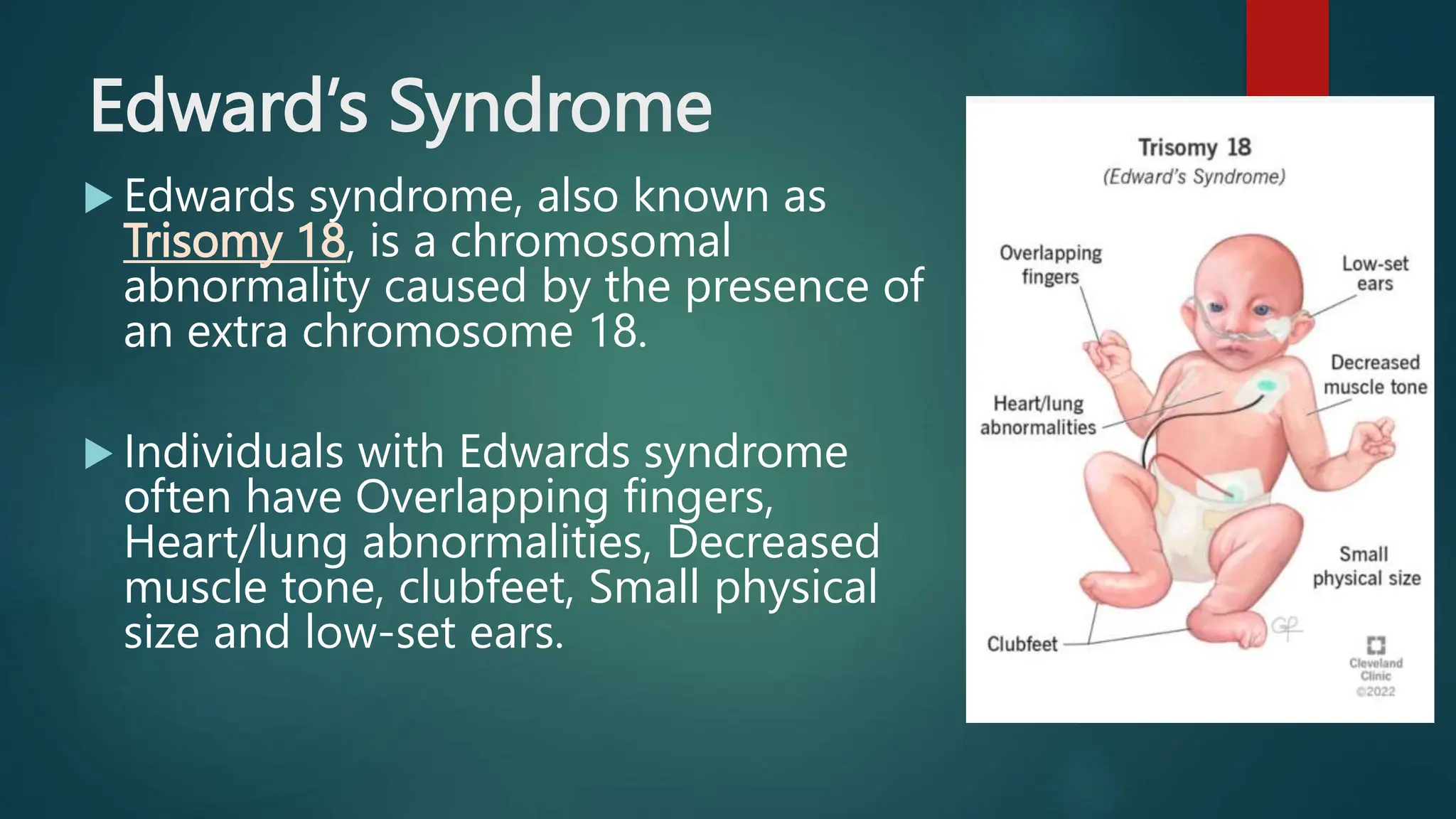
 Edwards syndrome, also known as
Trisomy 18, is a chromosomal
abnormality caused by the presence of
an extra chromosome 18.
 Individuals with Edwards syndrome
often have Overlapping fingers,
Heart/lung abnormalities, Decreased
muscle tone, clubfeet, Small physical
size and low-set ears.
Edward’s Syndrome
 All humans have 46 chromosomes that divide into 23 pairs.
Chromosomes carry your DNA in cells, which tells your body how
to form and function as it’s instruction manual.
 When cells form, they start in reproductive organs as one fertilized
cell ( sperm in males and eggs in females ). Cells divide ( meiosis )
to create pairs by copying themselves. The cell’s copy contains half
the amount of DNA as the original cell, 23 chromosomes from 46,
and each chromosome pair has a number.
Edward’s Syndrome
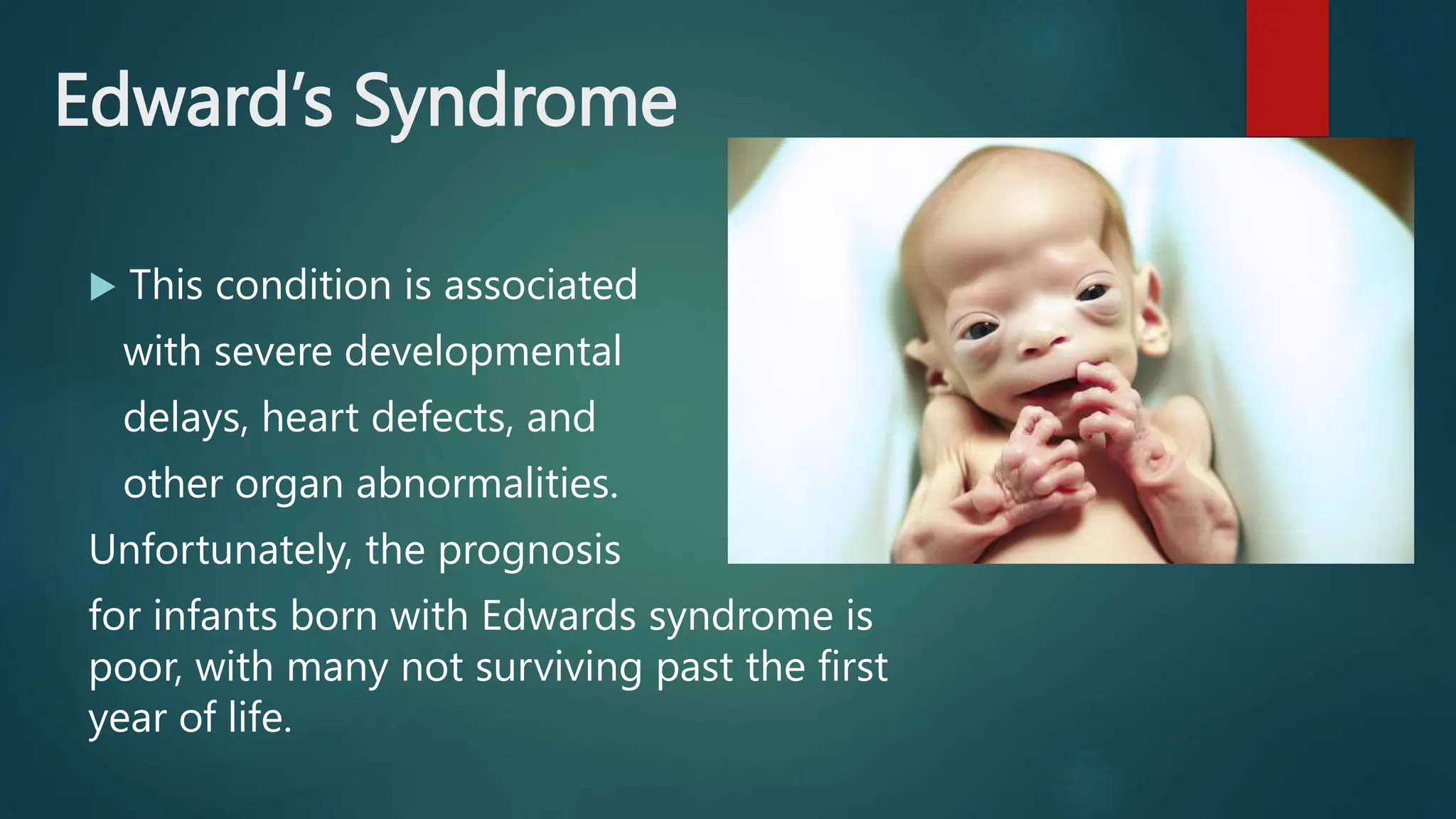
 This condition is associated
with severe developmental
delays, heart defects, and
other organ abnormalities.
Unfortunately, the prognosis
for infants born with Edwards syndrome is
poor, with many not surviving past the first
year of life.
Edward’s Syndrome
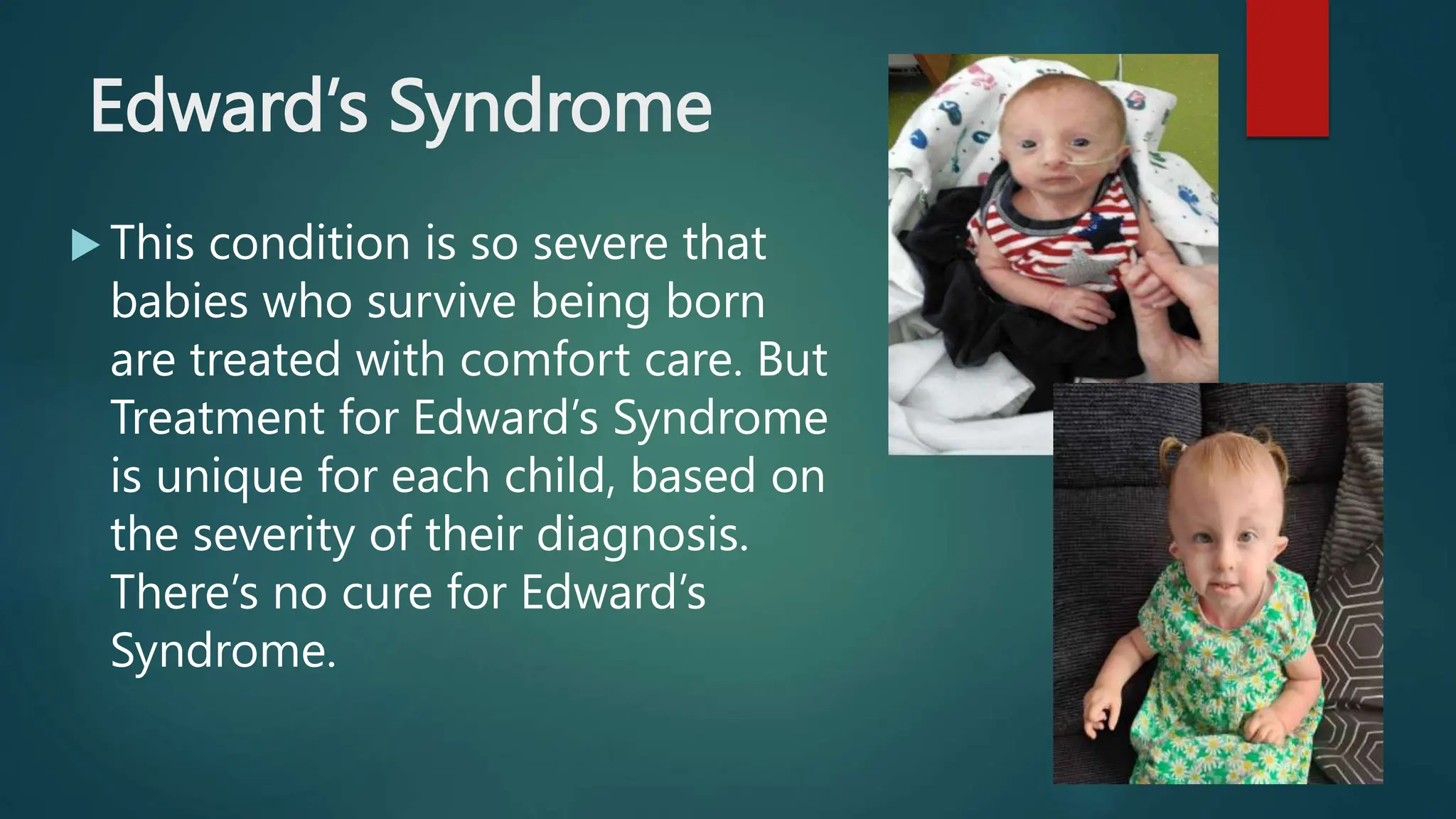
 This condition is so severe that
babies who survive being born
are treated with comfort care. But
Treatment for Edward’s Syndrome
is unique for each child, based on
the severity of their diagnosis.
There’s no cure for Edward’s
Syndrome.
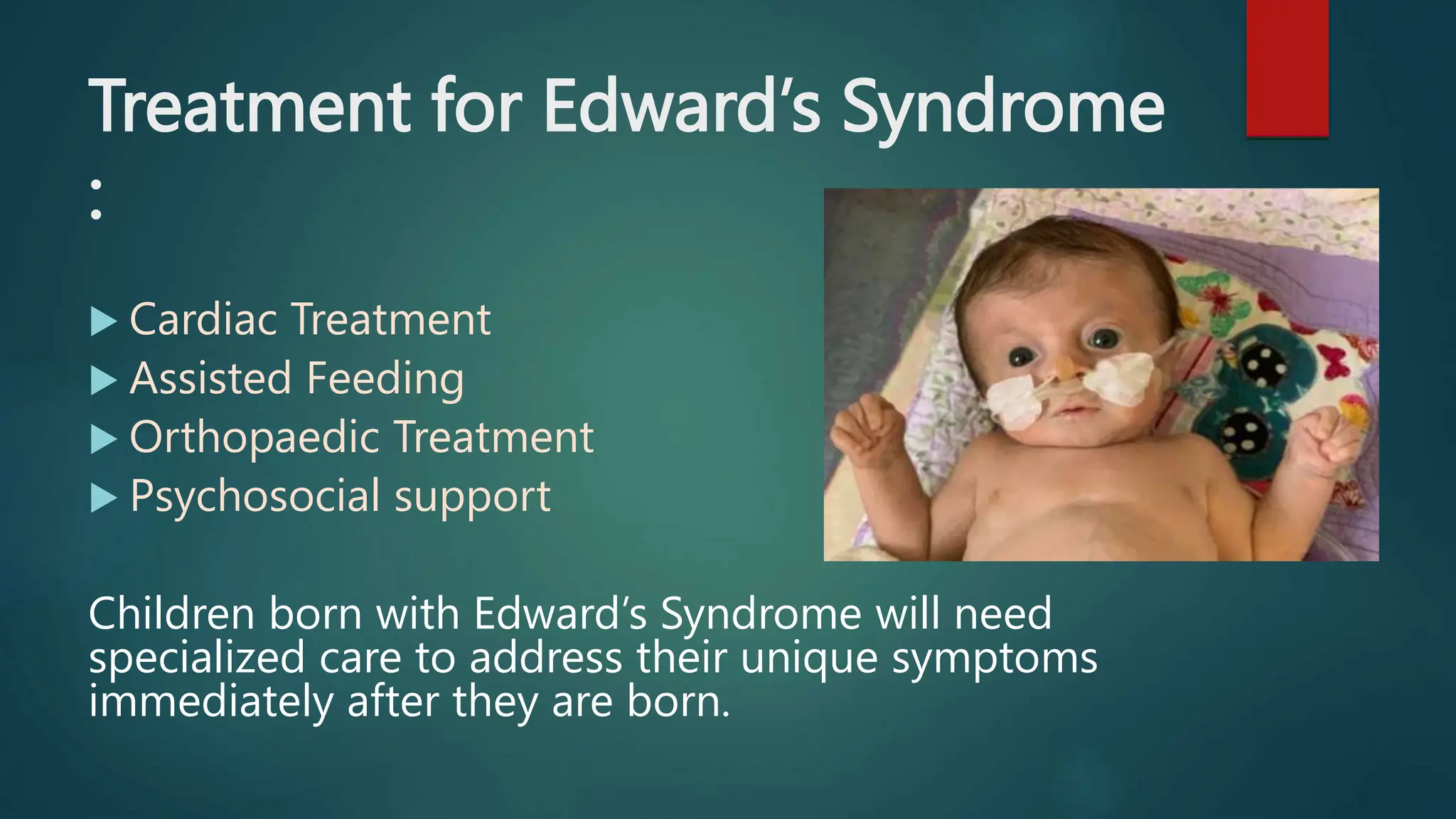
Treatment for Edward’s Syndrome
:
 Cardiac Treatment
 Assisted Feeding
 Orthopaedic Treatment
 Psychosocial support
Children born with Edward’s Syndrome will need
specialized care to address their unique symptoms
immediately after they are born.
Edward’s Syndrome
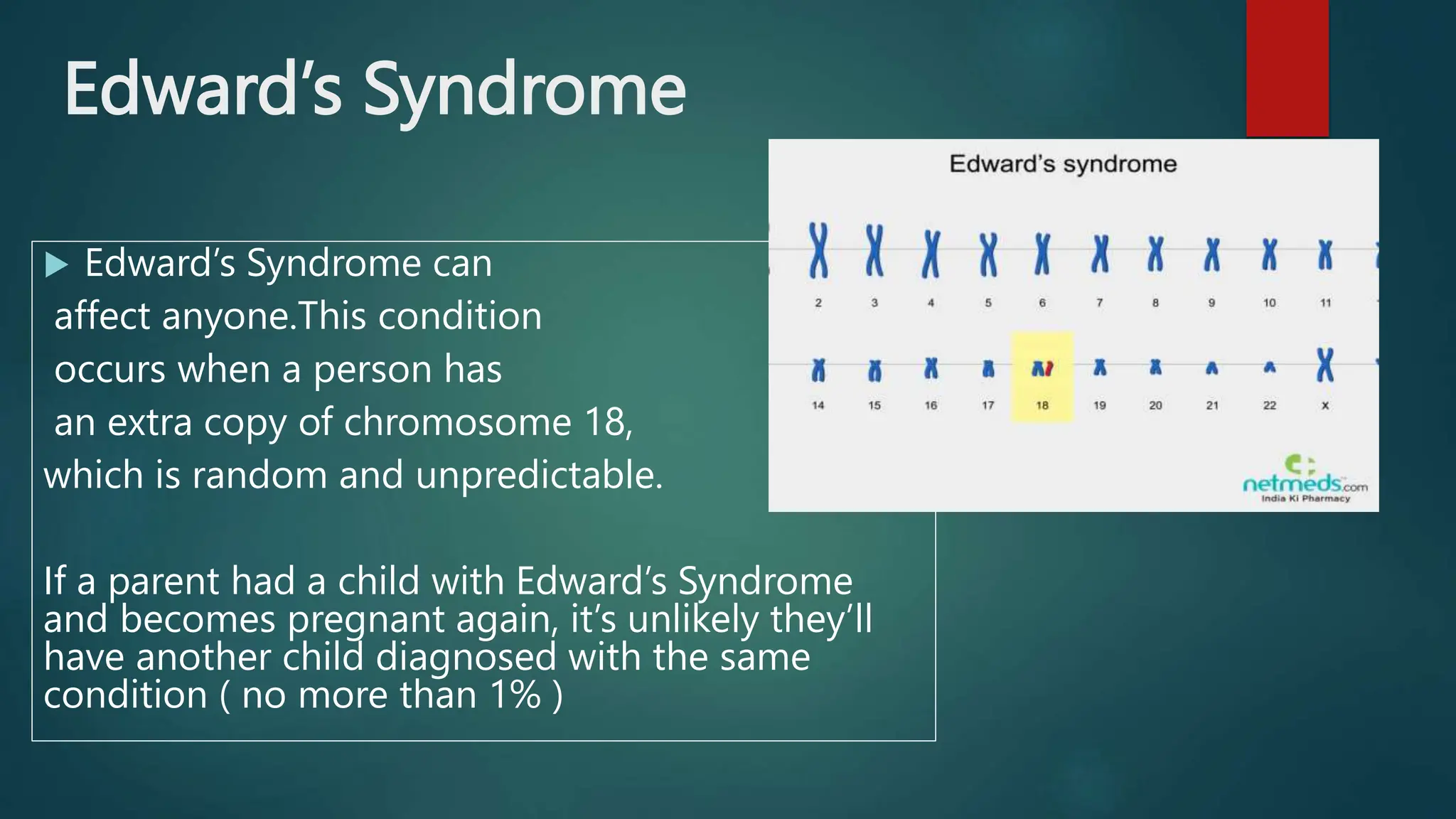
 Edward’s Syndrome can
affect anyone.This condition
occurs when a person has
an extra copy of chromosome 18,
which is random and unpredictable.
If a parent had a child with Edward’s Syndrome
and becomes pregnant again, it’s unlikely they’ll
have another child diagnosed with the same
condition ( no more than 1% )
Edward’s Syndrome
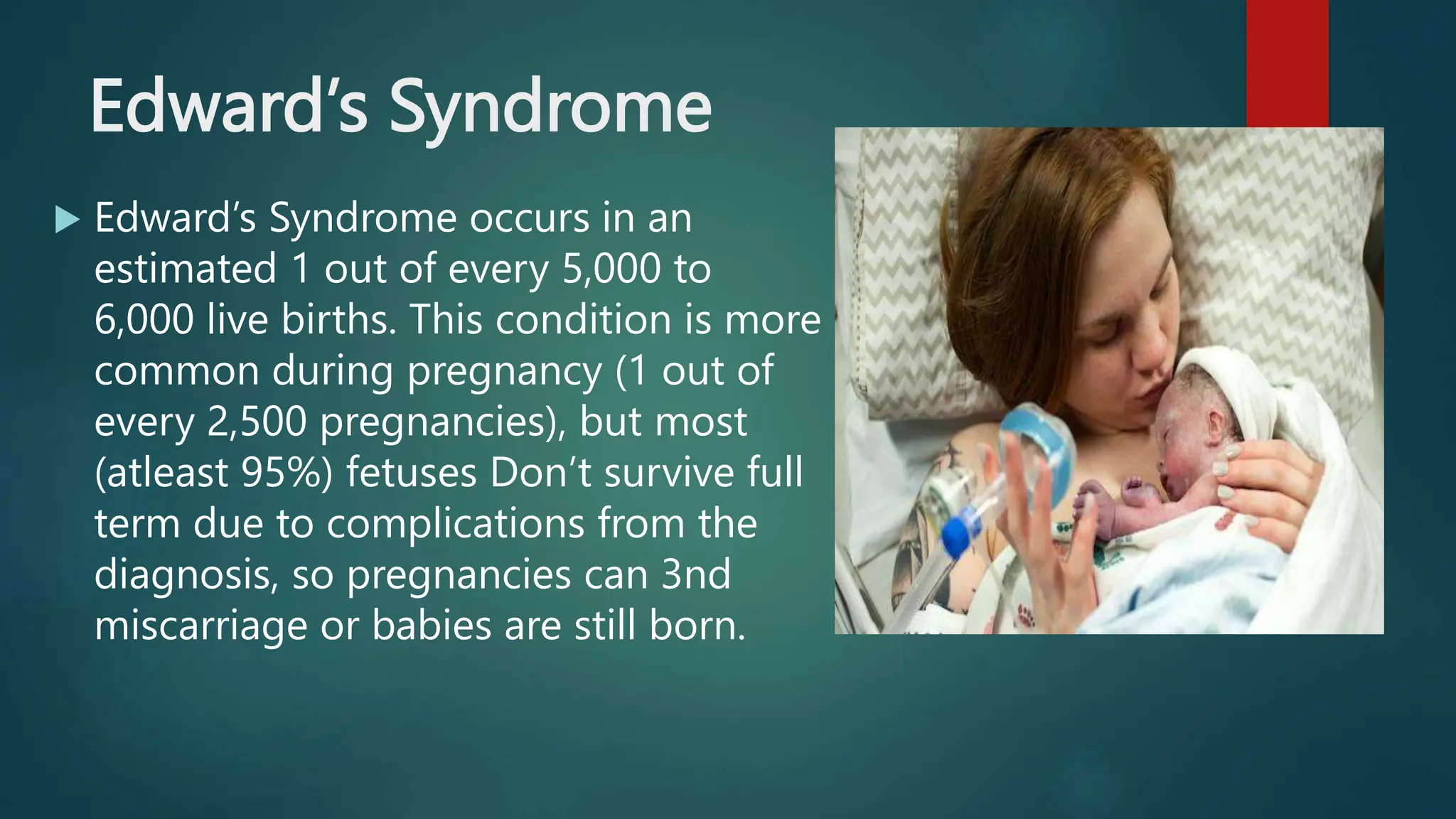
 Edward’s Syndrome occurs in an
estimated 1 out of every 5,000 to
6,000 live births. This condition is more
common during pregnancy (1 out of
every 2,500 pregnancies), but most
(atleast 95%) fetuses Don’t survive full
term due to complications from the
diagnosis, so pregnancies can 3nd
miscarriage or babies are still born.
Edward’s Syndrome
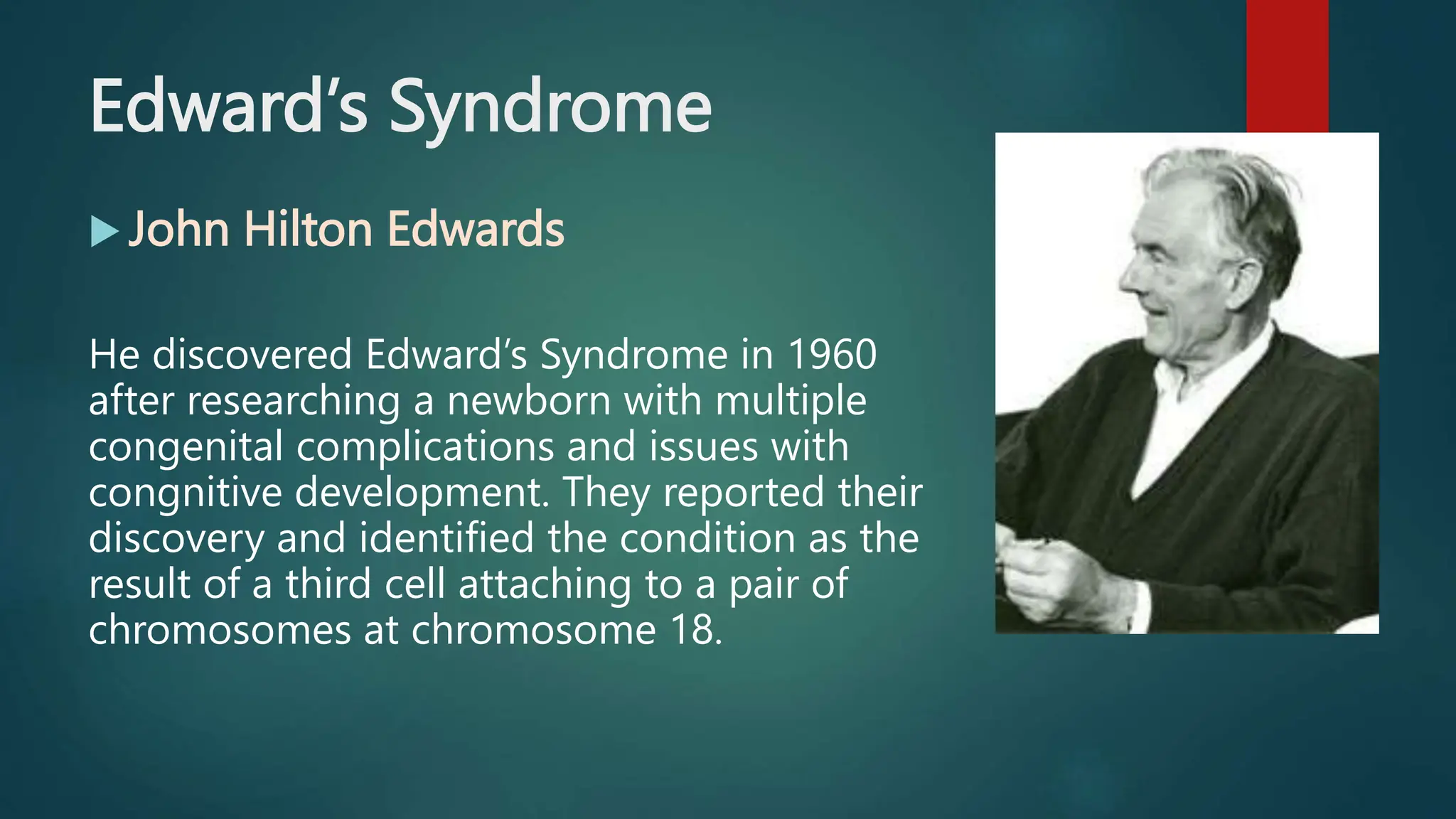
 John Hilton Edwards
He discovered Edward’s Syndrome in 1960
after researching a newborn with multiple
congenital complications and issues with
congnitive development. They reported their
discovery and identified the condition as the
result of a third cell attaching to a pair of
chromosomes at chromosome 18.
END
QUIZ 1-10
1. Edward’s Syndrome is also known as _______.
2. This condition occurs when a person has an extra copy of
chromosome 18.
3. Edward’s Syndrome can affect who?
4. He discovered Edward’s Syndrome.
5. All humans have ________ Chromosomes that divide into 23 pairs.
6. The Edward’s Syndrome discovered in what year?
7. 7-10 4 Treatment for Edward’s Syndrome.

Edwards-Syndrome trisomy 18 presentation

  • 1.
  • 2.
    Edward’s Syndrome  Edwardssyndrome, also known as Trisomy 18, is a chromosomal abnormality caused by the presence of an extra chromosome 18.  Individuals with Edwards syndrome often have Overlapping fingers, Heart/lung abnormalities, Decreased muscle tone, clubfeet, Small physical size and low-set ears.
  • 3.
    Edward’s Syndrome  Allhumans have 46 chromosomes that divide into 23 pairs. Chromosomes carry your DNA in cells, which tells your body how to form and function as it’s instruction manual.  When cells form, they start in reproductive organs as one fertilized cell ( sperm in males and eggs in females ). Cells divide ( meiosis ) to create pairs by copying themselves. The cell’s copy contains half the amount of DNA as the original cell, 23 chromosomes from 46, and each chromosome pair has a number.
  • 4.
    Edward’s Syndrome  Thiscondition is associated with severe developmental delays, heart defects, and other organ abnormalities. Unfortunately, the prognosis for infants born with Edwards syndrome is poor, with many not surviving past the first year of life.
  • 5.
    Edward’s Syndrome  Thiscondition is so severe that babies who survive being born are treated with comfort care. But Treatment for Edward’s Syndrome is unique for each child, based on the severity of their diagnosis. There’s no cure for Edward’s Syndrome.
  • 6.
    Treatment for Edward’sSyndrome :  Cardiac Treatment  Assisted Feeding  Orthopaedic Treatment  Psychosocial support Children born with Edward’s Syndrome will need specialized care to address their unique symptoms immediately after they are born.
  • 7.
    Edward’s Syndrome  Edward’sSyndrome can affect anyone.This condition occurs when a person has an extra copy of chromosome 18, which is random and unpredictable. If a parent had a child with Edward’s Syndrome and becomes pregnant again, it’s unlikely they’ll have another child diagnosed with the same condition ( no more than 1% )
  • 8.
    Edward’s Syndrome  Edward’sSyndrome occurs in an estimated 1 out of every 5,000 to 6,000 live births. This condition is more common during pregnancy (1 out of every 2,500 pregnancies), but most (atleast 95%) fetuses Don’t survive full term due to complications from the diagnosis, so pregnancies can 3nd miscarriage or babies are still born.
  • 9.
    Edward’s Syndrome  JohnHilton Edwards He discovered Edward’s Syndrome in 1960 after researching a newborn with multiple congenital complications and issues with congnitive development. They reported their discovery and identified the condition as the result of a third cell attaching to a pair of chromosomes at chromosome 18.
  • 10.
  • 11.
    QUIZ 1-10 1. Edward’sSyndrome is also known as _______. 2. This condition occurs when a person has an extra copy of chromosome 18. 3. Edward’s Syndrome can affect who? 4. He discovered Edward’s Syndrome. 5. All humans have ________ Chromosomes that divide into 23 pairs. 6. The Edward’s Syndrome discovered in what year? 7. 7-10 4 Treatment for Edward’s Syndrome.