Why a new kind of planning become
necessary?

1) Wasteful imbalances within the educational system
2)Demand far in excess of capacity
3)Costs rising faster than revenues
4)Non-financial bottlenecks
5)Not enough jobs for the educated
6)The wrong kind of education
WASTEFUL IMBALANCES WITHIN THE
EDUCATIONAL SYSTEM
Necessary flows of components such as
teachers, buildings, equipment, textbooks, etc.
were not carefully projected, scheduled and
programmed.
DEMAND FAR IN EXCESS OF CAPACITY
The setting of bold targets, the making of large
promises, and the very expansion of education fired
an increase in popular expectations and educational
demand that fed on itself and soon go out of hand.
COSTS RISING FASTER THAN REVENUES
Enormous popular demand was an effective political
pressure for boosting education budgets, however the
budgets could not possible keep pace with the rising
costs and student numbers.
Three possible escapes
1st

One has to cut back the initial targets

2nd

One has to cut costs by raising educational efficiency

3rd

One has to spread available resources thinner over
more and more students
NON-FINANCIAL BOTTLENECKS
• Shortage plagued in educational development
a) the limited administrative abilities of educational systems
to plan and to transform plans and money into desired
results
b) the long time required to recruit and develop competent
staffs for new schools and universities
c) the limited capacity of local construction industries
NOT ENOUGH JOBS FOR THE EDUCATED
The employment market pendulum had swung sooner and
more abruptly than even the manpower experts had
anticipated. In a small and simple economy it does not take a
very large shift in the numbers to produce a major change in
the employment market balance---and a traumatic shock for
many students and their families.
After a few years of educational
„production lag‟, relatively large
numbers of graduates began to
come on to the market.
Simultaneously, many who had
gone abroad to study were now
returning with degrees.

The vacant government posts by
now had been largely filled by the
best qualified people available at
the time, even though their
qualifications often fell well below
the official norms, and below those
of the newly educated who would
later come on to the market.
WRONG KIND OF EDUCATION
th
20

„Imported
century education‟ as
being ill-suited to the needs of poor
nations
trying
to
modernize
themselves.
It was doubtful if even a more „modern‟ type
of education designed to fit young people for
a modern job and city life was the right
education for the great majority of
youngsters who were destined to live out
their lives in rural areas.
Instead of conditioning them for leadership
in rural and agricultural development, which
was indispensable to over-all national
development, it would tend to alienate them
from their rural surroundings.
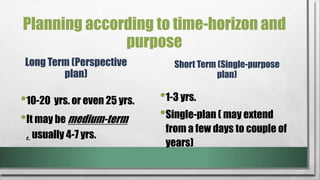
Planning according to time-horizon and
purpose
Long Term (Perspective
plan)

•10-20 yrs. or even 25 yrs.
•It may be medium-term
, usually 4-7 yrs.

Short Term (Single-purpose
plan)

•1-3 yrs.
•Single-plan ( may extend

from a few days to couple of
years)
MEDIUM-TERM PLANS
ADVANTAGES

PURPOSE

• Prepared against the back-drop of • To prepare on rolling basis, that
a long term perspective plan, have
operationally proved to be the
most efficient.

• Define the goals and targets with
greater clarity and provide a
definite basis for action.

is extending the plan by one
year at a time and revising the
targets
according
to
implementation experience.
Thus, a country
which prepares 5year plans will
produce a “rolling
plan” every year in
this following
manner:

(a)2010-2014
(b)2011-2015
(c)2012-2016
(d)2013-2017
(e)2014-2018
SHORT-TERM PLANNING

SINGLE-PURPOSE PLANNING

• Needs to be adopted only as an • Usefully
inevitable alternative to mediumterm planning and that, too, on an
emergency basis.

• “rolling

plans” has eliminated
the need for short-term planning
in most cases.

adopted
when
a
particular
objective
like
implementing
a
reform
measure, building an institution
or piloting legislation is to be
achieved.
Florencio Arica Jr. notes that whatever the
time horizon of an education plan, the
function of preparing is characterized by:

(A) An attempt to bring about a balanced development of all
sectors of the educational system as well as learning

opportunities provided outside the system;
(b) The correlation of the educational effort with the national
policy for economic and social development;
(c) An effort to coordinate quantitative expansion with

qualitative improvements in structure, content and methods;
(d) The determination to ensure that the investment in
education brings good dividends both to the society and
the individual.
~ END OF REPORT~
Being busy does not always mean real work. The object of all
work is production or accomplishment and to either of these
ends there must be
forethought, system, planning, intelligence, and honest
purpose, as well as perspiration. Seeming to do is not doing.
Thomas A. Edison

Educational Planning Report

  • 2.
    Why a newkind of planning become necessary? 1) Wasteful imbalances within the educational system 2)Demand far in excess of capacity 3)Costs rising faster than revenues 4)Non-financial bottlenecks 5)Not enough jobs for the educated 6)The wrong kind of education
  • 3.
    WASTEFUL IMBALANCES WITHINTHE EDUCATIONAL SYSTEM Necessary flows of components such as teachers, buildings, equipment, textbooks, etc. were not carefully projected, scheduled and programmed.
  • 4.
    DEMAND FAR INEXCESS OF CAPACITY The setting of bold targets, the making of large promises, and the very expansion of education fired an increase in popular expectations and educational demand that fed on itself and soon go out of hand.
  • 5.
    COSTS RISING FASTERTHAN REVENUES Enormous popular demand was an effective political pressure for boosting education budgets, however the budgets could not possible keep pace with the rising costs and student numbers.
  • 6.
    Three possible escapes 1st Onehas to cut back the initial targets 2nd One has to cut costs by raising educational efficiency 3rd One has to spread available resources thinner over more and more students
  • 7.
    NON-FINANCIAL BOTTLENECKS • Shortageplagued in educational development a) the limited administrative abilities of educational systems to plan and to transform plans and money into desired results b) the long time required to recruit and develop competent staffs for new schools and universities c) the limited capacity of local construction industries
  • 8.
    NOT ENOUGH JOBSFOR THE EDUCATED The employment market pendulum had swung sooner and more abruptly than even the manpower experts had anticipated. In a small and simple economy it does not take a very large shift in the numbers to produce a major change in the employment market balance---and a traumatic shock for many students and their families.
  • 9.
    After a fewyears of educational „production lag‟, relatively large numbers of graduates began to come on to the market. Simultaneously, many who had gone abroad to study were now returning with degrees. The vacant government posts by now had been largely filled by the best qualified people available at the time, even though their qualifications often fell well below the official norms, and below those of the newly educated who would later come on to the market.
  • 10.
    WRONG KIND OFEDUCATION th 20 „Imported century education‟ as being ill-suited to the needs of poor nations trying to modernize themselves.
  • 11.
    It was doubtfulif even a more „modern‟ type of education designed to fit young people for a modern job and city life was the right education for the great majority of youngsters who were destined to live out their lives in rural areas.
  • 12.
    Instead of conditioningthem for leadership in rural and agricultural development, which was indispensable to over-all national development, it would tend to alienate them from their rural surroundings.
  • 14.
    Planning according totime-horizon and purpose Long Term (Perspective plan) •10-20 yrs. or even 25 yrs. •It may be medium-term , usually 4-7 yrs. Short Term (Single-purpose plan) •1-3 yrs. •Single-plan ( may extend from a few days to couple of years)
  • 15.
    MEDIUM-TERM PLANS ADVANTAGES PURPOSE • Preparedagainst the back-drop of • To prepare on rolling basis, that a long term perspective plan, have operationally proved to be the most efficient. • Define the goals and targets with greater clarity and provide a definite basis for action. is extending the plan by one year at a time and revising the targets according to implementation experience.
  • 16.
    Thus, a country whichprepares 5year plans will produce a “rolling plan” every year in this following manner: (a)2010-2014 (b)2011-2015 (c)2012-2016 (d)2013-2017 (e)2014-2018
  • 17.
    SHORT-TERM PLANNING SINGLE-PURPOSE PLANNING •Needs to be adopted only as an • Usefully inevitable alternative to mediumterm planning and that, too, on an emergency basis. • “rolling plans” has eliminated the need for short-term planning in most cases. adopted when a particular objective like implementing a reform measure, building an institution or piloting legislation is to be achieved.
  • 18.
    Florencio Arica Jr.notes that whatever the time horizon of an education plan, the function of preparing is characterized by: (A) An attempt to bring about a balanced development of all sectors of the educational system as well as learning opportunities provided outside the system;
  • 19.
    (b) The correlationof the educational effort with the national policy for economic and social development; (c) An effort to coordinate quantitative expansion with qualitative improvements in structure, content and methods; (d) The determination to ensure that the investment in education brings good dividends both to the society and the individual.
  • 20.
    ~ END OFREPORT~ Being busy does not always mean real work. The object of all work is production or accomplishment and to either of these ends there must be forethought, system, planning, intelligence, and honest purpose, as well as perspiration. Seeming to do is not doing. Thomas A. Edison