WHAT? THERE ARE VOLCANOES IN ORANGE
COUNTY?
ORANGE COUNTY VOLCANOES UNIT: MS. MADDOX’S 7TH GRADE SCIENCE CLASS
1
LEARNING STANDARDS AND OBJECTIVES
 CA Content Standard:
 NGSS MS-ESS2-3 Earth's Systems: Analyze and interpret data on the distribution of fossils
and rocks, continental shapes, and seafloor structures to provide evidence of the past plate
motions. Examples of data include similarities of rock and fossil types on different continents,
the shapes of the continents (including continental shelves), and the locations of ocean
structures (such as ridges, fracture zones, and trenches.)
 Lesson Objectives:
 Introduce the material that will be covered in the Orange County Volcanoes unit
 Understand the past plate movements affecting the Santa Ana Mountains
 Explain the type of past plate motions that created the Santiago Peak Volcanics
 Interpret data about the distribution of rocks as evidence of past plate motions
2
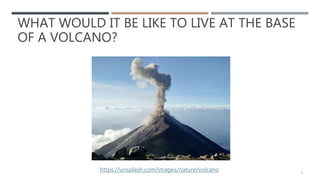
WHAT WOULD IT BE LIKE TO LIVE AT THE BASE
OF A VOLCANO?
3
https://unsplash.com/images/nature/volcano
WELL GUESS WHAT, YOU DO! SORT OF….
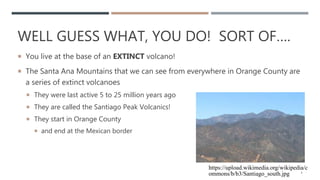
 You live at the base of an EXTINCT volcano!
 The Santa Ana Mountains that we can see from everywhere in Orange County are
a series of extinct volcanoes
 They were last active 5 to 25 million years ago
 They are called the Santiago Peak Volcanics!
 They start in Orange County
 and end at the Mexican border
4
https://upload.wikimedia.org/wikipedia/c
ommons/b/b3/Santiago_south.jpg
NOW YOU TRY!
 If Santiago Peak is now extinct, does that mean that the ground under us right
now is not moving?
 Defend your answer!
5
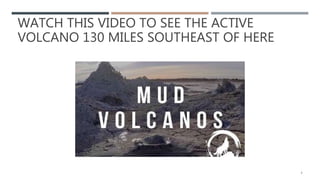
WATCH THIS VIDEO TO SEE THE ACTIVE
VOLCANO 130 MILES SOUTHEAST OF HERE
6
NOW YOU TRY
 So the Earth under California is still active! How can that be?
7
THE ANSWER IS PAST PLATE MOTIONS!
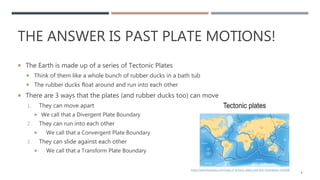
 The Earth is made up of a series of Tectonic Plates
 Think of them like a whole bunch of rubber ducks in a bath tub
 The rubber ducks float around and run into each other
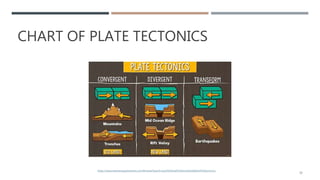
 There are 3 ways that the plates (and rubber ducks too) can move
1. They can move apart
 We call that a Divergent Plate Boundary
2. They can run into each other
 We call that a Convergent Plate Boundary
3. They can slide against each other
 We call that a Transform Plate Boundary
8
https://www.thoughtco.com/map-of-tectonic-plates-and-their-boundaries-1441098
HOW DID OUR EXTINCT VOLCANOES
FORM?
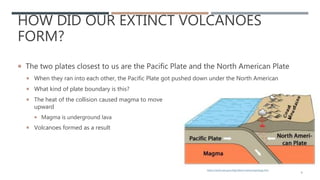
 The two plates closest to us are the Pacific Plate and the North American Plate
 When they ran into each other, the Pacific Plate got pushed down under the North American
 What kind of plate boundary is this?
 The heat of the collision caused magma to move
upward
 Magma is underground lava
 Volcanoes formed as a result
9
https://www.nps.gov/klgo/learn/nature/geology.htm
CHART OF PLATE TECTONICS
10
https://www.teacherspayteachers.com/Browse/Search:word%20wall%20words%20plate%20tectonics
NOW YOU TRY
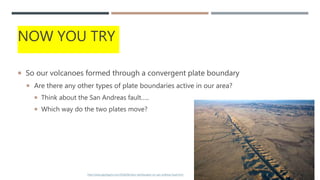
 So our volcanoes formed through a convergent plate boundary
 Are there any other types of plate boundaries active in our area?
 Think about the San Andreas fault…..
 Which way do the two plates move?
11
http://www.geologyin.com/2018/06/slow-earthquakes-on-san-andreas-fault.html
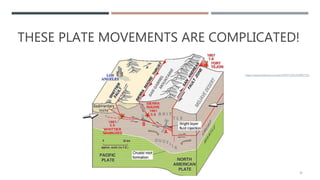
THESE PLATE MOVEMENTS ARE COMPLICATED!
12
https://www.pinterest.com/pin/359373245250985752/
WHAT HAPPENED TO THE SANTIAGO PEAK
VOLCANO?
 Answer: It weathered and eroded over time
 Over millions of years, wind and rain caused the rock to be broken down
 It was ground into small particles that eventually turned into sand
 Rain water carried it down the mountain
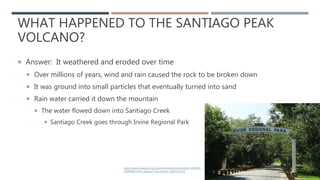
 The water flowed down into Santiago Creek
 Santiago Creek goes through Irvine Regional Park
13
https://www.tripadvisor.ca/LocationPhotoDirectLink-g32825-d269435-
i45950668-Irvine_Regional_Park-Orange_California.html
THE SAND FROM SANTIAGO PEAK
 Geologists can analyze the Santiago Creek sand to learn more about our extinct
Santiago Peak volcano!
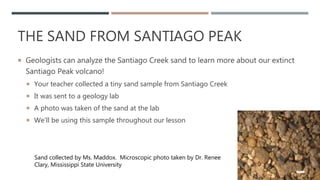
 Your teacher collected a tiny sand sample from Santiago Creek
 It was sent to a geology lab
 A photo was taken of the sand at the lab
 We’ll be using this sample throughout our lesson
14
Sand collected by Ms. Maddox. Microscopic photo taken by Dr. Renee
Clary, Mississippi State University
NOW YOU TRY: CULMINATING QUESTION
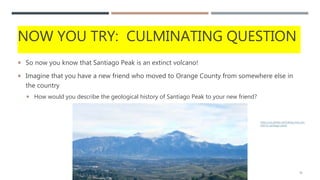
 So now you know that Santiago Peak is an extinct volcano!
 Imagine that you have a new friend who moved to Orange County from somewhere else in
the country
 How would you describe the geological history of Santiago Peak to your new friend?
15
https://socalhiker.net/hiking-holy-jim-
trail-to-santiago-peak/

Edsc 304 lecture

  • 1.
    WHAT? THERE AREVOLCANOES IN ORANGE COUNTY? ORANGE COUNTY VOLCANOES UNIT: MS. MADDOX’S 7TH GRADE SCIENCE CLASS 1
  • 2.
    LEARNING STANDARDS ANDOBJECTIVES  CA Content Standard:  NGSS MS-ESS2-3 Earth's Systems: Analyze and interpret data on the distribution of fossils and rocks, continental shapes, and seafloor structures to provide evidence of the past plate motions. Examples of data include similarities of rock and fossil types on different continents, the shapes of the continents (including continental shelves), and the locations of ocean structures (such as ridges, fracture zones, and trenches.)  Lesson Objectives:  Introduce the material that will be covered in the Orange County Volcanoes unit  Understand the past plate movements affecting the Santa Ana Mountains  Explain the type of past plate motions that created the Santiago Peak Volcanics  Interpret data about the distribution of rocks as evidence of past plate motions 2
  • 3.
    WHAT WOULD ITBE LIKE TO LIVE AT THE BASE OF A VOLCANO? 3 https://unsplash.com/images/nature/volcano
  • 4.
    WELL GUESS WHAT,YOU DO! SORT OF….  You live at the base of an EXTINCT volcano!  The Santa Ana Mountains that we can see from everywhere in Orange County are a series of extinct volcanoes  They were last active 5 to 25 million years ago  They are called the Santiago Peak Volcanics!  They start in Orange County  and end at the Mexican border 4 https://upload.wikimedia.org/wikipedia/c ommons/b/b3/Santiago_south.jpg
  • 5.
    NOW YOU TRY! If Santiago Peak is now extinct, does that mean that the ground under us right now is not moving?  Defend your answer! 5
  • 6.
    WATCH THIS VIDEOTO SEE THE ACTIVE VOLCANO 130 MILES SOUTHEAST OF HERE 6
  • 7.
    NOW YOU TRY So the Earth under California is still active! How can that be? 7
  • 8.
    THE ANSWER ISPAST PLATE MOTIONS!  The Earth is made up of a series of Tectonic Plates  Think of them like a whole bunch of rubber ducks in a bath tub  The rubber ducks float around and run into each other  There are 3 ways that the plates (and rubber ducks too) can move 1. They can move apart  We call that a Divergent Plate Boundary 2. They can run into each other  We call that a Convergent Plate Boundary 3. They can slide against each other  We call that a Transform Plate Boundary 8 https://www.thoughtco.com/map-of-tectonic-plates-and-their-boundaries-1441098
  • 9.
    HOW DID OUREXTINCT VOLCANOES FORM?  The two plates closest to us are the Pacific Plate and the North American Plate  When they ran into each other, the Pacific Plate got pushed down under the North American  What kind of plate boundary is this?  The heat of the collision caused magma to move upward  Magma is underground lava  Volcanoes formed as a result 9 https://www.nps.gov/klgo/learn/nature/geology.htm
  • 10.
    CHART OF PLATETECTONICS 10 https://www.teacherspayteachers.com/Browse/Search:word%20wall%20words%20plate%20tectonics
  • 11.
    NOW YOU TRY So our volcanoes formed through a convergent plate boundary  Are there any other types of plate boundaries active in our area?  Think about the San Andreas fault…..  Which way do the two plates move? 11 http://www.geologyin.com/2018/06/slow-earthquakes-on-san-andreas-fault.html
  • 12.
    THESE PLATE MOVEMENTSARE COMPLICATED! 12 https://www.pinterest.com/pin/359373245250985752/
  • 13.
    WHAT HAPPENED TOTHE SANTIAGO PEAK VOLCANO?  Answer: It weathered and eroded over time  Over millions of years, wind and rain caused the rock to be broken down  It was ground into small particles that eventually turned into sand  Rain water carried it down the mountain  The water flowed down into Santiago Creek  Santiago Creek goes through Irvine Regional Park 13 https://www.tripadvisor.ca/LocationPhotoDirectLink-g32825-d269435- i45950668-Irvine_Regional_Park-Orange_California.html
  • 14.
    THE SAND FROMSANTIAGO PEAK  Geologists can analyze the Santiago Creek sand to learn more about our extinct Santiago Peak volcano!  Your teacher collected a tiny sand sample from Santiago Creek  It was sent to a geology lab  A photo was taken of the sand at the lab  We’ll be using this sample throughout our lesson 14 Sand collected by Ms. Maddox. Microscopic photo taken by Dr. Renee Clary, Mississippi State University
  • 15.
    NOW YOU TRY:CULMINATING QUESTION  So now you know that Santiago Peak is an extinct volcano!  Imagine that you have a new friend who moved to Orange County from somewhere else in the country  How would you describe the geological history of Santiago Peak to your new friend? 15 https://socalhiker.net/hiking-holy-jim- trail-to-santiago-peak/