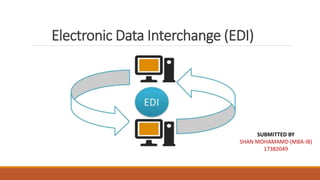
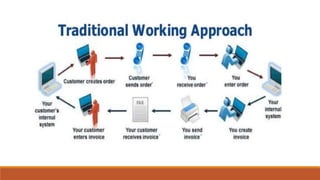
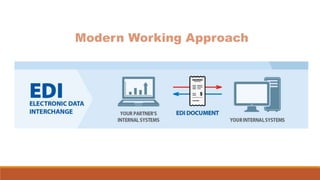
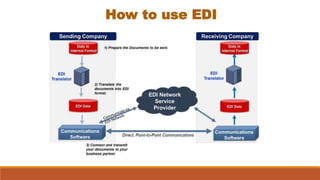
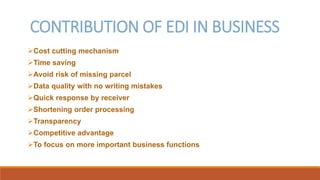
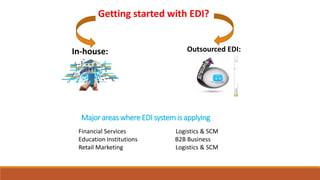
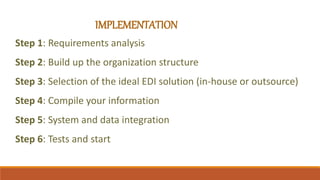
Electronic Data Interchange (EDI) allows businesses to exchange standard business documents like orders and invoices electronically. EDI cuts costs and saves time by avoiding errors and speeding up processes like order fulfillment. It provides benefits like cost savings, time savings, improved data quality, and competitive advantages. Implementing EDI involves analyzing requirements, selecting an in-house or outsourced solution, compiling information, integrating systems and data, and testing the system before use. Leading companies offer EDI solutions to facilitate electronic business document exchange between organizations.





![Electronic data interchange_Project[1][1].pptx](https://cdn.slidesharecdn.com/ss_thumbnails/manojitttrainingproject11-250716042210-6f318242-thumbnail.jpg?width=640&height=640&fit=bounds)
![Electronic data interchange_Project[1][1].pptx](https://cdn.slidesharecdn.com/ss_thumbnails/manojitttrainingproject11-250716041723-58602a1e-thumbnail.jpg?width=640&height=640&fit=bounds)


