Downloaded 63 times


![Some basic
Photo by O C Always [link]
concepts](https://image.slidesharecdn.com/ed-batista-touchy-feely-class-1-beginnings-slideshare-160323022929/85/Ed-Batista-Interpersonal-Dynamics-Class-1-Beginnings-4-320.jpg)


![When you do [X], I feel [Y].
The simplest
feedback model](https://image.slidesharecdn.com/ed-batista-touchy-feely-class-1-beginnings-slideshare-160323022929/85/Ed-Batista-Interpersonal-Dynamics-Class-1-Beginnings-22-320.jpg)
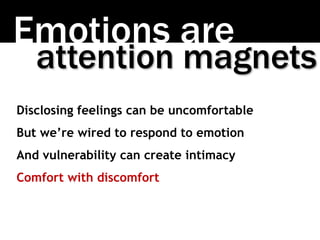
![Emotions are
attention magnets
Photo by Garrett Mace [link]](https://image.slidesharecdn.com/ed-batista-touchy-feely-class-1-beginnings-slideshare-160323022929/85/Ed-Batista-Interpersonal-Dynamics-Class-1-Beginnings-23-320.jpg)
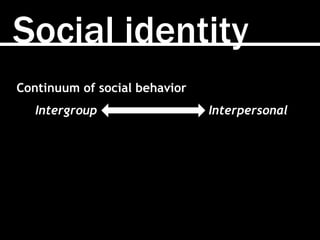
![Intergroup
Photo by U.S. Army [link]](https://image.slidesharecdn.com/ed-batista-touchy-feely-class-1-beginnings-slideshare-160323022929/85/Ed-Batista-Interpersonal-Dynamics-Class-1-Beginnings-29-320.jpg)
![Intergroup
Photo by Neon Tommy [link]](https://image.slidesharecdn.com/ed-batista-touchy-feely-class-1-beginnings-slideshare-160323022929/85/Ed-Batista-Interpersonal-Dynamics-Class-1-Beginnings-30-320.jpg)
![Interpersonal
Photo by Tania Cataldo [link]](https://image.slidesharecdn.com/ed-batista-touchy-feely-class-1-beginnings-slideshare-160323022929/85/Ed-Batista-Interpersonal-Dynamics-Class-1-Beginnings-31-320.jpg)
![It’s usually both
Photo by Anne Worner [link]](https://image.slidesharecdn.com/ed-batista-touchy-feely-class-1-beginnings-slideshare-160323022929/85/Ed-Batista-Interpersonal-Dynamics-Class-1-Beginnings-32-320.jpg)
![Some (more)
Photo by O C Always [link]
basic concepts](https://image.slidesharecdn.com/ed-batista-touchy-feely-class-1-beginnings-slideshare-160323022929/85/Ed-Batista-Interpersonal-Dynamics-Class-1-Beginnings-34-320.jpg)
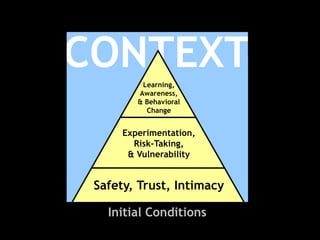
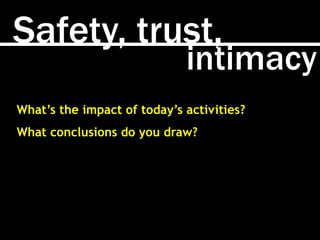
![Safety, trust,
Photo by Carly Lesser & Art Drauglis [link]
intimacy](https://image.slidesharecdn.com/ed-batista-touchy-feely-class-1-beginnings-slideshare-160323022929/85/Ed-Batista-Interpersonal-Dynamics-Class-1-Beginnings-35-320.jpg)
![How we learn
Conceptual learning is important…[and] has
severe limitations when you want to learn
about how you interact with others and how
they interact with you.
~Interpersonal Dynamics Reader](https://image.slidesharecdn.com/ed-batista-touchy-feely-class-1-beginnings-slideshare-160323022929/85/Ed-Batista-Interpersonal-Dynamics-Class-1-Beginnings-40-320.jpg)

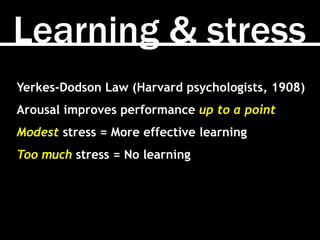
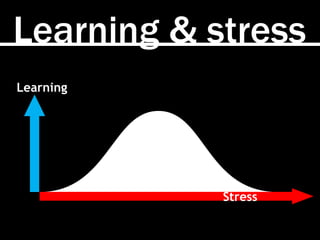
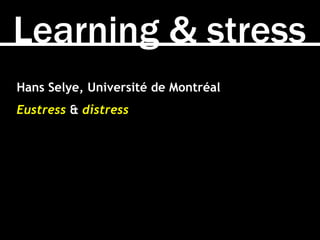
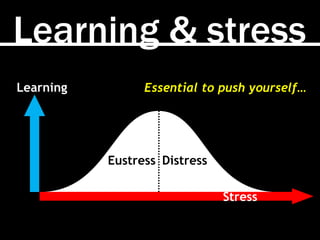
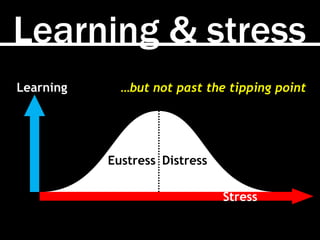
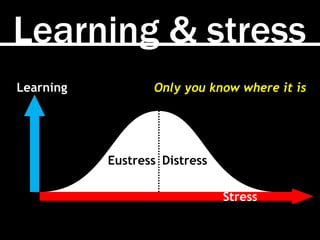
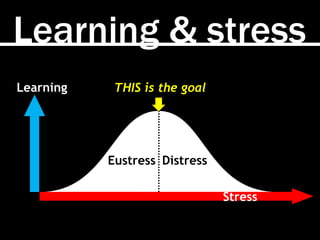
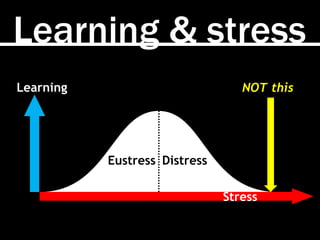
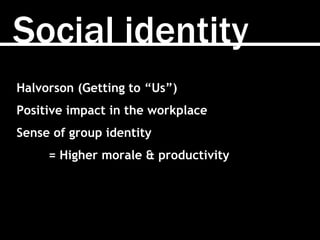
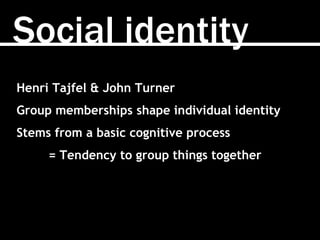
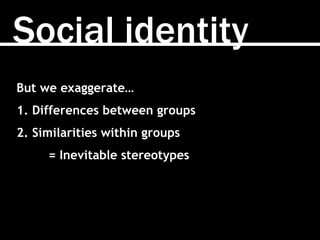
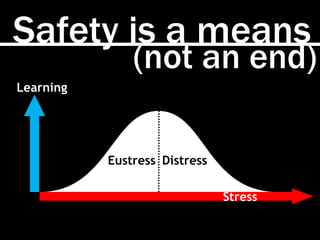
The document outlines a course on interpersonal dynamics led by Ed Batista, focusing on the importance of self-coaching and emotional intelligence in the context of learning and stress management. Key concepts discussed include the Yerkes-Dodson law, the distinction between eustress and distress, and the role of social identity in shaping individual behavior and group dynamics. The course emphasizes the impact of safety, trust, and intimacy on learning and interpersonal interactions.


