NetstarterTechTalkApril 10th 2014
 General E-Business Security Issues
 Security Questions
 Threats andAttacks
 E-Commerce Security
 In the past decade there have been two major
developments;
- Computerization: almost every aspect of
business as well as human life is “computerized”.
- Networking & Internet: the entire world is now a
network of networks, connecting millions of
computers, devices and sharing petabytes of data
every second.
 Any E-Business needs to be concerned about network
security.
 The Internet is a “public” network consisting of
thousands of interconnected private computer
networks.
 Private computer network systems are exposed to
threats from anywhere on the public network.
 Businesses must protect against the unknown.
 New methods of attacking networks andWeb sites,
and new network security holes, are being constantly
discovered or invented.
 An E-Business cannot expect to achieve perfect
security for its network andWeb site.
 How is the data protected once it is delivered
to the E-Business?
 How are credit card transactions
authenticated and authorized?
 The biggest potential security problem in an
E-Business is of human, rather than
electronic, origin.
 The weakest link in any security system is the
people using it.
 According to PriceWaterhouseCooper
 Hacking cost United States companies $1.5 trillion
in 2000
 WorldTrade Center insurable loss
 $50 billion
 One year of hacking equals 30Trade Center
attacks.
 Mainly there is two types of attacks
 Technical attacks
▪ An attack perpetrated using software and systems
knowledge or expertise.
 Non technical attacks
▪ An attack that uses chicanery to trick people into
revealing sensitive information or performing actions
that compromise the security of a network.
 Technical attacks
 Hacking
▪ Denial of Service attack
▪ Packet Sniffing
▪ Spoofing
▪ Keystroke Monitoring
▪ Viruses / Malware
▪ Cracking
▪ Zero-day incidents
▪ Botnets (hijacked computers).
▪ Web site defacement.
 Non technical attacks
 Social Engineering
 Today’s most ecommerce solutions are pre-
build customizable solutions provided by
varied range of organizations. Most of these
solutions has built in reliable security
features.
 Customizations to these applications should
be done in accordance with solution provider
guide lines and standard coding methods.
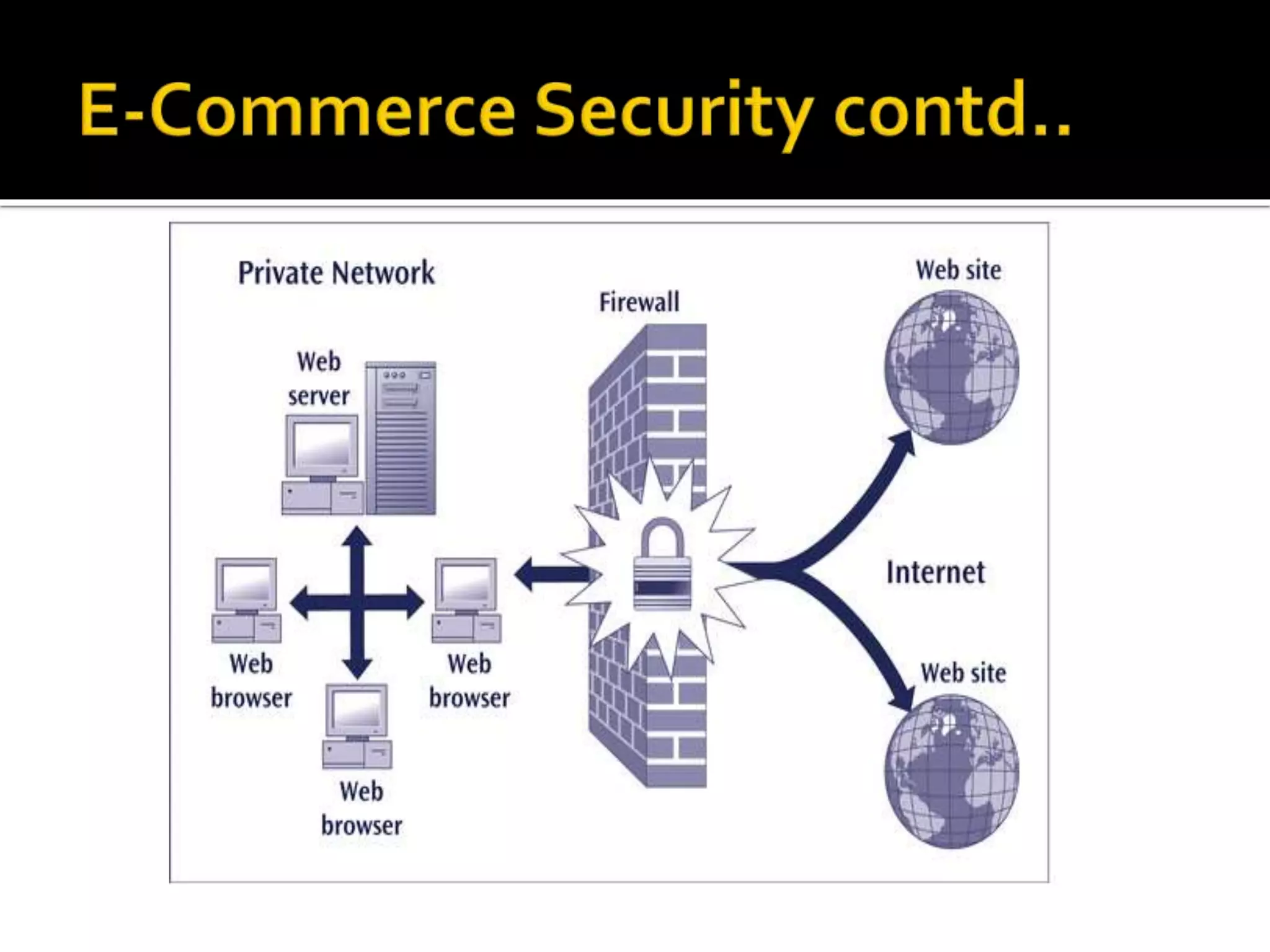
 Tools such as passwords, firewalls, intrusion detection
systems, and virus scanning software should be used
to protect an E-Business’s network andWeb site.
 Transaction Security and Data Protection
 Use a predefined key to encrypt and decrypt the data
during transmission
 Use the secure sockets layer (SSL) protocol to protect data
transmitted over the Internet.
 Move sensitive customer information such as credit card
numbers offline or encrypting the information if it is to be
stored online.
 Remove all files and data from storage devices including disk drives
and tapes before getting rid of the devices.
 Shred all hard-copy documents containing sensitive information
before trashing them.
 Security is only as strong as the weakest link.
 Security Audits and Penetration Testing
 Can provide an overall assessment of the firm’s current exposure and
vulnerabilities.
 This is an outsourced item.
 Consultant will provide a comprehensive recommendation to address
list of vulnerabilities.
 E-Commerce will continue to grow and the
threats to it too will evolve. In order to safe
guard privacy and trust on E-Commerce its
critical organizations actively plan and
implement strategies prevent security
breaches.This will value added to the
business.
ThankYou

E-commerce & Security

  • 1.
  • 2.
     General E-BusinessSecurity Issues  Security Questions  Threats andAttacks  E-Commerce Security
  • 3.
     In thepast decade there have been two major developments; - Computerization: almost every aspect of business as well as human life is “computerized”. - Networking & Internet: the entire world is now a network of networks, connecting millions of computers, devices and sharing petabytes of data every second.
  • 4.
     Any E-Businessneeds to be concerned about network security.  The Internet is a “public” network consisting of thousands of interconnected private computer networks.  Private computer network systems are exposed to threats from anywhere on the public network.  Businesses must protect against the unknown.  New methods of attacking networks andWeb sites, and new network security holes, are being constantly discovered or invented.  An E-Business cannot expect to achieve perfect security for its network andWeb site.
  • 5.
     How isthe data protected once it is delivered to the E-Business?  How are credit card transactions authenticated and authorized?  The biggest potential security problem in an E-Business is of human, rather than electronic, origin.  The weakest link in any security system is the people using it.
  • 6.
     According toPriceWaterhouseCooper  Hacking cost United States companies $1.5 trillion in 2000  WorldTrade Center insurable loss  $50 billion  One year of hacking equals 30Trade Center attacks.
  • 7.
     Mainly thereis two types of attacks  Technical attacks ▪ An attack perpetrated using software and systems knowledge or expertise.  Non technical attacks ▪ An attack that uses chicanery to trick people into revealing sensitive information or performing actions that compromise the security of a network.
  • 8.
     Technical attacks Hacking ▪ Denial of Service attack ▪ Packet Sniffing ▪ Spoofing ▪ Keystroke Monitoring ▪ Viruses / Malware ▪ Cracking ▪ Zero-day incidents ▪ Botnets (hijacked computers). ▪ Web site defacement.  Non technical attacks  Social Engineering
  • 9.
     Today’s mostecommerce solutions are pre- build customizable solutions provided by varied range of organizations. Most of these solutions has built in reliable security features.  Customizations to these applications should be done in accordance with solution provider guide lines and standard coding methods.
  • 10.
     Tools suchas passwords, firewalls, intrusion detection systems, and virus scanning software should be used to protect an E-Business’s network andWeb site.  Transaction Security and Data Protection  Use a predefined key to encrypt and decrypt the data during transmission  Use the secure sockets layer (SSL) protocol to protect data transmitted over the Internet.  Move sensitive customer information such as credit card numbers offline or encrypting the information if it is to be stored online.
  • 12.
     Remove allfiles and data from storage devices including disk drives and tapes before getting rid of the devices.  Shred all hard-copy documents containing sensitive information before trashing them.  Security is only as strong as the weakest link.  Security Audits and Penetration Testing  Can provide an overall assessment of the firm’s current exposure and vulnerabilities.  This is an outsourced item.  Consultant will provide a comprehensive recommendation to address list of vulnerabilities.
  • 13.
     E-Commerce willcontinue to grow and the threats to it too will evolve. In order to safe guard privacy and trust on E-Commerce its critical organizations actively plan and implement strategies prevent security breaches.This will value added to the business.
  • 14.

Editor's Notes

  • #2 Ecommerce & Security