ECG CAS ES
EMAD WORLD
1
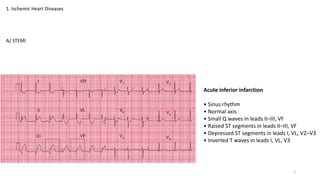
1. Ischemic Heart Diseases
A/ STEMI
Acute inferior infarction
• Sinus rhythm
• Normal axis
• Small Q waves in leads II–III, VF
• Raised ST segments in leads II–III, VF
• Depressed ST segments in leads I, VL, V2–V3
• Inverted T waves in leads I, VL, V3
2
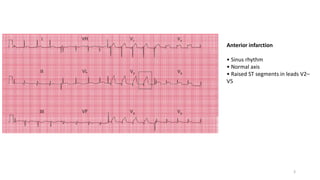
Anterior infarction
• Sinus rhythm
• Normal axis
• Raised ST segments in leads V2–
V5
3
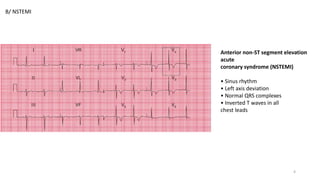
B/ NSTEMI
Anterior non-ST segment elevation
acute
coronary syndrome (NSTEMI)
• Sinus rhythm
• Left axis deviation
• Normal QRS complexes
• Inverted T waves in all
chest leads
4
2. Tachyarrythmia
A, Narrow complex QRS
B. Broad complex QRS
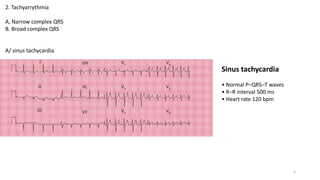
A/ sinus tachycardia
Sinus tachycardia
• Normal P–QRS–T waves
• R–R interval 500 ms
• Heart rate 120 bpm
5
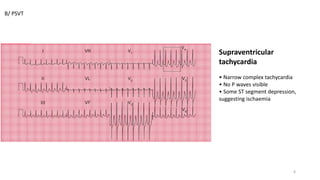
B/ PSVT
Supraventricular
tachycardia
• Narrow complex tachycardia
• No P waves visible
• Some ST segment depression,
suggesting ischaemia
6
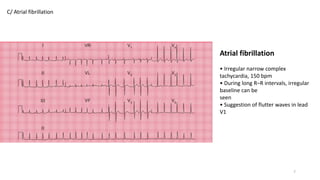
C/ Atrial fibrillation
Atrial fibrillation
• Irregular narrow complex
tachycardia, 150 bpm
• During long R–R intervals, irregular
baseline can be
seen
• Suggestion of flutter waves in lead
V1
7
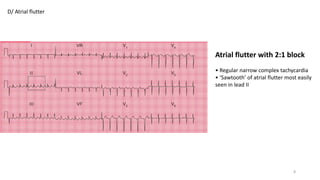
D/ Atrial flutter
Atrial flutter with 2:1 block
• Regular narrow complex tachycardia
• ‘Sawtooth’ of atrial flutter most easily
seen in lead II
8
3. Bradyarrythmias
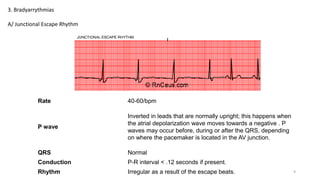
A/ Junctional Escape Rhythm
Rate 40-60/bpm
P wave
Inverted in leads that are normally upright; this happens when
the atrial depolarization wave moves towards a negative . P
waves may occur before, during or after the QRS, depending
on where the pacemaker is located in the AV junction.
QRS Normal
Conduction P-R interval < .12 seconds if present.
Rhythm Irregular as a result of the escape beats. 9
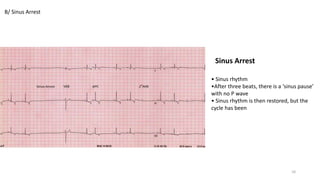
B/ Sinus Arrest
• Sinus rhythm
•After three beats, there is a ‘sinus pause’
with no P wave
• Sinus rhythm is then restored, but the
cycle has been
Sinus Arrest
10
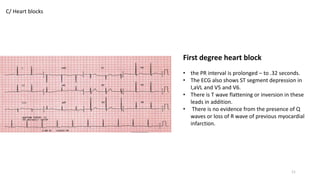
C/ Heart blocks
First degree heart block
• the PR interval is prolonged – to .32 seconds.
• The ECG also shows ST segment depression in
I,aVL and V5 and V6.
• There is T wave flattening or inversion in these
leads in addition.
• There is no evidence from the presence of Q
waves or loss of R wave of previous myocardial
infarction.
11
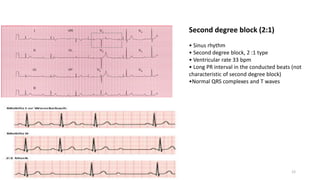
Second degree block (2:1)
• Sinus rhythm
• Second degree block, 2 :1 type
• Ventricular rate 33 bpm
• Long PR interval in the conducted beats (not
characteristic of second degree block)
•Normal QRS complexes and T waves
12
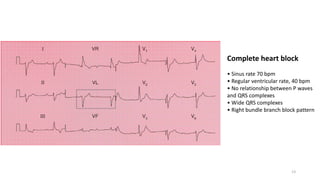
Complete heart block
• Sinus rate 70 bpm
• Regular ventricular rate, 40 bpm
• No relationship between P waves
and QRS complexes
• Wide QRS complexes
• Right bundle branch block pattern
13
4. Ventricular hypertrophy
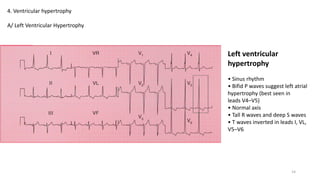
A/ Left Ventricular Hypertrophy
Left ventricular
hypertrophy
• Sinus rhythm
• Bifid P waves suggest left atrial
hypertrophy (best seen in
leads V4–V5)
• Normal axis
• Tall R waves and deep S waves
• T waves inverted in leads I, VL,
V5–V6
14
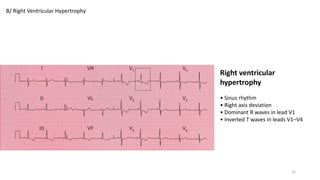
B/ Right Ventricular Hypertrophy
Right ventricular
hypertrophy
• Sinus rhythm
• Right axis deviation
• Dominant R waves in lead V1
• Inverted T waves in leads V1–V4
15
5. Bundle branch blocks
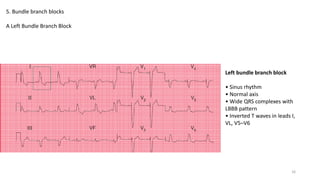
A Left Bundle Branch Block
Left bundle branch block
• Sinus rhythm
• Normal axis
• Wide QRS complexes with
LBBB pattern
• Inverted T waves in leads I,
VL, V5–V6
16
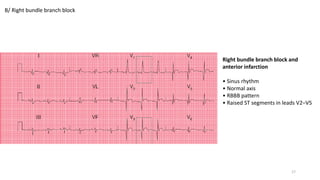
Right bundle branch block and
anterior infarction
• Sinus rhythm
• Normal axis
• RBBB pattern
• Raised ST segments in leads V2–V5
B/ Right bundle branch block
17
6. Premature Complexes
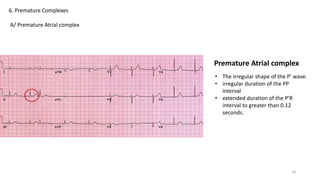
A/ Premature Atrial complex
• The irregular shape of the P' wave.
• irregular duration of the PP
interval
• extended duration of the P'R
interval to greater than 0.12
seconds.
Premature Atrial complex
18
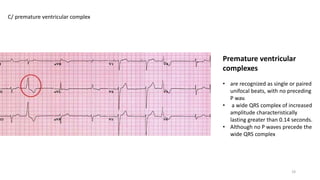
Premature ventricular
complexes
• are recognized as single or paired
unifocal beats, with no preceding
P wav.
• a wide QRS complex of increased
amplitude characteristically
lasting greater than 0.14 seconds.
• Although no P waves precede the
wide QRS complex
C/ premature ventricular complex
19
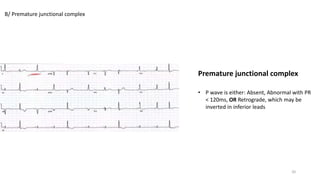
• P wave is either: Absent, Abnormal with PR
< 120ms, OR Retrograde, which may be
inverted in inferior leads
B/ Premature junctional complex
Premature junctional complex
20

ECG-cases.pptx

  • 1.
  • 2.
    1. Ischemic HeartDiseases A/ STEMI Acute inferior infarction • Sinus rhythm • Normal axis • Small Q waves in leads II–III, VF • Raised ST segments in leads II–III, VF • Depressed ST segments in leads I, VL, V2–V3 • Inverted T waves in leads I, VL, V3 2
  • 3.
    Anterior infarction • Sinusrhythm • Normal axis • Raised ST segments in leads V2– V5 3
  • 4.
    B/ NSTEMI Anterior non-STsegment elevation acute coronary syndrome (NSTEMI) • Sinus rhythm • Left axis deviation • Normal QRS complexes • Inverted T waves in all chest leads 4
  • 5.
    2. Tachyarrythmia A, Narrowcomplex QRS B. Broad complex QRS A/ sinus tachycardia Sinus tachycardia • Normal P–QRS–T waves • R–R interval 500 ms • Heart rate 120 bpm 5
  • 6.
    B/ PSVT Supraventricular tachycardia • Narrowcomplex tachycardia • No P waves visible • Some ST segment depression, suggesting ischaemia 6
  • 7.
    C/ Atrial fibrillation Atrialfibrillation • Irregular narrow complex tachycardia, 150 bpm • During long R–R intervals, irregular baseline can be seen • Suggestion of flutter waves in lead V1 7
  • 8.
    D/ Atrial flutter Atrialflutter with 2:1 block • Regular narrow complex tachycardia • ‘Sawtooth’ of atrial flutter most easily seen in lead II 8
  • 9.
    3. Bradyarrythmias A/ JunctionalEscape Rhythm Rate 40-60/bpm P wave Inverted in leads that are normally upright; this happens when the atrial depolarization wave moves towards a negative . P waves may occur before, during or after the QRS, depending on where the pacemaker is located in the AV junction. QRS Normal Conduction P-R interval < .12 seconds if present. Rhythm Irregular as a result of the escape beats. 9
  • 10.
    B/ Sinus Arrest •Sinus rhythm •After three beats, there is a ‘sinus pause’ with no P wave • Sinus rhythm is then restored, but the cycle has been Sinus Arrest 10
  • 11.
    C/ Heart blocks Firstdegree heart block • the PR interval is prolonged – to .32 seconds. • The ECG also shows ST segment depression in I,aVL and V5 and V6. • There is T wave flattening or inversion in these leads in addition. • There is no evidence from the presence of Q waves or loss of R wave of previous myocardial infarction. 11
  • 12.
    Second degree block(2:1) • Sinus rhythm • Second degree block, 2 :1 type • Ventricular rate 33 bpm • Long PR interval in the conducted beats (not characteristic of second degree block) •Normal QRS complexes and T waves 12
  • 13.
    Complete heart block •Sinus rate 70 bpm • Regular ventricular rate, 40 bpm • No relationship between P waves and QRS complexes • Wide QRS complexes • Right bundle branch block pattern 13
  • 14.
    4. Ventricular hypertrophy A/Left Ventricular Hypertrophy Left ventricular hypertrophy • Sinus rhythm • Bifid P waves suggest left atrial hypertrophy (best seen in leads V4–V5) • Normal axis • Tall R waves and deep S waves • T waves inverted in leads I, VL, V5–V6 14
  • 15.
    B/ Right VentricularHypertrophy Right ventricular hypertrophy • Sinus rhythm • Right axis deviation • Dominant R waves in lead V1 • Inverted T waves in leads V1–V4 15
  • 16.
    5. Bundle branchblocks A Left Bundle Branch Block Left bundle branch block • Sinus rhythm • Normal axis • Wide QRS complexes with LBBB pattern • Inverted T waves in leads I, VL, V5–V6 16
  • 17.
    Right bundle branchblock and anterior infarction • Sinus rhythm • Normal axis • RBBB pattern • Raised ST segments in leads V2–V5 B/ Right bundle branch block 17
  • 18.
    6. Premature Complexes A/Premature Atrial complex • The irregular shape of the P' wave. • irregular duration of the PP interval • extended duration of the P'R interval to greater than 0.12 seconds. Premature Atrial complex 18
  • 19.
    Premature ventricular complexes • arerecognized as single or paired unifocal beats, with no preceding P wav. • a wide QRS complex of increased amplitude characteristically lasting greater than 0.14 seconds. • Although no P waves precede the wide QRS complex C/ premature ventricular complex 19
  • 20.
    • P waveis either: Absent, Abnormal with PR < 120ms, OR Retrograde, which may be inverted in inferior leads B/ Premature junctional complex Premature junctional complex 20