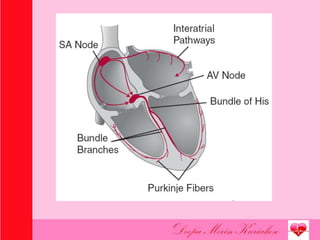
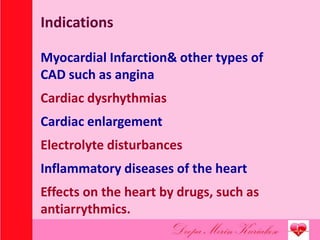
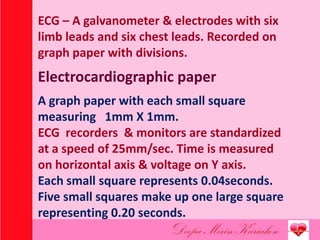
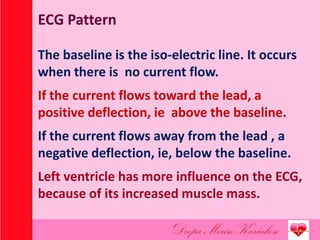
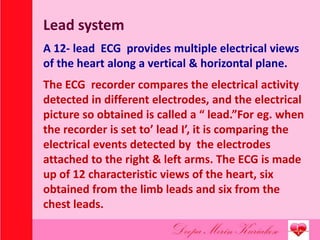
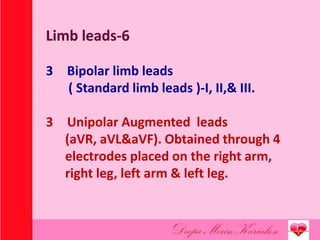
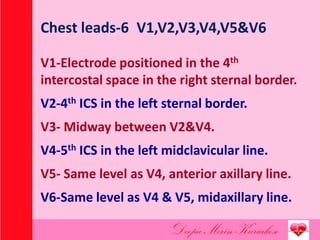
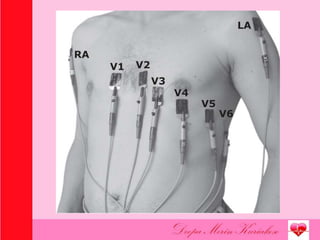
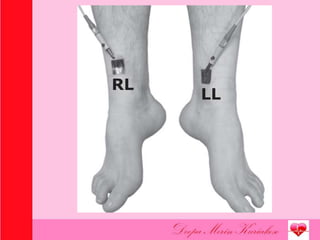
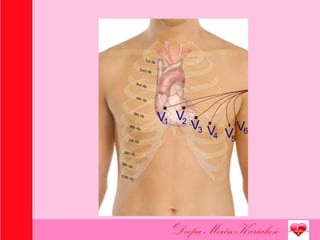
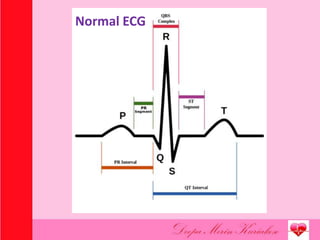
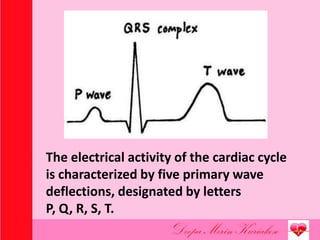
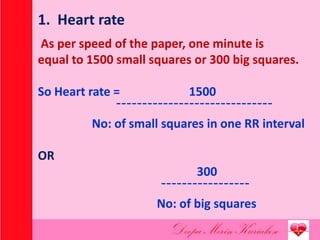
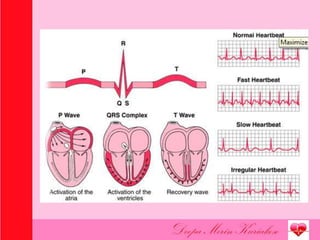
An electrocardiogram (ECG) records the electrical activity of the heart. It detects depolarization and repolarization of the myocardium through electrodes attached to the skin. The normal conduction pathway in the heart involves electrical signals traveling from the sinoatrial node through the atria and atrioventricular node before reaching the ventricles. An ECG provides 12 leads that give different views of the heart. It is used to diagnose conditions like myocardial infarction, dysrhythmias, and electrolyte imbalances.