EBIT-EPS Analysis
• EBIT-EPS analysis gives a scientific basis for
comparison among various financial plans and
shows ways to maximize EPS. Hence EBIT-EPS
analysis may be defined as ‘a tool of financial
planning that evaluates various alternatives of
financing a project under varying levels of EBIT
and suggests the best alternative having
highest EPS and determines the most
profitable level of EBIT’.
Concept of EBIT-EPS Analysis:
• The EBIT-EBT analysis is the method that
studies the leverage, i.e. comparing
alternative methods of financing at different
levels of EBIT. Simply put, EBIT-EPS analysis
examines the effect of financial leverage on
the EPS with varying levels of EBIT or under
alternative financial plans.
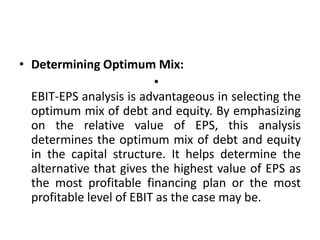
• Determining Optimum Mix:
•
EBIT-EPS analysis is advantageous in selecting the
optimum mix of debt and equity. By emphasizing
on the relative value of EPS, this analysis
determines the optimum mix of debt and equity
in the capital structure. It helps determine the
alternative that gives the highest value of EPS as
the most profitable financing plan or the most
profitable level of EBIT as the case may be.
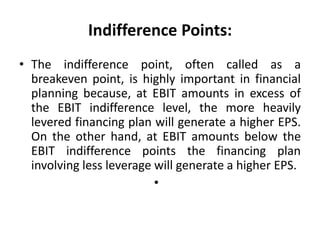
Indifference Points:
• The indifference point, often called as a
breakeven point, is highly important in financial
planning because, at EBIT amounts in excess of
the EBIT indifference level, the more heavily
levered financing plan will generate a higher EPS.
On the other hand, at EBIT amounts below the
EBIT indifference points the financing plan
involving less leverage will generate a higher EPS.
•
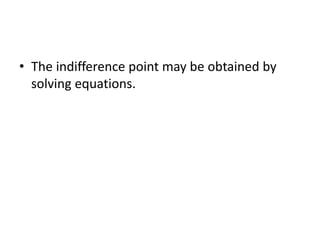
• The indifference point may be obtained by
solving equations.
EBIT-EPS analysis.pptx

EBIT-EPS analysis.pptx

  • 1.
  • 2.
    • EBIT-EPS analysisgives a scientific basis for comparison among various financial plans and shows ways to maximize EPS. Hence EBIT-EPS analysis may be defined as ‘a tool of financial planning that evaluates various alternatives of financing a project under varying levels of EBIT and suggests the best alternative having highest EPS and determines the most profitable level of EBIT’.
  • 3.
    Concept of EBIT-EPSAnalysis: • The EBIT-EBT analysis is the method that studies the leverage, i.e. comparing alternative methods of financing at different levels of EBIT. Simply put, EBIT-EPS analysis examines the effect of financial leverage on the EPS with varying levels of EBIT or under alternative financial plans.
  • 8.
    • Determining OptimumMix: • EBIT-EPS analysis is advantageous in selecting the optimum mix of debt and equity. By emphasizing on the relative value of EPS, this analysis determines the optimum mix of debt and equity in the capital structure. It helps determine the alternative that gives the highest value of EPS as the most profitable financing plan or the most profitable level of EBIT as the case may be.
  • 11.
    Indifference Points: • Theindifference point, often called as a breakeven point, is highly important in financial planning because, at EBIT amounts in excess of the EBIT indifference level, the more heavily levered financing plan will generate a higher EPS. On the other hand, at EBIT amounts below the EBIT indifference points the financing plan involving less leverage will generate a higher EPS. •
  • 14.
    • The indifferencepoint may be obtained by solving equations.