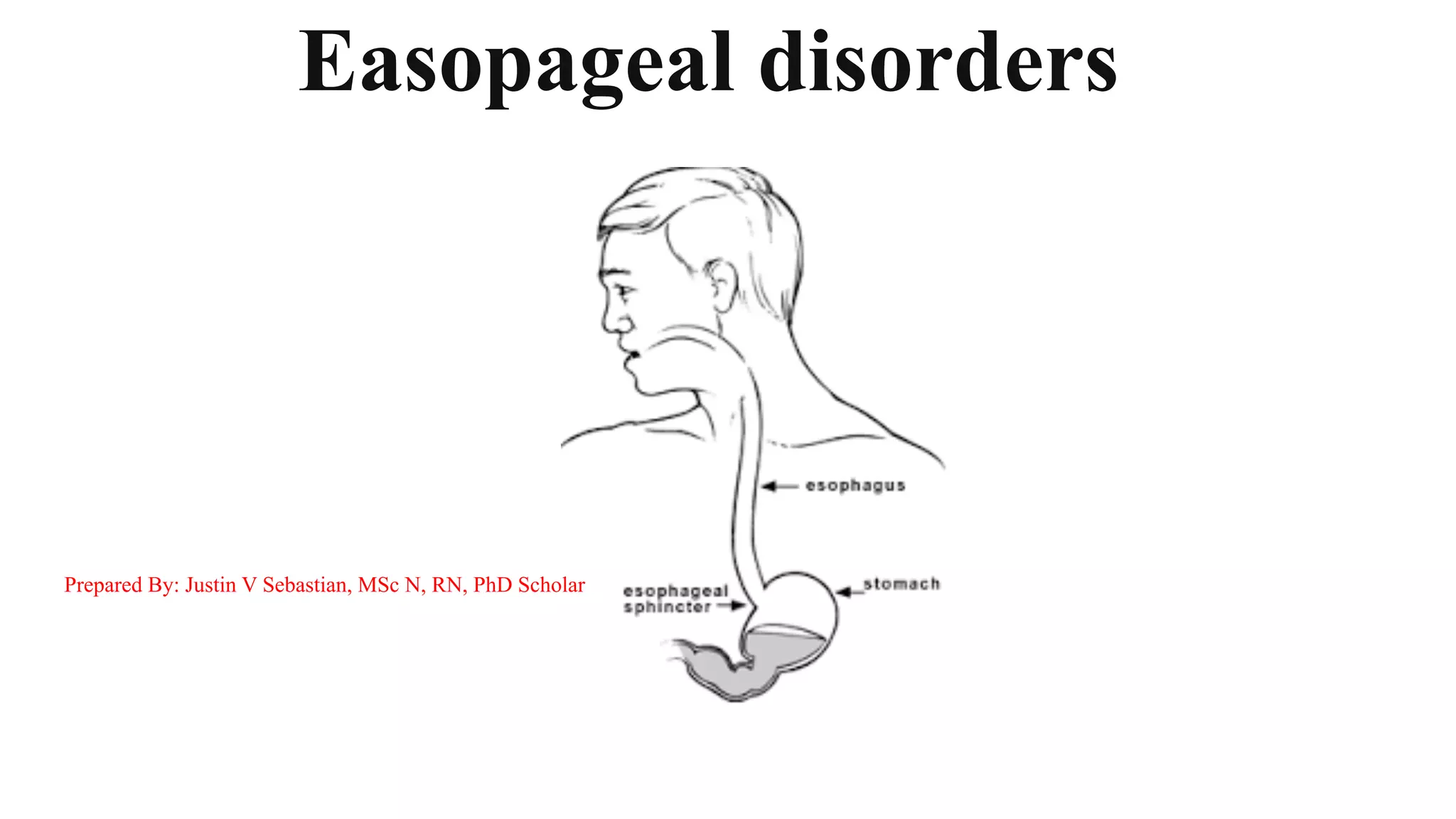
Easopageal disorders
Prepared By: Justin V Sebastian, MSc N, RN, PhD Scholar
Esophagitis
Overview


Esophagitis (is inflammation that may damage tissues of the
esophagus, the muscular tube that delivers food from mouth to
stomach.


Esophagitis can cause painful, difficult swallowing and chest pain.
Causes


Esophagitis is generally categorised by the conditions that cause it. In some
cases, more than one factor may be causing esophagitis.


Reflux esophagitis


A valve-like structure called the lower esophageal sphincter usually keeps the
acidic contents of the stomach out of the esophagus. If this valve opens when it
shouldn't or doesn't close properly, the contents of the stomach may back up into
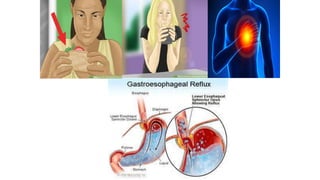
the esophagus (gastroesophageal reflux). Gastroesophageal reflux disease
(GERD) is a condition in which this back-flow of acid is a frequent or ongoing
problem. A complication of GERD is chronic inflammation and tissue damage in
the esophagus.
Eosinophilic esophagitis


Eosinophils are white blood cells that play a key role in allergic reactions.
Eosinophilic esophagitis occurs with a high concentration of these white blood
cells in the esophagus, most likely in response to an allergy-causing agent
(allergen) or acid reflux or both.


In many cases, this type of esophagitis may be triggered by foods such as milk,
eggs, wheat, soy, peanuts, beans, rye and beef.


Lymphocytic esophagitis


Lymphocytic esophagitis (LE) is an uncommon esophageal condition in which
there are an increased number of lymphocytes in the lining of the esophagus. LE
may be related to eosinophilic esophagitis or to GERD.
Drug-induced esophagitis


Several oral medications may cause tissue damage if they remain in
contact with the lining of the esophagus for too long. For example, if you
swallow a pill with little or no water, the pill itself or residue from the pill
may remain in the esophagus. Drugs that have been linked to esophagitis
include:


•Pain-relieving medications, such as aspirin, ibuprofen


•Antibiotics, such as tetracycline and doxycycline


•Potassium chloride, which is used to treat potassium deficiency


•Quinidine, which is used to treat heart problems
Infectious esophagitis


A bacterial, viral or fungal infection in tissues of the esophagus may
cause esophagitis. Infectious esophagitis is relatively rare and
occurs most often in people with poor immune system function,
such as people with HIV/AIDS or cancer.


A fungus normally present in the mouth called Candida albicans is a
common cause of infectious esophagitis. Such infections are often
associated with poor immune system function, diabetes, cancer, or
the use of steroid or antibiotic medications.
Risk factors


Risk factors for esophagitis vary depending on the different causes of the
disorder.


Reflux esophagitis


Factors that increase the risk of gastroesophageal reflux disease (GERD) — and
therefore are factors in reflux esophagitis — include the following:


•Eating immediately before going to bed


•Dietary factors such as excess alcohol, caffeine, chocolate and flavoured foods


•Excessively large and fatty meals


•Smoking


•Extra weight, including from pregnancy
Eosinophilic esophagitis


Risk factors for eosinophilic esophagitis, or allergy-related esophagitis, may include:


•A history of certain allergic reactions, including allergic rhinitis, asthma and atopic dermatitis


•A family history of eosinophilic esophagitis


Drug-induced esophagitis


Factors that may increase the risk of drug-induced esophagitis are generally related to issues that
prevent quick and complete passage of a pill into the stomach. These factors include:


•Swallowing a pill with little or no water


•Taking drugs while lying down


•Taking drugs right before sleep, probably due in part to the production of less saliva and swallowing
less during sleep


•Older age, possibly because of age-related changes to the muscles of the esophagus or a decreased
production of saliva


•Large or oddly shaped pills
Infectious esophagitis


Risk factors for infectious esophagitis often relate to medications,
such as steroids and antibiotics. People with diabetes also are at
increased risk of candida esophagitis in particular.


Other causes of infectious esophagitis may relate to poor immune
system function. This may be due to an immune disorder, HIV/AIDS
or certain cancers. Also, certain cancer treatments and drugs that
block immune system reactions to transplanted organs
(immunosuppressants) may increase the risk of infectious esophagitis.
Symptoms


Common signs and symptoms of esophagitis include:


•Difficult swallowing


•Painful swallowing


•Chest pain, particularly behind the breastbone, that occurs with eating


•Swallowed food becoming stuck in the esophagus (food impaction)


•Heartburn


•Acid regurgitation


In infants and young children, particularly those too young to explain their discomfort or
pain, signs of esophagitis may include:


•Feeding difficulties


•Failure to thrive
Complications


Left untreated, esophagitis can lead to changes in the structure of
the esophagus. Possible complications include:


•Scarring or narrowing (stricture) of the esophagus


•Tearing of the esophagus lining tissue from retching (if food gets
stuck) or during endoscopy (due to inflammation)


•Barrett's esophagus, characterised by changes to the cells lining
the esophagus, increasing risk of esophageal cancer
Diagnosis


Doctor or specialist will likely make a diagnosis based on answers to
questions, a physical exam, and one or more tests. These tests may
include:


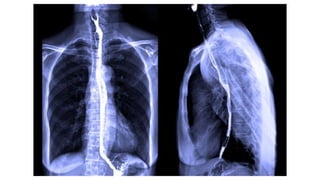
Barium X-ray


For this test, Patient drink a solution containing a compound called barium
or take a pill coated with barium. Barium coats the lining of the esophagus
and stomach and makes the organs visible. These images can help identify
narrowing of the esophagus, other structural changes, a hiatal hernia,
tumors or other abnormalities that could be causing symptoms.
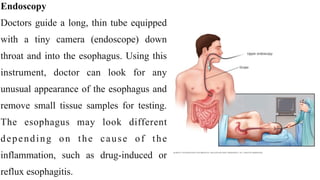
Endoscopy


Doctors guide a long, thin tube equipped
with a tiny camera (endoscope) down
throat and into the esophagus. Using this
instrument, doctor can look for any
unusual appearance of the esophagus and
remove small tissue samples for testing.
The esophagus may look different
depending on the cause of the
inflammation, such as drug-induced or
reflux esophagitis.
Laboratory tests


Small tissue samples removed (biopsy) during an endoscopic exam
are sent to the lab for testing. Depending on the suspected cause of
the disorder, tests may be used to:


•Diagnose a bacterial, viral or fungal infection


•Determine the concentration of allergy-related white blood cells
(eosinophils)


•Identify abnormal cells that would indicate esophageal cancer or
precancerous changes
Treatment


Treatments for esophagitis are intended to lessen symptoms, manage complications and
treat underlying causes of the disorder. Treatment strategies vary primarily based on the
cause of the disorder.


Reflux esophagitis

Treatment for reflux esophagitis may include:


•Over-the-counter treatments. These include antacids (Maalox, Mylanta, others);
medications that reduce acid production, called H-2-receptor blockers, such as cimetidine.


•Surgery. Fundoplication may be used to improve the condition of the esophagus if other
interventions don't work. A portion of the stomach is wrapped around the valve separating
the esophagus and stomach (lower esophageal sphincter). This strengthens the sphincter
and prevents acid from backing up into the esophagus.
Eosinophilic esophagitis


Medications may include:


•Proton pump inhibitors. Doctor will likely first prescribe a proton pump
inhibitor, such as omeprazole (Prilosec) or pantoprazole (Protonix).


•Steroids. Some studies have shown that swallowed steroids such as
fluticasone (Flovent) and budesonide (Pulmicort) may act topically in the
esophagus and help treat eosinophilic esophagitis.


•Elimination and elemental diets. A response to a food allergen is likely
the cause of eosinophilic esophagitis. Therefore, elimination of the culprit
food may be an effective treatment strategy.
Drug-induced esophagitis


Treatment for drug-induced esophagitis is primarily avoiding the
problem drug when possible and reducing the risk with better pill-
taking habits. Doctor may recommend:


•Taking an alternative drug that is less likely to cause drug-induced
esophagitis


•Taking a liquid version of a medication if possible


•Drinking an entire glass of water with a pill.


•Sitting or standing for at least 30 minutes after taking a pill
Infectious esophagitis


Doctor may prescribe a medication to treat a bacterial, viral, fungal or parasitic
infection causing infectious esophagitis.


Treating common complications


A gastroenterologist may perform a procedure to expand (dilate) the esophagus. This
treatment is generally used only when the narrowing is very severe or food has become
lodged in the esophagus.


In esophageal dilation, doctor uses one or more endoscopic devices — small narrow
tubes inserted through the esophagus. Versions of these devices may be equipped with:


•A tapered tip that starts with a rounded point that gradually widens


•A balloon that can be expanded after it's inserted in the esophagus
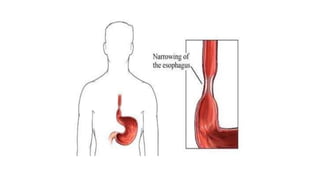
ESOPHAGEALSTRICTURE


An esophageal stricture is a narrowing of the
esophagus, the passageway from the throat to the
stomach.
chemicals,
	
and
	
other
	
irritants
	
may
	
injure
Stomach
	
acid,
	
accidentally
	
swallowed
	
harsh


the
esophageal lining, causing inflammation (esophagitis)
and the formation of scar tissue.


This may gradually lead to obstruction of the
esophagus, preventing food and fluids from reaching
the stomach.
ETIOLOGY:


• Persistent reflux of gastric acid


• Systemic sclerosis (scleroderma)


• Swallowing lye or other corrosive chemicals


• Pills lodged in the esophagus or medications


• Esophageal surgery


• Protracted
	
use
	
of
	
a
	
nasogastric
	
tube
	
(used
	
in
hospitals for feeding)


• Esophageal cancer


• Frequent exposure to harmful stomach acid can
cause scar tissue to form.
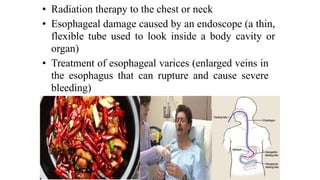
• Radiation therapy to the chest or neck


• Esophageal damage caused by an endoscope (a thin,
flexible tube used to look inside a body cavity or
organ)


• Treatment of esophageal varices (enlarged veins in
the esophagus that can rupture and cause severe
bleeding)
• Infectious esophagitis - Candida, herpes simplex
virus (HSV), cytomegalovirus (CMV), human
immunodeficiency virus (HIV)


• Acquired immunodeficiency syndrome (AIDS) and
immunosuppression in patients who have received a
transplant


• Miscellaneous - Trauma to the esophagus from
external
	
forces,
	
foreign
	
body, surgical
congenital
anastomosis/postoperative
	
stricture,
esophageal stenosis
• Crohn
	
disease
	
-
	
Crohn's
	
disease
	
is
	
a
	
chronic
inflammatory disease of the digestive tract.
PATHOPHYSIOLOGY:


• Benign esophageal stricture describes a narrowing
or tightening of the esophagus.


• Benign esophageal stricture typically occurs when
stomach acid and other irritants damage the lining of
the esophagus over time.


• This leads to inflammation (esophagitis) and scar
tissue, which causes the esophagus to narrow.
SYMPTOMS OF ESOPHAGEAL STRICTURE


• Progressive swallowing difficulty - solid foods, liquids


• Chest pain after meals, increased salivation


• Regurgitation of foods and liquids.


• Regurgitation
	
may
	
aspirate
	
into
	
the
	
lungs,
	
causing
cough, wheezing, and shortness of breath.


• Weight loss


• Dehydration


• Cough, particularly at night


• Sensation of something stuck in the chest after eat


• Frequent burping or hiccups


• Heartburn
DIAGNOSTIC EVLUATION:


• A medical history and physical examination are performed.


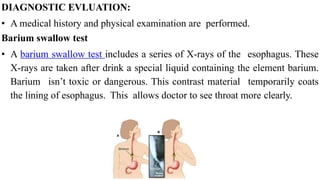
Barium swallow test


• A barium swallow test includes a series of X-rays of the esophagus. These
X-rays are taken after drink a special liquid containing the element barium.
Barium isn’t toxic or dangerous. This contrast material temporarily coats
the lining of esophagus. This allows doctor to see throat more clearly.
Esophageal pH monitoring


• This test measures the amount of stomach acid that enters esophagus.


Upper GI endoscopy


• In an upper gastrointestinal (upper GI) endoscopy, doctor will place
an endoscope through mouth and into esophagus. An endoscope is a
thin, flexible tube with an attached camera. It allows doctor to
examine esophagus and upper intestinal tract.


• Doctor can use forceps (tongs) and scissors attached to the
endoscope to remove tissue from the esophagus. They’ll then
analyse this sample of tissue to find the underlying cause of benign
esophageal stricture.
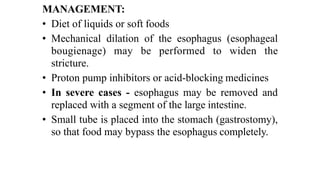
MANAGEMENT:


• Diet of liquids or soft foods


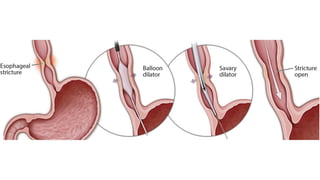
• Mechanical dilation of the esophagus (esophageal
bougienage) may be performed to widen the
stricture.


• Proton pump inhibitors or acid-blocking medicines


• In severe cases - esophagus may be removed and
replaced with a segment of the large intestine.


• Small tube is placed into the stomach (gastrostomy),
so that food may bypass the esophagus completely.
MEDICATION


• A group of acid-blocking drugs, known as proton
pump inhibitors (PPIs),


The PPIs used to control GERD include:


• omeprazole


• pantoprazole


• Antacids:
	
provide
	
short-term relief
	
by
	
neutralising acids in the stomach


• Antihistamines :(such as ranitidine and famotidine)
decrease the secretion of acid
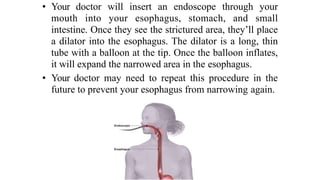
• Your doctor will insert an endoscope through your
mouth into your esophagus, stomach, and small
intestine. Once they see the strictured area, they’ll place
a dilator into the esophagus. The dilator is a long, thin
tube with a balloon at the tip. Once the balloon inflates,
it will expand the narrowed area in the esophagus.


• Your doctor may need to repeat this procedure in the
future to prevent your esophagus from narrowing again.
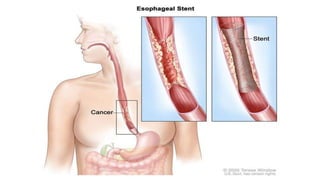
Esophageal stent placement


• The insertion of esophageal stents can provide relief
from esophageal stricture.


• A stent
	
is
	
a
	
thin
	
tube
	
made
	
of
	
plastic,
	
expandable
metal, or a flexible mesh material.
• Esophageal
esophagus
liquids.
stents
open
	
so
can
	
help
	
	
keep
	
a
	
	
blocked
you
	
	
can
	
swallow
	
	
food
	
and
• Patient
	
will
	
be
	
under
	
general
	
or
	
moderate
	
sedation
for the procedure.


• Doctor will use an endoscope to guide the stent into
place.
DIET & LIFESTYLE


• elevating
	
your
	
pillow
	
to
	
prevent
	
stomach
	
acid
	
from
	
flowing
back up into your esophagus


• eating smaller meals


• not eating for three hours before bedtime


• quitting smoking


• avoiding alcohol


You should also avoid foods that cause acid reflux, such as:


• spicy foods


• fatty foods


• carbonated beverages


• chocolate


• coffee and caffeinated products


• tomato-based foods


• citrus products
Prevention of Esophageal Stricture


• Aggressive
	
treatment
	
of
	
chronic
	
gastroesophageal reflux is
necessary.


• Store
	
all
	
corrosive
	
chemicals
	
where
	
they
	
will
	
be inaccessible to
children.


• Take all pills with a full glass of liquid.


• avoiding substances that can damage esophagus.


• Managing symptoms of GERD can also greatly reduce risk for
esophageal stricture.


• Follow doctor’s instructions regarding dietary and lifestyle choices
that can minimise the backup of acid into esophagus.
COMPLICATIONS:


• Dense and solid foods can lodge in the esophagus
when it narrows. This may cause choking or
difficulty breathing.


• Dehydration


• Malnutrition.


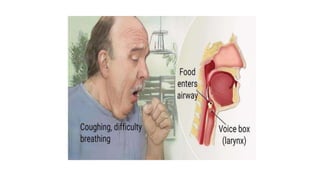
• There’s also a risk of getting pulmonary aspiration,
which occurs when vomit, food, or fluids enter
lungs. This could result in aspiration pneumonia, an
infection caused by bacteria growing around the
food, vomit or fluids in the lung.
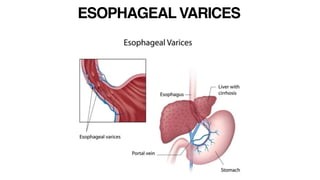
ESOPHAGEAL VARICES
ESOPHAGEAL VARICES
• Esophageal varices are abnormal, enlarged veins in the tube that connects
the throat and stomach (esophagus). This condition occurs most often in
people with serious liver diseases.


• Esophageal varices develop when normal blood flow to the liver is blocked
by a clot or scar tissue in the liver. To go around the blockages, blood flows
into smaller blood vessels that aren't designed to carry large volumes of
blood. The vessels can leak blood or even rupture, causing life- threatening
bleeding.


• A number of drugs and medical procedures can help prevent and stop
bleeding from esophageal varices.
Symptoms andCauses
Symptoms


• Esophageal varices usually don't cause signs and symptoms unless they
bleed. Signs and symptoms of bleeding esophageal varices include:


• Vomiting and seeing significant amounts of blood in vomit


• Black, tarry or bloody stools


• Lightheadedness


• Loss of consciousness (in severe case)


Signs of liver disease, including:


• Yellow coloration of skin and eyes (jaundice)


• Easy bleeding or bruising


• Fluid buildup in abdomen (ascites)
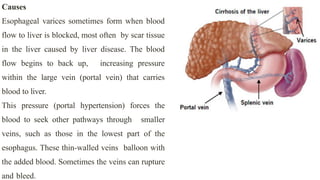
Causes


Esophageal varices sometimes form when blood
flow to liver is blocked, most often by scar tissue
in the liver caused by liver disease. The blood
flow begins to back up, increasing pressure
within the large vein (portal vein) that carries
blood to liver.


This pressure (portal hypertension) forces the
blood to seek other pathways through smaller
veins, such as those in the lowest part of the
esophagus. These thin-walled veins balloon with
the added blood. Sometimes the veins can rupture
and bleed.
Causes of esophageal varices include:


Severe liver scarring (cirrhosis). A number of liver diseases — including
hepatitis infection, alcoholic liver disease, fatty liver disease and a bile
duct disorder called primary biliary cirrhosis — can result in cirrhosis.


Blood clot (thrombosis). A blood clot in the portal vein or in a vein that
feeds into the portal vein (splenic vein) can cause esophageal varices.


A parasitic infection. Schistosomiasis is a parasitic infection found in parts
of Africa, South America, the Caribbean, the Middle East and Southeast
Asia. The parasite can damage the liver, as well as the lungs, intestine and
bladder
Riskfactors


Although many people with advanced liver disease develop esophageal
varices, mostwon'thavebleeding.Varicesare more likelytobleedif
• High portal vein pressure. The risk of bleeding increases with the
amount of pressure in the portal vein (portal hypertension).


• Large varices. The larger the varices, the more likely they are to bleed.


• Red marks on the varices. When viewed through an endoscope passed
down throat, some varices show long, red streaks or red spots. These marks
indicate a high risk of bleeding.


• Severe cirrhosis or liver failure. Most often, the more severe liver
disease, the more likely varices are to bleed.


• Continued alcohol use. risk of variceal bleeding is far greater if continue
to drink, especially if disease is alcohol related.
Complications


• The most serious complication of esophageal varices is bleeding. Once you
have had a bleeding episode, your risk of another bleeding episode greatly
increases. If you lose enough blood, you can go into shock, which can lead
to death.
Diagnosis
• Main tests used to diagnose esophageal varices are:


• Endoscope exam. A procedure called upper gastrointestinal endoscopy is the
preferred method of screening for varices. The doctor will look for dilated veins,
measure them, if found, and check for red streaks and red spots, which usually
indicate a significant risk of bleeding. Treatment can be performed during the exam.


• Imaging tests. Both abdominal CT scans and Doppler ultrasounds of the splenic and
portal veins can suggest the presence of esophageal varices.


• Capsule endoscopy. In this test, person swallow a vitamin-sized capsule containing a
tiny camera, which takes pictures of the esophagus as it goes through digestive tract.
This might be an option for people who are unable or unwilling to have an endoscope
exam. This technology is more expensive than regular endoscopy and not as
available.
Treatment :
• In emergency situations, care is directed at stopping blood loss, maintaining plasma
volume, correcting disorders in coagulation induced by cirrhosis. Blood volume
resuscitation should be done promptly and with caution. The goal should be
hemodynamic stability and haemoglobin of over 8 g/dl. Resuscitation of all lost
blood leads to increase in portal pressure leading to more bleeding. Volume
resuscitation can also worsen ascites and increase portal pressure.


• Therapeutic endoscopy is considered the mainstay of urgent treatment. The two
main therapeutic approaches are variceal ligation or banding and sclerotherapy.
Treatment
• Treatment to prevent bleeding


• Treatments to lower blood pressure in the portal vein may reduce the risk of bleeding
esophageal varices. Treatments may include:


• Medications to reduce pressure in the portal vein. A type of blood pressure drug called a beta
blocker may help reduce blood pressure in your portal vein, decreasing the likelihood of bleeding.
These medications include propranolol (Inderal, Innopran).


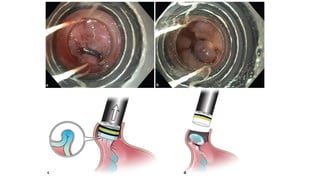
• Using elastic bands to tie off bleeding veins. If esophageal varices appear to have a high risk of
bleeding, doctor might recommend a procedure called band ligation.


• Using an endoscope, the doctor snares the varices and wraps them with an elastic band, which
essentially "strangles" the veins so they can't bleed. Esophageal band ligation carries a small risk
of complications, such as scarring of the esophagus.
Treatment :
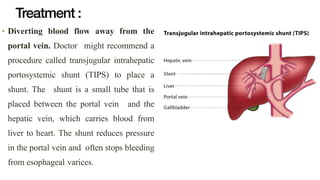
• Diverting blood flow away from the
portal vein. Doctor might recommend a
procedure called transjugular intrahepatic
portosystemic shunt (TIPS) to place a
shunt. The shunt is a small tube that is
placed between the portal vein and the
hepatic vein, which carries blood from
liver to heart. The shunt reduces pressure
in the portal vein and often stops bleeding
from esophageal varices.
Treatment :
• Restoring blood volume. You might be given a transfusion to replace lost
blood and clotting factor to stop bleeding.


• Preventing infection. There is an increased risk of infection with bleeding,
so you'll likely be given an antibiotic to prevent infection.


• Replacing the diseased liver with a healthy one. Liver transplant is an
option for people with severe liver disease or those who experience
recurrent bleeding of esophageal varices. Although liver transplantation is
often successful, the number of people awaiting transplants far outnumbers
the available organs.
Self-management
Prevention


• Currently, no treatment can prevent the development of esophageal varices in people with cirrhosis. While beta
blocker drugs are effective in preventing bleeding in many people who have esophageal varices, they do not prevent
esophageal varices from forming.


• Don't drink alcohol. People with liver disease are often advised to stop drinking alcohol.


• Eat a healthy diet. Choose a plant-based diet that's full of fruits and vegetables. Select whole grains and lean
sources of protein. Reduce the amount of fatty and fried foods.


• Use chemicals sparingly and carefully. Follow the directions on household chemicals, such as cleaning supplies
and insect sprays. If you work around chemicals, follow all safety precautions. Your liver removes toxins from your
body, so give it a break by limiting the amount of toxins it must process.


• Reduce risk of hepatitis. Sharing needles and having unprotected sex can increase risk of hepatitis B and
C
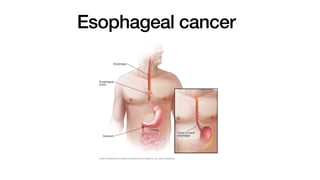
Esophageal cancer
• Esophageal cancer is cancer that occurs in the esophagus — a long, hollow
tube that runs from throat to stomach.


• Esophageal cancer usually begins in the cells that line the inside of the
esophagus.


• Esophageal cancer can occur anywhere along the esophagus.


• More men than women get esophageal cancer.


• Esophageal cancer is the sixth most common cause of cancer deaths
worldwide.
Causes


•It's not exactly clear what causes esophageal cancer.


•Esophageal cancer occurs when cells in the esophagus develop changes (mutations)
in their DNA.
Risk factors


It's thought that chronic irritation of esophagus may contribute to the changes that cause esophageal
cancer. Factors that cause irritation in the cells of esophagus and increase risk of esophageal cancer
include:


•Having gastroesophageal reflux disease (GERD)


•Smoking


•Having precancerous changes in the cells of the esophagus (Barrett's esophagus)


•Being obese


•Drinking alcohol


•Having difficulty swallowing because of an esophageal sphincter that won't relax (achalasia)


•Having a steady habit of drinking very hot liquids


•Not eating enough fruits and vegetables


•Undergoing radiation treatment to the chest or upper abdomen
Types of esophageal cancer


Esophageal cancer is classified according to the type of cells that are
involved. Types of esophageal cancer include:


•Adenocarcinoma. Adenocarcinoma begins in the cells of mucus-
secreting glands in the esophagus.


•Squamous cell carcinoma. The squamous cells are flat, thin cells that
line the surface of the esophagus.
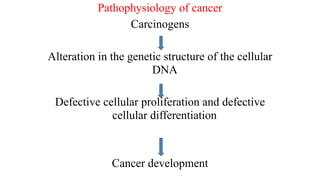
Pathophysiology of cancer


Carcinogens


Alteration in the genetic structure of the cellular
DNA


Defective cellular proliferation and defective
cellular differentiation


Cancer development
Symptoms


Signs and symptoms of esophageal cancer include:


•Difficulty swallowing (dysphagia)


•Weight loss without trying


•Chest pain, pressure or burning


•Worsening indigestion or heartburn


•Coughing or hoarseness


Early esophageal cancer typically causes no signs or symptoms.
Diagnosis


Tests and procedures used to diagnose esophageal cancer include:


•Barium swallow study. During this study, patient swallow a liquid that includes barium
and then undergo X-rays. The barium coats the inside of esophagus, which then shows
any changes to the tissue on the X-ray.


•Using a scope to examine esophagus (endoscopy). During endoscopy, doctor passes a
flexible tube equipped with a video lens (videoendoscope) down throat and into
esophagus. Using the endoscope, doctor examines esophagus, looking for cancer or
areas of irritation.


•Collecting a sample of tissue for testing (biopsy). Doctor may use a special scope
passed down throat into esophagus (endoscope) to collect a sample of suspicious tissue
(biopsy). The tissue sample is sent to a laboratory to look for cancer cells.
Treatment


Surgery


Surgery to remove the cancer can be used alone or in combination with other treatments.


Operations used to treat esophageal cancer include:


•Surgery to remove very small tumours. If cancer is very small, confined to the superficial layers of
esophagus and hasn't spread, surgeon may recommend removing the cancer and margin of healthy
tissue that surrounds it.


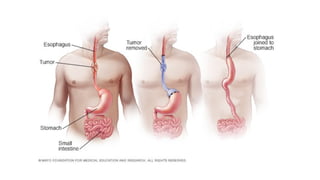
•Surgery to remove a portion of the esophagus (esophagectomy). During esophagectomy, the
surgeon removes the portion of esophagus that contains the cancer, along with a portion of the upper
part of stomach, and nearby lymph nodes. The remaining esophagus is reconnected to stomach.


•Surgery to remove part of esophagus and the upper portion of stomach (esophagogastrectomy).
During esophagogastrectomy, the surgeon removes part of esophagus, nearby lymph nodes and a
larger part of stomach. The remainder of stomach is then pulled up and reattached to esophagus. If
necessary, part of colon is used to help join the two.
• Radiation


Radiation therapy uses high-powered energy beams, such as X-rays or
protons, to kill cancer cells.


• Chemotherapy


Chemotherapy uses medications, usually injected into a vein, to kill
cancer cells.


• Immunotherapy


• Bone marrow transplantation and stem cell research

Easopageal disorders

  • 1.
    Easopageal disorders Prepared By:Justin V Sebastian, MSc N, RN, PhD Scholar
  • 2.
  • 3.
    Overview Esophagitis (is inflammationthat may damage tissues of the esophagus, the muscular tube that delivers food from mouth to stomach. Esophagitis can cause painful, difficult swallowing and chest pain.
  • 4.
    Causes Esophagitis is generallycategorised by the conditions that cause it. In some cases, more than one factor may be causing esophagitis. Reflux esophagitis A valve-like structure called the lower esophageal sphincter usually keeps the acidic contents of the stomach out of the esophagus. If this valve opens when it shouldn't or doesn't close properly, the contents of the stomach may back up into the esophagus (gastroesophageal reflux). Gastroesophageal reflux disease (GERD) is a condition in which this back-flow of acid is a frequent or ongoing problem. A complication of GERD is chronic inflammation and tissue damage in the esophagus.
  • 5.
    Eosinophilic esophagitis Eosinophils arewhite blood cells that play a key role in allergic reactions. Eosinophilic esophagitis occurs with a high concentration of these white blood cells in the esophagus, most likely in response to an allergy-causing agent (allergen) or acid reflux or both. In many cases, this type of esophagitis may be triggered by foods such as milk, eggs, wheat, soy, peanuts, beans, rye and beef. Lymphocytic esophagitis Lymphocytic esophagitis (LE) is an uncommon esophageal condition in which there are an increased number of lymphocytes in the lining of the esophagus. LE may be related to eosinophilic esophagitis or to GERD.
  • 6.
    Drug-induced esophagitis Several oralmedications may cause tissue damage if they remain in contact with the lining of the esophagus for too long. For example, if you swallow a pill with little or no water, the pill itself or residue from the pill may remain in the esophagus. Drugs that have been linked to esophagitis include: •Pain-relieving medications, such as aspirin, ibuprofen •Antibiotics, such as tetracycline and doxycycline •Potassium chloride, which is used to treat potassium deficiency •Quinidine, which is used to treat heart problems
  • 7.
    Infectious esophagitis A bacterial,viral or fungal infection in tissues of the esophagus may cause esophagitis. Infectious esophagitis is relatively rare and occurs most often in people with poor immune system function, such as people with HIV/AIDS or cancer. A fungus normally present in the mouth called Candida albicans is a common cause of infectious esophagitis. Such infections are often associated with poor immune system function, diabetes, cancer, or the use of steroid or antibiotic medications.
  • 8.
    Risk factors Risk factorsfor esophagitis vary depending on the different causes of the disorder. Reflux esophagitis Factors that increase the risk of gastroesophageal reflux disease (GERD) — and therefore are factors in reflux esophagitis — include the following: •Eating immediately before going to bed •Dietary factors such as excess alcohol, caffeine, chocolate and flavoured foods •Excessively large and fatty meals •Smoking •Extra weight, including from pregnancy
  • 9.
    Eosinophilic esophagitis Risk factorsfor eosinophilic esophagitis, or allergy-related esophagitis, may include: •A history of certain allergic reactions, including allergic rhinitis, asthma and atopic dermatitis •A family history of eosinophilic esophagitis Drug-induced esophagitis Factors that may increase the risk of drug-induced esophagitis are generally related to issues that prevent quick and complete passage of a pill into the stomach. These factors include: •Swallowing a pill with little or no water •Taking drugs while lying down •Taking drugs right before sleep, probably due in part to the production of less saliva and swallowing less during sleep •Older age, possibly because of age-related changes to the muscles of the esophagus or a decreased production of saliva •Large or oddly shaped pills
  • 10.
    Infectious esophagitis Risk factorsfor infectious esophagitis often relate to medications, such as steroids and antibiotics. People with diabetes also are at increased risk of candida esophagitis in particular. Other causes of infectious esophagitis may relate to poor immune system function. This may be due to an immune disorder, HIV/AIDS or certain cancers. Also, certain cancer treatments and drugs that block immune system reactions to transplanted organs (immunosuppressants) may increase the risk of infectious esophagitis.
  • 11.
    Symptoms Common signs andsymptoms of esophagitis include: •Difficult swallowing •Painful swallowing •Chest pain, particularly behind the breastbone, that occurs with eating •Swallowed food becoming stuck in the esophagus (food impaction) •Heartburn •Acid regurgitation In infants and young children, particularly those too young to explain their discomfort or pain, signs of esophagitis may include: •Feeding difficulties •Failure to thrive
  • 12.
    Complications Left untreated, esophagitiscan lead to changes in the structure of the esophagus. Possible complications include: •Scarring or narrowing (stricture) of the esophagus •Tearing of the esophagus lining tissue from retching (if food gets stuck) or during endoscopy (due to inflammation) •Barrett's esophagus, characterised by changes to the cells lining the esophagus, increasing risk of esophageal cancer
  • 13.
    Diagnosis Doctor or specialistwill likely make a diagnosis based on answers to questions, a physical exam, and one or more tests. These tests may include: Barium X-ray For this test, Patient drink a solution containing a compound called barium or take a pill coated with barium. Barium coats the lining of the esophagus and stomach and makes the organs visible. These images can help identify narrowing of the esophagus, other structural changes, a hiatal hernia, tumors or other abnormalities that could be causing symptoms.
  • 15.
    Endoscopy Doctors guide along, thin tube equipped with a tiny camera (endoscope) down throat and into the esophagus. Using this instrument, doctor can look for any unusual appearance of the esophagus and remove small tissue samples for testing. The esophagus may look different depending on the cause of the inflammation, such as drug-induced or reflux esophagitis.
  • 16.
    Laboratory tests Small tissuesamples removed (biopsy) during an endoscopic exam are sent to the lab for testing. Depending on the suspected cause of the disorder, tests may be used to: •Diagnose a bacterial, viral or fungal infection •Determine the concentration of allergy-related white blood cells (eosinophils) •Identify abnormal cells that would indicate esophageal cancer or precancerous changes
  • 17.
    Treatment Treatments for esophagitisare intended to lessen symptoms, manage complications and treat underlying causes of the disorder. Treatment strategies vary primarily based on the cause of the disorder. Reflux esophagitis Treatment for reflux esophagitis may include: •Over-the-counter treatments. These include antacids (Maalox, Mylanta, others); medications that reduce acid production, called H-2-receptor blockers, such as cimetidine. •Surgery. Fundoplication may be used to improve the condition of the esophagus if other interventions don't work. A portion of the stomach is wrapped around the valve separating the esophagus and stomach (lower esophageal sphincter). This strengthens the sphincter and prevents acid from backing up into the esophagus.
  • 18.
    Eosinophilic esophagitis Medications mayinclude: •Proton pump inhibitors. Doctor will likely first prescribe a proton pump inhibitor, such as omeprazole (Prilosec) or pantoprazole (Protonix). •Steroids. Some studies have shown that swallowed steroids such as fluticasone (Flovent) and budesonide (Pulmicort) may act topically in the esophagus and help treat eosinophilic esophagitis. •Elimination and elemental diets. A response to a food allergen is likely the cause of eosinophilic esophagitis. Therefore, elimination of the culprit food may be an effective treatment strategy.
  • 19.
    Drug-induced esophagitis Treatment fordrug-induced esophagitis is primarily avoiding the problem drug when possible and reducing the risk with better pill- taking habits. Doctor may recommend: •Taking an alternative drug that is less likely to cause drug-induced esophagitis •Taking a liquid version of a medication if possible •Drinking an entire glass of water with a pill. •Sitting or standing for at least 30 minutes after taking a pill
  • 20.
    Infectious esophagitis Doctor mayprescribe a medication to treat a bacterial, viral, fungal or parasitic infection causing infectious esophagitis. Treating common complications A gastroenterologist may perform a procedure to expand (dilate) the esophagus. This treatment is generally used only when the narrowing is very severe or food has become lodged in the esophagus. In esophageal dilation, doctor uses one or more endoscopic devices — small narrow tubes inserted through the esophagus. Versions of these devices may be equipped with: •A tapered tip that starts with a rounded point that gradually widens •A balloon that can be expanded after it's inserted in the esophagus
  • 22.
    ESOPHAGEALSTRICTURE An esophageal strictureis a narrowing of the esophagus, the passageway from the throat to the stomach. chemicals, and other irritants may injure Stomach acid, accidentally swallowed harsh the esophageal lining, causing inflammation (esophagitis) and the formation of scar tissue. This may gradually lead to obstruction of the esophagus, preventing food and fluids from reaching the stomach.
  • 24.
    ETIOLOGY: • Persistent refluxof gastric acid • Systemic sclerosis (scleroderma) • Swallowing lye or other corrosive chemicals • Pills lodged in the esophagus or medications • Esophageal surgery • Protracted use of a nasogastric tube (used in hospitals for feeding) • Esophageal cancer • Frequent exposure to harmful stomach acid can cause scar tissue to form.
  • 25.
    • Radiation therapyto the chest or neck • Esophageal damage caused by an endoscope (a thin, flexible tube used to look inside a body cavity or organ) • Treatment of esophageal varices (enlarged veins in the esophagus that can rupture and cause severe bleeding)
  • 26.
    • Infectious esophagitis- Candida, herpes simplex virus (HSV), cytomegalovirus (CMV), human immunodeficiency virus (HIV) • Acquired immunodeficiency syndrome (AIDS) and immunosuppression in patients who have received a transplant • Miscellaneous - Trauma to the esophagus from external forces, foreign body, surgical congenital anastomosis/postoperative stricture, esophageal stenosis • Crohn disease - Crohn's disease is a chronic inflammatory disease of the digestive tract.
  • 27.
    PATHOPHYSIOLOGY: • Benign esophagealstricture describes a narrowing or tightening of the esophagus. • Benign esophageal stricture typically occurs when stomach acid and other irritants damage the lining of the esophagus over time. • This leads to inflammation (esophagitis) and scar tissue, which causes the esophagus to narrow.
  • 28.
    SYMPTOMS OF ESOPHAGEALSTRICTURE • Progressive swallowing difficulty - solid foods, liquids • Chest pain after meals, increased salivation • Regurgitation of foods and liquids. • Regurgitation may aspirate into the lungs, causing cough, wheezing, and shortness of breath. • Weight loss • Dehydration • Cough, particularly at night • Sensation of something stuck in the chest after eat • Frequent burping or hiccups • Heartburn
  • 30.
    DIAGNOSTIC EVLUATION: • Amedical history and physical examination are performed. Barium swallow test • A barium swallow test includes a series of X-rays of the esophagus. These X-rays are taken after drink a special liquid containing the element barium. Barium isn’t toxic or dangerous. This contrast material temporarily coats the lining of esophagus. This allows doctor to see throat more clearly.
  • 31.
    Esophageal pH monitoring •This test measures the amount of stomach acid that enters esophagus. Upper GI endoscopy • In an upper gastrointestinal (upper GI) endoscopy, doctor will place an endoscope through mouth and into esophagus. An endoscope is a thin, flexible tube with an attached camera. It allows doctor to examine esophagus and upper intestinal tract. • Doctor can use forceps (tongs) and scissors attached to the endoscope to remove tissue from the esophagus. They’ll then analyse this sample of tissue to find the underlying cause of benign esophageal stricture.
  • 32.
    MANAGEMENT: • Diet ofliquids or soft foods • Mechanical dilation of the esophagus (esophageal bougienage) may be performed to widen the stricture. • Proton pump inhibitors or acid-blocking medicines • In severe cases - esophagus may be removed and replaced with a segment of the large intestine. • Small tube is placed into the stomach (gastrostomy), so that food may bypass the esophagus completely.
  • 33.
    MEDICATION • A groupof acid-blocking drugs, known as proton pump inhibitors (PPIs), The PPIs used to control GERD include: • omeprazole • pantoprazole • Antacids: provide short-term relief by neutralising acids in the stomach • Antihistamines :(such as ranitidine and famotidine) decrease the secretion of acid
  • 34.
    • Your doctorwill insert an endoscope through your mouth into your esophagus, stomach, and small intestine. Once they see the strictured area, they’ll place a dilator into the esophagus. The dilator is a long, thin tube with a balloon at the tip. Once the balloon inflates, it will expand the narrowed area in the esophagus. • Your doctor may need to repeat this procedure in the future to prevent your esophagus from narrowing again.
  • 35.
    Esophageal stent placement •The insertion of esophageal stents can provide relief from esophageal stricture. • A stent is a thin tube made of plastic, expandable metal, or a flexible mesh material. • Esophageal esophagus liquids. stents open so can help keep a blocked you can swallow food and • Patient will be under general or moderate sedation for the procedure. • Doctor will use an endoscope to guide the stent into place.
  • 37.
    DIET & LIFESTYLE •elevating your pillow to prevent stomach acid from flowing back up into your esophagus • eating smaller meals • not eating for three hours before bedtime • quitting smoking • avoiding alcohol You should also avoid foods that cause acid reflux, such as: • spicy foods • fatty foods • carbonated beverages • chocolate • coffee and caffeinated products • tomato-based foods • citrus products
  • 38.
    Prevention of EsophagealStricture • Aggressive treatment of chronic gastroesophageal reflux is necessary. • Store all corrosive chemicals where they will be inaccessible to children. • Take all pills with a full glass of liquid. • avoiding substances that can damage esophagus. • Managing symptoms of GERD can also greatly reduce risk for esophageal stricture. • Follow doctor’s instructions regarding dietary and lifestyle choices that can minimise the backup of acid into esophagus.
  • 39.
    COMPLICATIONS: • Dense andsolid foods can lodge in the esophagus when it narrows. This may cause choking or difficulty breathing. • Dehydration • Malnutrition. • There’s also a risk of getting pulmonary aspiration, which occurs when vomit, food, or fluids enter lungs. This could result in aspiration pneumonia, an infection caused by bacteria growing around the food, vomit or fluids in the lung.
  • 41.
  • 42.
    ESOPHAGEAL VARICES • Esophagealvarices are abnormal, enlarged veins in the tube that connects the throat and stomach (esophagus). This condition occurs most often in people with serious liver diseases. • Esophageal varices develop when normal blood flow to the liver is blocked by a clot or scar tissue in the liver. To go around the blockages, blood flows into smaller blood vessels that aren't designed to carry large volumes of blood. The vessels can leak blood or even rupture, causing life- threatening bleeding. • A number of drugs and medical procedures can help prevent and stop bleeding from esophageal varices.
  • 43.
    Symptoms andCauses Symptoms • Esophagealvarices usually don't cause signs and symptoms unless they bleed. Signs and symptoms of bleeding esophageal varices include: • Vomiting and seeing significant amounts of blood in vomit • Black, tarry or bloody stools • Lightheadedness • Loss of consciousness (in severe case) Signs of liver disease, including: • Yellow coloration of skin and eyes (jaundice) • Easy bleeding or bruising • Fluid buildup in abdomen (ascites)
  • 44.
    Causes Esophageal varices sometimesform when blood flow to liver is blocked, most often by scar tissue in the liver caused by liver disease. The blood flow begins to back up, increasing pressure within the large vein (portal vein) that carries blood to liver. This pressure (portal hypertension) forces the blood to seek other pathways through smaller veins, such as those in the lowest part of the esophagus. These thin-walled veins balloon with the added blood. Sometimes the veins can rupture and bleed.
  • 45.
    Causes of esophagealvarices include: Severe liver scarring (cirrhosis). A number of liver diseases — including hepatitis infection, alcoholic liver disease, fatty liver disease and a bile duct disorder called primary biliary cirrhosis — can result in cirrhosis. Blood clot (thrombosis). A blood clot in the portal vein or in a vein that feeds into the portal vein (splenic vein) can cause esophageal varices. A parasitic infection. Schistosomiasis is a parasitic infection found in parts of Africa, South America, the Caribbean, the Middle East and Southeast Asia. The parasite can damage the liver, as well as the lungs, intestine and bladder
  • 46.
    Riskfactors Although many peoplewith advanced liver disease develop esophageal varices, mostwon'thavebleeding.Varicesare more likelytobleedif • High portal vein pressure. The risk of bleeding increases with the amount of pressure in the portal vein (portal hypertension). • Large varices. The larger the varices, the more likely they are to bleed. • Red marks on the varices. When viewed through an endoscope passed down throat, some varices show long, red streaks or red spots. These marks indicate a high risk of bleeding. • Severe cirrhosis or liver failure. Most often, the more severe liver disease, the more likely varices are to bleed. • Continued alcohol use. risk of variceal bleeding is far greater if continue to drink, especially if disease is alcohol related.
  • 47.
    Complications • The mostserious complication of esophageal varices is bleeding. Once you have had a bleeding episode, your risk of another bleeding episode greatly increases. If you lose enough blood, you can go into shock, which can lead to death.
  • 48.
    Diagnosis • Main testsused to diagnose esophageal varices are: • Endoscope exam. A procedure called upper gastrointestinal endoscopy is the preferred method of screening for varices. The doctor will look for dilated veins, measure them, if found, and check for red streaks and red spots, which usually indicate a significant risk of bleeding. Treatment can be performed during the exam. • Imaging tests. Both abdominal CT scans and Doppler ultrasounds of the splenic and portal veins can suggest the presence of esophageal varices. • Capsule endoscopy. In this test, person swallow a vitamin-sized capsule containing a tiny camera, which takes pictures of the esophagus as it goes through digestive tract. This might be an option for people who are unable or unwilling to have an endoscope exam. This technology is more expensive than regular endoscopy and not as available.
  • 49.
    Treatment : • Inemergency situations, care is directed at stopping blood loss, maintaining plasma volume, correcting disorders in coagulation induced by cirrhosis. Blood volume resuscitation should be done promptly and with caution. The goal should be hemodynamic stability and haemoglobin of over 8 g/dl. Resuscitation of all lost blood leads to increase in portal pressure leading to more bleeding. Volume resuscitation can also worsen ascites and increase portal pressure. • Therapeutic endoscopy is considered the mainstay of urgent treatment. The two main therapeutic approaches are variceal ligation or banding and sclerotherapy.
  • 50.
    Treatment • Treatment toprevent bleeding • Treatments to lower blood pressure in the portal vein may reduce the risk of bleeding esophageal varices. Treatments may include: • Medications to reduce pressure in the portal vein. A type of blood pressure drug called a beta blocker may help reduce blood pressure in your portal vein, decreasing the likelihood of bleeding. These medications include propranolol (Inderal, Innopran). • Using elastic bands to tie off bleeding veins. If esophageal varices appear to have a high risk of bleeding, doctor might recommend a procedure called band ligation. • Using an endoscope, the doctor snares the varices and wraps them with an elastic band, which essentially "strangles" the veins so they can't bleed. Esophageal band ligation carries a small risk of complications, such as scarring of the esophagus.
  • 52.
    Treatment : • Divertingblood flow away from the portal vein. Doctor might recommend a procedure called transjugular intrahepatic portosystemic shunt (TIPS) to place a shunt. The shunt is a small tube that is placed between the portal vein and the hepatic vein, which carries blood from liver to heart. The shunt reduces pressure in the portal vein and often stops bleeding from esophageal varices.
  • 53.
    Treatment : • Restoringblood volume. You might be given a transfusion to replace lost blood and clotting factor to stop bleeding. • Preventing infection. There is an increased risk of infection with bleeding, so you'll likely be given an antibiotic to prevent infection. • Replacing the diseased liver with a healthy one. Liver transplant is an option for people with severe liver disease or those who experience recurrent bleeding of esophageal varices. Although liver transplantation is often successful, the number of people awaiting transplants far outnumbers the available organs.
  • 54.
    Self-management Prevention • Currently, notreatment can prevent the development of esophageal varices in people with cirrhosis. While beta blocker drugs are effective in preventing bleeding in many people who have esophageal varices, they do not prevent esophageal varices from forming. • Don't drink alcohol. People with liver disease are often advised to stop drinking alcohol. • Eat a healthy diet. Choose a plant-based diet that's full of fruits and vegetables. Select whole grains and lean sources of protein. Reduce the amount of fatty and fried foods. • Use chemicals sparingly and carefully. Follow the directions on household chemicals, such as cleaning supplies and insect sprays. If you work around chemicals, follow all safety precautions. Your liver removes toxins from your body, so give it a break by limiting the amount of toxins it must process. • Reduce risk of hepatitis. Sharing needles and having unprotected sex can increase risk of hepatitis B and C
  • 55.
  • 56.
    • Esophageal canceris cancer that occurs in the esophagus — a long, hollow tube that runs from throat to stomach. • Esophageal cancer usually begins in the cells that line the inside of the esophagus. • Esophageal cancer can occur anywhere along the esophagus. • More men than women get esophageal cancer. • Esophageal cancer is the sixth most common cause of cancer deaths worldwide.
  • 57.
    Causes •It's not exactlyclear what causes esophageal cancer. •Esophageal cancer occurs when cells in the esophagus develop changes (mutations) in their DNA.
  • 58.
    Risk factors It's thoughtthat chronic irritation of esophagus may contribute to the changes that cause esophageal cancer. Factors that cause irritation in the cells of esophagus and increase risk of esophageal cancer include: •Having gastroesophageal reflux disease (GERD) •Smoking •Having precancerous changes in the cells of the esophagus (Barrett's esophagus) •Being obese •Drinking alcohol •Having difficulty swallowing because of an esophageal sphincter that won't relax (achalasia) •Having a steady habit of drinking very hot liquids •Not eating enough fruits and vegetables •Undergoing radiation treatment to the chest or upper abdomen
  • 59.
    Types of esophagealcancer Esophageal cancer is classified according to the type of cells that are involved. Types of esophageal cancer include: •Adenocarcinoma. Adenocarcinoma begins in the cells of mucus- secreting glands in the esophagus. •Squamous cell carcinoma. The squamous cells are flat, thin cells that line the surface of the esophagus.
  • 60.
    Pathophysiology of cancer Carcinogens Alterationin the genetic structure of the cellular DNA Defective cellular proliferation and defective cellular differentiation Cancer development
  • 61.
    Symptoms Signs and symptomsof esophageal cancer include: •Difficulty swallowing (dysphagia) •Weight loss without trying •Chest pain, pressure or burning •Worsening indigestion or heartburn •Coughing or hoarseness Early esophageal cancer typically causes no signs or symptoms.
  • 62.
    Diagnosis Tests and proceduresused to diagnose esophageal cancer include: •Barium swallow study. During this study, patient swallow a liquid that includes barium and then undergo X-rays. The barium coats the inside of esophagus, which then shows any changes to the tissue on the X-ray. •Using a scope to examine esophagus (endoscopy). During endoscopy, doctor passes a flexible tube equipped with a video lens (videoendoscope) down throat and into esophagus. Using the endoscope, doctor examines esophagus, looking for cancer or areas of irritation. •Collecting a sample of tissue for testing (biopsy). Doctor may use a special scope passed down throat into esophagus (endoscope) to collect a sample of suspicious tissue (biopsy). The tissue sample is sent to a laboratory to look for cancer cells.
  • 63.
    Treatment Surgery Surgery to removethe cancer can be used alone or in combination with other treatments. Operations used to treat esophageal cancer include: •Surgery to remove very small tumours. If cancer is very small, confined to the superficial layers of esophagus and hasn't spread, surgeon may recommend removing the cancer and margin of healthy tissue that surrounds it. •Surgery to remove a portion of the esophagus (esophagectomy). During esophagectomy, the surgeon removes the portion of esophagus that contains the cancer, along with a portion of the upper part of stomach, and nearby lymph nodes. The remaining esophagus is reconnected to stomach. •Surgery to remove part of esophagus and the upper portion of stomach (esophagogastrectomy). During esophagogastrectomy, the surgeon removes part of esophagus, nearby lymph nodes and a larger part of stomach. The remainder of stomach is then pulled up and reattached to esophagus. If necessary, part of colon is used to help join the two.
  • 65.
    • Radiation Radiation therapyuses high-powered energy beams, such as X-rays or protons, to kill cancer cells. • Chemotherapy Chemotherapy uses medications, usually injected into a vein, to kill cancer cells. • Immunotherapy • Bone marrow transplantation and stem cell research