EMMANUEL COLLEGE OF B.Ed , VAZHICHAL
E-commerce is a transaction of buying
or selling online. Electronic commerce draws
on technologies such as mobile
commerce, electronic funds transfer, supply chain
management, Internet marketing, online transaction
processing, electronic data
interchange (EDI), inventory management systems,
and automated data collection systems.
Some common applications related to electronic
commerce are:
Online Shopping
Group Buying
Online Banking
Teleconferencing
Electronic Tickets
Social Networking
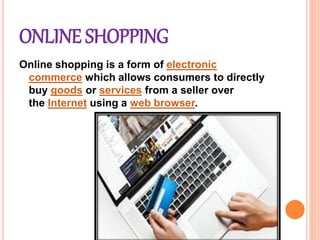
ONLINE SHOPPING
Online shopping is a form of electronic
commerce which allows consumers to directly
buy goods or services from a seller over
the Internet using a web browser.
TELECONFERENCING
A teleconference or teleseminar is the live
exchange and mass articulation
of information among several persons and
machines remote from one another but linked by
a telecommunications system.
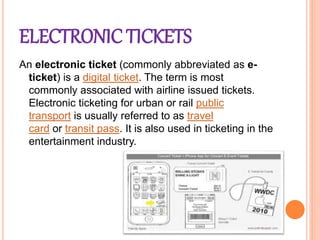
ELECTRONIC TICKETS
An electronic ticket (commonly abbreviated as e-
ticket) is a digital ticket. The term is most
commonly associated with airline issued tickets.
Electronic ticketing for urban or rail public
transport is usually referred to as travel
card or transit pass. It is also used in ticketing in the
entertainment industry.
SOCIAL NETWORKING
A social networking service (also social
networking site, SNS or social media) is an
online platform that is used by people to build social
networks or social relations with other people who
share similar personal or career interests, activities,
backgrounds or real-life connections.
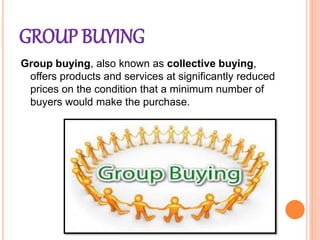
GROUP BUYING
Group buying, also known as collective buying,
offers products and services at significantly reduced
prices on the condition that a minimum number of
buyers would make the purchase.
ONLINE BANKING
Online banking, also known as internet banking, e-
banking or virtual banking, is an electronic
payment system that enables customers of
a bank or other financial institution to conduct a
range of financial transactions through the financial
institution's website.
GOVERNMENT REGULATION
In India, the Information
Technology Act
2000 governs the basic
applicability of e-
commerce.
SOCIAL IMPACT
 E-commerce has changed the relative importance
of time, but as the pillars of indicator of the
country's economic state that the importance of time
should not be ignored.
 Online merchants gather purchase activity and
interests of their customers. This information is
being used by the online marketers to promote
relevant products and services. This creates an extra
convenience for online shoppers.
 Online merchandise is searchable, which makes it
more accessible to shoppers. Many online retailers
offer a review mechanism, which helps shoppers
decide on the product to purchase. This is another
convenience and a satisfaction improvement factor.
 E-commerce offers the consumer or enterprise
various information they need, making information
into total transparency, and enterprises are no
longer is able to use the mode of space or
advertisement to raise their competitive edge.
Moreover, in theory, perfect competition between
the consumer sovereignty and industry will
maximize social welfare.
SUMMARY
E-Commerce or Electronics Commerce
is a methodology of modern business
which addresses the need of business
organizations, vendors and customers
to reduce cost and improve the quality
of goods and services while increasing
the speed of delivery.
E commerce
E commerce

E commerce

  • 2.
    EMMANUEL COLLEGE OFB.Ed , VAZHICHAL
  • 4.
    E-commerce is atransaction of buying or selling online. Electronic commerce draws on technologies such as mobile commerce, electronic funds transfer, supply chain management, Internet marketing, online transaction processing, electronic data interchange (EDI), inventory management systems, and automated data collection systems.
  • 6.
    Some common applicationsrelated to electronic commerce are: Online Shopping Group Buying Online Banking Teleconferencing Electronic Tickets Social Networking
  • 7.
    ONLINE SHOPPING Online shoppingis a form of electronic commerce which allows consumers to directly buy goods or services from a seller over the Internet using a web browser.
  • 8.
    TELECONFERENCING A teleconference orteleseminar is the live exchange and mass articulation of information among several persons and machines remote from one another but linked by a telecommunications system.
  • 9.
    ELECTRONIC TICKETS An electronicticket (commonly abbreviated as e- ticket) is a digital ticket. The term is most commonly associated with airline issued tickets. Electronic ticketing for urban or rail public transport is usually referred to as travel card or transit pass. It is also used in ticketing in the entertainment industry.
  • 10.
    SOCIAL NETWORKING A socialnetworking service (also social networking site, SNS or social media) is an online platform that is used by people to build social networks or social relations with other people who share similar personal or career interests, activities, backgrounds or real-life connections.
  • 11.
    GROUP BUYING Group buying,also known as collective buying, offers products and services at significantly reduced prices on the condition that a minimum number of buyers would make the purchase.
  • 12.
    ONLINE BANKING Online banking,also known as internet banking, e- banking or virtual banking, is an electronic payment system that enables customers of a bank or other financial institution to conduct a range of financial transactions through the financial institution's website.
  • 13.
    GOVERNMENT REGULATION In India,the Information Technology Act 2000 governs the basic applicability of e- commerce.
  • 15.
    SOCIAL IMPACT  E-commercehas changed the relative importance of time, but as the pillars of indicator of the country's economic state that the importance of time should not be ignored.  Online merchants gather purchase activity and interests of their customers. This information is being used by the online marketers to promote relevant products and services. This creates an extra convenience for online shoppers.
  • 16.
     Online merchandiseis searchable, which makes it more accessible to shoppers. Many online retailers offer a review mechanism, which helps shoppers decide on the product to purchase. This is another convenience and a satisfaction improvement factor.
  • 17.
     E-commerce offersthe consumer or enterprise various information they need, making information into total transparency, and enterprises are no longer is able to use the mode of space or advertisement to raise their competitive edge. Moreover, in theory, perfect competition between the consumer sovereignty and industry will maximize social welfare.
  • 19.
    SUMMARY E-Commerce or ElectronicsCommerce is a methodology of modern business which addresses the need of business organizations, vendors and customers to reduce cost and improve the quality of goods and services while increasing the speed of delivery.