A dynamic-equivalence translation can also be 
called a thought-for-thought translation… 
In making a thought-for-thought translation, the 
translators must do their best to enter into the 
thought patterns of the ancient authors and to 
present the same ideas, connotations, and effects 
in the receptor modern language. 
From the Introduction to the New Living Translation.
 Do you have your feathers? Good. 
 Siap dengan bulu-bulu kalian? Bagus. 
 It is not appropriate to translate it as : 
 Apakah kamu sudah mendapatkan bulumu? 
Bagus.
 No, stop,stop, stop! You’re going to take 
someone’s eye out. 
 Tidak, hentikan, hentikan, hentikan! Sebelum 
kamu membutakan mata orang. 
 It is not suitable to translate it as: bukan, 
berhenti, berhenti, berhenti , kamu akan 
membuat mata orang keluar.
 It’s Leviosa, not Leviosar 
This sentence will be appropriate to be translated 
as : “Leviosa, bukan leviosar.” There is no need 
to translate the words “It’s” to be “Itu Leviosa, 
bukan leviosar”.
Dynamic equivalence translations do not attempt to 
translate every word, but rather give the meaning of 
every thought (though most words will be 
translated).
 the most emotional parts of the text occur when 
one of the main characters, Lintang, has to 
leave the school: 
 "It was dead silent. The birds that usually 
played in the filicium were silent, too. 
Everyone’s hearts were drowning in tears at 
having the pearl of knowledge taken away 
from school. We hugged Lintang as a symbol 
of saying goodbye.
 His tears fell slowly, his hug tight like he 
didn't want to let go. His body shook when 
his noble soul was forced to leave the school. 
I couldn't bear to see his miserable face, and 
no matter how hard I tried, my sadness won 
and emptied my eyes of their tears.
 It turned into a silent, tearless cry; it was so 
painful. I couldn't even utter a fragment of a 
word to say goodbye. We were all sobbing. 
Muslimah’s lips quivered holding back tears, 
her eyes red. But not one tear fell from her 
eyes. She wanted us to be strong. My chest 
ached seeing her like that.
 That afternoon was the saddest afternoon in 
the history of Belitong, from the Linggang 
River delta to Pangkalan Punai Beach, from 
Mirang Bridge to Tanjong Pandan. It was the 
saddest afternoon in the world. At the 
moment I realized that we all were actually 
the brothers of light and fire.
 We pledged to be faithful through strikes of 
lightning and mountain-moving tornadoes. 
Our pledge was written in the seven layers of 
the sky, witnessed by the mysterious dragons 
that ruled the South China Sea. Together, we 
were the most beautiful rainbow ever created 
by God."
 "On a silent evening, a poor man with a heart 
as big as the sky passed away. One of the 
wells of knowledge in the forsaken 
(terabaikan/ditinggalkan), dry field was gone 
forever. He died on his battlefield, the school 
he fought to keep alive until his last breath. A 
noble death, just like he always wanted.
 There were no rounds of gunshots to salute 
him, no flower arrangements, no awards from 
the government or speeches from the 
Education Minister, no glorifying monument 
of any kind from anybody. But he had left a 
pure well in the hearts of eleven students, a 
well of knowledge that would never dry up.
 We wept in the classroom. The one who 
sobbed most heart wrenchingly( hati yang 
pilu/terpukul) was Harun. Pak Harfan had 
been like a father to him. He sobbed and 
sobbed; he couldn't be consoled (dihibur). His 
heavy tears streamed down, soaking his 
shirt."
 The translations produced by this method 
are easier to read and understand, and 
generally are written in smoother English 
 These translations make it easy to 
understand the central meaning of a 
sentences.
 This method requires more 
interpretation by the translator than an 
essentially literal translation
Bahasa Indonesia: 
A: Eh, TUMBEN kamu di sini.. Janjian ketemu sama 
orang? 
B: Ngga, ISENG aja. Udah lama ngga ke sini. 
English: 
A: Hi! I didn't expect to see you here. Meeting someone? 
B: Nope. Just thought I'd come here. Been a long time. 
How would you translate the indonesian word "TUMBEN"? 
And what about "ISENG"? you don't translate them, do 
you?. You just look at the whole context of conversational 
exchanges and find expressions that best convey.
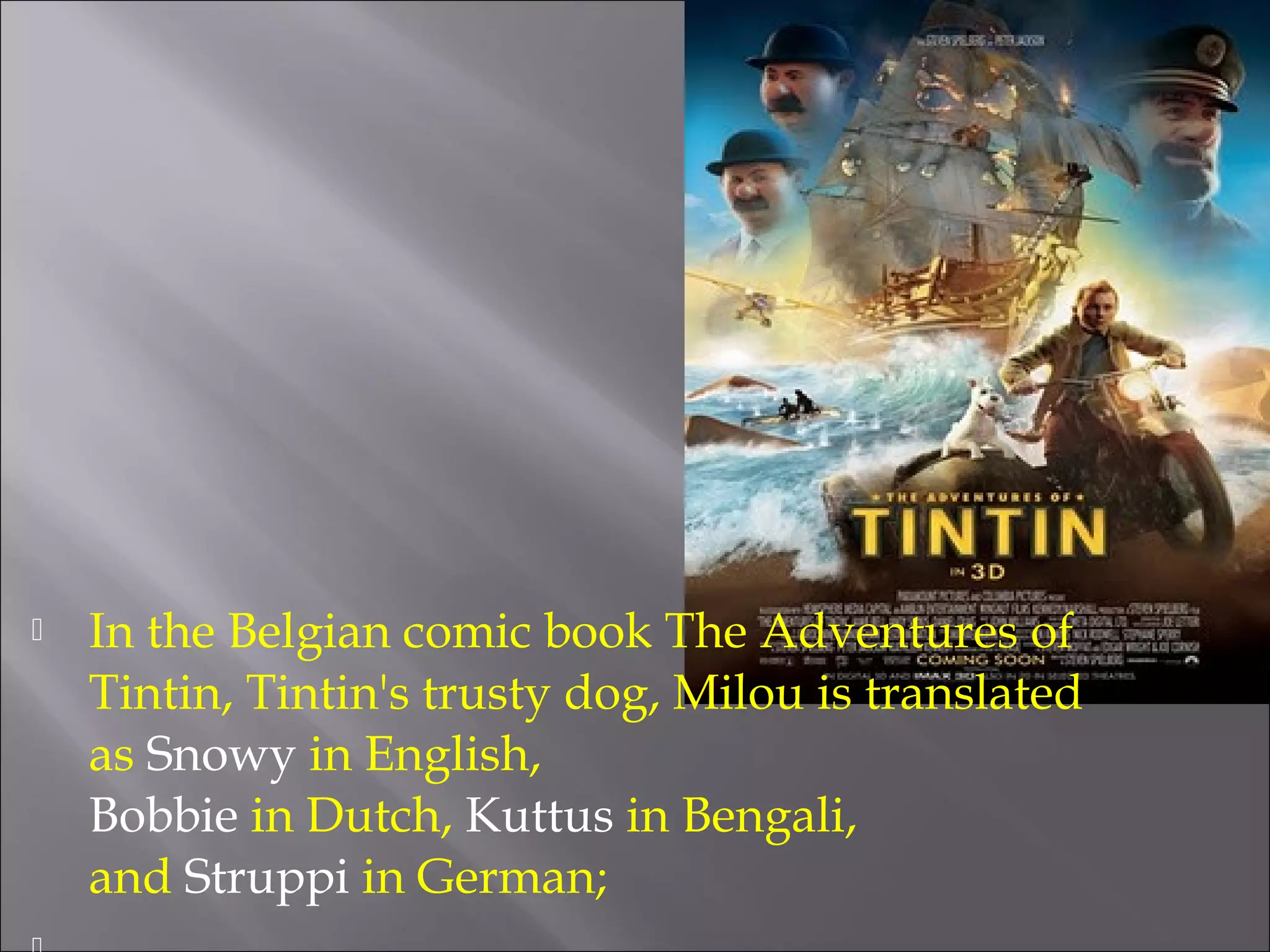
 In the Belgian comic book The Adventures of 
Tintin, Tintin's trusty dog, Milou is translated 
as Snowy in English, 
Bobbie in Dutch, Kuttus in Bengali, 
and Struppi in German; 

Paraphrases or free translations are most concerned 
with a fresh way to express the meaning of the 
passage, and are generally not concerned to translate 
each underlying word or even phrase from the original 
language
 Translations produced by this method will 
usually be very original and may cause the 
reader to take more notice of the passage
 These translations are highly interpretive 
 These translations have no concern for 
translating each underlying word or phrase 
and so are not good for study purposes
 There is no such thing as a perfect translation 
– language is simply too complex 
 Due to the fact that languages change, all 
translations will have to be updated over time
Dynamic contextual translation

Dynamic contextual translation

  • 2.
    A dynamic-equivalence translationcan also be called a thought-for-thought translation… In making a thought-for-thought translation, the translators must do their best to enter into the thought patterns of the ancient authors and to present the same ideas, connotations, and effects in the receptor modern language. From the Introduction to the New Living Translation.
  • 3.
     Do youhave your feathers? Good.  Siap dengan bulu-bulu kalian? Bagus.  It is not appropriate to translate it as :  Apakah kamu sudah mendapatkan bulumu? Bagus.
  • 4.
     No, stop,stop,stop! You’re going to take someone’s eye out.  Tidak, hentikan, hentikan, hentikan! Sebelum kamu membutakan mata orang.  It is not suitable to translate it as: bukan, berhenti, berhenti, berhenti , kamu akan membuat mata orang keluar.
  • 5.
     It’s Leviosa,not Leviosar This sentence will be appropriate to be translated as : “Leviosa, bukan leviosar.” There is no need to translate the words “It’s” to be “Itu Leviosa, bukan leviosar”.
  • 6.
    Dynamic equivalence translationsdo not attempt to translate every word, but rather give the meaning of every thought (though most words will be translated).
  • 7.
     the mostemotional parts of the text occur when one of the main characters, Lintang, has to leave the school:  "It was dead silent. The birds that usually played in the filicium were silent, too. Everyone’s hearts were drowning in tears at having the pearl of knowledge taken away from school. We hugged Lintang as a symbol of saying goodbye.
  • 8.
     His tearsfell slowly, his hug tight like he didn't want to let go. His body shook when his noble soul was forced to leave the school. I couldn't bear to see his miserable face, and no matter how hard I tried, my sadness won and emptied my eyes of their tears.
  • 9.
     It turnedinto a silent, tearless cry; it was so painful. I couldn't even utter a fragment of a word to say goodbye. We were all sobbing. Muslimah’s lips quivered holding back tears, her eyes red. But not one tear fell from her eyes. She wanted us to be strong. My chest ached seeing her like that.
  • 10.
     That afternoonwas the saddest afternoon in the history of Belitong, from the Linggang River delta to Pangkalan Punai Beach, from Mirang Bridge to Tanjong Pandan. It was the saddest afternoon in the world. At the moment I realized that we all were actually the brothers of light and fire.
  • 11.
     We pledgedto be faithful through strikes of lightning and mountain-moving tornadoes. Our pledge was written in the seven layers of the sky, witnessed by the mysterious dragons that ruled the South China Sea. Together, we were the most beautiful rainbow ever created by God."
  • 12.
     "On asilent evening, a poor man with a heart as big as the sky passed away. One of the wells of knowledge in the forsaken (terabaikan/ditinggalkan), dry field was gone forever. He died on his battlefield, the school he fought to keep alive until his last breath. A noble death, just like he always wanted.
  • 13.
     There wereno rounds of gunshots to salute him, no flower arrangements, no awards from the government or speeches from the Education Minister, no glorifying monument of any kind from anybody. But he had left a pure well in the hearts of eleven students, a well of knowledge that would never dry up.
  • 14.
     We weptin the classroom. The one who sobbed most heart wrenchingly( hati yang pilu/terpukul) was Harun. Pak Harfan had been like a father to him. He sobbed and sobbed; he couldn't be consoled (dihibur). His heavy tears streamed down, soaking his shirt."
  • 15.
     The translationsproduced by this method are easier to read and understand, and generally are written in smoother English  These translations make it easy to understand the central meaning of a sentences.
  • 16.
     This methodrequires more interpretation by the translator than an essentially literal translation
  • 17.
    Bahasa Indonesia: A:Eh, TUMBEN kamu di sini.. Janjian ketemu sama orang? B: Ngga, ISENG aja. Udah lama ngga ke sini. English: A: Hi! I didn't expect to see you here. Meeting someone? B: Nope. Just thought I'd come here. Been a long time. How would you translate the indonesian word "TUMBEN"? And what about "ISENG"? you don't translate them, do you?. You just look at the whole context of conversational exchanges and find expressions that best convey.
  • 18.
     In theBelgian comic book The Adventures of Tintin, Tintin's trusty dog, Milou is translated as Snowy in English, Bobbie in Dutch, Kuttus in Bengali, and Struppi in German; 
  • 19.
    Paraphrases or freetranslations are most concerned with a fresh way to express the meaning of the passage, and are generally not concerned to translate each underlying word or even phrase from the original language
  • 20.
     Translations producedby this method will usually be very original and may cause the reader to take more notice of the passage
  • 21.
     These translationsare highly interpretive  These translations have no concern for translating each underlying word or phrase and so are not good for study purposes
  • 22.
     There isno such thing as a perfect translation – language is simply too complex  Due to the fact that languages change, all translations will have to be updated over time