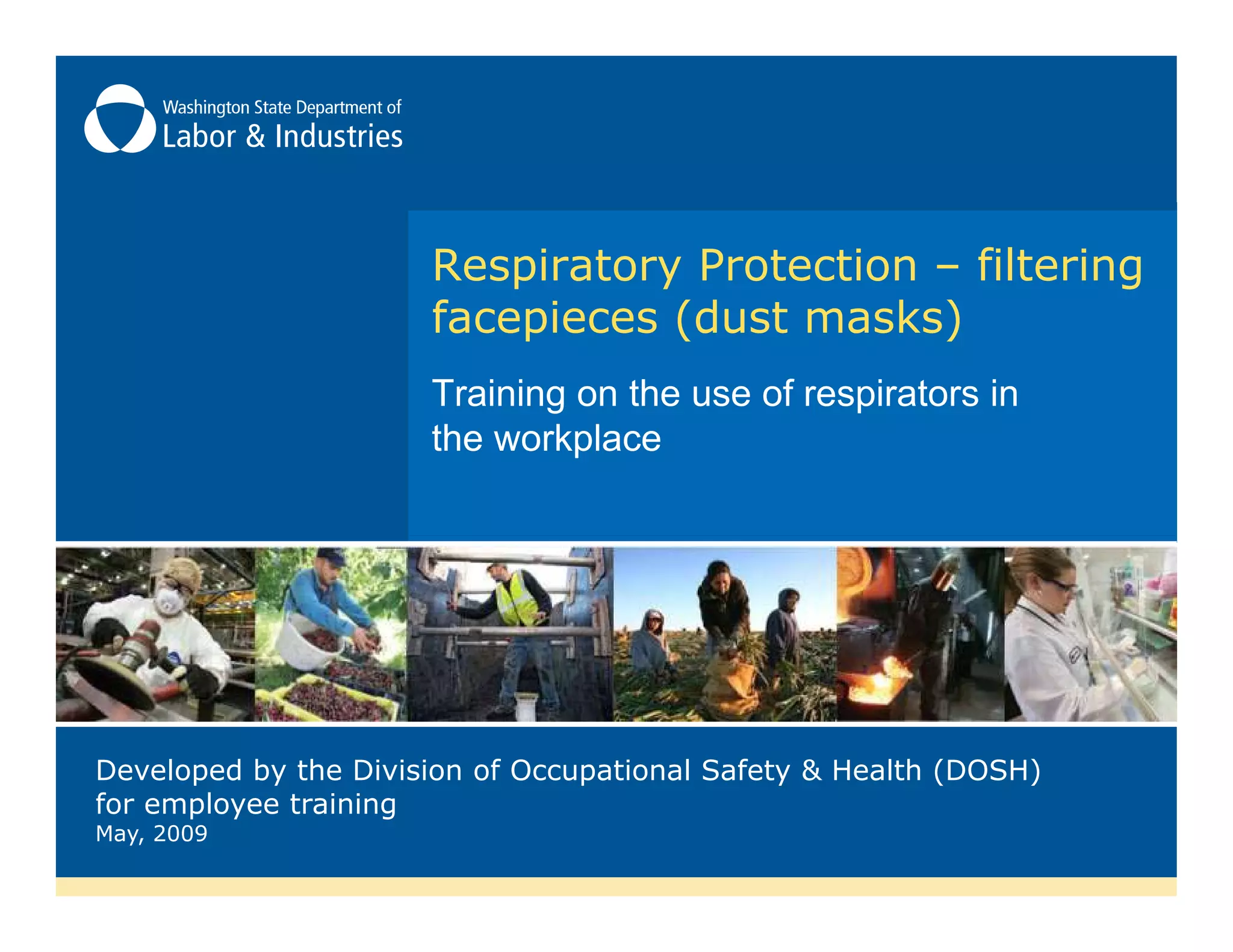
Respiratory Protection – filtering
                      facepieces (dust masks)
                      Training on the use of respirators in
                      the workplace


Developed by the Division of Occupational Safety & Health (DOSH)
for employee training
May, 2009
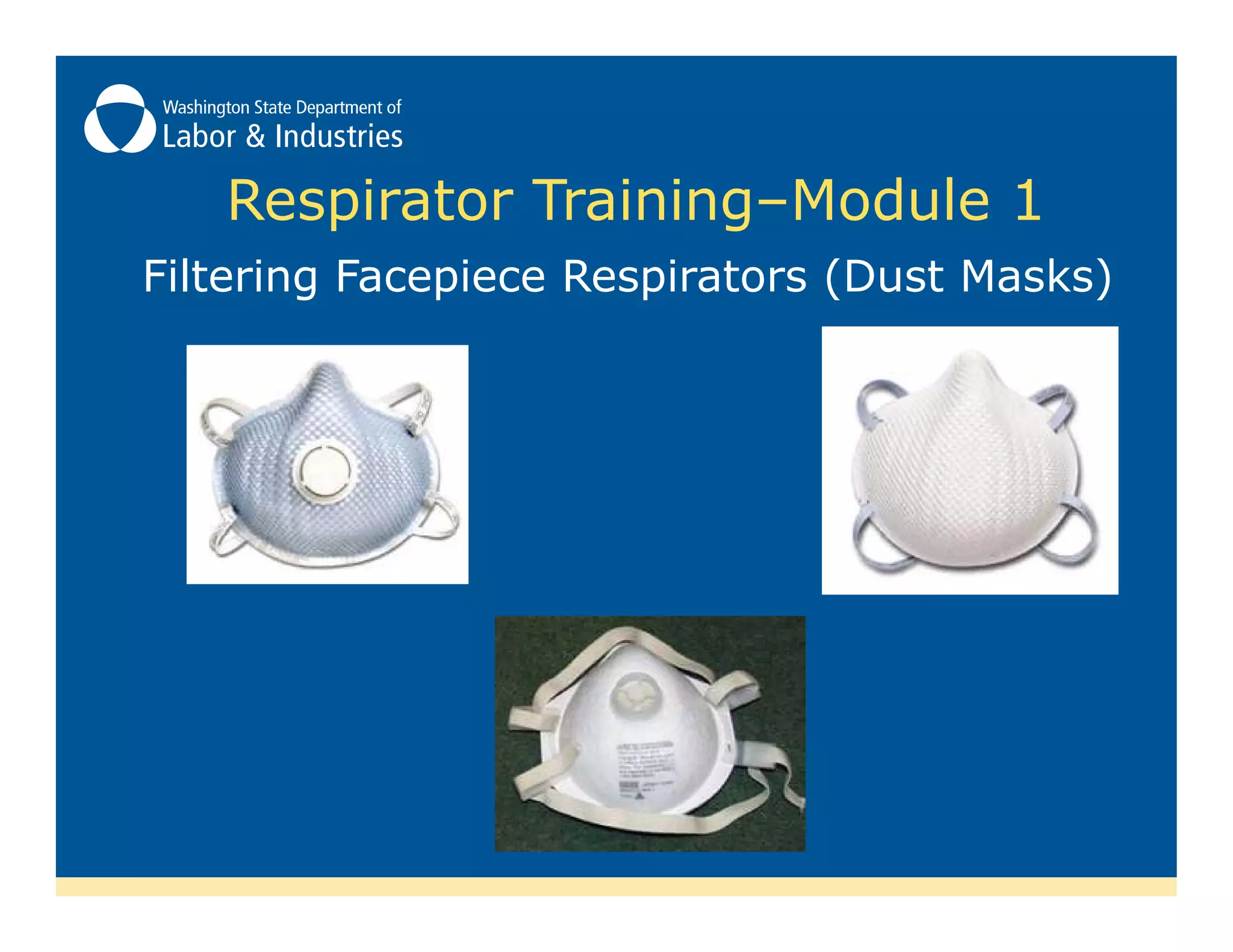
Respirator Training–Module 1
Filtering Facepiece Respirators (
        g     p        p        (Dust Masks)
                                           )
Respirator Training
           Why Is This Training Required?

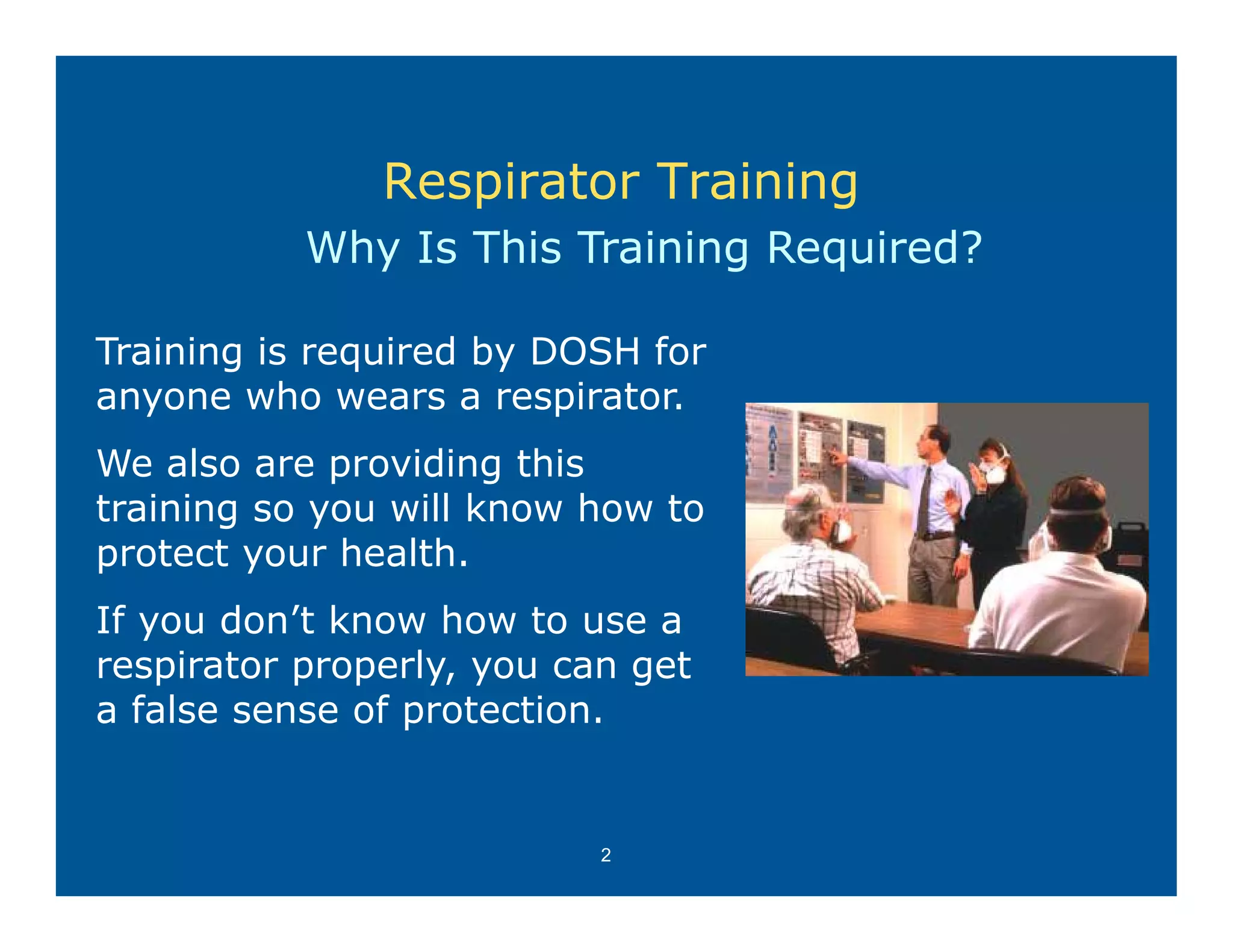
Training is required by DOSH for
anyone who wears a respirator.
  y                      p
We also are providing this
training so you will know how to
protect your health.
If you don’t know how to use a
respirator properly, you can get
     i t          l            t
a false sense of protection.


                           2
Respirator Training
      Respirator Program Administrator

Our respirator administrator is [name]


This person is responsible for overseeing our
respirator program
           program.


This person has training on respirators.


                        3
Respirator Use
    Where We Require Filtering Facepieces
     h                 l
Filtering facepieces (dust masks) are required in the
following locations or for the following job tasks:
                      [List here]


                        4
Respirator Use
We provide filtering facepieces (dust masks) for
protection against the following kinds of dust and
particles:
                [List here]


                      5
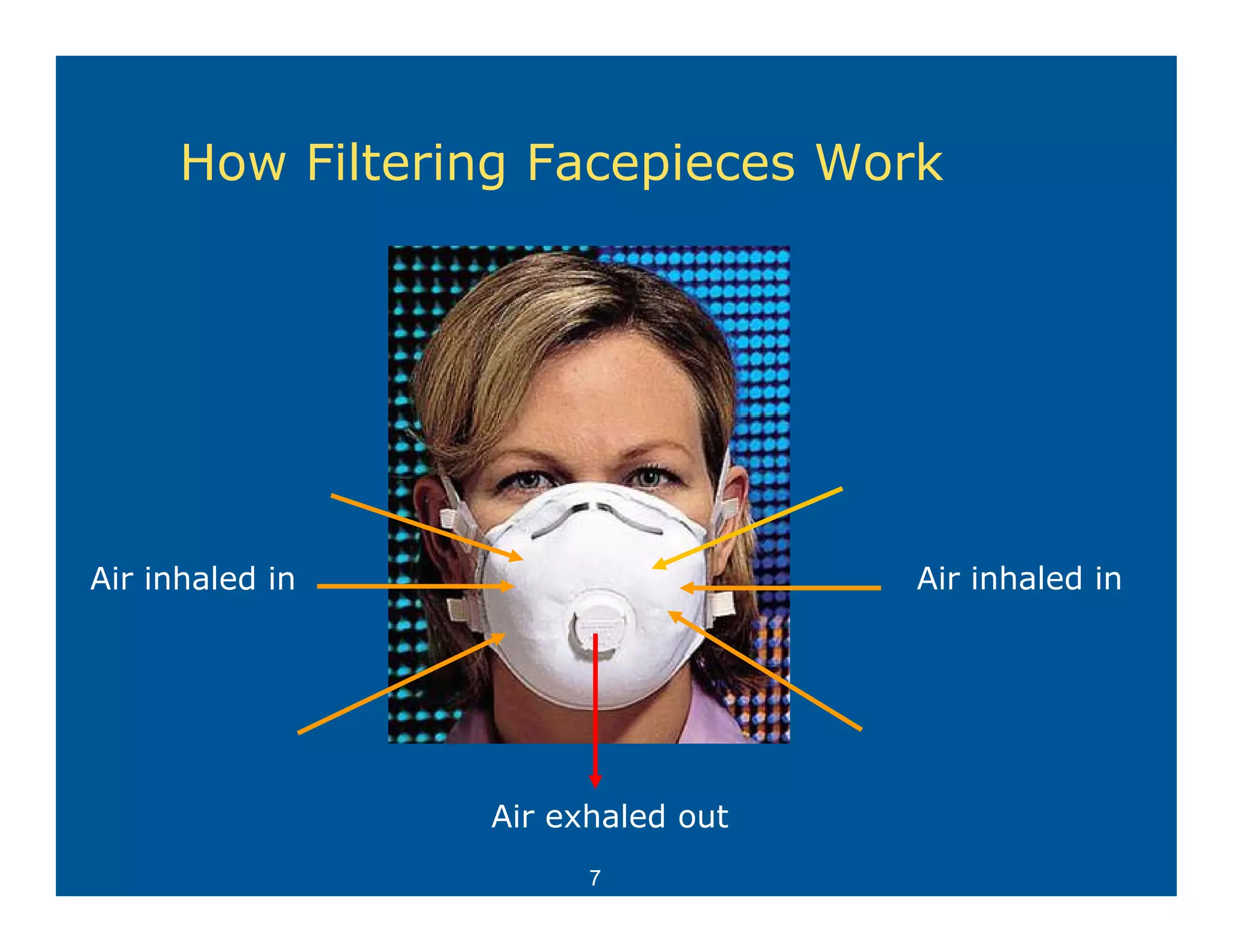
How Filtering Facepieces Work
                  g     p
      How Do Dust Masks Protect You?

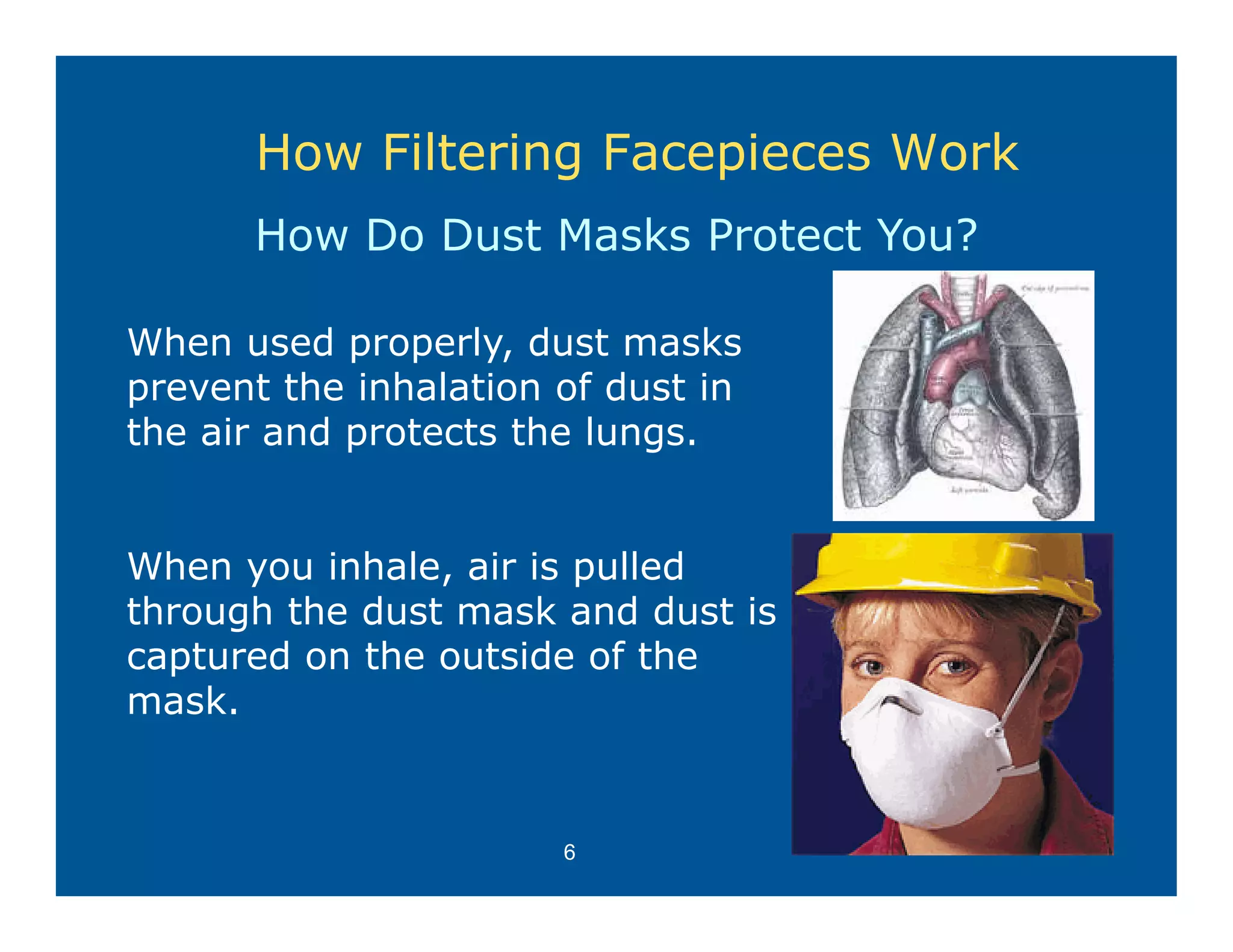
When used properly, dust masks
prevent the inhalation of dust in
the air and protects the lungs.


When you inhale, air is pulled
through the dust mask and dust is
captured on the outside of the
mask.


                       6
How Filtering Facepieces Work


Air inhaled in                     Air inhaled in


                 Air exhaled out
                       7
Using Filtering Facepieces
               Limits of dust masks
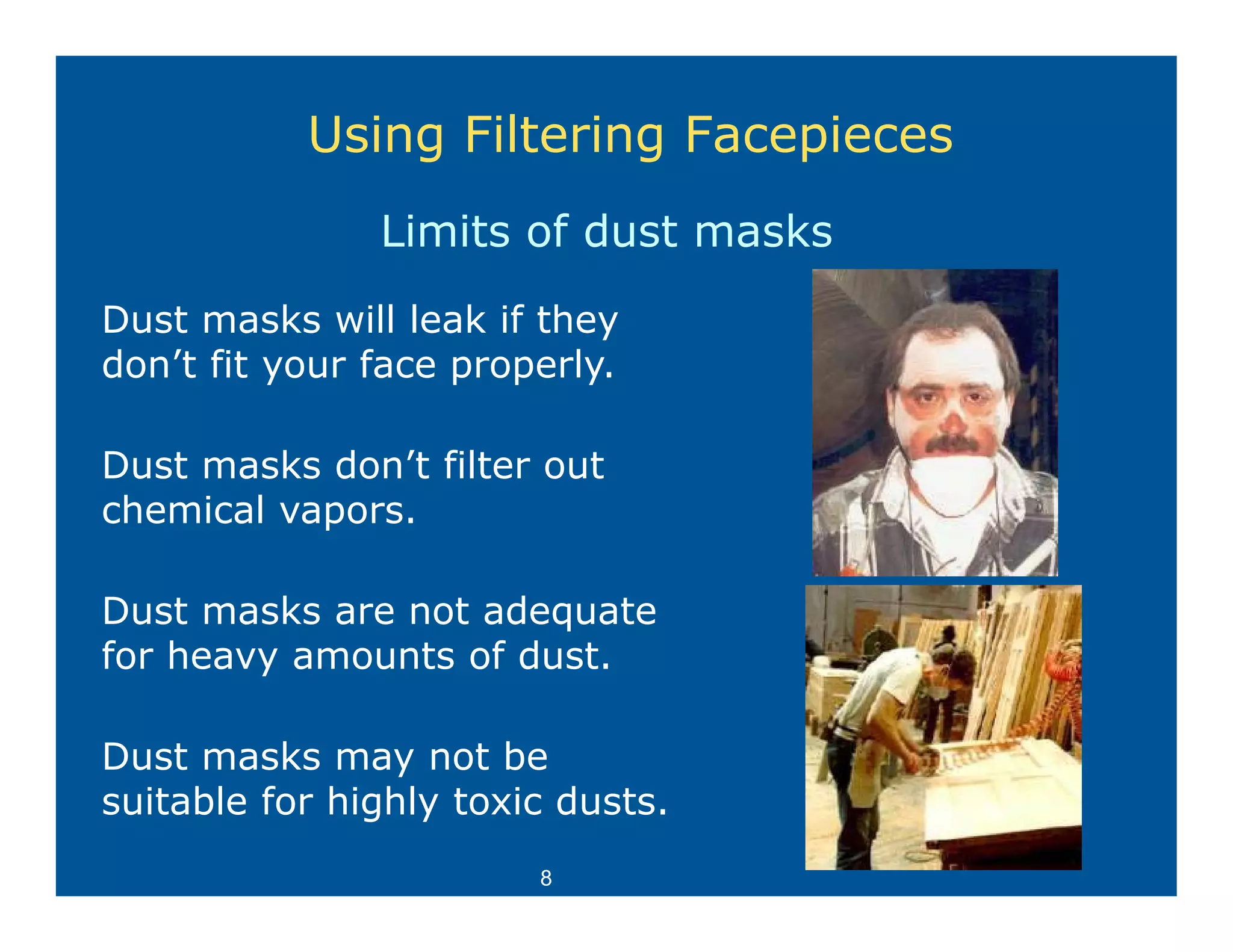
Dust masks will leak if they
don’t fit your face properly.

Dust masks don’t filter out
chemical vapors.

Dust masks are not adequate
for heavy amounts of dust
                     dust.

Dust masks may not be
                y
suitable for highly toxic dusts.
                        8
Dust Mask Protection Factor

How much protection does a dust mask give?


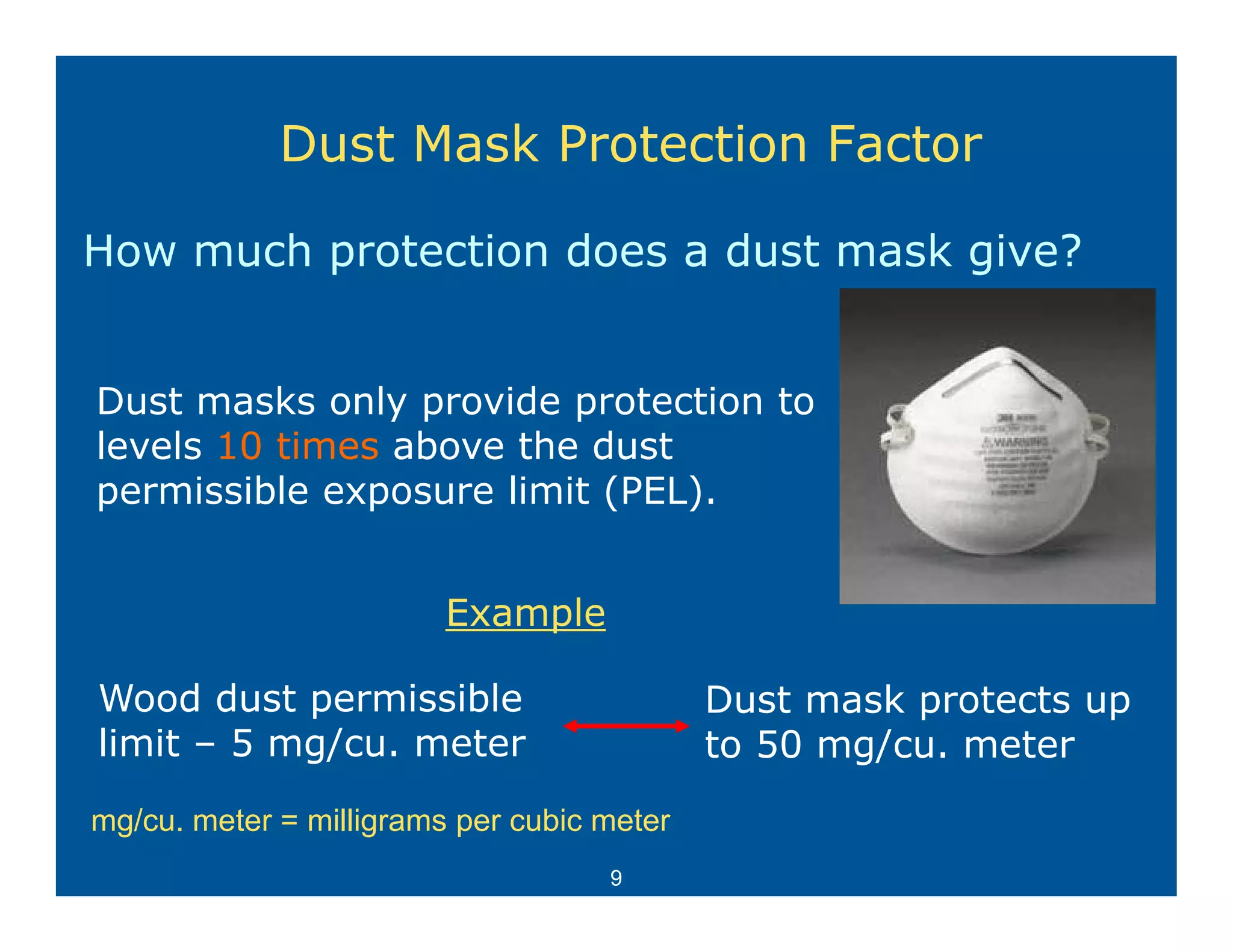
Dust masks only provide protection to
               yp        p
levels 10 times above the dust
permissible exposure limit (PEL).


                         Example

Wood dust permissible                       Dust mask protects up
limit – 5 mg/cu. meter                      to 50 mg/cu. meter
mg/cu. meter = milligrams per cubic meter
                                    9
NIOSH–Approved Dust Masks


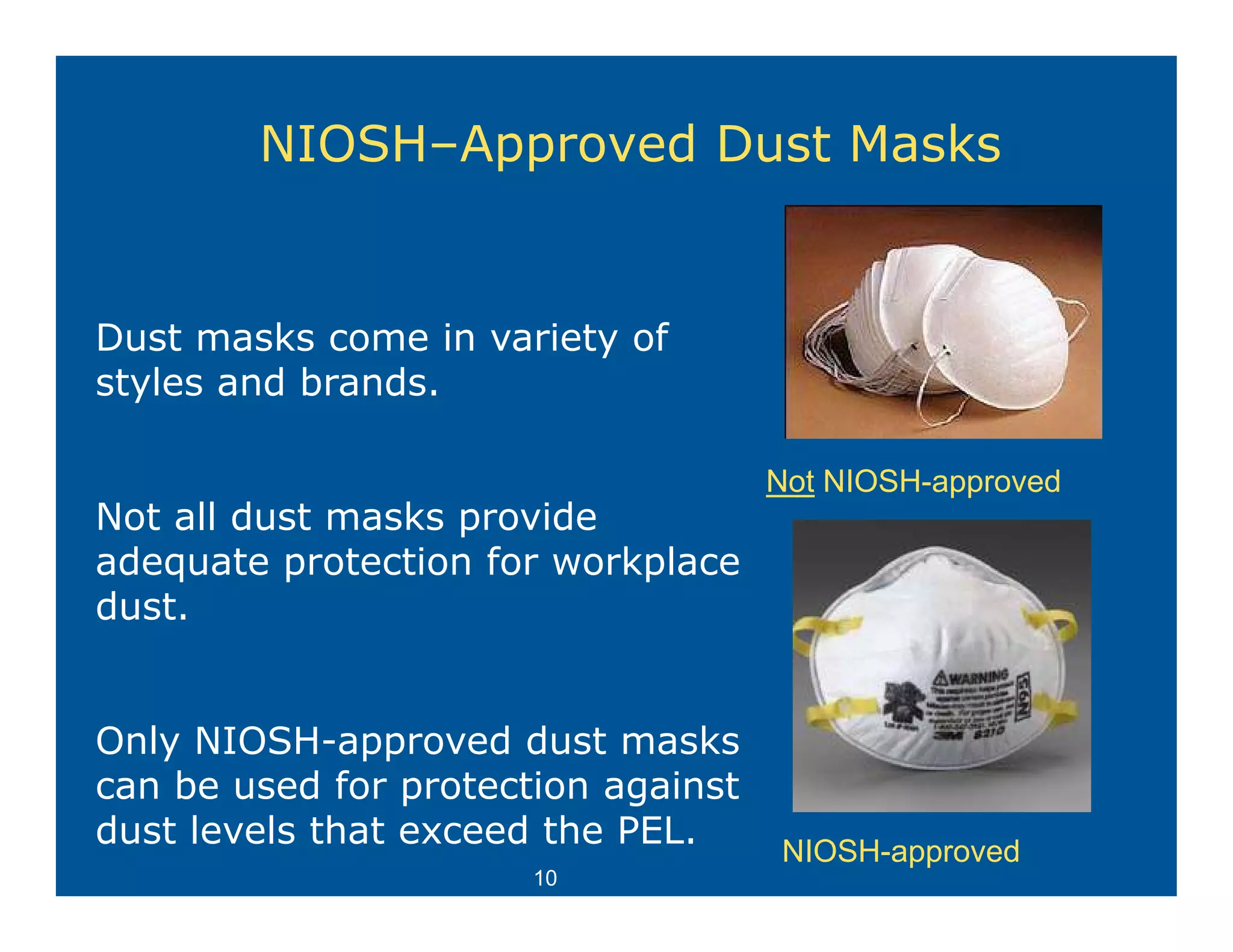
Dust masks come in variety of
styles and brands.

                                     Not NIOSH-approved
Not all dust masks provide
                   p
adequate protection for workplace
dust.


Only NIOSH-approved dust masks
can be used for protection against
    b      df       t ti      i t
dust levels that exceed the PEL.     NIOSH-approved
                       10
Types of Dust Masks
            yp
 Some masks are more protective than others

N95/R95/P95 masks filter out 95% of dust particles

N99/R95/P99 masks filter out 99% of dust particles

N100/R100/P100 masks filter out 99.7% of dust
particles

N99 or N100 masks are recommended for very fine
dust or dangerous dusts such as asbestos or silica.
             We use [list type] masks
                          11
Where Dust Masks Can’t Be Used
  Dust masks will not provide adequate
   protection in the following situations:


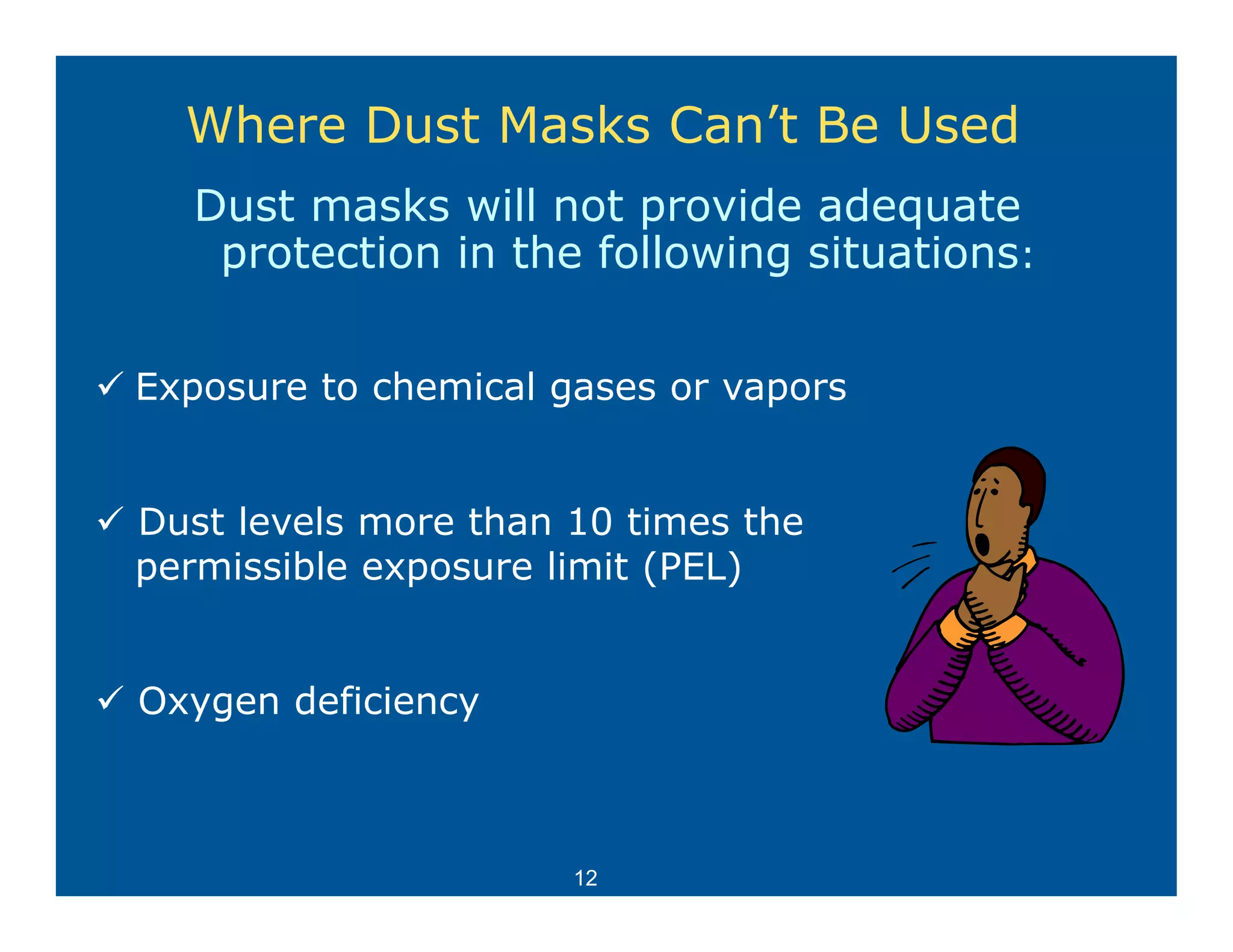
Exposure to chemical gases or vapors


Dust levels more than 10 times the
permissible exposure limit (PEL)


Oxygen deficiency


                      12
Respirators and Physical Fitness
               Medical Evaluations


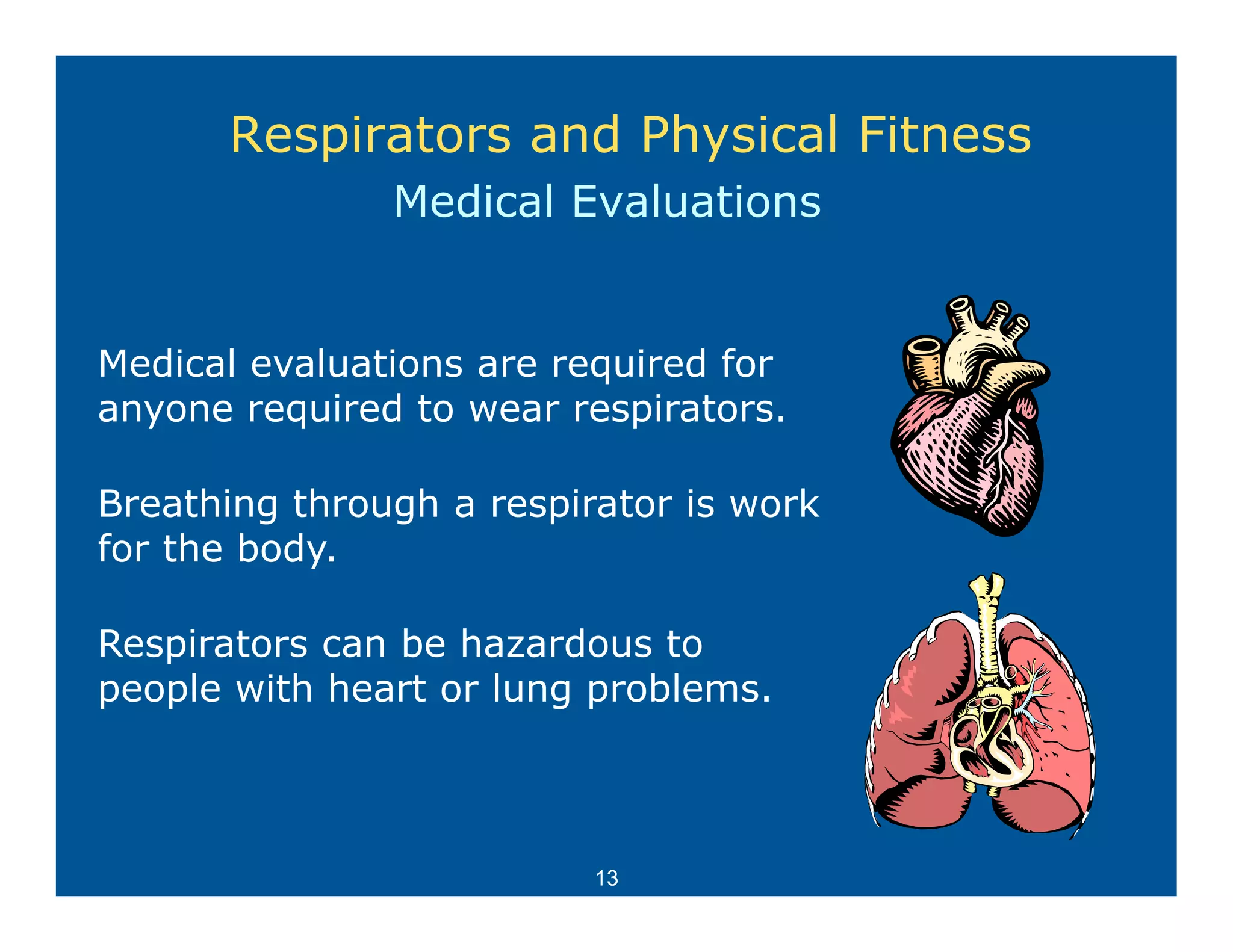
Medical evaluations are required for
anyone required to wear respirators
                         respirators.

Breathing through a respirator is work
for th b d
f the body.

Respirators can be hazardous to
people with heart or lung problems.


                          13
Respirator and Physical Fitness
              Medical Questionnaire

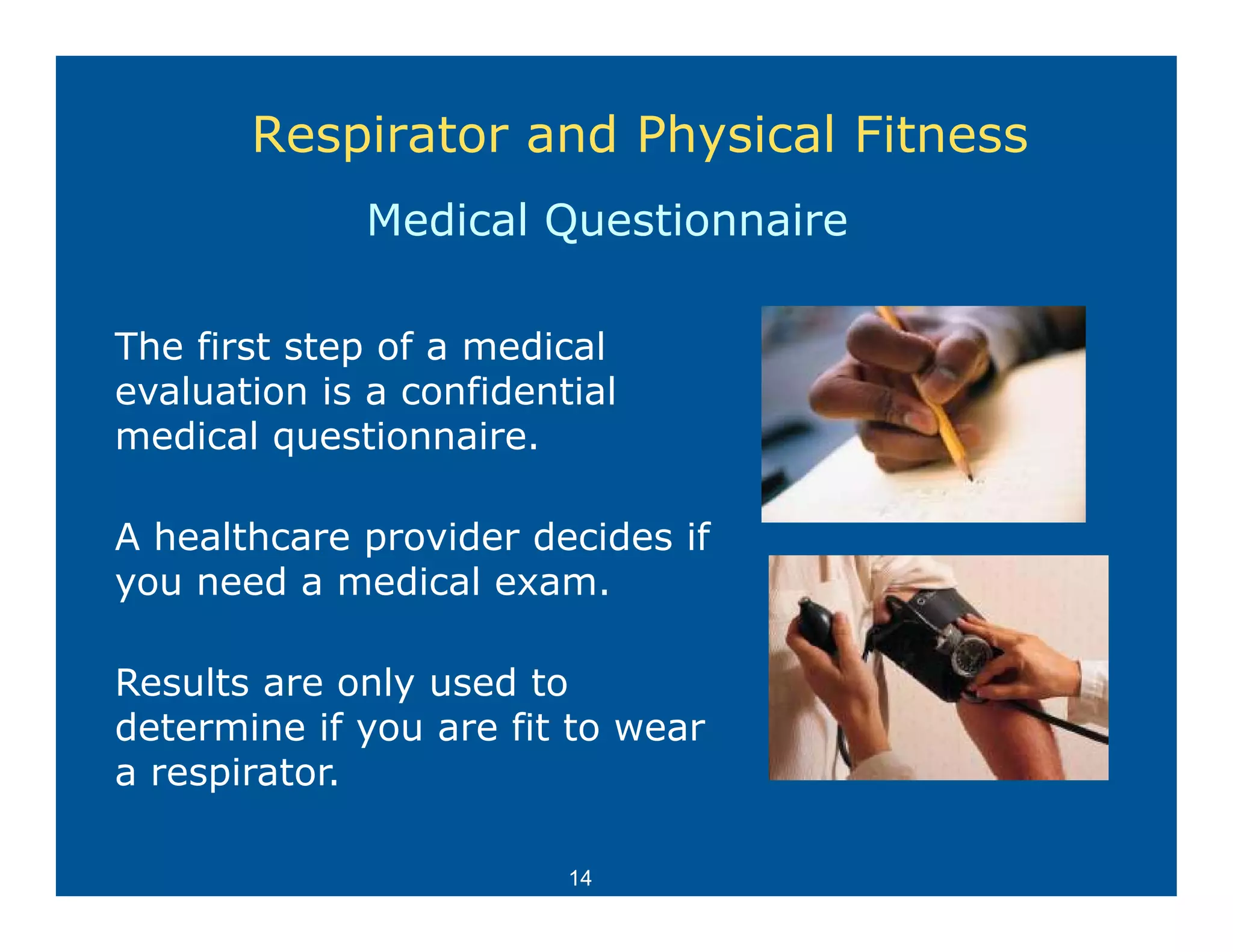
The first step of a medical
evaluation is a confidential
medical questionnaire.

A healthcare provider decides if
you need a medical exam.

Results are only used to
determine if you are fit to wear
a respirator
  respirator.

                         14
Respirator Fit
          Dust Masks Must Fit Properly

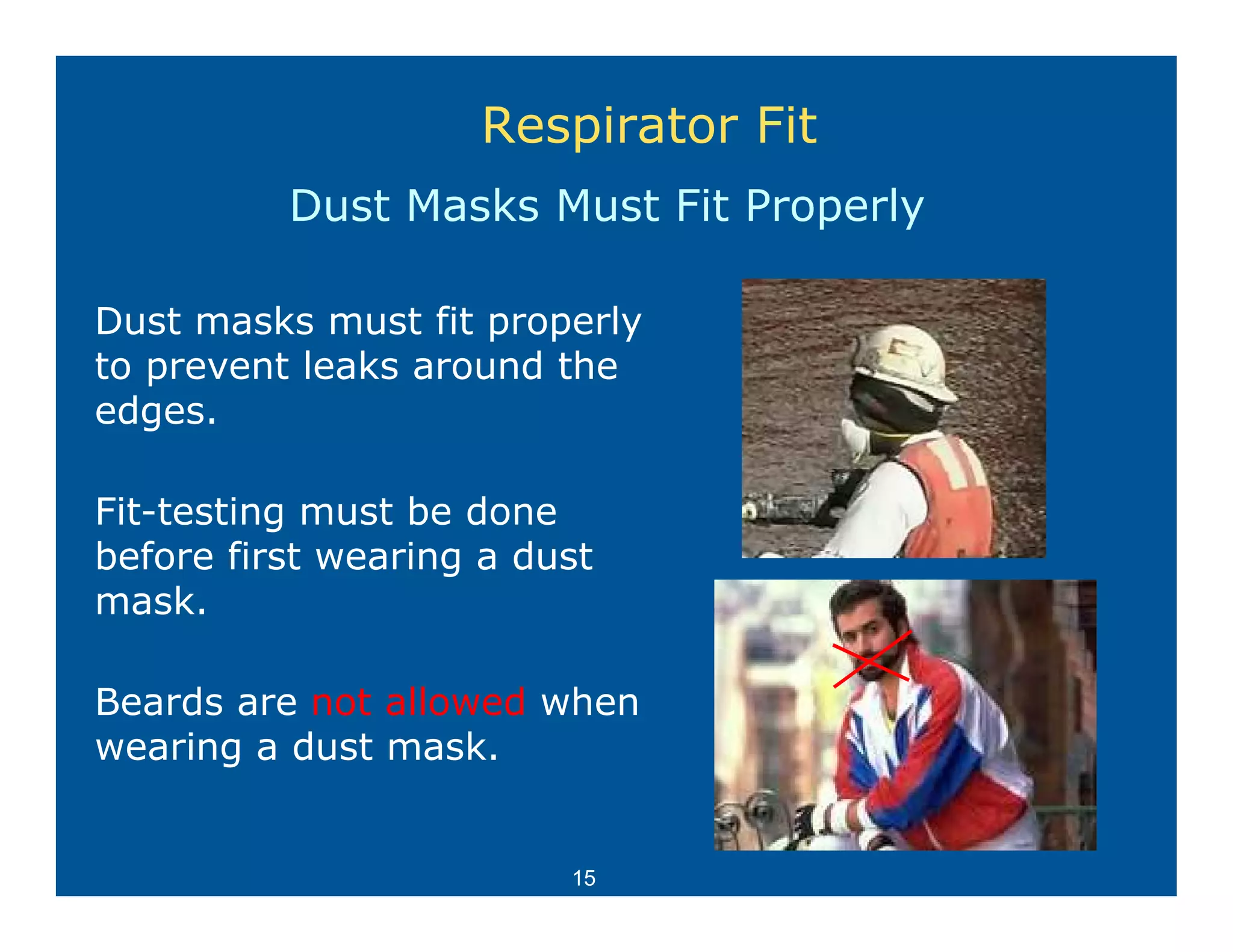
Dust masks must fit properly
to prevent leaks around the
edges.
edges

Fit-testing must be done
before first wearing a dust
mask.

Beards are not allowed when
wearing a dust mask.


                         15
Respirator Fit

                      Fit-testing

In fit-testing, you first try on a
dust mask for general comfort
and fit.

After
Aft a comfortable respirator is
           f t bl       i t i
selected, we conduct the actual
fit-test.
The method we use for fit-testing
is as follows: [describe]


                            16
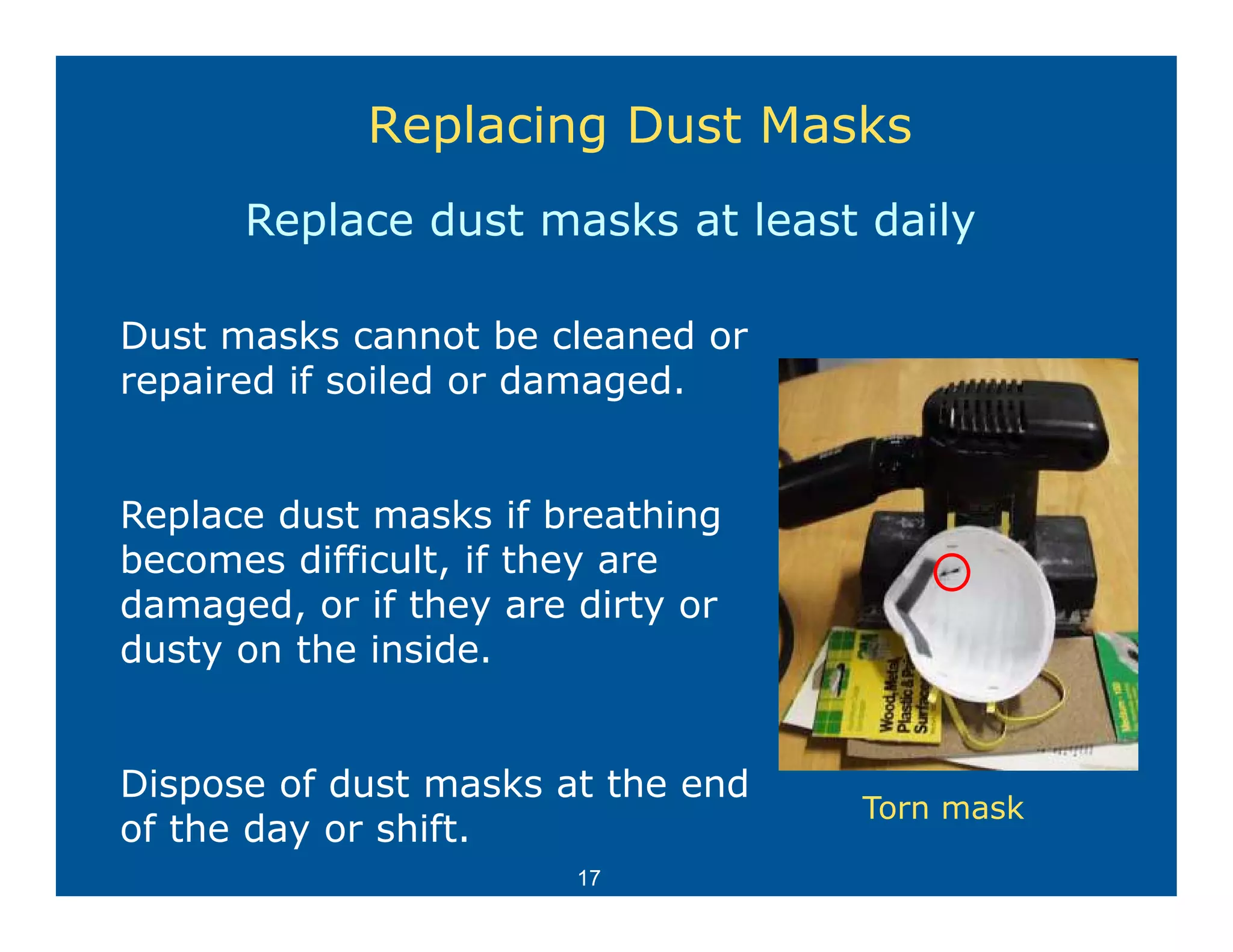
Replacing Dust Masks
      Replace dust masks at least daily

Dust masks cannot be cleaned or
repaired if soiled or damaged.


Replace dust masks if breathingg
becomes difficult, if they are
damaged, or if they are dirty or
dusty on the inside
             inside.


Dispose of dust masks at the end
Di        fd t       k t th    d
                                   Torn mask
of the day or shift.
                        17
Respirator Problems
      When it Smells Bad or You Feel Sick


If you notice an odor, find dust inside
         ti        d    fi d d t i id
the mask, feel ill, or you think your
respirator leaks, notify your
    p           ,       yy
supervisor.


Leave the area if you know your
mask is leaking.


                            18
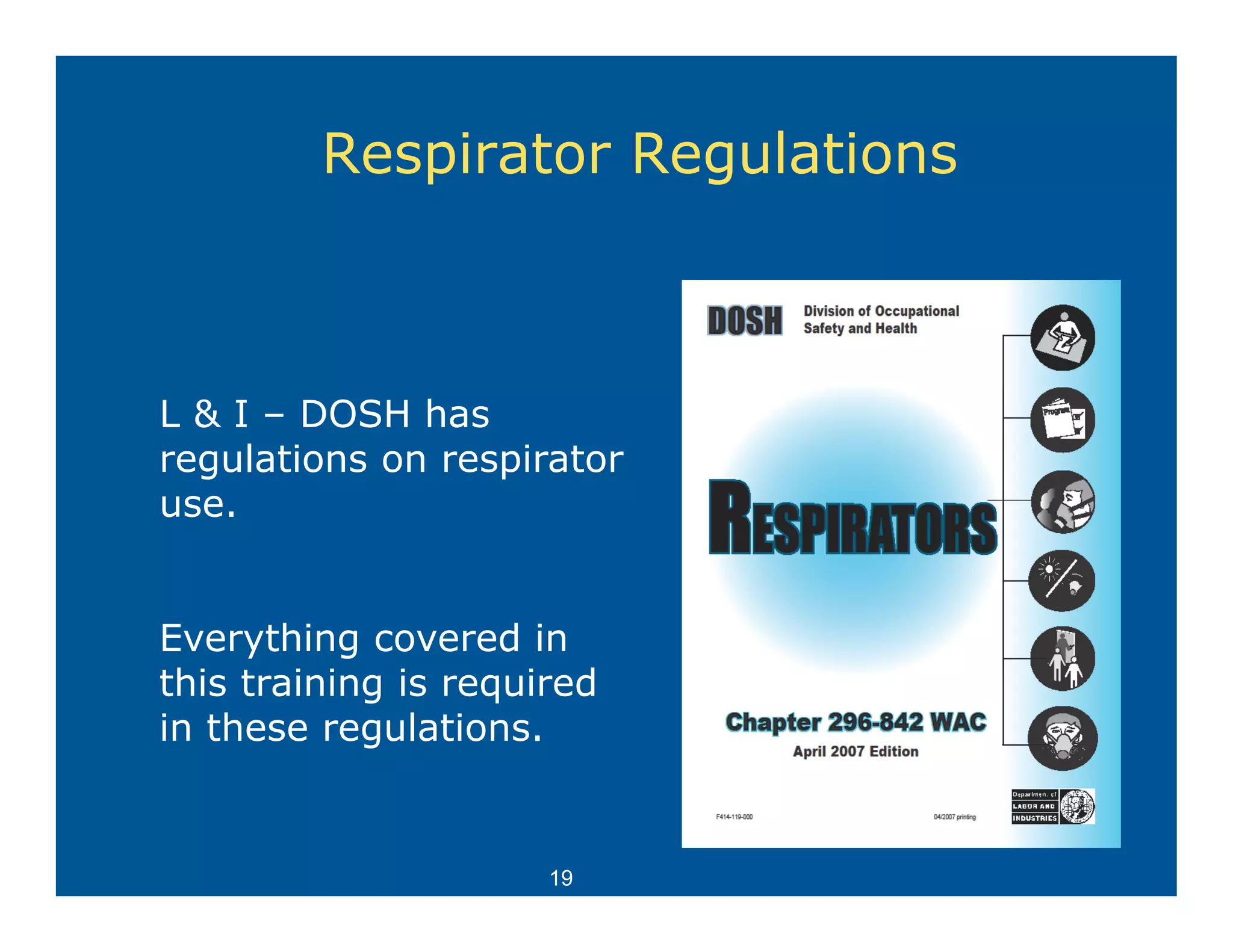
Respirator Regulations
            p         g


L & I – DOSH has
regulations on respirator
use.


Everything covered in
     y     g
this training is required
in these regulations.


                      19
Optional Quiz

The following questions are optional. They can be
            gq                p           y
used to check employees’ understanding of this
training and promote discussion. You can add more
questions for a short written or verbal quiz
                                        quiz.


                     20
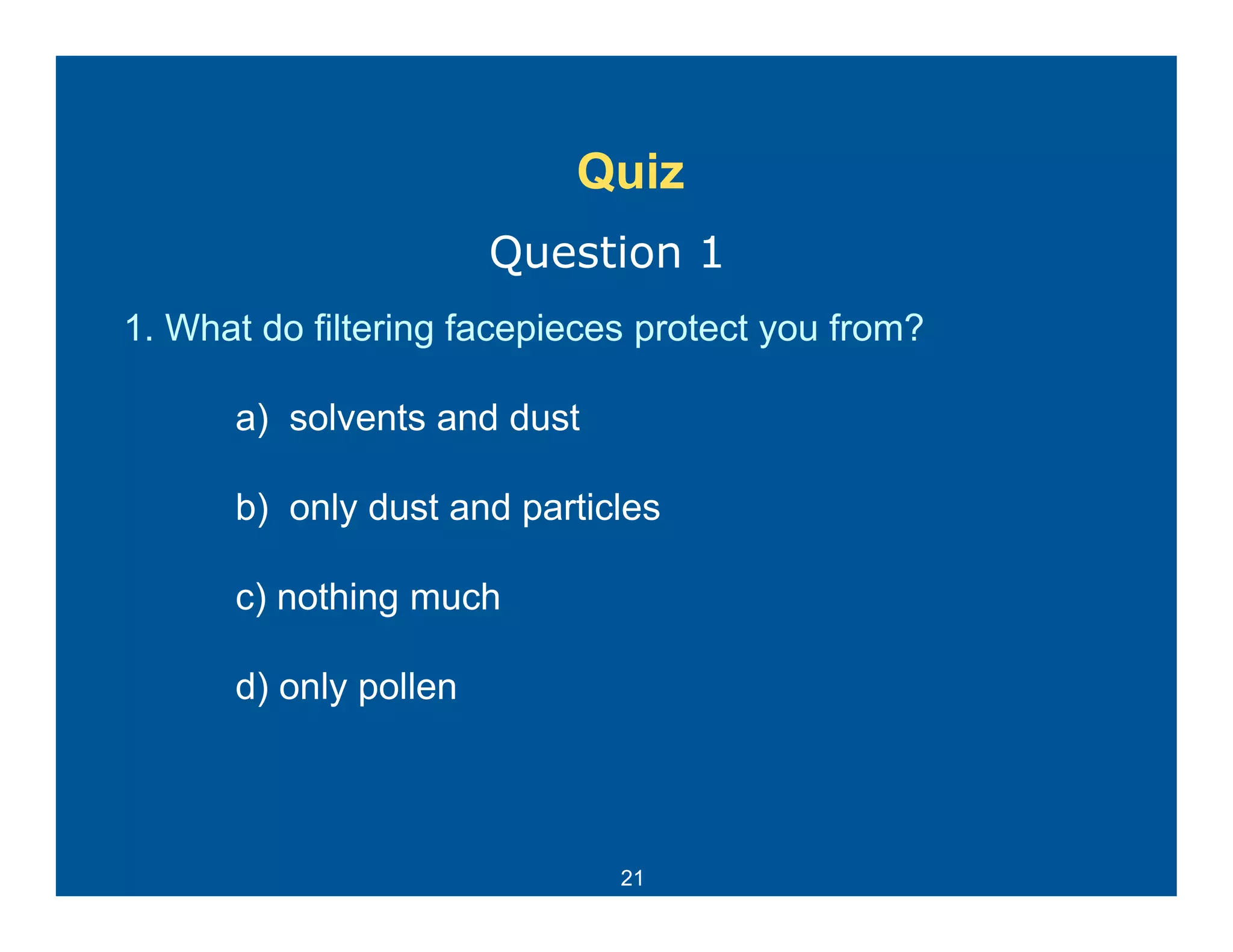
Quiz
                       Question 1
1. What do filtering facepieces protect you from?

      a) solvents and dust

      b) only dust and particles

      c) nothing much

      d) only pollen


                              21
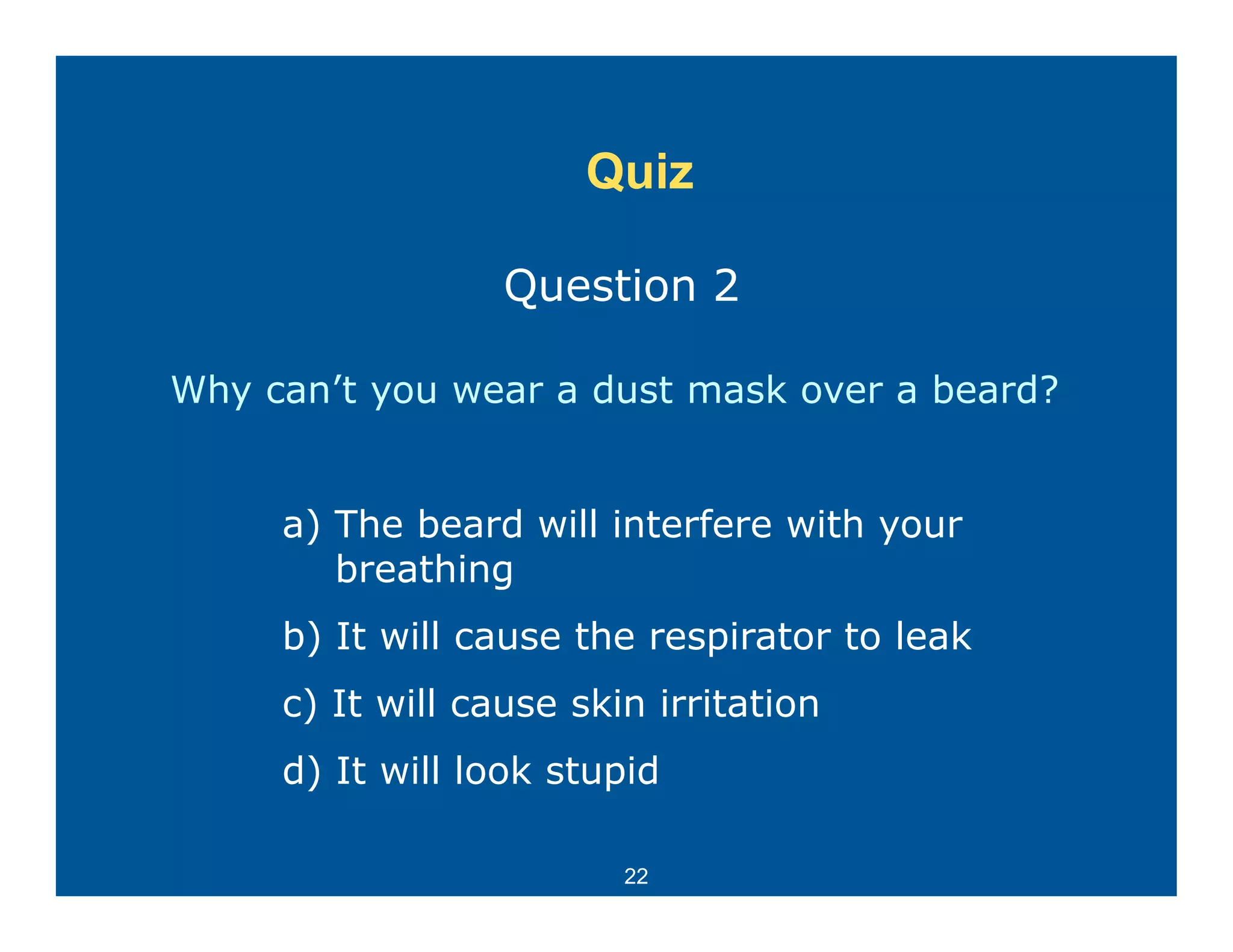
Quiz

                  Question 2

Why can’t you wear a dust mask over a beard?


     a) The beard will interfere with your
        breathing
     b) It will cause the respirator to leak
      )                      p
     c) It will cause skin irritation
     d) It will look stupid

                         22
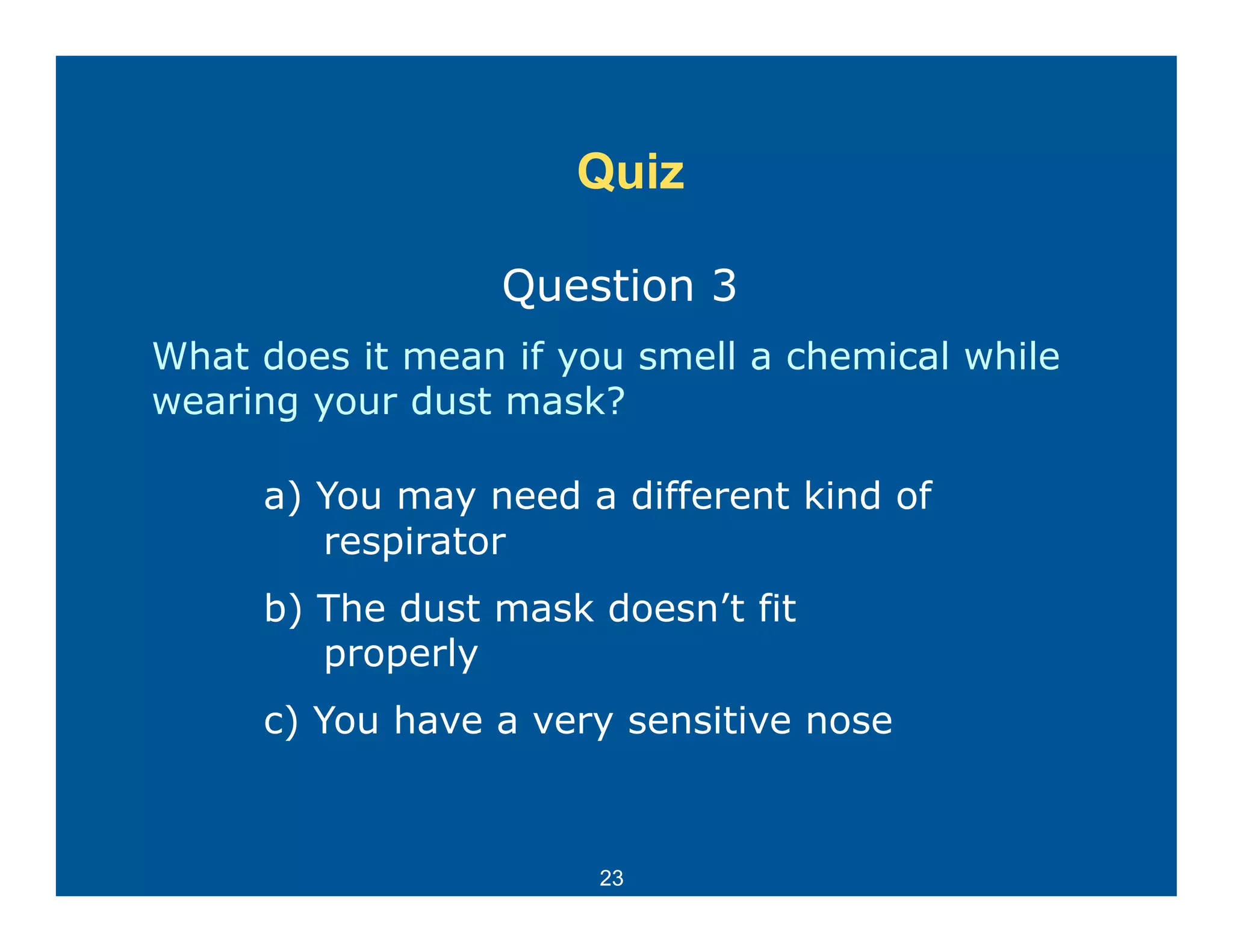
Quiz

                  Question 3
What does it mean if you smell a chemical while
wearing your dust mask?
      gy

     a) You may need a different kind of
        respirator
     b) The dust mask doesn’t fit
        properly
     c) You have a very sensitive nose


                       23

Dust mask ppt

  • 1.
    Respiratory Protection –filtering facepieces (dust masks) Training on the use of respirators in the workplace Developed by the Division of Occupational Safety & Health (DOSH) for employee training May, 2009
  • 2.
    Respirator Training–Module 1 FilteringFacepiece Respirators ( g p p (Dust Masks) )
  • 3.
    Respirator Training Why Is This Training Required? Training is required by DOSH for anyone who wears a respirator. y p We also are providing this training so you will know how to protect your health. If you don’t know how to use a respirator properly, you can get i t l t a false sense of protection. 2
  • 4.
    Respirator Training Respirator Program Administrator Our respirator administrator is [name] This person is responsible for overseeing our respirator program program. This person has training on respirators. 3
  • 5.
    Respirator Use Where We Require Filtering Facepieces h l Filtering facepieces (dust masks) are required in the following locations or for the following job tasks: [List here] 4
  • 6.
    Respirator Use We providefiltering facepieces (dust masks) for protection against the following kinds of dust and particles: [List here] 5
  • 7.
    How Filtering FacepiecesWork g p How Do Dust Masks Protect You? When used properly, dust masks prevent the inhalation of dust in the air and protects the lungs. When you inhale, air is pulled through the dust mask and dust is captured on the outside of the mask. 6
  • 8.
    How Filtering FacepiecesWork Air inhaled in Air inhaled in Air exhaled out 7
  • 9.
    Using Filtering Facepieces Limits of dust masks Dust masks will leak if they don’t fit your face properly. Dust masks don’t filter out chemical vapors. Dust masks are not adequate for heavy amounts of dust dust. Dust masks may not be y suitable for highly toxic dusts. 8
  • 10.
    Dust Mask ProtectionFactor How much protection does a dust mask give? Dust masks only provide protection to yp p levels 10 times above the dust permissible exposure limit (PEL). Example Wood dust permissible Dust mask protects up limit – 5 mg/cu. meter to 50 mg/cu. meter mg/cu. meter = milligrams per cubic meter 9
  • 11.
    NIOSH–Approved Dust Masks Dustmasks come in variety of styles and brands. Not NIOSH-approved Not all dust masks provide p adequate protection for workplace dust. Only NIOSH-approved dust masks can be used for protection against b df t ti i t dust levels that exceed the PEL. NIOSH-approved 10
  • 12.
    Types of DustMasks yp Some masks are more protective than others N95/R95/P95 masks filter out 95% of dust particles N99/R95/P99 masks filter out 99% of dust particles N100/R100/P100 masks filter out 99.7% of dust particles N99 or N100 masks are recommended for very fine dust or dangerous dusts such as asbestos or silica. We use [list type] masks 11
  • 13.
    Where Dust MasksCan’t Be Used Dust masks will not provide adequate protection in the following situations: Exposure to chemical gases or vapors Dust levels more than 10 times the permissible exposure limit (PEL) Oxygen deficiency 12
  • 14.
    Respirators and PhysicalFitness Medical Evaluations Medical evaluations are required for anyone required to wear respirators respirators. Breathing through a respirator is work for th b d f the body. Respirators can be hazardous to people with heart or lung problems. 13
  • 15.
    Respirator and PhysicalFitness Medical Questionnaire The first step of a medical evaluation is a confidential medical questionnaire. A healthcare provider decides if you need a medical exam. Results are only used to determine if you are fit to wear a respirator respirator. 14
  • 16.
    Respirator Fit Dust Masks Must Fit Properly Dust masks must fit properly to prevent leaks around the edges. edges Fit-testing must be done before first wearing a dust mask. Beards are not allowed when wearing a dust mask. 15
  • 17.
    Respirator Fit Fit-testing In fit-testing, you first try on a dust mask for general comfort and fit. After Aft a comfortable respirator is f t bl i t i selected, we conduct the actual fit-test. The method we use for fit-testing is as follows: [describe] 16
  • 18.
    Replacing Dust Masks Replace dust masks at least daily Dust masks cannot be cleaned or repaired if soiled or damaged. Replace dust masks if breathingg becomes difficult, if they are damaged, or if they are dirty or dusty on the inside inside. Dispose of dust masks at the end Di fd t k t th d Torn mask of the day or shift. 17
  • 19.
    Respirator Problems When it Smells Bad or You Feel Sick If you notice an odor, find dust inside ti d fi d d t i id the mask, feel ill, or you think your respirator leaks, notify your p , yy supervisor. Leave the area if you know your mask is leaking. 18
  • 20.
    Respirator Regulations p g L & I – DOSH has regulations on respirator use. Everything covered in y g this training is required in these regulations. 19
  • 21.
    Optional Quiz The followingquestions are optional. They can be gq p y used to check employees’ understanding of this training and promote discussion. You can add more questions for a short written or verbal quiz quiz. 20
  • 22.
    Quiz Question 1 1. What do filtering facepieces protect you from? a) solvents and dust b) only dust and particles c) nothing much d) only pollen 21
  • 23.
    Quiz Question 2 Why can’t you wear a dust mask over a beard? a) The beard will interfere with your breathing b) It will cause the respirator to leak ) p c) It will cause skin irritation d) It will look stupid 22
  • 24.
    Quiz Question 3 What does it mean if you smell a chemical while wearing your dust mask? gy a) You may need a different kind of respirator b) The dust mask doesn’t fit properly c) You have a very sensitive nose 23