

Wisconsin Department of Administration Division of Facilities Development Holiday Inn Convention Center Stevens Point, Wisconsin July 24, 2002 Presented by: Wane A. Baker, P.E., CIH Director, Air Quality Services MICHAELS ENGINEERING INC. Indoor Environmental Quality The Basics – and More
Indoor Environmental Quality The Basics – and More AGENDA In this session, we’ll cover: Common IAQ definitions: SBS, BRI  Microbiological contaminants Thermal comfort Adequate ventilation Using CO 2  as an indicator Chemical contaminants Particulate matter
Indoor Environmental Quality The Basics – and More irritation of the eyes, nose and throat dry mucous membranes and skin erythema (skin redness) headache and mental fatigue respiratory infections and cough hoarseness of voice and wheezing hypersensitivity reactions nausea and dizziness DEFINITIONS per proposed OSHA IAQ Rule, April 1994 (FR 59:15968-16039) Sick Building Syndrome (SBS)  Eight (8) non-inclusive symptoms, identified by WHO (1983)
Indoor Environmental Quality The Basics – and More Perceived as being from exposure to an unidentified contaminant or mixture Relief from symptoms after leaving the building May be reduced or eliminated by modifying the ventilating system Subject to variations in individual sensitivities: “ the dose  + the host  = the poison” Other references add a ‘percentage of the population’ criteria to the definition.  However, any one occupant can experience symptoms of SBS.  DEFINITIONS per proposed OSHA IAQ Rule, April 1994 (FR 59:15968-16039) Sick Building Syndrome  (cont’)
Indoor Environmental Quality The Basics – and More sensory irritation when caused by known agents respiratory allergies nosocomial infections humidifier fever hypersensitivity pneumonitis Legionnaires' disease symptoms and signs consistent with exposure to chemical or biological substances (CO, formaldehyde, pesticides, endotoxins, mycotoxins) DEFINITIONS per proposed OSHA IAQ Rule, April 1994 (FR 59:15968-16039) Building-Related Illness (BRI)  Specific medical conditions of known cause or origin, which can often be documented by physical signs and laboratory findings.  BRI includes: END SECTION
Indoor Environmental Quality The Basics – and More Refers to bacteria, viruses, fungi, algae, protozoa  In IAQ context, primarily concerned with bacteria and fungi  Bacteria : Kingdom Prokaryotae (Monera) No organized nucleus Single-celled organisms; are ubiquitous in nature Amplification (growth) by an increase in number of cells, not by an increase in size Can demonstrate classic exponential growth MICROBIOLOGICAL CONTAMINANTS Plantae, Animalia, Fungi Protoctista: algae, amoebas, ciliates, slime molds
Indoor Environmental Quality MICROBIOLOGICAL CONTAMINANTS (cont’) Bacteria  (cont’) :   Ex:  Legionella pneumophila ,  (a gram-negative, aerobic bacillus)  responsible for Legionnaires’ disease, Pontiac fever Cooling towers, fountains, hot tubs, building water systems See ASHRAE Guideline 12-2000:  Minimizing the Risk of Legionellosis Associated with Building Water Systems
Indoor Environmental Quality MICROBIOLOGICAL CONTAMINANTS (cont’) Bacteria  (cont’) :  Other  Gram-negative bacilli   (rod-shaped) Endotoxin : cell wall component Heat-stable molecule – not eliminated by autoclaving Highly toxic: GNB infection produces fever, malaise, changes in WBC counts, respiratory distress, shock  Acute and chronic inhalation effects include airflow obstruction, accelerated loss of lung function
Indoor Environmental Quality MICROBIOLOGICAL CONTAMINANTS (cont’) Bacteria  (cont’) :   Gram-positive bacilli Prevalent in soil, water, air and vegetation Spore-bearing; spores resistant to environmental stress Most are non-pathogenic (do not cause disease) Exception:  Bacillus anthracis , responsible for anthrax Spores are 1 - 1.5 microns in size Transform into reproducing bacilli in chest lymph nodes  Release toxins that cause septic shock and respiratory failure
Indoor Environmental Quality MICROBIOLOGICAL CONTAMINANTS (cont’) Fungi : Kingdom Fungi Not a plant nor an animal, but sharing characteristics of each  Includes molds, mildew, smuts, yeast, mushrooms, puffballs All are heterotrophs: must have external food sources they are non-photosynthetic (lack chlorophyll) Most are saprophytic (derive nourishment from dead or decaying organic matter) Exude enzymes to digest organic materials into glucose, which is then absorbed
Indoor Environmental Quality MICROBIOLOGICAL CONTAMINANTS (cont’) Fungi  (cont’) : Mold :  a term equivalent to a gardener’s use of “weed” for a plant growing where it is not wanted; limited taxonomic significance, but accepted vernacular Mildew :  layperson’s term for fungi growing on fabrics, window sills or bathroom surfaces; used by mycologists to refer to fungi that cause plant disease (smuts) Yeast :  a single-celled fungi; does not form mycelia
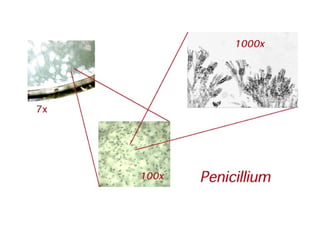
Indoor Environmental Quality MICROBIOLOGICAL CONTAMINANTS (cont’) “ Fun facts” about fungi: Comprise about one-quarter of the biomass on the planet Presently ~100,000 known species; may be ~200,000 species per MN DoH: >1 million;  AIHA: up to 1.5 million species  Primary role of most molds is bio-degradation / bio-deterioration Unique characteristics allow growth on virtually any substrate glass, jet fuel, acids, paint, rubber, textiles, electrical equipment (Mir space station!) Smallest spores are 2-3   m ( Aspergillus spp. ,  Penicillium spp. ) Largest can be 60   m diameter ( Alternaria alternata )
Indoor Environmental Quality MICROBIOLOGICAL CONTAMINANTS (cont’) More “fun facts” about fungi: Spores can remain dormant, but viable, for years mushroom ascospores: >20 years Penicillium spp.  and  Aspergillus spp. : >12 years A colony arising from a single spore of  Penicillium spp.  can produce 10 12  spores in a few days Over 500 organic compounds (VOCs) produced by fungi dominated by ethanol responsible for the characteristic “moldy”, “mildewy” odor ~20 compounds are identified in current MVOC testing
Indoor Environmental Quality MICROBIOLOGICAL CONTAMINANTS (cont’) “ Not-so-fun facts” about fungi: In tropical countries, diseases caused by  ingestion  of fungal toxins are among leading causes of death liver cancer from ingestion of aflatoxins esophageal cancer caused by  Fusarium  toxins indirect cause of death from excessive consumption of immune system depressors such as trichothecenes Very rare in temperate and cold-weather climates
Indoor Environmental Quality MICROBIOLOGICAL CONTAMINANTS (cont’) More “not-so-fun facts” about fungi: Hazards associated with  inhalation  exposure  infectious diseases: histoplasmosis, aspergillosis allergy: growing segment of our population hypersensitivity diseases: (e.g., HP - hypersensitivity pneumonitis) typically from exposure to very high concentrations of organic dusts; permanent lung damage can occur mycotoxicoses:  organic dust toxic syndrome (ODTS) from massive exposures;  limited data on the long-term effects of chronic, low doses of inhaled mycotoxins
Indoor Environmental Quality MICROBIOLOGICAL CONTAMINANTS (cont’) Methods of sampling for fungi Bulk material Prefer serial dilution methods Report results in CFU/gram of material Guidelines based on UofM DEHS; see: http://www.dehs.umn.edu/iaq/fungus/mycoglos.html Surface wipes or swabs Generally, a qualitative test method (CFU/swab) Results can also be reported in CFU/sq inch or CFU/sq cm
Indoor Environmental Quality MICROBIOLOGICAL CONTAMINANTS (cont’) Methods of sampling for fungi   (cont’) Contact plates Results in CFU/plate or CFU/area Sticky tape or “tease tape” method Optical microscopy: qualitative test Identify spores and fungal structures  Vacuum samples (“micro-vac”) For dust in carpet or upholstered furniture Must collect ~a gram of material (2 thimbles-full)  Serial dilution, culture plates
Indoor Environmental Quality MICROBIOLOGICAL CONTAMINANTS (cont’) Methods of sampling for fungi  (cont’) Bioaerosols – airborne particles of biological origin Primarily viable and total spore methods Also, filter cassettes, biochemical assay or molecular techniques Viable: impaction onto suitable culture media (agar) Ex: Andersen N6, Aerotech 6, BioStage-1, Burkard Total spore or spore trap: impaction onto greased slide Ex: Air-O-Cell, Burkard, Cyclex Filter cassettes: desiccates hydrophilic species Still used, but obsolete  (IMHO)
Indoor Environmental Quality MICROBIOLOGICAL CONTAMINANTS (cont’) Methods of sampling for fungi  (cont’) Viable methods Limited to culturable micro-organisms Agar plates must be incubated (typ. 25 °C, 37°C, 50°C) Takes time! (5-7 day incubation) Permits identification to species level, which can be key to proper interpretation, determination of source Choice of media, sample duration, duplicate samples are critical to success of sampling plan
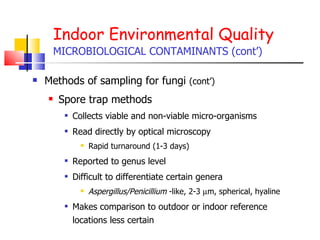
Indoor Environmental Quality MICROBIOLOGICAL CONTAMINANTS (cont’) Methods of sampling for fungi  (cont’) Spore trap methods Collects viable and non-viable micro-organisms Read directly by optical microscopy Rapid turnaround (1-3 days) Reported to genus level Difficult to differentiate certain genera Aspergillus/Penicillium  -like, 2-3   m, spherical, hyaline Makes comparison to outdoor or indoor reference locations less certain
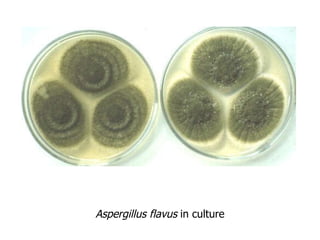
Aspergillus flavus  in culture
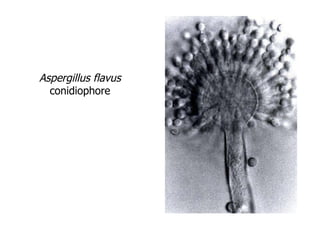
Aspergillus flavus  conidiophore
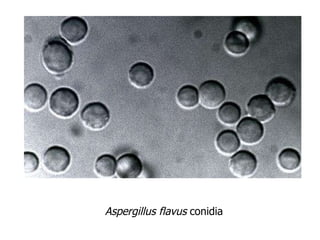
Aspergillus flavus  conidia
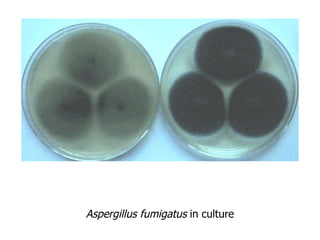
Aspergillus fumigatus  in culture
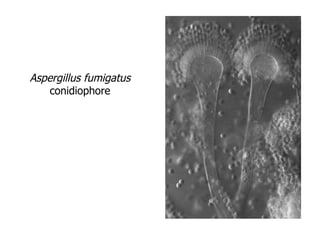
Aspergillus fumigatus  conidiophore
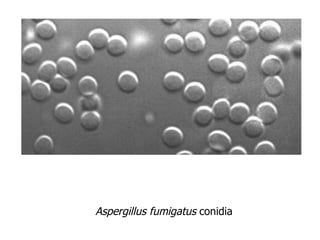
Aspergillus fumigatus  conidia
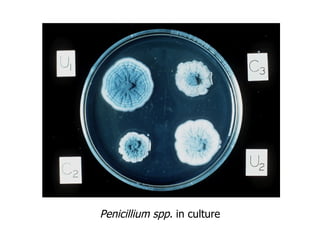
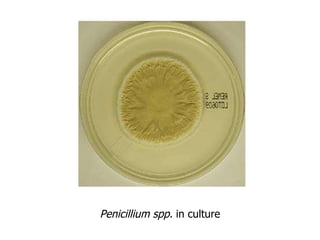
Penicillium spp.  in culture
 
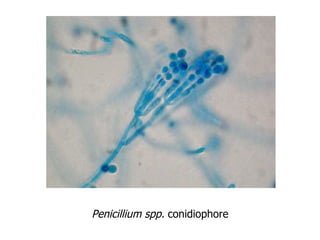
Penicillium spp.  conidiophore
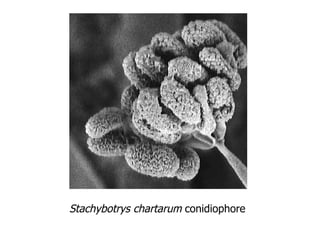
Stachybotrys chartarum  conidiophore
From the comic strip “Rex Morgan, MD” (August 6, 2001)
 
Indoor Environmental Quality MICROBIOLOGICAL CONTAMINANTS (cont’) The good news:  help is available MN Dept. of Health:  Indoor Mold – Health Hazard Identification and Control   http://www.health.state.mn.us/divs/eh/aialr/iair/moldslide/moldtext.html   Fungal glossary  at University of Minnesota, DEHS:   http://www.dehs.umn.edu/iaq/fungus/glossary.html The School IAQ Frequently Asked Questions website: http://www.dehs.umn.edu/iaq/school/
Indoor Environmental Quality MICROBIOLOGICAL CONTAMINANTS (cont’) Recommended Best Practices for Mold Investigations in Minnesota Schools   (September 2001) Developed by Minnesota Dept. of Health, Indoor Air Unit Invited to serve as a technical reviewer Provides guidance on: procedures for school district investigation of mold background on mold growth and health effects interpretation of mold testing results expectations for professional mold investigations http://www.health.state.mn.us/divs/eh/indoorair/schools/index.html
Indoor Environmental Quality MICROBIOLOGICAL CONTAMINANTS (cont’) Mold Remediation in Schools and Commercial Buildings  (EPA 402-K-01-001, March 2001) Developed by U.S. EPA Indoor Environments Division Available on-line in *.html or *.pdf (4.8 MB) See:  http://www.epa.gov/iaq/molds/index.html Investigating, evaluating, remediating moisture and mold problems  Flow chart for key steps in mold remediation Table 1: Water damage – cleanup and mold prevention Table 2: Guidelines for remediating mold growth  END SECTION
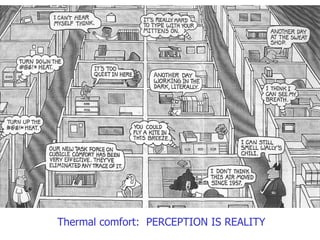
Thermal comfort:  PERCEPTION IS REALITY
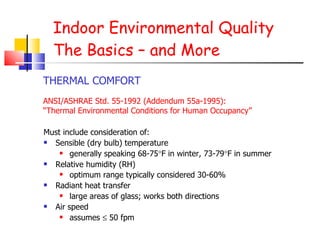
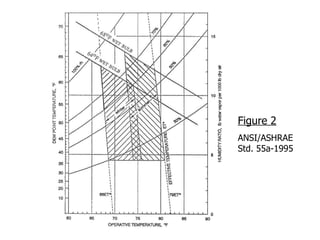
Indoor Environmental Quality The Basics – and More Must include consideration of: Sensible (dry bulb) temperature generally speaking 68-75  F in winter, 73-79  F in summer Relative humidity (RH) optimum range typically considered 30-60%   Radiant heat transfer large areas of glass; works both directions Air speed  assumes    50 fpm THERMAL COMFORT ANSI/ASHRAE Std. 55-1992 (Addendum 55a-1995):  “ Thermal Environmental Conditions for Human Occupancy”
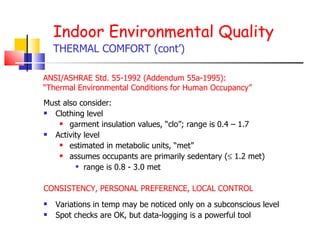
Indoor Environmental Quality THERMAL COMFORT (cont’) Must also consider: Clothing level garment insulation values, “clo”; range is 0.4 – 1.7 Activity level  estimated in metabolic units, “met” assumes occupants are primarily sedentary (   1.2 met) range is 0.8 - 3.0 met CONSISTENCY, PERSONAL PREFERENCE, LOCAL CONTROL Variations in temp may be noticed only on a subconscious level Spot checks are OK, but data-logging is a powerful tool ANSI/ASHRAE Std. 55-1992 (Addendum 55a-1995):  “ Thermal Environmental Conditions for Human Occupancy”
Figure 2 ANSI/ASHRAE Std. 55a-1995
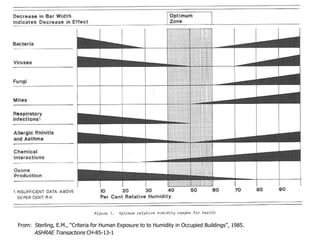
From:  Sterling, E.M., “Criteria for Human Exposure to to Humidity in Occupied Buildings”, 1985.  ASHRAE Transactions  CH-85-13-1
Indoor Environmental Quality THERMAL COMFORT (cont’) Foreword:  “The standard specifies conditions in which 80% or more of the occupants will find the environment thermally acceptable.” Three articles to aid in understanding and applying this guidance: Olesen, B.W., “Guidelines for Comfort”,  ASHRAE Journal , August 2000 Fang, L., et al, “Temperature and Humidity: Important Factors for Perception of Air Quality and for Ventilation Requirements”, 2000.  ASHRAE Transactions: Symposia  MN-00-4-3 Berglund, L.G., “Comfort and Humidity”,  ASHRAE Journal , August 1998 A proposed revision to this standard completed a public review and comment period in April 2001 (primarily, clarified its scope) ANSI/ASHRAE Std. 55-1992 (Addendum 55a-1995):  “ Thermal Environmental Conditions for Human Occupancy”
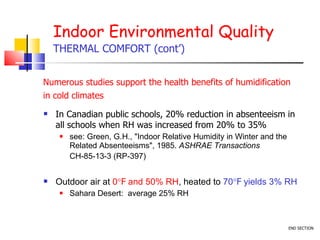
Indoor Environmental Quality THERMAL COMFORT (cont’) In Canadian public schools, 20% reduction in absenteeism in all schools when RH was increased from 20% to 35%  see: Green, G.H., "Indoor Relative Humidity in Winter and the Related Absenteeisms", 1985.  ASHRAE Transactions  CH-85-13-3 (RP-397)   Outdoor air at  0  F  and 50% RH , heated to  70  F  yields 3% RH Sahara Desert:  average 25% RH  Numerous studies support the health benefits of humidification in cold climates END SECTION
Indoor Environmental Quality The Basics – and More Historical guidelines Past building codes Current requirements Proposed addenda to ASHRAE Std. 62-1999 ADEQUATE VENTILATION Outdoor air ventilation  [cfm/occupant or cfm/sq ft] vs.  total airflow  [air changes per hour]
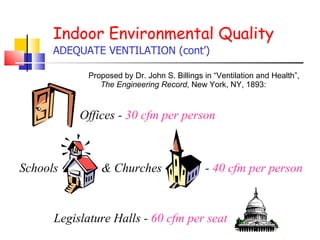
Proposed by Dr. John S. Billings in “Ventilation and Health”,  The Engineering Record , New York, NY, 1893: Indoor Environmental Quality ADEQUATE VENTILATION (cont’) Offices -  30 cfm per person Schools  & Churches  -  40 cfm per person Legislature Halls -  60 cfm per seat
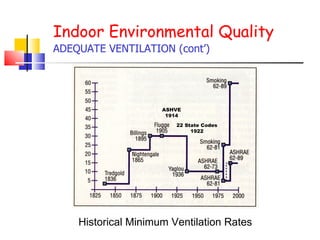
Indoor Environmental Quality ADEQUATE VENTILATION (cont’) Historical Minimum Ventilation Rates ASHVE 1914 22 State Codes 1922
The history of building codes in the State of Wisconsin has left a legacy of schools, offices and commercial spaces ventilated at 1/3 to 1/2 of the current minimum rate recommended by ASHRAE: Wisconsin Administrative Code, Comm. 64.05(2)(a) [Table 64.05]:  changed from 5 cfm/occupant to 7-1/2 cfm/occupant in April 1996, but was “stayed” until April 1997.  Indoor Environmental Quality ADEQUATE VENTILATION (cont’) Building Codes
Research conducted by Lehmberg and Yaglou at Harvard University in the 1930s established outdoor air ventilation requirements based on the  subjective acceptance of body odors .   odors were acceptable at 20 CFM/occupant with lower room temperatures, but 30 CFM/occupant was required at higher temperatures (Lehmberg, 1935) 12 CFM/occupant found to be the minimum outdoor air ventilation rate necessary to control body odors from sedentary adults (Yaglou, 1937)   The work at Harvard was based on the perceptions of  unadapted individuals , i.e., visitors to the space.  Yaglou also found that 80% of adapted individuals (i.e., occupants of the space) deemed the odor intensity acceptable at 5 CFM/occupant.   Indoor Environmental Quality ADEQUATE VENTILATION (cont’) ASHRAE Std. 62-1999:  “ Ventilation for Acceptable Indoor Air Quality”
Proposed Addendum “n”  (Second Public Review completed Sept 2001) return to a floor value of 5 CFM of outdoor air per person to address occupant-generated odors and irritants (the “ people component ”)  additional outdoor air ventilation to address non-occupant derived sources, such as furnishings and finishes, cleaning products (the “ building component ”)  The Standard 62 Committee explains:  “… it was decided that a code-intended standard  should not be designed to satisfy the first impression of visitors , but rather should be designed to satisfy the building’s occupants.”  Depending on design occupant density, resultant OA ventilation rate may increase or decrease compared to current “Table 2”.  Indoor Environmental Quality ADEQUATE VENTILATION (cont’) ASHRAE Std. 62-1999:  “ Ventilation for Acceptable Indoor Air Quality”
Occupants consume O 2  and exhale CO 2  at a rate primarily dependent on level of physical activity body size (surface area) and diet are also factors Serves as a surrogate for measuring occupant-generated pollutants; addresses the “people component” of proposed Addendum “n” to Standard 62-1999 ASHRAE’s 1000 ppm guideline is very often misapplied  not an instantaneous value; not a ceiling value outdoor CO 2  levels have increased ASHRAE guideline was based on  300 ppm  outdoor concentration Indoor Environmental Quality ADEQUATE VENTILATION (cont’) Using CO 2  levels as an indicator of adequate ventilation
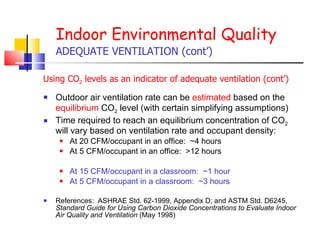
Outdoor air ventilation rate can be  estimated  based on the  equilibrium  CO 2  level (with certain simplifying assumptions) Time required to reach an equilibrium concentration of CO 2  will vary based on ventilation rate and occupant density: At 20 CFM/occupant in an office:  ~4 hours At 5 CFM/occupant in an office:  >12 hours At 15 CFM/occupant in a classroom:  ~1 hour At 5 CFM/occupant in a classroom:  ~3 hours References:  ASHRAE Std. 62-1999, Appendix D; and ASTM Std. D6245,  Standard Guide for Using Carbon Dioxide Concentrations to Evaluate Indoor Air Quality and Ventilation  (May 1998) Indoor Environmental Quality ADEQUATE VENTILATION (cont’) Using CO 2  levels as an indicator of adequate ventilation (cont’)
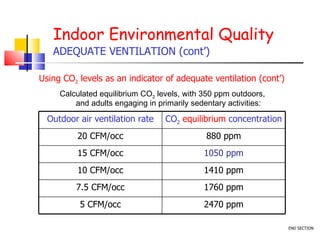
Indoor Environmental Quality ADEQUATE VENTILATION (cont’) Calculated equilibrium CO 2  levels, with 350 ppm outdoors, and adults engaging in primarily sedentary activities: Using CO 2  levels as an indicator of adequate ventilation (cont’) END SECTION Outdoor air ventilation rate CO 2   equilibrium  concentration 20 CFM/occ 880 ppm 15 CFM/occ 1050 ppm 10 CFM/occ 1410 ppm 7.5 CFM/occ 1760 ppm 5 CFM/occ 2470 ppm
Indoor Environmental Quality The Basics – and More Printers and copiers emit VOCs, including formaldehyde, as well as particulates, nitrogen oxides, and ozone (older equipment) dominant VOCs: ethylbenzene, xylenes, styrene Occupants themselves VOCs in exhaled breath: an “important indoor source”  typically: isoprene, acetone, ethanol, methanol, other alcohols See:  J. Air & Waste Manage. Assoc.  49:594-598 (May 1999) dry-cleaning solvents on clothing personal care products Cleaning and maintenance products sometimes dominate  CHEMICAL CONTAMINANTS
Indoor Environmental Quality CHEMICAL CONTAMINANTS (cont’) Furnishings, finishes carpet, sheetgoods, paints, varnish/shellac, manufactured wood products, GWB joint compound, adhesives, caulks Art and science classrooms, shops, copier rooms local control, pressure relationships are critical Carbon monoxide and other criteria pollutants, radon, pesticides topics worthy of a separate day-long workshop PM10, SO2, NO2, CO, Pb and O3
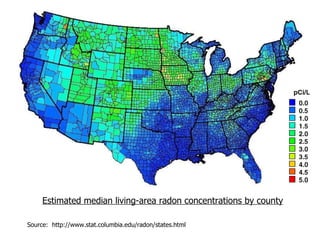
Estimated median living-area radon concentrations by county Source:  http://www.stat.columbia.edu/radon/states.html
Indoor Environmental Quality The Basics – and More What does this map mean?  Radon levels in U.S. houses vary quite a bit.  This map shows the estimated median living-area radon concentrations for each county in the contiguous United States. In this map, blue is low, green is intermediate, and yellow and red indicate counties with high median radon levels.  Radon concentrations are highly variable within a county , and in a given county  some homes will have concentrations more than 5 times as high  (and others will have concentrations more than 5 times as low) as the medians shown here.  Thus,  this map gives a general idea  of what areas of the country have low and high radon levels, but  all areas have some high-radon homes .
Indoor Environmental Quality CHEMICAL CONTAMINANTS (cont’) Integrated pest management (IPM) resources U.S. EPA: Office of Pesticide Programs see:  http://www.epa.gov/pesticides/citizens/ipm.htm Wisconsin's School IPM Manual see:  http://ipcm.wisc.edu/programs/school/default.htm   National Integrated Pest Management Network see:  http://www.reeusda.gov/nipmn/   The University of Florida see:  http://schoolipm.ifas.ufl.edu/ END SECTION
Indoor Environmental Quality The Basics – and More Definition:  all types of airborne solid and liquid particles; sizes range from 0.005 – 100 microns [  m] Comparisons diameter human hair:  60-70 microns smallest visible:  20-30 microns  Particles >30 microns unlikely to enter nasal passages Inhalable (thoracic) particles:  <10 microns (PM 10 ) Fine (respirable) particles: <2.5 microns (PM 2.5 ) IH definition: < 4 microns (median cut-point) Ultrafine particles (UFP):  <0.1 micron PARTICULATE MATTER
Indoor Environmental Quality PARTICULATE MATTER (cont’) Mean increase in death rate from cardiovascular and respiratory causes was found to be 0.68% for each 10   g/m 3  increase in PM 10   New England Journal of Medicine , Vol 343, No 24, Dec. 14, 2000 Larger fraction responds well to use of good HVAC filters, enhanced cleaning practices  Vacuums with allergen filters; damp-wipe surfaces See:  Berry, Michael A.,  Protecting the Built Environment: Cleaning for Health , Tricomm 21 st  Press, Chapel Hill, NC (1993) Fine and ultra-fine can be reduced by avoiding vehicle emissions and other combustion devices, source capture at printers, copiers A portion of UFP will pass through HEPA filters:  HEPA = 99.97% at 0.3   m  NAAQS - annual mean:  50   g/m 3 2nd highest 24-hour:  150   g/m 3
Indoor Environmental Quality PARTICULATE MATTER (cont’) Sources include mechanical reduction (grinding), wind erosion, combustion (wildfires,  I.C. engines, boilers ), skin flakes, paper dust, insect parts, natural and synthetic fibers, industrial processes, smog, copiers and printers  People emit large numbers of particles: 400,000 per minute sitting at a desk 45,000,000 per minute during exercise Particle surfaces will adsorb VOCs, oxidants  Effective at delivering organics, toxics to lung tissues UFP believed to overwhelm cleaning mechanism in alveoli (PAMs), damage epithelial cells, cause inflammation -- increases potential for bronchitis, asthma  END SECTION
Thank you! Wane A. Baker, P.E., CIH Michaels Engineering Inc. La Crosse, WI 608/785-1900 Email:  [email_address] Website:  www.michaelsengineering.com Indoor Environmental Quality The Basics – and More QUESTIONS??

Indoor Air Quality -- The Basics And More

  • 1.
    Wisconsin Department ofAdministration Division of Facilities Development Holiday Inn Convention Center Stevens Point, Wisconsin July 24, 2002 Presented by: Wane A. Baker, P.E., CIH Director, Air Quality Services MICHAELS ENGINEERING INC. Indoor Environmental Quality The Basics – and More
  • 2.
    Indoor Environmental QualityThe Basics – and More AGENDA In this session, we’ll cover: Common IAQ definitions: SBS, BRI Microbiological contaminants Thermal comfort Adequate ventilation Using CO 2 as an indicator Chemical contaminants Particulate matter
  • 3.
    Indoor Environmental QualityThe Basics – and More irritation of the eyes, nose and throat dry mucous membranes and skin erythema (skin redness) headache and mental fatigue respiratory infections and cough hoarseness of voice and wheezing hypersensitivity reactions nausea and dizziness DEFINITIONS per proposed OSHA IAQ Rule, April 1994 (FR 59:15968-16039) Sick Building Syndrome (SBS) Eight (8) non-inclusive symptoms, identified by WHO (1983)
  • 4.
    Indoor Environmental QualityThe Basics – and More Perceived as being from exposure to an unidentified contaminant or mixture Relief from symptoms after leaving the building May be reduced or eliminated by modifying the ventilating system Subject to variations in individual sensitivities: “ the dose + the host = the poison” Other references add a ‘percentage of the population’ criteria to the definition. However, any one occupant can experience symptoms of SBS. DEFINITIONS per proposed OSHA IAQ Rule, April 1994 (FR 59:15968-16039) Sick Building Syndrome (cont’)
  • 5.
    Indoor Environmental QualityThe Basics – and More sensory irritation when caused by known agents respiratory allergies nosocomial infections humidifier fever hypersensitivity pneumonitis Legionnaires' disease symptoms and signs consistent with exposure to chemical or biological substances (CO, formaldehyde, pesticides, endotoxins, mycotoxins) DEFINITIONS per proposed OSHA IAQ Rule, April 1994 (FR 59:15968-16039) Building-Related Illness (BRI) Specific medical conditions of known cause or origin, which can often be documented by physical signs and laboratory findings. BRI includes: END SECTION
  • 6.
    Indoor Environmental QualityThe Basics – and More Refers to bacteria, viruses, fungi, algae, protozoa In IAQ context, primarily concerned with bacteria and fungi Bacteria : Kingdom Prokaryotae (Monera) No organized nucleus Single-celled organisms; are ubiquitous in nature Amplification (growth) by an increase in number of cells, not by an increase in size Can demonstrate classic exponential growth MICROBIOLOGICAL CONTAMINANTS Plantae, Animalia, Fungi Protoctista: algae, amoebas, ciliates, slime molds
  • 7.
    Indoor Environmental QualityMICROBIOLOGICAL CONTAMINANTS (cont’) Bacteria (cont’) : Ex: Legionella pneumophila , (a gram-negative, aerobic bacillus) responsible for Legionnaires’ disease, Pontiac fever Cooling towers, fountains, hot tubs, building water systems See ASHRAE Guideline 12-2000: Minimizing the Risk of Legionellosis Associated with Building Water Systems
  • 8.
    Indoor Environmental QualityMICROBIOLOGICAL CONTAMINANTS (cont’) Bacteria (cont’) : Other Gram-negative bacilli (rod-shaped) Endotoxin : cell wall component Heat-stable molecule – not eliminated by autoclaving Highly toxic: GNB infection produces fever, malaise, changes in WBC counts, respiratory distress, shock Acute and chronic inhalation effects include airflow obstruction, accelerated loss of lung function
  • 9.
    Indoor Environmental QualityMICROBIOLOGICAL CONTAMINANTS (cont’) Bacteria (cont’) : Gram-positive bacilli Prevalent in soil, water, air and vegetation Spore-bearing; spores resistant to environmental stress Most are non-pathogenic (do not cause disease) Exception: Bacillus anthracis , responsible for anthrax Spores are 1 - 1.5 microns in size Transform into reproducing bacilli in chest lymph nodes Release toxins that cause septic shock and respiratory failure
  • 10.
    Indoor Environmental QualityMICROBIOLOGICAL CONTAMINANTS (cont’) Fungi : Kingdom Fungi Not a plant nor an animal, but sharing characteristics of each Includes molds, mildew, smuts, yeast, mushrooms, puffballs All are heterotrophs: must have external food sources they are non-photosynthetic (lack chlorophyll) Most are saprophytic (derive nourishment from dead or decaying organic matter) Exude enzymes to digest organic materials into glucose, which is then absorbed
  • 11.
    Indoor Environmental QualityMICROBIOLOGICAL CONTAMINANTS (cont’) Fungi (cont’) : Mold : a term equivalent to a gardener’s use of “weed” for a plant growing where it is not wanted; limited taxonomic significance, but accepted vernacular Mildew : layperson’s term for fungi growing on fabrics, window sills or bathroom surfaces; used by mycologists to refer to fungi that cause plant disease (smuts) Yeast : a single-celled fungi; does not form mycelia
  • 12.
    Indoor Environmental QualityMICROBIOLOGICAL CONTAMINANTS (cont’) “ Fun facts” about fungi: Comprise about one-quarter of the biomass on the planet Presently ~100,000 known species; may be ~200,000 species per MN DoH: >1 million; AIHA: up to 1.5 million species Primary role of most molds is bio-degradation / bio-deterioration Unique characteristics allow growth on virtually any substrate glass, jet fuel, acids, paint, rubber, textiles, electrical equipment (Mir space station!) Smallest spores are 2-3  m ( Aspergillus spp. , Penicillium spp. ) Largest can be 60  m diameter ( Alternaria alternata )
  • 13.
    Indoor Environmental QualityMICROBIOLOGICAL CONTAMINANTS (cont’) More “fun facts” about fungi: Spores can remain dormant, but viable, for years mushroom ascospores: >20 years Penicillium spp. and Aspergillus spp. : >12 years A colony arising from a single spore of Penicillium spp. can produce 10 12 spores in a few days Over 500 organic compounds (VOCs) produced by fungi dominated by ethanol responsible for the characteristic “moldy”, “mildewy” odor ~20 compounds are identified in current MVOC testing
  • 14.
    Indoor Environmental QualityMICROBIOLOGICAL CONTAMINANTS (cont’) “ Not-so-fun facts” about fungi: In tropical countries, diseases caused by ingestion of fungal toxins are among leading causes of death liver cancer from ingestion of aflatoxins esophageal cancer caused by Fusarium toxins indirect cause of death from excessive consumption of immune system depressors such as trichothecenes Very rare in temperate and cold-weather climates
  • 15.
    Indoor Environmental QualityMICROBIOLOGICAL CONTAMINANTS (cont’) More “not-so-fun facts” about fungi: Hazards associated with inhalation exposure infectious diseases: histoplasmosis, aspergillosis allergy: growing segment of our population hypersensitivity diseases: (e.g., HP - hypersensitivity pneumonitis) typically from exposure to very high concentrations of organic dusts; permanent lung damage can occur mycotoxicoses: organic dust toxic syndrome (ODTS) from massive exposures; limited data on the long-term effects of chronic, low doses of inhaled mycotoxins
  • 16.
    Indoor Environmental QualityMICROBIOLOGICAL CONTAMINANTS (cont’) Methods of sampling for fungi Bulk material Prefer serial dilution methods Report results in CFU/gram of material Guidelines based on UofM DEHS; see: http://www.dehs.umn.edu/iaq/fungus/mycoglos.html Surface wipes or swabs Generally, a qualitative test method (CFU/swab) Results can also be reported in CFU/sq inch or CFU/sq cm
  • 17.
    Indoor Environmental QualityMICROBIOLOGICAL CONTAMINANTS (cont’) Methods of sampling for fungi (cont’) Contact plates Results in CFU/plate or CFU/area Sticky tape or “tease tape” method Optical microscopy: qualitative test Identify spores and fungal structures Vacuum samples (“micro-vac”) For dust in carpet or upholstered furniture Must collect ~a gram of material (2 thimbles-full) Serial dilution, culture plates
  • 18.
    Indoor Environmental QualityMICROBIOLOGICAL CONTAMINANTS (cont’) Methods of sampling for fungi (cont’) Bioaerosols – airborne particles of biological origin Primarily viable and total spore methods Also, filter cassettes, biochemical assay or molecular techniques Viable: impaction onto suitable culture media (agar) Ex: Andersen N6, Aerotech 6, BioStage-1, Burkard Total spore or spore trap: impaction onto greased slide Ex: Air-O-Cell, Burkard, Cyclex Filter cassettes: desiccates hydrophilic species Still used, but obsolete (IMHO)
  • 19.
    Indoor Environmental QualityMICROBIOLOGICAL CONTAMINANTS (cont’) Methods of sampling for fungi (cont’) Viable methods Limited to culturable micro-organisms Agar plates must be incubated (typ. 25 °C, 37°C, 50°C) Takes time! (5-7 day incubation) Permits identification to species level, which can be key to proper interpretation, determination of source Choice of media, sample duration, duplicate samples are critical to success of sampling plan
  • 20.
    Indoor Environmental QualityMICROBIOLOGICAL CONTAMINANTS (cont’) Methods of sampling for fungi (cont’) Spore trap methods Collects viable and non-viable micro-organisms Read directly by optical microscopy Rapid turnaround (1-3 days) Reported to genus level Difficult to differentiate certain genera Aspergillus/Penicillium -like, 2-3  m, spherical, hyaline Makes comparison to outdoor or indoor reference locations less certain
  • 21.
  • 22.
    Aspergillus flavus conidiophore
  • 23.
  • 24.
  • 25.
  • 26.
  • 27.
  • 28.
  • 29.
  • 30.
    Penicillium spp. conidiophore
  • 31.
  • 32.
    From the comicstrip “Rex Morgan, MD” (August 6, 2001)
  • 33.
  • 34.
    Indoor Environmental QualityMICROBIOLOGICAL CONTAMINANTS (cont’) The good news: help is available MN Dept. of Health: Indoor Mold – Health Hazard Identification and Control http://www.health.state.mn.us/divs/eh/aialr/iair/moldslide/moldtext.html Fungal glossary at University of Minnesota, DEHS: http://www.dehs.umn.edu/iaq/fungus/glossary.html The School IAQ Frequently Asked Questions website: http://www.dehs.umn.edu/iaq/school/
  • 35.
    Indoor Environmental QualityMICROBIOLOGICAL CONTAMINANTS (cont’) Recommended Best Practices for Mold Investigations in Minnesota Schools (September 2001) Developed by Minnesota Dept. of Health, Indoor Air Unit Invited to serve as a technical reviewer Provides guidance on: procedures for school district investigation of mold background on mold growth and health effects interpretation of mold testing results expectations for professional mold investigations http://www.health.state.mn.us/divs/eh/indoorair/schools/index.html
  • 36.
    Indoor Environmental QualityMICROBIOLOGICAL CONTAMINANTS (cont’) Mold Remediation in Schools and Commercial Buildings (EPA 402-K-01-001, March 2001) Developed by U.S. EPA Indoor Environments Division Available on-line in *.html or *.pdf (4.8 MB) See: http://www.epa.gov/iaq/molds/index.html Investigating, evaluating, remediating moisture and mold problems Flow chart for key steps in mold remediation Table 1: Water damage – cleanup and mold prevention Table 2: Guidelines for remediating mold growth END SECTION
  • 37.
    Thermal comfort: PERCEPTION IS REALITY
  • 38.
    Indoor Environmental QualityThe Basics – and More Must include consideration of: Sensible (dry bulb) temperature generally speaking 68-75  F in winter, 73-79  F in summer Relative humidity (RH) optimum range typically considered 30-60% Radiant heat transfer large areas of glass; works both directions Air speed assumes  50 fpm THERMAL COMFORT ANSI/ASHRAE Std. 55-1992 (Addendum 55a-1995): “ Thermal Environmental Conditions for Human Occupancy”
  • 39.
    Indoor Environmental QualityTHERMAL COMFORT (cont’) Must also consider: Clothing level garment insulation values, “clo”; range is 0.4 – 1.7 Activity level estimated in metabolic units, “met” assumes occupants are primarily sedentary (  1.2 met) range is 0.8 - 3.0 met CONSISTENCY, PERSONAL PREFERENCE, LOCAL CONTROL Variations in temp may be noticed only on a subconscious level Spot checks are OK, but data-logging is a powerful tool ANSI/ASHRAE Std. 55-1992 (Addendum 55a-1995): “ Thermal Environmental Conditions for Human Occupancy”
  • 40.
    Figure 2 ANSI/ASHRAEStd. 55a-1995
  • 41.
    From: Sterling,E.M., “Criteria for Human Exposure to to Humidity in Occupied Buildings”, 1985. ASHRAE Transactions CH-85-13-1
  • 42.
    Indoor Environmental QualityTHERMAL COMFORT (cont’) Foreword: “The standard specifies conditions in which 80% or more of the occupants will find the environment thermally acceptable.” Three articles to aid in understanding and applying this guidance: Olesen, B.W., “Guidelines for Comfort”, ASHRAE Journal , August 2000 Fang, L., et al, “Temperature and Humidity: Important Factors for Perception of Air Quality and for Ventilation Requirements”, 2000. ASHRAE Transactions: Symposia MN-00-4-3 Berglund, L.G., “Comfort and Humidity”, ASHRAE Journal , August 1998 A proposed revision to this standard completed a public review and comment period in April 2001 (primarily, clarified its scope) ANSI/ASHRAE Std. 55-1992 (Addendum 55a-1995): “ Thermal Environmental Conditions for Human Occupancy”
  • 43.
    Indoor Environmental QualityTHERMAL COMFORT (cont’) In Canadian public schools, 20% reduction in absenteeism in all schools when RH was increased from 20% to 35% see: Green, G.H., &quot;Indoor Relative Humidity in Winter and the Related Absenteeisms&quot;, 1985. ASHRAE Transactions CH-85-13-3 (RP-397) Outdoor air at 0  F and 50% RH , heated to 70  F yields 3% RH Sahara Desert: average 25% RH Numerous studies support the health benefits of humidification in cold climates END SECTION
  • 44.
    Indoor Environmental QualityThe Basics – and More Historical guidelines Past building codes Current requirements Proposed addenda to ASHRAE Std. 62-1999 ADEQUATE VENTILATION Outdoor air ventilation [cfm/occupant or cfm/sq ft] vs. total airflow [air changes per hour]
  • 45.
    Proposed by Dr.John S. Billings in “Ventilation and Health”, The Engineering Record , New York, NY, 1893: Indoor Environmental Quality ADEQUATE VENTILATION (cont’) Offices - 30 cfm per person Schools & Churches - 40 cfm per person Legislature Halls - 60 cfm per seat
  • 46.
    Indoor Environmental QualityADEQUATE VENTILATION (cont’) Historical Minimum Ventilation Rates ASHVE 1914 22 State Codes 1922
  • 47.
    The history ofbuilding codes in the State of Wisconsin has left a legacy of schools, offices and commercial spaces ventilated at 1/3 to 1/2 of the current minimum rate recommended by ASHRAE: Wisconsin Administrative Code, Comm. 64.05(2)(a) [Table 64.05]: changed from 5 cfm/occupant to 7-1/2 cfm/occupant in April 1996, but was “stayed” until April 1997. Indoor Environmental Quality ADEQUATE VENTILATION (cont’) Building Codes
  • 48.
    Research conducted byLehmberg and Yaglou at Harvard University in the 1930s established outdoor air ventilation requirements based on the subjective acceptance of body odors . odors were acceptable at 20 CFM/occupant with lower room temperatures, but 30 CFM/occupant was required at higher temperatures (Lehmberg, 1935) 12 CFM/occupant found to be the minimum outdoor air ventilation rate necessary to control body odors from sedentary adults (Yaglou, 1937) The work at Harvard was based on the perceptions of unadapted individuals , i.e., visitors to the space. Yaglou also found that 80% of adapted individuals (i.e., occupants of the space) deemed the odor intensity acceptable at 5 CFM/occupant. Indoor Environmental Quality ADEQUATE VENTILATION (cont’) ASHRAE Std. 62-1999: “ Ventilation for Acceptable Indoor Air Quality”
  • 49.
    Proposed Addendum “n” (Second Public Review completed Sept 2001) return to a floor value of 5 CFM of outdoor air per person to address occupant-generated odors and irritants (the “ people component ”) additional outdoor air ventilation to address non-occupant derived sources, such as furnishings and finishes, cleaning products (the “ building component ”) The Standard 62 Committee explains: “… it was decided that a code-intended standard should not be designed to satisfy the first impression of visitors , but rather should be designed to satisfy the building’s occupants.” Depending on design occupant density, resultant OA ventilation rate may increase or decrease compared to current “Table 2”. Indoor Environmental Quality ADEQUATE VENTILATION (cont’) ASHRAE Std. 62-1999: “ Ventilation for Acceptable Indoor Air Quality”
  • 50.
    Occupants consume O2 and exhale CO 2 at a rate primarily dependent on level of physical activity body size (surface area) and diet are also factors Serves as a surrogate for measuring occupant-generated pollutants; addresses the “people component” of proposed Addendum “n” to Standard 62-1999 ASHRAE’s 1000 ppm guideline is very often misapplied not an instantaneous value; not a ceiling value outdoor CO 2 levels have increased ASHRAE guideline was based on 300 ppm outdoor concentration Indoor Environmental Quality ADEQUATE VENTILATION (cont’) Using CO 2 levels as an indicator of adequate ventilation
  • 51.
    Outdoor air ventilationrate can be estimated based on the equilibrium CO 2 level (with certain simplifying assumptions) Time required to reach an equilibrium concentration of CO 2 will vary based on ventilation rate and occupant density: At 20 CFM/occupant in an office: ~4 hours At 5 CFM/occupant in an office: >12 hours At 15 CFM/occupant in a classroom: ~1 hour At 5 CFM/occupant in a classroom: ~3 hours References: ASHRAE Std. 62-1999, Appendix D; and ASTM Std. D6245, Standard Guide for Using Carbon Dioxide Concentrations to Evaluate Indoor Air Quality and Ventilation (May 1998) Indoor Environmental Quality ADEQUATE VENTILATION (cont’) Using CO 2 levels as an indicator of adequate ventilation (cont’)
  • 52.
    Indoor Environmental QualityADEQUATE VENTILATION (cont’) Calculated equilibrium CO 2 levels, with 350 ppm outdoors, and adults engaging in primarily sedentary activities: Using CO 2 levels as an indicator of adequate ventilation (cont’) END SECTION Outdoor air ventilation rate CO 2 equilibrium concentration 20 CFM/occ 880 ppm 15 CFM/occ 1050 ppm 10 CFM/occ 1410 ppm 7.5 CFM/occ 1760 ppm 5 CFM/occ 2470 ppm
  • 53.
    Indoor Environmental QualityThe Basics – and More Printers and copiers emit VOCs, including formaldehyde, as well as particulates, nitrogen oxides, and ozone (older equipment) dominant VOCs: ethylbenzene, xylenes, styrene Occupants themselves VOCs in exhaled breath: an “important indoor source” typically: isoprene, acetone, ethanol, methanol, other alcohols See: J. Air & Waste Manage. Assoc. 49:594-598 (May 1999) dry-cleaning solvents on clothing personal care products Cleaning and maintenance products sometimes dominate CHEMICAL CONTAMINANTS
  • 54.
    Indoor Environmental QualityCHEMICAL CONTAMINANTS (cont’) Furnishings, finishes carpet, sheetgoods, paints, varnish/shellac, manufactured wood products, GWB joint compound, adhesives, caulks Art and science classrooms, shops, copier rooms local control, pressure relationships are critical Carbon monoxide and other criteria pollutants, radon, pesticides topics worthy of a separate day-long workshop PM10, SO2, NO2, CO, Pb and O3
  • 55.
    Estimated median living-arearadon concentrations by county Source: http://www.stat.columbia.edu/radon/states.html
  • 56.
    Indoor Environmental QualityThe Basics – and More What does this map mean? Radon levels in U.S. houses vary quite a bit. This map shows the estimated median living-area radon concentrations for each county in the contiguous United States. In this map, blue is low, green is intermediate, and yellow and red indicate counties with high median radon levels. Radon concentrations are highly variable within a county , and in a given county some homes will have concentrations more than 5 times as high (and others will have concentrations more than 5 times as low) as the medians shown here. Thus, this map gives a general idea of what areas of the country have low and high radon levels, but all areas have some high-radon homes .
  • 57.
    Indoor Environmental QualityCHEMICAL CONTAMINANTS (cont’) Integrated pest management (IPM) resources U.S. EPA: Office of Pesticide Programs see: http://www.epa.gov/pesticides/citizens/ipm.htm Wisconsin's School IPM Manual see: http://ipcm.wisc.edu/programs/school/default.htm National Integrated Pest Management Network see: http://www.reeusda.gov/nipmn/ The University of Florida see: http://schoolipm.ifas.ufl.edu/ END SECTION
  • 58.
    Indoor Environmental QualityThe Basics – and More Definition: all types of airborne solid and liquid particles; sizes range from 0.005 – 100 microns [  m] Comparisons diameter human hair: 60-70 microns smallest visible: 20-30 microns Particles >30 microns unlikely to enter nasal passages Inhalable (thoracic) particles: <10 microns (PM 10 ) Fine (respirable) particles: <2.5 microns (PM 2.5 ) IH definition: < 4 microns (median cut-point) Ultrafine particles (UFP): <0.1 micron PARTICULATE MATTER
  • 59.
    Indoor Environmental QualityPARTICULATE MATTER (cont’) Mean increase in death rate from cardiovascular and respiratory causes was found to be 0.68% for each 10  g/m 3 increase in PM 10 New England Journal of Medicine , Vol 343, No 24, Dec. 14, 2000 Larger fraction responds well to use of good HVAC filters, enhanced cleaning practices Vacuums with allergen filters; damp-wipe surfaces See: Berry, Michael A., Protecting the Built Environment: Cleaning for Health , Tricomm 21 st Press, Chapel Hill, NC (1993) Fine and ultra-fine can be reduced by avoiding vehicle emissions and other combustion devices, source capture at printers, copiers A portion of UFP will pass through HEPA filters: HEPA = 99.97% at 0.3  m NAAQS - annual mean: 50  g/m 3 2nd highest 24-hour: 150  g/m 3
  • 60.
    Indoor Environmental QualityPARTICULATE MATTER (cont’) Sources include mechanical reduction (grinding), wind erosion, combustion (wildfires, I.C. engines, boilers ), skin flakes, paper dust, insect parts, natural and synthetic fibers, industrial processes, smog, copiers and printers People emit large numbers of particles: 400,000 per minute sitting at a desk 45,000,000 per minute during exercise Particle surfaces will adsorb VOCs, oxidants Effective at delivering organics, toxics to lung tissues UFP believed to overwhelm cleaning mechanism in alveoli (PAMs), damage epithelial cells, cause inflammation -- increases potential for bronchitis, asthma END SECTION
  • 61.
    Thank you! WaneA. Baker, P.E., CIH Michaels Engineering Inc. La Crosse, WI 608/785-1900 Email: [email_address] Website: www.michaelsengineering.com Indoor Environmental Quality The Basics – and More QUESTIONS??

Editor's Notes

  • #2 Division of Facilities Development July 24, 2002 © Michaels Engineering Inc. 2002
  • #3 Division of Facilities Development July 24, 2002 © Michaels Engineering Inc. 2002
  • #19 Division of Facilities Development July 24, 2002 © Michaels Engineering Inc. 2002
  • #40 Division of Facilities Development July 24, 2002 © Michaels Engineering Inc. 2002
  • #46 Division of Facilities Development July 24, 2002 © Michaels Engineering Inc. 2002
  • #48 Division of Facilities Development July 24, 2002 © Michaels Engineering Inc. 2002
  • #55 Division of Facilities Development July 24, 2002 © Michaels Engineering Inc. 2002
  • #56 Division of Facilities Development July 24, 2002 © Michaels Engineering Inc. 2002
  • #57 Division of Facilities Development July 24, 2002 © Michaels Engineering Inc. 2002
  • #58 Division of Facilities Development July 24, 2002 © Michaels Engineering Inc. 2002
  • #62 Division of Facilities Development July 24, 2002 © Michaels Engineering Inc. 2002