DRUSEN
Dr Khushmina Khan
Drusen
 There are two main types of Drusen in the eye.
-Macular
-Optic Nerve
 They are two very different conditions.
 Macular Drusen can be very early symptom of
macular degeneration.
 They are simply small yellow or white
deposits of lipid (a fatty compound)and
calcium that build up in the Bruch's
membrane of the eye. The Bruch's
membrane is a layer of tissue underneath the
retina.
 The other two important layers are the retinal
pigment epithelium (RPE) and the the choroid
layer, filled with blood vessels. The job of
these three layers of tissue is to bring oxygen
and nutrients to the rod and cone cells and
remove built up waste products.
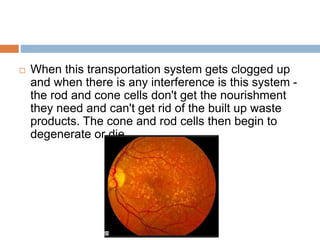
 When this transportation system gets clogged up
and when there is any interference is this system -
the rod and cone cells don't get the nourishment
they need and can't get rid of the built up waste
products. The cone and rod cells then begin to
degenerate or die.
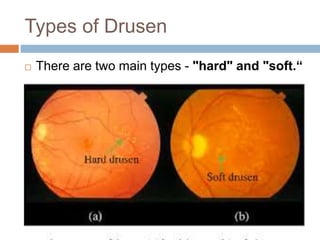
Types of Drusen
 There are two main types - "hard" and "soft.“
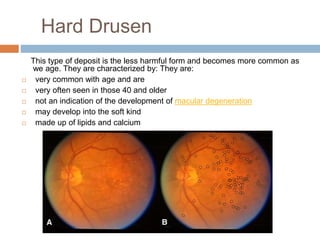
Hard Drusen
This type of deposit is the less harmful form and becomes more common as
we age. They are characterized by: They are:
 very common with age and are
 very often seen in those 40 and older
 not an indication of the development of macular degeneration
 may develop into the soft kind
 made up of lipids and calcium
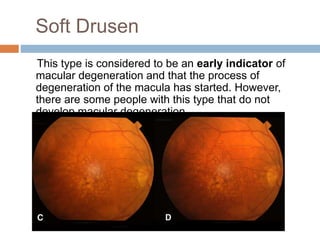
Soft Drusen
This type is considered to be an early indicator of
macular degeneration and that the process of
degeneration of the macula has started. However,
there are some people with this type that do not
develop macular degeneration.
Cont…
The soft form are characterized by:
 pale yellow
 ill-defined borders
 larger than the hard form
 vary in size and shape.
 Soft Deposits:
 Are more often associated with loss of vision
 May cause the retinal pigment epithelium (RPE) to
separate from the other retinal layers.
Drusen and AMD
 Several small drusen or a few medium-sized drusen
is a sign of early AMD and many medium-sized
drusen or one or more large drusen indicates
intermediate AMD. Advanced AMD is noted by
several medium size to large size drusen.
 The more drusen you have the greater chance you
have of developing wet macular degeneration - the
more severe kind of AMD.
 "Large numbers of drusen or large confluent drusen
are also associated with a significantly increased risk
of developing choroidal neovascularization,
characteristic of the exudative (wet) form of AMD."
Size of Drusen
 The size of the drusen is an important
prognostic factor for this retinal condition as
well. Those with larger drusen are more apt to
experience leaky blood vessels, or wet
macular degeneration which causes more
vision loss than dry macular degeneration.
Disease Progression
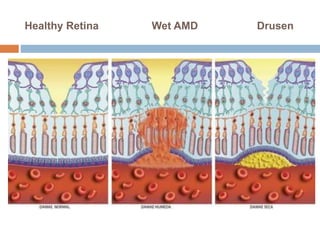
 The detection of macular drusen can also
identify those who are at risk for developing
AMD. "Drusen within the macula are a
significant risk factor for the development
of AMD."
Healthy Retina Wet AMD Drusen
References
 Investigative Ophthalmology and Visual
Science October 2003 vol. 44 no. 10 4481-
4488
 Internet
Thank You

Drusen

  • 1.
  • 2.
    Drusen  There aretwo main types of Drusen in the eye. -Macular -Optic Nerve  They are two very different conditions.  Macular Drusen can be very early symptom of macular degeneration.
  • 3.
     They aresimply small yellow or white deposits of lipid (a fatty compound)and calcium that build up in the Bruch's membrane of the eye. The Bruch's membrane is a layer of tissue underneath the retina.  The other two important layers are the retinal pigment epithelium (RPE) and the the choroid layer, filled with blood vessels. The job of these three layers of tissue is to bring oxygen and nutrients to the rod and cone cells and remove built up waste products.
  • 4.
     When thistransportation system gets clogged up and when there is any interference is this system - the rod and cone cells don't get the nourishment they need and can't get rid of the built up waste products. The cone and rod cells then begin to degenerate or die.
  • 5.
    Types of Drusen There are two main types - "hard" and "soft.“
  • 6.
    Hard Drusen This typeof deposit is the less harmful form and becomes more common as we age. They are characterized by: They are:  very common with age and are  very often seen in those 40 and older  not an indication of the development of macular degeneration  may develop into the soft kind  made up of lipids and calcium
  • 7.
    Soft Drusen This typeis considered to be an early indicator of macular degeneration and that the process of degeneration of the macula has started. However, there are some people with this type that do not develop macular degeneration.
  • 8.
    Cont… The soft formare characterized by:  pale yellow  ill-defined borders  larger than the hard form  vary in size and shape.  Soft Deposits:  Are more often associated with loss of vision  May cause the retinal pigment epithelium (RPE) to separate from the other retinal layers.
  • 9.
    Drusen and AMD Several small drusen or a few medium-sized drusen is a sign of early AMD and many medium-sized drusen or one or more large drusen indicates intermediate AMD. Advanced AMD is noted by several medium size to large size drusen.  The more drusen you have the greater chance you have of developing wet macular degeneration - the more severe kind of AMD.  "Large numbers of drusen or large confluent drusen are also associated with a significantly increased risk of developing choroidal neovascularization, characteristic of the exudative (wet) form of AMD."
  • 10.
    Size of Drusen The size of the drusen is an important prognostic factor for this retinal condition as well. Those with larger drusen are more apt to experience leaky blood vessels, or wet macular degeneration which causes more vision loss than dry macular degeneration.
  • 11.
    Disease Progression  Thedetection of macular drusen can also identify those who are at risk for developing AMD. "Drusen within the macula are a significant risk factor for the development of AMD."
  • 12.
  • 13.
    References  Investigative Ophthalmologyand Visual Science October 2003 vol. 44 no. 10 4481- 4488  Internet
  • 14.