Substance Use and Abuse
One of the most common yet
preventable causes of substance use and abuse
among young people like you is ignorance or
lack of knowledge about their ill effects and
the damage they can do to your body. Many
young people start using drugs out of curiosity.
Others fail to realize or underestimate the
ill effects of drugs, particularly it’s addictive
effects. They begin with occasional use, thinking
they can control themselves, only to succumb to
addiction.
Drug education is therefore crucial in
preventing substance use and abuse.
Factors Influencing Substance Use and Abuse
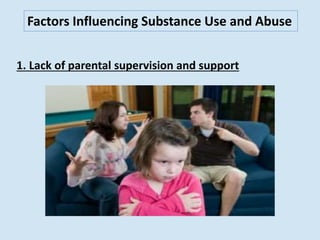
1. Lack of parental supervision and support
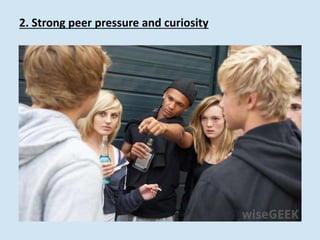
2. Strong peer pressure and curiosity
3. Intense feelings of pleasure
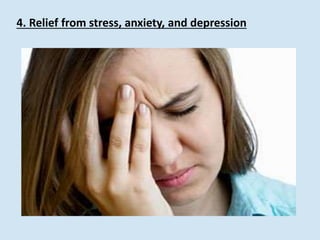
4. Relief from stress, anxiety, and depression
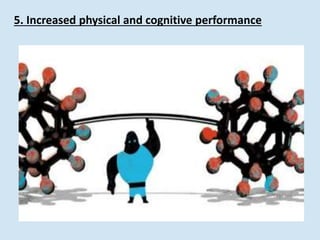
5. Increased physical and cognitive performance
Drugs may be defined as:
1. A chemical substance that has an effect on the body or
mind.
2. A substance intended for use in the diagnosis, cure,
treatment, and prevention of disease in man and
animals.
3. An article other than food which is intended to alter
the structure and/or function of the body.
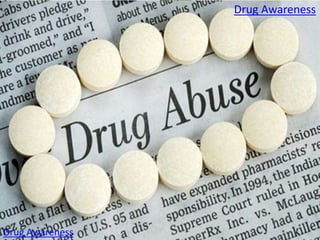
Drug Awareness
Drug Awareness
Prohibited Drugs
The prohibited drugs include opium and
its active components and derivatives
principally cocaine, alpha and beta cocaine;
hallucinogenic drugs, such as mescaline,
lysergic acid diethylamide (LSD) and other
substances producing similar effects.
Regulated Drugs
The regulated drugs include self-inducing
sedatives, such as secobarbital, phenobarbital,
pentobarbital, amobarbital and any other drug
which contains salt or a derivative of salt or
barbituric acid.
Substances
Stimulants
Stimulants are a class of drugs that consists of
illegal drugs such as cocaine, methamphetamine
and MDMA (ecstasy), as well as legal drugs such
as nicotine, caffeine and prescription medications such
as Ritalin and Adderall. These drugs increase alertness,
energy and attention and boost mood.
Stimulants, sometimes called “uppers,”
temporarily increase alertness and energy. The
most commonly used street drugs that fall into
this category are cocaine and amphetamines.
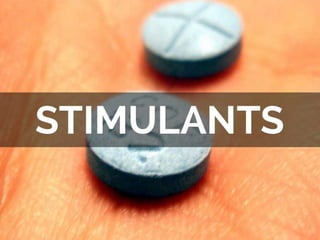
Prescription stimulants come in tablets or
capsules. When abused, they are swallowed,
injected in liquid form or crushed and snorted.
As the name suggests, stimulants
increase alertness, attention, and energy, as
well as elevate blood pressure, heart rate, and
respiration. Stimulants historically were used
to treat asthma and other respiratory
problems, obesity, neurological disorders, and
a variety of other ailments.
But as their potential for abuse and
addiction became apparent, the medical use
of stimulants began to wane. Now, stimulants
are prescribed to treat only a few health
conditions, including ADHD, narcolepsy, and
occasionally depression—in those who have
not responded to other treatments.
Short-term effects
•Loss of appetite.
•Increased heart rate, blood pressure, body
temperature.
•Dilation of pupils.
•Disturbed sleep patterns.
•Nausea.
•Bizarre, erratic, sometimes violent behavior.
•Hallucinations, hyperexcitability, irritability.
•Panic and psychosis.
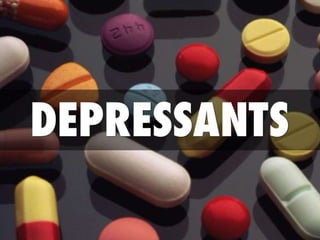
Depressants
A depressant, or central depressant, is
a drug that lowers neurotransmission levels, which
is to depress or reduce arousal or stimulation, in
various areas of the brain. Depressants are also
occasionally referred to as "downers" as they lower
the level of arousal when taken.
Depressants are widely used throughout the
world as prescription medicines and as illicit
substances. Alcohol is a very prominent depressant.
Depressants are drugs that calm nerves and relax
muscles. Depressants do exactly what the name
suggests — they depress a person's nervous system.
Doctors use them to treat things like
insomnia or anxiety.
Inhalants
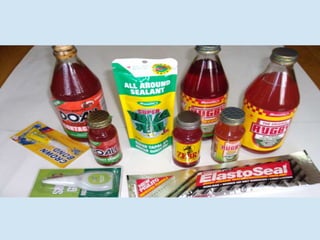
Inhalants are a broad range of intoxicative
drugs whose gases or volatile vapors are breathed
in via the nose or mouth. They are taken by room
temperature volatilization or from a pressurized
container (e.g., nitrous oxide), and do not include
drugs that are sniffed after burning or heating.
Inhalants are volatile substances that produce
chemical vapors that can be inhaled to induce a
psychoactive, or mind-altering, effect. Although
other abused substances can be inhaled, the term
"inhalants" is used to describe a variety of
substances whose main common characteristic is
that they are rarely, if ever, taken by any route other
than inhalation.
Narcotics
Narcotics are also called opioid pain relievers.
They are used only for pain that is severe and is not
helped by other types of painkillers. When used
carefully and under a health care provider's direct
care, these drugs can be effective at reducing pain.
Hallucinogens
Hallucinogens are a class of drugs that cause
hallucinations—profound distortions in a person’s
perceptions of reality. Hallucinogens can be found
in some plants and mushrooms (or their extracts) or
can be man-made, and they are commonly divided
into two broad categories: classic hallucinogens
(such as LSD) and dissociative drugs (such as PCP).
When under the influence of either type
of drug, people often report rapid, intense
emotional swings and seeing images, hearing
sounds, and feeling sensations that seem real
but are not.

Drugs Substance Use and Abuse

  • 2.
    Substance Use andAbuse One of the most common yet preventable causes of substance use and abuse among young people like you is ignorance or lack of knowledge about their ill effects and the damage they can do to your body. Many young people start using drugs out of curiosity.
  • 3.
    Others fail torealize or underestimate the ill effects of drugs, particularly it’s addictive effects. They begin with occasional use, thinking they can control themselves, only to succumb to addiction. Drug education is therefore crucial in preventing substance use and abuse.
  • 4.
    Factors Influencing SubstanceUse and Abuse 1. Lack of parental supervision and support
  • 5.
    2. Strong peerpressure and curiosity
  • 6.
  • 7.
    4. Relief fromstress, anxiety, and depression
  • 8.
    5. Increased physicaland cognitive performance
  • 9.
    Drugs may bedefined as: 1. A chemical substance that has an effect on the body or mind. 2. A substance intended for use in the diagnosis, cure, treatment, and prevention of disease in man and animals. 3. An article other than food which is intended to alter the structure and/or function of the body.
  • 10.
  • 11.
    Prohibited Drugs The prohibiteddrugs include opium and its active components and derivatives principally cocaine, alpha and beta cocaine; hallucinogenic drugs, such as mescaline, lysergic acid diethylamide (LSD) and other substances producing similar effects.
  • 12.
    Regulated Drugs The regulateddrugs include self-inducing sedatives, such as secobarbital, phenobarbital, pentobarbital, amobarbital and any other drug which contains salt or a derivative of salt or barbituric acid.
  • 13.
    Substances Stimulants Stimulants are aclass of drugs that consists of illegal drugs such as cocaine, methamphetamine and MDMA (ecstasy), as well as legal drugs such as nicotine, caffeine and prescription medications such as Ritalin and Adderall. These drugs increase alertness, energy and attention and boost mood.
  • 15.
    Stimulants, sometimes called“uppers,” temporarily increase alertness and energy. The most commonly used street drugs that fall into this category are cocaine and amphetamines. Prescription stimulants come in tablets or capsules. When abused, they are swallowed, injected in liquid form or crushed and snorted.
  • 16.
    As the namesuggests, stimulants increase alertness, attention, and energy, as well as elevate blood pressure, heart rate, and respiration. Stimulants historically were used to treat asthma and other respiratory problems, obesity, neurological disorders, and a variety of other ailments.
  • 17.
    But as theirpotential for abuse and addiction became apparent, the medical use of stimulants began to wane. Now, stimulants are prescribed to treat only a few health conditions, including ADHD, narcolepsy, and occasionally depression—in those who have not responded to other treatments.
  • 18.
    Short-term effects •Loss ofappetite. •Increased heart rate, blood pressure, body temperature. •Dilation of pupils. •Disturbed sleep patterns. •Nausea. •Bizarre, erratic, sometimes violent behavior. •Hallucinations, hyperexcitability, irritability. •Panic and psychosis.
  • 20.
    Depressants A depressant, orcentral depressant, is a drug that lowers neurotransmission levels, which is to depress or reduce arousal or stimulation, in various areas of the brain. Depressants are also occasionally referred to as "downers" as they lower the level of arousal when taken.
  • 21.
    Depressants are widelyused throughout the world as prescription medicines and as illicit substances. Alcohol is a very prominent depressant. Depressants are drugs that calm nerves and relax muscles. Depressants do exactly what the name suggests — they depress a person's nervous system. Doctors use them to treat things like insomnia or anxiety.
  • 22.
    Inhalants Inhalants are abroad range of intoxicative drugs whose gases or volatile vapors are breathed in via the nose or mouth. They are taken by room temperature volatilization or from a pressurized container (e.g., nitrous oxide), and do not include drugs that are sniffed after burning or heating.
  • 24.
    Inhalants are volatilesubstances that produce chemical vapors that can be inhaled to induce a psychoactive, or mind-altering, effect. Although other abused substances can be inhaled, the term "inhalants" is used to describe a variety of substances whose main common characteristic is that they are rarely, if ever, taken by any route other than inhalation.
  • 26.
    Narcotics Narcotics are alsocalled opioid pain relievers. They are used only for pain that is severe and is not helped by other types of painkillers. When used carefully and under a health care provider's direct care, these drugs can be effective at reducing pain.
  • 28.
    Hallucinogens Hallucinogens are aclass of drugs that cause hallucinations—profound distortions in a person’s perceptions of reality. Hallucinogens can be found in some plants and mushrooms (or their extracts) or can be man-made, and they are commonly divided into two broad categories: classic hallucinogens (such as LSD) and dissociative drugs (such as PCP).
  • 29.
    When under theinfluence of either type of drug, people often report rapid, intense emotional swings and seeing images, hearing sounds, and feeling sensations that seem real but are not.

Editor's Notes