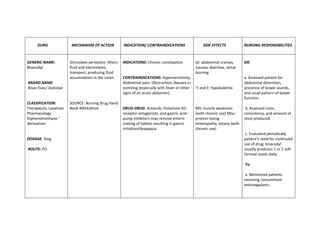
DURG MECHANISM OF ACTION INDICATION/ CONTRAINDICATIONS SIDE EFFECTS NURSING RESPONSIBILITIES
GENERIC NAME:
Bisacodyl
BRAND NAME:
Bisac-Evac/ Dulcolax
CLASSIFICATION:
Therapeutic Laxatives
Pharmacology
Diphenylmethane ‘
derivatives
DOSAGE: 5mg
ROUTE: PO
Stimulates peristalsis. Alters
fluid and electrolytes,
transport, producing fluid
accumulation in the colon.
SOURCE: Nursing Drug Hand
Book 40thEdition
INDICATIONS: Chronic constipation
CONTRAINDICATIONS: Hypersensitivity;
Abdominal pain; Obstruction; Nausea or
vomiting (especially with fever or other
signs of an acute abdomen)
DRUG-DRUG: Antacids, histamine H2-
receptor antagonists, and gastric acid–
pump inhibitors may remove enteric
coating of tablets resulting in gastric
irritation/dyspepsia.
GI: abdominal cramps,
nausea, diarrhea, rectal
burning
F and E: hypokalemia
MS: muscle weakness
(with chronic use) Misc:
protein-losing
enteropathy, tetany (with
chronic use)
DX:
a. Assessed patient for
abdominal distention,
presence of bowel sounds,
and usual pattern of bowel
function.
b. Assessed color,
consistency, and amount of
stool produced.
c. Evaluated periodically
patient's need for continued
use of drug; bisacodyl
usually produces 1 or 2 soft
formed stools daily.
Tx:
a. Monitored patients
receiving concomitant
anticoagulants.
b. Monitored patient for
diarrhea and abdominal
pain.
c. Monitored patient input
and output.
EDx:
a. Advised patient to
increase fluid intake to at
least 1500– 2000 mL/day
during therapy to prevent
dehydration.
b. Encouraged patients to
use other forms of bowel
regulation (increasing bulk
in the diet, increasing fluid
intake, or increasing
mobility).
c. Advise patient that
bisacodyl should not be
used when constipation is
accompanied by abdominal
pain, feve nausea, or
vomiting.
DRUG study 1.docx

DRUG study 1.docx

  • 1.
    DURG MECHANISM OFACTION INDICATION/ CONTRAINDICATIONS SIDE EFFECTS NURSING RESPONSIBILITIES GENERIC NAME: Bisacodyl BRAND NAME: Bisac-Evac/ Dulcolax CLASSIFICATION: Therapeutic Laxatives Pharmacology Diphenylmethane ‘ derivatives DOSAGE: 5mg ROUTE: PO Stimulates peristalsis. Alters fluid and electrolytes, transport, producing fluid accumulation in the colon. SOURCE: Nursing Drug Hand Book 40thEdition INDICATIONS: Chronic constipation CONTRAINDICATIONS: Hypersensitivity; Abdominal pain; Obstruction; Nausea or vomiting (especially with fever or other signs of an acute abdomen) DRUG-DRUG: Antacids, histamine H2- receptor antagonists, and gastric acid– pump inhibitors may remove enteric coating of tablets resulting in gastric irritation/dyspepsia. GI: abdominal cramps, nausea, diarrhea, rectal burning F and E: hypokalemia MS: muscle weakness (with chronic use) Misc: protein-losing enteropathy, tetany (with chronic use) DX: a. Assessed patient for abdominal distention, presence of bowel sounds, and usual pattern of bowel function. b. Assessed color, consistency, and amount of stool produced. c. Evaluated periodically patient's need for continued use of drug; bisacodyl usually produces 1 or 2 soft formed stools daily. Tx: a. Monitored patients receiving concomitant anticoagulants.
  • 2.
    b. Monitored patientfor diarrhea and abdominal pain. c. Monitored patient input and output. EDx: a. Advised patient to increase fluid intake to at least 1500– 2000 mL/day during therapy to prevent dehydration. b. Encouraged patients to use other forms of bowel regulation (increasing bulk in the diet, increasing fluid intake, or increasing mobility). c. Advise patient that bisacodyl should not be used when constipation is accompanied by abdominal pain, feve nausea, or vomiting.