Dr Ajay Bhalla
Add. Director & HOD Gastroenterology
& Hepatology
Fortis Hospital Noida
 World Health Organization:
• “live microorganisms which when administered in
adequate amounts confer a health benefit on the
host”
 They:
• Survive stomach acid and bile
• Establish residence in the intestines
• Impart health benefits
Products containing
BOTH
• Prebiotics
• Probiotics
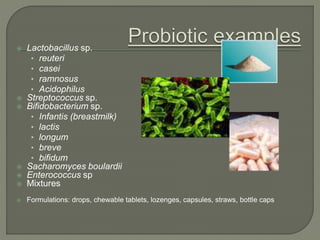
 Lactobacillus sp.
• reuteri
• casei
• ramnosus
• Acidophilus
 Streptococcus sp.
 Bifidobacterium sp.
• Infantis (breastmilk)
• lactis
• longum
• breve
• bifidum
 Sacharomyces boulardii
 Enterococcus sp
 Mixtures
 Formulations: drops, chewable tablets, lozenges, capsules, straws, bottle caps
 Eli Metchnikoff - early 20th century (Russian Nobel
laureate, professor at Pasteur Institute in Paris)
 Observed
• Bulgarians who drank milk fermented by lactic-acid
producing bacteria had long lives
• Lactic acid lowers gut pH and inhibits the growth of
some pathogenic bacteria.
 Metchnikoff began drinking fermented milk and soon
Parisian physicians did likewise.
 Henry Tissier at Pasteur Institute identified bacteria
common in breastfed infant stool: Bifidobacter
 Lactobacillus acidophilus breaks down lactose and
allows lactose intolerant individuals to drink milk
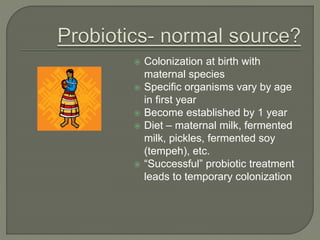
 Colonization at birth with
maternal species
 Specific organisms vary by age
in first year
 Become established by 1 year
 Diet – maternal milk, fermented
milk, pickles, fermented soy
(tempeh), etc.
 “Successful” probiotic treatment
leads to temporary colonization
After reviewing a majority of the research
and literature relative to probiotic use in
humans, it is clear that diarrhea is the
condition most beneficially treated by
probiotic therapy. This can include
diarrhea associated with antibiotics,
travel, gastroenteritis, lactose
intolerance, and Inflammatory Bowel
Disease. These areas were reviewed.
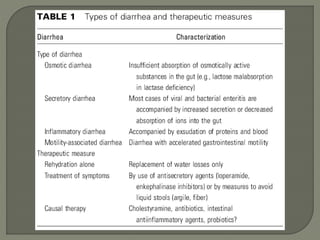
Diarrhea is frequent loose stools, along with
an excessive loss of fluid and electrolytes
(K & Na especially), abdominal cramping,
pain, and often presence of a fever.
It can be acute or chronic, and is secondary
to an underlying disease or condition or
pathogenic bacteria within the GI tract.
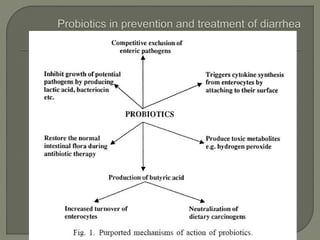
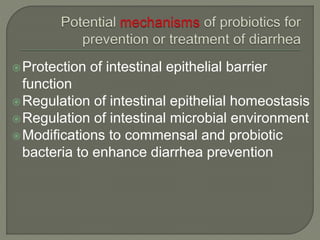
Protection of intestinal epithelial barrier
function
Regulation of intestinal epithelial homeostasis
Regulation of intestinal microbial environment
Modifications to commensal and probiotic
bacteria to enhance diarrhea prevention
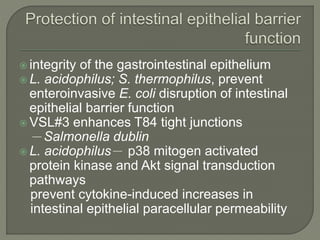
 integrity of the gastrointestinal epithelium
 L. acidophilus; S. thermophilus, prevent
enteroinvasive E. coli disruption of intestinal
epithelial barrier function
 VSL#3 enhances T84 tight junctions
-Salmonella dublin
 L. acidophilus- p38 mitogen activated
protein kinase and Akt signal transduction
pathways
prevent cytokine-induced increases in
intestinal epithelial paracellular permeability
 Inflammatory cytokines and chemokines
-intestinal epithelial cell injury.
 L. casei -downregulates Shigella flexneri
by inhibition of NFκB-dependent transcription
 LGG - prevents cytokine-induced intestinal
epithelial injury
1.by preventing apoptosis and promoting cell
growth
2.cytoprotective shock proteins
Disturbing the balance between the host and
commensal bacterial flora in GI tract is
associated with antibiotic-associated
diarrhea
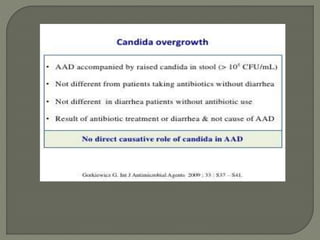
fungal infections
L. acidophilus and Bifidobacterium spp.
1.prevent antibiotic treatment-induced
increases in facultative anaerobic bacteria
2.decrease antibiotic-resistant enterococci.
toxin-receptor blockade strategy
recombinant E. coli is able to produce a
lipopolysaccharide, which can bind heat-
labile enterotoxin, induces traveler’s
diarrhea
virulent V. cholerae- cholera toxin
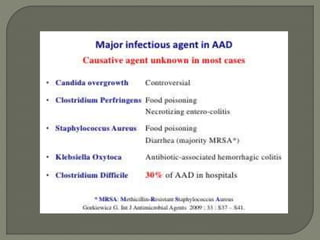
Antibiotic-associated diarrhea (AAD)
and Clostridium difficile infection major
pathological bacteria
Lactobacillus GG (LGG)
Saccharomyces boulardii
1.significantly reduced the incidence of
antibiotic-
associated diarrhea
from 18.9% (placebo) to 5.7% (P < 0.05)
2.combination with susceptible antibiotics
decreases recurrence of C. difficile infection
 Administration of LGG, Saccharomyces boulardii,
before and during antibiotic treatment reduced
the frequency and/or duration of episodes and
the severity of symptoms in many cases but
was not always effective
 Eradication Helicobacter pylori using
clarithromycin, amoxicillin, and omeprazol leads
to diarrheas
Coadministration of S. boulardii during H. pylori
eradication did reduce AAD from 11.5 to 6.9%
AAD is defined as unexplained diarrhoea
which develops within few hours following
antibiotic use upto 8 weeks after antibiotic
discontinuation
 Its incidence has been noted to slowly increase over
the past few years, reaching up to 30% in some
instances.
 Symptoms can vary from mild self-limited disease to
the more serious and severe Clostridium difficile (C.
difficile)-associated diarrhea (CDAD).
 Luckily, CDAD is only responsible for an estimated
10%-20% of cases of AAD
 Multiple risk factors for CDAD have been delineated,
such as advanced age, hospitalization, acid
suppression, chemotherapy, renal failure,
gastrointestinal surgery and mechanical ventilation
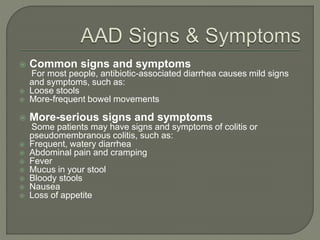
 Common signs and symptoms
For most people, antibiotic-associated diarrhea causes mild signs
and symptoms, such as:
 Loose stools
 More-frequent bowel movements
 More-serious signs and symptoms
Some patients may have signs and symptoms of colitis or
pseudomembranous colitis, such as:
 Frequent, watery diarrhea
 Abdominal pain and cramping
 Fever
 Mucus in your stool
 Bloody stools
 Nausea
 Loss of appetite
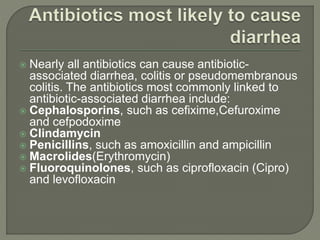
 Nearly all antibiotics can cause antibiotic-
associated diarrhea, colitis or pseudomembranous
colitis. The antibiotics most commonly linked to
antibiotic-associated diarrhea include:
 Cephalosporins, such as cefixime,Cefuroxime
and cefpodoxime
 Clindamycin
 Penicillins, such as amoxicillin and ampicillin
 Macrolides(Erythromycin)
 Fluoroquinolones, such as ciprofloxacin (Cipro)
and levofloxacin
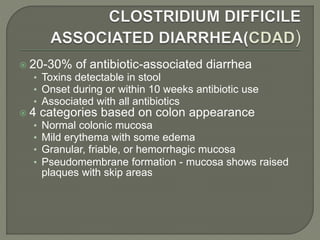
 20-30% of antibiotic-associated diarrhea
• Toxins detectable in stool
• Onset during or within 10 weeks antibiotic use
• Associated with all antibiotics
 4 categories based on colon appearance
• Normal colonic mucosa
• Mild erythema with some edema
• Granular, friable, or hemorrhagic mucosa
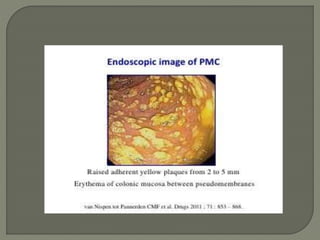
• Pseudomembrane formation - mucosa shows raised
plaques with skip areas
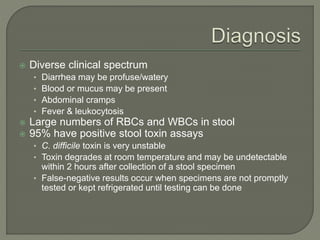
 Diverse clinical spectrum
• Diarrhea may be profuse/watery
• Blood or mucus may be present
• Abdominal cramps
• Fever & leukocytosis
 Large numbers of RBCs and WBCs in stool
 95% have positive stool toxin assays
• C. difficile toxin is very unstable
• Toxin degrades at room temperature and may be undetectable
within 2 hours after collection of a stool specimen
• False-negative results occur when specimens are not promptly
tested or kept refrigerated until testing can be done
 Pseudomembraneous colitis
 Toxic megacolon
 Perforation of the colon
 Sepsis
 Death
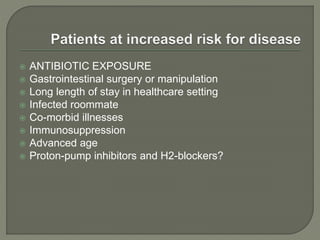
 ANTIBIOTIC EXPOSURE
 Gastrointestinal surgery or manipulation
 Long length of stay in healthcare setting
 Infected roommate
 Co-morbid illnesses
 Immunosuppression
 Advanced age
 Proton-pump inhibitors and H2-blockers?
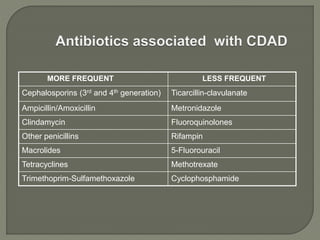
MORE FREQUENT LESS FREQUENT
Cephalosporins (3rd and 4th generation) Ticarcillin-clavulanate
Ampicillin/Amoxicillin Metronidazole
Clindamycin Fluoroquinolones
Other penicillins Rifampin
Macrolides 5-Fluorouracil
Tetracyclines Methotrexate
Trimethoprim-Sulfamethoxazole Cyclophosphamide
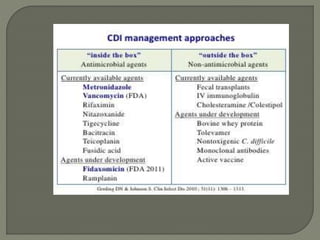
 Enhanced infection control measures.
 Targeted antibiotic restriction
 Appropriate antibiotic therapy
 Adjunctive therapy – probiotics, IVIG, toxin
binders
 Avoid antiperistaltic and opiate drugs.
 Fecal transplantation
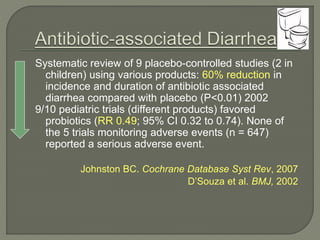
Systematic review of 9 placebo-controlled studies (2 in
children) using various products: 60% reduction in
incidence and duration of antibiotic associated
diarrhea compared with placebo (P<0.01) 2002
9/10 pediatric trials (different products) favored
probiotics (RR 0.49; 95% CI 0.32 to 0.74). None of
the 5 trials monitoring adverse events (n = 647)
reported a serious adverse event.
Johnston BC. Cochrane Database Syst Rev, 2007
D’Souza et al. BMJ, 2002
The probiotics promote increase
production of the synergistic bacteria,
thus increasing the quantity in the
intestine & decreasing the number of
available receptor sites
 In 1989 the largest study on antibiotic-
associated diarrhea and probiotic intervention
was completed. This spurned more interest in
the area.
 Prospective, double-blind, placebo-controlled
trial
 N =180 hospital patients on antibiotics
 Experimental: Received S. boulardii in
conjunction with antibiotics.
 Results: There was a 13% decrease in overall
diarrhea symptoms when comparing the
experimental to the control.
A study using clear dosage levels was
published in 1999. It examined 119
children (2wks-12.8 yrs) on antibiotics. Half
were given a placebo and half a 2 * 10^10
colony forming units of Lactobacillus GG
twice a day. This was examined over a
three month period. During this time
careful stool frequency and consistency
logs were maintained by the parents of
subjects.
1. There was a 11% decrease of diarrhea in
the initial two weeks of probiotic therapy
when comparing the experimental group
to control.
2. By the third week, there was a 30%
decrease difference between the two
groups.
 The study in 1989 was lacking in clearly
quantifiable values of probiotic dose.
 The study that was completed in 1999 was a
break through because there were standardized
amounts of probiotics given. However, the age
range of children does not enable a clear dose
per weight determination to be made.
 In all of the studies reviewed concerning
antibiotic-related diarrhea, there were one or
more of the following confounds: lack of
specific detail of amount and consistency of
diarrhea and the quantity and viability of the
probiotic strains administered. There leaves
much to be researched.
Which organism to use?
• S boulardii, Lactobacillus, and E faecium have
prevented antibiotic-associated diarrhea
• L GG and L reuterii reduced infectious diarrhea
• L GG for eczema
• L reuteri for colic
Which product? What dose? How long?
Side effects? Cost?
 Cochrane meta analysis of over 2000
individuals from 10 RCT—PROBIOTICS
SIGNIFICANTLY REDUCED INCIDENCE OF
AAD(RR 0.49).
 Efficacy of Probiotic varied with dosage.A
study of 255 Indoor patients those receiving 2
caps of 50 billion CFU of live organism(L
acidophillus + L casei) had lower AAD(15%)
vs those receiving 1 cap(28%) vs
placebo(44.1%)
 Gao et al,Am J Gastro
2010
In a 2013 Cochrane review of 23 trials
investigating 4213 adult or pediatric
patients receiving antibiotic therapy
prophylactic probiotic therapy was
associted with reduction in development of
CDAD(2% vs 5.5% for placebo)
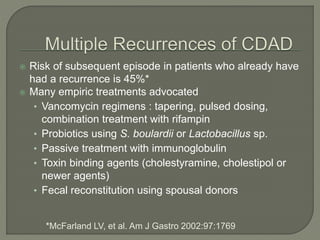
 Risk of subsequent episode in patients who already have
had a recurrence is 45%*
 Many empiric treatments advocated
• Vancomycin regimens : tapering, pulsed dosing,
combination treatment with rifampin
• Probiotics using S. boulardii or Lactobacillus sp.
• Passive treatment with immunoglobulin
• Toxin binding agents (cholestyramine, cholestipol or
newer agents)
• Fecal reconstitution using spousal donors
*McFarland LV, et al. Am J Gastro 2002:97:1769
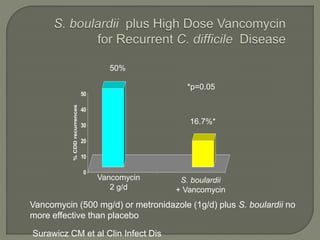
0
10
20
30
40
50
%CDDrecurrences
50%
16.7%*
Surawicz CM et al Clin Infect Dis
S. boulardii
+ Vancomycin
Vancomycin
2 g/d
*p=0.05
Vancomycin (500 mg/d) or metronidazole (1g/d) plus S. boulardii no
more effective than placebo
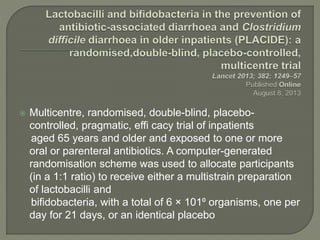
 Multicentre, randomised, double-blind, placebo-
controlled, pragmatic, effi cacy trial of inpatients
aged 65 years and older and exposed to one or more
oral or parenteral antibiotics. A computer-generated
randomisation scheme was used to allocate participants
(in a 1:1 ratio) to receive either a multistrain preparation
of lactobacilli and
bifidobacteria, with a total of 6 × 101⁰ organisms, one per
day for 21 days, or an identical placebo
 The primary outcomes were occurrence of AAD
within 8 weeks and C diffi cile diarrhoea (CDD) within 1
2 weeks of recruitment.
 Of 17 420 patients screened, 1493 were randomly assigned to
the microbial preparation group and 1488 to the placebo group.
1470 and 1471, respectively, were included in the analyses of
the primary endpoints.
 AAD(including CDD) occurred in 159 (10.8%) participants in the
microbial preparation group and 153 (10.4%) participants in the
placebo group (relative risk [RR] 1.04; 95% CI 0.84–1.28; p=0・
71).
 CDD was an uncommon cause of AAD and occurred in 12
(0.8%) participants in the microbial preparation group and 17
(1.2%) participants in the placebo group (RR 0.71; 95% CI 0.34–
1.47; p=0.35).
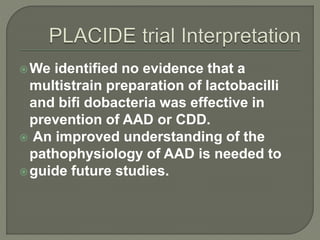
We identified no evidence that a
multistrain preparation of lactobacilli
and bifi dobacteria was effective in
prevention of AAD or CDD.
 An improved understanding of the
pathophysiology of AAD is needed to
guide future studies.
 Antibiotics given upto 7 days before
randomisation(Probiotics should have been used
simultaneously)
 Usage of ‘random effect analysis’ instead of ‘fixed effect
analysis’ would give different results
 Power of trial was 80% based on 50% reduction in CDD
assuming 5% placebo effect but placebo effect was 1.2%
hence power reduced to 40%.
 Other probiotic strains with proven efficacy eg,
preparations containing Saccharomyces boulardii are
also used to prevent C difficile infection (Can J
Gastroenterol 2009;23:817–821
 There is a basis to believe that probiotics, through competitive
exclusion by the enhancement of intestinal micro flora, are
able to lessen the frequency and duration of diarrhea.

 Benefit of probiotics is thought to derive (at least partly) from
recolonization of the gastrointestinal tract with “normal”, non-
pathologic flora rather than from species-specific effect[
 These results are in accordance with the PLACIDE trial and
suggest that probiotics use maybe beneficial in adults but not
necessarily in the older age group.
 More needs to be done in order to create clinically applicable
recommendations.
 However, what the PLACIDE trial does point out is that
there is no clear evidence for use of probiotics in this
setting until high-quality RCTs are conducted.
 Although we have been successful in decreasing the host
susceptibility in recurrence of C difficile with fecal
transplantation(N Engl J Med 2013;368:407–415),
currently no modalities exist to improve host immunity to
prevent antibiotic therapy induced CDD.
 Hence, primary prevention with rigorous infectious
control programs remains our strongest tool to decrease
the rate CDD in hospitalized patients. These interventions
have proven to be effective where implemented
 The appeal of using probiotics comes clearly from
their ready availability, low cost and acceptable
known safety profile.
 With the current data at hand, it is difficult to draw
any solid conclusion about the prophylactic use of
probiotics in AAD.
 It would be reasonable to advise their use in some
specific populations such as patients with a history
of AAD or risk factors for the development of
CDAD
 Faecal transplantation has been used to treat
recurrent C difficile infection and,as such, could be
considered as the“ultimate probiotic”..
Dr ajay bhalla

Dr ajay bhalla

  • 1.
    Dr Ajay Bhalla Add.Director & HOD Gastroenterology & Hepatology Fortis Hospital Noida
  • 2.
     World HealthOrganization: • “live microorganisms which when administered in adequate amounts confer a health benefit on the host”  They: • Survive stomach acid and bile • Establish residence in the intestines • Impart health benefits
  • 3.
  • 4.
     Lactobacillus sp. •reuteri • casei • ramnosus • Acidophilus  Streptococcus sp.  Bifidobacterium sp. • Infantis (breastmilk) • lactis • longum • breve • bifidum  Sacharomyces boulardii  Enterococcus sp  Mixtures  Formulations: drops, chewable tablets, lozenges, capsules, straws, bottle caps
  • 5.
     Eli Metchnikoff- early 20th century (Russian Nobel laureate, professor at Pasteur Institute in Paris)  Observed • Bulgarians who drank milk fermented by lactic-acid producing bacteria had long lives • Lactic acid lowers gut pH and inhibits the growth of some pathogenic bacteria.  Metchnikoff began drinking fermented milk and soon Parisian physicians did likewise.  Henry Tissier at Pasteur Institute identified bacteria common in breastfed infant stool: Bifidobacter  Lactobacillus acidophilus breaks down lactose and allows lactose intolerant individuals to drink milk
  • 6.
     Colonization atbirth with maternal species  Specific organisms vary by age in first year  Become established by 1 year  Diet – maternal milk, fermented milk, pickles, fermented soy (tempeh), etc.  “Successful” probiotic treatment leads to temporary colonization
  • 7.
    After reviewing amajority of the research and literature relative to probiotic use in humans, it is clear that diarrhea is the condition most beneficially treated by probiotic therapy. This can include diarrhea associated with antibiotics, travel, gastroenteritis, lactose intolerance, and Inflammatory Bowel Disease. These areas were reviewed.
  • 8.
    Diarrhea is frequentloose stools, along with an excessive loss of fluid and electrolytes (K & Na especially), abdominal cramping, pain, and often presence of a fever. It can be acute or chronic, and is secondary to an underlying disease or condition or pathogenic bacteria within the GI tract.
  • 11.
    Protection of intestinalepithelial barrier function Regulation of intestinal epithelial homeostasis Regulation of intestinal microbial environment Modifications to commensal and probiotic bacteria to enhance diarrhea prevention
  • 12.
     integrity ofthe gastrointestinal epithelium  L. acidophilus; S. thermophilus, prevent enteroinvasive E. coli disruption of intestinal epithelial barrier function  VSL#3 enhances T84 tight junctions -Salmonella dublin  L. acidophilus- p38 mitogen activated protein kinase and Akt signal transduction pathways prevent cytokine-induced increases in intestinal epithelial paracellular permeability
  • 13.
     Inflammatory cytokinesand chemokines -intestinal epithelial cell injury.  L. casei -downregulates Shigella flexneri by inhibition of NFκB-dependent transcription  LGG - prevents cytokine-induced intestinal epithelial injury 1.by preventing apoptosis and promoting cell growth 2.cytoprotective shock proteins
  • 14.
    Disturbing the balancebetween the host and commensal bacterial flora in GI tract is associated with antibiotic-associated diarrhea fungal infections L. acidophilus and Bifidobacterium spp. 1.prevent antibiotic treatment-induced increases in facultative anaerobic bacteria 2.decrease antibiotic-resistant enterococci.
  • 15.
    toxin-receptor blockade strategy recombinantE. coli is able to produce a lipopolysaccharide, which can bind heat- labile enterotoxin, induces traveler’s diarrhea virulent V. cholerae- cholera toxin
  • 17.
    Antibiotic-associated diarrhea (AAD) andClostridium difficile infection major pathological bacteria Lactobacillus GG (LGG) Saccharomyces boulardii 1.significantly reduced the incidence of antibiotic- associated diarrhea from 18.9% (placebo) to 5.7% (P < 0.05) 2.combination with susceptible antibiotics decreases recurrence of C. difficile infection
  • 18.
     Administration ofLGG, Saccharomyces boulardii, before and during antibiotic treatment reduced the frequency and/or duration of episodes and the severity of symptoms in many cases but was not always effective  Eradication Helicobacter pylori using clarithromycin, amoxicillin, and omeprazol leads to diarrheas Coadministration of S. boulardii during H. pylori eradication did reduce AAD from 11.5 to 6.9%
  • 19.
    AAD is definedas unexplained diarrhoea which develops within few hours following antibiotic use upto 8 weeks after antibiotic discontinuation
  • 20.
     Its incidencehas been noted to slowly increase over the past few years, reaching up to 30% in some instances.  Symptoms can vary from mild self-limited disease to the more serious and severe Clostridium difficile (C. difficile)-associated diarrhea (CDAD).  Luckily, CDAD is only responsible for an estimated 10%-20% of cases of AAD  Multiple risk factors for CDAD have been delineated, such as advanced age, hospitalization, acid suppression, chemotherapy, renal failure, gastrointestinal surgery and mechanical ventilation
  • 21.
     Common signsand symptoms For most people, antibiotic-associated diarrhea causes mild signs and symptoms, such as:  Loose stools  More-frequent bowel movements  More-serious signs and symptoms Some patients may have signs and symptoms of colitis or pseudomembranous colitis, such as:  Frequent, watery diarrhea  Abdominal pain and cramping  Fever  Mucus in your stool  Bloody stools  Nausea  Loss of appetite
  • 22.
     Nearly allantibiotics can cause antibiotic- associated diarrhea, colitis or pseudomembranous colitis. The antibiotics most commonly linked to antibiotic-associated diarrhea include:  Cephalosporins, such as cefixime,Cefuroxime and cefpodoxime  Clindamycin  Penicillins, such as amoxicillin and ampicillin  Macrolides(Erythromycin)  Fluoroquinolones, such as ciprofloxacin (Cipro) and levofloxacin
  • 29.
     20-30% ofantibiotic-associated diarrhea • Toxins detectable in stool • Onset during or within 10 weeks antibiotic use • Associated with all antibiotics  4 categories based on colon appearance • Normal colonic mucosa • Mild erythema with some edema • Granular, friable, or hemorrhagic mucosa • Pseudomembrane formation - mucosa shows raised plaques with skip areas
  • 30.
     Diverse clinicalspectrum • Diarrhea may be profuse/watery • Blood or mucus may be present • Abdominal cramps • Fever & leukocytosis  Large numbers of RBCs and WBCs in stool  95% have positive stool toxin assays • C. difficile toxin is very unstable • Toxin degrades at room temperature and may be undetectable within 2 hours after collection of a stool specimen • False-negative results occur when specimens are not promptly tested or kept refrigerated until testing can be done
  • 32.
     Pseudomembraneous colitis Toxic megacolon  Perforation of the colon  Sepsis  Death
  • 33.
     ANTIBIOTIC EXPOSURE Gastrointestinal surgery or manipulation  Long length of stay in healthcare setting  Infected roommate  Co-morbid illnesses  Immunosuppression  Advanced age  Proton-pump inhibitors and H2-blockers?
  • 34.
    MORE FREQUENT LESSFREQUENT Cephalosporins (3rd and 4th generation) Ticarcillin-clavulanate Ampicillin/Amoxicillin Metronidazole Clindamycin Fluoroquinolones Other penicillins Rifampin Macrolides 5-Fluorouracil Tetracyclines Methotrexate Trimethoprim-Sulfamethoxazole Cyclophosphamide
  • 35.
     Enhanced infectioncontrol measures.  Targeted antibiotic restriction  Appropriate antibiotic therapy  Adjunctive therapy – probiotics, IVIG, toxin binders  Avoid antiperistaltic and opiate drugs.  Fecal transplantation
  • 37.
    Systematic review of9 placebo-controlled studies (2 in children) using various products: 60% reduction in incidence and duration of antibiotic associated diarrhea compared with placebo (P<0.01) 2002 9/10 pediatric trials (different products) favored probiotics (RR 0.49; 95% CI 0.32 to 0.74). None of the 5 trials monitoring adverse events (n = 647) reported a serious adverse event. Johnston BC. Cochrane Database Syst Rev, 2007 D’Souza et al. BMJ, 2002
  • 38.
    The probiotics promoteincrease production of the synergistic bacteria, thus increasing the quantity in the intestine & decreasing the number of available receptor sites
  • 39.
     In 1989the largest study on antibiotic- associated diarrhea and probiotic intervention was completed. This spurned more interest in the area.  Prospective, double-blind, placebo-controlled trial  N =180 hospital patients on antibiotics  Experimental: Received S. boulardii in conjunction with antibiotics.  Results: There was a 13% decrease in overall diarrhea symptoms when comparing the experimental to the control.
  • 40.
    A study usingclear dosage levels was published in 1999. It examined 119 children (2wks-12.8 yrs) on antibiotics. Half were given a placebo and half a 2 * 10^10 colony forming units of Lactobacillus GG twice a day. This was examined over a three month period. During this time careful stool frequency and consistency logs were maintained by the parents of subjects.
  • 41.
    1. There wasa 11% decrease of diarrhea in the initial two weeks of probiotic therapy when comparing the experimental group to control. 2. By the third week, there was a 30% decrease difference between the two groups.
  • 42.
     The studyin 1989 was lacking in clearly quantifiable values of probiotic dose.  The study that was completed in 1999 was a break through because there were standardized amounts of probiotics given. However, the age range of children does not enable a clear dose per weight determination to be made.  In all of the studies reviewed concerning antibiotic-related diarrhea, there were one or more of the following confounds: lack of specific detail of amount and consistency of diarrhea and the quantity and viability of the probiotic strains administered. There leaves much to be researched.
  • 43.
    Which organism touse? • S boulardii, Lactobacillus, and E faecium have prevented antibiotic-associated diarrhea • L GG and L reuterii reduced infectious diarrhea • L GG for eczema • L reuteri for colic Which product? What dose? How long? Side effects? Cost?
  • 44.
     Cochrane metaanalysis of over 2000 individuals from 10 RCT—PROBIOTICS SIGNIFICANTLY REDUCED INCIDENCE OF AAD(RR 0.49).  Efficacy of Probiotic varied with dosage.A study of 255 Indoor patients those receiving 2 caps of 50 billion CFU of live organism(L acidophillus + L casei) had lower AAD(15%) vs those receiving 1 cap(28%) vs placebo(44.1%)  Gao et al,Am J Gastro 2010
  • 45.
    In a 2013Cochrane review of 23 trials investigating 4213 adult or pediatric patients receiving antibiotic therapy prophylactic probiotic therapy was associted with reduction in development of CDAD(2% vs 5.5% for placebo)
  • 46.
     Risk ofsubsequent episode in patients who already have had a recurrence is 45%*  Many empiric treatments advocated • Vancomycin regimens : tapering, pulsed dosing, combination treatment with rifampin • Probiotics using S. boulardii or Lactobacillus sp. • Passive treatment with immunoglobulin • Toxin binding agents (cholestyramine, cholestipol or newer agents) • Fecal reconstitution using spousal donors *McFarland LV, et al. Am J Gastro 2002:97:1769
  • 47.
    0 10 20 30 40 50 %CDDrecurrences 50% 16.7%* Surawicz CM etal Clin Infect Dis S. boulardii + Vancomycin Vancomycin 2 g/d *p=0.05 Vancomycin (500 mg/d) or metronidazole (1g/d) plus S. boulardii no more effective than placebo
  • 48.
     Multicentre, randomised,double-blind, placebo- controlled, pragmatic, effi cacy trial of inpatients aged 65 years and older and exposed to one or more oral or parenteral antibiotics. A computer-generated randomisation scheme was used to allocate participants (in a 1:1 ratio) to receive either a multistrain preparation of lactobacilli and bifidobacteria, with a total of 6 × 101⁰ organisms, one per day for 21 days, or an identical placebo
  • 49.
     The primaryoutcomes were occurrence of AAD within 8 weeks and C diffi cile diarrhoea (CDD) within 1 2 weeks of recruitment.  Of 17 420 patients screened, 1493 were randomly assigned to the microbial preparation group and 1488 to the placebo group. 1470 and 1471, respectively, were included in the analyses of the primary endpoints.  AAD(including CDD) occurred in 159 (10.8%) participants in the microbial preparation group and 153 (10.4%) participants in the placebo group (relative risk [RR] 1.04; 95% CI 0.84–1.28; p=0・ 71).  CDD was an uncommon cause of AAD and occurred in 12 (0.8%) participants in the microbial preparation group and 17 (1.2%) participants in the placebo group (RR 0.71; 95% CI 0.34– 1.47; p=0.35).
  • 50.
    We identified noevidence that a multistrain preparation of lactobacilli and bifi dobacteria was effective in prevention of AAD or CDD.  An improved understanding of the pathophysiology of AAD is needed to guide future studies.
  • 51.
     Antibiotics givenupto 7 days before randomisation(Probiotics should have been used simultaneously)  Usage of ‘random effect analysis’ instead of ‘fixed effect analysis’ would give different results  Power of trial was 80% based on 50% reduction in CDD assuming 5% placebo effect but placebo effect was 1.2% hence power reduced to 40%.  Other probiotic strains with proven efficacy eg, preparations containing Saccharomyces boulardii are also used to prevent C difficile infection (Can J Gastroenterol 2009;23:817–821
  • 52.
     There isa basis to believe that probiotics, through competitive exclusion by the enhancement of intestinal micro flora, are able to lessen the frequency and duration of diarrhea.   Benefit of probiotics is thought to derive (at least partly) from recolonization of the gastrointestinal tract with “normal”, non- pathologic flora rather than from species-specific effect[  These results are in accordance with the PLACIDE trial and suggest that probiotics use maybe beneficial in adults but not necessarily in the older age group.  More needs to be done in order to create clinically applicable recommendations.
  • 53.
     However, whatthe PLACIDE trial does point out is that there is no clear evidence for use of probiotics in this setting until high-quality RCTs are conducted.  Although we have been successful in decreasing the host susceptibility in recurrence of C difficile with fecal transplantation(N Engl J Med 2013;368:407–415), currently no modalities exist to improve host immunity to prevent antibiotic therapy induced CDD.  Hence, primary prevention with rigorous infectious control programs remains our strongest tool to decrease the rate CDD in hospitalized patients. These interventions have proven to be effective where implemented
  • 54.
     The appealof using probiotics comes clearly from their ready availability, low cost and acceptable known safety profile.  With the current data at hand, it is difficult to draw any solid conclusion about the prophylactic use of probiotics in AAD.  It would be reasonable to advise their use in some specific populations such as patients with a history of AAD or risk factors for the development of CDAD  Faecal transplantation has been used to treat recurrent C difficile infection and,as such, could be considered as the“ultimate probiotic”..