J.B. Prajapati
Principal & Dean
SMC College of Dairy Science,
Anand Agricultural University,
Anand–388 110 (Gujarat)
jbprajapati@aau.in
Probiotics
for
Geriatric
Population
JBP-YIMPSF-080315 1
Global ageing…..
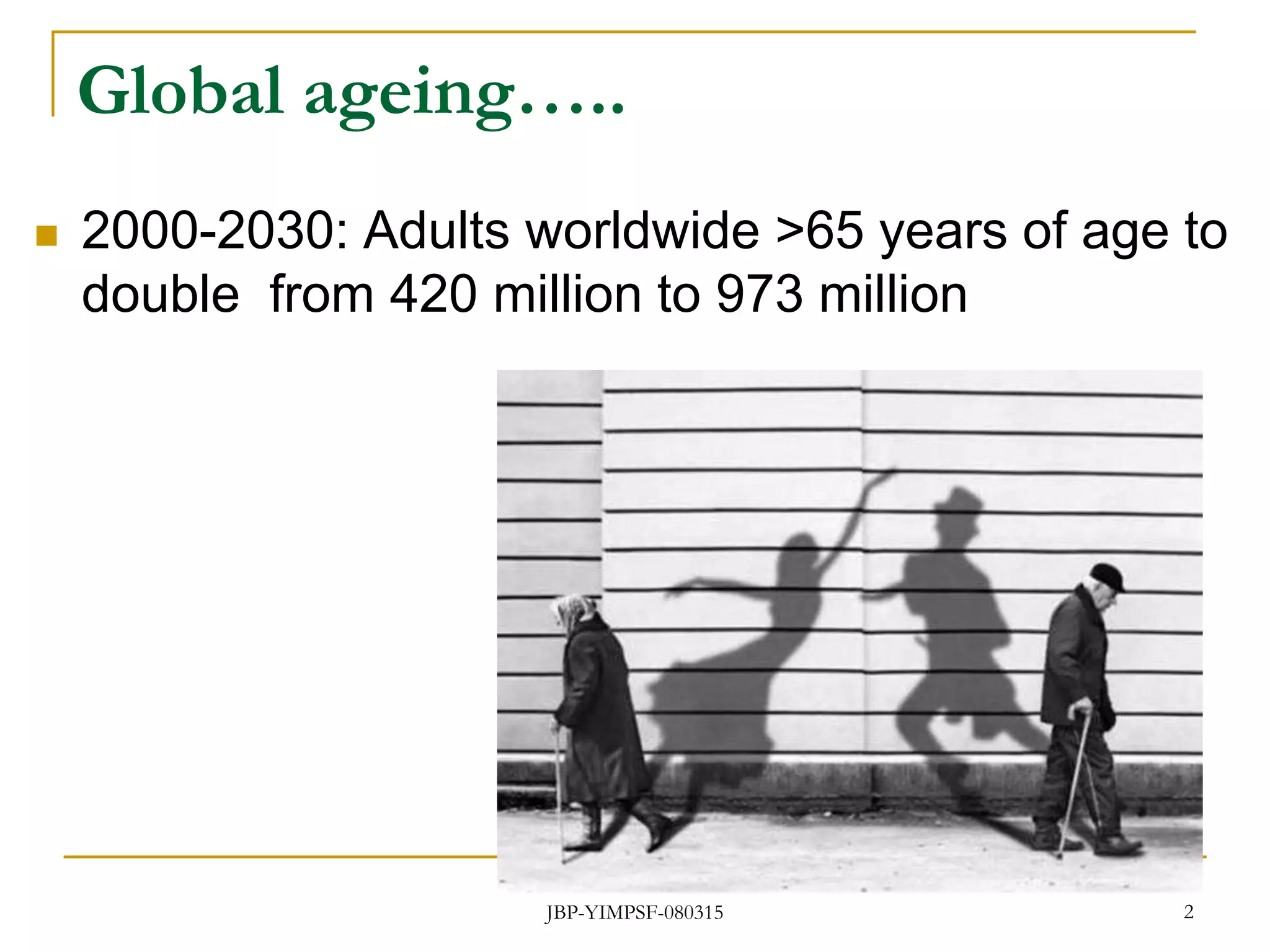
 2000-2030: Adults worldwide >65 years of age to
double from 420 million to 973 million
JBP-YIMPSF-080315 2
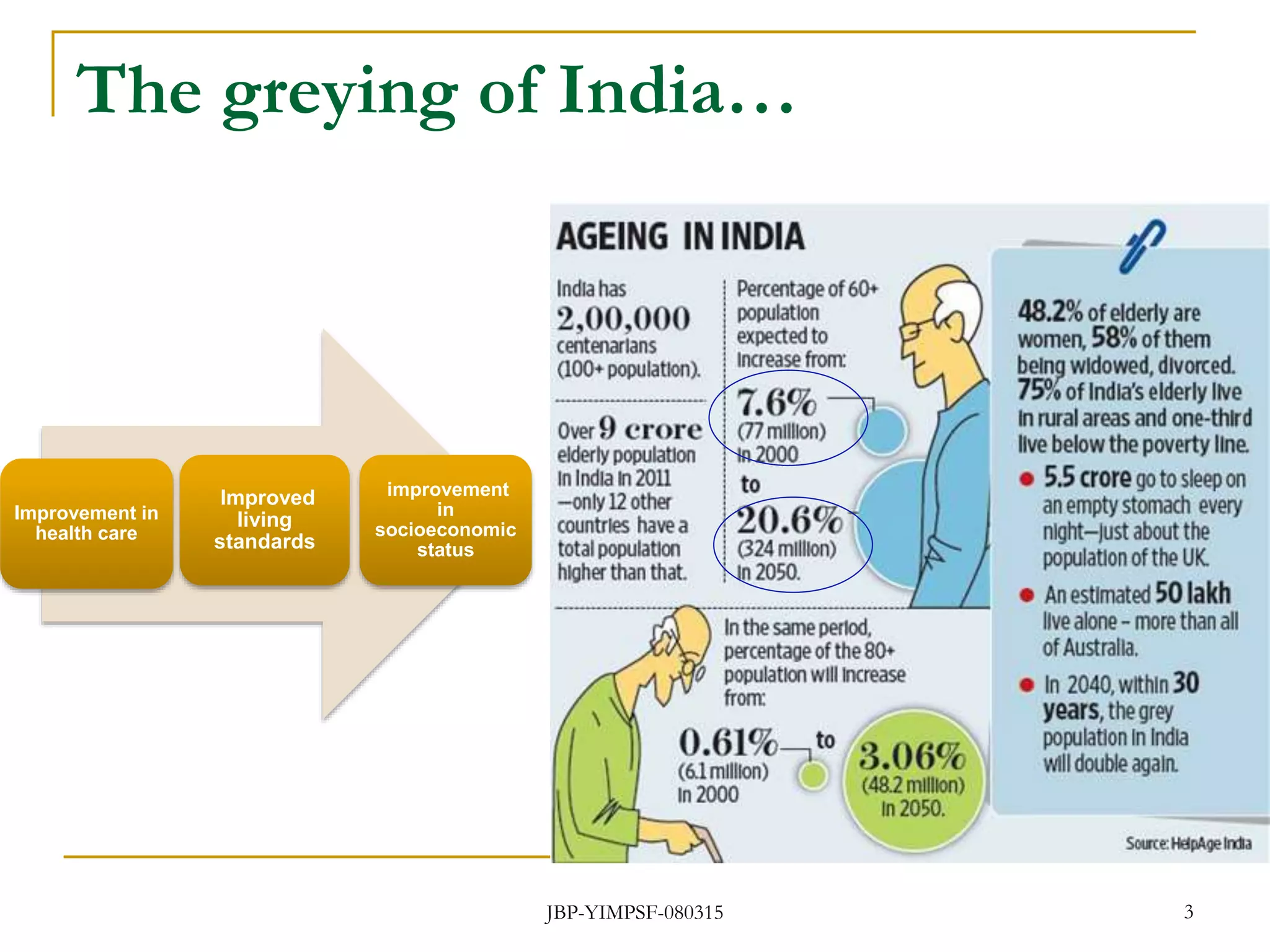
The greying of India…
Improvement in
health care
Improved
living
standards
improvement
in
socioeconomic
status
JBP-YIMPSF-080315 3
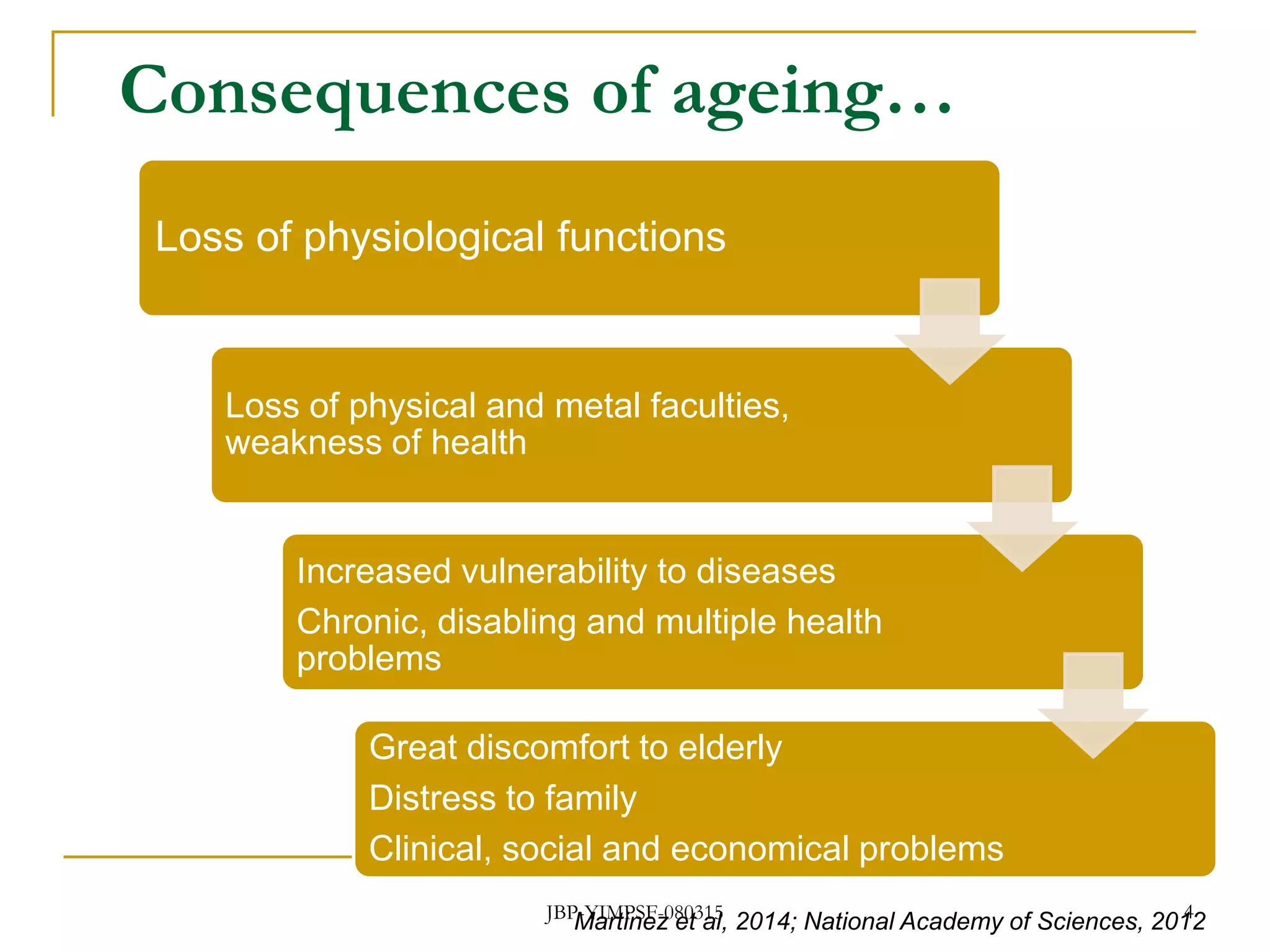
Consequences of ageing…
Loss of physiological functions
Loss of physical and metal faculties,
weakness of health
Increased vulnerability to diseases
Chronic, disabling and multiple health
problems
Great discomfort to elderly
Distress to family
Clinical, social and economical problems
Martinez et al, 2014; National Academy of Sciences, 2012JBP-YIMPSF-080315 4
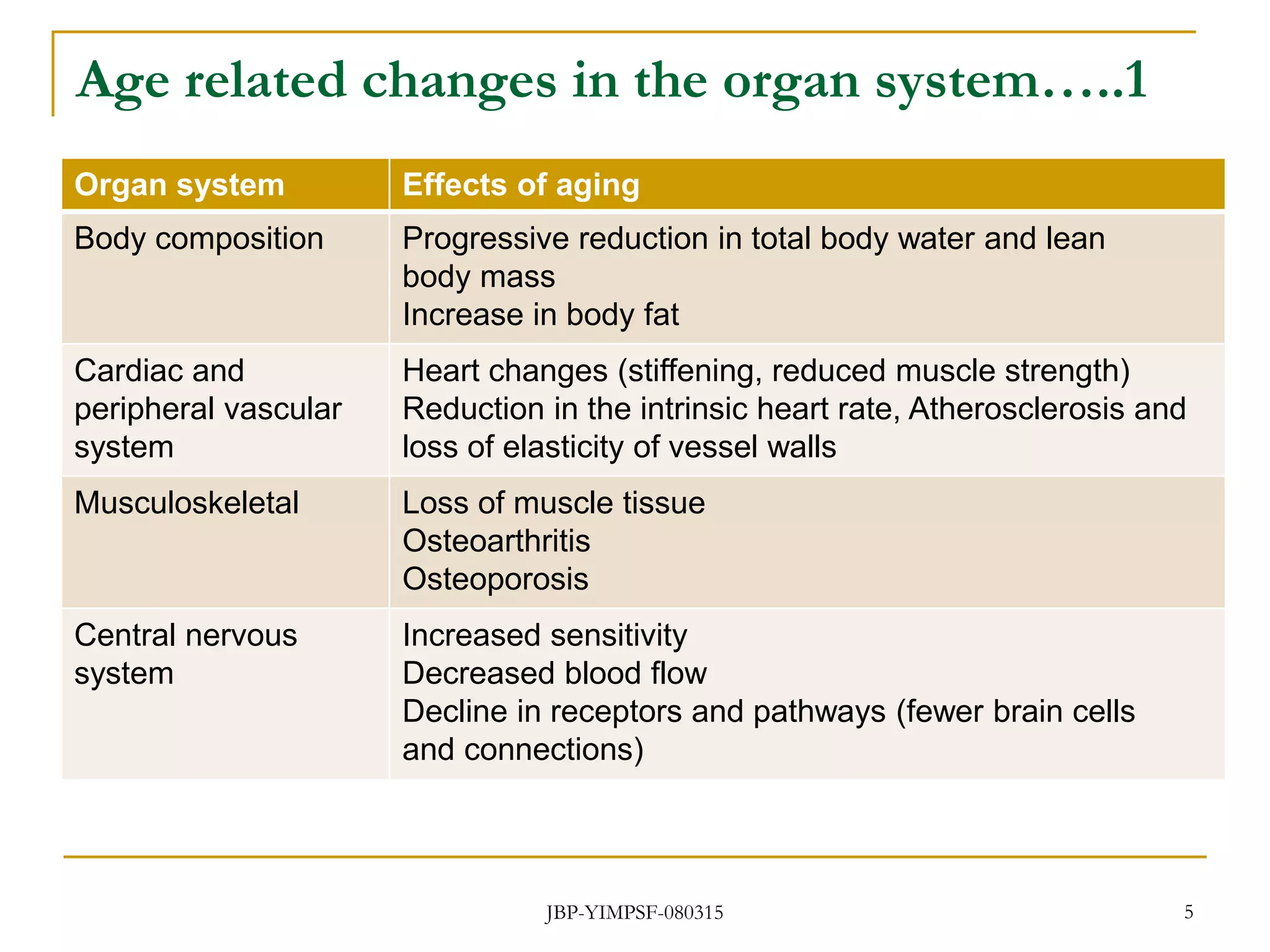
Age related changes in the organ system…..1
Organ system Effects of aging
Body composition Progressive reduction in total body water and lean
body mass
Increase in body fat
Cardiac and
peripheral vascular
system
Heart changes (stiffening, reduced muscle strength)
Reduction in the intrinsic heart rate, Atherosclerosis and
loss of elasticity of vessel walls
Musculoskeletal Loss of muscle tissue
Osteoarthritis
Osteoporosis
Central nervous
system
Increased sensitivity
Decreased blood flow
Decline in receptors and pathways (fewer brain cells
and connections)
JBP-YIMPSF-080315 5
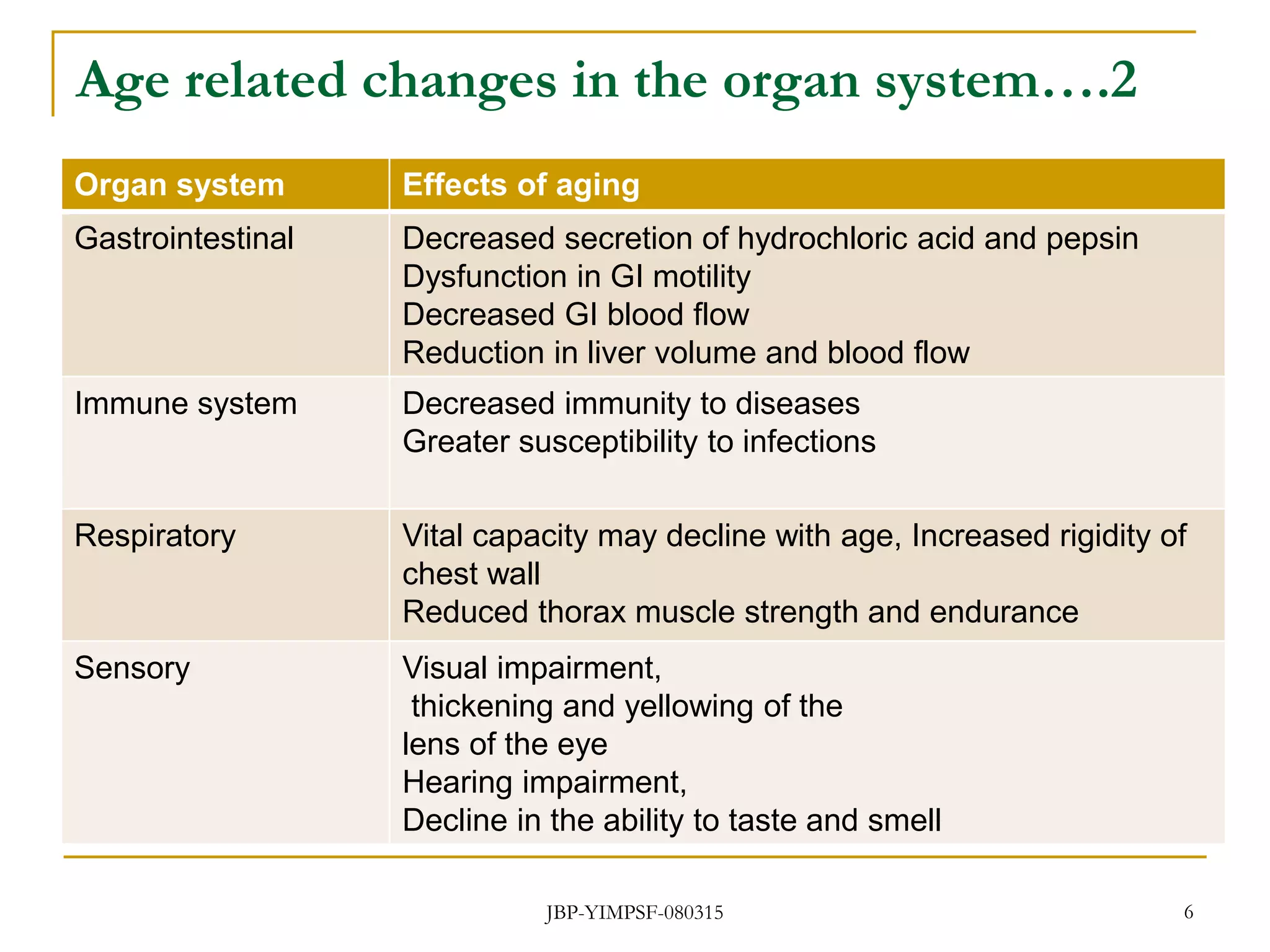
Age related changes in the organ system….2
Organ system Effects of aging
Gastrointestinal Decreased secretion of hydrochloric acid and pepsin
Dysfunction in GI motility
Decreased GI blood flow
Reduction in liver volume and blood flow
Immune system Decreased immunity to diseases
Greater susceptibility to infections
Respiratory Vital capacity may decline with age, Increased rigidity of
chest wall
Reduced thorax muscle strength and endurance
Sensory Visual impairment,
thickening and yellowing of the
lens of the eye
Hearing impairment,
Decline in the ability to taste and smell
JBP-YIMPSF-080315 6
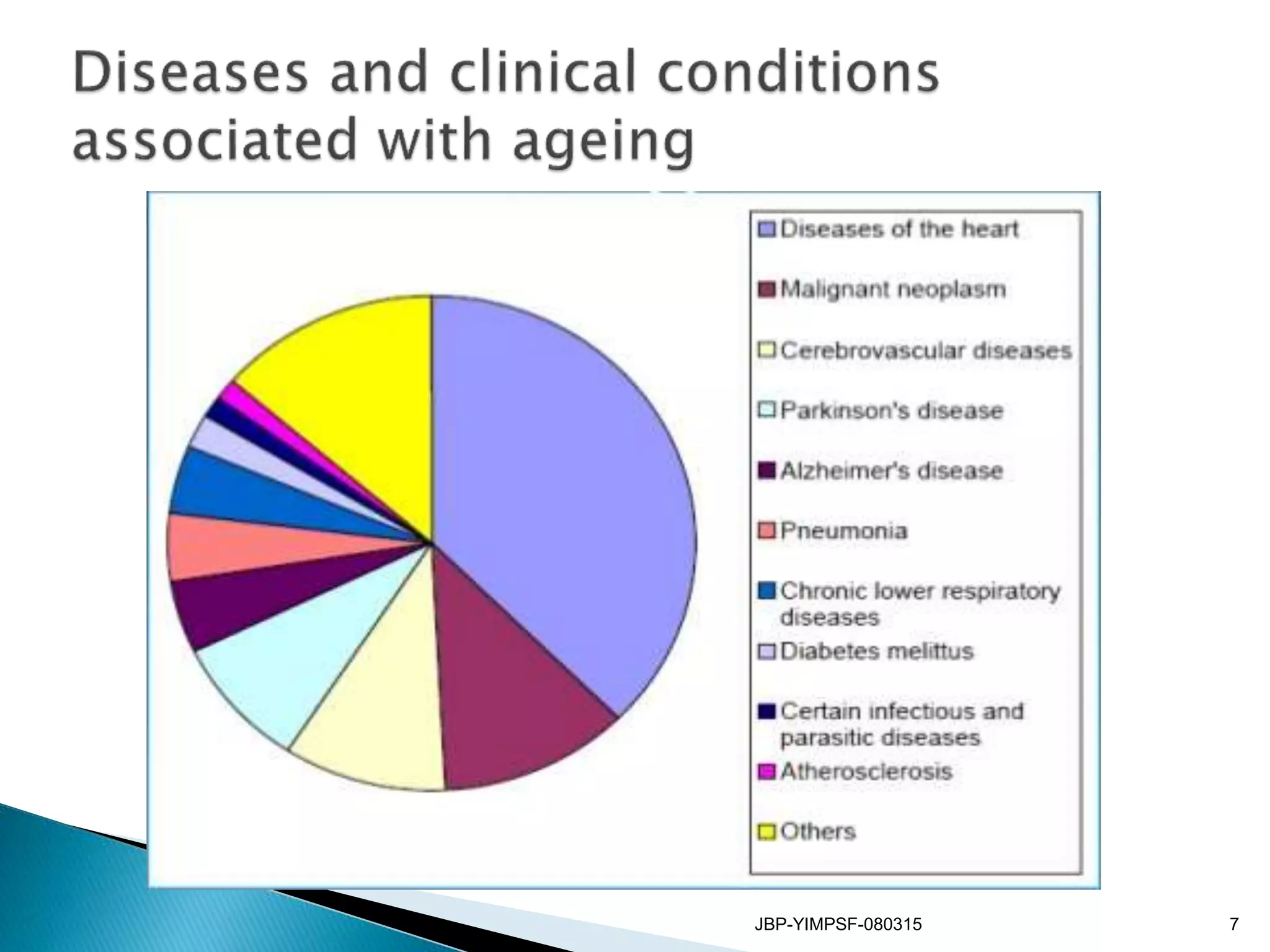
JBP-YIMPSF-080315 7
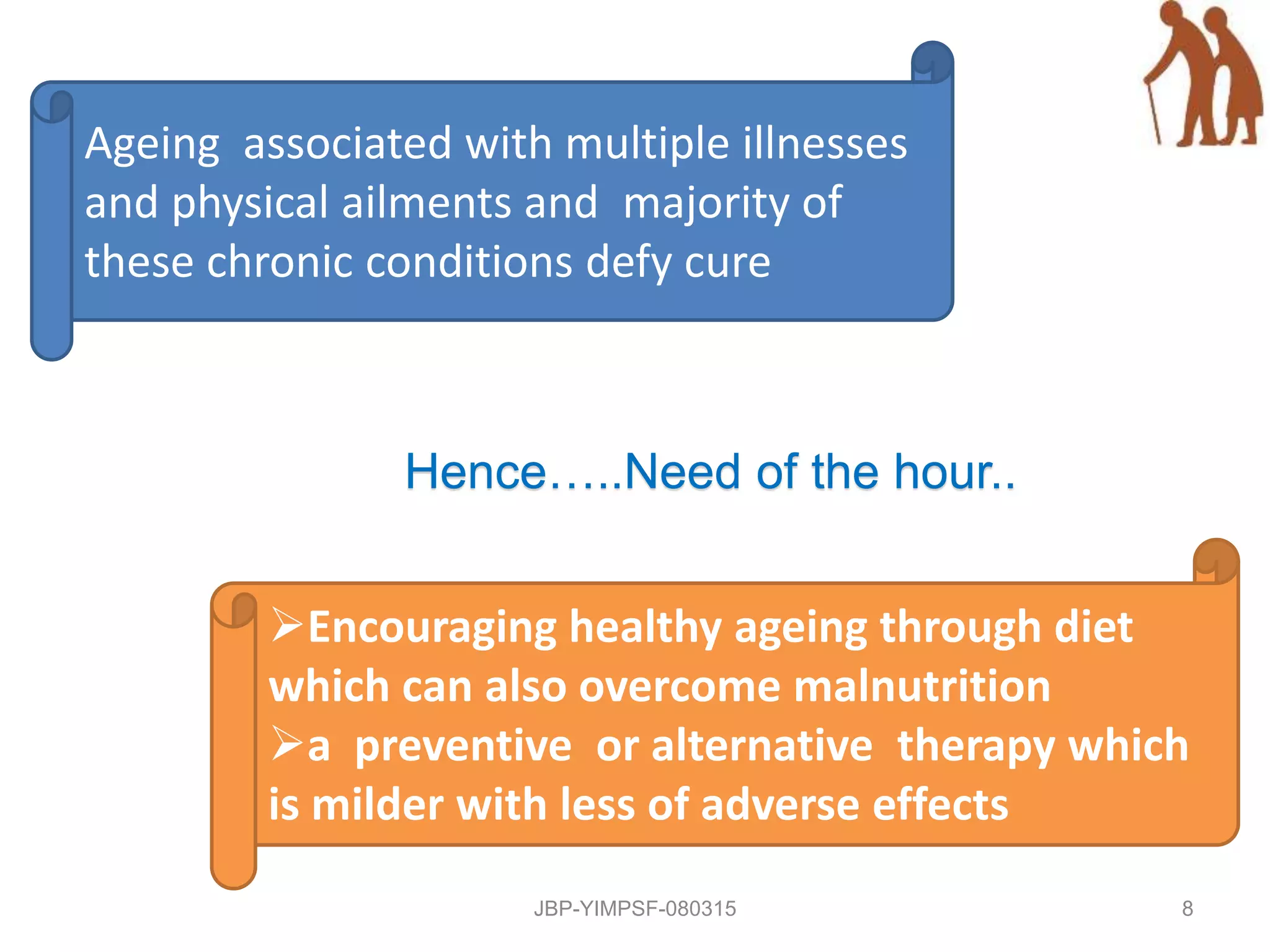
Ageing associated with multiple illnesses
and physical ailments and majority of
these chronic conditions defy cure
Hence…..Need of the hour..
Encouraging healthy ageing through diet
which can also overcome malnutrition
a preventive or alternative therapy which
is milder with less of adverse effects
JBP-YIMPSF-080315 8
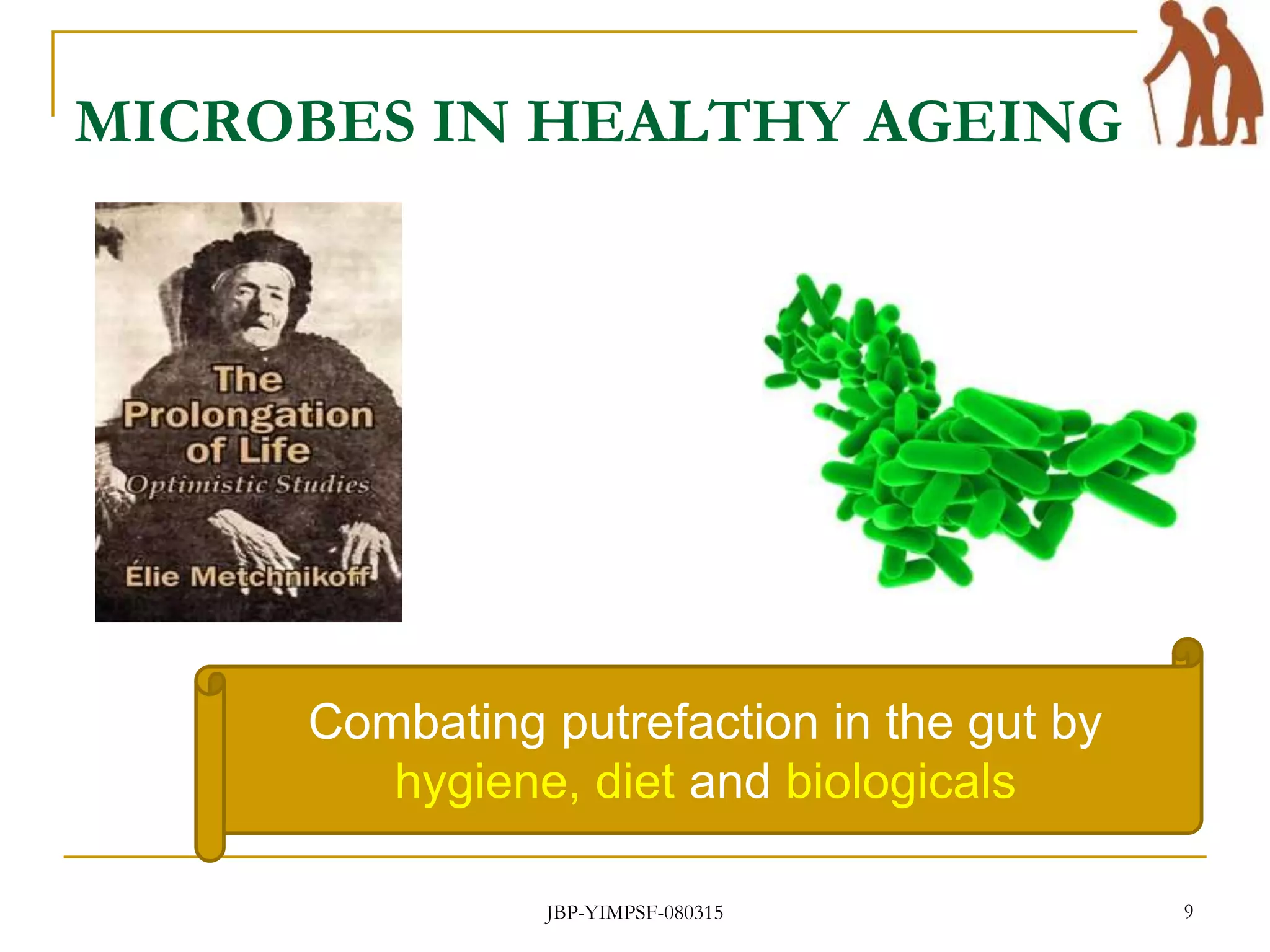
MICROBES IN HEALTHY AGEING
JBP-YIMPSF-080315 9
Combating putrefaction in the gut by
hygiene, diet and biologicals
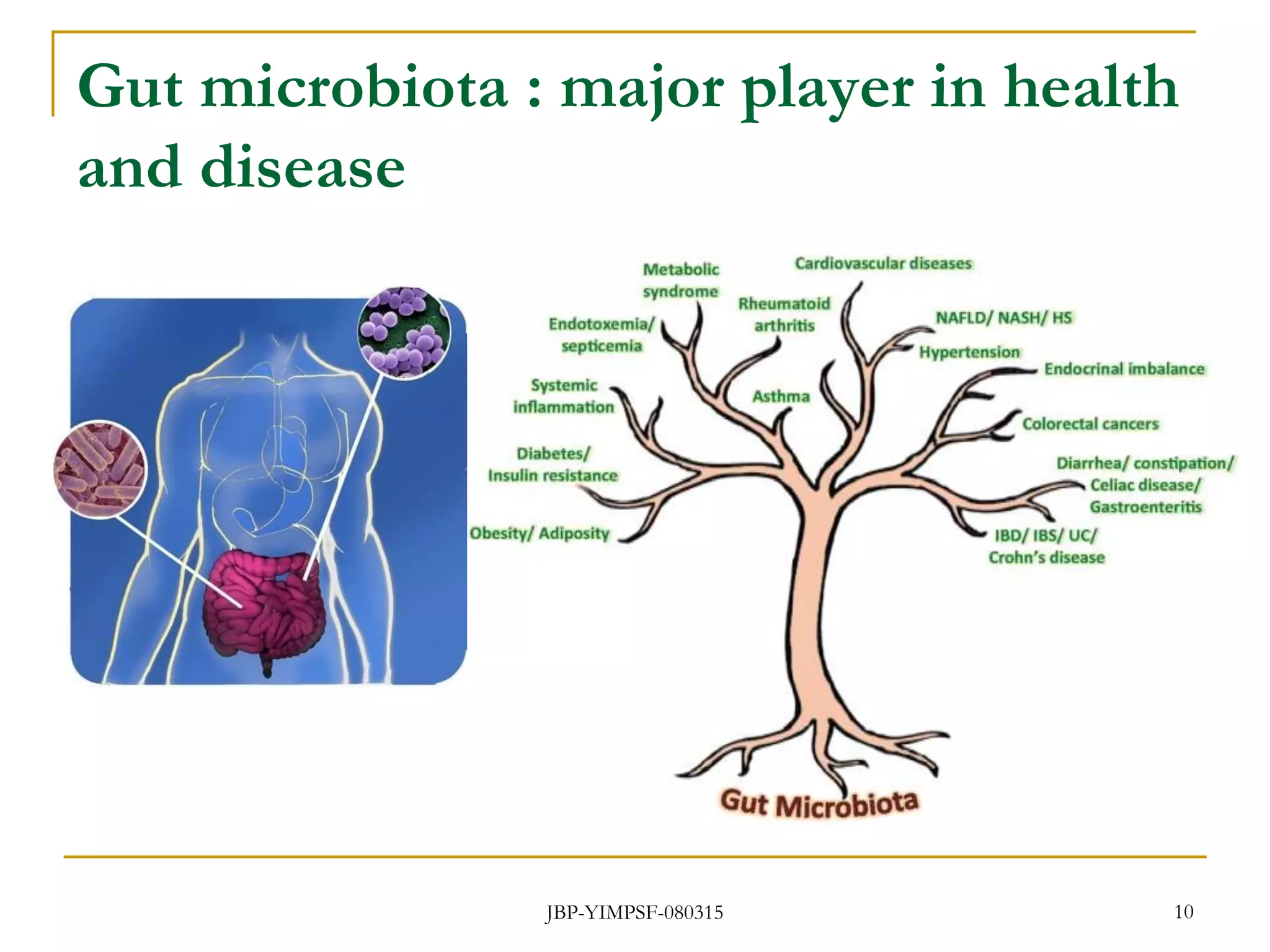
Gut microbiota : major player in health
and disease
JBP-YIMPSF-080315 10
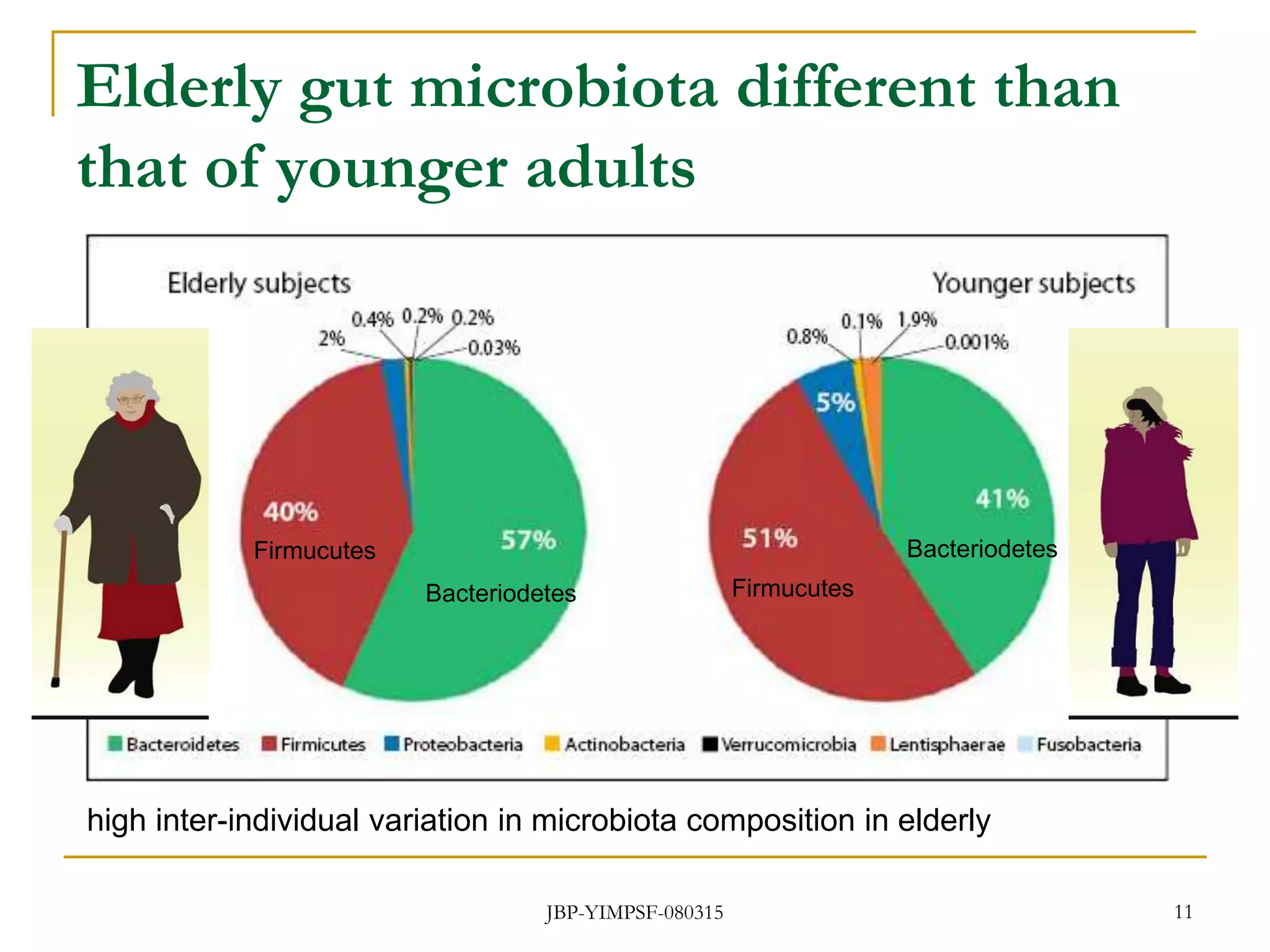
Elderly gut microbiota different than
that of younger adults
high inter-individual variation in microbiota composition in elderly
JBP-YIMPSF-080315 11
Bacteriodetes
Bacteriodetes
Firmucutes
Firmucutes
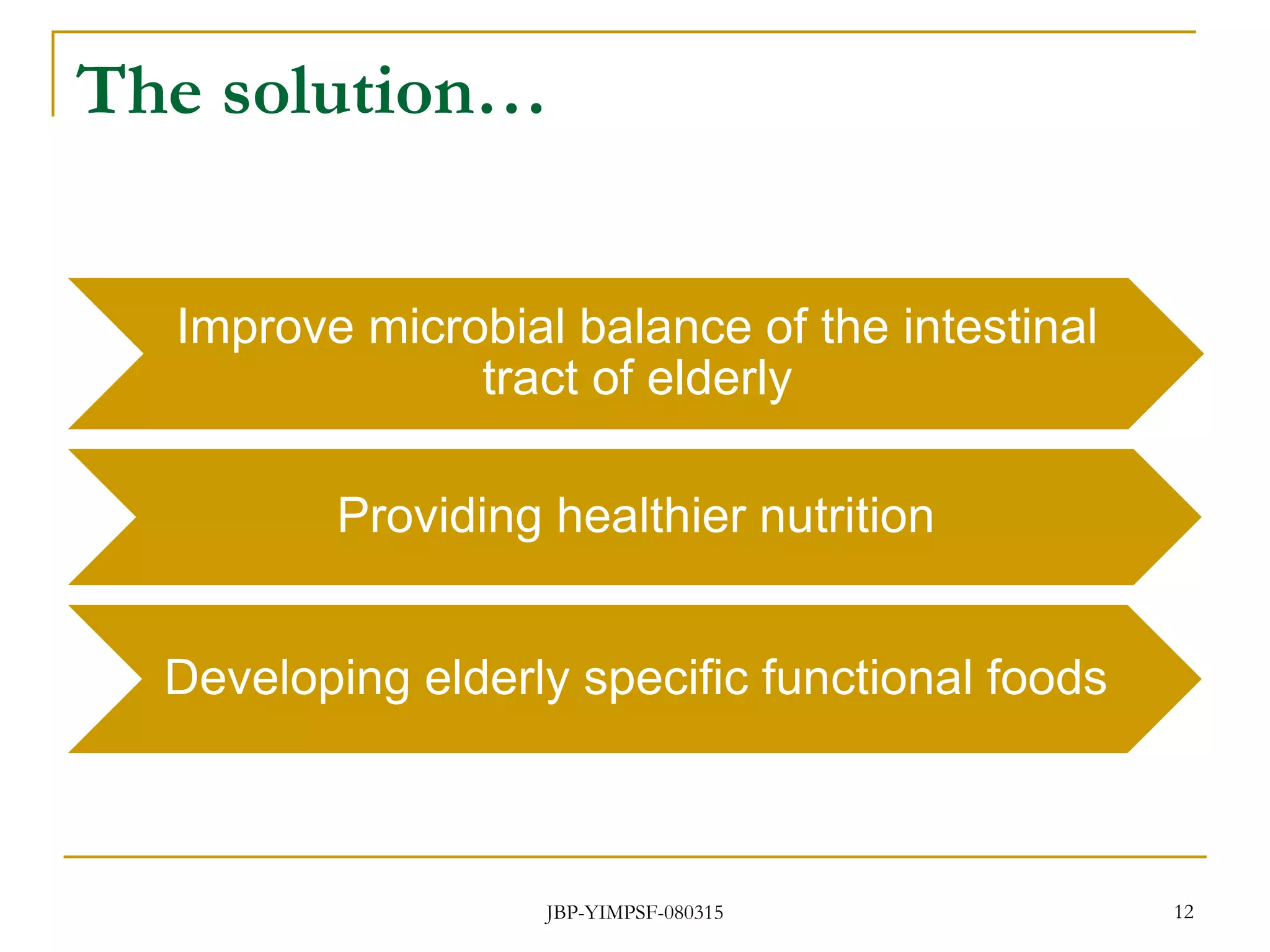
The solution…
Improve microbial balance of the intestinal
tract of elderly
Providing healthier nutrition
Developing elderly specific functional foods
JBP-YIMPSF-080315 12
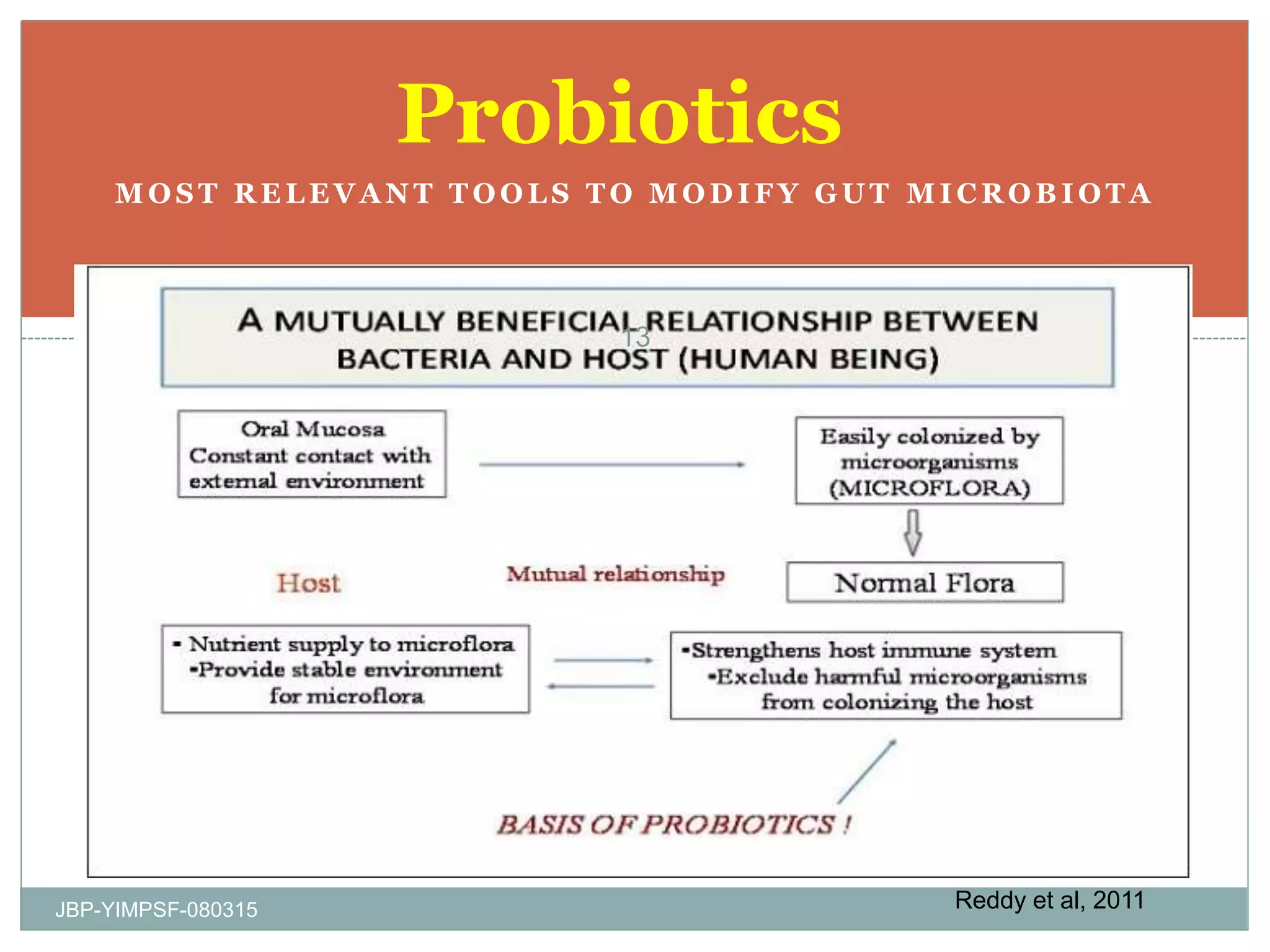
M O S T R E L E V A N T T O O L S T O M O D I F Y G U T M I C R O B I O T A
Probiotics
Reddy et al, 2011JBP-YIMPSF-080315
13
Probiotics in geriatric health
-emerging evidences
 Probiotics have been recommended by WHO as an adjunctive therapy for
nutritional deficiency (Kurniawan and Simadibrata, 2011)
 The potential role of probiotics on the gut-brain axis is an emerging study
area particularly important in relation to neurodegerative diseases of elderly
(Martinez, et al, 2014).
Results of some previous studies……..
JBP-YIMPSF-080315 14
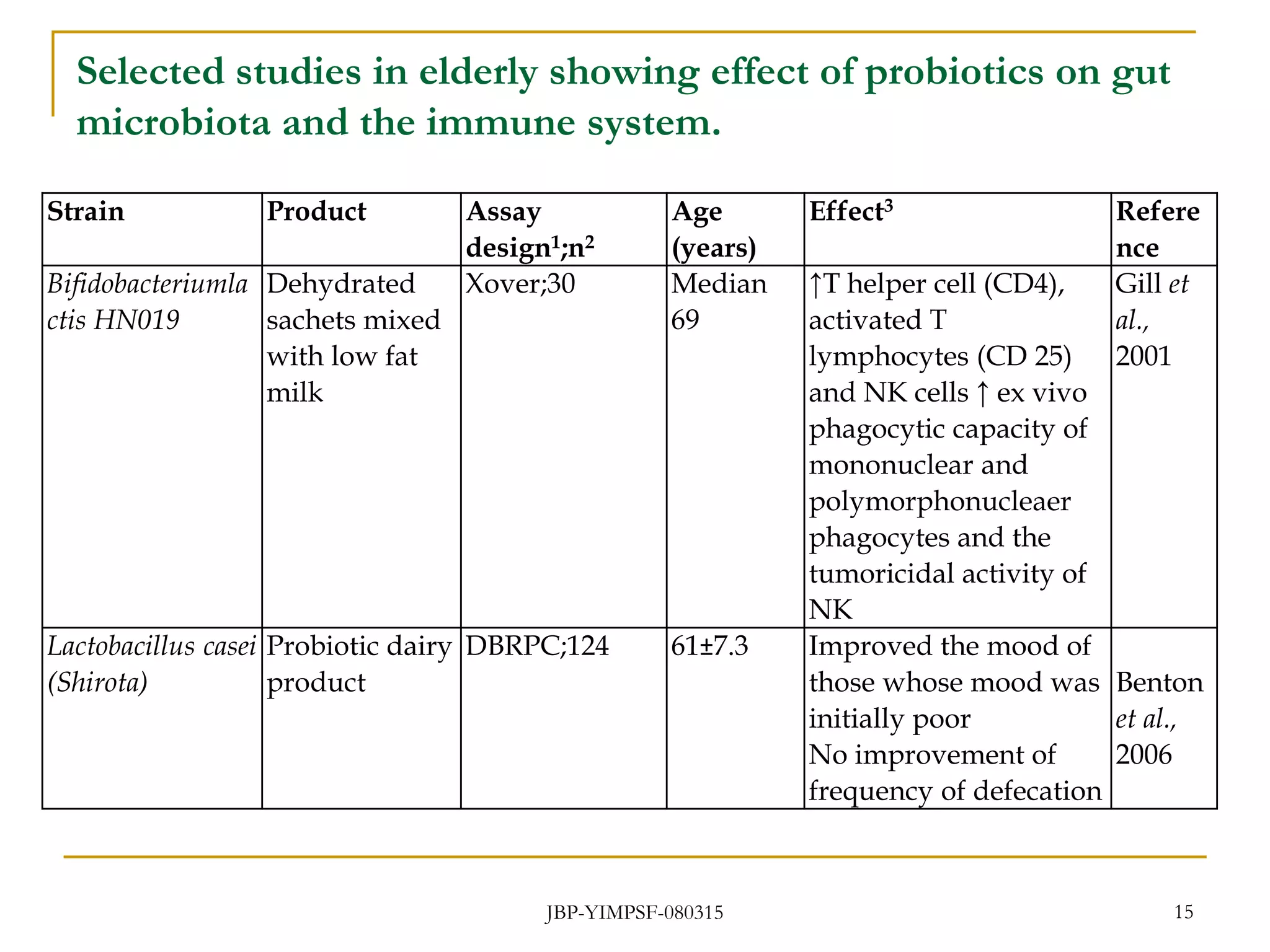
Selected studies in elderly showing effect of probiotics on gut
microbiota and the immune system.
Strain Product Assay
design1;n2
Age
(years)
Effect3 Refere
nce
Bifidobacteriumla
ctis HN019
Dehydrated
sachets mixed
with low fat
milk
Xover;30 Median
69
↑T helper cell (CD4),
activated T
lymphocytes (CD 25)
and NK cells ↑ ex vivo
phagocytic capacity of
mononuclear and
polymorphonucleaer
phagocytes and the
tumoricidal activity of
NK
Gill et
al.,
2001
Lactobacillus casei
(Shirota)
Probiotic dairy
product
DBRPC;124 61±7.3 Improved the mood of
those whose mood was
initially poor
No improvement of
frequency of defecation
Benton
et al.,
2006
JBP-YIMPSF-080315 15
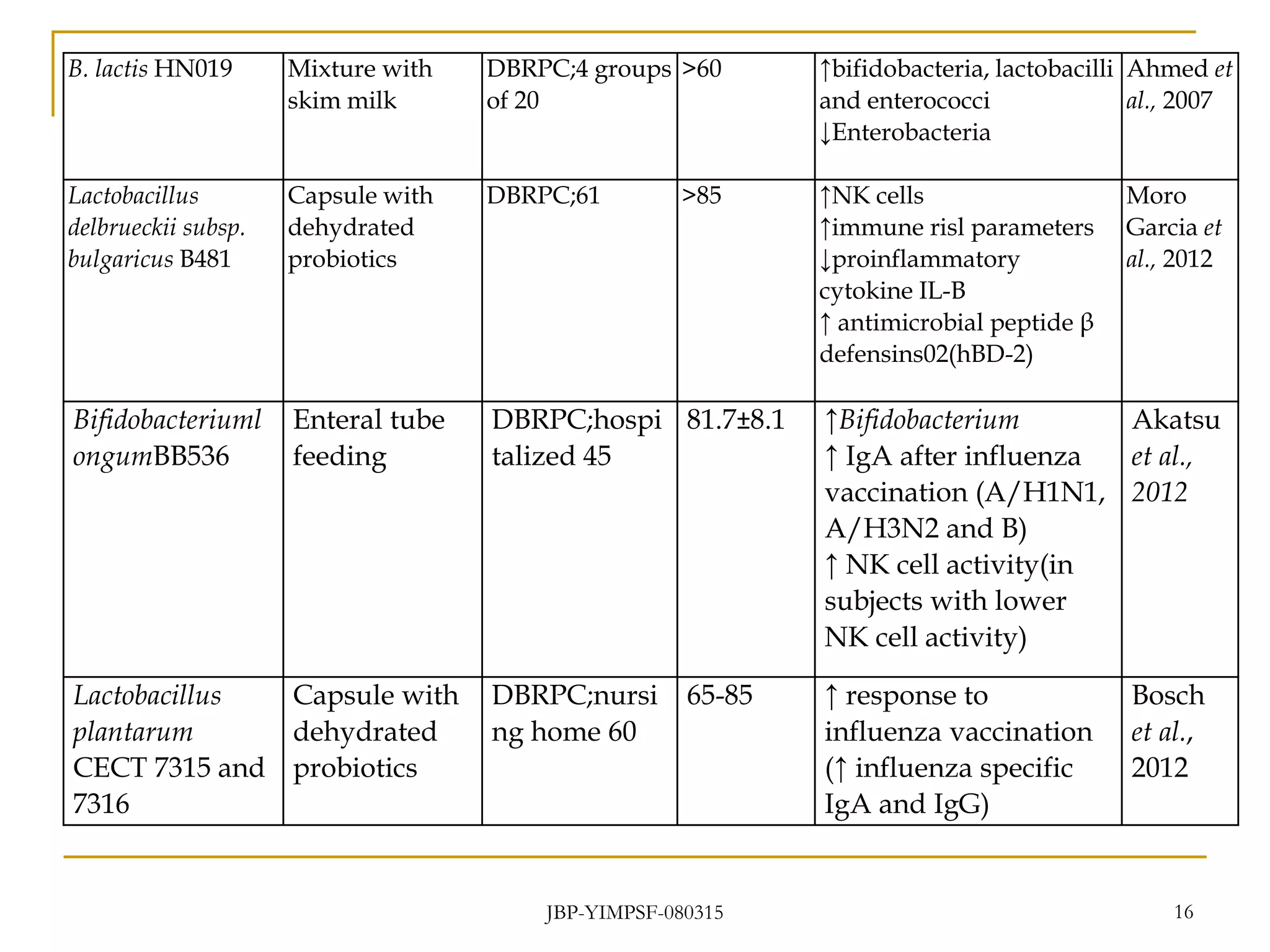
B. lactis HN019 Mixture with
skim milk
DBRPC;4 groups
of 20
>60 ↑bifidobacteria, lactobacilli
and enterococci
↓Enterobacteria
Ahmed et
al., 2007
Lactobacillus
delbrueckii subsp.
bulgaricus B481
Capsule with
dehydrated
probiotics
DBRPC;61 >85 ↑NK cells
↑immune risl parameters
↓proinflammatory
cytokine IL-B
↑ antimicrobial peptide β
defensins02(hBD-2)
Moro
Garcia et
al., 2012
Bifidobacteriuml
ongumBB536
Enteral tube
feeding
DBRPC;hospi
talized 45
81.7±8.1 ↑Bifidobacterium
↑ IgA after influenza
vaccination (A/H1N1,
A/H3N2 and B)
↑ NK cell activity(in
subjects with lower
NK cell activity)
Akatsu
et al.,
2012
Lactobacillus
plantarum
CECT 7315 and
7316
Capsule with
dehydrated
probiotics
DBRPC;nursi
ng home 60
65-85 ↑ response to
influenza vaccination
(↑ influenza specific
IgA and IgG)
Bosch
et al.,
2012
JBP-YIMPSF-080315 16
Bifidobacteriumin
fantis CCUG
52486, B.
longumSp 0713,
Lactobacillus
rhamnosus GG
and Lactobacillus
casei (Shirota)
Fermement
ed milk
In vitro
PBMC; 16
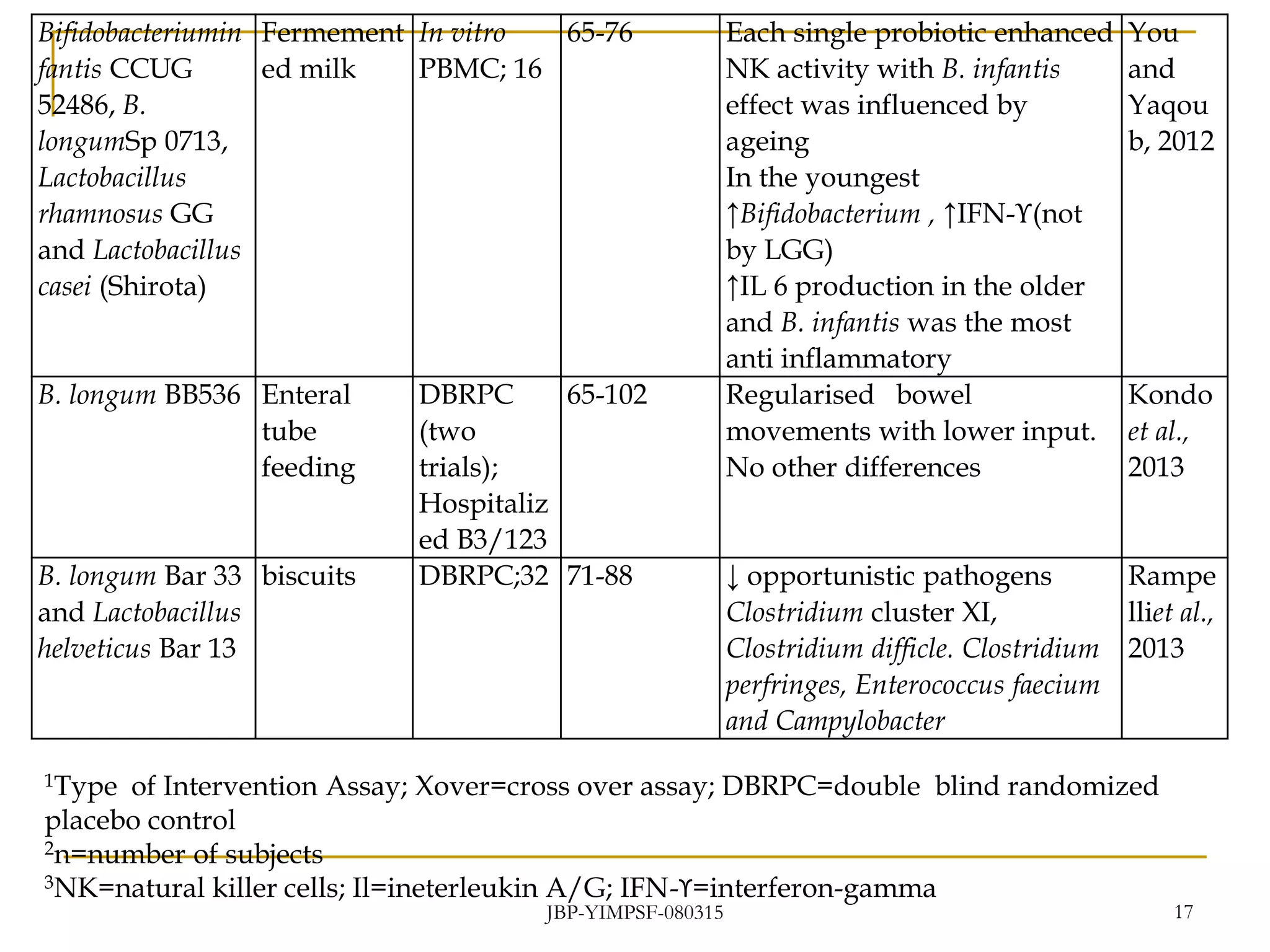
65-76 Each single probiotic enhanced
NK activity with B. infantis
effect was influenced by
ageing
In the youngest
↑Bifidobacterium , ↑IFN-ϒ(not
by LGG)
↑IL 6 production in the older
and B. infantis was the most
anti inflammatory
You
and
Yaqou
b, 2012
B. longum BB536 Enteral
tube
feeding
DBRPC
(two
trials);
Hospitaliz
ed B3/123
65-102 Regularised bowel
movements with lower input.
No other differences
Kondo
et al.,
2013
B. longum Bar 33
and Lactobacillus
helveticus Bar 13
biscuits DBRPC;32 71-88 ↓ opportunistic pathogens
Clostridium cluster XI,
Clostridium difficle. Clostridium
perfringes, Enterococcus faecium
and Campylobacter
Rampe
lliet al.,
2013
1Type of Intervention Assay; Xover=cross over assay; DBRPC=double blind randomized
placebo control
2n=number of subjects
3NK=natural killer cells; Il=ineterleukin A/G; IFN-ϒ=interferon-gamma
JBP-YIMPSF-080315 17
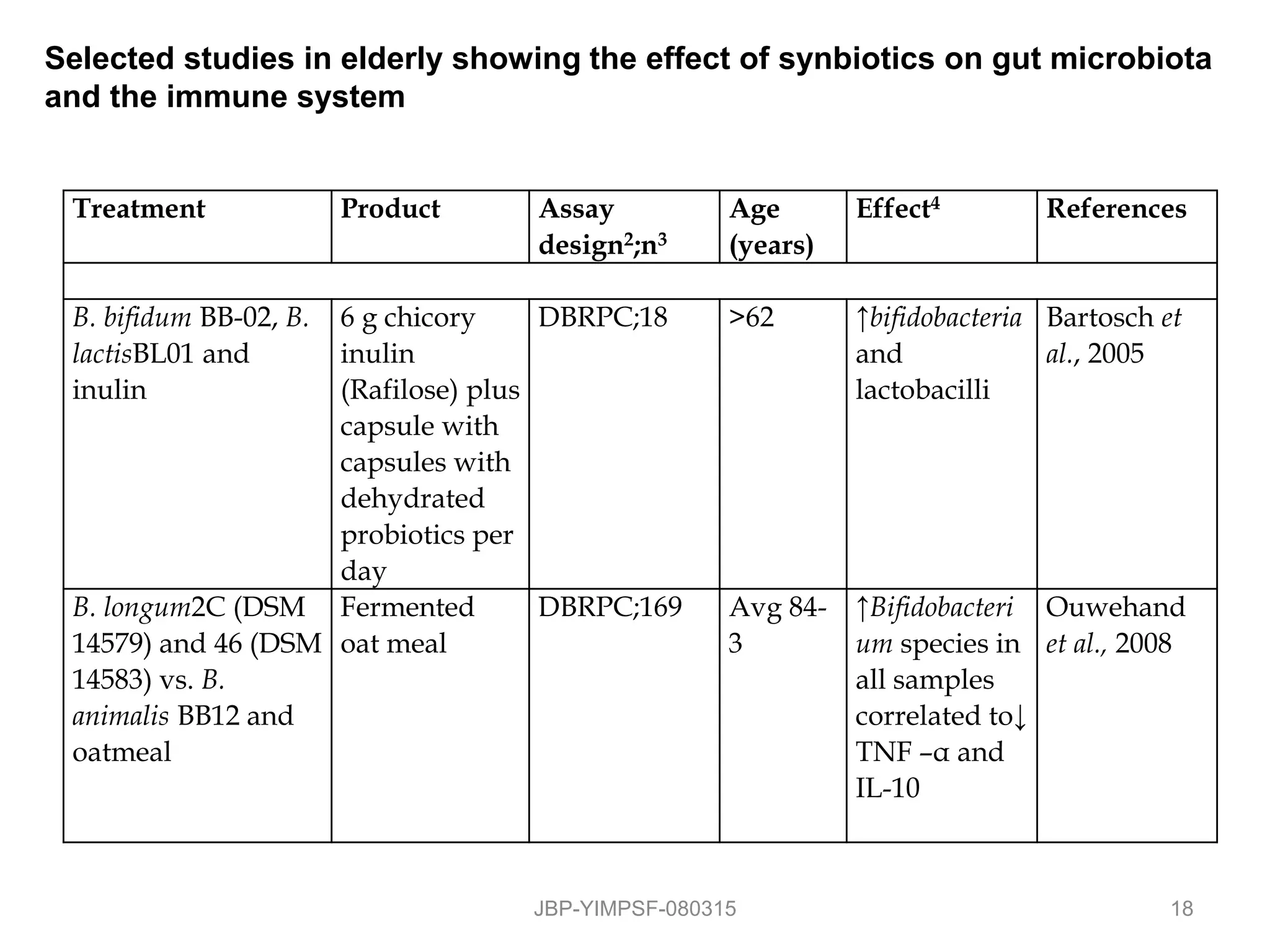
Selected studies in elderly showing the effect of synbiotics on gut microbiota
and the immune system
Treatment Product Assay
design2;n3
Age
(years)
Effect4 References
B. bifidum BB-02, B.
lactisBL01 and
inulin
6 g chicory
inulin
(Rafilose) plus
capsule with
capsules with
dehydrated
probiotics per
day
DBRPC;18 >62 ↑bifidobacteria
and
lactobacilli
Bartosch et
al., 2005
B. longum2C (DSM
14579) and 46 (DSM
14583) vs. B.
animalis BB12 and
oatmeal
Fermented
oat meal
DBRPC;169 Avg 84-
3
↑Bifidobacteri
um species in
all samples
correlated to↓
TNF –α and
IL-10
Ouwehand
et al., 2008
JBP-YIMPSF-080315 18
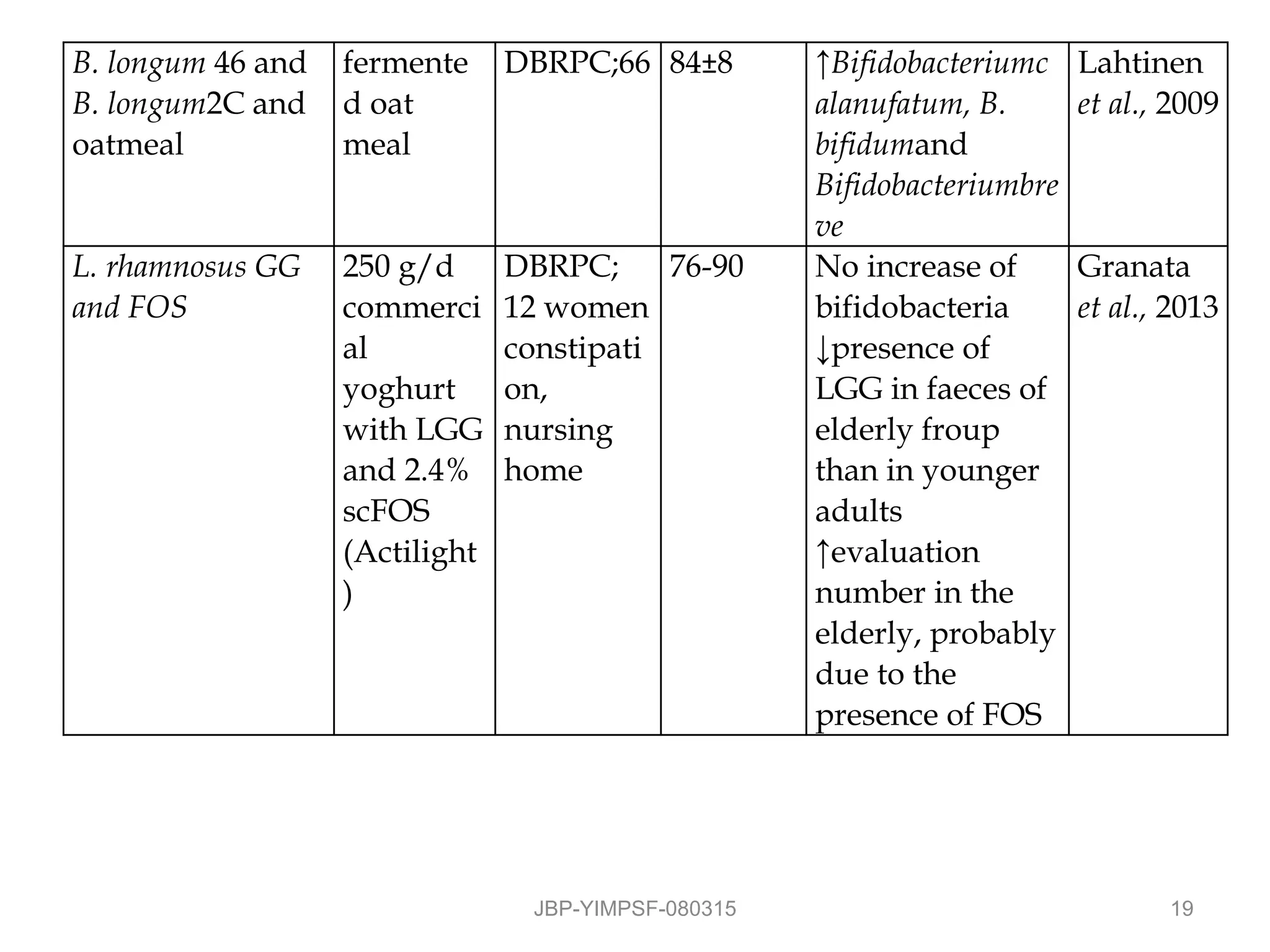
B. longum 46 and
B. longum2C and
oatmeal
fermente
d oat
meal
DBRPC;66 84±8 ↑Bifidobacteriumc
alanufatum, B.
bifidumand
Bifidobacteriumbre
ve
Lahtinen
et al., 2009
L. rhamnosus GG
and FOS
250 g/d
commerci
al
yoghurt
with LGG
and 2.4%
scFOS
(Actilight
)
DBRPC;
12 women
constipati
on,
nursing
home
76-90 No increase of
bifidobacteria
↓presence of
LGG in faeces of
elderly froup
than in younger
adults
↑evaluation
number in the
elderly, probably
due to the
presence of FOS
Granata
et al., 2013
JBP-YIMPSF-080315 19
JBP-YIMPSF-080315 20
Metagenomic and Clinical investigation of synbiotic
fermented dairy product containing probiotic
Lactobacillus helveticus MTCC 5463 in geriatric
volunteers
21
PARTNERS:
Dairy Microbiology Department, Anand Agricultural University, Anand
PI : Dr JB Prajapati, Professor, Dairy Microbiology
Co-PI : Dr Vijendra Mishra, Associate Prof., Dairy Microbiology
Mrs Suja Senan, Asst. Prof., Dairy Microbiology
Mrs Sreeja V. Asst. Prof., Dairy Microbiology
Animal Biotechnology Department, Anand Agricultural University, Anand
Co-PI : Dr CG Joshi, Prof., Animal Biotechnology
HM Patel Centre for Medical Care & Education
Pramukh Swami Medical College, Karamsad-Gujarat
Co-PI : Dr Himanshu Pandya, Prof., Medicine
Dr Sunil Trivedi, Prof of Microbiology
Dr Uday S Singh, Prof of Community Medicine
Dr Rupal Patel, Asst. Prof., Microbiology
Dr Manisha Gohel, Asst. Prof. Community Medicine
Dr Ajay Pathak, Statistical Expert
Vidya Dairy, Anand
Co-PI : Dr HK Desai, Managing Director
JBP-YIMPSF-080315
22
Objectives
 Selection of functional synbiotic dairy product
 To conduct feeding trial in old age subjects and validate health benefits
 Study changes in composition and biochemical activities of
gastrointestinal microflora
 Metagenomic analysis of gut microflora composition and metabolic
pathways.
 To manufacture product on pilot scale and survey its acceptability
Aim of the study
to clinically investigate the influence of an indigenous probiotic
culture, fed through well accepted synbiotic dairy food, in geriatric
volunteers and carry out metagenomic analysis for gut microflora.
JBP-YIMPSF-080315
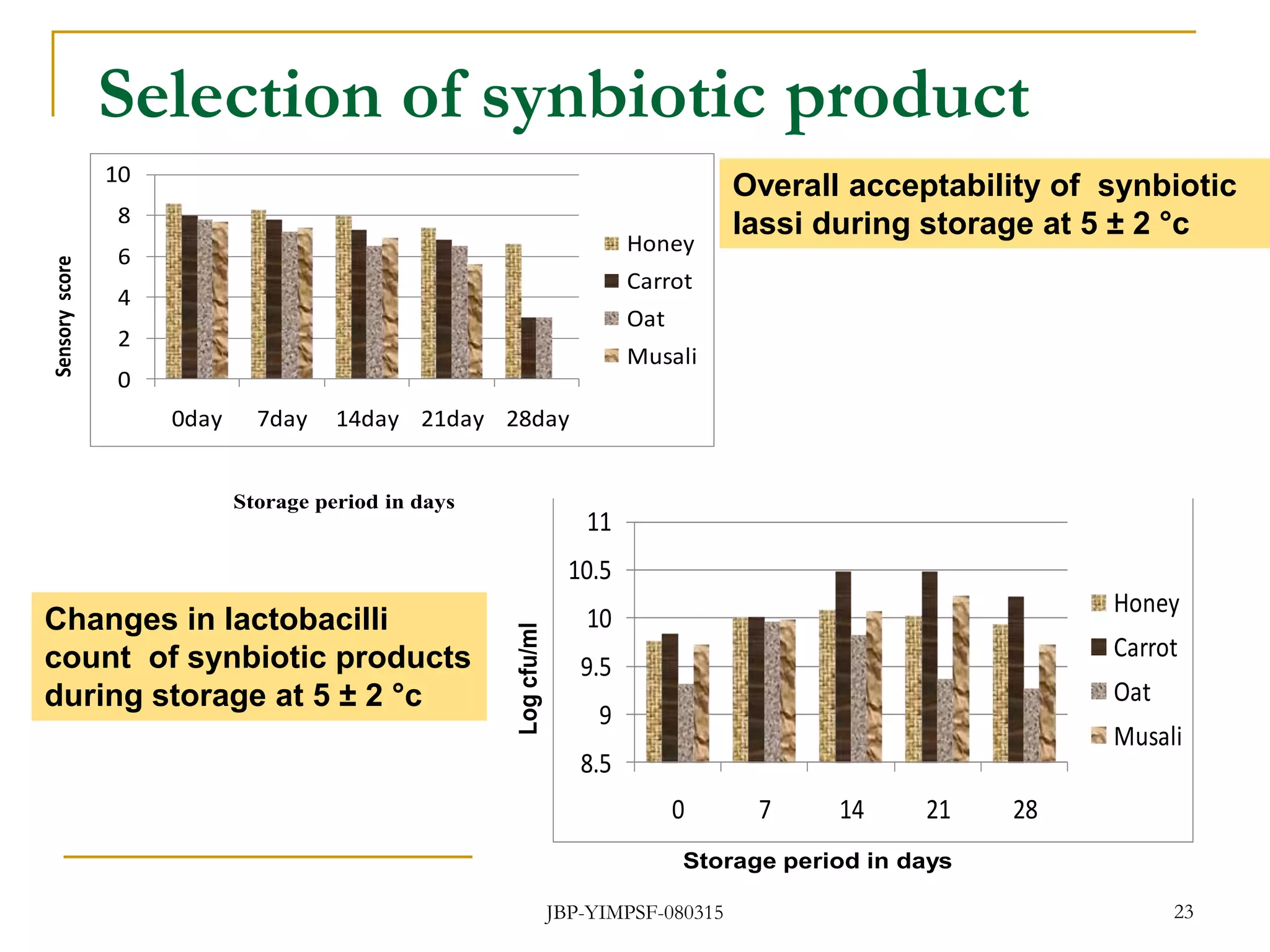
Selection of synbiotic product
0
2
4
6
8
10
0day 7day 14day 21day 28day
Honey
Carrot
Oat
Musali
Storage period in days
erall acceptability of synbiotic lassi products during storage at 5 2 c
Sensoryscore
8.5
9
9.5
10
10.5
11
0 7 14 21 28
Honey
Carrot
Oat
Musali
Storage period in days
Logcfu/ml
Changes in lactobacilli
count of synbiotic products
during storage at 5 ± 2 °c
Overall acceptability of synbiotic
lassi during storage at 5 ± 2 °c
JBP-YIMPSF-080315 23
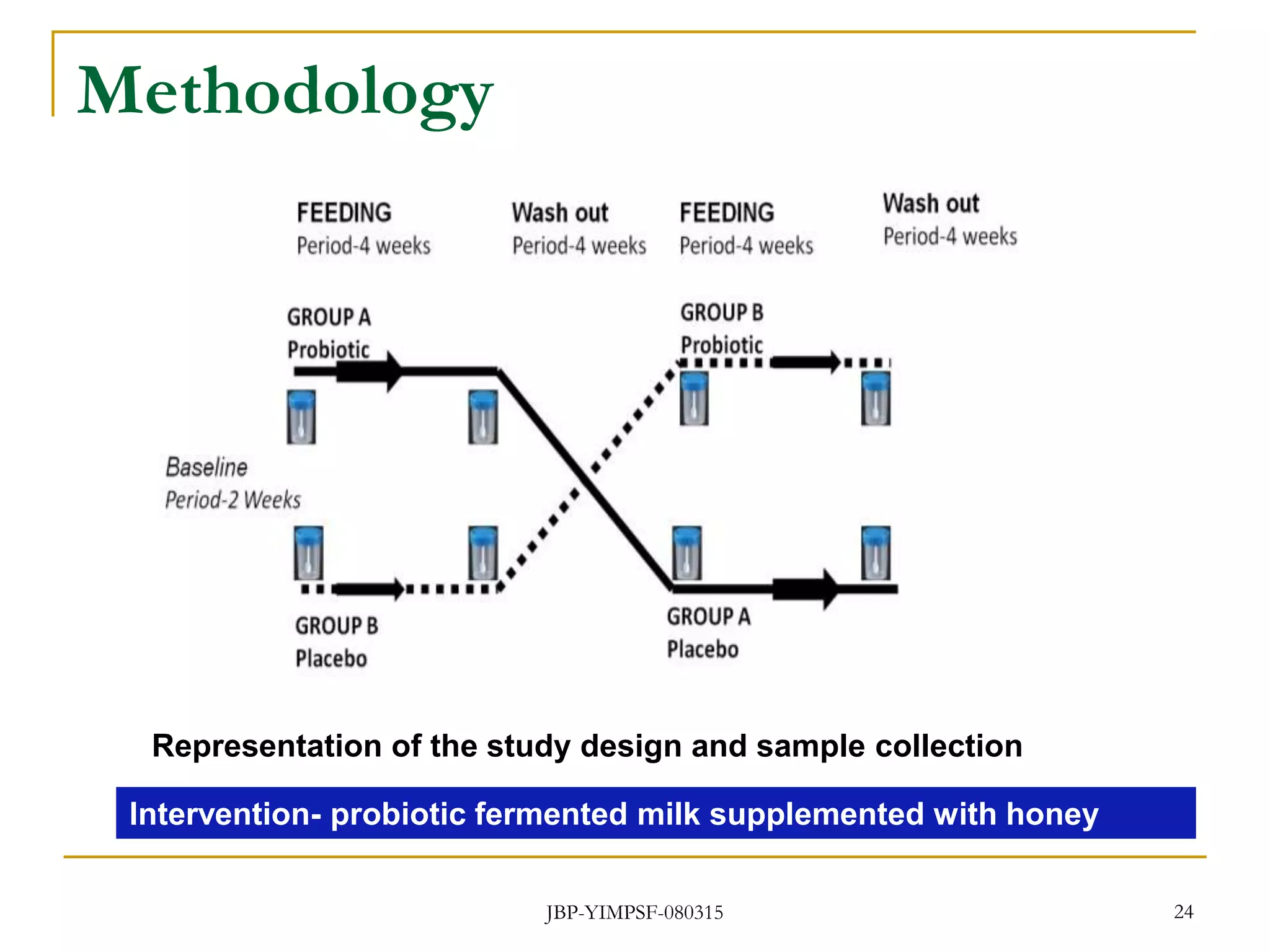
Methodology
24
Representation of the study design and sample collection
JBP-YIMPSF-080315
Intervention- probiotic fermented milk supplemented with honey
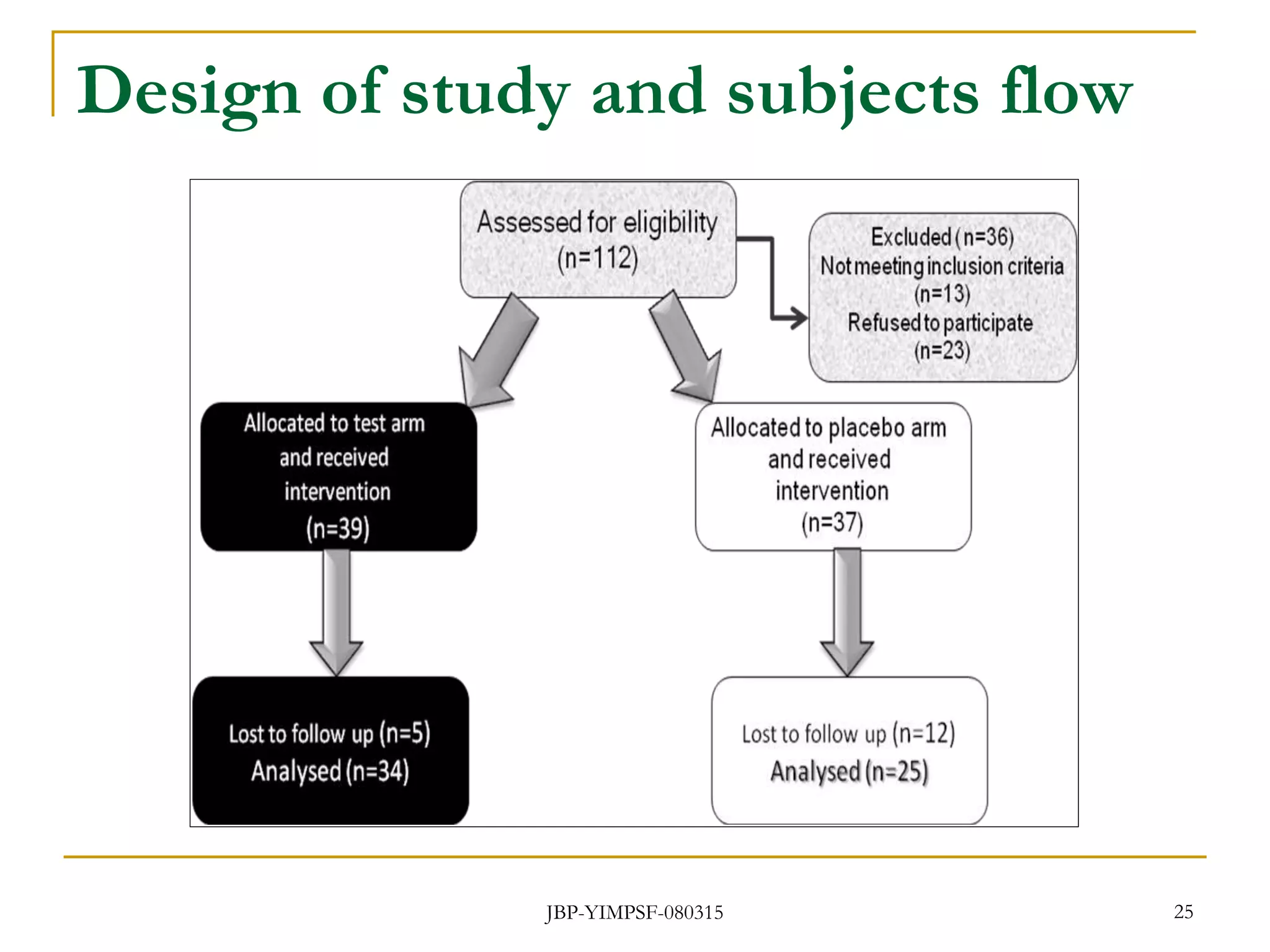
Design of study and subjects flow
25JBP-YIMPSF-080315
Data collection…..
 The changes in composition and biochemical activities of gastrointestinal
microflora were studied on the basis of their population in faecal sampes and
facecal enzyme activity.
 Collection of blood for Haematological, lipid, and immunological parameters.
 Metagenomic analysis of gut microflora composition was studied by using
semi conductor based amplicon sequencing on Ion Torrent PGM sequencer.
 The metagenomic data obtained were analysed using MG-RAST and QIIME
followed by STAMP statistical analysis.
 The product was prepared on pilot scale at Vidya Dairy and survey of its
acceptability in the geriatrics is conducted.
26JBP-YIMPSF-080315
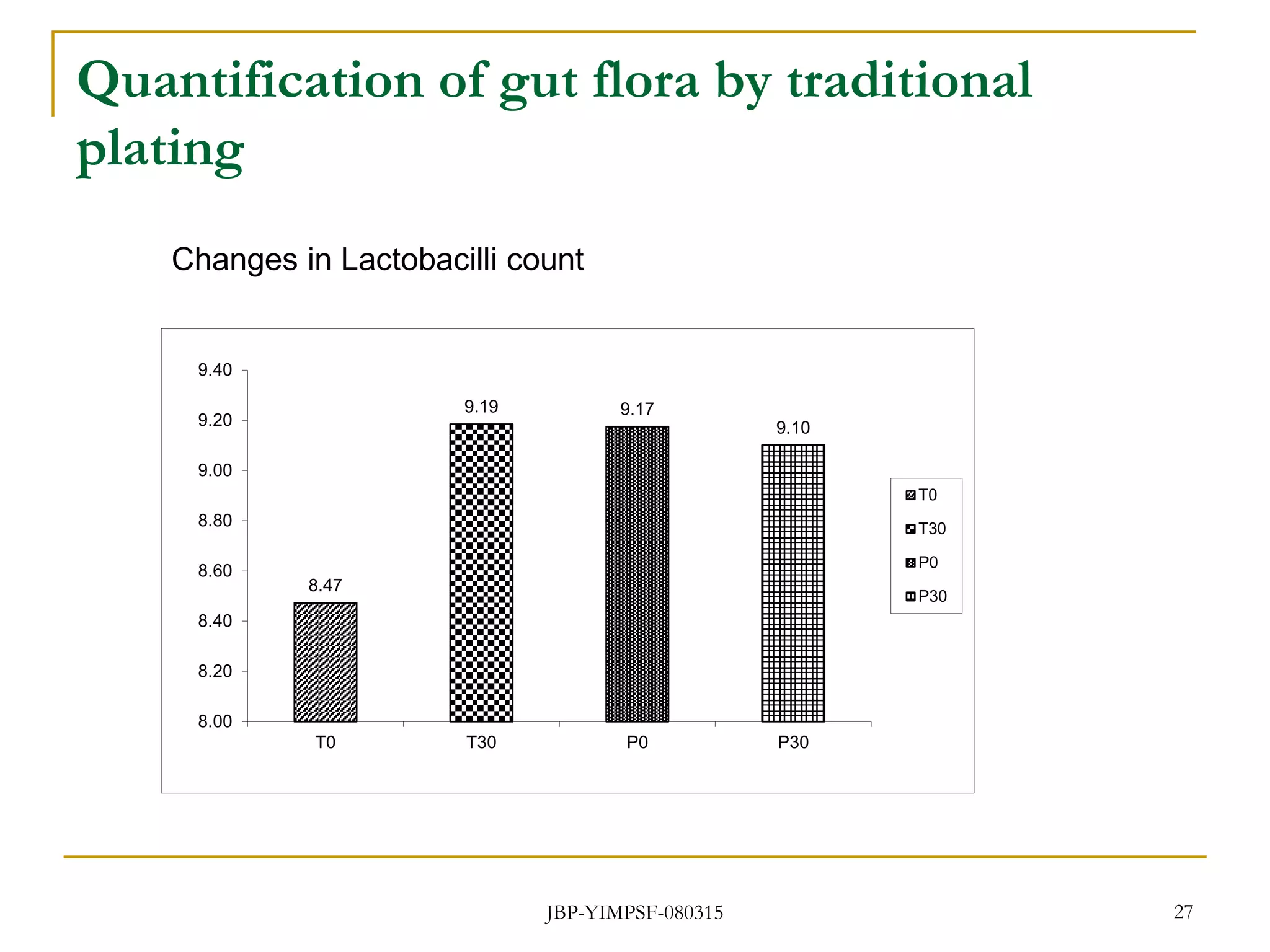
Quantification of gut flora by traditional
plating
JBP-YIMPSF-080315 27
8.47
9.19 9.17
9.10
8.00
8.20
8.40
8.60
8.80
9.00
9.20
9.40
T0 T30 P0 P30
T0
T30
P0
P30
Changes in Lactobacilli count
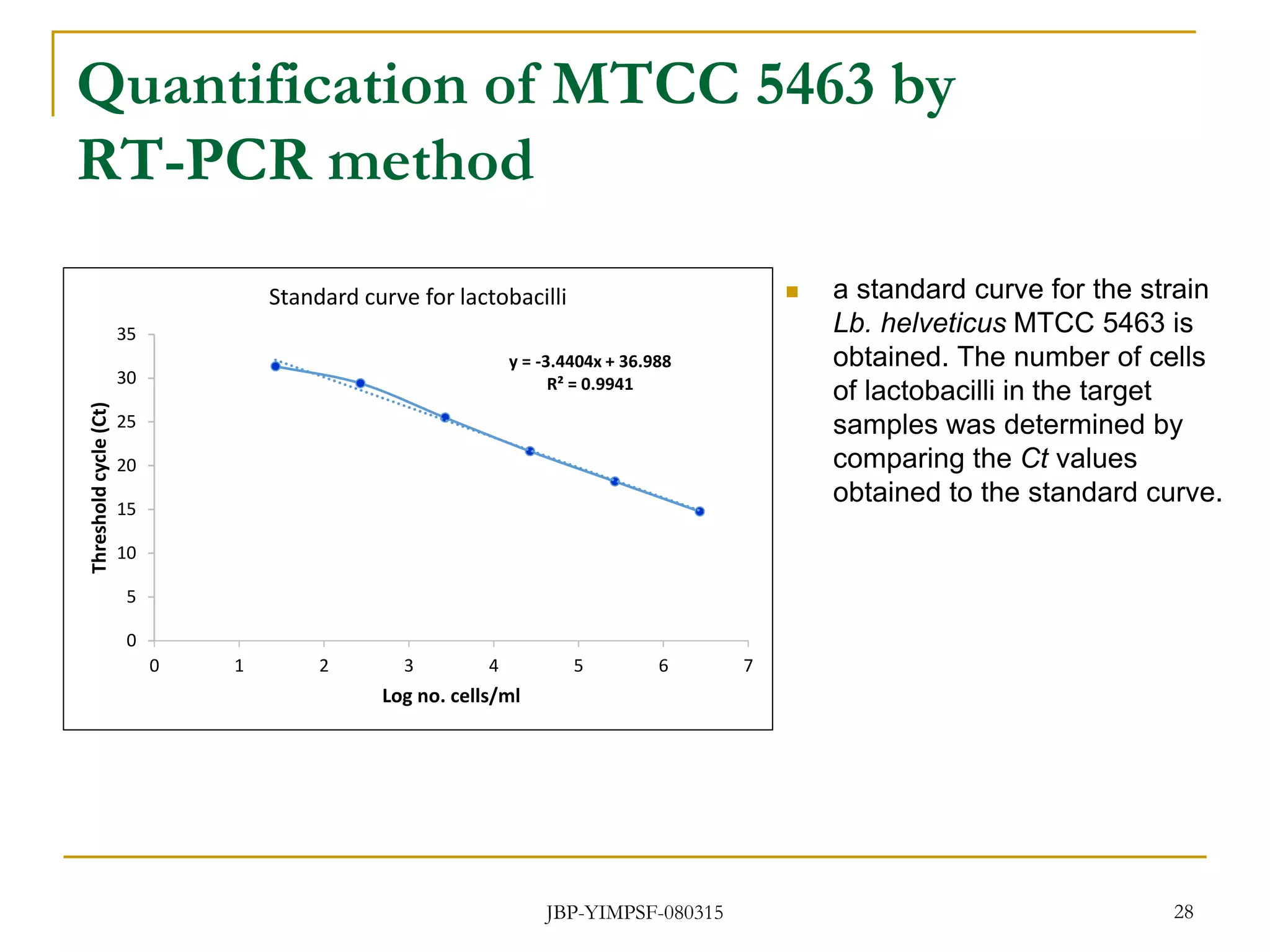
Quantification of MTCC 5463 by
RT-PCR method
 a standard curve for the strain
Lb. helveticus MTCC 5463 is
obtained. The number of cells
of lactobacilli in the target
samples was determined by
comparing the Ct values
obtained to the standard curve.
28
y = -3.4404x + 36.988
R² = 0.9941
0
5
10
15
20
25
30
35
0 1 2 3 4 5 6 7
Thresholdcycle(Ct)
Log no. cells/ml
Standard curve for lactobacilli
JBP-YIMPSF-080315
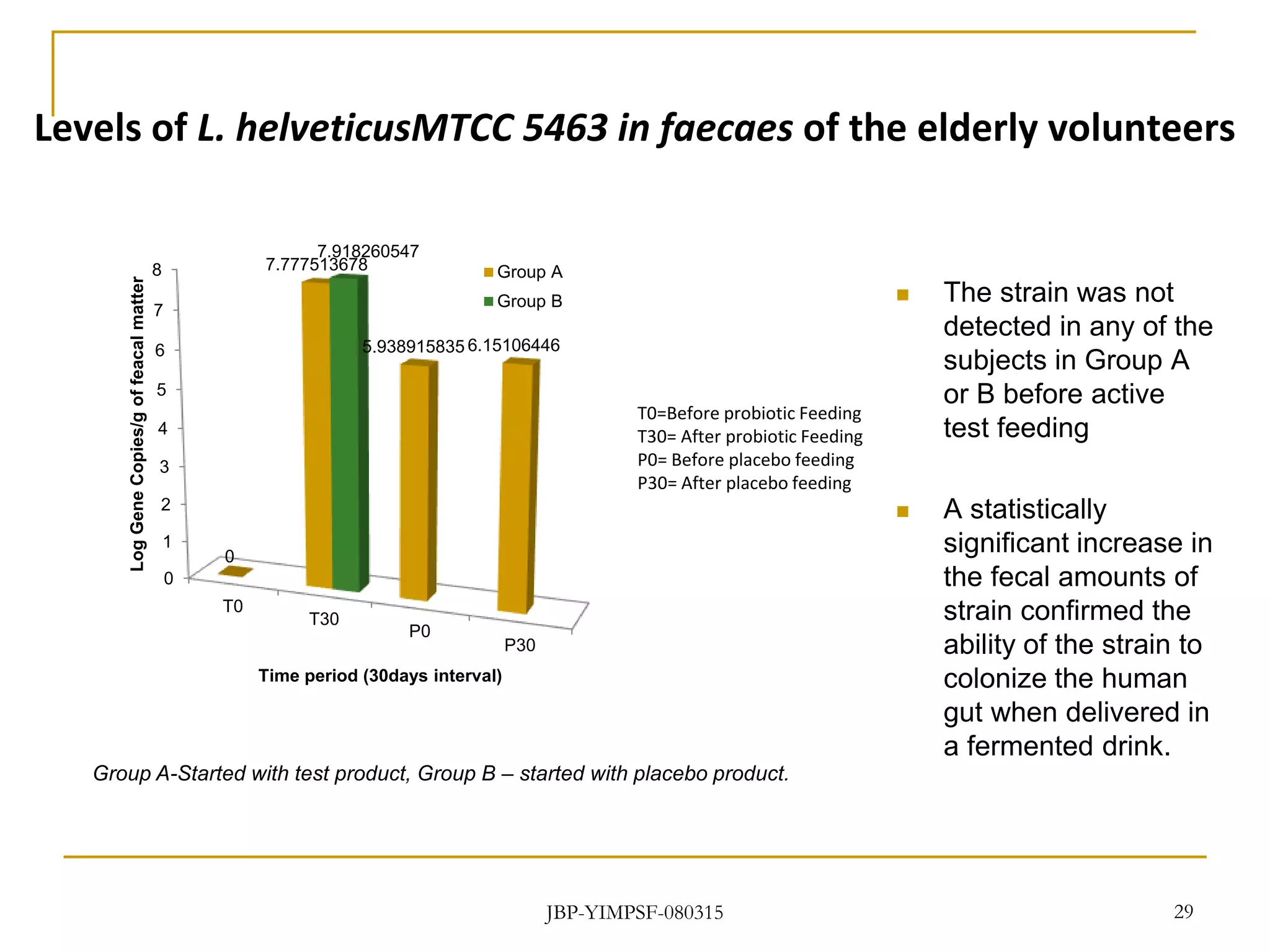
Levels of L. helveticusMTCC 5463 in faecaes of the elderly volunteers
 The strain was not
detected in any of the
subjects in Group A
or B before active
test feeding
 A statistically
significant increase in
the fecal amounts of
strain confirmed the
ability of the strain to
colonize the human
gut when delivered in
a fermented drink.
29
0
1
2
3
4
5
6
7
8
T0
T30
P0
P30
0
7.777513678
5.938915835 6.15106446
7.918260547
LogGeneCopies/goffeacalmatter
Time period (30days interval)
Group A
Group B
T0=Before probiotic Feeding
T30= After probiotic Feeding
P0= Before placebo feeding
P30= After placebo feeding
Group A-Started with test product, Group B – started with placebo product.
JBP-YIMPSF-080315
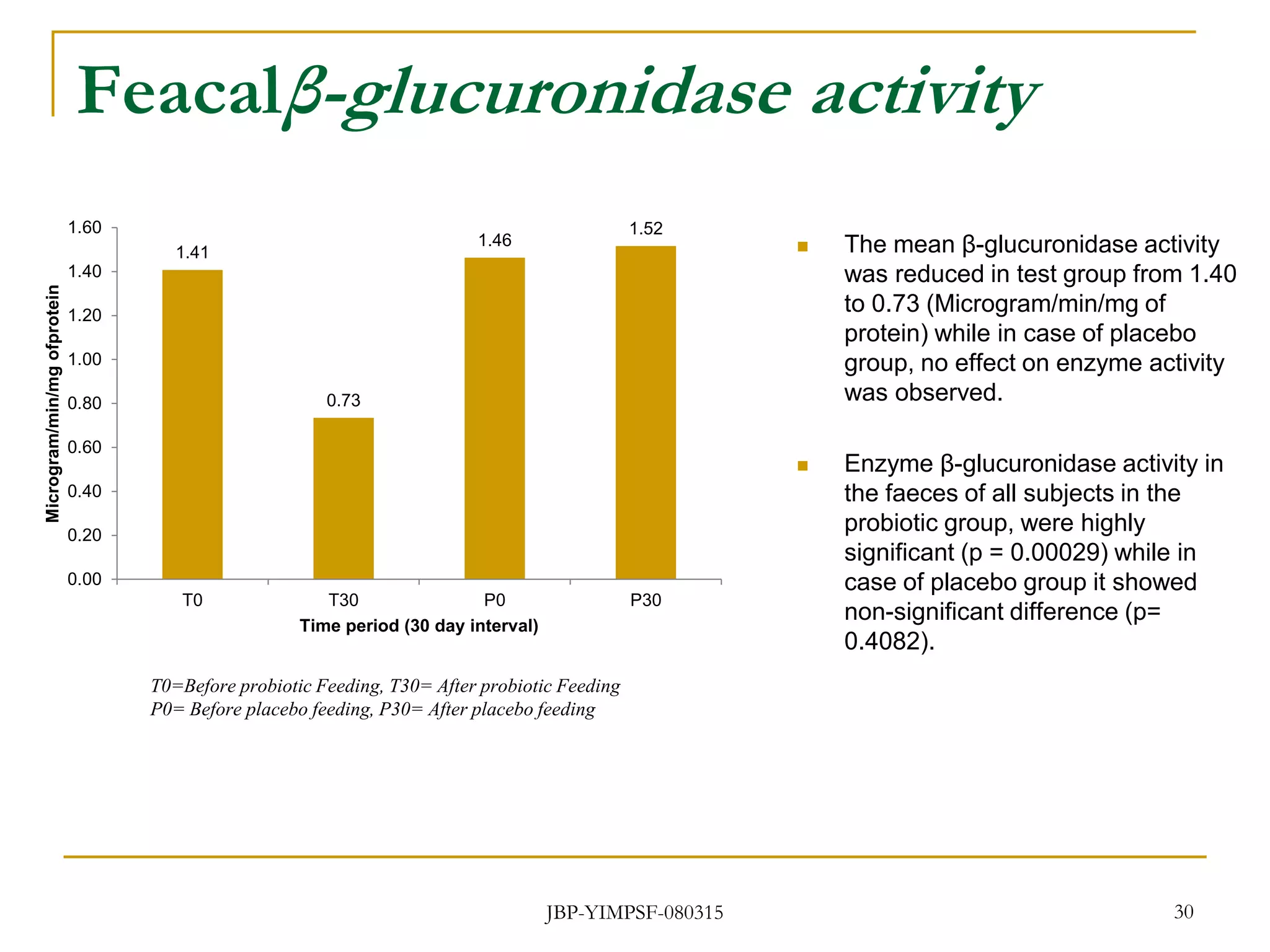
Feacalβ-glucuronidase activity
 The mean β-glucuronidase activity
was reduced in test group from 1.40
to 0.73 (Microgram/min/mg of
protein) while in case of placebo
group, no effect on enzyme activity
was observed.
 Enzyme β-glucuronidase activity in
the faeces of all subjects in the
probiotic group, were highly
significant (p = 0.00029) while in
case of placebo group it showed
non-significant difference (p=
0.4082).
30
1.41
0.73
1.46
1.52
0.00
0.20
0.40
0.60
0.80
1.00
1.20
1.40
1.60
T0 T30 P0 P30
Microgram/min/mgofprotein
Time period (30 day interval)
T0=Before probiotic Feeding, T30= After probiotic Feeding
P0= Before placebo feeding, P30= After placebo feeding
JBP-YIMPSF-080315
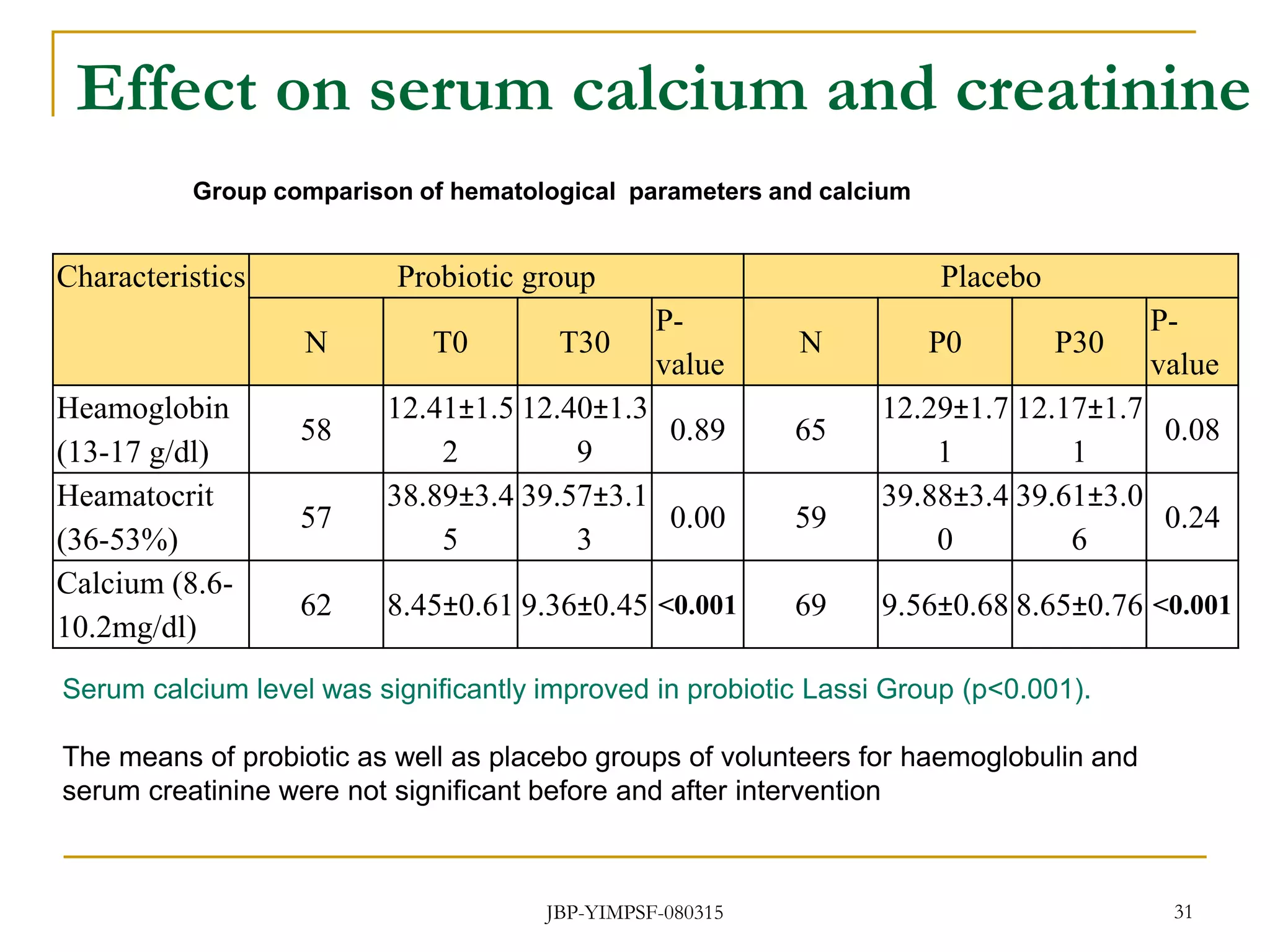
Effect on serum calcium and creatinine
Characteristics Probiotic group Placebo
N T0 T30
P-
value
N P0 P30
P-
value
Heamoglobin
(13-17 g/dl)
58
12.41±1.5
2
12.40±1.3
9
0.89 65
12.29±1.7
1
12.17±1.7
1
0.08
Heamatocrit
(36-53%)
57
38.89±3.4
5
39.57±3.1
3
0.00 59
39.88±3.4
0
39.61±3.0
6
0.24
Calcium (8.6-
10.2mg/dl)
62 8.45±0.61 9.36±0.45 <0.001 69 9.56±0.68 8.65±0.76 <0.001
31
Group comparison of hematological parameters and calcium
Serum calcium level was significantly improved in probiotic Lassi Group (p<0.001).
The means of probiotic as well as placebo groups of volunteers for haemoglobulin and
serum creatinine were not significant before and after intervention
JBP-YIMPSF-080315
Effect on the Immunological parameters
(TNF-α, IL2, IFN–γ and IgG or IgM levels)
32
Immunological
parameters
Placebo group Probiotic group
P
value
Subjects with
normal or
abnormal value*
(as defined for
each parameter)
before dietary
supplement(a)
Subjects
with
Significant
benefit
observed
(b)
%
Correction
(b/a X100)
Subjects with
normal or
abnormal
value* (as
defined) before
dietary
supplement(c)
Subjects
with
Significant
benefit
observed
(d)
%
Correctio
n
(d/c
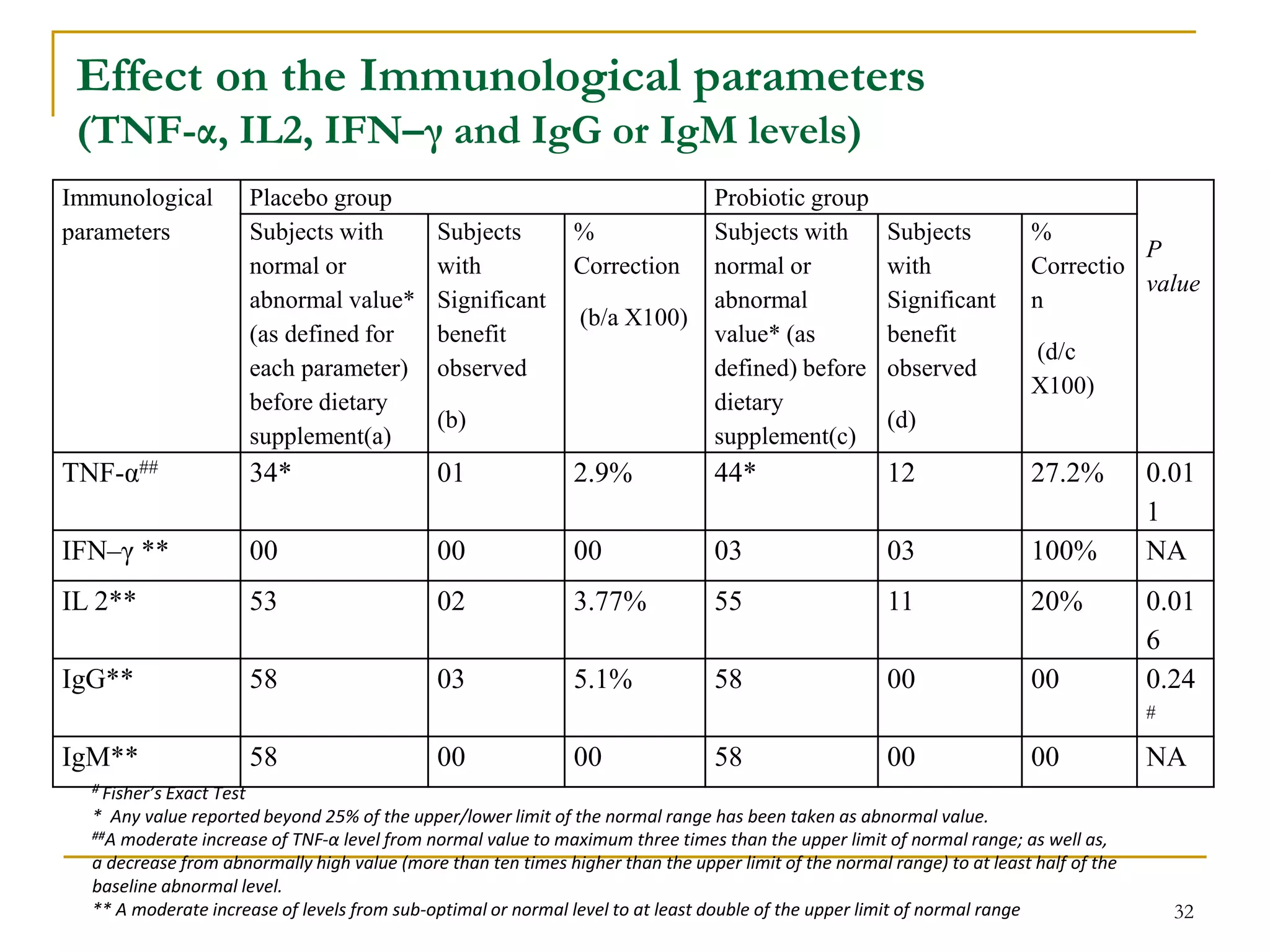
X100)
TNF-α## 34* 01 2.9% 44* 12 27.2% 0.01
1
IFN–γ ** 00 00 00 03 03 100% NA
IL 2** 53 02 3.77% 55 11 20% 0.01
6
IgG** 58 03 5.1% 58 00 00 0.24
#
IgM** 58 00 00 58 00 00 NA
# Fisher’s Exact Test
* Any value reported beyond 25% of the upper/lower limit of the normal range has been taken as abnormal value.
##A moderate increase of TNF-α level from normal value to maximum three times than the upper limit of normal range; as well as,
a decrease from abnormally high value (more than ten times higher than the upper limit of the normal range) to at least half of the
baseline abnormal level.
** A moderate increase of levels from sub-optimal or normal level to at least double of the upper limit of normal range
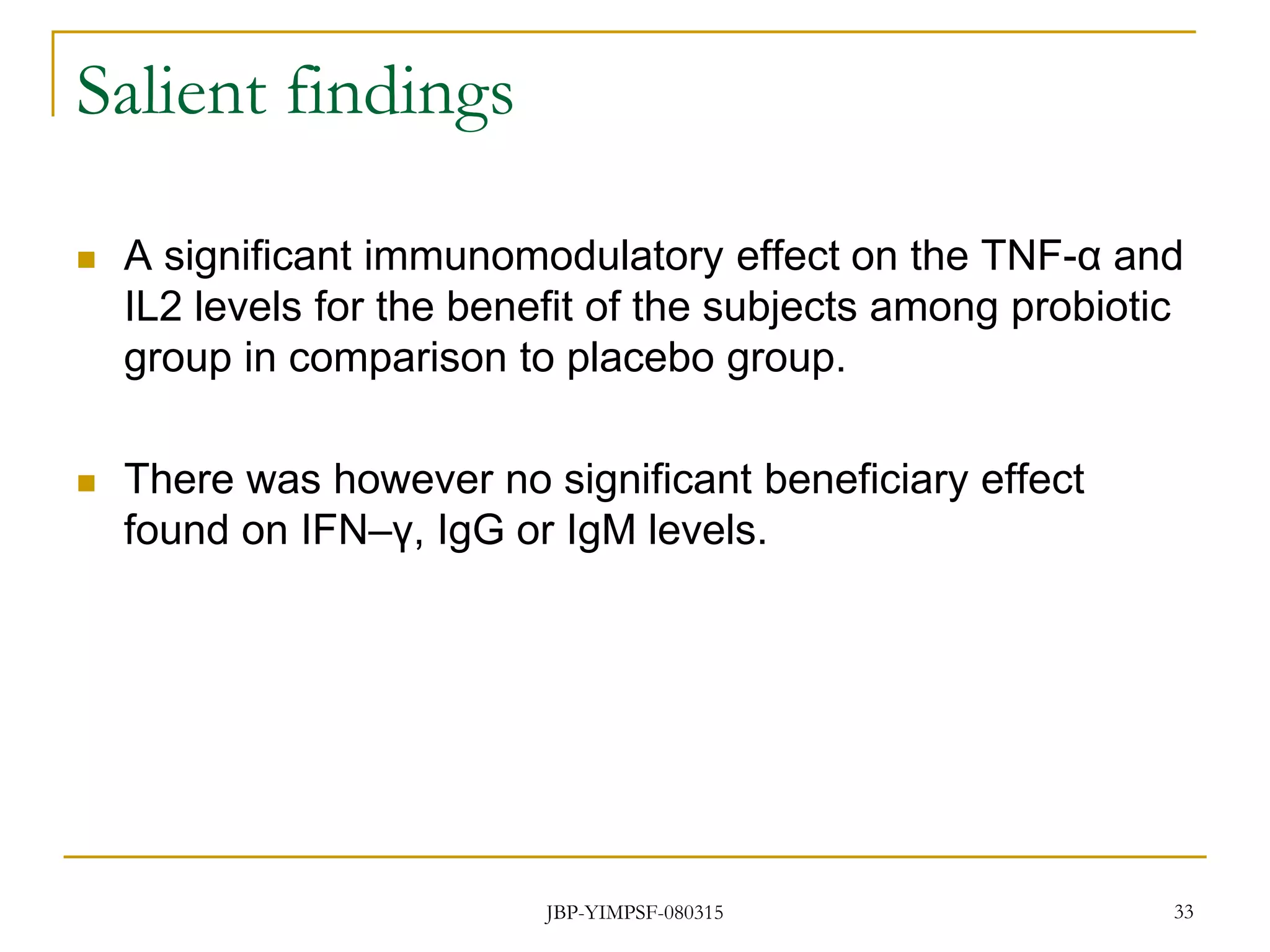
Salient findings
 A significant immunomodulatory effect on the TNF-α and
IL2 levels for the benefit of the subjects among probiotic
group in comparison to placebo group.
 There was however no significant beneficiary effect
found on IFN–γ, IgG or IgM levels.
33JBP-YIMPSF-080315
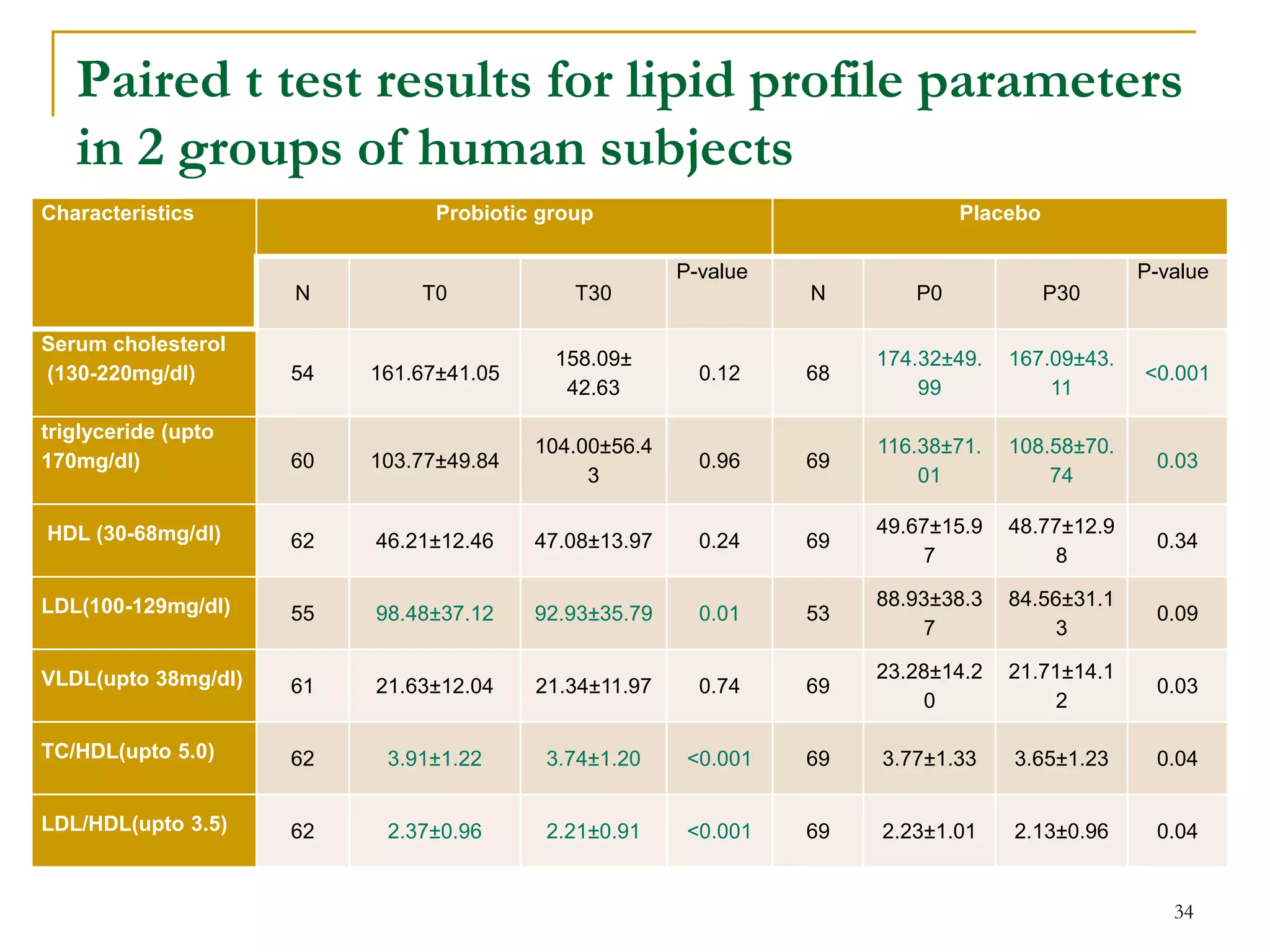
Paired t test results for lipid profile parameters
in 2 groups of human subjects
34
Characteristics Probiotic group Placebo
N T0 T30
P-value
N P0 P30
P-value
Serum cholesterol
(130-220mg/dl) 54 161.67±41.05
158.09±
42.63
0.12 68
174.32±49.
99
167.09±43.
11
<0.001
triglyceride (upto
170mg/dl) 60 103.77±49.84
104.00±56.4
3
0.96 69
116.38±71.
01
108.58±70.
74
0.03
HDL (30-68mg/dl) 62 46.21±12.46 47.08±13.97 0.24 69
49.67±15.9
7
48.77±12.9
8
0.34
LDL(100-129mg/dl) 55 98.48±37.12 92.93±35.79 0.01 53
88.93±38.3
7
84.56±31.1
3
0.09
VLDL(upto 38mg/dl) 61 21.63±12.04 21.34±11.97 0.74 69
23.28±14.2
0
21.71±14.1
2
0.03
TC/HDL(upto 5.0) 62 3.91±1.22 3.74±1.20 <0.001 69 3.77±1.33 3.65±1.23 0.04
LDL/HDL(upto 3.5) 62 2.37±0.96 2.21±0.91 <0.001 69 2.23±1.01 2.13±0.96 0.04
Metagenomic analysis of gut microflora composition
and metabolic pathways
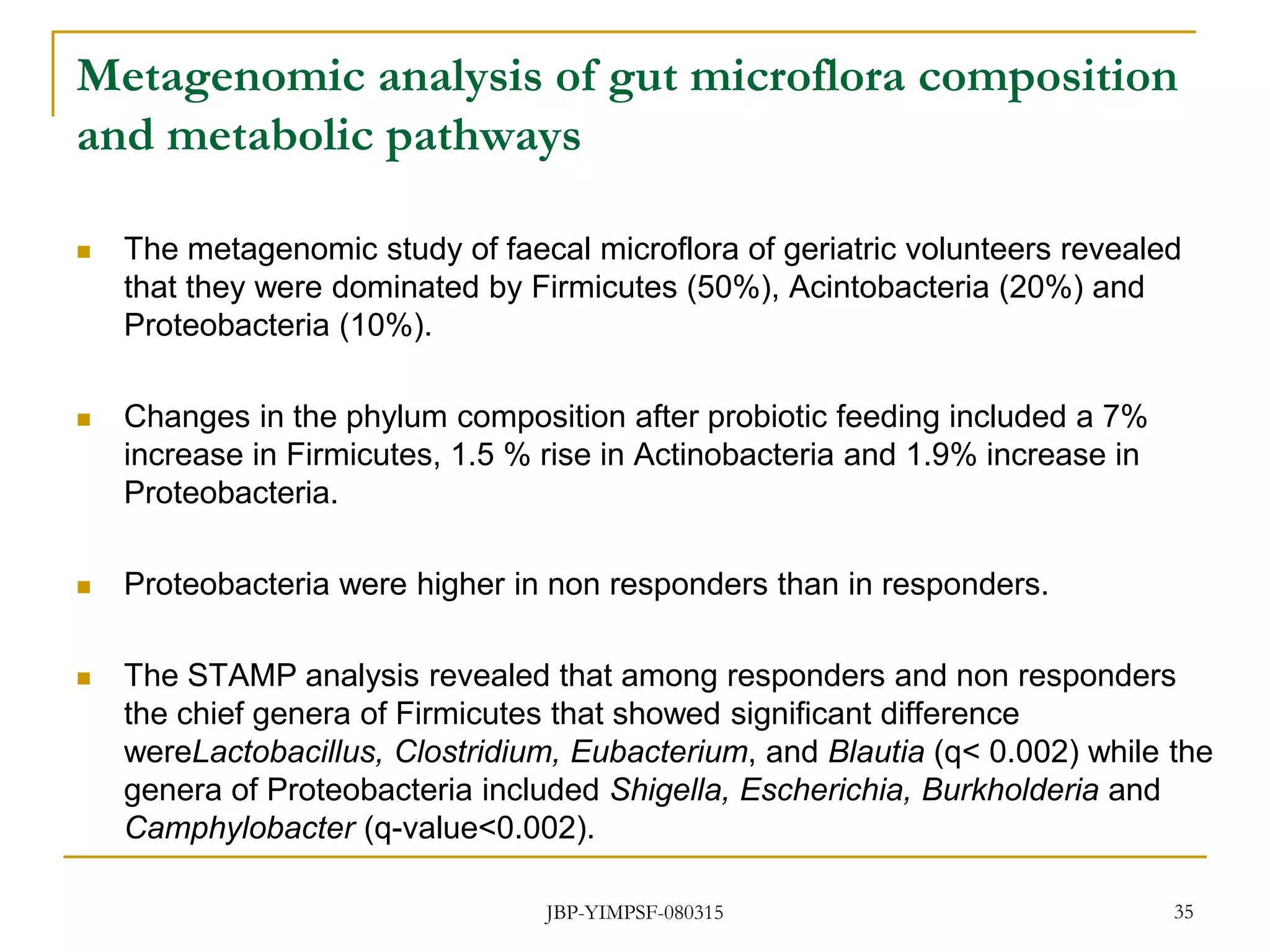
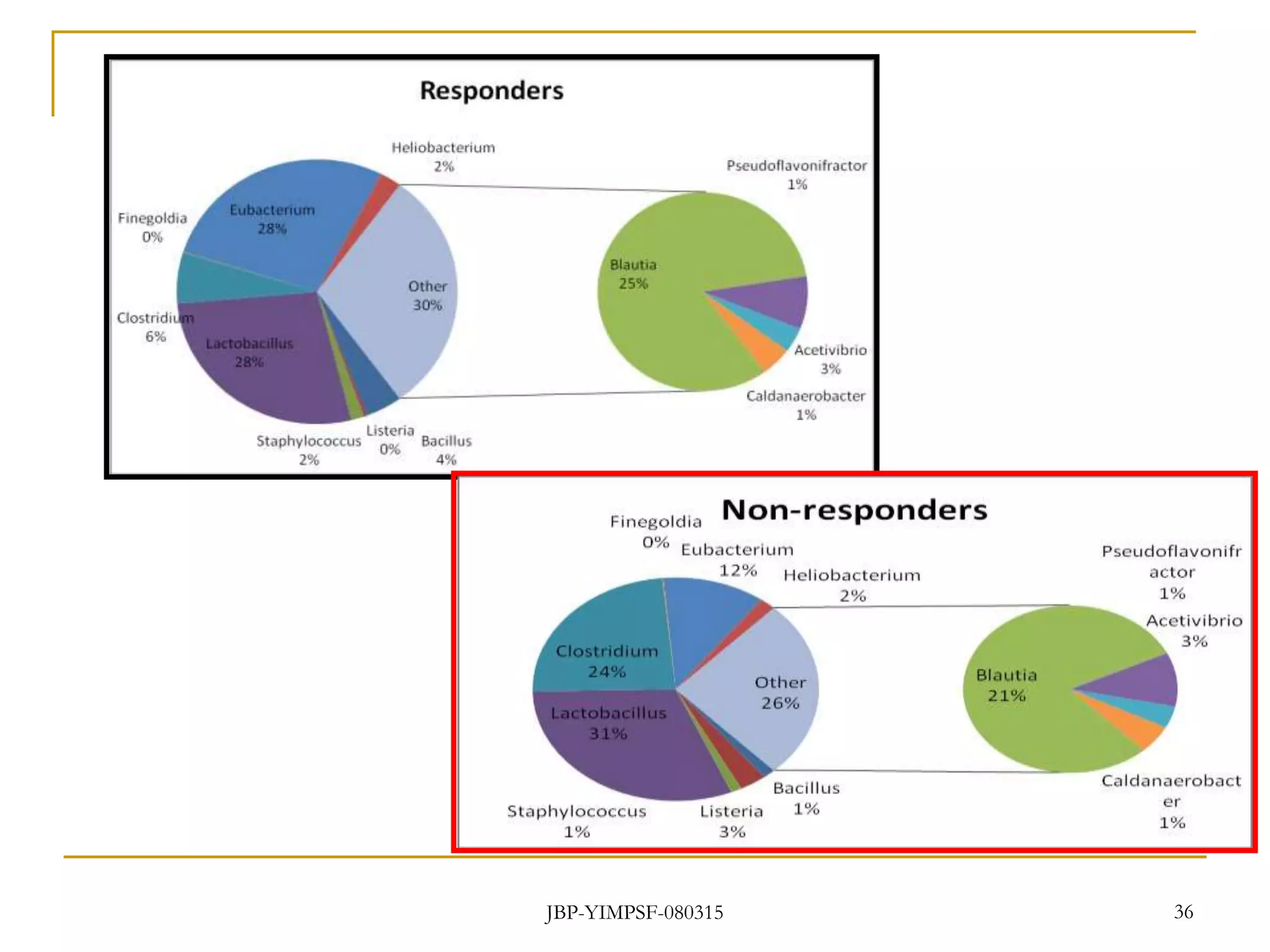
 The metagenomic study of faecal microflora of geriatric volunteers revealed
that they were dominated by Firmicutes (50%), Acintobacteria (20%) and
Proteobacteria (10%).
 Changes in the phylum composition after probiotic feeding included a 7%
increase in Firmicutes, 1.5 % rise in Actinobacteria and 1.9% increase in
Proteobacteria.
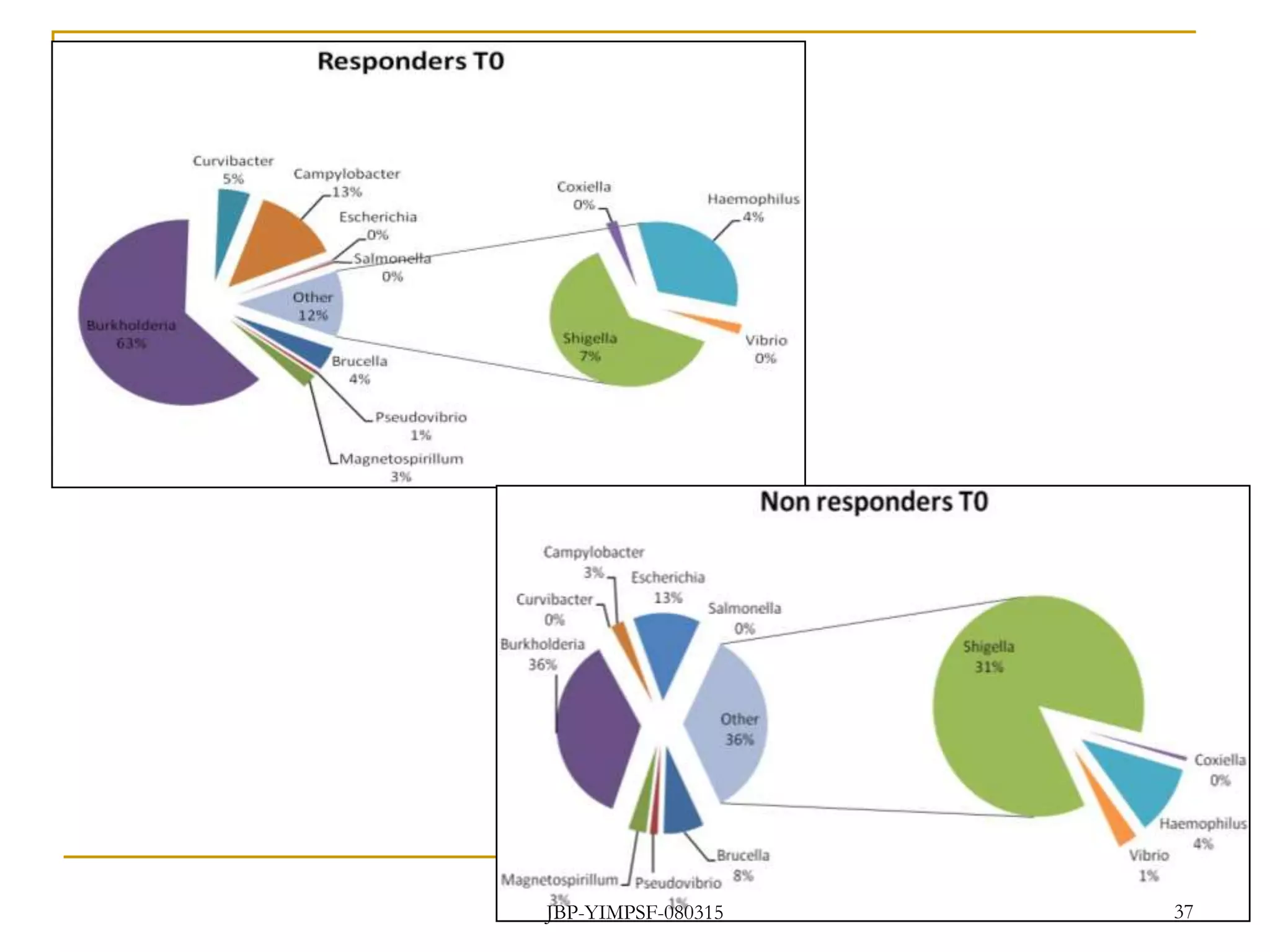
 Proteobacteria were higher in non responders than in responders.
 The STAMP analysis revealed that among responders and non responders
the chief genera of Firmicutes that showed significant difference
wereLactobacillus, Clostridium, Eubacterium, and Blautia (q< 0.002) while the
genera of Proteobacteria included Shigella, Escherichia, Burkholderia and
Camphylobacter (q-value<0.002).
35JBP-YIMPSF-080315
36JBP-YIMPSF-080315
JBP-YIMPSF-080315 37
To summarize…
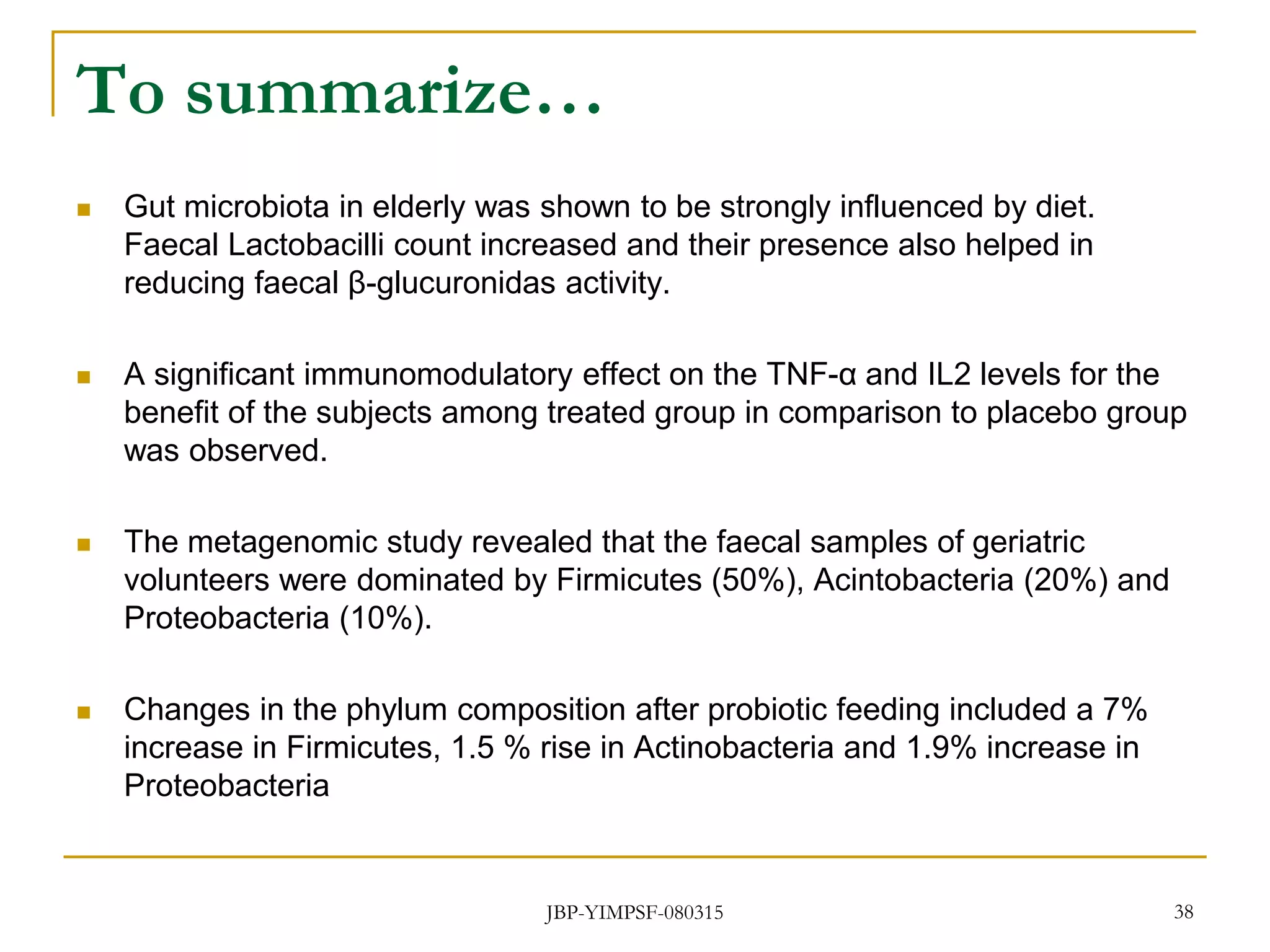
 Gut microbiota in elderly was shown to be strongly influenced by diet.
Faecal Lactobacilli count increased and their presence also helped in
reducing faecal β-glucuronidas activity.
 A significant immunomodulatory effect on the TNF-α and IL2 levels for the
benefit of the subjects among treated group in comparison to placebo group
was observed.
 The metagenomic study revealed that the faecal samples of geriatric
volunteers were dominated by Firmicutes (50%), Acintobacteria (20%) and
Proteobacteria (10%).
 Changes in the phylum composition after probiotic feeding included a 7%
increase in Firmicutes, 1.5 % rise in Actinobacteria and 1.9% increase in
Proteobacteria
JBP-YIMPSF-080315 38
To summarize…
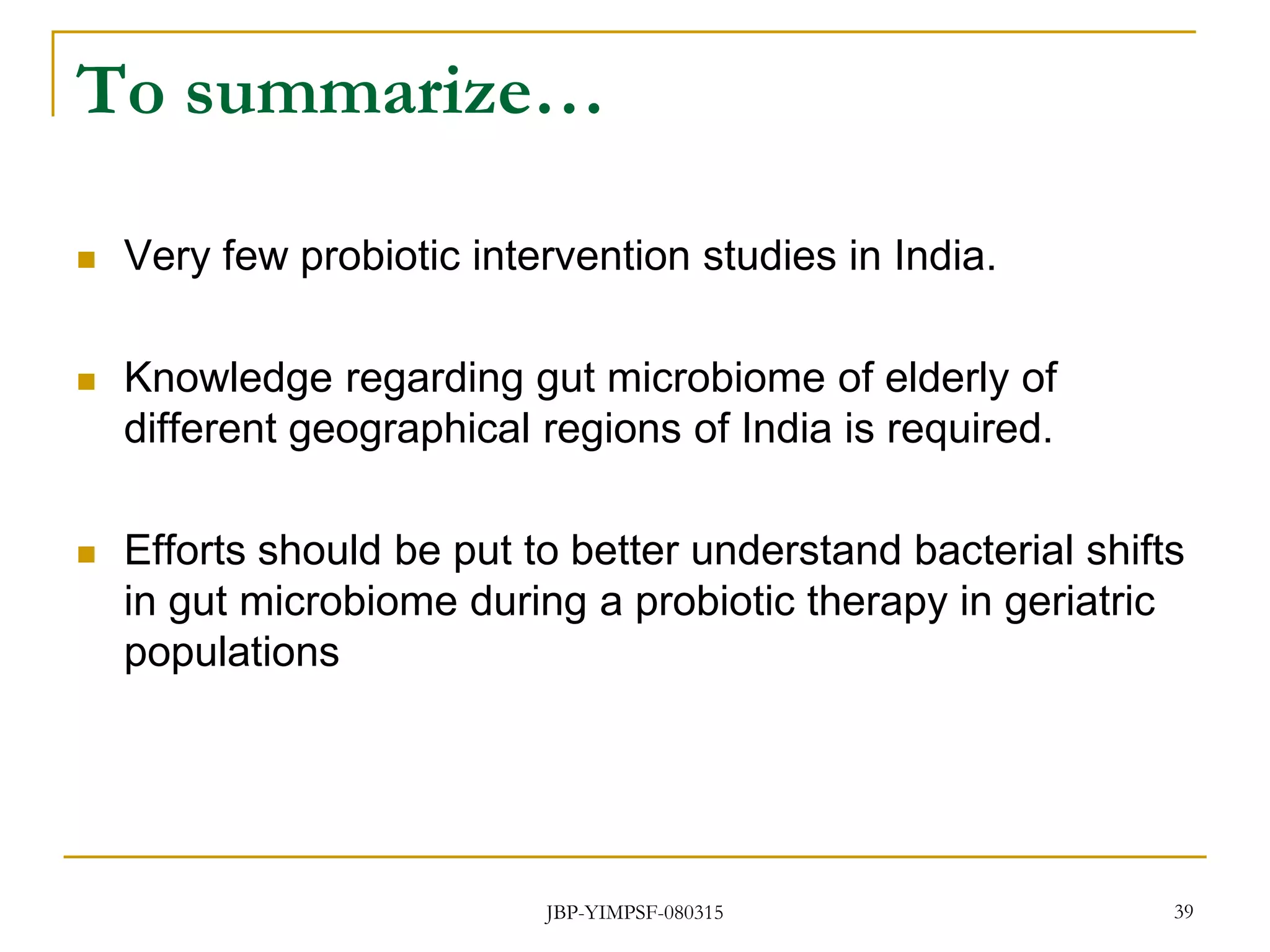
 Very few probiotic intervention studies in India.
 Knowledge regarding gut microbiome of elderly of
different geographical regions of India is required.
 Efforts should be put to better understand bacterial shifts
in gut microbiome during a probiotic therapy in geriatric
populations
JBP-YIMPSF-080315 39
“Let us give the elderly a healthy living and let us all have a healthy ageing”
Thank you
JBP-YIMPSF-080315 40

Jb prajapati 080315

  • 1.
    J.B. Prajapati Principal &Dean SMC College of Dairy Science, Anand Agricultural University, Anand–388 110 (Gujarat) jbprajapati@aau.in Probiotics for Geriatric Population JBP-YIMPSF-080315 1
  • 2.
    Global ageing…..  2000-2030:Adults worldwide >65 years of age to double from 420 million to 973 million JBP-YIMPSF-080315 2
  • 3.
    The greying ofIndia… Improvement in health care Improved living standards improvement in socioeconomic status JBP-YIMPSF-080315 3
  • 4.
    Consequences of ageing… Lossof physiological functions Loss of physical and metal faculties, weakness of health Increased vulnerability to diseases Chronic, disabling and multiple health problems Great discomfort to elderly Distress to family Clinical, social and economical problems Martinez et al, 2014; National Academy of Sciences, 2012JBP-YIMPSF-080315 4
  • 5.
    Age related changesin the organ system…..1 Organ system Effects of aging Body composition Progressive reduction in total body water and lean body mass Increase in body fat Cardiac and peripheral vascular system Heart changes (stiffening, reduced muscle strength) Reduction in the intrinsic heart rate, Atherosclerosis and loss of elasticity of vessel walls Musculoskeletal Loss of muscle tissue Osteoarthritis Osteoporosis Central nervous system Increased sensitivity Decreased blood flow Decline in receptors and pathways (fewer brain cells and connections) JBP-YIMPSF-080315 5
  • 6.
    Age related changesin the organ system….2 Organ system Effects of aging Gastrointestinal Decreased secretion of hydrochloric acid and pepsin Dysfunction in GI motility Decreased GI blood flow Reduction in liver volume and blood flow Immune system Decreased immunity to diseases Greater susceptibility to infections Respiratory Vital capacity may decline with age, Increased rigidity of chest wall Reduced thorax muscle strength and endurance Sensory Visual impairment, thickening and yellowing of the lens of the eye Hearing impairment, Decline in the ability to taste and smell JBP-YIMPSF-080315 6
  • 7.
  • 8.
    Ageing associated withmultiple illnesses and physical ailments and majority of these chronic conditions defy cure Hence…..Need of the hour.. Encouraging healthy ageing through diet which can also overcome malnutrition a preventive or alternative therapy which is milder with less of adverse effects JBP-YIMPSF-080315 8
  • 9.
    MICROBES IN HEALTHYAGEING JBP-YIMPSF-080315 9 Combating putrefaction in the gut by hygiene, diet and biologicals
  • 10.
    Gut microbiota :major player in health and disease JBP-YIMPSF-080315 10
  • 11.
    Elderly gut microbiotadifferent than that of younger adults high inter-individual variation in microbiota composition in elderly JBP-YIMPSF-080315 11 Bacteriodetes Bacteriodetes Firmucutes Firmucutes
  • 12.
    The solution… Improve microbialbalance of the intestinal tract of elderly Providing healthier nutrition Developing elderly specific functional foods JBP-YIMPSF-080315 12
  • 13.
    M O ST R E L E V A N T T O O L S T O M O D I F Y G U T M I C R O B I O T A Probiotics Reddy et al, 2011JBP-YIMPSF-080315 13
  • 14.
    Probiotics in geriatrichealth -emerging evidences  Probiotics have been recommended by WHO as an adjunctive therapy for nutritional deficiency (Kurniawan and Simadibrata, 2011)  The potential role of probiotics on the gut-brain axis is an emerging study area particularly important in relation to neurodegerative diseases of elderly (Martinez, et al, 2014). Results of some previous studies…….. JBP-YIMPSF-080315 14
  • 15.
    Selected studies inelderly showing effect of probiotics on gut microbiota and the immune system. Strain Product Assay design1;n2 Age (years) Effect3 Refere nce Bifidobacteriumla ctis HN019 Dehydrated sachets mixed with low fat milk Xover;30 Median 69 ↑T helper cell (CD4), activated T lymphocytes (CD 25) and NK cells ↑ ex vivo phagocytic capacity of mononuclear and polymorphonucleaer phagocytes and the tumoricidal activity of NK Gill et al., 2001 Lactobacillus casei (Shirota) Probiotic dairy product DBRPC;124 61±7.3 Improved the mood of those whose mood was initially poor No improvement of frequency of defecation Benton et al., 2006 JBP-YIMPSF-080315 15
  • 16.
    B. lactis HN019Mixture with skim milk DBRPC;4 groups of 20 >60 ↑bifidobacteria, lactobacilli and enterococci ↓Enterobacteria Ahmed et al., 2007 Lactobacillus delbrueckii subsp. bulgaricus B481 Capsule with dehydrated probiotics DBRPC;61 >85 ↑NK cells ↑immune risl parameters ↓proinflammatory cytokine IL-B ↑ antimicrobial peptide β defensins02(hBD-2) Moro Garcia et al., 2012 Bifidobacteriuml ongumBB536 Enteral tube feeding DBRPC;hospi talized 45 81.7±8.1 ↑Bifidobacterium ↑ IgA after influenza vaccination (A/H1N1, A/H3N2 and B) ↑ NK cell activity(in subjects with lower NK cell activity) Akatsu et al., 2012 Lactobacillus plantarum CECT 7315 and 7316 Capsule with dehydrated probiotics DBRPC;nursi ng home 60 65-85 ↑ response to influenza vaccination (↑ influenza specific IgA and IgG) Bosch et al., 2012 JBP-YIMPSF-080315 16
  • 17.
    Bifidobacteriumin fantis CCUG 52486, B. longumSp0713, Lactobacillus rhamnosus GG and Lactobacillus casei (Shirota) Fermement ed milk In vitro PBMC; 16 65-76 Each single probiotic enhanced NK activity with B. infantis effect was influenced by ageing In the youngest ↑Bifidobacterium , ↑IFN-ϒ(not by LGG) ↑IL 6 production in the older and B. infantis was the most anti inflammatory You and Yaqou b, 2012 B. longum BB536 Enteral tube feeding DBRPC (two trials); Hospitaliz ed B3/123 65-102 Regularised bowel movements with lower input. No other differences Kondo et al., 2013 B. longum Bar 33 and Lactobacillus helveticus Bar 13 biscuits DBRPC;32 71-88 ↓ opportunistic pathogens Clostridium cluster XI, Clostridium difficle. Clostridium perfringes, Enterococcus faecium and Campylobacter Rampe lliet al., 2013 1Type of Intervention Assay; Xover=cross over assay; DBRPC=double blind randomized placebo control 2n=number of subjects 3NK=natural killer cells; Il=ineterleukin A/G; IFN-ϒ=interferon-gamma JBP-YIMPSF-080315 17
  • 18.
    Selected studies inelderly showing the effect of synbiotics on gut microbiota and the immune system Treatment Product Assay design2;n3 Age (years) Effect4 References B. bifidum BB-02, B. lactisBL01 and inulin 6 g chicory inulin (Rafilose) plus capsule with capsules with dehydrated probiotics per day DBRPC;18 >62 ↑bifidobacteria and lactobacilli Bartosch et al., 2005 B. longum2C (DSM 14579) and 46 (DSM 14583) vs. B. animalis BB12 and oatmeal Fermented oat meal DBRPC;169 Avg 84- 3 ↑Bifidobacteri um species in all samples correlated to↓ TNF –α and IL-10 Ouwehand et al., 2008 JBP-YIMPSF-080315 18
  • 19.
    B. longum 46and B. longum2C and oatmeal fermente d oat meal DBRPC;66 84±8 ↑Bifidobacteriumc alanufatum, B. bifidumand Bifidobacteriumbre ve Lahtinen et al., 2009 L. rhamnosus GG and FOS 250 g/d commerci al yoghurt with LGG and 2.4% scFOS (Actilight ) DBRPC; 12 women constipati on, nursing home 76-90 No increase of bifidobacteria ↓presence of LGG in faeces of elderly froup than in younger adults ↑evaluation number in the elderly, probably due to the presence of FOS Granata et al., 2013 JBP-YIMPSF-080315 19
  • 20.
    JBP-YIMPSF-080315 20 Metagenomic andClinical investigation of synbiotic fermented dairy product containing probiotic Lactobacillus helveticus MTCC 5463 in geriatric volunteers
  • 21.
    21 PARTNERS: Dairy Microbiology Department,Anand Agricultural University, Anand PI : Dr JB Prajapati, Professor, Dairy Microbiology Co-PI : Dr Vijendra Mishra, Associate Prof., Dairy Microbiology Mrs Suja Senan, Asst. Prof., Dairy Microbiology Mrs Sreeja V. Asst. Prof., Dairy Microbiology Animal Biotechnology Department, Anand Agricultural University, Anand Co-PI : Dr CG Joshi, Prof., Animal Biotechnology HM Patel Centre for Medical Care & Education Pramukh Swami Medical College, Karamsad-Gujarat Co-PI : Dr Himanshu Pandya, Prof., Medicine Dr Sunil Trivedi, Prof of Microbiology Dr Uday S Singh, Prof of Community Medicine Dr Rupal Patel, Asst. Prof., Microbiology Dr Manisha Gohel, Asst. Prof. Community Medicine Dr Ajay Pathak, Statistical Expert Vidya Dairy, Anand Co-PI : Dr HK Desai, Managing Director JBP-YIMPSF-080315
  • 22.
    22 Objectives  Selection offunctional synbiotic dairy product  To conduct feeding trial in old age subjects and validate health benefits  Study changes in composition and biochemical activities of gastrointestinal microflora  Metagenomic analysis of gut microflora composition and metabolic pathways.  To manufacture product on pilot scale and survey its acceptability Aim of the study to clinically investigate the influence of an indigenous probiotic culture, fed through well accepted synbiotic dairy food, in geriatric volunteers and carry out metagenomic analysis for gut microflora. JBP-YIMPSF-080315
  • 23.
    Selection of synbioticproduct 0 2 4 6 8 10 0day 7day 14day 21day 28day Honey Carrot Oat Musali Storage period in days erall acceptability of synbiotic lassi products during storage at 5 2 c Sensoryscore 8.5 9 9.5 10 10.5 11 0 7 14 21 28 Honey Carrot Oat Musali Storage period in days Logcfu/ml Changes in lactobacilli count of synbiotic products during storage at 5 ± 2 °c Overall acceptability of synbiotic lassi during storage at 5 ± 2 °c JBP-YIMPSF-080315 23
  • 24.
    Methodology 24 Representation of thestudy design and sample collection JBP-YIMPSF-080315 Intervention- probiotic fermented milk supplemented with honey
  • 25.
    Design of studyand subjects flow 25JBP-YIMPSF-080315
  • 26.
    Data collection…..  Thechanges in composition and biochemical activities of gastrointestinal microflora were studied on the basis of their population in faecal sampes and facecal enzyme activity.  Collection of blood for Haematological, lipid, and immunological parameters.  Metagenomic analysis of gut microflora composition was studied by using semi conductor based amplicon sequencing on Ion Torrent PGM sequencer.  The metagenomic data obtained were analysed using MG-RAST and QIIME followed by STAMP statistical analysis.  The product was prepared on pilot scale at Vidya Dairy and survey of its acceptability in the geriatrics is conducted. 26JBP-YIMPSF-080315
  • 27.
    Quantification of gutflora by traditional plating JBP-YIMPSF-080315 27 8.47 9.19 9.17 9.10 8.00 8.20 8.40 8.60 8.80 9.00 9.20 9.40 T0 T30 P0 P30 T0 T30 P0 P30 Changes in Lactobacilli count
  • 28.
    Quantification of MTCC5463 by RT-PCR method  a standard curve for the strain Lb. helveticus MTCC 5463 is obtained. The number of cells of lactobacilli in the target samples was determined by comparing the Ct values obtained to the standard curve. 28 y = -3.4404x + 36.988 R² = 0.9941 0 5 10 15 20 25 30 35 0 1 2 3 4 5 6 7 Thresholdcycle(Ct) Log no. cells/ml Standard curve for lactobacilli JBP-YIMPSF-080315
  • 29.
    Levels of L.helveticusMTCC 5463 in faecaes of the elderly volunteers  The strain was not detected in any of the subjects in Group A or B before active test feeding  A statistically significant increase in the fecal amounts of strain confirmed the ability of the strain to colonize the human gut when delivered in a fermented drink. 29 0 1 2 3 4 5 6 7 8 T0 T30 P0 P30 0 7.777513678 5.938915835 6.15106446 7.918260547 LogGeneCopies/goffeacalmatter Time period (30days interval) Group A Group B T0=Before probiotic Feeding T30= After probiotic Feeding P0= Before placebo feeding P30= After placebo feeding Group A-Started with test product, Group B – started with placebo product. JBP-YIMPSF-080315
  • 30.
    Feacalβ-glucuronidase activity  Themean β-glucuronidase activity was reduced in test group from 1.40 to 0.73 (Microgram/min/mg of protein) while in case of placebo group, no effect on enzyme activity was observed.  Enzyme β-glucuronidase activity in the faeces of all subjects in the probiotic group, were highly significant (p = 0.00029) while in case of placebo group it showed non-significant difference (p= 0.4082). 30 1.41 0.73 1.46 1.52 0.00 0.20 0.40 0.60 0.80 1.00 1.20 1.40 1.60 T0 T30 P0 P30 Microgram/min/mgofprotein Time period (30 day interval) T0=Before probiotic Feeding, T30= After probiotic Feeding P0= Before placebo feeding, P30= After placebo feeding JBP-YIMPSF-080315
  • 31.
    Effect on serumcalcium and creatinine Characteristics Probiotic group Placebo N T0 T30 P- value N P0 P30 P- value Heamoglobin (13-17 g/dl) 58 12.41±1.5 2 12.40±1.3 9 0.89 65 12.29±1.7 1 12.17±1.7 1 0.08 Heamatocrit (36-53%) 57 38.89±3.4 5 39.57±3.1 3 0.00 59 39.88±3.4 0 39.61±3.0 6 0.24 Calcium (8.6- 10.2mg/dl) 62 8.45±0.61 9.36±0.45 <0.001 69 9.56±0.68 8.65±0.76 <0.001 31 Group comparison of hematological parameters and calcium Serum calcium level was significantly improved in probiotic Lassi Group (p<0.001). The means of probiotic as well as placebo groups of volunteers for haemoglobulin and serum creatinine were not significant before and after intervention JBP-YIMPSF-080315
  • 32.
    Effect on theImmunological parameters (TNF-α, IL2, IFN–γ and IgG or IgM levels) 32 Immunological parameters Placebo group Probiotic group P value Subjects with normal or abnormal value* (as defined for each parameter) before dietary supplement(a) Subjects with Significant benefit observed (b) % Correction (b/a X100) Subjects with normal or abnormal value* (as defined) before dietary supplement(c) Subjects with Significant benefit observed (d) % Correctio n (d/c X100) TNF-α## 34* 01 2.9% 44* 12 27.2% 0.01 1 IFN–γ ** 00 00 00 03 03 100% NA IL 2** 53 02 3.77% 55 11 20% 0.01 6 IgG** 58 03 5.1% 58 00 00 0.24 # IgM** 58 00 00 58 00 00 NA # Fisher’s Exact Test * Any value reported beyond 25% of the upper/lower limit of the normal range has been taken as abnormal value. ##A moderate increase of TNF-α level from normal value to maximum three times than the upper limit of normal range; as well as, a decrease from abnormally high value (more than ten times higher than the upper limit of the normal range) to at least half of the baseline abnormal level. ** A moderate increase of levels from sub-optimal or normal level to at least double of the upper limit of normal range
  • 33.
    Salient findings  Asignificant immunomodulatory effect on the TNF-α and IL2 levels for the benefit of the subjects among probiotic group in comparison to placebo group.  There was however no significant beneficiary effect found on IFN–γ, IgG or IgM levels. 33JBP-YIMPSF-080315
  • 34.
    Paired t testresults for lipid profile parameters in 2 groups of human subjects 34 Characteristics Probiotic group Placebo N T0 T30 P-value N P0 P30 P-value Serum cholesterol (130-220mg/dl) 54 161.67±41.05 158.09± 42.63 0.12 68 174.32±49. 99 167.09±43. 11 <0.001 triglyceride (upto 170mg/dl) 60 103.77±49.84 104.00±56.4 3 0.96 69 116.38±71. 01 108.58±70. 74 0.03 HDL (30-68mg/dl) 62 46.21±12.46 47.08±13.97 0.24 69 49.67±15.9 7 48.77±12.9 8 0.34 LDL(100-129mg/dl) 55 98.48±37.12 92.93±35.79 0.01 53 88.93±38.3 7 84.56±31.1 3 0.09 VLDL(upto 38mg/dl) 61 21.63±12.04 21.34±11.97 0.74 69 23.28±14.2 0 21.71±14.1 2 0.03 TC/HDL(upto 5.0) 62 3.91±1.22 3.74±1.20 <0.001 69 3.77±1.33 3.65±1.23 0.04 LDL/HDL(upto 3.5) 62 2.37±0.96 2.21±0.91 <0.001 69 2.23±1.01 2.13±0.96 0.04
  • 35.
    Metagenomic analysis ofgut microflora composition and metabolic pathways  The metagenomic study of faecal microflora of geriatric volunteers revealed that they were dominated by Firmicutes (50%), Acintobacteria (20%) and Proteobacteria (10%).  Changes in the phylum composition after probiotic feeding included a 7% increase in Firmicutes, 1.5 % rise in Actinobacteria and 1.9% increase in Proteobacteria.  Proteobacteria were higher in non responders than in responders.  The STAMP analysis revealed that among responders and non responders the chief genera of Firmicutes that showed significant difference wereLactobacillus, Clostridium, Eubacterium, and Blautia (q< 0.002) while the genera of Proteobacteria included Shigella, Escherichia, Burkholderia and Camphylobacter (q-value<0.002). 35JBP-YIMPSF-080315
  • 36.
  • 37.
  • 38.
    To summarize…  Gutmicrobiota in elderly was shown to be strongly influenced by diet. Faecal Lactobacilli count increased and their presence also helped in reducing faecal β-glucuronidas activity.  A significant immunomodulatory effect on the TNF-α and IL2 levels for the benefit of the subjects among treated group in comparison to placebo group was observed.  The metagenomic study revealed that the faecal samples of geriatric volunteers were dominated by Firmicutes (50%), Acintobacteria (20%) and Proteobacteria (10%).  Changes in the phylum composition after probiotic feeding included a 7% increase in Firmicutes, 1.5 % rise in Actinobacteria and 1.9% increase in Proteobacteria JBP-YIMPSF-080315 38
  • 39.
    To summarize…  Veryfew probiotic intervention studies in India.  Knowledge regarding gut microbiome of elderly of different geographical regions of India is required.  Efforts should be put to better understand bacterial shifts in gut microbiome during a probiotic therapy in geriatric populations JBP-YIMPSF-080315 39
  • 40.
    “Let us givethe elderly a healthy living and let us all have a healthy ageing” Thank you JBP-YIMPSF-080315 40

Editor's Notes

  • #9 However, to address the healthcare needs of this growing numbers of vulnerable and heterogeneous population, reliable information about their health problems from different social settings is still lacking in India. Functional health status greatly influences quality of life at old age.