BY
CH.NARENDRA CHOWDARY
M2 SEC
Double Acting Cylinders
 Is a cylinder designed to use air to
extend and retract the piston.
 Double acting cylinders are far more
popular than single acting.
 They are available in single rod end and
double rod end, cushioned and non-
cushioned.
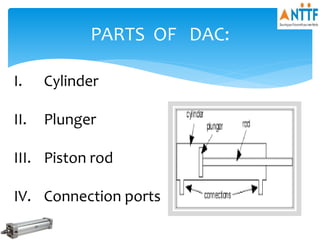
PARTS OF DAC:
I. Cylinder
II. Plunger
III. Piston rod
IV. Connection ports
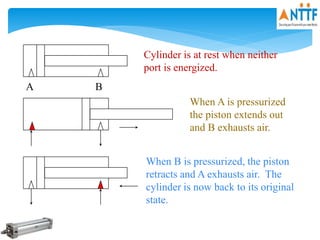
A B
Cylinder is at rest when neither
port is energized.
When A is pressurized
the piston extends out
and B exhausts air.
When B is pressurized, the piston
retracts and A exhausts air. The
cylinder is now back to its original
state.
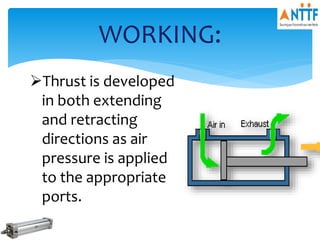
WORKING:
Thrust is developed
in both extending
and retracting
directions as air
pressure is applied
to the appropriate
ports.
Air cylinders are available in a variety of
sizes and can typically range from a small
2.5 mm air cylinder.
An 400 mm diameter air cylinders which
would impart enough force to lift a car.
Some pneumatic cylinders reach 1000 mm
in diameter.
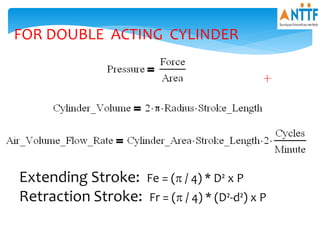
Extending Stroke: Fe = (p / 4) * D² x P
Retraction Stroke: Fr = (p / 4) * (D²-d²) x P
FOR DOUBLE ACTING CYLINDER
Required Air Flow Rate
Max Pressure/Required
Pressure
Capable Force
Capable Torque
Max RPM
Linear Velocity
S PS
• More compact body when compared
to single acting.
•Constant force(Dependent on stroke)
• Higher force with smaller bore size
due to absence of spring.
• Every movement uses compressed air.
• No defined position in the event of
compressed air failure.
DOUBLE ACTING  CYLINDER

DOUBLE ACTING CYLINDER

  • 2.
  • 3.
    Double Acting Cylinders Is a cylinder designed to use air to extend and retract the piston.  Double acting cylinders are far more popular than single acting.  They are available in single rod end and double rod end, cushioned and non- cushioned.
  • 4.
    PARTS OF DAC: I.Cylinder II. Plunger III. Piston rod IV. Connection ports
  • 5.
    A B Cylinder isat rest when neither port is energized. When A is pressurized the piston extends out and B exhausts air. When B is pressurized, the piston retracts and A exhausts air. The cylinder is now back to its original state.
  • 6.
    WORKING: Thrust is developed inboth extending and retracting directions as air pressure is applied to the appropriate ports.
  • 7.
    Air cylinders areavailable in a variety of sizes and can typically range from a small 2.5 mm air cylinder. An 400 mm diameter air cylinders which would impart enough force to lift a car. Some pneumatic cylinders reach 1000 mm in diameter.
  • 8.
    Extending Stroke: Fe= (p / 4) * D² x P Retraction Stroke: Fr = (p / 4) * (D²-d²) x P FOR DOUBLE ACTING CYLINDER
  • 9.
    Required Air FlowRate Max Pressure/Required Pressure Capable Force Capable Torque Max RPM Linear Velocity S PS
  • 10.
    • More compactbody when compared to single acting. •Constant force(Dependent on stroke) • Higher force with smaller bore size due to absence of spring.
  • 11.
    • Every movementuses compressed air. • No defined position in the event of compressed air failure.