Domino’s Pizza Ethical issue
PRESENTED BY:
Kashmala Khalil
1
2
OVERVIEW
• INTRODUCTION
• VISION AND MISSION STATEMENT
• CASE SUMMARY
• STAKEHOLDERS ANALYSIS
• TIME LINE
• WHAT DOMINO’S DID RIGHT
• WHAT DOMINO’S DID WRONG
• CONCLUSION
3
INTRODUCTION
url 1: http://kidskunst.info/linked/the-history-of-dominos-pizza-746865.htm
url 2:http://icon-construction.com/modular-restaurant/
• American restaurant chain
• Founded in 1960
• Second – largest pizza chain in
the U.S
• Opened first international pizza
store in Canada
• 12,500 stores in more than 86
countries
• Delivers more than 1 million
pizzas per day worldwide
4
VISION AND MISSION STATEMENT
• Maintaining high standards of the international chain of
pizza delivery and provide the experience of an excellent
product with excellent customer service.
• Exceptional People serving the best pizza in the world.
• Sell more pizza.
• Have more fun.
The Mission
• To be the best operator Domino's Pizza system with the
best talent.
• Number one in pizza.
• Number one in people
The Vision
url: http://dominos-pizza-cobat.blogspot.com/p/mission-and-vision.html
5
CASE SUMMARY
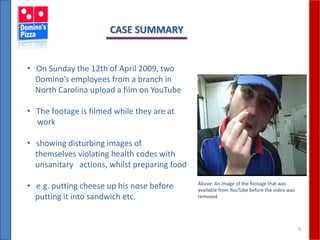
• On Sunday the 12th of April 2009, two
Domino’s employees from a branch in
North Carolina upload a film on YouTube
• The footage is filmed while they are at
work
• showing disturbing images of
themselves violating health codes with
unsanitary actions, whilst preparing food
• e.g. putting cheese up his nose before
putting it into sandwich etc.
Above: An image of the footage that was
available from YouTube before the video was
removed
6
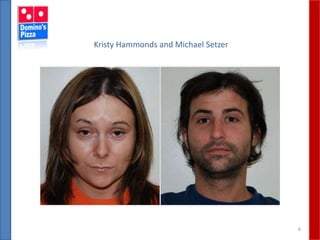
Kristy Hammonds and Michael Setzer
7
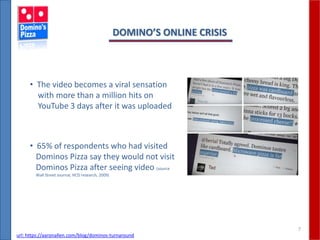
DOMINO’S ONLINE CRISIS
• The video becomes a viral sensation
with more than a million hits on
YouTube 3 days after it was uploaded
• 65% of respondents who had visited
Dominos Pizza say they would not visit
Dominos Pizza after seeing video (source
Wall Street Journal, HCD research, 2009)
url: https://aaronallen.com/blog/dominos-turnaround
8
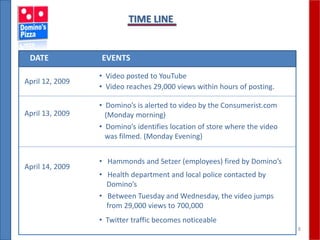
TIME LINE
DATE EVENTS
April 12, 2009
• Video posted to YouTube
• Video reaches 29,000 views within hours of posting.
April 13, 2009
• Domino’s is alerted to video by the Consumerist.com
(Monday morning)
• Domino’s identifies location of store where the video
was filmed. (Monday Evening)
April 14, 2009
• Hammonds and Setzer (employees) fired by Domino’s
• Health department and local police contacted by
Domino’s
• Twitter traffic becomes noticeable
• Between Tuesday and Wednesday, the video jumps
from 29,000 views to 700,000
9
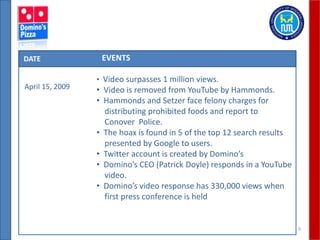
DATE EVENTS
April 15, 2009
• Video surpasses 1 million views.
• Video is removed from YouTube by Hammonds.
• Hammonds and Setzer face felony charges for
distributing prohibited foods and report to
Conover Police.
• The hoax is found in 5 of the top 12 search results
presented by Google to users.
• Twitter account is created by Domino’s
• Domino’s CEO (Patrick Doyle) responds in a YouTube
video.
• Domino’s video response has 330,000 views when
first press conference is held
10
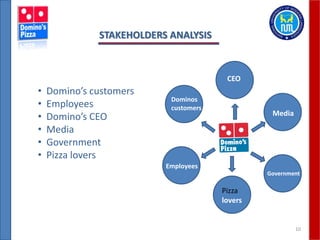
STAKEHOLDERS ANALYSIS
• Domino’s customers
• Employees
• Domino’s CEO
• Media
• Government
• Pizza lovers
Dominos
customers
Employees
CEO
Media
Government
Pizza
lovers
11
• Delayed reaction- alert was heard
late
• Silent when answers were needed
• Reacted after they were contacted
by consumer affairs blog site
• Lack of strategy for digital crises
management
• Lack of social media presence
• Lack of employee policy on social
media use and communication
WHAT DOMINO’S DID WRONG
url:https://www.express.co.uk/news/uk/929271/uk-pizza-domino-growth-sales-online-order-brexit
12
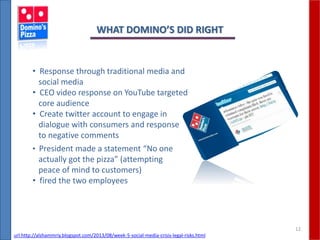
• Response through traditional media and
social media
• CEO video response on YouTube targeted
core audience
• Create twitter account to engage in
dialogue with consumers and response
to negative comments
• President made a statement “No one
actually got the pizza” (attempting
peace of mind to customers)
• fired the two employees
WHAT DOMINO’S DID RIGHT
url:http://alshammriy.blogspot.com/2013/08/week-5-social-media-crisis-legal-risks.html
13
CONCLUSION
PR professionals at Domino’s pizza implemented both the
reactive and recovery phases as well, once the issue became
critical. They initiated a crisis management plan by
establishing communication channels with the target
audience through social media. They also implemented
reputation management and image restoration when they
decided to reinvent their pizza with a campaign called Pizza
Turnaround by using an extensive media coverage,
documentaries, promotions, advertising, etc. Once the crisis
was overcome, they started implementing the proactive and
strategic phases of establishing constant communication with
customers through social media channels, with a strategy to
pay special attention to customer feedback.
14
THANK YOU

Dominos case study

  • 1.
    Domino’s Pizza Ethicalissue PRESENTED BY: Kashmala Khalil 1
  • 2.
    2 OVERVIEW • INTRODUCTION • VISIONAND MISSION STATEMENT • CASE SUMMARY • STAKEHOLDERS ANALYSIS • TIME LINE • WHAT DOMINO’S DID RIGHT • WHAT DOMINO’S DID WRONG • CONCLUSION
  • 3.
    3 INTRODUCTION url 1: http://kidskunst.info/linked/the-history-of-dominos-pizza-746865.htm url2:http://icon-construction.com/modular-restaurant/ • American restaurant chain • Founded in 1960 • Second – largest pizza chain in the U.S • Opened first international pizza store in Canada • 12,500 stores in more than 86 countries • Delivers more than 1 million pizzas per day worldwide
  • 4.
    4 VISION AND MISSIONSTATEMENT • Maintaining high standards of the international chain of pizza delivery and provide the experience of an excellent product with excellent customer service. • Exceptional People serving the best pizza in the world. • Sell more pizza. • Have more fun. The Mission • To be the best operator Domino's Pizza system with the best talent. • Number one in pizza. • Number one in people The Vision url: http://dominos-pizza-cobat.blogspot.com/p/mission-and-vision.html
  • 5.
    5 CASE SUMMARY • OnSunday the 12th of April 2009, two Domino’s employees from a branch in North Carolina upload a film on YouTube • The footage is filmed while they are at work • showing disturbing images of themselves violating health codes with unsanitary actions, whilst preparing food • e.g. putting cheese up his nose before putting it into sandwich etc. Above: An image of the footage that was available from YouTube before the video was removed
  • 6.
    6 Kristy Hammonds andMichael Setzer
  • 7.
    7 DOMINO’S ONLINE CRISIS •The video becomes a viral sensation with more than a million hits on YouTube 3 days after it was uploaded • 65% of respondents who had visited Dominos Pizza say they would not visit Dominos Pizza after seeing video (source Wall Street Journal, HCD research, 2009) url: https://aaronallen.com/blog/dominos-turnaround
  • 8.
    8 TIME LINE DATE EVENTS April12, 2009 • Video posted to YouTube • Video reaches 29,000 views within hours of posting. April 13, 2009 • Domino’s is alerted to video by the Consumerist.com (Monday morning) • Domino’s identifies location of store where the video was filmed. (Monday Evening) April 14, 2009 • Hammonds and Setzer (employees) fired by Domino’s • Health department and local police contacted by Domino’s • Twitter traffic becomes noticeable • Between Tuesday and Wednesday, the video jumps from 29,000 views to 700,000
  • 9.
    9 DATE EVENTS April 15,2009 • Video surpasses 1 million views. • Video is removed from YouTube by Hammonds. • Hammonds and Setzer face felony charges for distributing prohibited foods and report to Conover Police. • The hoax is found in 5 of the top 12 search results presented by Google to users. • Twitter account is created by Domino’s • Domino’s CEO (Patrick Doyle) responds in a YouTube video. • Domino’s video response has 330,000 views when first press conference is held
  • 10.
    10 STAKEHOLDERS ANALYSIS • Domino’scustomers • Employees • Domino’s CEO • Media • Government • Pizza lovers Dominos customers Employees CEO Media Government Pizza lovers
  • 11.
    11 • Delayed reaction-alert was heard late • Silent when answers were needed • Reacted after they were contacted by consumer affairs blog site • Lack of strategy for digital crises management • Lack of social media presence • Lack of employee policy on social media use and communication WHAT DOMINO’S DID WRONG url:https://www.express.co.uk/news/uk/929271/uk-pizza-domino-growth-sales-online-order-brexit
  • 12.
    12 • Response throughtraditional media and social media • CEO video response on YouTube targeted core audience • Create twitter account to engage in dialogue with consumers and response to negative comments • President made a statement “No one actually got the pizza” (attempting peace of mind to customers) • fired the two employees WHAT DOMINO’S DID RIGHT url:http://alshammriy.blogspot.com/2013/08/week-5-social-media-crisis-legal-risks.html
  • 13.
    13 CONCLUSION PR professionals atDomino’s pizza implemented both the reactive and recovery phases as well, once the issue became critical. They initiated a crisis management plan by establishing communication channels with the target audience through social media. They also implemented reputation management and image restoration when they decided to reinvent their pizza with a campaign called Pizza Turnaround by using an extensive media coverage, documentaries, promotions, advertising, etc. Once the crisis was overcome, they started implementing the proactive and strategic phases of establishing constant communication with customers through social media channels, with a strategy to pay special attention to customer feedback.
  • 14.