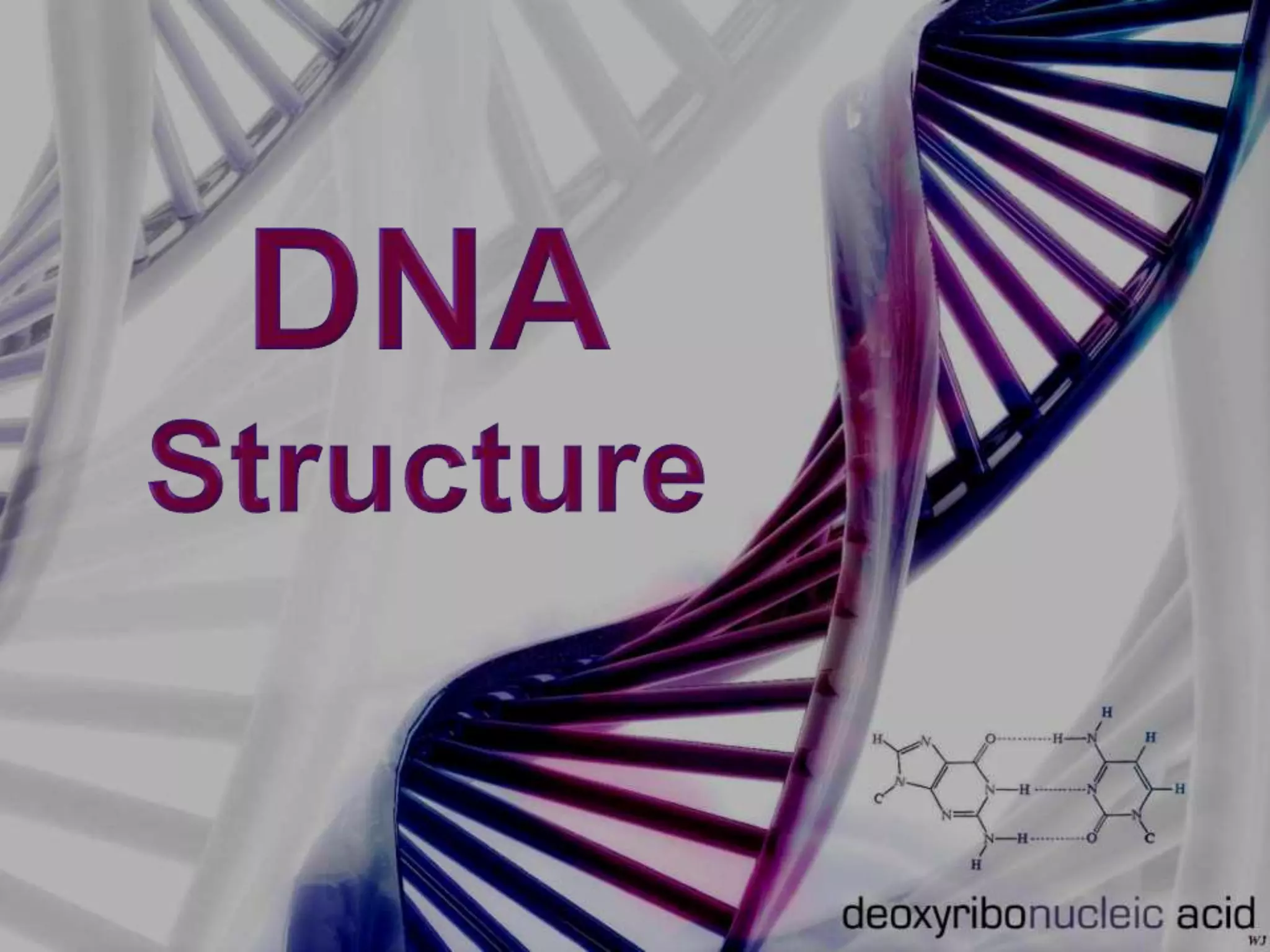
DNA stands for
Deoxyribonucleic acid
DNA Structure
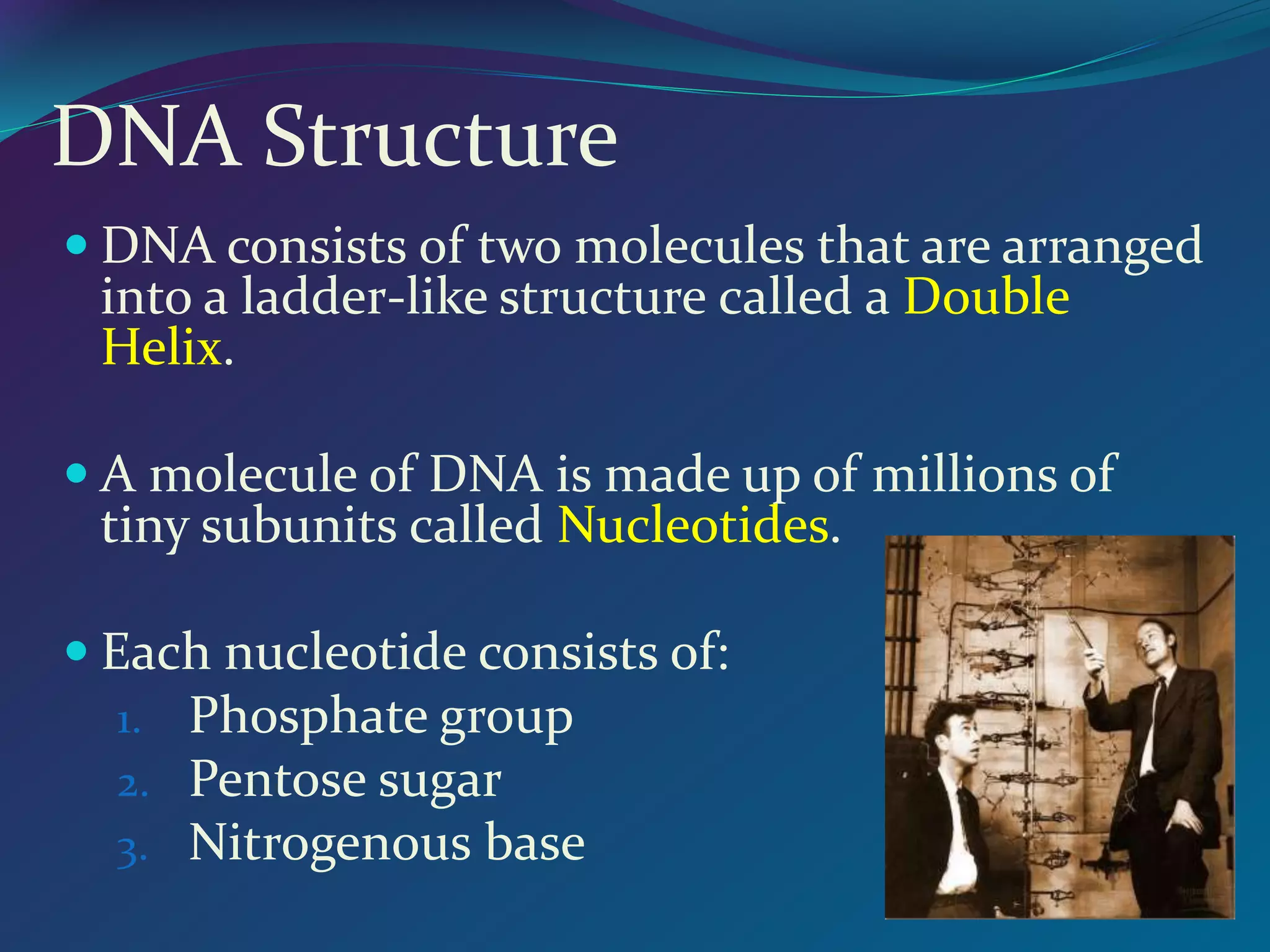
 DNA consists of two molecules that are arranged
into a ladder-like structure called a Double
Helix.
 A molecule of DNA is made up of millions of
tiny subunits called Nucleotides.
 Each nucleotide consists of:
1. Phosphate group
2. Pentose sugar
3. Nitrogenous base
Nucleotides
Phosphate
Pentose
Sugar
Nitrogenous
Base
Nucleotides
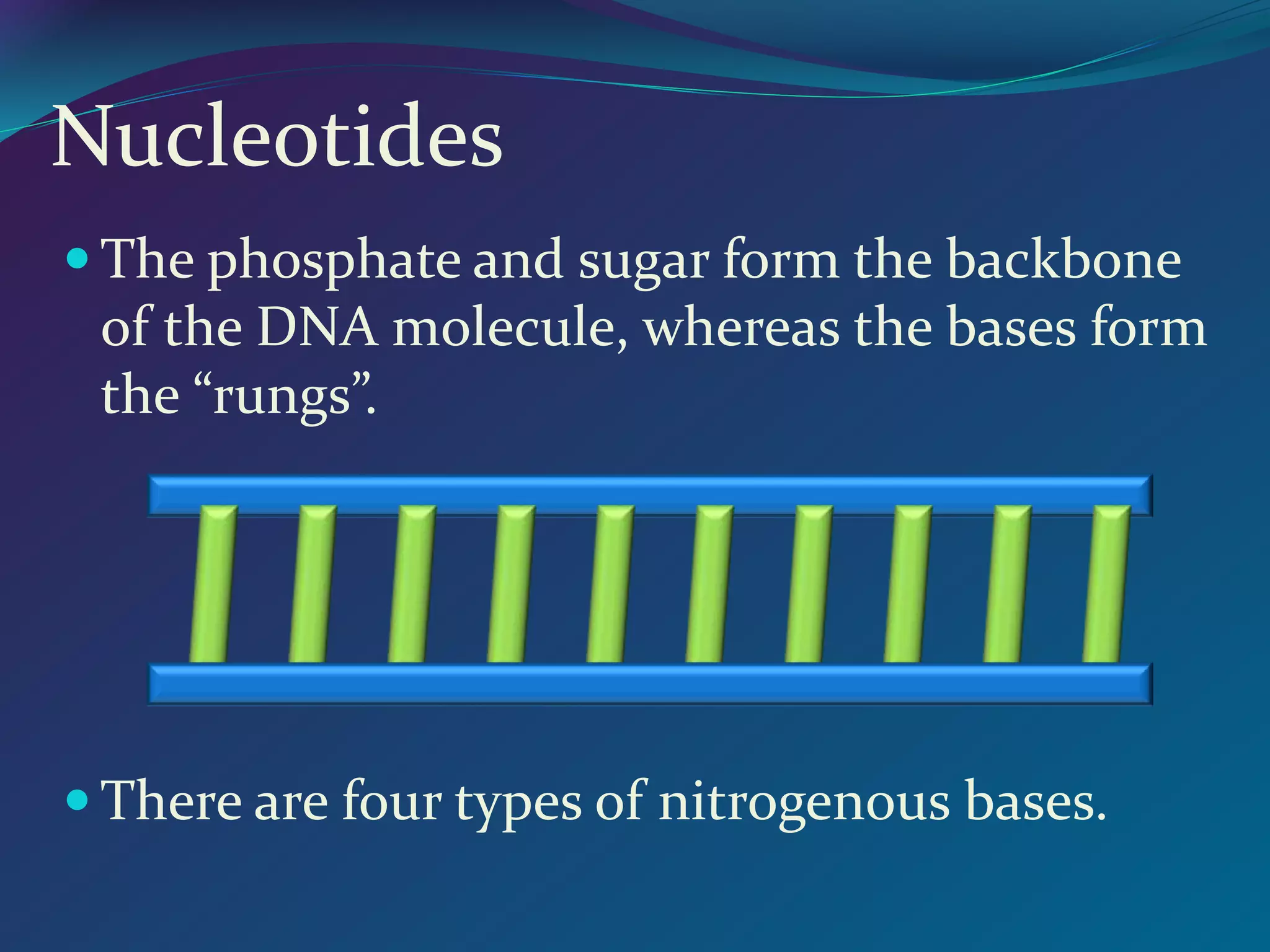
 The phosphate and sugar form the backbone
of the DNA molecule, whereas the bases form
the “rungs”.
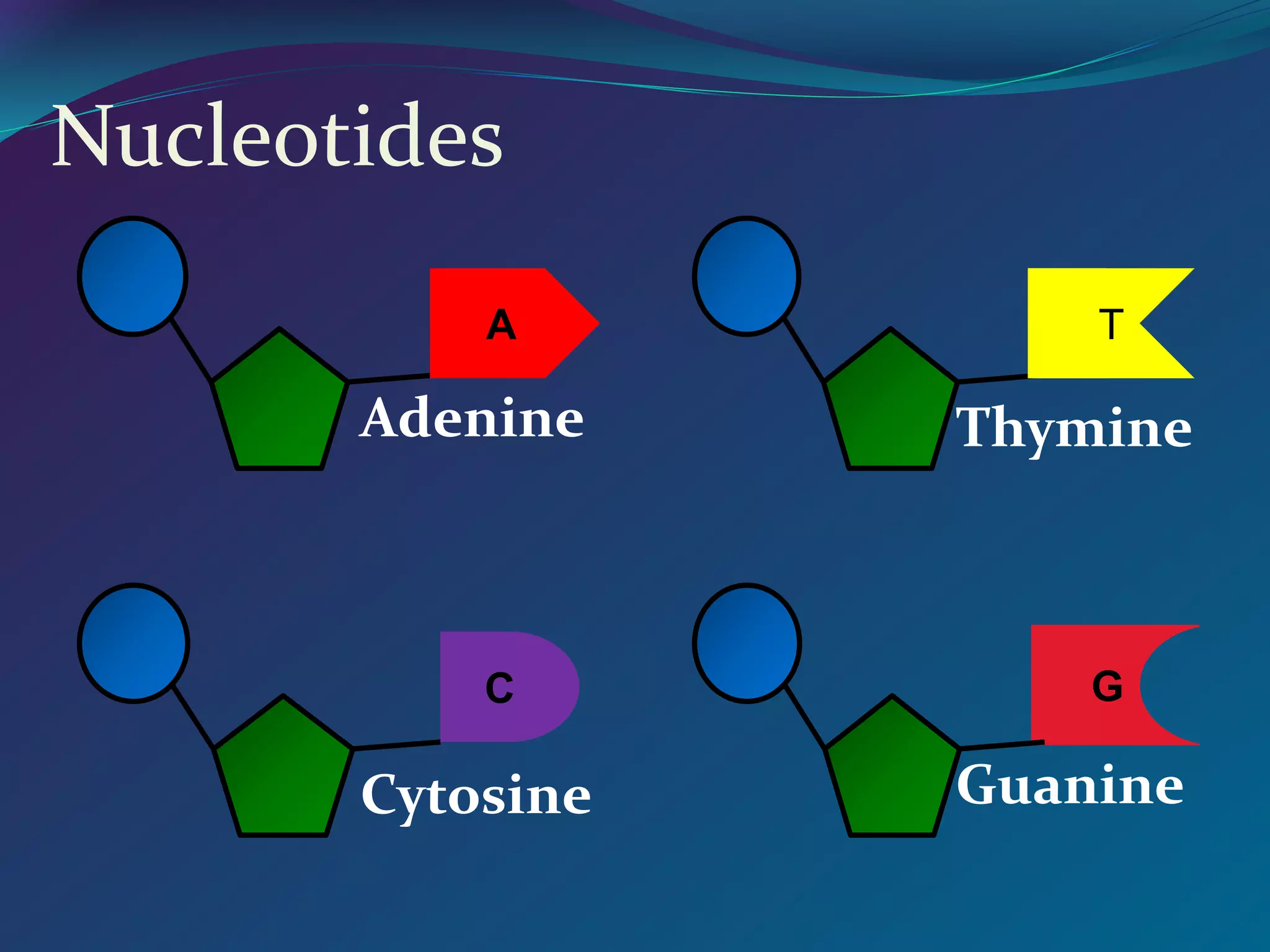
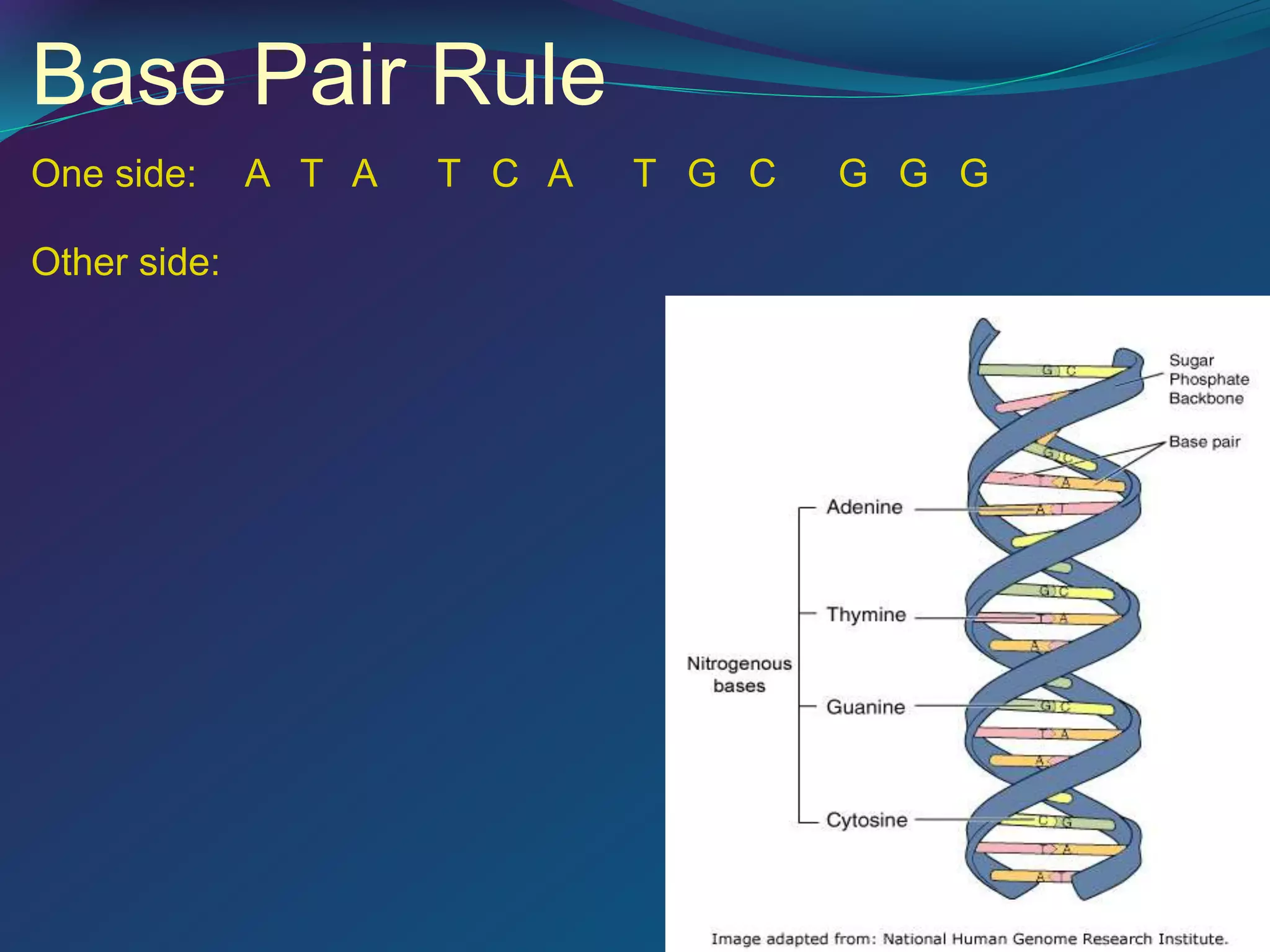
 There are four types of nitrogenous bases.
Nucleotides
A
Adenine
T
Thymine
G
Guanine
C
Cytosine
Nucleotides
 Each base will only bond with one other
specific base.
 Adenine (A)
 Thymine (T)
 Cytosine (C)
 Guanine (G)
Form a base pair.
Form a base pair.
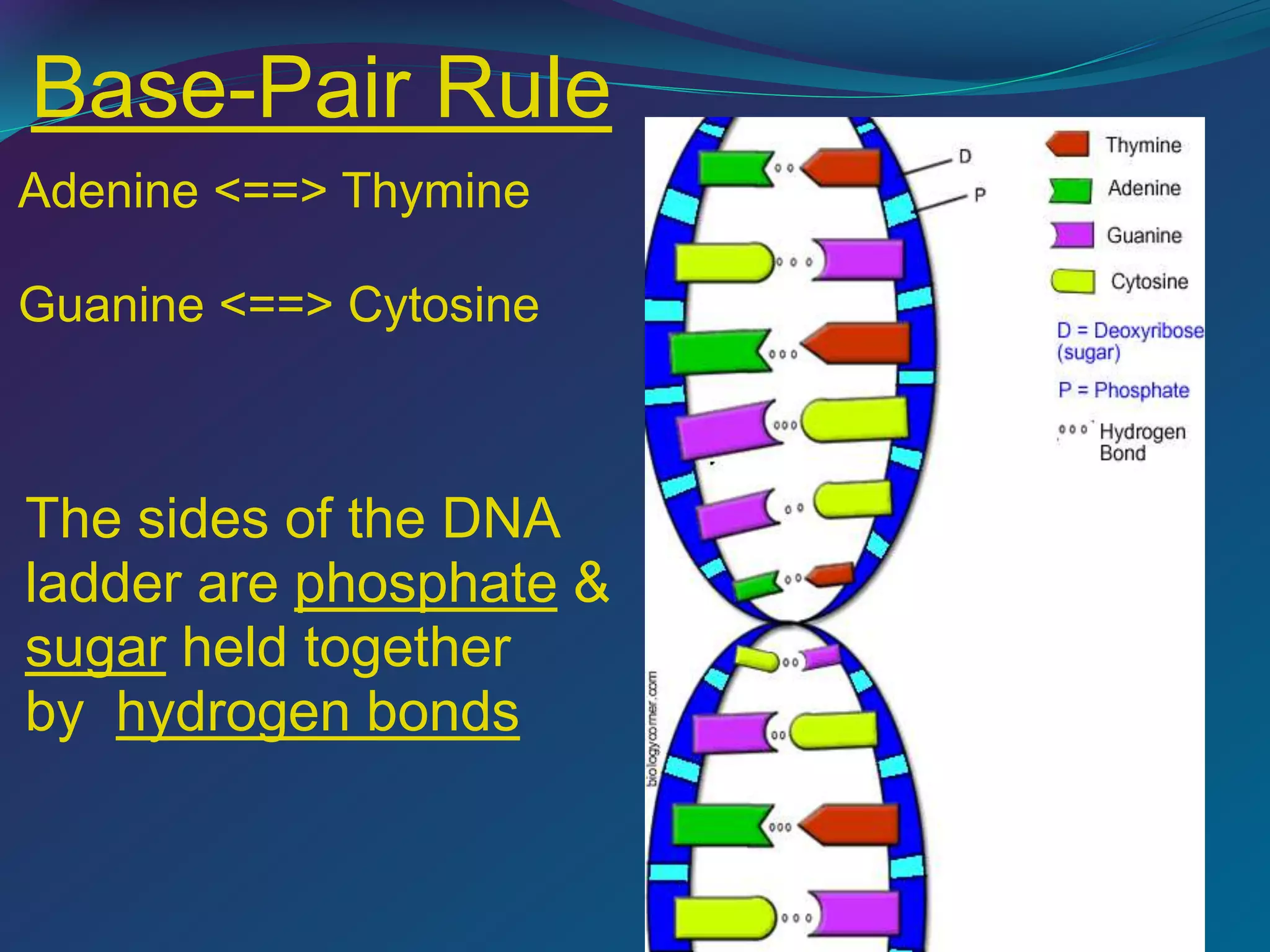
Base-Pair Rule
Adenine <==> Thymine
Guanine <==> Cytosine
The sides of the DNA
ladder are phosphate &
sugar held together
by hydrogen bonds
DNA Structure
 Because of this complementary base pairing,
the order of the bases in one strand
determines the order of the bases in the other
strand.
G
G
A
T
T
A
A
C
T
G
C
A
T
C
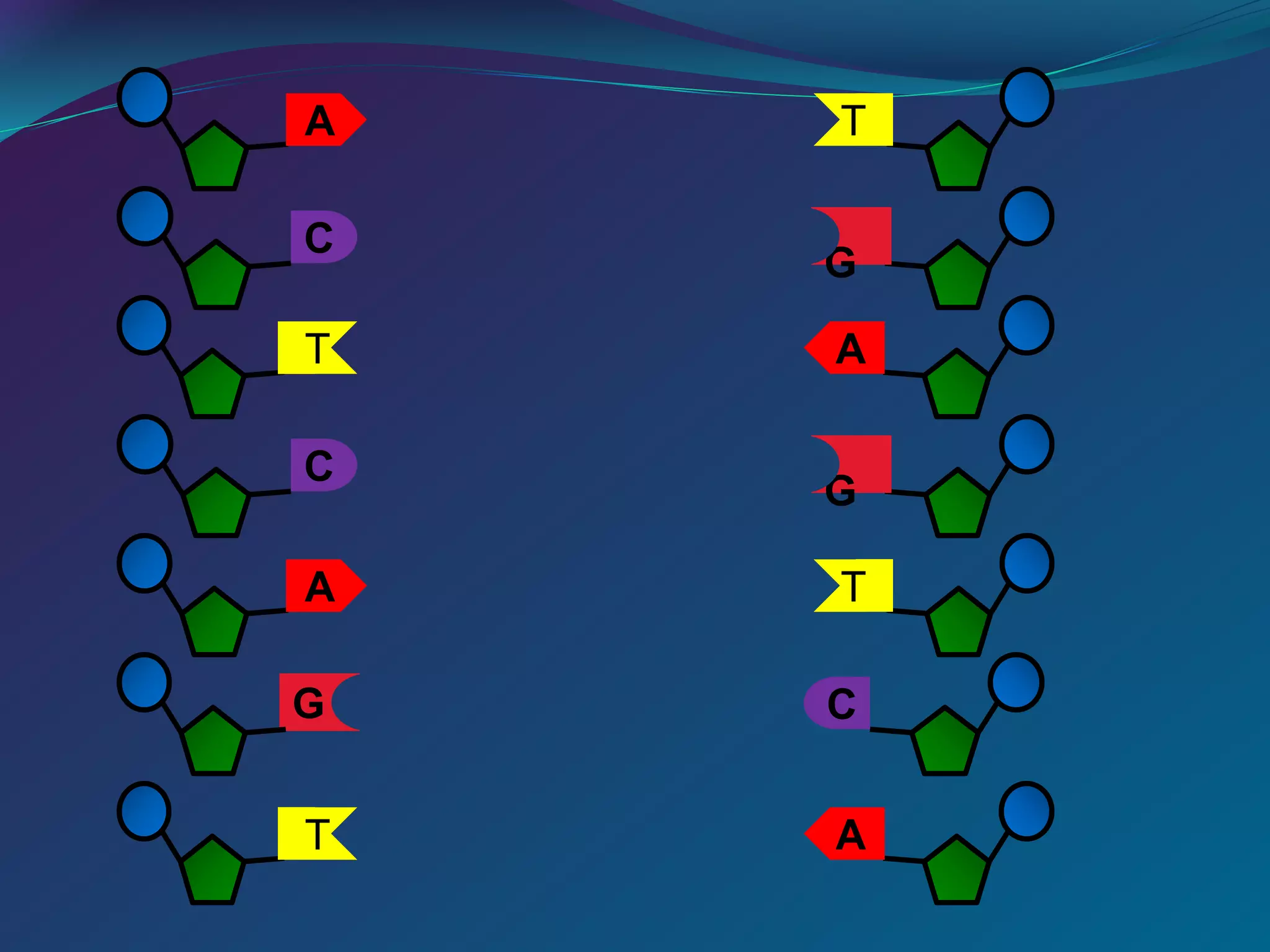
Base Pair Rule
One side: A T A T C A T G C G G G
Other side:
DNA Structure
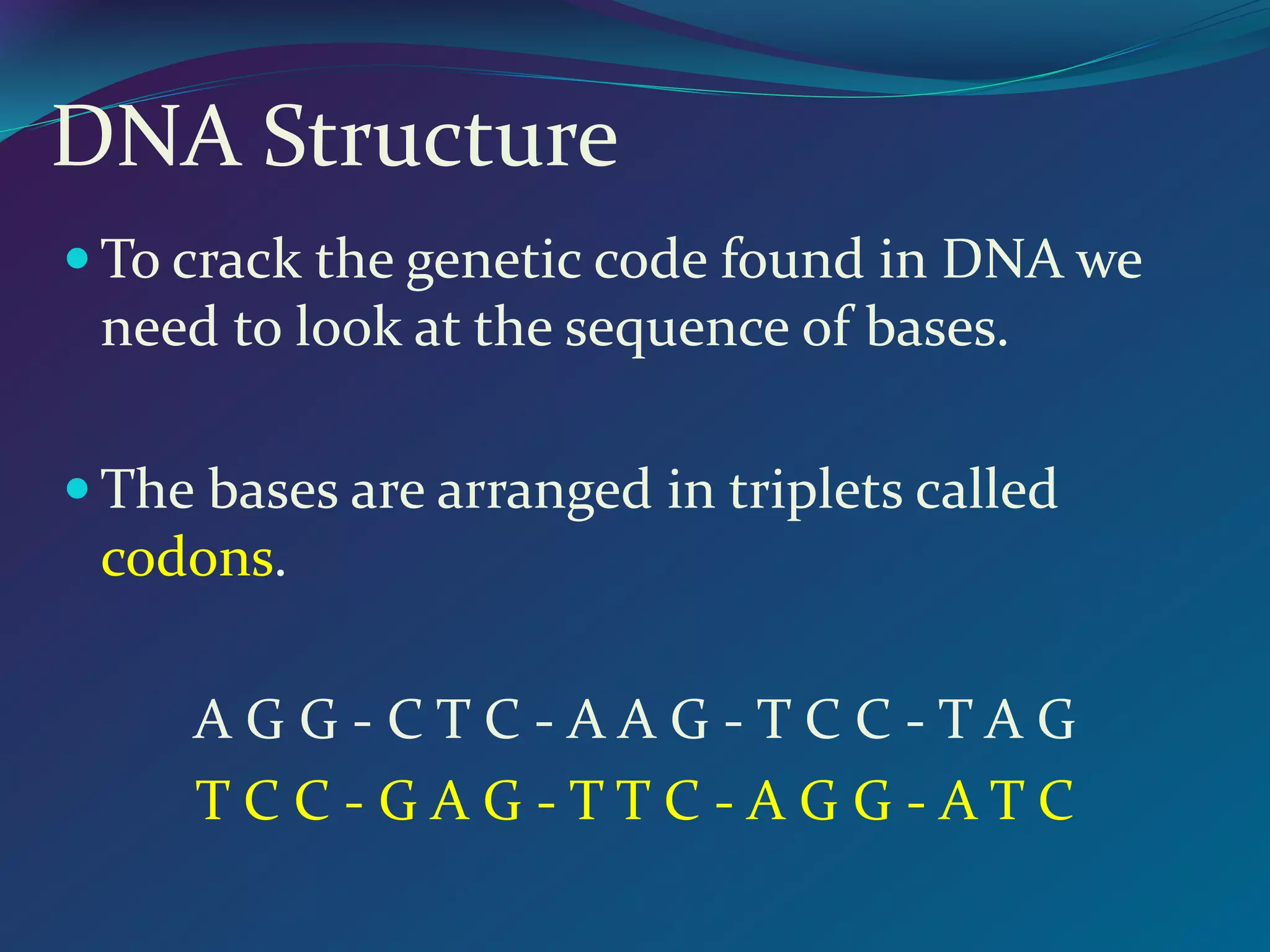
 To crack the genetic code found in DNA we
need to look at the sequence of bases.
 The bases are arranged in triplets called
codons.
A G G - C T C - A A G - T C C - T A G
T C C - G A G - T T C - A G G - A T C
DNA Structure
 A gene is a section of DNA that codes for a
protein.
 Each unique gene has a unique sequence of
bases.
 This unique sequence of bases will code for the
production of a unique protein.
 It is these proteins and combination of proteins
that give us a unique phenotype.
How the Code Works
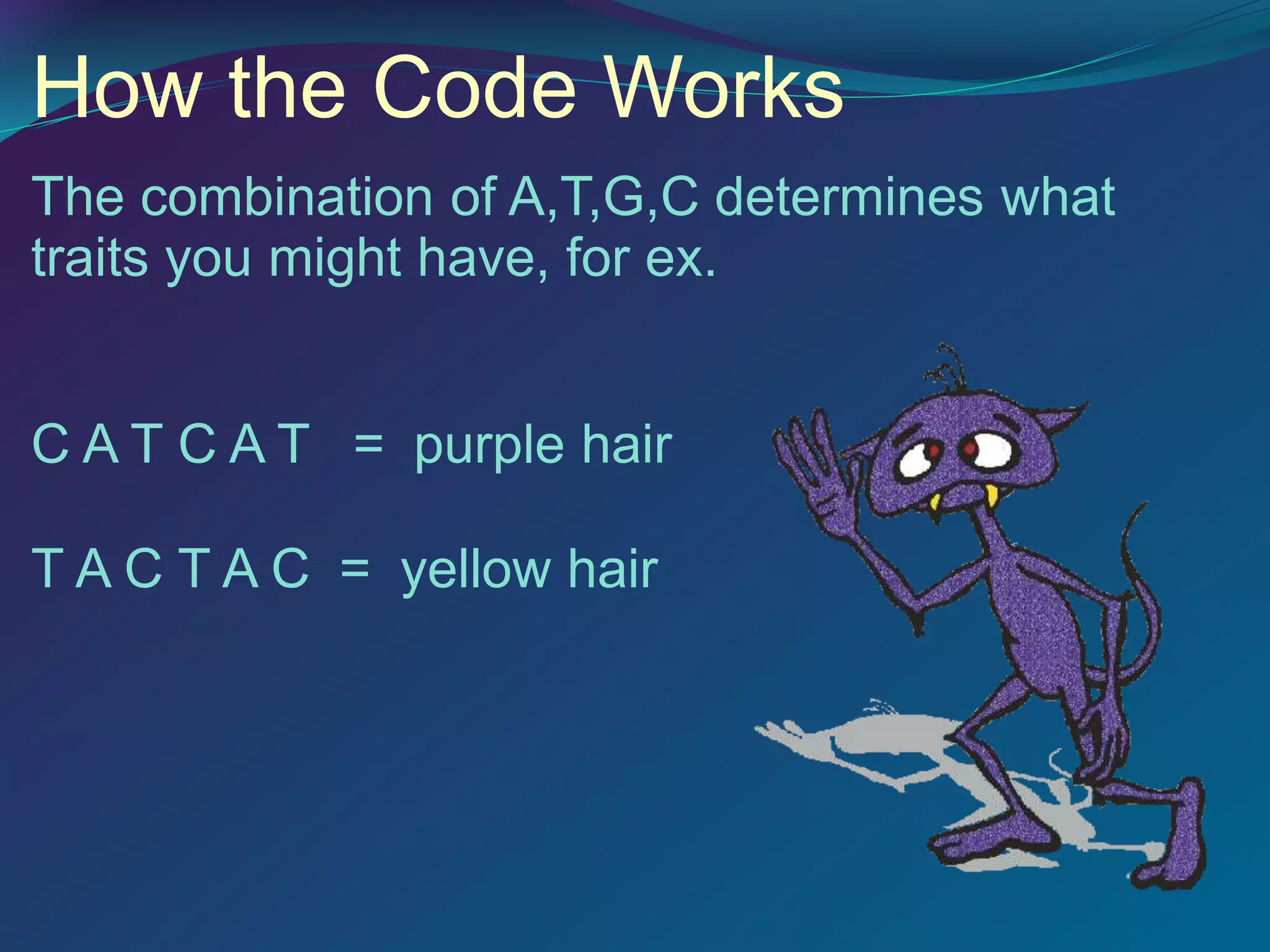
The combination of A,T,G,C determines what
traits you might have, for ex.
C A T C A T = purple hair
T A C T A C = yellow hair
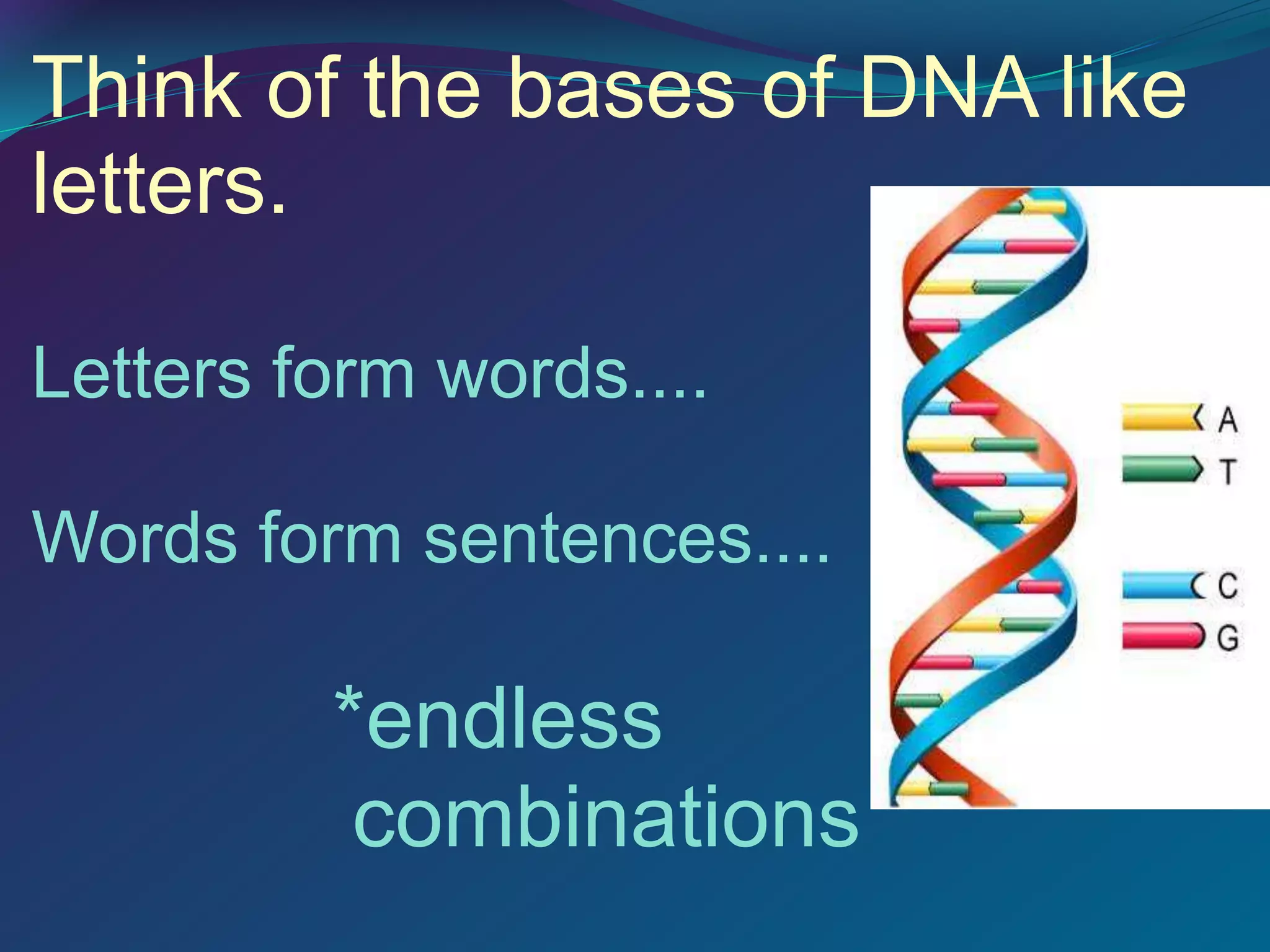
Think of the bases of DNA like
letters.
Letters form words....
Words form sentences....
*endless
combinations
Let's Review What We Know
About DNA
1. DNA stands for: De _____ ribo ______ acid
2. What is the shape of DNA? _______________
3. Adenine always pairs with _______________
4. The sides of the DNA ladder are deoxyribose and _____
5. Guanine always pairs with _____________
6. What is the complimentary sequence: A A T G C A
7. The two sides of DNA are held together by _______
bonds.
8. DNA is composed of repeating subunits called
______________________
9. What are the 4 bases that make up the rungs of the DNA
ladder? _______________________________________
DNA-Structure-PPT (1).ppt

DNA-Structure-PPT (1).ppt

  • 2.
  • 3.
    DNA Structure  DNAconsists of two molecules that are arranged into a ladder-like structure called a Double Helix.  A molecule of DNA is made up of millions of tiny subunits called Nucleotides.  Each nucleotide consists of: 1. Phosphate group 2. Pentose sugar 3. Nitrogenous base
  • 4.
  • 5.
    Nucleotides  The phosphateand sugar form the backbone of the DNA molecule, whereas the bases form the “rungs”.  There are four types of nitrogenous bases.
  • 6.
  • 7.
    Nucleotides  Each basewill only bond with one other specific base.  Adenine (A)  Thymine (T)  Cytosine (C)  Guanine (G) Form a base pair. Form a base pair.
  • 8.
    Base-Pair Rule Adenine <==>Thymine Guanine <==> Cytosine The sides of the DNA ladder are phosphate & sugar held together by hydrogen bonds
  • 9.
    DNA Structure  Becauseof this complementary base pairing, the order of the bases in one strand determines the order of the bases in the other strand.
  • 10.
  • 11.
    Base Pair Rule Oneside: A T A T C A T G C G G G Other side:
  • 12.
    DNA Structure  Tocrack the genetic code found in DNA we need to look at the sequence of bases.  The bases are arranged in triplets called codons. A G G - C T C - A A G - T C C - T A G T C C - G A G - T T C - A G G - A T C
  • 13.
    DNA Structure  Agene is a section of DNA that codes for a protein.  Each unique gene has a unique sequence of bases.  This unique sequence of bases will code for the production of a unique protein.  It is these proteins and combination of proteins that give us a unique phenotype.
  • 14.
    How the CodeWorks The combination of A,T,G,C determines what traits you might have, for ex. C A T C A T = purple hair T A C T A C = yellow hair
  • 15.
    Think of thebases of DNA like letters. Letters form words.... Words form sentences.... *endless combinations
  • 17.
    Let's Review WhatWe Know About DNA 1. DNA stands for: De _____ ribo ______ acid 2. What is the shape of DNA? _______________ 3. Adenine always pairs with _______________ 4. The sides of the DNA ladder are deoxyribose and _____ 5. Guanine always pairs with _____________ 6. What is the complimentary sequence: A A T G C A 7. The two sides of DNA are held together by _______ bonds. 8. DNA is composed of repeating subunits called ______________________ 9. What are the 4 bases that make up the rungs of the DNA ladder? _______________________________________