GRADES 1 to 12
DAILY LESSON
LOG
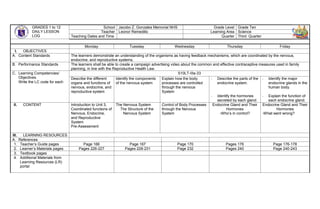
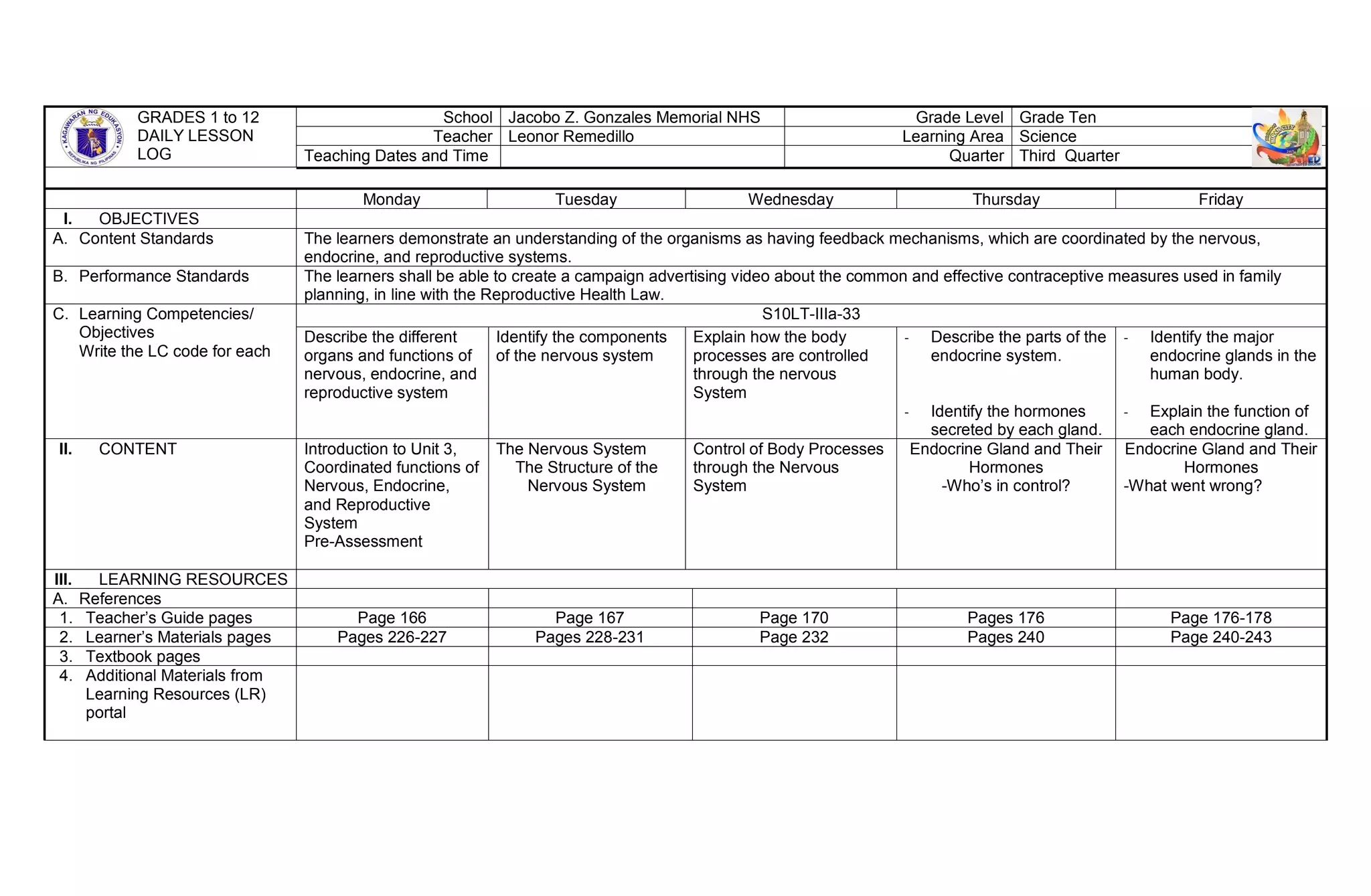
School Jacobo Z. Gonzales Memorial NHS Grade Level Grade Ten
Teacher Leonor Remedillo Learning Area Science
Teaching Dates and Time Quarter Third Quarter
Monday Tuesday Wednesday Thursday Friday
I. OBJECTIVES
A. Content Standards The learners demonstrate an understanding of the organisms as having feedback mechanisms, which are coordinated by the nervous,
endocrine, and reproductive systems.
B. Performance Standards The learners shall be able to create a campaign advertising video about the common and effective contraceptive measures used in family
planning, in line with the Reproductive Health Law.
C. Learning Competencies/
Objectives
Write the LC code for each
S10LT-IIIa-33
Describe the different
organs and functions of
nervous, endocrine, and
reproductive system
Identify the components
of the nervous system
Explain how the body
processes are controlled
through the nervous
System
- Describe the parts of the
endocrine system.
- Identify the hormones
secreted by each gland.
- Identify the major
endocrine glands in the
human body.
- Explain the function of
each endocrine gland.
II. CONTENT Introduction to Unit 3,
Coordinated functions of
Nervous, Endocrine,
and Reproductive
System
Pre-Assessment
The Nervous System
The Structure of the
Nervous System
Control of Body Processes
through the Nervous
System
Endocrine Gland and Their
Hormones
-Who’s in control?
Endocrine Gland and Their
Hormones
-What went wrong?
III. LEARNING RESOURCES
A. References
1. Teacher’s Guide pages Page 166 Page 167 Page 170 Pages 176 Page 176-178
2. Learner’s Materials pages Pages 226-227 Pages 228-231 Page 232 Pages 240 Page 240-243
3. Textbook pages
4. Additional Materials from
Learning Resources (LR)
portal
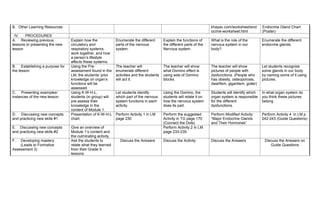
B. Other Learning Resources khayav.com/worksheet/end
ocrine-worksheet.html
Endocrine Gland Chart
(Poster)
IV. PROCEDURES
A. Reviewing previous
lessons or presenting the new
lesson
Explain how the
circulatory and
respiratory systems
work together, and how
a person’s lifestyle
affects these systems.
Enumerate the different
parts of the nervous
system.
Explain the functions of
the different parts of the
Nervous system.
What is the role of the
nervous system in our
body?
Enumerate the different
endocrine glands.
B. Establishing a purpose for
the lesson
Using the Pre-
assessment found in the
LM, the students’ prior
knowledge on organ’s
functions will be
assessed.
The teacher will
enumerate different
activities and the students
will act it.
The teacher will show
what Domino effect is
using sets of Domino
blocks.
The teacher will show
pictures of people with
dysfunctions. (People who
has obesity, osteoporosis,
dwarfism, gigantism, goiter)
Let students recognize
some glands in our body
by naming some of it using
pictures.
C. Presenting examples/
instances of the new lesson
Using K-W-H-L,
students (in group) will
pre-assess their
knowledge in the
content of Module 1.
Let students identify
which part of the nervous
system functions in each
activity.
Using the Domino, the
students will relate it on
how the nervous system
does its part.
Students will identify which
organ system is responsible
for the different
dysfunctions.
In what organ system do
you think these pictures
belong
D. Discussing new concepts
and practicing new skills #1
Presentation of K-W-H-L
chart.
Perform Activity 1 in LM
page 230
Perform the suggested
Activity in TG page 170
(Connect the Dots)
Perform Modified Activity:
“Major Endocrine Glands
and Their Hormones”
Perform Activity 4 in LM p.
242-243 (Guide Questions)
E. Discussing new concepts
and practicing new skills #2
Give an overview of
Module 1’s content and
the culminating activity.
Perform Activity 2 in LM
page 233-235
F. Developing mastery
(Leads to Formative
Assessment 3)
Ask the students to
relate what they learned
from their Grade 9
lessons.
Discuss the Answers Discuss the Activity Discuss the Answers Discuss the Answers on
Guide Questions
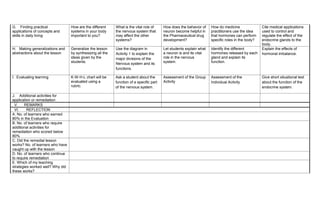
G. Finding practical
applications of concepts and
skills in daily living
How are the different
systems in your body
important to you?
What is the vital role of
the nervous system that
may affect the other
systems?
How does the behavior of
neuron become helpful in
the Pharmaceutical drug
development?
How do medicine
practitioners use the idea
that hormones can perform
specific roles in the body?
Cite medical applications
used to control and
regulate the effect of the
endocrine glands to the
body.
H. Making generalizations and
abstractions about the lesson
Generalize the lesson
by synthesizing all the
ideas given by the
students.
Use the diagram in
Activity 1 to explain the
major divisions of the
Nervous system and its
functions.
Let students explain what
a neuron is and its vital
role in the nervous
system.
Identify the different
hormones released by each
gland and explain its
function.
Explain the effects of
hormonal imbalance.
I. Evaluating learning K-W-H-L chart will be
evaluated using a
rubric.
Ask a student about the
function of a specific part
of the nervous system.
Assessment of the Group
Activity
Assessment of the
Individual Activity
Give short situational test
about the function of the
endocrine system.
J. Additional activities for
application or remediation
V. REMARKS
VI. REFLECTION
A. No. of learners who earned
80% in the Evaluation
B. No. of learners who require
additional activities for
remediation who scored below
80%
C. Did the remedial lesson
works? No. of learners who have
caught up with the lesson
D. No. of learners who continue
to require remediation
E. Which of my teaching
strategies worked well? Why did
these works?
F. What difficulties did I
encounter which my principal or
supervisor can help me solve?
G. What innovations or localized
materials did I use/discover
which I wish to share with other
teachers?

DLL MOD.1 PART 1 3RD QRTR G10.pdf

  • 1.
    GRADES 1 to12 DAILY LESSON LOG School Jacobo Z. Gonzales Memorial NHS Grade Level Grade Ten Teacher Leonor Remedillo Learning Area Science Teaching Dates and Time Quarter Third Quarter Monday Tuesday Wednesday Thursday Friday I. OBJECTIVES A. Content Standards The learners demonstrate an understanding of the organisms as having feedback mechanisms, which are coordinated by the nervous, endocrine, and reproductive systems. B. Performance Standards The learners shall be able to create a campaign advertising video about the common and effective contraceptive measures used in family planning, in line with the Reproductive Health Law. C. Learning Competencies/ Objectives Write the LC code for each S10LT-IIIa-33 Describe the different organs and functions of nervous, endocrine, and reproductive system Identify the components of the nervous system Explain how the body processes are controlled through the nervous System - Describe the parts of the endocrine system. - Identify the hormones secreted by each gland. - Identify the major endocrine glands in the human body. - Explain the function of each endocrine gland. II. CONTENT Introduction to Unit 3, Coordinated functions of Nervous, Endocrine, and Reproductive System Pre-Assessment The Nervous System The Structure of the Nervous System Control of Body Processes through the Nervous System Endocrine Gland and Their Hormones -Who’s in control? Endocrine Gland and Their Hormones -What went wrong? III. LEARNING RESOURCES A. References 1. Teacher’s Guide pages Page 166 Page 167 Page 170 Pages 176 Page 176-178 2. Learner’s Materials pages Pages 226-227 Pages 228-231 Page 232 Pages 240 Page 240-243 3. Textbook pages 4. Additional Materials from Learning Resources (LR) portal
  • 2.
    B. Other LearningResources khayav.com/worksheet/end ocrine-worksheet.html Endocrine Gland Chart (Poster) IV. PROCEDURES A. Reviewing previous lessons or presenting the new lesson Explain how the circulatory and respiratory systems work together, and how a person’s lifestyle affects these systems. Enumerate the different parts of the nervous system. Explain the functions of the different parts of the Nervous system. What is the role of the nervous system in our body? Enumerate the different endocrine glands. B. Establishing a purpose for the lesson Using the Pre- assessment found in the LM, the students’ prior knowledge on organ’s functions will be assessed. The teacher will enumerate different activities and the students will act it. The teacher will show what Domino effect is using sets of Domino blocks. The teacher will show pictures of people with dysfunctions. (People who has obesity, osteoporosis, dwarfism, gigantism, goiter) Let students recognize some glands in our body by naming some of it using pictures. C. Presenting examples/ instances of the new lesson Using K-W-H-L, students (in group) will pre-assess their knowledge in the content of Module 1. Let students identify which part of the nervous system functions in each activity. Using the Domino, the students will relate it on how the nervous system does its part. Students will identify which organ system is responsible for the different dysfunctions. In what organ system do you think these pictures belong D. Discussing new concepts and practicing new skills #1 Presentation of K-W-H-L chart. Perform Activity 1 in LM page 230 Perform the suggested Activity in TG page 170 (Connect the Dots) Perform Modified Activity: “Major Endocrine Glands and Their Hormones” Perform Activity 4 in LM p. 242-243 (Guide Questions) E. Discussing new concepts and practicing new skills #2 Give an overview of Module 1’s content and the culminating activity. Perform Activity 2 in LM page 233-235 F. Developing mastery (Leads to Formative Assessment 3) Ask the students to relate what they learned from their Grade 9 lessons. Discuss the Answers Discuss the Activity Discuss the Answers Discuss the Answers on Guide Questions
  • 3.
    G. Finding practical applicationsof concepts and skills in daily living How are the different systems in your body important to you? What is the vital role of the nervous system that may affect the other systems? How does the behavior of neuron become helpful in the Pharmaceutical drug development? How do medicine practitioners use the idea that hormones can perform specific roles in the body? Cite medical applications used to control and regulate the effect of the endocrine glands to the body. H. Making generalizations and abstractions about the lesson Generalize the lesson by synthesizing all the ideas given by the students. Use the diagram in Activity 1 to explain the major divisions of the Nervous system and its functions. Let students explain what a neuron is and its vital role in the nervous system. Identify the different hormones released by each gland and explain its function. Explain the effects of hormonal imbalance. I. Evaluating learning K-W-H-L chart will be evaluated using a rubric. Ask a student about the function of a specific part of the nervous system. Assessment of the Group Activity Assessment of the Individual Activity Give short situational test about the function of the endocrine system. J. Additional activities for application or remediation V. REMARKS VI. REFLECTION A. No. of learners who earned 80% in the Evaluation B. No. of learners who require additional activities for remediation who scored below 80% C. Did the remedial lesson works? No. of learners who have caught up with the lesson D. No. of learners who continue to require remediation E. Which of my teaching strategies worked well? Why did these works?
  • 4.
    F. What difficultiesdid I encounter which my principal or supervisor can help me solve? G. What innovations or localized materials did I use/discover which I wish to share with other teachers?