Quick Sort
Using
Divide And Conquer
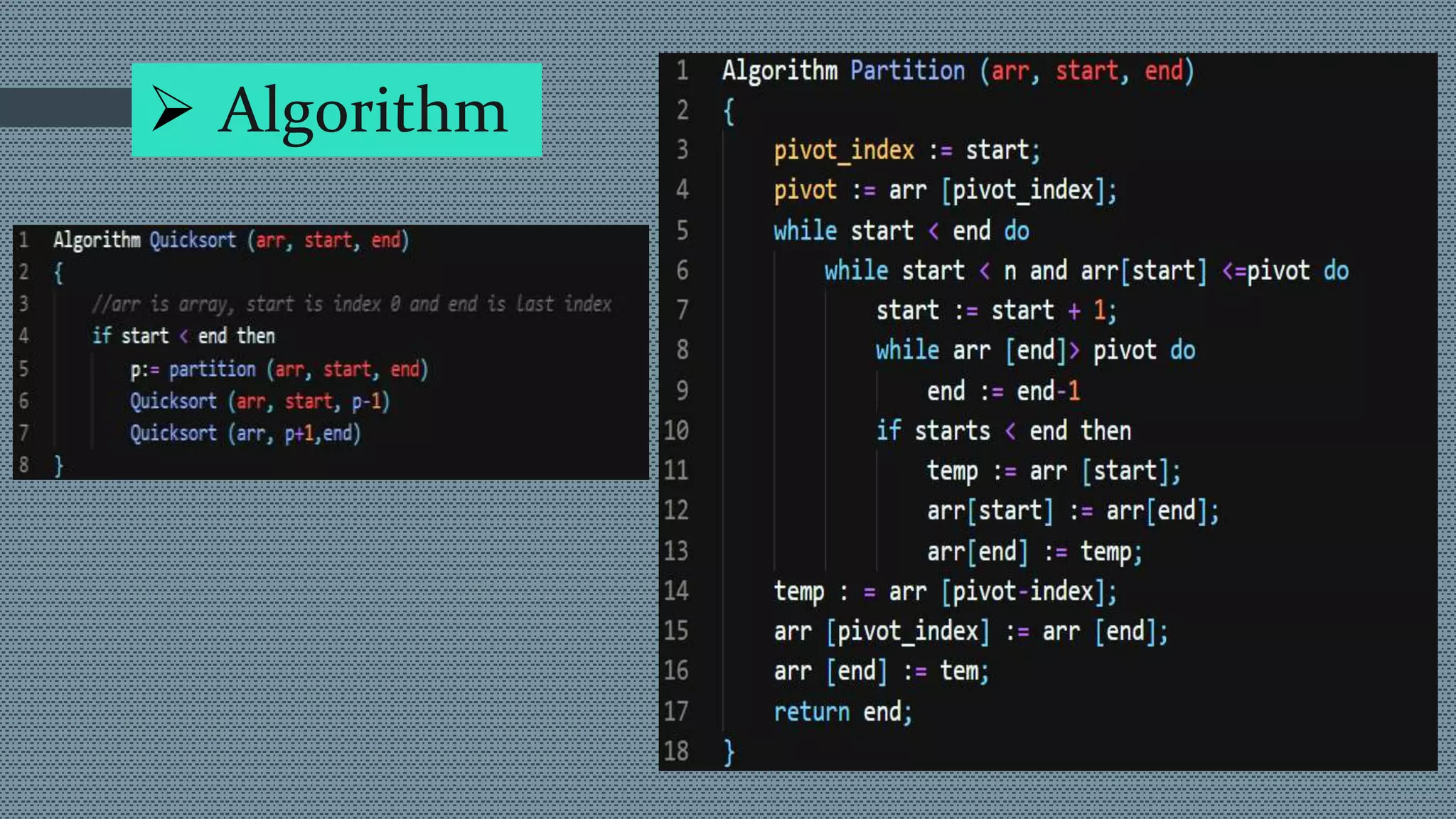
Algorithm
Name : Mrunal Sanjay Patil
Roll No : FYMCA2064
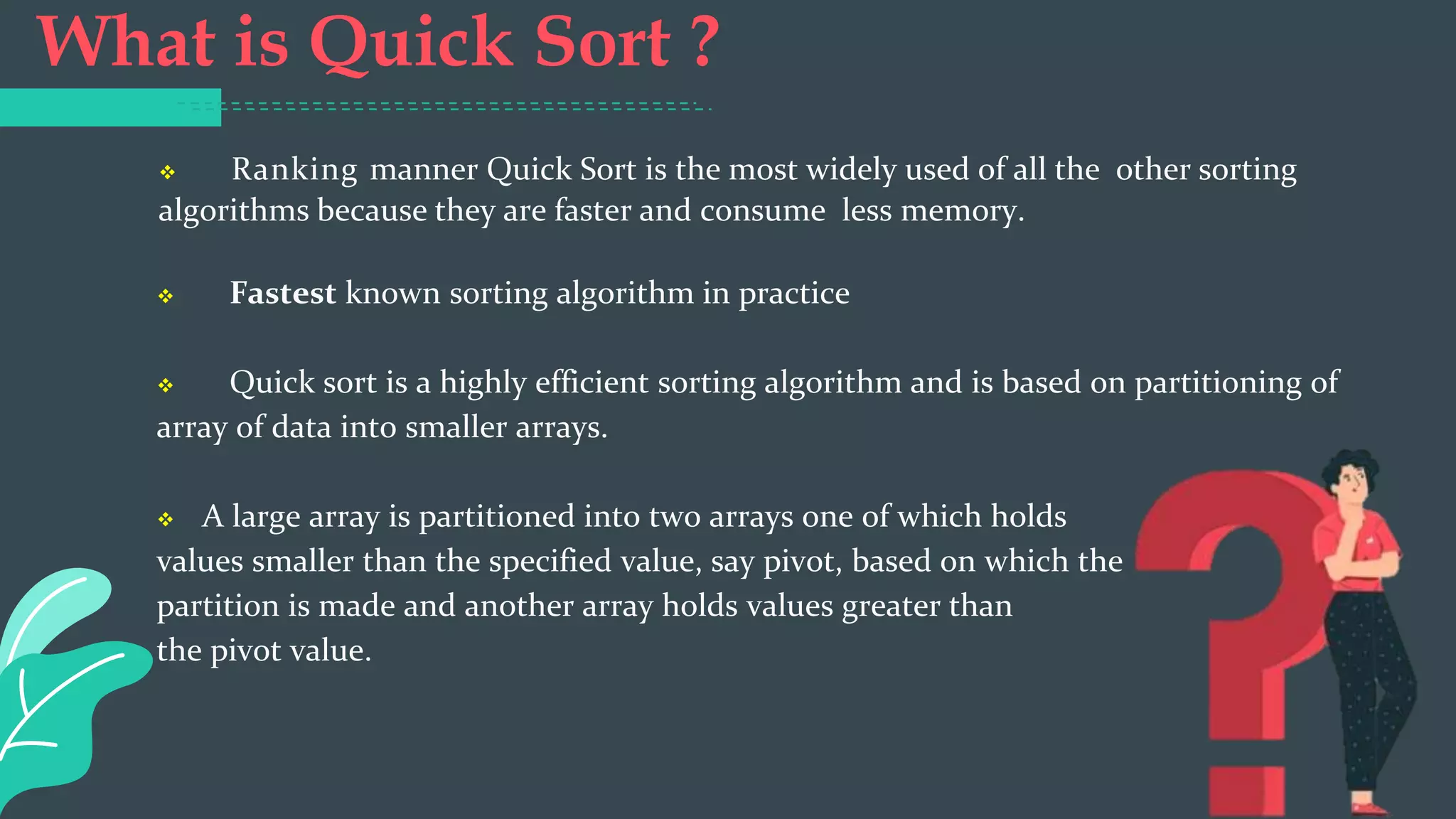
What is Quick Sort ?
 Ranking manner Quick Sort is the most widely used of all the other sorting
algorithms because they are faster and consume less memory.
 Fastest known sorting algorithm in practice
 Quick sort is a highly efficient sorting algorithm and is based on partitioning of
array of data into smaller arrays.
 A large array is partitioned into two arrays one of which holds
values smaller than the specified value, say pivot, based on which the
partition is made and another array holds values greater than
the pivot value.
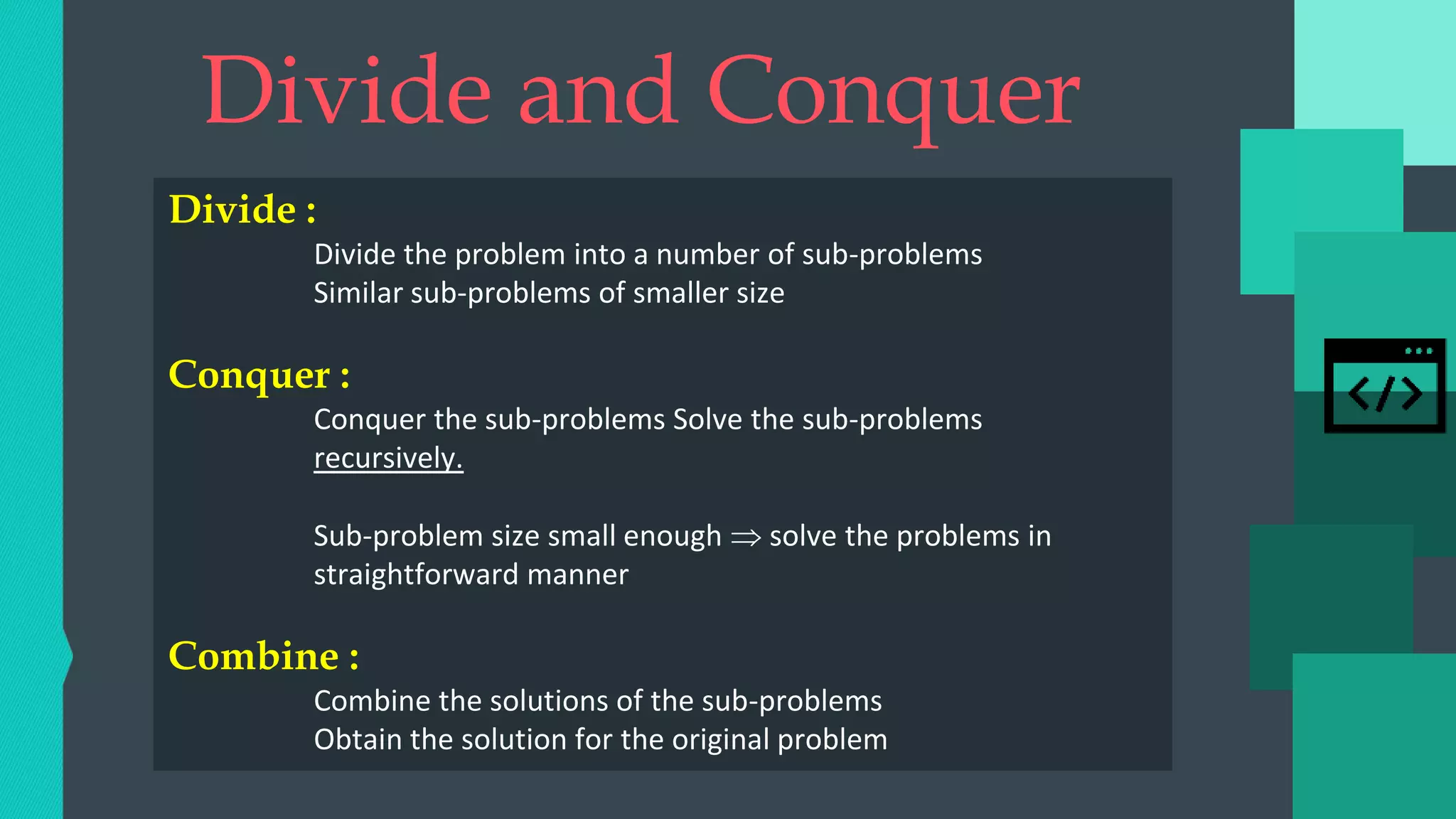
Divide and Conquer
Divide :
Divide the problem into a number of sub-problems
Similar sub-problems of smaller size
Conquer :
Conquer the sub-problems Solve the sub-problems
recursively.
Sub-problem size small enough  solve the problems in
straightforward manner
Combine :
Combine the solutions of the sub-problems
Obtain the solution for the original problem
How we use divide and conquer algorithm for
Quicksort
 Sort an array A[p…r]
 Divide
Partition the array A into 2 subarrays A[p..q] and A[q+1..r], such that each element of
A[p..q] is smaller than or equal to each element in A[q+1..r]
Need to find index q to partition the array
≤
 Conquer
Recursively sort A[p..q] and A[q+1..r] using Quicksort.
First sort A[p..q] and then sort A[q+1..r] individually.
 Combine
Trivial: the arrays are sorted in place
No additional work is required to combine them.
The entire array is now sorted.
≤
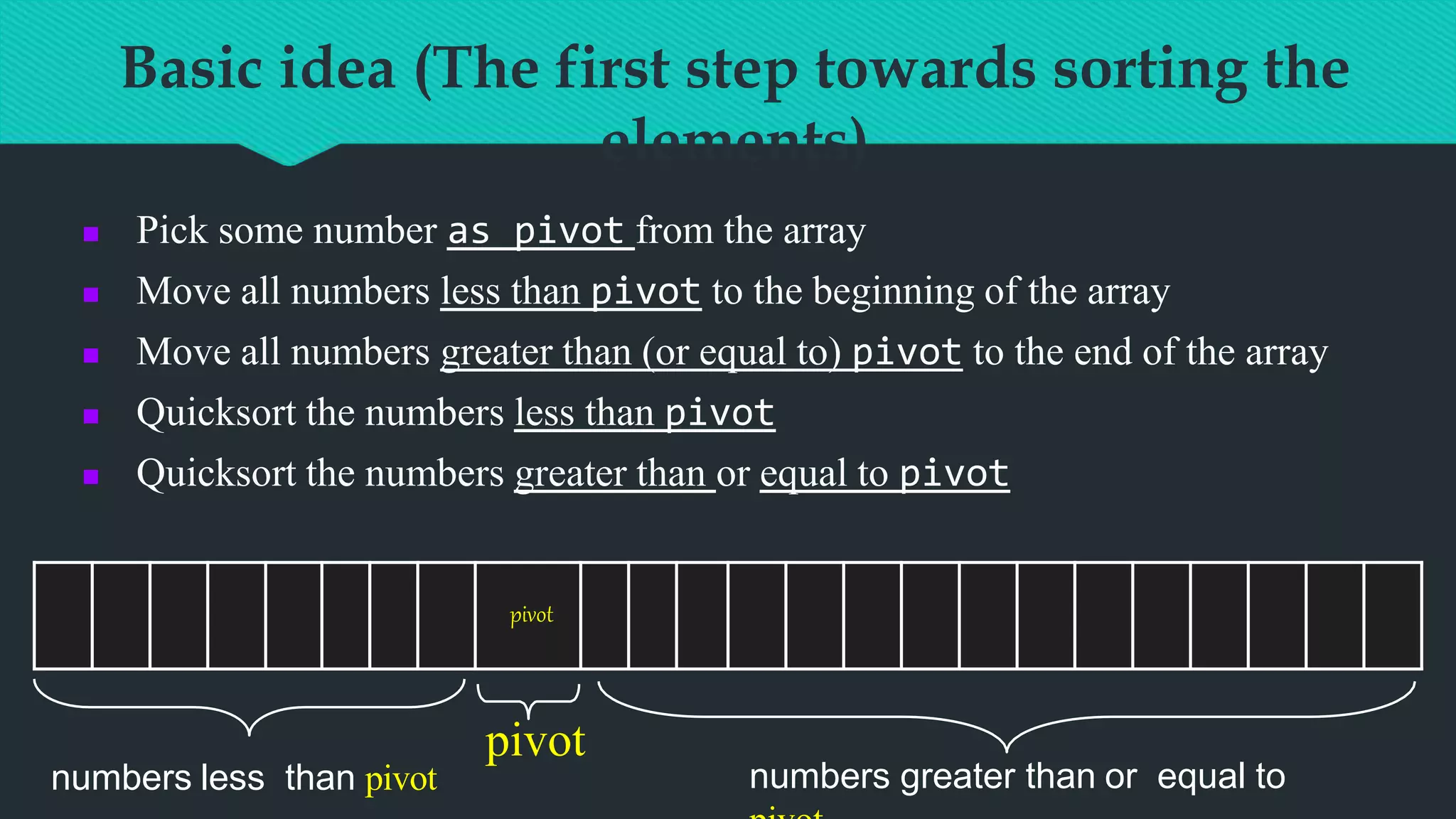
Basic idea (The first step towards sorting the
elements)
 Pick some number as pivot from the array
 Move all numbers less than pivot to the beginning of the array
 Move all numbers greater than (or equal to) pivot to the end of the array
 Quicksort the numbers less than pivot
 Quicksort the numbers greater than or equal to pivot
pivot
pivot
numbers less than pivot numbers greater than or equal to
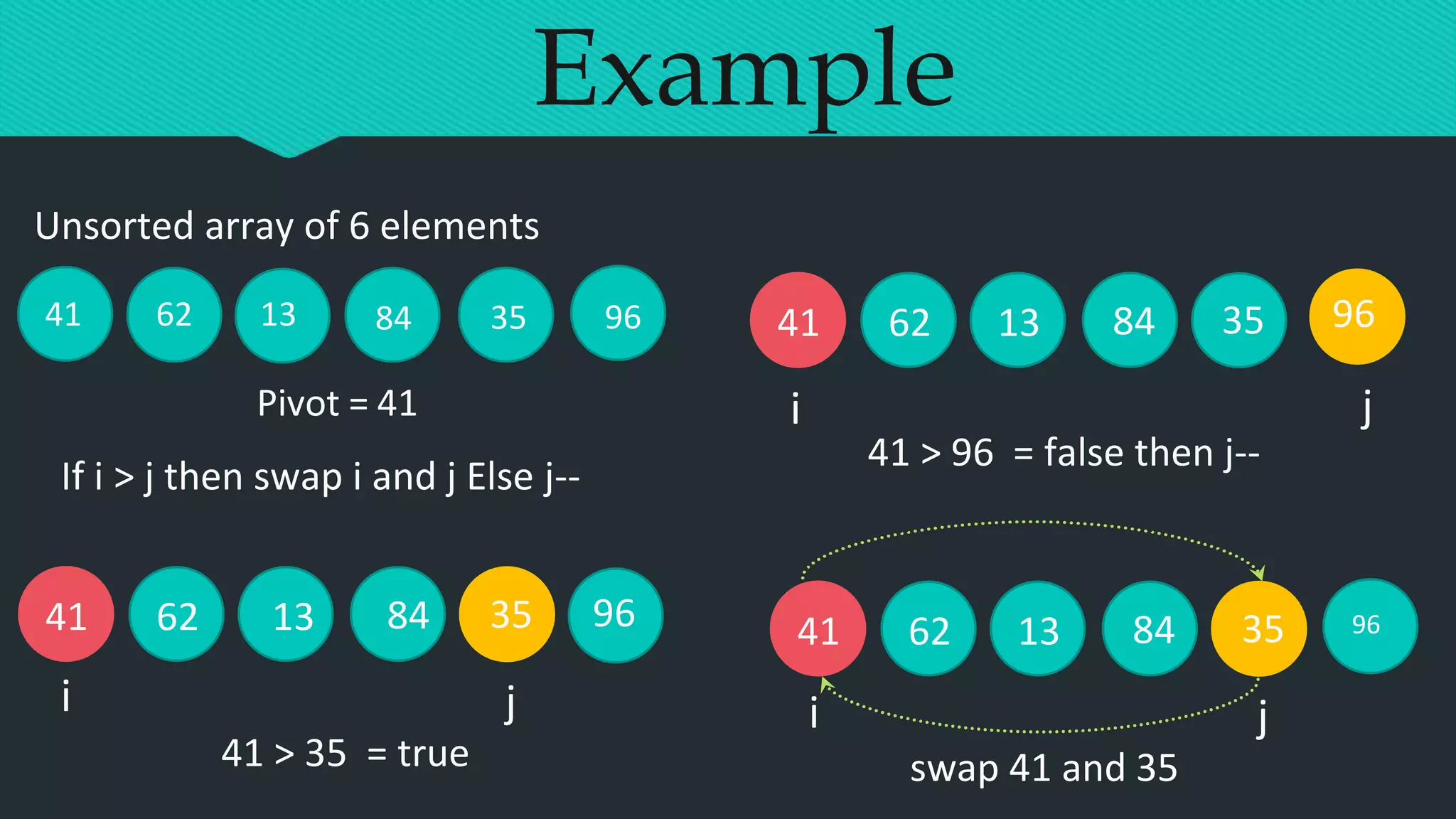
Example
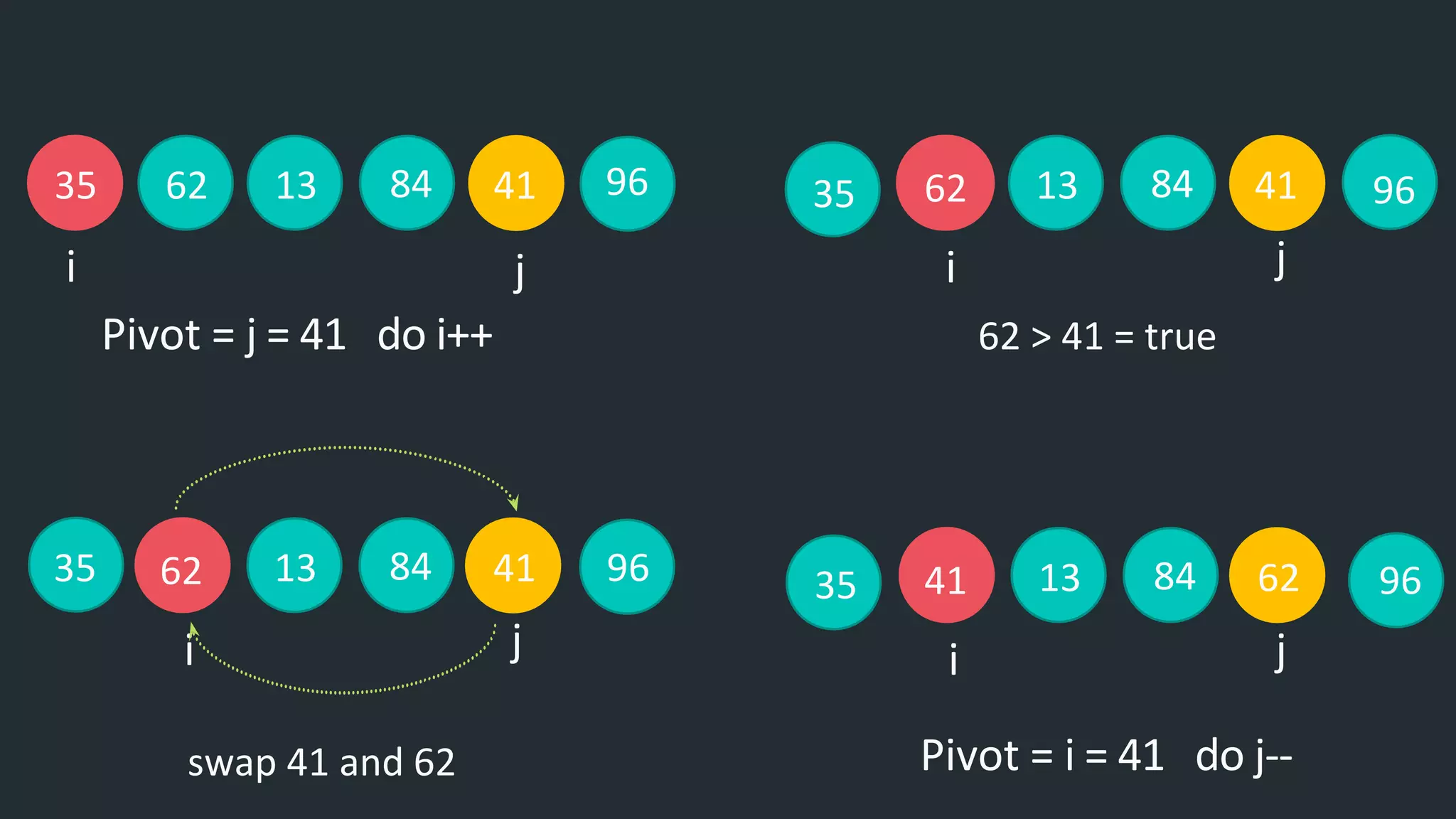
41 62 13 84 35 96
Pivot = 41 i j
35
84
13
62
41
If i > j then swap i and j Else j--
96
35
84
13
62
41
i j
41 > 35 = true
35
84
13
62
41
i j
swap 41 and 35
96
96
Unsorted array of 6 elements
41 > 96 = false then j--
i j
41
84
13
62
35 96
Pivot = j = 41 do i++
i j
62 > 41 = true
j
41
84
13
i
62
swap 41 and 62
j
62
84
13
i
41
Pivot = i = 41 do j--
35 35 96
41
84
13
62 84
62
35 96
96
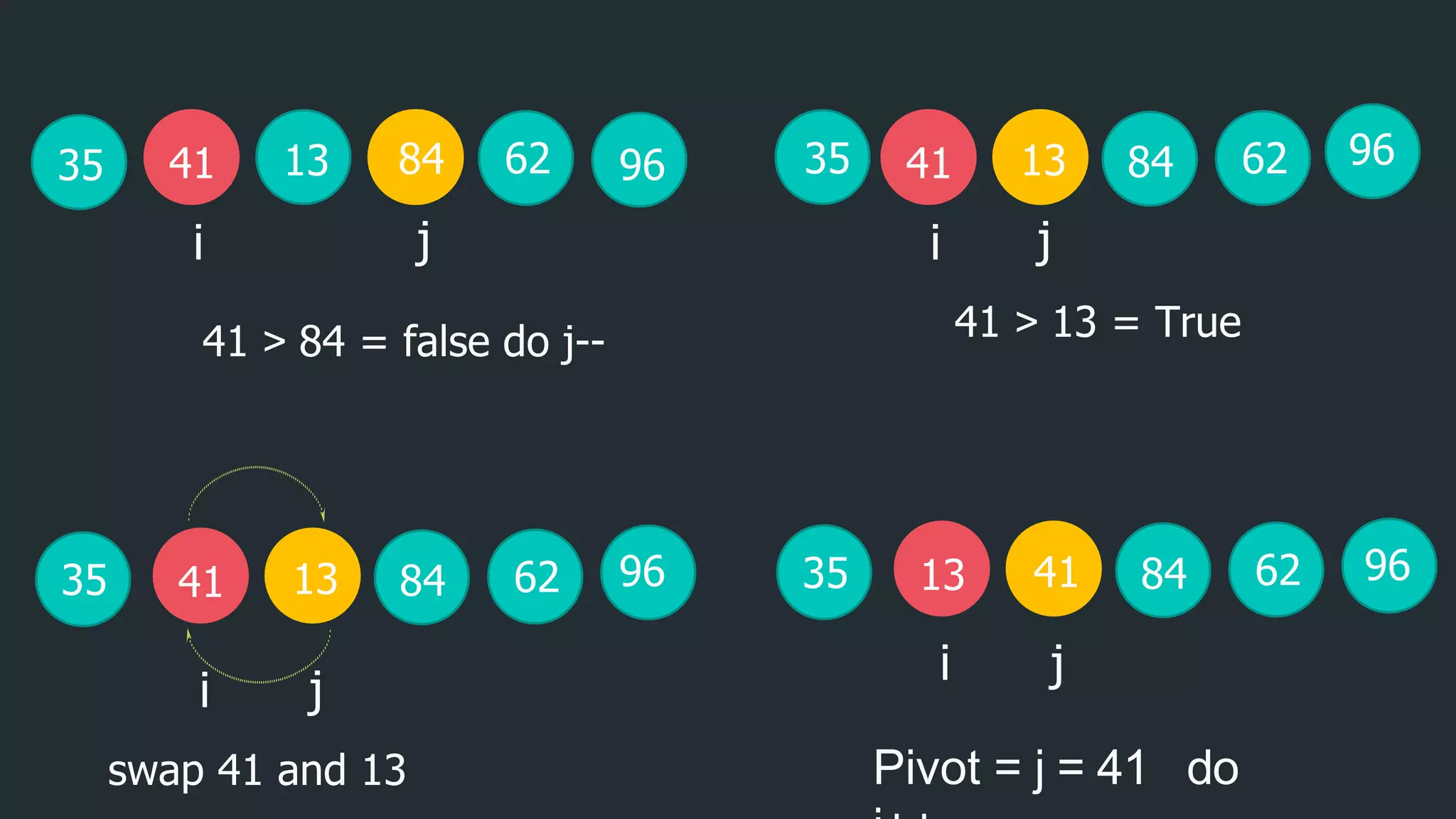
41 > 84 = false do j-- 41 > 13 = True
j
13
i
41 62
84
35
j
84
13
i
41 62
35 96
swap 41 and 13 Pivot = j = 41 do
96
j
41
i
13 62
84
35 96
j
13
i
41 62
84
35 96
i = j
41
13
35
a[0] a[1] a[2] a[3] a[4] a[5]
numbers less than
pivot
numbers greater than or
equal to pivot
Now we sort numbers less than pivot
13
35
41 62
84 96
62
84 96
j
41
i
13 62
84
35 96
13 41 62
84 96
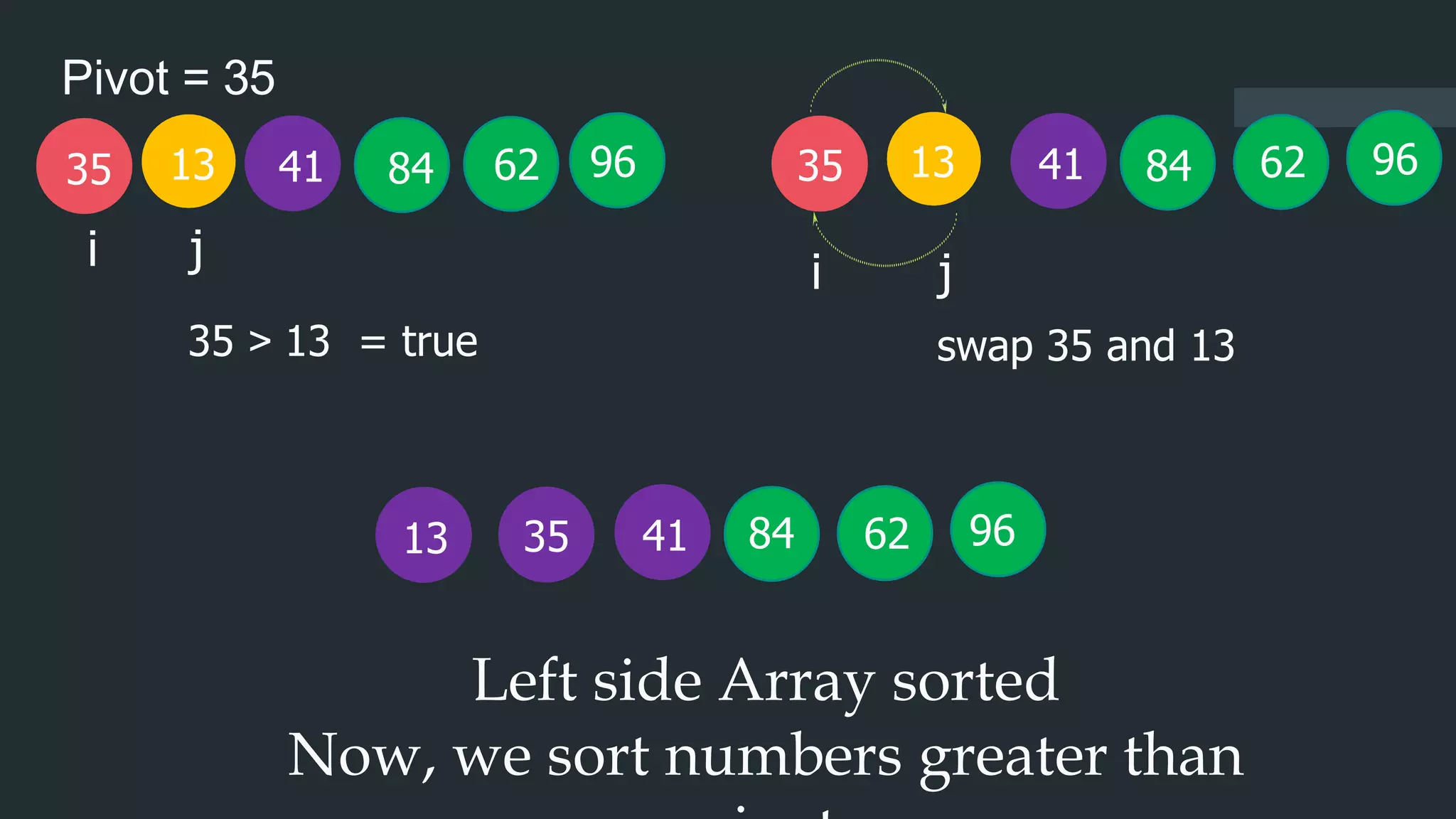
Pivot = 35
j
i
35
35 > 13 = true
Left side Array sorted
Now, we sort numbers greater than
35 41 62
84
13 96
13 41 62
84
j
i
35 96
swap 35 and 13
35 41
13
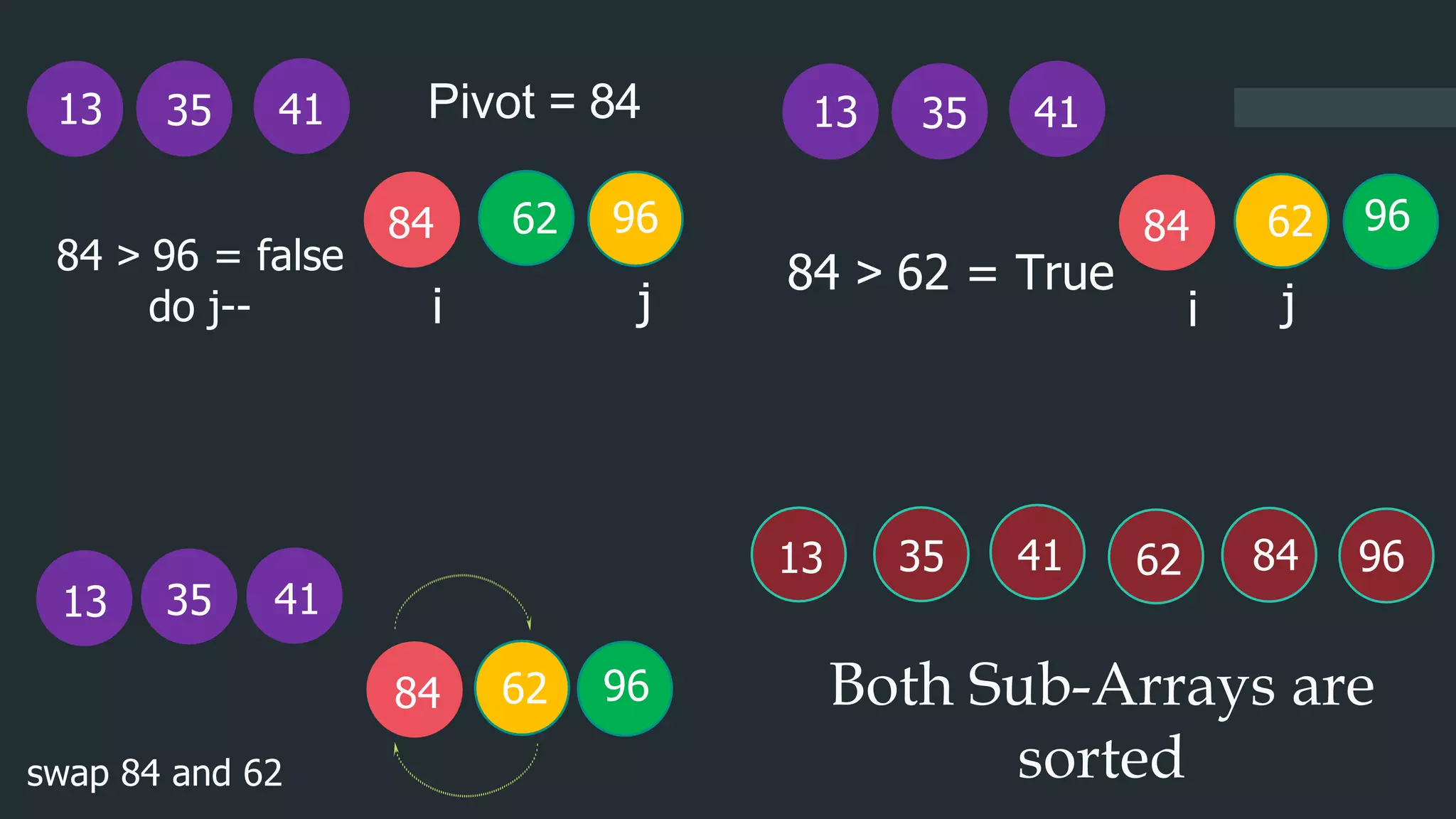
Pivot = 84
84 > 62 = True
35 41
13
swap 84 and 62
Both Sub-Arrays are
sorted
62
35 41
13
j
i
84
84 > 96 = false
do j--
96 62
j
i
84 96
62
84 96
35 41 84
13 62 96
 Algorithm
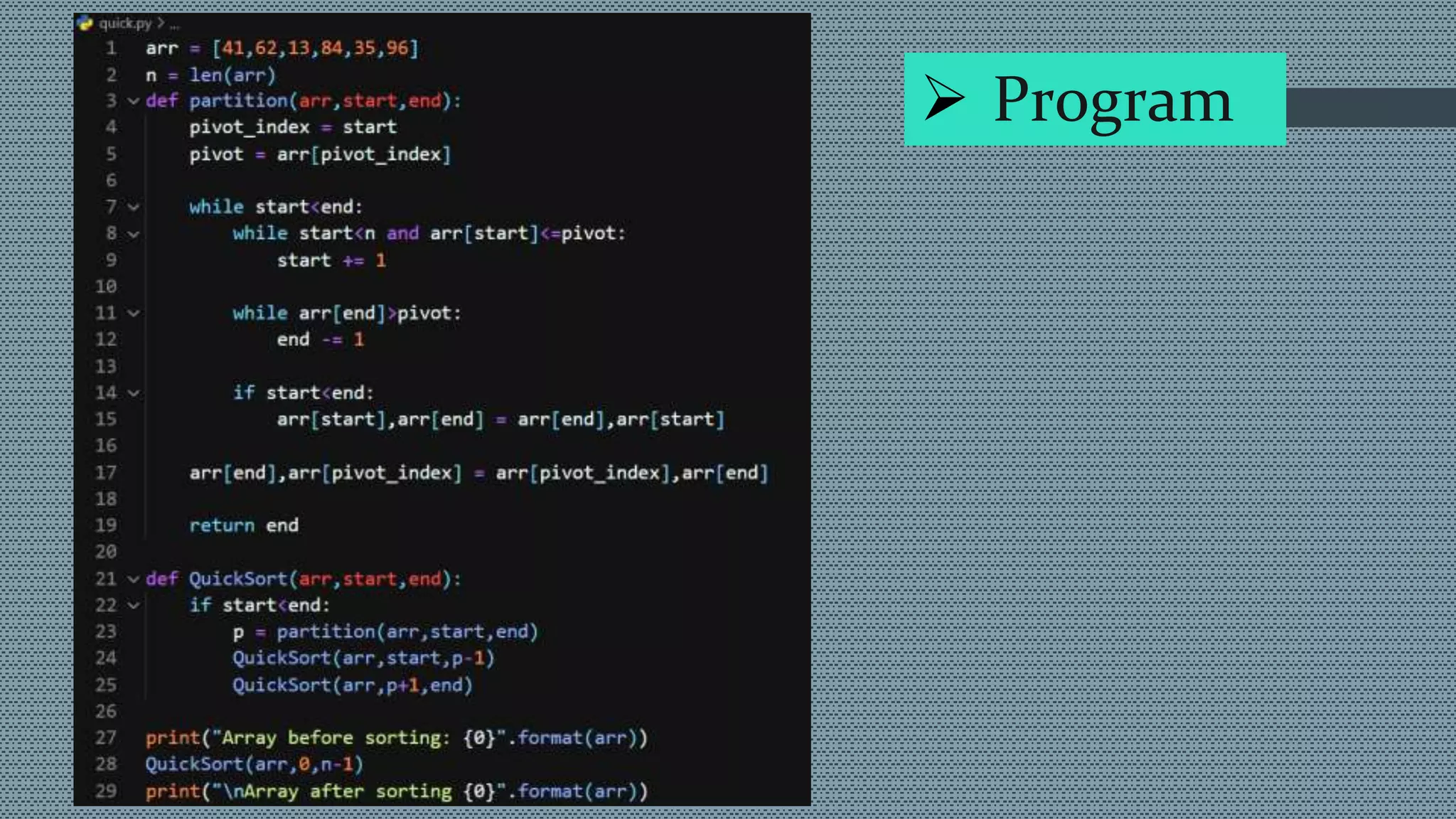
 Program
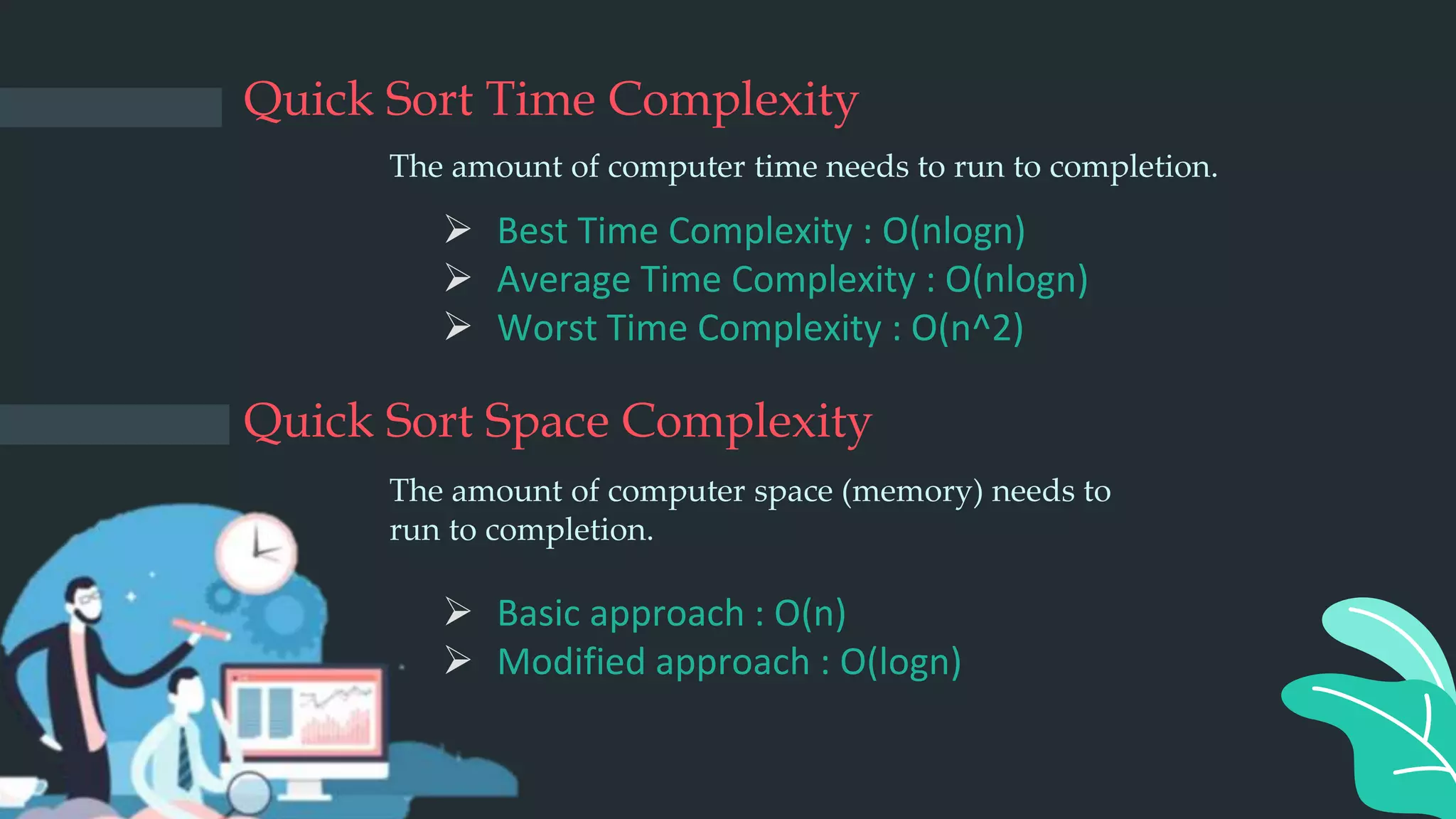
Quick Sort Space Complexity
 Basic approach : O(n)
 Modified approach : O(logn)
Quick Sort Time Complexity
 Best Time Complexity : O(nlogn)
 Average Time Complexity : O(nlogn)
 Worst Time Complexity : O(n^2)
The amount of computer time needs to run to completion.
The amount of computer space (memory) needs to
run to completion.
Divide-and-conquer

Divide-and-conquer

  • 1.
    Quick Sort Using Divide AndConquer Algorithm Name : Mrunal Sanjay Patil Roll No : FYMCA2064
  • 2.
    What is QuickSort ?  Ranking manner Quick Sort is the most widely used of all the other sorting algorithms because they are faster and consume less memory.  Fastest known sorting algorithm in practice  Quick sort is a highly efficient sorting algorithm and is based on partitioning of array of data into smaller arrays.  A large array is partitioned into two arrays one of which holds values smaller than the specified value, say pivot, based on which the partition is made and another array holds values greater than the pivot value.
  • 3.
    Divide and Conquer Divide: Divide the problem into a number of sub-problems Similar sub-problems of smaller size Conquer : Conquer the sub-problems Solve the sub-problems recursively. Sub-problem size small enough  solve the problems in straightforward manner Combine : Combine the solutions of the sub-problems Obtain the solution for the original problem
  • 4.
    How we usedivide and conquer algorithm for Quicksort  Sort an array A[p…r]  Divide Partition the array A into 2 subarrays A[p..q] and A[q+1..r], such that each element of A[p..q] is smaller than or equal to each element in A[q+1..r] Need to find index q to partition the array ≤
  • 5.
     Conquer Recursively sortA[p..q] and A[q+1..r] using Quicksort. First sort A[p..q] and then sort A[q+1..r] individually.  Combine Trivial: the arrays are sorted in place No additional work is required to combine them. The entire array is now sorted. ≤
  • 6.
    Basic idea (Thefirst step towards sorting the elements)  Pick some number as pivot from the array  Move all numbers less than pivot to the beginning of the array  Move all numbers greater than (or equal to) pivot to the end of the array  Quicksort the numbers less than pivot  Quicksort the numbers greater than or equal to pivot pivot pivot numbers less than pivot numbers greater than or equal to
  • 7.
    Example 41 62 1384 35 96 Pivot = 41 i j 35 84 13 62 41 If i > j then swap i and j Else j-- 96 35 84 13 62 41 i j 41 > 35 = true 35 84 13 62 41 i j swap 41 and 35 96 96 Unsorted array of 6 elements 41 > 96 = false then j--
  • 8.
    i j 41 84 13 62 35 96 Pivot= j = 41 do i++ i j 62 > 41 = true j 41 84 13 i 62 swap 41 and 62 j 62 84 13 i 41 Pivot = i = 41 do j-- 35 35 96 41 84 13 62 84 62 35 96 96
  • 9.
    41 > 84= false do j-- 41 > 13 = True j 13 i 41 62 84 35 j 84 13 i 41 62 35 96 swap 41 and 13 Pivot = j = 41 do 96 j 41 i 13 62 84 35 96 j 13 i 41 62 84 35 96
  • 10.
    i = j 41 13 35 a[0]a[1] a[2] a[3] a[4] a[5] numbers less than pivot numbers greater than or equal to pivot Now we sort numbers less than pivot 13 35 41 62 84 96 62 84 96 j 41 i 13 62 84 35 96
  • 11.
    13 41 62 8496 Pivot = 35 j i 35 35 > 13 = true Left side Array sorted Now, we sort numbers greater than 35 41 62 84 13 96 13 41 62 84 j i 35 96 swap 35 and 13
  • 12.
    35 41 13 Pivot =84 84 > 62 = True 35 41 13 swap 84 and 62 Both Sub-Arrays are sorted 62 35 41 13 j i 84 84 > 96 = false do j-- 96 62 j i 84 96 62 84 96 35 41 84 13 62 96
  • 13.
  • 14.
  • 15.
    Quick Sort SpaceComplexity  Basic approach : O(n)  Modified approach : O(logn) Quick Sort Time Complexity  Best Time Complexity : O(nlogn)  Average Time Complexity : O(nlogn)  Worst Time Complexity : O(n^2) The amount of computer time needs to run to completion. The amount of computer space (memory) needs to run to completion.