







the global distribution of the
five major religious traditions
Students will:
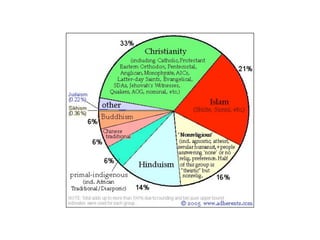
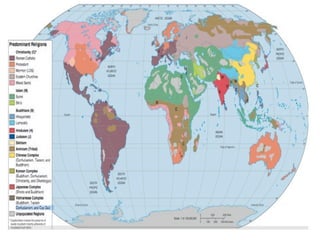
  investigate statistical data of the
current global distribution of the five
      major religious traditions
Investigate
Investigate

 Plan, inquire into
    and draw
conclusions about
Instructions
Instructions
     Summarising Activity
•Where from originally
•Where located now
•Numbers world wide
•Other??
Global distribution
of Buddhism today
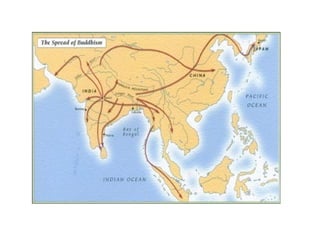
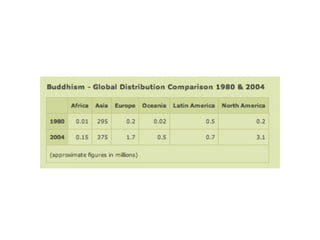
The global Buddhist
   population is located
  predominantly in Asia,
although today Buddhism
is steadily growing in the
    Western countries.
Current distribution of
      Buddhism
Today, Mahayana
  Buddhism is located
 mainly in Japan, Korea,
  Mongolia, and Tibet,
  Vietnam and in some
parts of India and Russia.
The major centres of
Theravada Buddhism are
Burma, Cambodia, Laos,
 Sri Lanka and Thailand.
The origins of
 Christianity
Christianity, founded by
 Jesus of Nazareth, began
in what is known today as
the Middle Eastern region.
  During the life of Jesus,
  Christianity was entirely
 contained in this region.
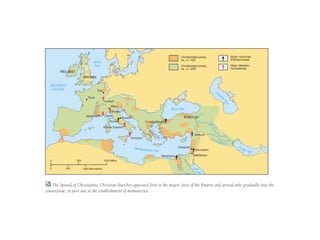
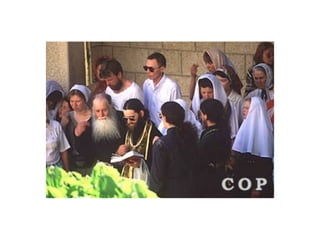
Initially, the followers of Jesus
     regarded themselves as
    belonging to a sect within
   Palestinian Judaism and the
religion remained concentrated
    in the Roman province of
  Palestine and the immediate
        surrounding areas.
Current distribution of
     Christianity
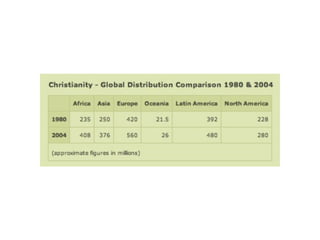
Today, the Central and
North America is home to
   the largest Christian
 populations in the world.
China and South-east Asia
    is the second most
  populous region in the
  world for Christianity.
There is clear trend in the
  recent development of
Christianity which points
  to its steady decline in
the Western world and its
   rapid growth in Asia,
Africa and Latin America.
Origins of Hinduism
Hinduism was the first of
the major Eastern religious
   traditions to emerge.
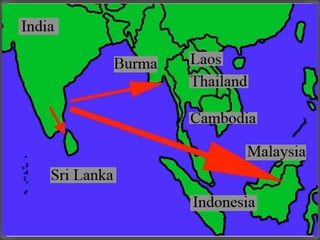
  Hinduism began in the
  Punjab region of north-
 west India, approximately
      4000 years ago.
Current distribution of
      Hinduism
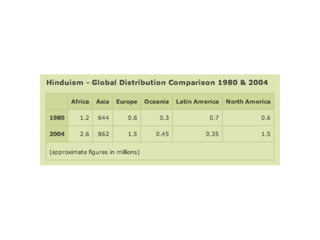
The vast majority of the
Hindu's of the world are found
      in India and while not
   significant in numbers, the
       population of Fiji is
  approximately 50% Hindu in
line with its Indian population.
Neighbouring countries in
the Indian sub-continent,
Nepal, Bangladesh and Sri
 Lanka have large Hindu
  populations, as does
        Indonesia.
The origins of Islam
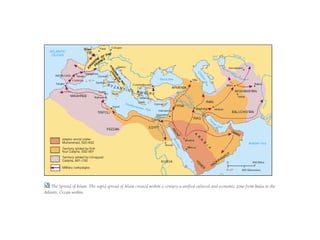
Within a century of the death
  of the Prophet Muhammad ,
the founder of Islam in 632CE,
   it had spread to Palestine,
   Persia, Egypt, Syria, North
    Africa and even as far as
 Spain, which Islam dominated
      until the Middle Ages.
Prior to the death of the
Prophet Muhammad who
 founded the religion in
  622 in Madinah, Islam
 was gathering strength
in the Arabian Peninsula.
In the following centuries,
Islam continued to grow in
 the Middle East, then into
 China, and finally through
    China Islam was also
  brought to the people of
      South East Asia.
Current distribution
       Islam
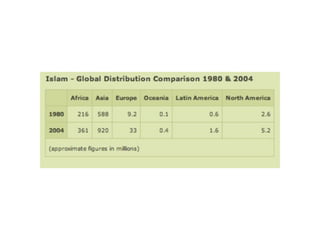
Islam is the second
largest religion in the
world today and is the
fastest growing of the
    five major world
       religions.
While remaining strong
 is its traditional areas
such as Asia, Africa and
the Middle East, Islam is
also growing steadily in
   Western countries.
In Western countries, Islam
seems to appeal particularly
  to poor and marginalised
   groups such as African
   Americans and migrant
communities in Europe and
    the United Kingdom.
Origins of Judaism
Judaism originated in the
beliefs of the Bronze Age
 people, who roamed the
  deserts of the Middle
           East.
Current distribution of
      Judaism
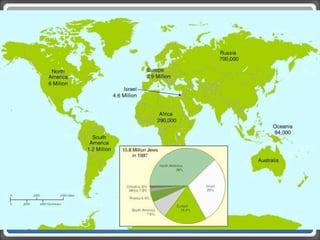
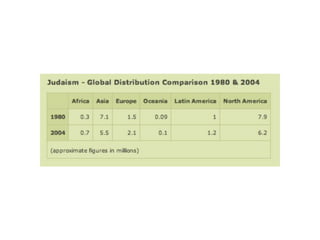
Significant Jewish
  communities exist today in
 many parts of the world as a
 result of Jewish migration to
 many of the countries which
comprised the allied forces in
    the Second World War.
It is often difficult to be sure of
 the exact number of Jews living
    in any given area as Jewish
people are often sensitive about
disclosing their religious identity
to public authorities for fear that
they may be persecuted (present
       time or in the future).
Questions/Tasks
Discuss the relationship
 between materialism,
   secularism and the
  trends in the global
 distribution of the five
     major religious
        traditions.
Use current figures and
   trends to project the
   likely situation in the
global distribution of the
    five major religious
 traditions over the next
          25 years.
๏ end

Distribution Of Religions

  • 1.
    the global distributionof the five major religious traditions
  • 2.
    Students will: investigate statistical data of the current global distribution of the five major religious traditions
  • 3.
  • 4.
    Investigate Plan, inquireinto and draw conclusions about
  • 5.
  • 6.
    Instructions Summarising Activity •Where from originally •Where located now •Numbers world wide •Other??
  • 9.
  • 11.
    The global Buddhist population is located predominantly in Asia, although today Buddhism is steadily growing in the Western countries.
  • 13.
  • 15.
    Today, Mahayana Buddhism is located mainly in Japan, Korea, Mongolia, and Tibet, Vietnam and in some parts of India and Russia.
  • 16.
    The major centresof Theravada Buddhism are Burma, Cambodia, Laos, Sri Lanka and Thailand.
  • 17.
    The origins of Christianity
  • 19.
    Christianity, founded by Jesus of Nazareth, began in what is known today as the Middle Eastern region. During the life of Jesus, Christianity was entirely contained in this region.
  • 21.
    Initially, the followersof Jesus regarded themselves as belonging to a sect within Palestinian Judaism and the religion remained concentrated in the Roman province of Palestine and the immediate surrounding areas.
  • 23.
  • 25.
    Today, the Centraland North America is home to the largest Christian populations in the world. China and South-east Asia is the second most populous region in the world for Christianity.
  • 26.
    There is cleartrend in the recent development of Christianity which points to its steady decline in the Western world and its rapid growth in Asia, Africa and Latin America.
  • 27.
  • 29.
    Hinduism was thefirst of the major Eastern religious traditions to emerge. Hinduism began in the Punjab region of north- west India, approximately 4000 years ago.
  • 31.
  • 33.
    The vast majorityof the Hindu's of the world are found in India and while not significant in numbers, the population of Fiji is approximately 50% Hindu in line with its Indian population.
  • 34.
    Neighbouring countries in theIndian sub-continent, Nepal, Bangladesh and Sri Lanka have large Hindu populations, as does Indonesia.
  • 35.
  • 37.
    Within a centuryof the death of the Prophet Muhammad , the founder of Islam in 632CE, it had spread to Palestine, Persia, Egypt, Syria, North Africa and even as far as Spain, which Islam dominated until the Middle Ages.
  • 39.
    Prior to thedeath of the Prophet Muhammad who founded the religion in 622 in Madinah, Islam was gathering strength in the Arabian Peninsula.
  • 40.
    In the followingcenturies, Islam continued to grow in the Middle East, then into China, and finally through China Islam was also brought to the people of South East Asia.
  • 41.
  • 43.
    Islam is thesecond largest religion in the world today and is the fastest growing of the five major world religions.
  • 44.
    While remaining strong is its traditional areas such as Asia, Africa and the Middle East, Islam is also growing steadily in Western countries.
  • 45.
    In Western countries,Islam seems to appeal particularly to poor and marginalised groups such as African Americans and migrant communities in Europe and the United Kingdom.
  • 46.
  • 48.
    Judaism originated inthe beliefs of the Bronze Age people, who roamed the deserts of the Middle East.
  • 50.
  • 52.
    Significant Jewish communities exist today in many parts of the world as a result of Jewish migration to many of the countries which comprised the allied forces in the Second World War.
  • 54.
    It is oftendifficult to be sure of the exact number of Jews living in any given area as Jewish people are often sensitive about disclosing their religious identity to public authorities for fear that they may be persecuted (present time or in the future).
  • 55.
  • 56.
    Discuss the relationship between materialism, secularism and the trends in the global distribution of the five major religious traditions.
  • 57.
    Use current figuresand trends to project the likely situation in the global distribution of the five major religious traditions over the next 25 years.
  • 58.