Dissecting The PaaS Landscape
       Rishidot Research Webinar
Bookkeeping and Disclaimers
 Speaker’s Twitter handle: @krishnan
 Webinar hashtag: #paasmkt
 This is not deep dive research rather a 30000 feet
  overview on the market. Not all players covered.
 Deploycon 2013 100% off discount code sent to
  webinar attendees
 Research report shared after Deploycon 2013
 Some of the vendors listed in this webinar are either
  Rishidot Research clients or Deploycon sponsors
Plan For The Talk
 Defining PaaS
 PaaS Ecosystem and Spectrum
 PaaS Differentiation
 PaaS and Big Data
 Conclusion
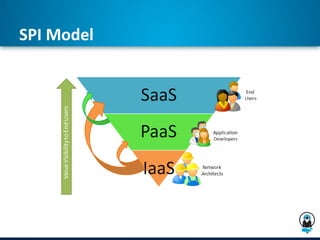
SPI Model
PaaS Definition

PaaS is defined as an elastic on-
demand platform for applications
that completely abstracts away the
underlying infrastructure with the
application scaling seamlessly with
the platform.
P, ugh, aaS?
 The idea of PaaS has evolved
 Enterprise reluctance and diverse needs
  has changed the aaS usage in PaaS
 PaaS  Platform Services where services
  can be hosted or private
  #ongoingdiscussion
 Let us stop thinking about the debate and
  start talking about the usage
What is PaaS and What is Not
PaaS definition has broadened but
certain characteristics hasn’t changed
Application scales with the platform
that offers “infinite” scalability
No human intervention
No hardware in the discussion
What is PaaS and What is Not

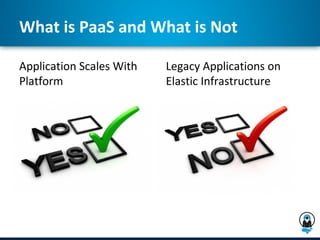
Application Scales With   Legacy Applications on
Platform                  Elastic Infrastructure
Is PaaS Middleware for Cloud?
Why PaaS?
Developers:
   Faster Development and Continuous
    Deployment (Agile)
   Fewer Bugs (Similar environments in Dev,
    Test and Production)
   Richer applications due to add-on services
   Easy seamless collaboration
Why PaaS?
Organizations:
  Platform for services world
  Reduced and efficient operations
  Cost effective IT
  Agility
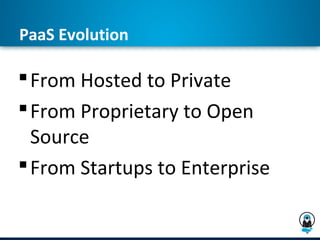
PaaS Evolution

 From Hosted to Private
 From Proprietary to Open
  Source
 From Startups to Enterprise
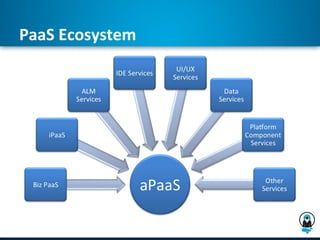
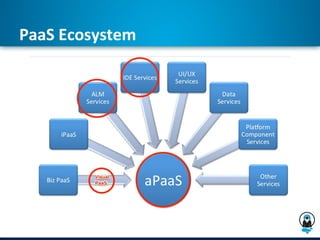
PaaS Ecosystem
PaaS Ecosystem
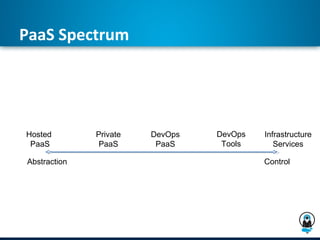
PaaS Spectrum


Hosted        Private   DevOps   DevOps   Infrastructure
 PaaS          PaaS      PaaS     Tools      Services

Abstraction                               Control
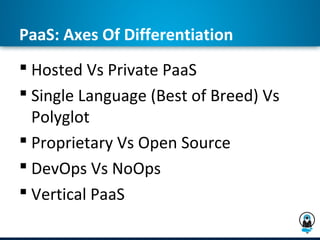
PaaS: Axes Of Differentiation
 Hosted Vs Private PaaS
 Single Language (Best of Breed) Vs
  Polyglot
 Proprietary Vs Open Source
 DevOps Vs NoOps
 Vertical PaaS
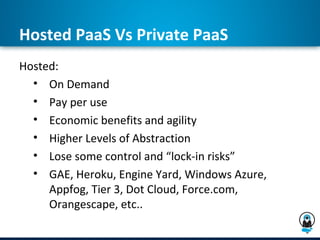
Hosted PaaS Vs Private PaaS
Hosted:
  • On Demand
  • Pay per use
  • Economic benefits and agility
  • Higher Levels of Abstraction
  • Lose some control and “lock-in risks”
  • GAE, Heroku, Engine Yard, Windows Azure,
     Appfog, Tier 3, Dot Cloud, Force.com,
     Orangescape, etc..
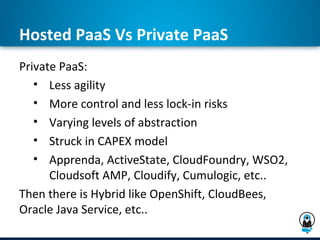
Hosted PaaS Vs Private PaaS
Private PaaS:
   • Less agility
   • More control and less lock-in risks
   • Varying levels of abstraction
   • Struck in CAPEX model
   • Apprenda, ActiveState, CloudFoundry, WSO2,
      Cloudsoft AMP, Cloudify, Cumulogic, etc..
Then there is Hybrid like OpenShift, CloudBees,
Oracle Java Service, etc..
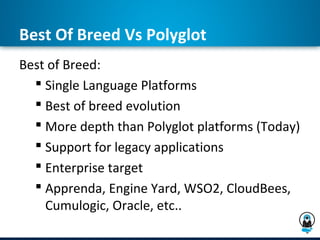
Best Of Breed Vs Polyglot
Best of Breed:
   Single Language Platforms
   Best of breed evolution
   More depth than Polyglot platforms (Today)
   Support for legacy applications
   Enterprise target
   Apprenda, Engine Yard, WSO2, CloudBees,
    Cumulogic, Oracle, etc..
Best Of Breed Vs Polyglot
Polyglot:
  • Single platform supporting multiple languages
    and frameworks
  • Suitable for modern apps and orgs with multi-
    language developer teams
  • More adoption in startups but enterprises are
    slowly embracing polyglot
  • Heroku, CloudFoundry, OpenShift, Tier3,
    ActiveState, AppFog, Google App Engine, etc..
Proprietary Vs Open Source
Proprietary Platforms:
  • Non availability of source code. Less
    flexibility in Platform customization
  • Hosted or Private
  • Higher Lock-in risks with hosted platforms
  • Heroku, Engine Yard, Google App Engine,
    Apprenda, HP, CloudBees, Cumulogic,
    etc..
Proprietary Vs Open Source
Open Source:
  • Usual moral reasons
  • Source code available for easy customization
  • Hosted or Private
  • Lesser lock-in risks with hosted platforms
    under certain conditions
  • CloudFoundry, IronFoundry, OpenShift,
    Brooklyn Project, Cloudify, etc..
DevOps Vs NoOps
 Convenience Vs Flexibility Question
 NoOps Platforms -> More Constraints
 Certain Applications like Marketing Apps
  fits well with NoOps Platforms
 DevOps Platforms -> More Control
 Certain Big Data Applications need more
  control
Vertical PaaS
 Focused on specific verticals like Financial,
  Health Care, Media, Gaming, etc..
 Media PaaS: Azure, AWS, Google, Federated
  Cloud Platforms
 Vertical PaaS for regulated industry
 Gaming PaaS on federated clouds could offer
  high performance gaming based on real time
  data
Other PaaS
 Visual PaaS -> Force.com,
  Orangescape, WorkXpress, etc..
 ALM Services -> CloudMunch, Electric
  Cloud, etc..
 IDE Services -> Cloud9, Codeenvy,
  Neutron Drive, etc..
Beyond PaaS
 PaaS Market  Platform Services
  Market
 Mobile Backend as a Service 
  Platform Services
 Component Services like Identity,
  Social, Real time streaming, etc.. 
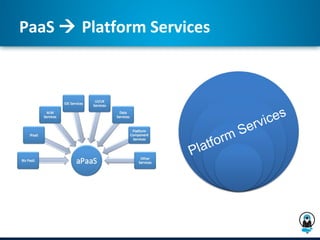
  Platform Services
PaaS  Platform Services


                                   rv ices
                              Se
                      latform
                     P
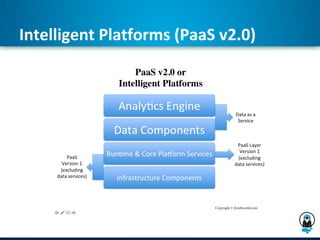
PaaS and Big Data
 Current Generation of PaaS is built
  for scaling users
 PaaS v2.0  PaaS for scaling data
  a.k.a PaaS for Big Data
 The evolution has started already
  but will accelerate in the coming
  years
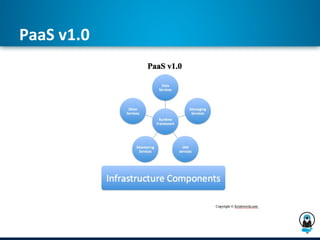
PaaS v1.0
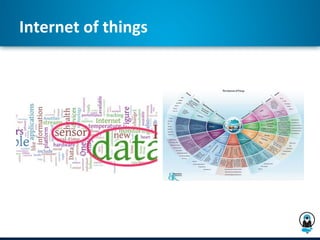
Internet of things
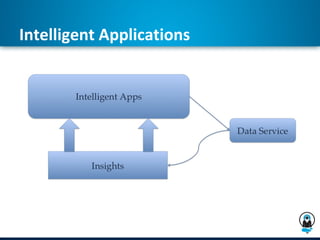
Intelligent Applications
Intelligent Platforms (PaaS v2.0)
Conclusion
 Enterprise PaaS is real
 Platform Services are still evolving
 We need platforms for the internet of
  things
 Platforms for big data
 Next 3-5 years is going to see emergence
  of intelligent platforms
Connect with me
Work: Principal Analyst, Rishidot Research
and Editor, CloudAve.com
Email: krishnan@krishworld.com
Twitter: @krishnan
Website: www.rishidot.com
Blog: www.cloudave.com/author/krishnan/
Slides: www.slideshare.net/rishidot

Dissecting The PaaS Landscape

  • 1.
    Dissecting The PaaSLandscape Rishidot Research Webinar
  • 2.
    Bookkeeping and Disclaimers Speaker’s Twitter handle: @krishnan  Webinar hashtag: #paasmkt  This is not deep dive research rather a 30000 feet overview on the market. Not all players covered.  Deploycon 2013 100% off discount code sent to webinar attendees  Research report shared after Deploycon 2013  Some of the vendors listed in this webinar are either Rishidot Research clients or Deploycon sponsors
  • 3.
    Plan For TheTalk  Defining PaaS  PaaS Ecosystem and Spectrum  PaaS Differentiation  PaaS and Big Data  Conclusion
  • 4.
  • 5.
    PaaS Definition PaaS isdefined as an elastic on- demand platform for applications that completely abstracts away the underlying infrastructure with the application scaling seamlessly with the platform.
  • 6.
    P, ugh, aaS? The idea of PaaS has evolved  Enterprise reluctance and diverse needs has changed the aaS usage in PaaS  PaaS  Platform Services where services can be hosted or private #ongoingdiscussion  Let us stop thinking about the debate and start talking about the usage
  • 7.
    What is PaaSand What is Not PaaS definition has broadened but certain characteristics hasn’t changed Application scales with the platform that offers “infinite” scalability No human intervention No hardware in the discussion
  • 8.
    What is PaaSand What is Not Application Scales With Legacy Applications on Platform Elastic Infrastructure
  • 9.
  • 10.
    Why PaaS? Developers:  Faster Development and Continuous Deployment (Agile)  Fewer Bugs (Similar environments in Dev, Test and Production)  Richer applications due to add-on services  Easy seamless collaboration
  • 11.
    Why PaaS? Organizations: Platform for services world  Reduced and efficient operations  Cost effective IT  Agility
  • 12.
    PaaS Evolution  FromHosted to Private  From Proprietary to Open Source  From Startups to Enterprise
  • 13.
  • 14.
  • 15.
    PaaS Spectrum Hosted Private DevOps DevOps Infrastructure PaaS PaaS PaaS Tools Services Abstraction Control
  • 16.
    PaaS: Axes OfDifferentiation  Hosted Vs Private PaaS  Single Language (Best of Breed) Vs Polyglot  Proprietary Vs Open Source  DevOps Vs NoOps  Vertical PaaS
  • 17.
    Hosted PaaS VsPrivate PaaS Hosted: • On Demand • Pay per use • Economic benefits and agility • Higher Levels of Abstraction • Lose some control and “lock-in risks” • GAE, Heroku, Engine Yard, Windows Azure, Appfog, Tier 3, Dot Cloud, Force.com, Orangescape, etc..
  • 18.
    Hosted PaaS VsPrivate PaaS Private PaaS: • Less agility • More control and less lock-in risks • Varying levels of abstraction • Struck in CAPEX model • Apprenda, ActiveState, CloudFoundry, WSO2, Cloudsoft AMP, Cloudify, Cumulogic, etc.. Then there is Hybrid like OpenShift, CloudBees, Oracle Java Service, etc..
  • 19.
    Best Of BreedVs Polyglot Best of Breed:  Single Language Platforms  Best of breed evolution  More depth than Polyglot platforms (Today)  Support for legacy applications  Enterprise target  Apprenda, Engine Yard, WSO2, CloudBees, Cumulogic, Oracle, etc..
  • 20.
    Best Of BreedVs Polyglot Polyglot: • Single platform supporting multiple languages and frameworks • Suitable for modern apps and orgs with multi- language developer teams • More adoption in startups but enterprises are slowly embracing polyglot • Heroku, CloudFoundry, OpenShift, Tier3, ActiveState, AppFog, Google App Engine, etc..
  • 21.
    Proprietary Vs OpenSource Proprietary Platforms: • Non availability of source code. Less flexibility in Platform customization • Hosted or Private • Higher Lock-in risks with hosted platforms • Heroku, Engine Yard, Google App Engine, Apprenda, HP, CloudBees, Cumulogic, etc..
  • 22.
    Proprietary Vs OpenSource Open Source: • Usual moral reasons • Source code available for easy customization • Hosted or Private • Lesser lock-in risks with hosted platforms under certain conditions • CloudFoundry, IronFoundry, OpenShift, Brooklyn Project, Cloudify, etc..
  • 23.
    DevOps Vs NoOps Convenience Vs Flexibility Question  NoOps Platforms -> More Constraints  Certain Applications like Marketing Apps fits well with NoOps Platforms  DevOps Platforms -> More Control  Certain Big Data Applications need more control
  • 24.
    Vertical PaaS  Focusedon specific verticals like Financial, Health Care, Media, Gaming, etc..  Media PaaS: Azure, AWS, Google, Federated Cloud Platforms  Vertical PaaS for regulated industry  Gaming PaaS on federated clouds could offer high performance gaming based on real time data
  • 25.
    Other PaaS  VisualPaaS -> Force.com, Orangescape, WorkXpress, etc..  ALM Services -> CloudMunch, Electric Cloud, etc..  IDE Services -> Cloud9, Codeenvy, Neutron Drive, etc..
  • 26.
    Beyond PaaS  PaaSMarket  Platform Services Market  Mobile Backend as a Service  Platform Services  Component Services like Identity, Social, Real time streaming, etc..  Platform Services
  • 27.
    PaaS  PlatformServices rv ices Se latform P
  • 28.
    PaaS and BigData  Current Generation of PaaS is built for scaling users  PaaS v2.0  PaaS for scaling data a.k.a PaaS for Big Data  The evolution has started already but will accelerate in the coming years
  • 29.
  • 30.
  • 31.
  • 32.
  • 33.
    Conclusion  Enterprise PaaSis real  Platform Services are still evolving  We need platforms for the internet of things  Platforms for big data  Next 3-5 years is going to see emergence of intelligent platforms
  • 34.
    Connect with me Work:Principal Analyst, Rishidot Research and Editor, CloudAve.com Email: krishnan@krishworld.com Twitter: @krishnan Website: www.rishidot.com Blog: www.cloudave.com/author/krishnan/ Slides: www.slideshare.net/rishidot