Disruptive Technologies influencing
Smart Grid revolution
Speaker: Jayant Sinha
Date: 8th April 2016
United Kingdom
jayant.sinha@enzen.com
Agenda
• What are disruptive technologies?
• Disruptive technologies in Smart Grids
• Changes sought by these technologies
• How these will affect us?
2
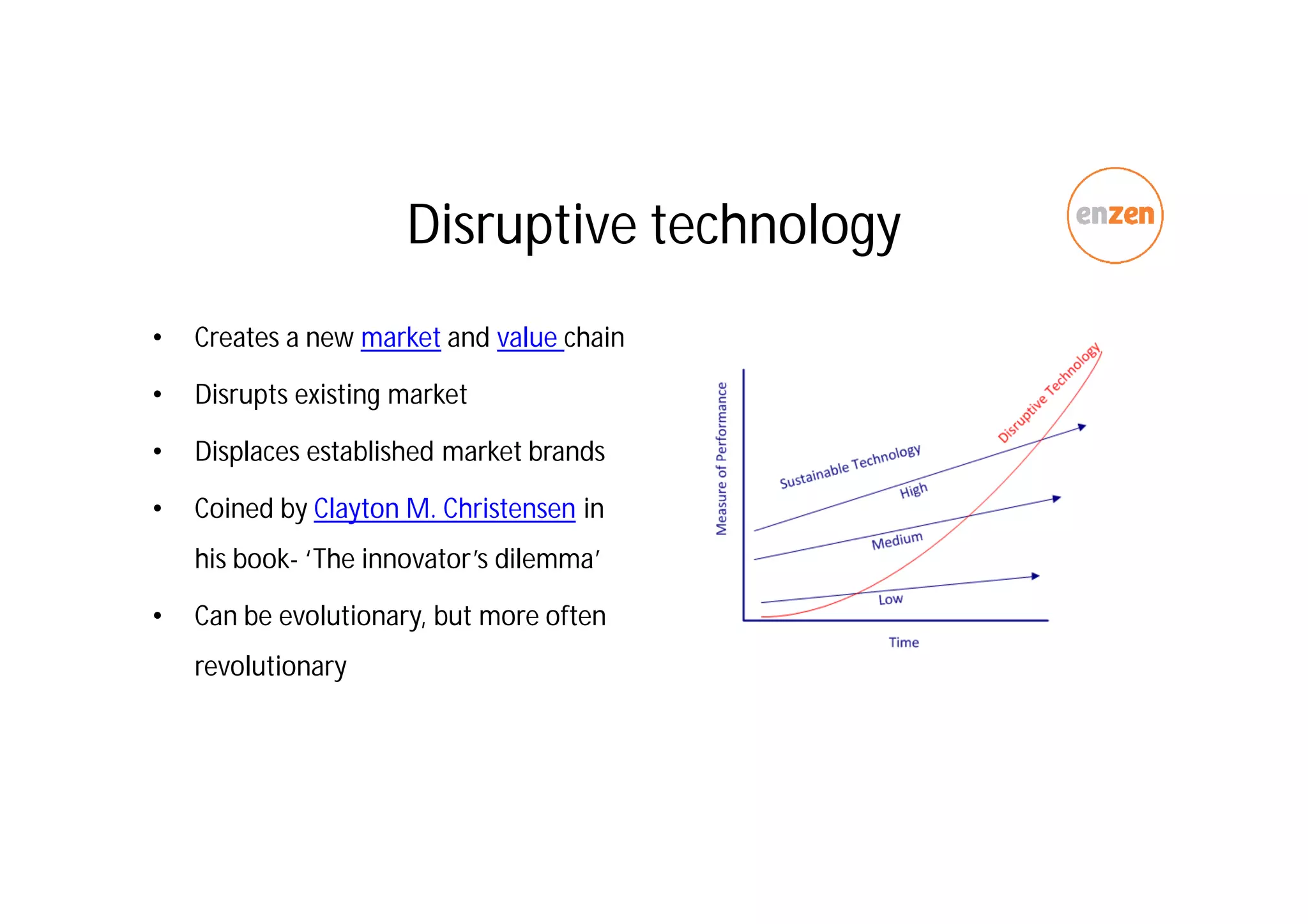
Disruptive technology
• Creates a new market and value chain
• Disrupts existing market
• Displaces established market brands
• Coined by Clayton M. Christensen in
his book- ‘The innovator’s dilemma’
• Can be evolutionary, but more often
revolutionary
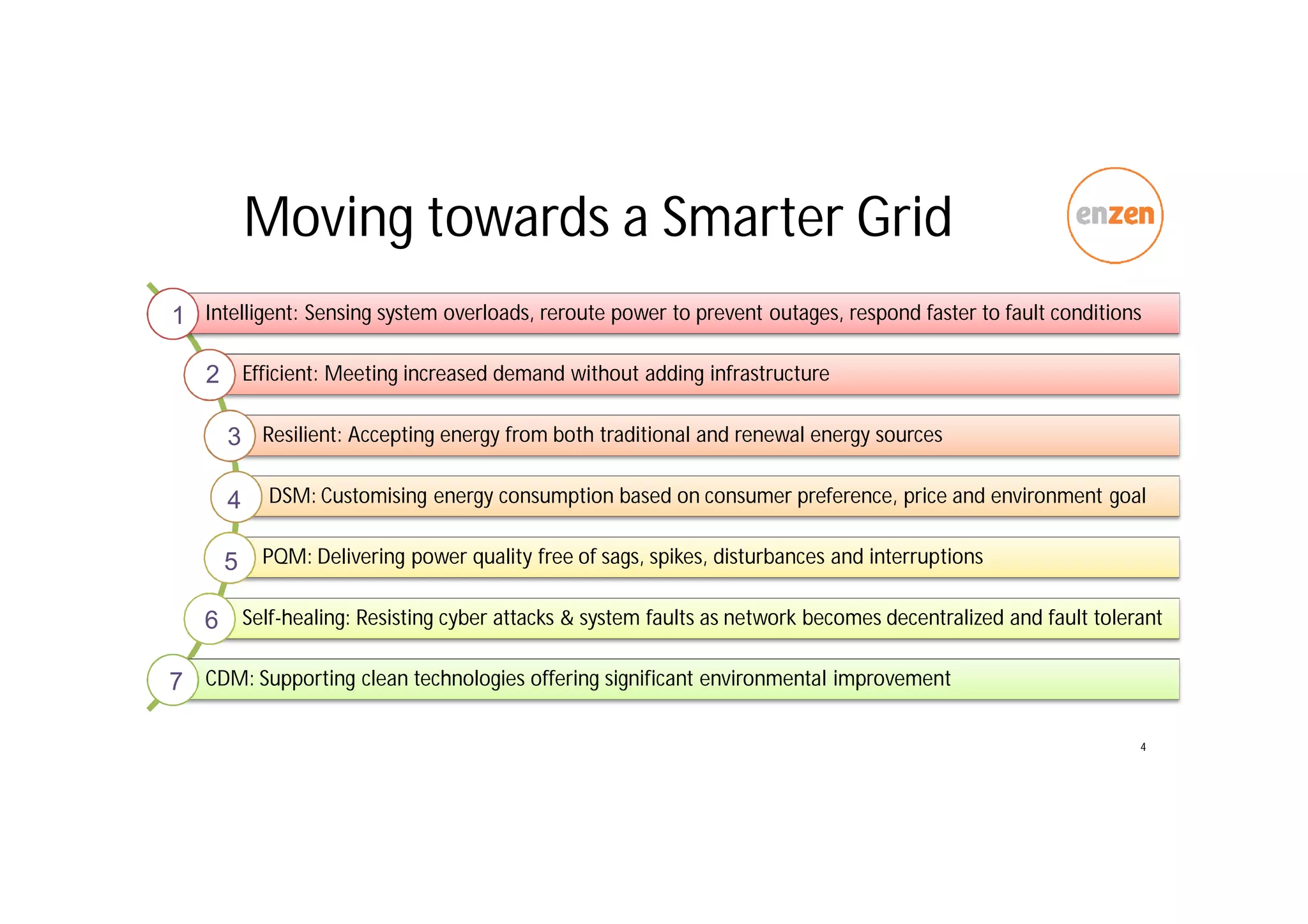
Moving towards a Smarter Grid
Intelligent: Sensing system overloads, reroute power to prevent outages, respond faster to fault conditions
Efficient: Meeting increased demand without adding infrastructure
Resilient: Accepting energy from both traditional and renewal energy sources
DSM: Customising energy consumption based on consumer preference, price and environment goal
PQM: Delivering power quality free of sags, spikes, disturbances and interruptions
Self-healing: Resisting cyber attacks & system faults as network becomes decentralized and fault tolerant
CDM: Supporting clean technologies offering significant environmental improvement
4
1
2
3
4
5
6
7
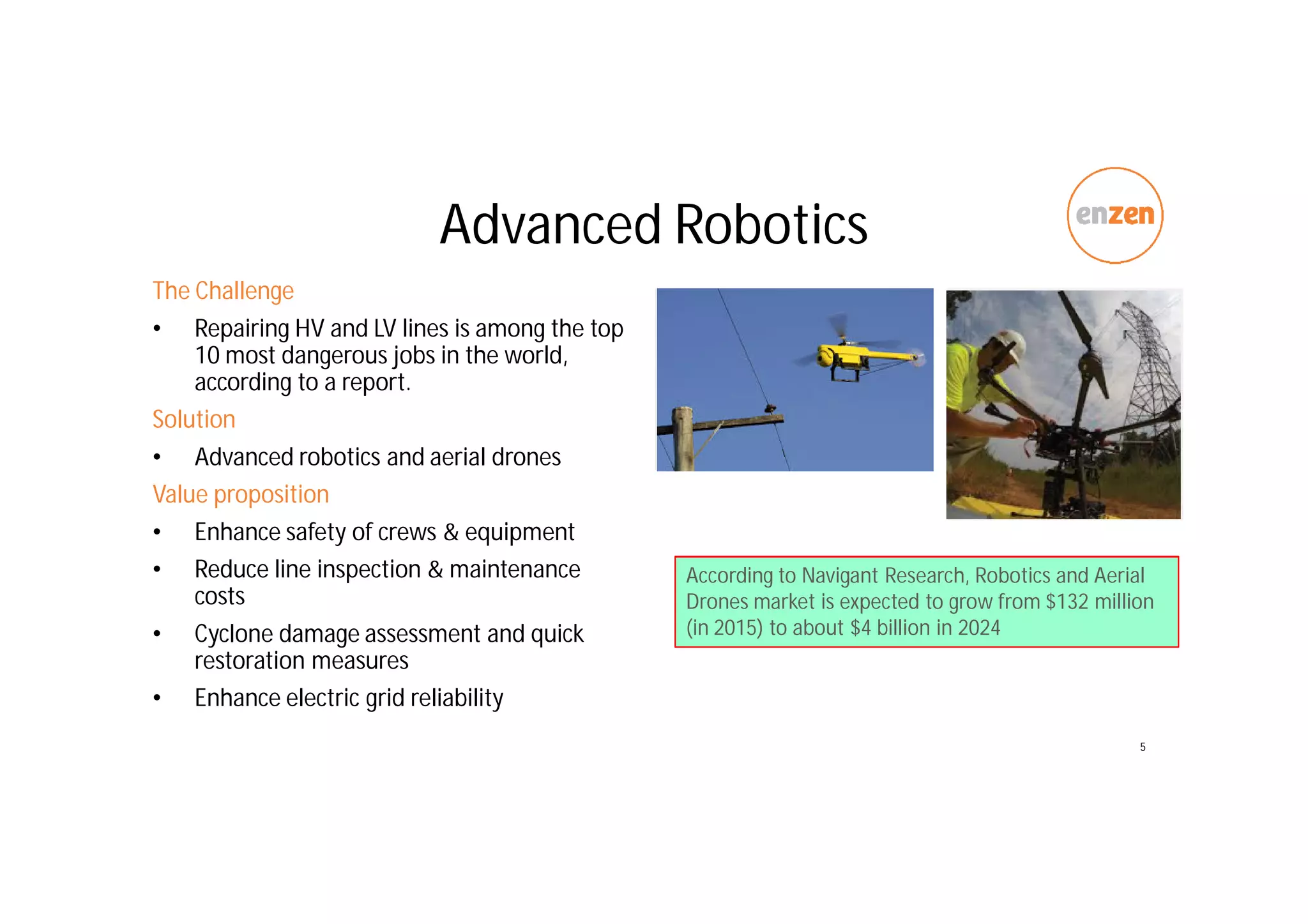
Advanced Robotics
The Challenge
• Repairing HV and LV lines is among the top
10 most dangerous jobs in the world,
according to a report.
Solution
• Advanced robotics and aerial drones
Value proposition
• Enhance safety of crews & equipment
• Reduce line inspection & maintenance
costs
• Cyclone damage assessment and quick
restoration measures
• Enhance electric grid reliability
5
According to Navigant Research, Robotics and Aerial
Drones market is expected to grow from $132 million
(in 2015) to about $4 billion in 2024
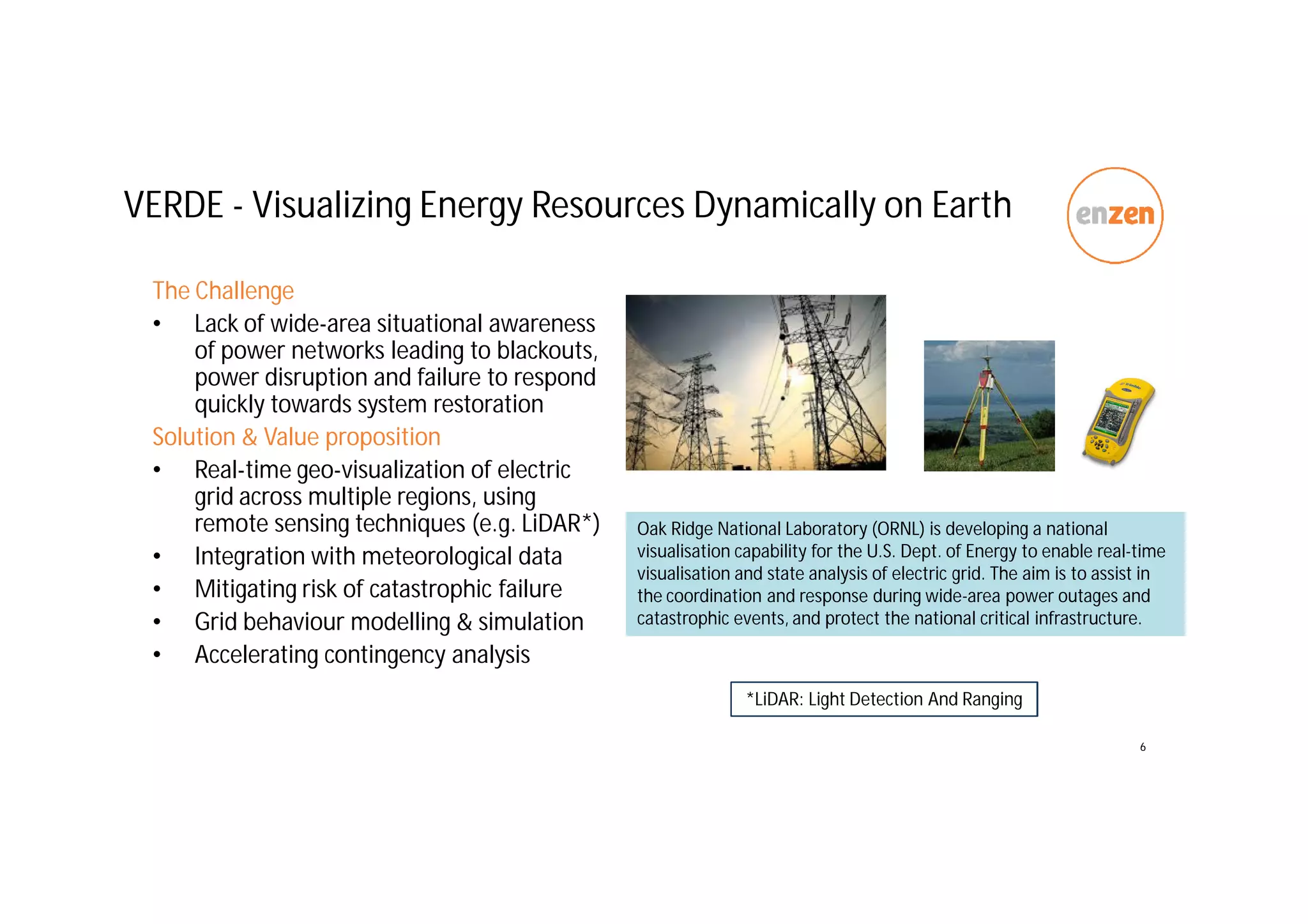
VERDE - Visualizing Energy Resources Dynamically on Earth
The Challenge
• Lack of wide-area situational awareness
of power networks leading to blackouts,
power disruption and failure to respond
quickly towards system restoration
Solution & Value proposition
• Real-time geo-visualization of electric
grid across multiple regions, using
remote sensing techniques (e.g. LiDAR*)
• Integration with meteorological data
• Mitigating risk of catastrophic failure
• Grid behaviour modelling & simulation
• Accelerating contingency analysis
6
Oak Ridge National Laboratory (ORNL) is developing a national
visualisation capability for the U.S. Dept. of Energy to enable real-time
visualisation and state analysis of electric grid. The aim is to assist in
the coordination and response during wide-area power outages and
catastrophic events, and protect the national critical infrastructure.
*LiDAR: Light Detection And Ranging
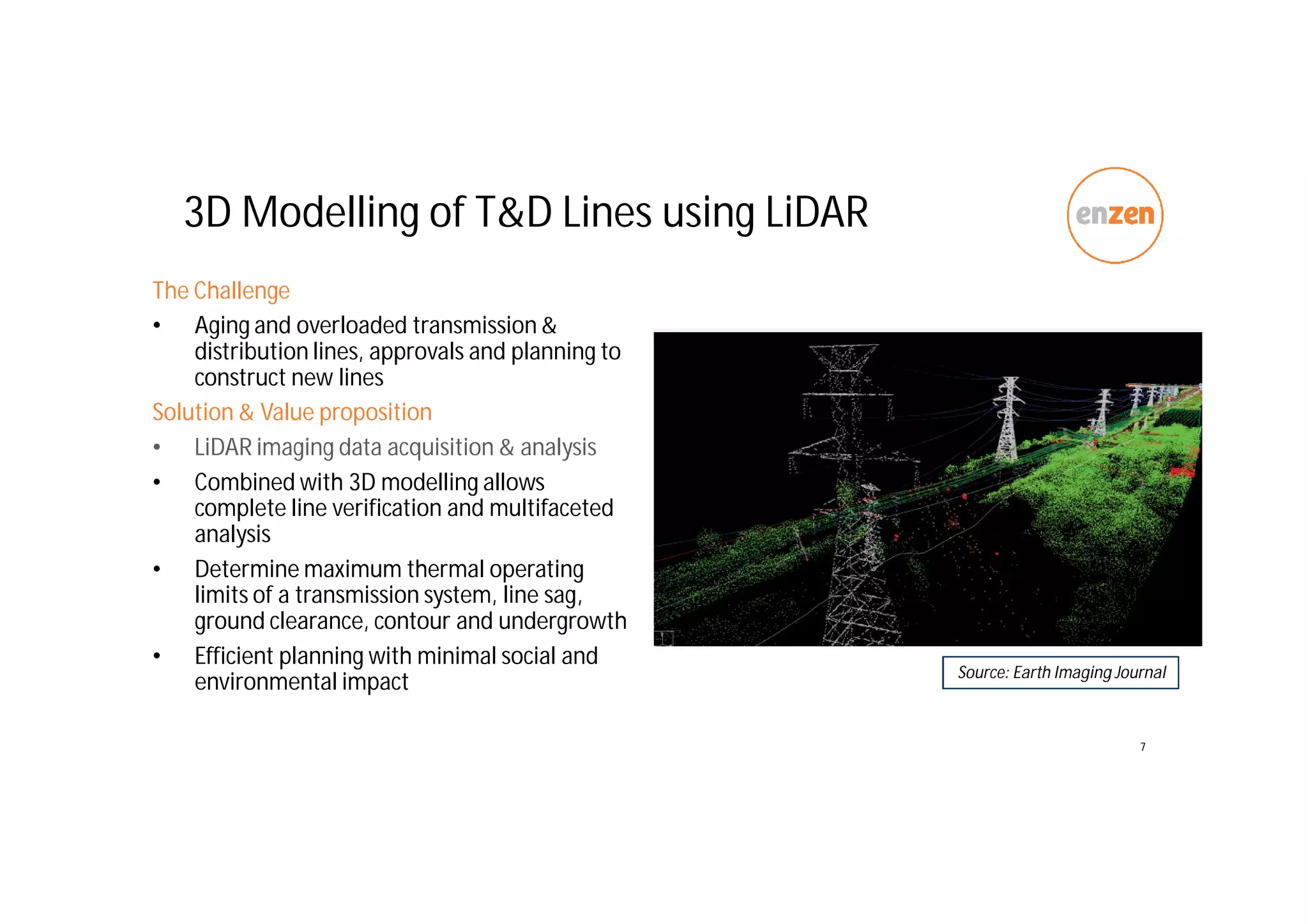
3D Modelling of T&D Lines using LiDAR
The Challenge
• Aging and overloaded transmission &
distribution lines, approvals and planning to
construct new lines
Solution & Value proposition
• LiDAR imaging data acquisition & analysis
• Combined with 3D modelling allows
complete line verification and multifaceted
analysis
• Determine maximum thermal operating
limits of a transmission system, line sag,
ground clearance, contour and undergrowth
• Efficient planning with minimal social and
environmental impact
7
Source: Earth Imaging Journal
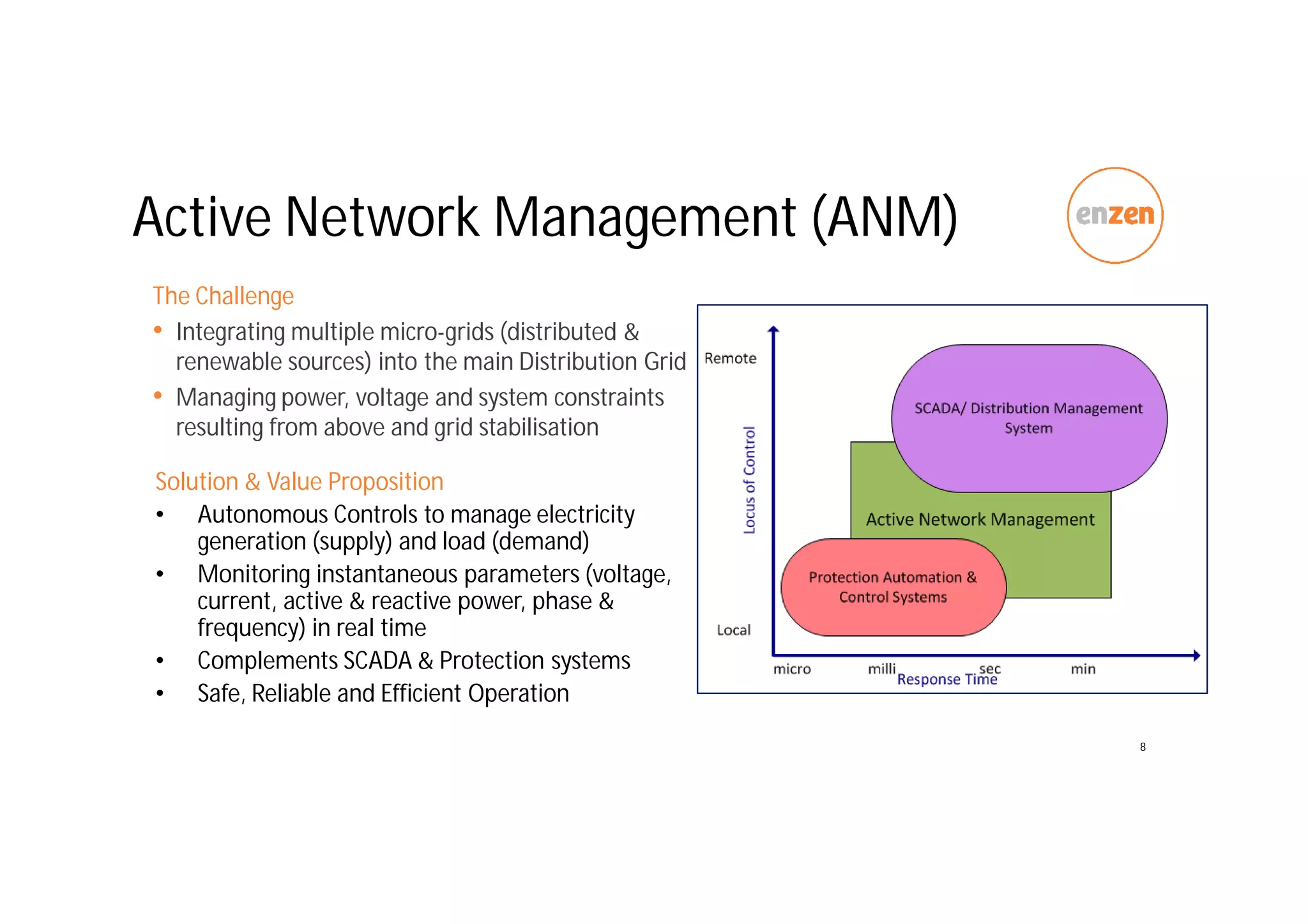
Active Network Management (ANM)
Solution & Value Proposition
• Autonomous Controls to manage electricity
generation (supply) and load (demand)
• Monitoring instantaneous parameters (voltage,
current, active & reactive power, phase &
frequency) in real time
• Complements SCADA & Protection systems
• Safe, Reliable and Efficient Operation
8
The Challenge
• Integrating multiple micro-grids (distributed &
renewable sources) into the main Distribution Grid
• Managing power, voltage and system constraints
resulting from above and grid stabilisation
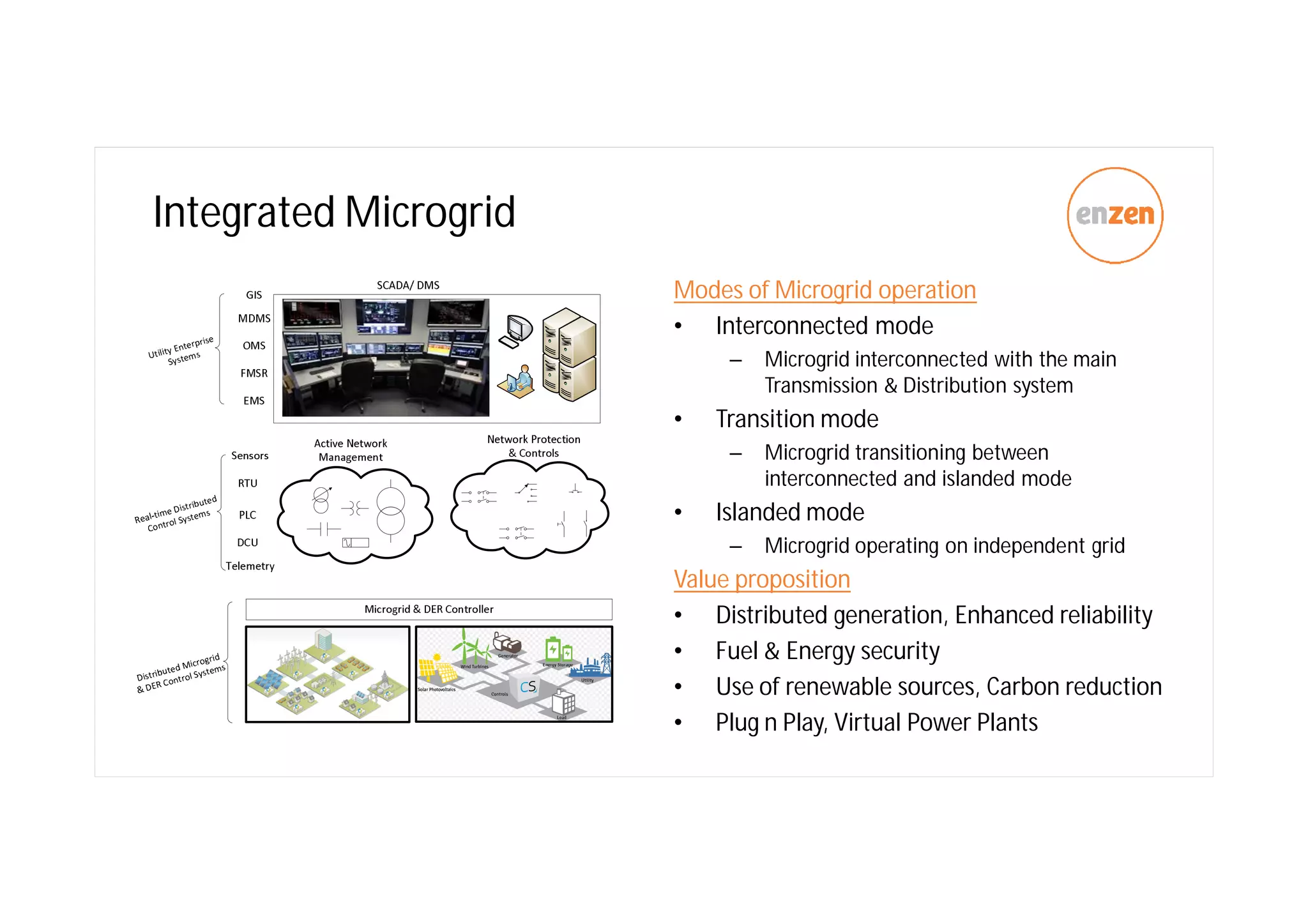
Modes of Microgrid operation
• Interconnected mode
– Microgrid interconnected with the main
Transmission & Distribution system
• Transition mode
– Microgrid transitioning between
interconnected and islanded mode
• Islanded mode
– Microgrid operating on independent grid
Value proposition
• Distributed generation, Enhanced reliability
• Fuel & Energy security
• Use of renewable sources, Carbon reduction
• Plug n Play, Virtual Power Plants
Integrated Microgrid
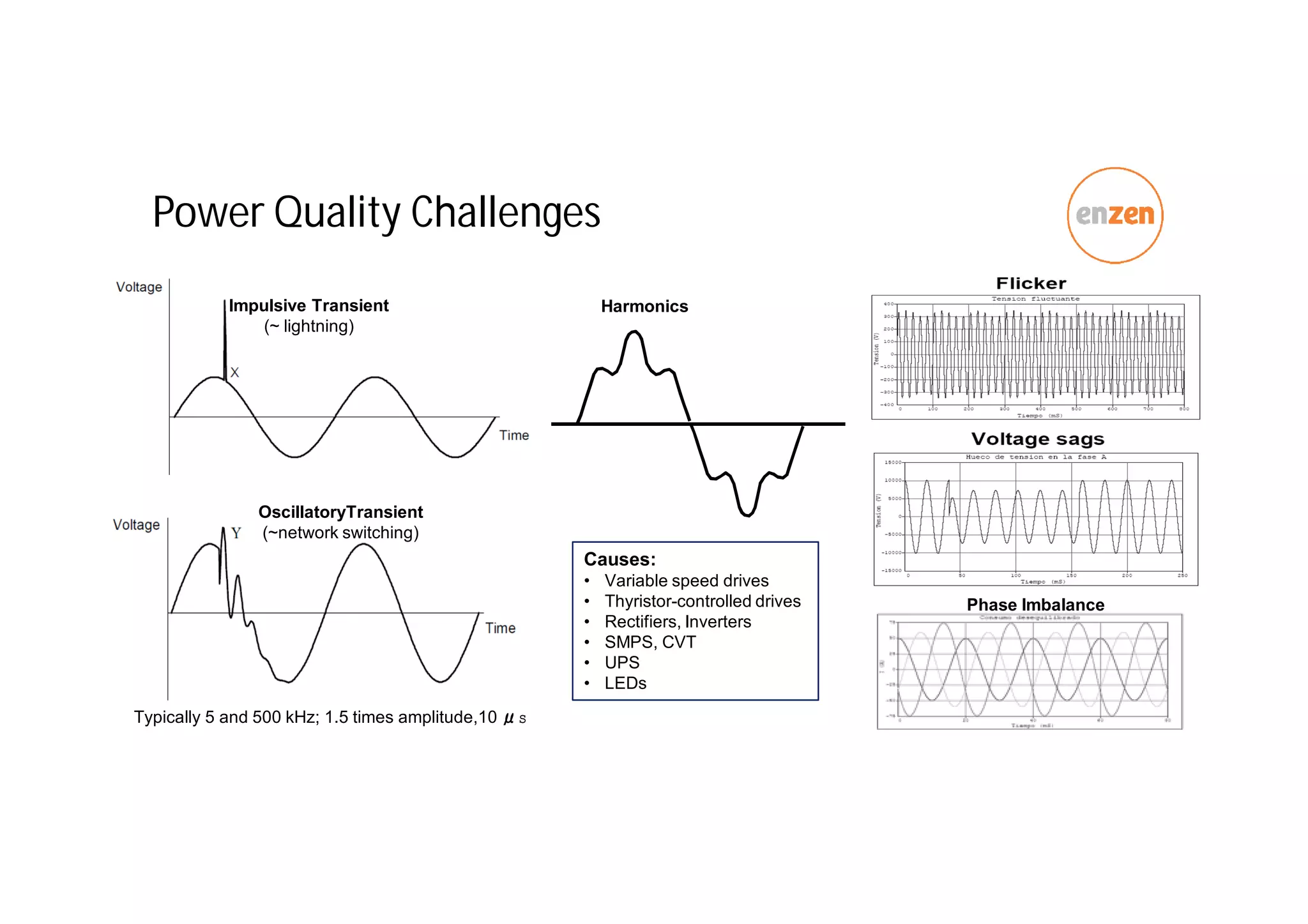
Impulsive Transient
(~ lightning)
OscillatoryTransient
(~network switching)
Typically 5 and 500 kHz; 1.5 times amplitude,10 μs
Causes:
• Variable speed drives
• Thyristor-controlled drives
• Rectifiers, Inverters
• SMPS, CVT
• UPS
• LEDs
Harmonics
Phase Imbalance
Power Quality Challenges
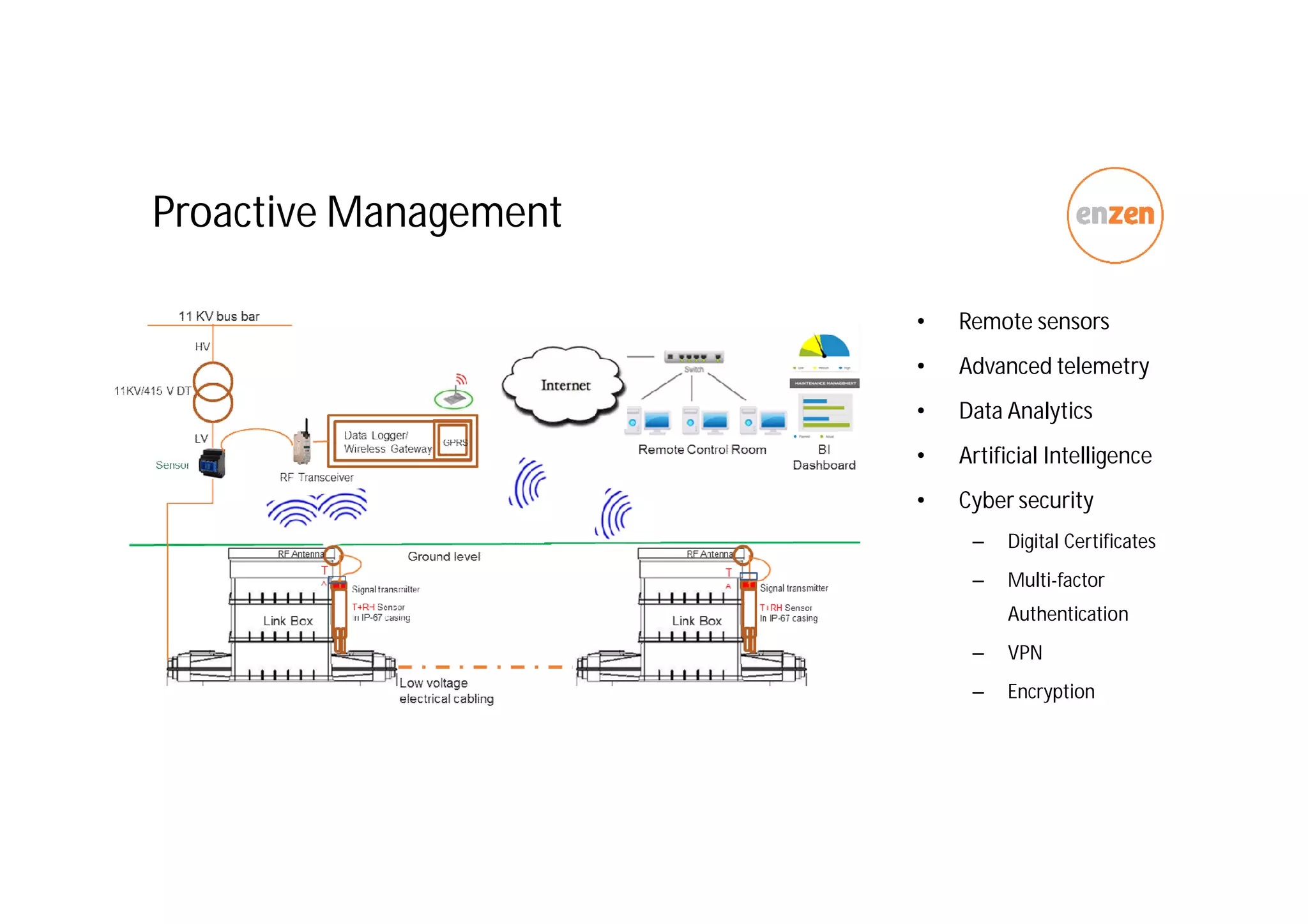
Proactive Management
• Remote sensors
• Advanced telemetry
• Data Analytics
• Artificial Intelligence
• Cyber security
– Digital Certificates
– Multi-factor
Authentication
– VPN
– Encryption
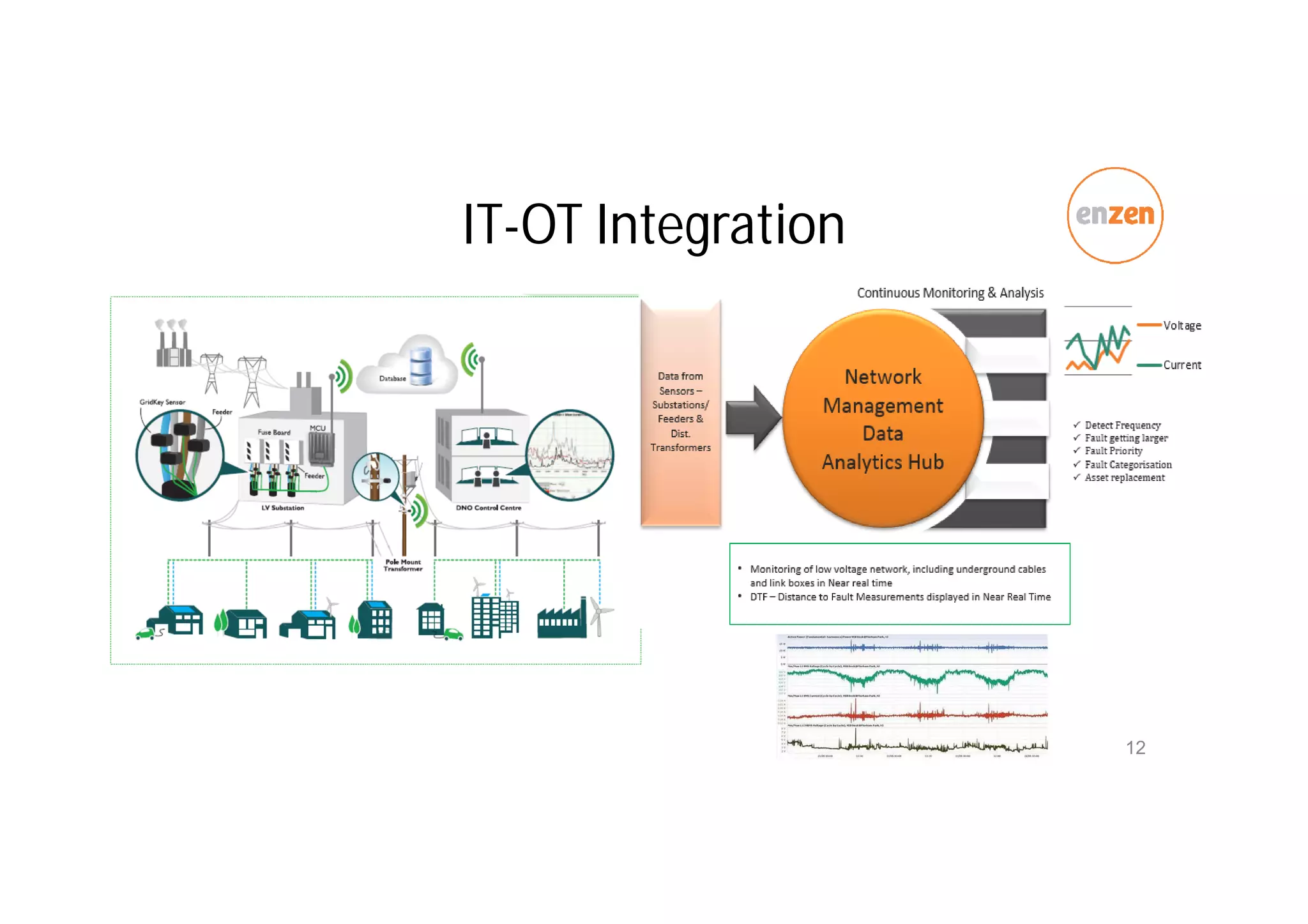
IT-OT Integration
12
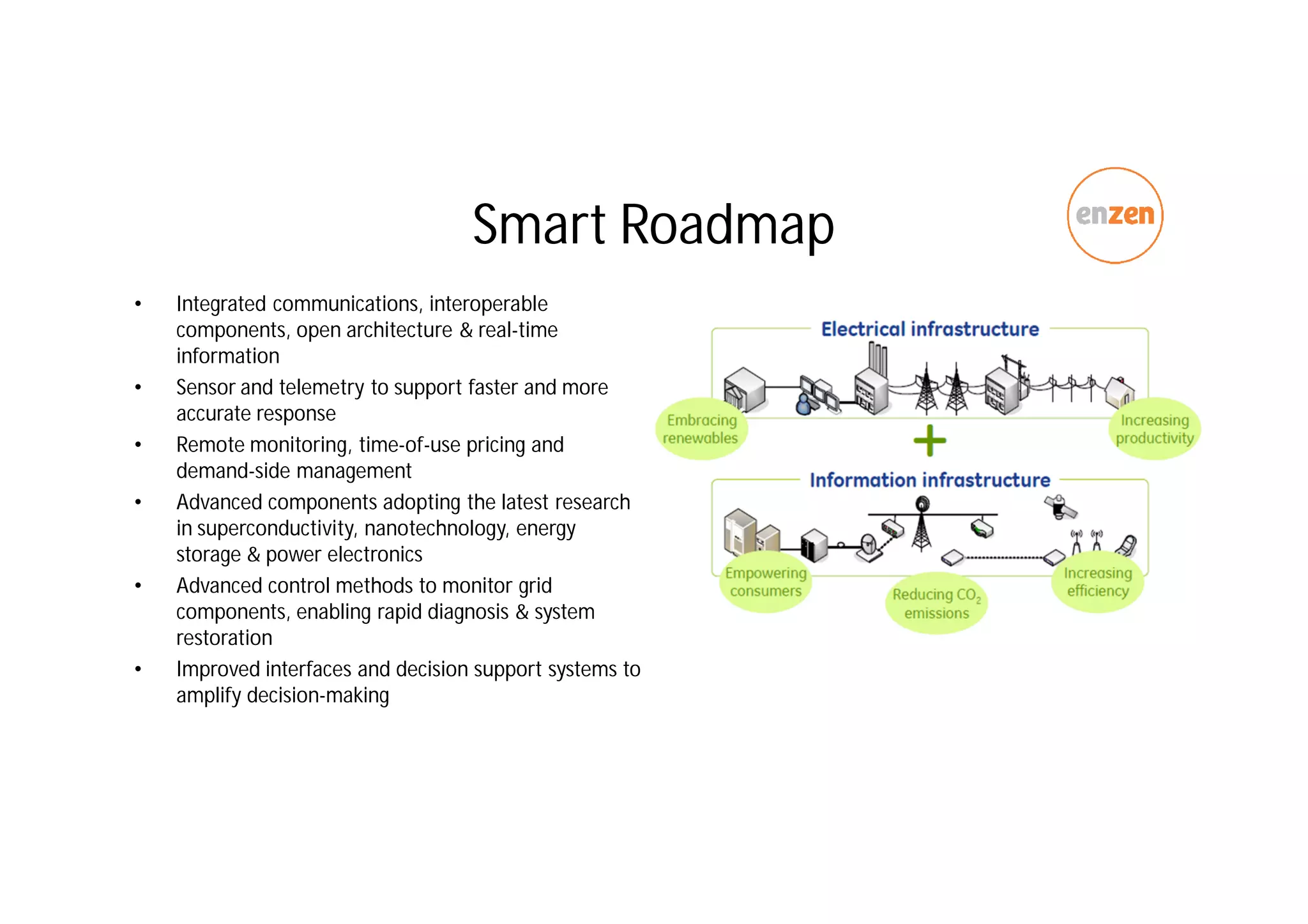
Smart Roadmap
• Integrated communications, interoperable
components, open architecture & real-time
information
• Sensor and telemetry to support faster and more
accurate response
• Remote monitoring, time-of-use pricing and
demand-side management
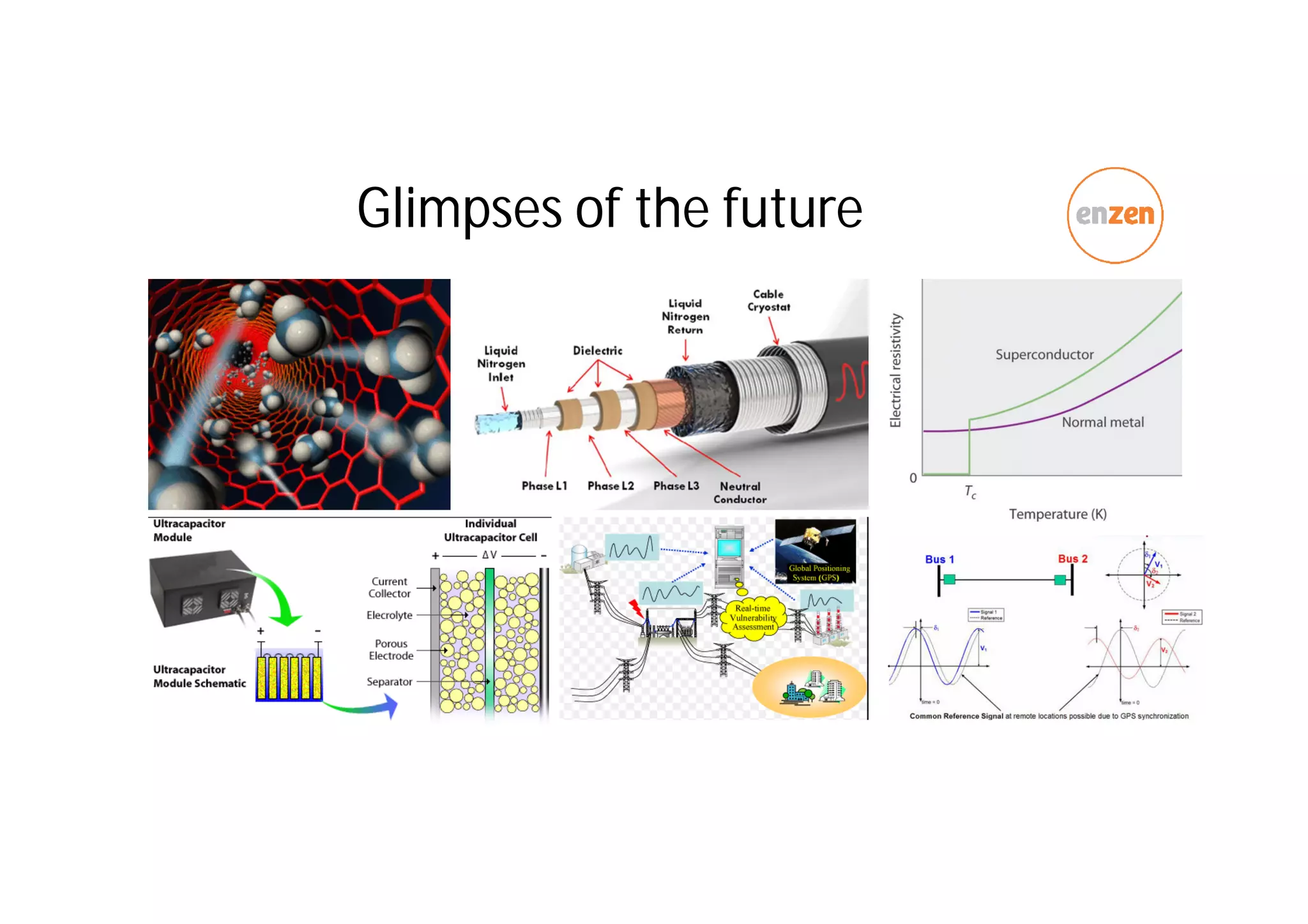
• Advanced components adopting the latest research
in superconductivity, nanotechnology, energy
storage & power electronics
• Advanced control methods to monitor grid
components, enabling rapid diagnosis & system
restoration
• Improved interfaces and decision support systems to
amplify decision-making
Glimpses of the future
Thank You!
Jayant Sinha
Principal Consultant (Energy & Utilties)
Jayant.sinha@enzen.com

Disruptive technologies smart grid jayant sinha final_2016

  • 1.
    Disruptive Technologies influencing SmartGrid revolution Speaker: Jayant Sinha Date: 8th April 2016 United Kingdom jayant.sinha@enzen.com
  • 2.
    Agenda • What aredisruptive technologies? • Disruptive technologies in Smart Grids • Changes sought by these technologies • How these will affect us? 2
  • 3.
    Disruptive technology • Createsa new market and value chain • Disrupts existing market • Displaces established market brands • Coined by Clayton M. Christensen in his book- ‘The innovator’s dilemma’ • Can be evolutionary, but more often revolutionary
  • 4.
    Moving towards aSmarter Grid Intelligent: Sensing system overloads, reroute power to prevent outages, respond faster to fault conditions Efficient: Meeting increased demand without adding infrastructure Resilient: Accepting energy from both traditional and renewal energy sources DSM: Customising energy consumption based on consumer preference, price and environment goal PQM: Delivering power quality free of sags, spikes, disturbances and interruptions Self-healing: Resisting cyber attacks & system faults as network becomes decentralized and fault tolerant CDM: Supporting clean technologies offering significant environmental improvement 4 1 2 3 4 5 6 7
  • 5.
    Advanced Robotics The Challenge •Repairing HV and LV lines is among the top 10 most dangerous jobs in the world, according to a report. Solution • Advanced robotics and aerial drones Value proposition • Enhance safety of crews & equipment • Reduce line inspection & maintenance costs • Cyclone damage assessment and quick restoration measures • Enhance electric grid reliability 5 According to Navigant Research, Robotics and Aerial Drones market is expected to grow from $132 million (in 2015) to about $4 billion in 2024
  • 6.
    VERDE - VisualizingEnergy Resources Dynamically on Earth The Challenge • Lack of wide-area situational awareness of power networks leading to blackouts, power disruption and failure to respond quickly towards system restoration Solution & Value proposition • Real-time geo-visualization of electric grid across multiple regions, using remote sensing techniques (e.g. LiDAR*) • Integration with meteorological data • Mitigating risk of catastrophic failure • Grid behaviour modelling & simulation • Accelerating contingency analysis 6 Oak Ridge National Laboratory (ORNL) is developing a national visualisation capability for the U.S. Dept. of Energy to enable real-time visualisation and state analysis of electric grid. The aim is to assist in the coordination and response during wide-area power outages and catastrophic events, and protect the national critical infrastructure. *LiDAR: Light Detection And Ranging
  • 7.
    3D Modelling ofT&D Lines using LiDAR The Challenge • Aging and overloaded transmission & distribution lines, approvals and planning to construct new lines Solution & Value proposition • LiDAR imaging data acquisition & analysis • Combined with 3D modelling allows complete line verification and multifaceted analysis • Determine maximum thermal operating limits of a transmission system, line sag, ground clearance, contour and undergrowth • Efficient planning with minimal social and environmental impact 7 Source: Earth Imaging Journal
  • 8.
    Active Network Management(ANM) Solution & Value Proposition • Autonomous Controls to manage electricity generation (supply) and load (demand) • Monitoring instantaneous parameters (voltage, current, active & reactive power, phase & frequency) in real time • Complements SCADA & Protection systems • Safe, Reliable and Efficient Operation 8 The Challenge • Integrating multiple micro-grids (distributed & renewable sources) into the main Distribution Grid • Managing power, voltage and system constraints resulting from above and grid stabilisation
  • 9.
    Modes of Microgridoperation • Interconnected mode – Microgrid interconnected with the main Transmission & Distribution system • Transition mode – Microgrid transitioning between interconnected and islanded mode • Islanded mode – Microgrid operating on independent grid Value proposition • Distributed generation, Enhanced reliability • Fuel & Energy security • Use of renewable sources, Carbon reduction • Plug n Play, Virtual Power Plants Integrated Microgrid
  • 10.
    Impulsive Transient (~ lightning) OscillatoryTransient (~networkswitching) Typically 5 and 500 kHz; 1.5 times amplitude,10 μs Causes: • Variable speed drives • Thyristor-controlled drives • Rectifiers, Inverters • SMPS, CVT • UPS • LEDs Harmonics Phase Imbalance Power Quality Challenges
  • 11.
    Proactive Management • Remotesensors • Advanced telemetry • Data Analytics • Artificial Intelligence • Cyber security – Digital Certificates – Multi-factor Authentication – VPN – Encryption
  • 12.
  • 13.
    Smart Roadmap • Integratedcommunications, interoperable components, open architecture & real-time information • Sensor and telemetry to support faster and more accurate response • Remote monitoring, time-of-use pricing and demand-side management • Advanced components adopting the latest research in superconductivity, nanotechnology, energy storage & power electronics • Advanced control methods to monitor grid components, enabling rapid diagnosis & system restoration • Improved interfaces and decision support systems to amplify decision-making
  • 14.
  • 15.
    Thank You! Jayant Sinha PrincipalConsultant (Energy & Utilties) Jayant.sinha@enzen.com